

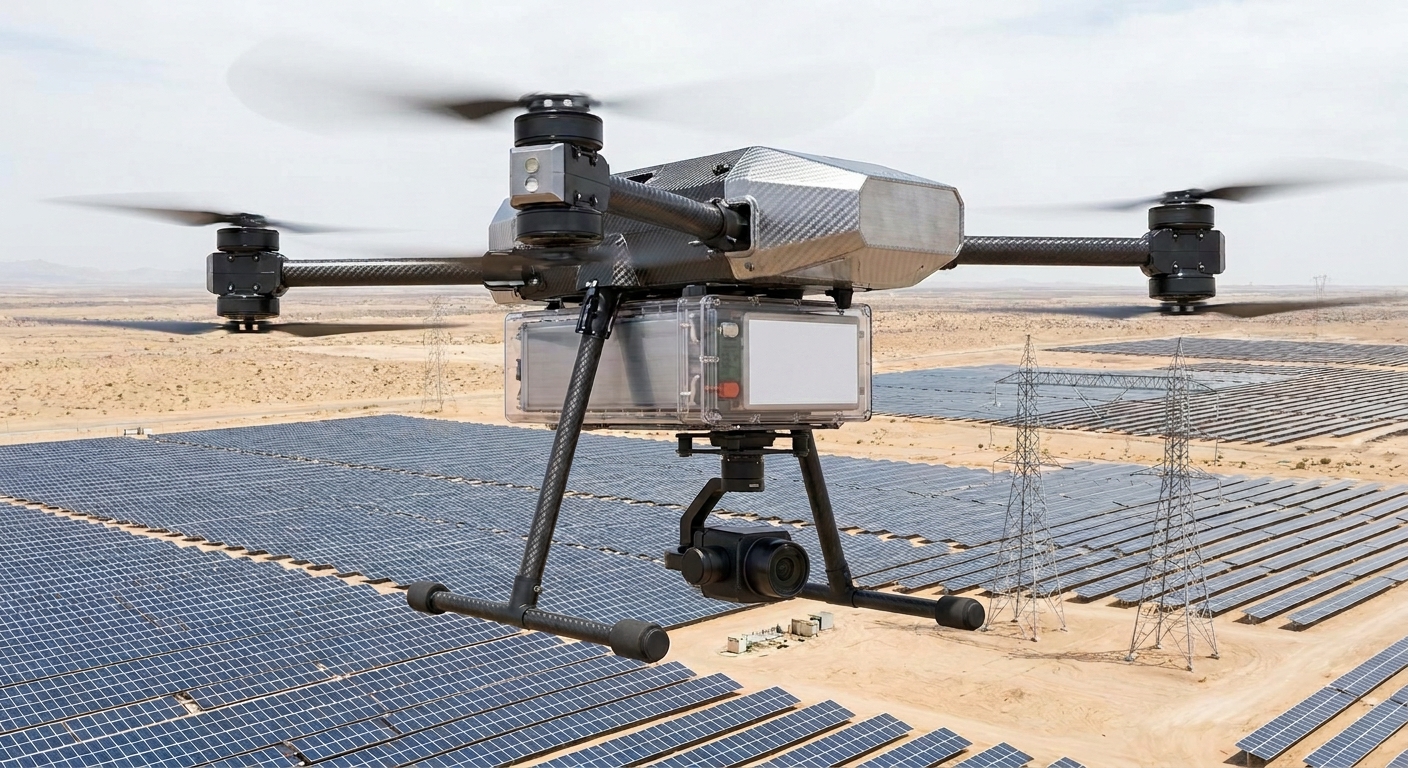
For many drones, endurance is constrained first by how much usable energy the aircraft can carry within its weight budget. Film, agriculture, logistics, and survey operations all hit the same wall: the energy a drone can carry per kilogram of battery sets a hard ceiling on how long it stays airborne and how much payload it can lift. That ceiling is now being moved for many aircraft classes by one specific metric — a 400Wh/kg battery.
This article explains what that figure actually means, how semi-solid-state technology is one of the paths toward it, and how to evaluate a high energy density battery for drones before you commit to one. The goal is not to sell a number. It is to give you a defensible way to read one.
What Does 400Wh/kg Mean for a Drone Battery?
At its simplest, 400Wh/kg means the battery can theoretically store about 400 watt-hours of energy per kilogram of battery weight, under specified test conditions. To put that in context, conventional lithium-ion cells typically land in the 200–250Wh/kg range. So a pack at this level holds roughly 60% more energy at the same weight — a meaningful jump for an aircraft where every gram of battery competes against every gram of payload.
Before using 400Wh/kg as a design target, confirm whether the number refers to the cell or the finished pack. A cell-level figure does not represent the energy density of the complete battery your aircraft will carry. Real-world usable energy also shifts with charge state, temperature, and discharge rate.
We come back to the cell-versus-pack distinction shortly, because it can materially change how much energy your drone actually carries.
Why Battery Specific Energy Matters for Drone Endurance and Payload
A drone’s maximum takeoff weight (MTOW) is fixed. Every kilogram assigned to the battery is a kilogram unavailable to sensors, cameras, spraying systems, or cargo. Since conventional lithium-ion cells sit in the 200–250Wh/kg range, a drone often needs a relatively heavy pack to store the energy a long mission requires.
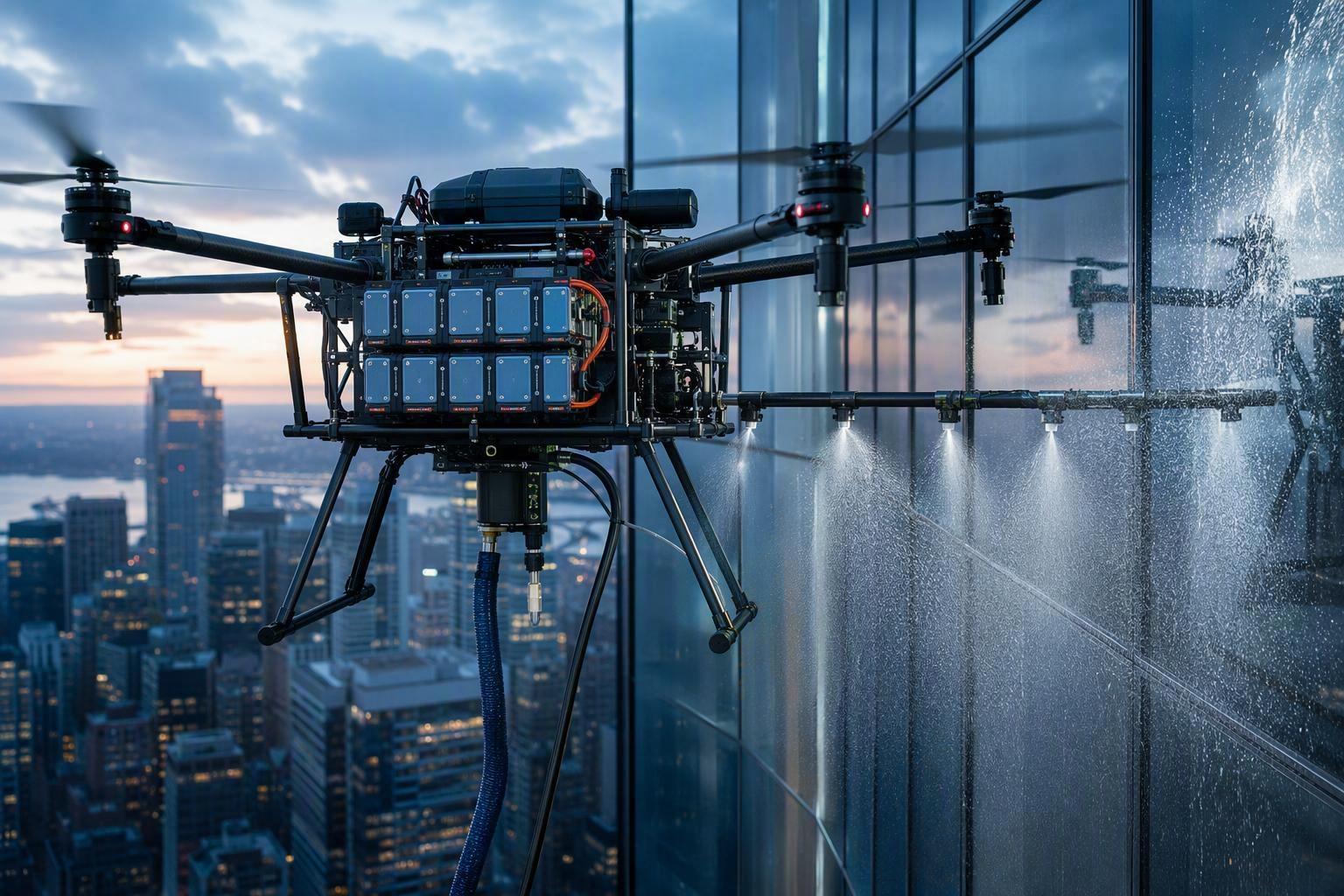
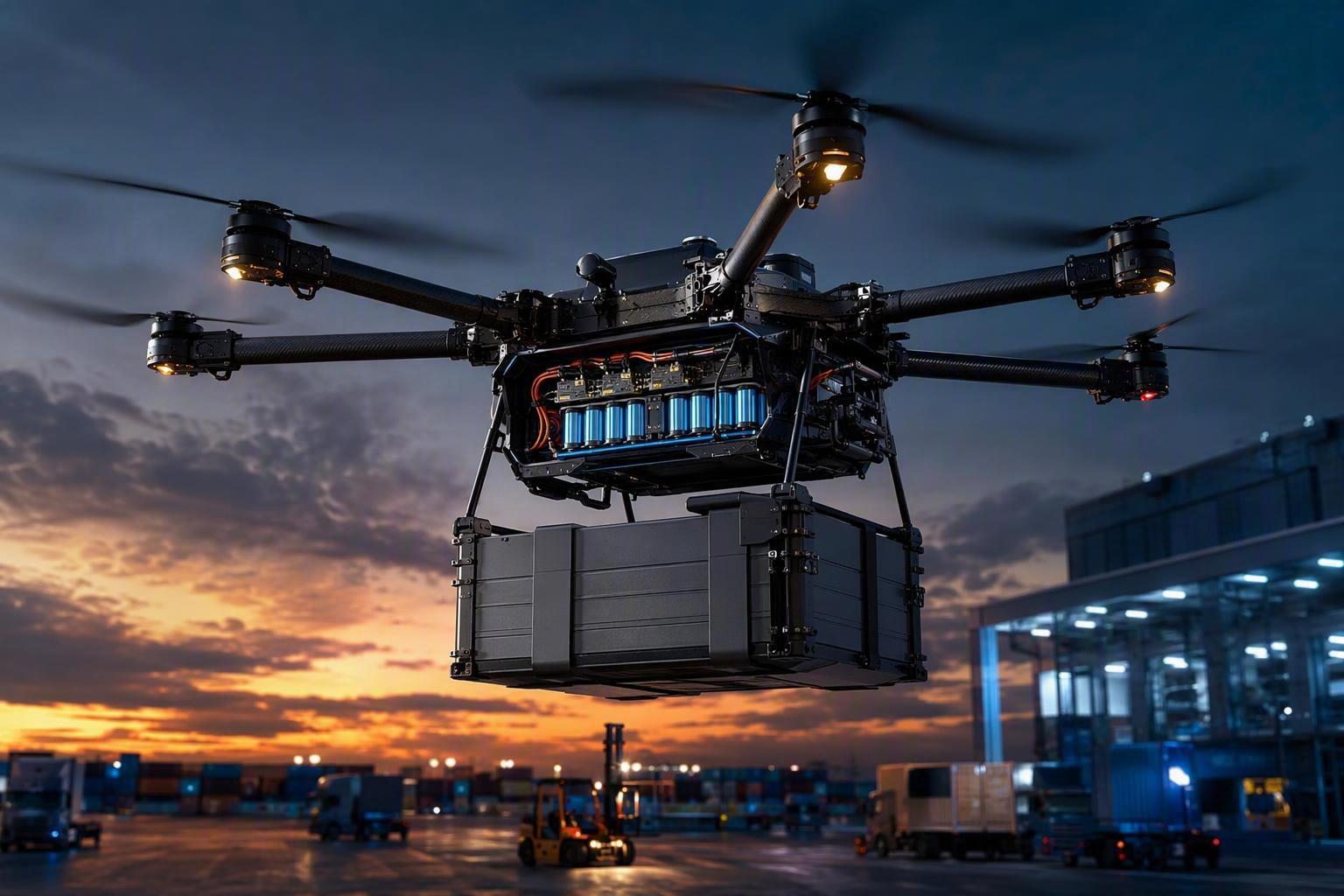
That creates a direct trade. If you need more endurance, you add battery mass. If you add battery mass, you reduce payload margin or push the aircraft toward its structural and thrust limits. Surveying drones carrying high-precision cameras, agricultural platforms with tank loads, and delivery aircraft with cargo are all squeezed by this equation.
So forget “the battery is heavy” as the takeaway. What actually decides how much endurance you can buy without giving up payload is the battery’s specific energy. A higher Wh/kg doesn’t remove the trade — nothing does — but it shifts where the trade lands: more energy in the same mass, or the same energy in a lighter pack, whichever the mission values more.
400Wh/kg vs Conventional Drone Battery Energy Density
To see the difference in practical terms, compare the theoretical energy a fixed mass can hold across common Wh/kg reference points — using a 5.7kg pack weight, the same mass class as the semi-solid case examined later in this article:
Battery specific energy (Wh/kg) | Stored energy per kg | Energy in a 5.7 kg pack (Wh) |
|---|---|---|
200 Wh/kg | 200 Wh | 1,140 Wh |
250 Wh/kg | 250 Wh | 1,425 Wh |
300 Wh/kg | 300 Wh | 1,710 Wh |
400 Wh/kg | 400 Wh | 2,280 Wh |
Actual endurance cannot be derived from battery energy alone because aircraft power consumption changes with total mass, payload, flight mode, and reserve requirements.
The numbers are illustrative reference points, not a guarantee for any specific product. Real usable energy depends on discharge profile, temperature, and reserve SOC. What the table shows is the direction of travel: energy density in this class sits well above conventional lithium-ion and represents the strong end of what high energy density battery for drones technology is targeting.
Reaching higher specific energy is not simply a matter of changing the electrolyte. It can involve changes across cell chemistry and architecture, which is where semi-solid-state technology enters the picture as one possible route.
How Semi-Solid-State Technology Can Support Higher Energy Density
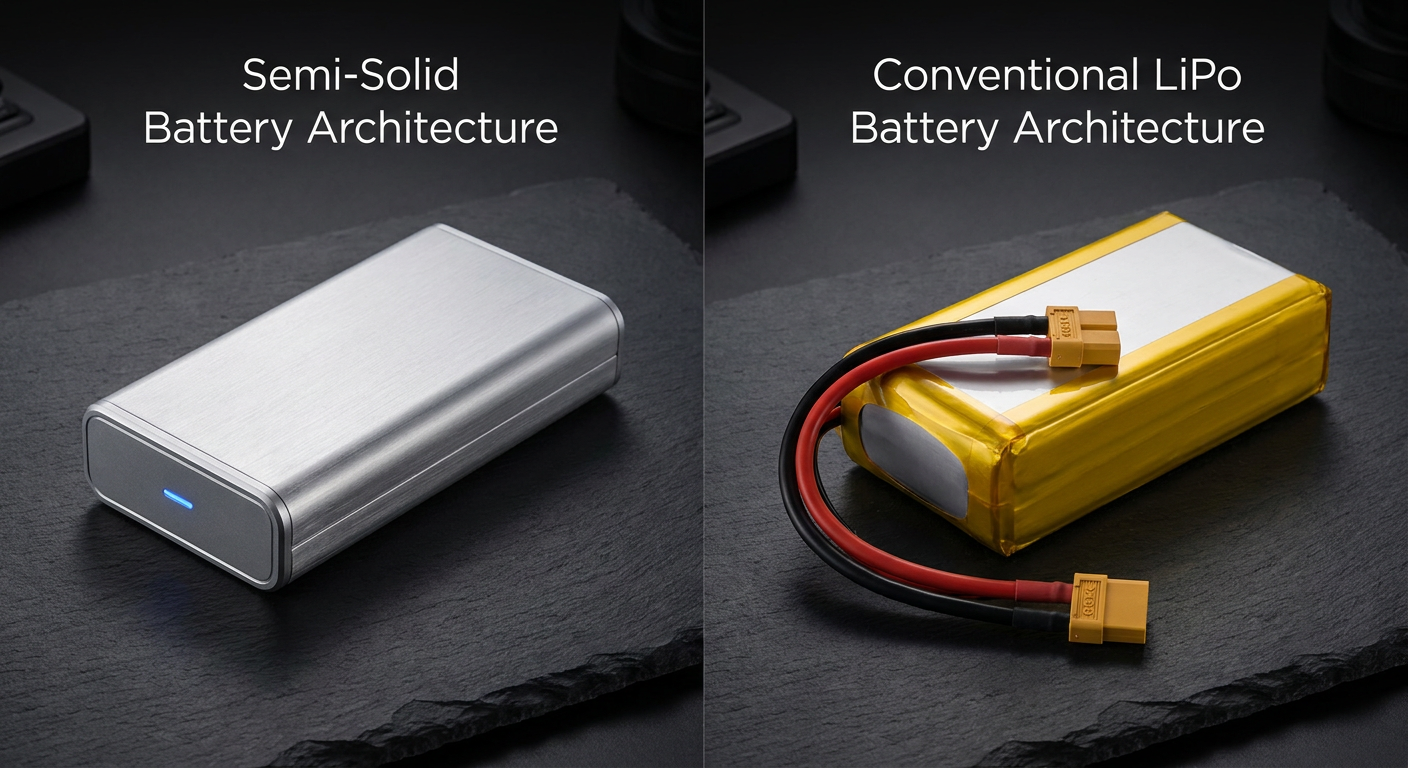
Think of a conventional lithium-ion battery as a sponge soaked in liquid. Semi-solid-state replaces part of that liquid with a gel-like material, allowing more active material to fit in the same space while reducing the risk of leakage.
Semi-solid-state batteries use a hybrid electrolyte structure that combines solid or gel-like components with a limited liquid phase. This design aims to improve safety and support higher energy density while retaining practical ion transport.
That short description is all you need for a procurement decision. What matters is the distinction it sits under: 400Wh/kg is a specific-energy target, while semi-solid is only one technology route toward it. Other routes exist, and a particular cell that hits the number may or may not be semi-solid.
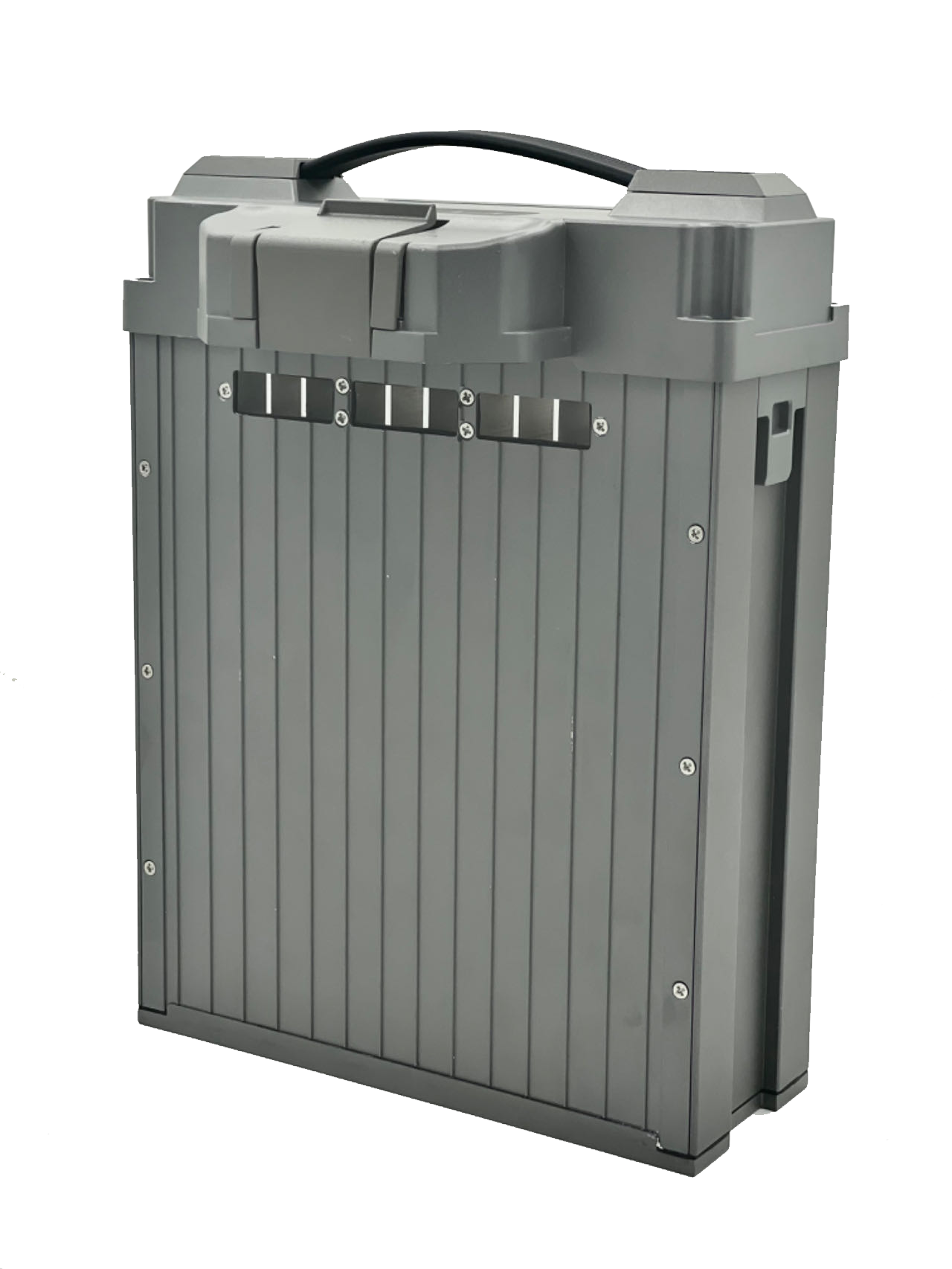
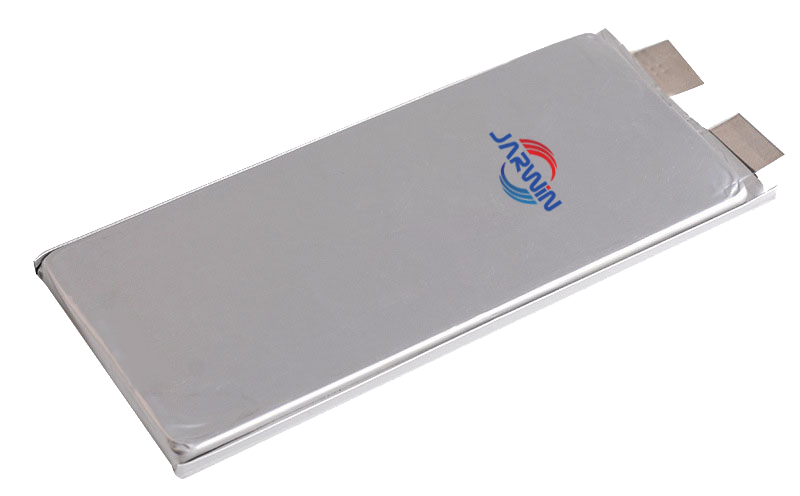
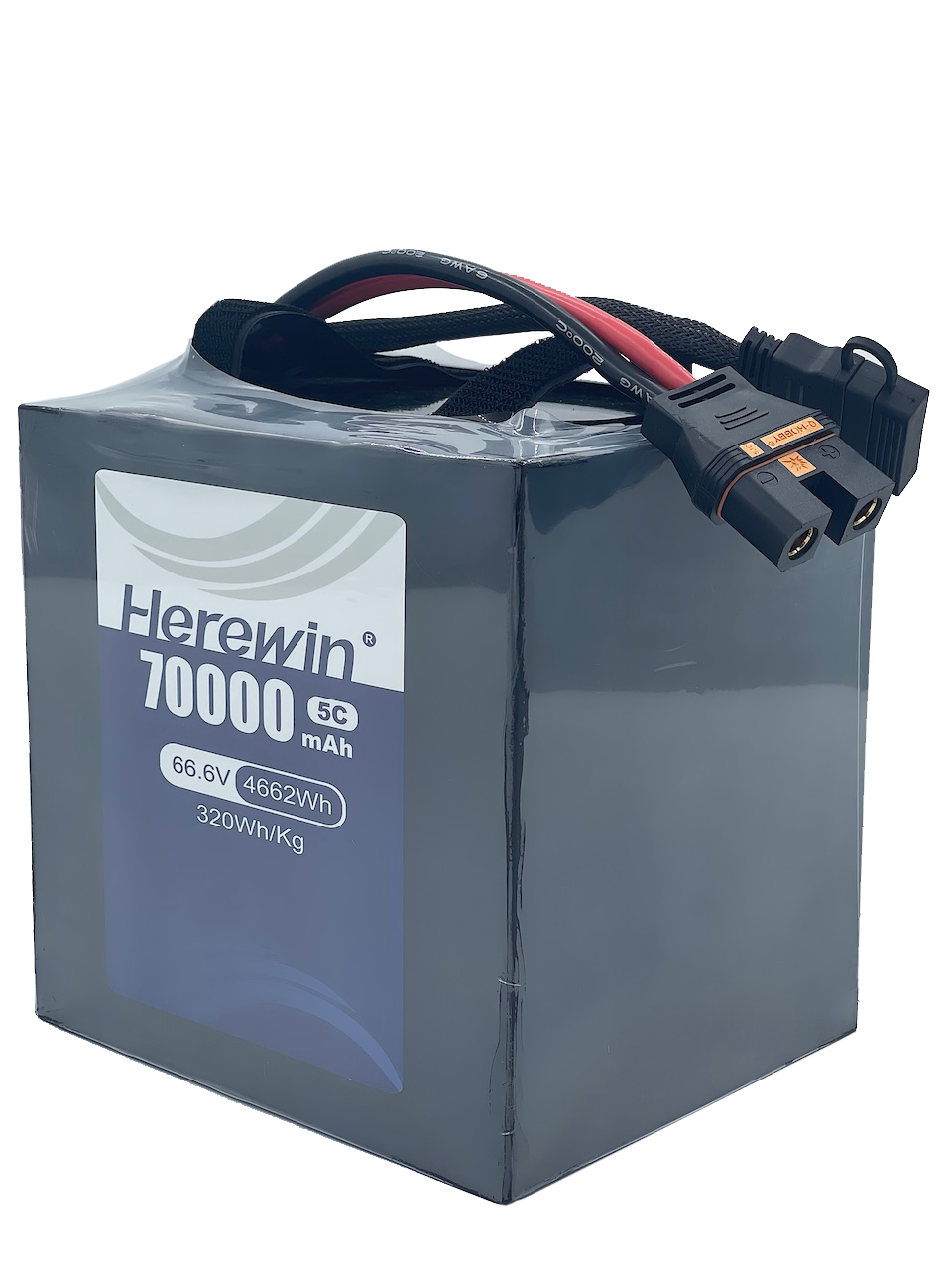
For drones, many OEMs are evaluating semi-solid-state batteries for next-gen drone platforms because the hybrid electrolyte balances specific energy with a more controllable safety and thermal profile than a highly energetic liquid system. Production packs in this space, such as Herewin’s 51.1V 41Ah semi-solid UAV battery, pair semi-solid NMC chemistry with production-ready discharge and cycle-life performance, illustrating how the approach is moving from lab target to field-ready hardware — the full spec breakdown for this pack appears later in this article.
When a supplier quotes “400Wh/kg,” ask which technology route got them there, and what that does to safety and thermal behavior. The number is only a target; the route is what you’re actually buying.
What a High-Specific-Energy Battery Means for Drone Flight Time and Payload
If a higher Wh/kg simply added a proportional amount of endurance, the calculation would be easy. In practice the relationship is indirect, because flight time depends on the whole system: aircraft mass, payload, motor and propeller efficiency, flight speed, wind, and the reserve SOC the operator keeps for a safe landing.
What the specific-energy gain reliably provides is design headroom. With the same battery weight, a higher Wh/kg stores more energy, which can extend mission time or range. With the same energy requirement, a higher Wh/kg can lower the battery weight, which frees mass for payload, sensors, or additional reserve energy.
Don’t look for a single “minutes gained” number here. Model it as a trade you tune to the mission:
Same battery mass → more stored energy → longer endurance or range at constant payload.
Same energy requirement → lighter battery → more payload margin or a lighter, more efficient airframe.
Hybrid → spend part of the gain on endurance and part on payload.
Real-world endurance does not rise in direct proportion to battery Wh/kg, and no credible spec sheet should promise otherwise. The value of the metric is that it defines how much latitude you have. A defensible evaluation sizes the gain against a specific mission envelope rather than a headline ratio.
Cell-Level vs Pack-Level Energy Density
Before comparing any batteries, ask one question: does the quoted 400Wh/kg figure refer to the cell or the complete battery pack? The distinction matters because the two numbers answer different questions.
Cell-level energy density measures just the bare electrochemical cell. Pack-level energy density measures the full assembled pack, and it is always lower — the pack also includes structural and electrical components such as the BMS, enclosure, wiring, and connectors, all of which add weight without storing energy.
The weight your drone actually carries is the pack figure, because the aircraft lifts the whole pack, not the naked cell. So when a supplier quotes “400Wh/kg,” confirm which level they mean before you size the airframe. If that number is cell-level, the pack that flies will sit below it.
A concrete example helps. Take a real semi-solid UAV pack such as the Herewin 51.1V 41Ah semi-solid UAV battery. At the cell level, this class targets around 400Wh/kg; once you add the BMS, enclosure, wiring, and connectors, the assembled pack lands closer to 367Wh/kg. Same chemistry, same cells — but the two numbers answer different questions. The 367Wh/kg figure is what your aircraft actually lifts, and the gap between 400 and 367 is exactly the overhead the pack structure adds without storing energy.
Parameter | Specification |
|---|---|
Configuration | 14S1P |
Nominal Voltage | 51.1V |
Capacity | 41Ah (41,000mAh) |
Nominal Energy | ~2,095Wh |
Cell Chemistry | Semi-solid NMC |
Cell-Level Energy Density | ~400Wh/kg |
Pack-Level Energy Density | ~367Wh/kg |
Pack Weight | ~5,700g |
Continuous Discharge Rate | 8C |
Charging Rate | 0.5C |
Siklus Hidup | ≥400 cycles |
Operating Temperature | -20°C to 60°C |
This specification illustrates why pack-level energy density is the more relevant figure when evaluating UAV flight performance. The aircraft needs to carry the complete 5.7kg battery assembly, not the individual cells inside it.
Safety and Thermal Considerations
Higher specific energy should not be read as higher risk by default, but it does concentrate more energy in less mass, which raises the stakes of a thermal event. Semi-solid architecture tends to be associated with reduced reliance on free liquid electrolyte, which can limit certain failure modes. That does not make the cell inherently risk-free.
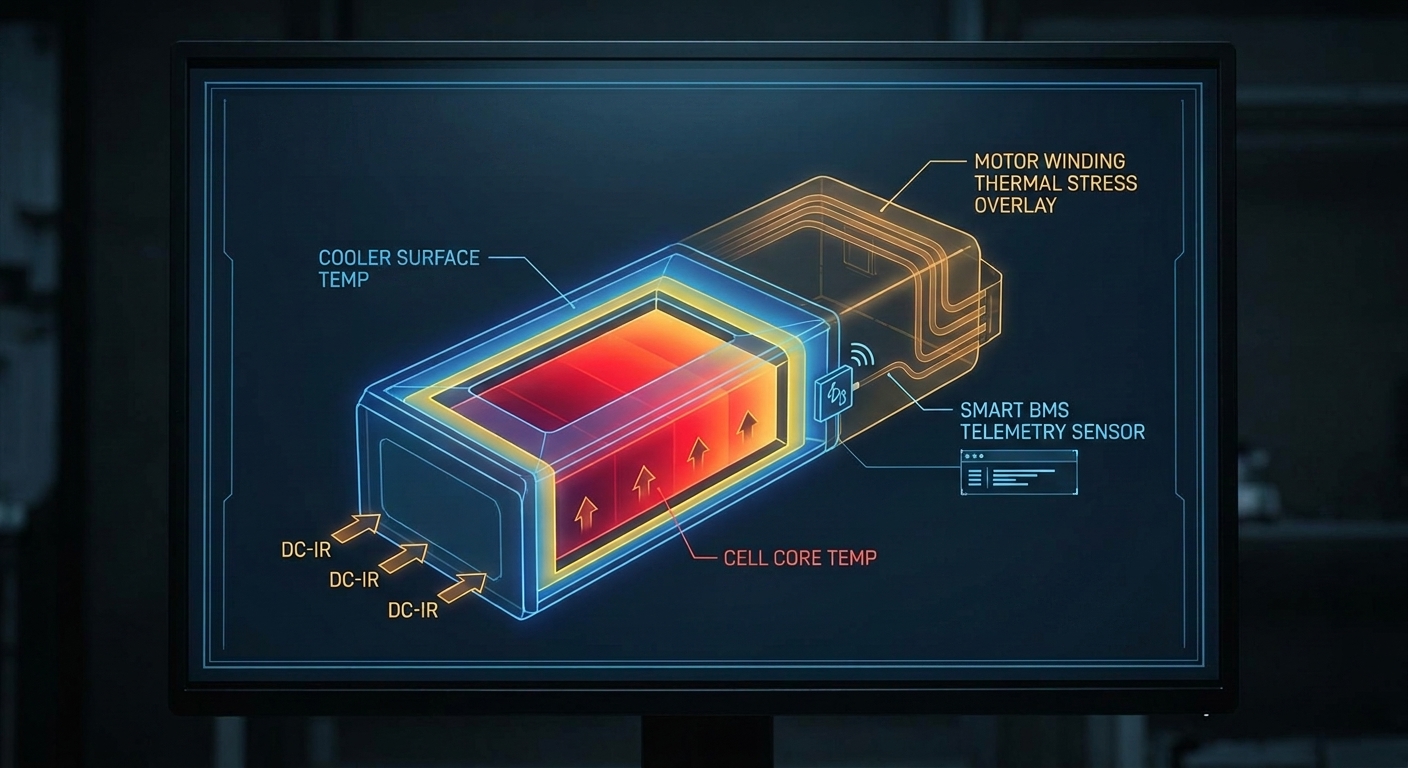
Thermal management still matters. A high-energy pack under sustained load will generate heat, and cell temperature directly affects life and safety margins. Pairing a high-Wh/kg cell with proper thermal design, charging control, and mechanical protection is what turns a promising cell into a dependable pack. Safety is a system property, not a cell property alone.
What to Check Before Choosing a High Energy Density Drone Battery
Before you sign off on a high energy density battery for drones, work through a short supplier-diligence list:
Confirm whether the quoted figure is cell-level or pack-level, and under what test conditions.
Check nominal voltage, capacity, and usable energy after reserve SOC.
Verify continuous and peak discharge capability against your aircraft’s real load current.
Confirm battery weight and physical dimensions fit the intended bay and balance.
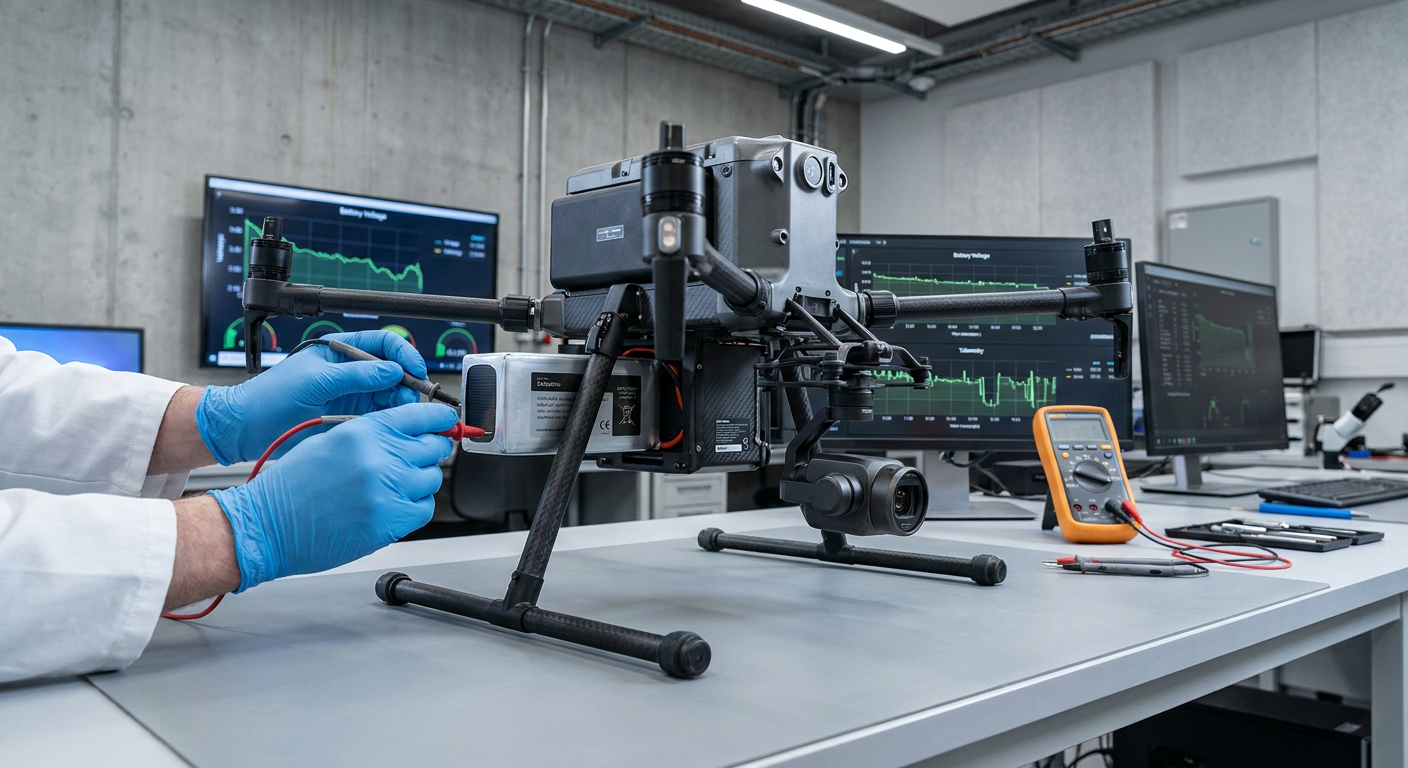
Review BMS functions, communication protocol, and SOC/SOH accuracy.
Assess thermal performance under your mission profile, not a lab curve.
Review cycle life and how specific energy decays over time.
Confirm charging requirements match field infrastructure.
Validate the relevant certifications and transport compliance for your market.
Validate performance under the actual drone load profile before committing to volume.
If a supplier cannot state the cell-level figure clearly and distinguish it from the pack figure, treat the claim with caution. The credible vendors separate them, because that is the number that decides whether the pack physically does the job.
Choosing the Right 400Wh/kg Battery for Your Mission
A 400Wh/kg battery represents a meaningful step beyond the 200–250Wh/kg of conventional lithium-ion cells, and semi-solid-state technology is one of the routes being explored toward this level of specific energy. The real value of the metric is the design headroom it creates for endurance, payload, and airframe architecture.
The catch is that Wh/kg alone does not fly the aircraft. Cell-versus-pack, discharge capability, thermal behavior, BMS integration, and compliance all decide whether a high-specific-energy cell becomes a dependable pack. Evaluate the figure in that full context, and a battery in this class can be a credible upgrade path rather than a marketing claim.
Nobody’s questioning that 400Wh/kg is impressive. The real question is whether the cell that delivers it also delivers the reliability, safety, and integration compatibility your specific mission requires. Answer that honestly, and you have found the right battery.
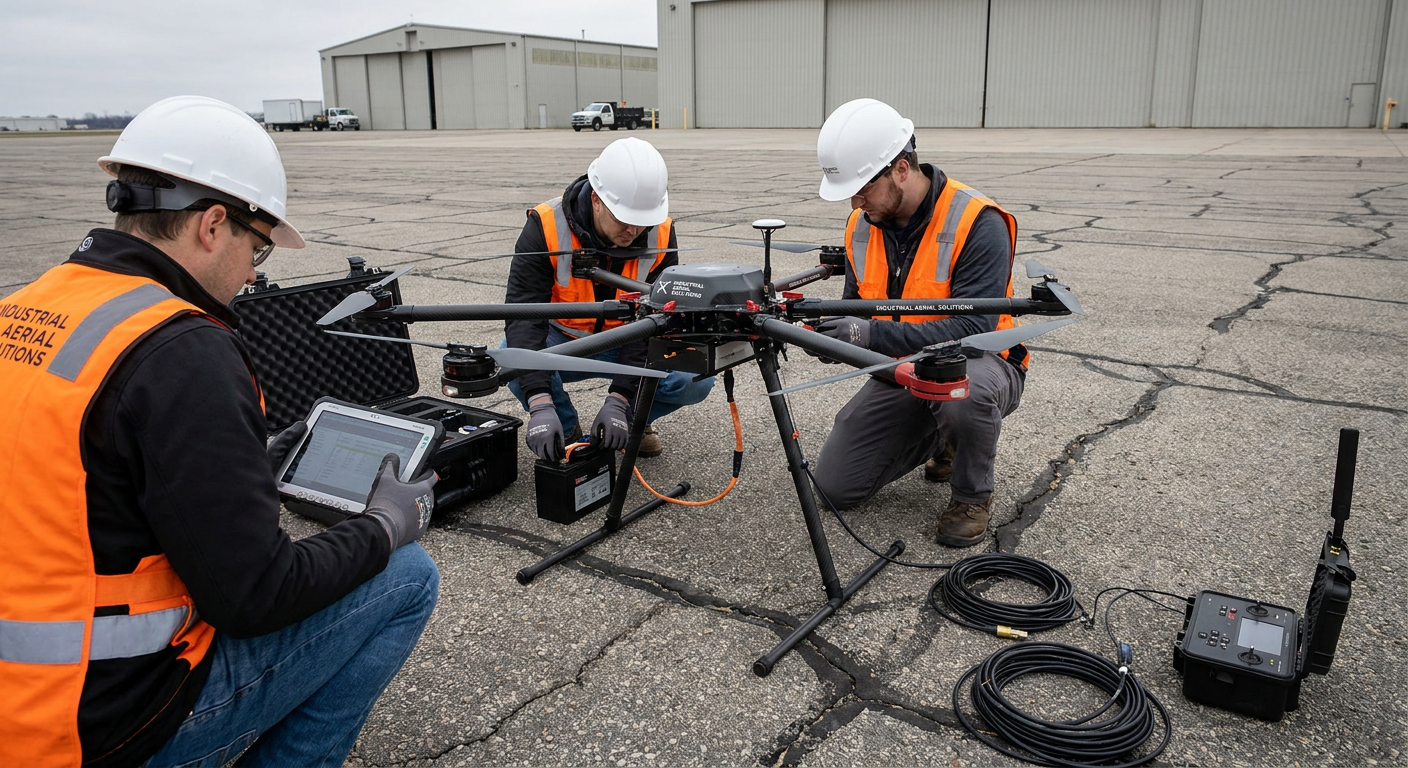
That evaluation doesn’t have to be a solo effort. If you are evaluating a high energy density battery for drones and want to size the specific-energy gain against a real mission envelope, we can help. Share your load current profile, peak currents, mission envelope, and BMS telemetry with our engineering team for joint validation.
 Bahasa Indonesia
  English
  Español
  한국어
한국어  Deutsch
  Français
  日本語
日本語  Русский
  ไทย
ไทย  العربية
  Português do Brasil
  Italiano
  Nederlands