

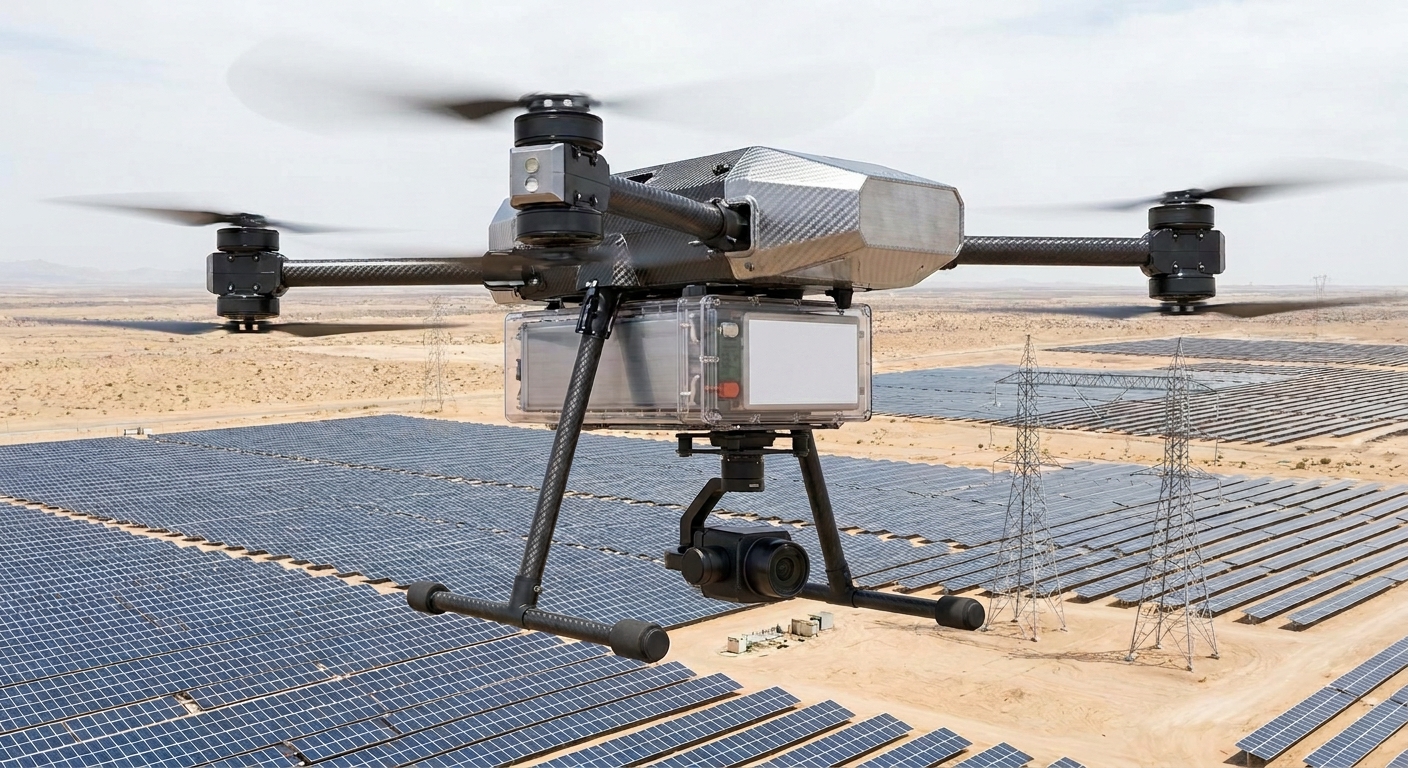
As commercial UAV platforms move toward heavier payloads, longer BVLOS missions, and higher fleet utilization, traditional battery capabilities directly govern aircraft performance, operational productivity, and mission economics. For drone OEMs, platform developers, and engineering decision-makers, selecting a commercial drone battery solution is no longer about sourcing a commodity component—it is a strategic decision that dictates aircraft capability and market competitiveness.
In recent years, the battery industry has highlighted 280–350Wh/kg semi-solid drone batteries as an emerging high-energy-density option for unmanned aerial vehicle (UAV) power. However, for a UAV OEM or procurement team, the fundamental evaluation is not simply whether a cell stores more energy per kilogram on paper. The true question is whether that energy density advantage can be converted into measurable mission efficiency, greater payload flexibility, and lower total cost of ownership (TCO) without compromising operational safety or thermal stability.
Here is how engineering and procurement teams can look beyond raw cell specs to evaluate what 280–350Wh/kg semi-solid technology actually delivers in real-world flight operations.
Why Traditional Drone Batteries Are Becoming a Limitation for Commercial UAVs
For years, commercial drone power selection relied on incremental capacity adjustments using standard Liquid Lithium Polymer (LiPo) or cylindrical Li-ion cells. Many conventional commercial drone battery packs typically operate around the 200–220 Wh/kg range, serving early commercial platforms well. However, as enterprise missions moved from short visual flights to long-range Beyond Visual Line of Sight (BVLOS) operations, traditional liquid chemistries hit a physical ceiling.
To gain extended range with standard batteries, operators were forced to add larger battery packs. But in multirotor and VTOL architectures, adding battery mass increases total aircraft weight. A heavier aircraft requires higher motor thrust to hover, which increases power consumption per minute and diminishes the net flight time gained from the extra battery weight. This negative feedback loop—often called the payload-range paradox—strictly limits aircraft productivity.
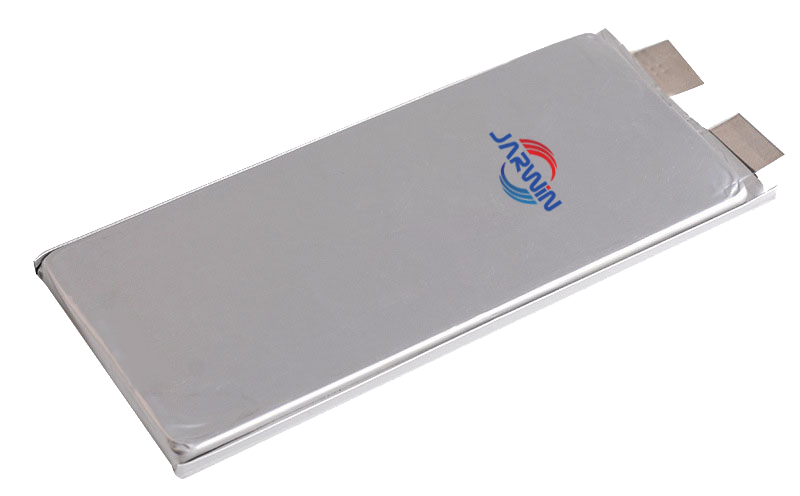
Semi-solid lithium technology breaks this cycle by pairing high-energy cathodes and silicon-composite anodes with a solid-liquid electrolyte structure. This design achieves gravimetric energy densities of 280 to 350 Wh/kg—a 30% to 50% increase over standard LiPo packs—while improving thermal stability and safety margins.
For enterprise UAV developers, the core decision is not simply whether semi-solid technology costs more per watt-hour upfront, but whether the measurable operational productivity gains justify the investment. For a detailed analysis of cell chemistries and performance metrics, see our semi-solid vs traditional lithium battery comparison. This transition fundamentally shifts battery selection from buying raw amp-hours (mAh) to optimizing overall power-system efficiency across the entire airframe mass budget.
How 280–350Wh/kg Semi-Solid Batteries Drive Mission Efficiency
When evaluating high-energy-density batteries, procurement and engineering teams should view the 280–350Wh/kg milestone through a single lens: mission efficiency optimization. Rather than treating lighter weight, longer endurance, and heavier payload as separate benefits, high gravimetric energy density provides airframe designers with a flexible mass budget that directly translates into commercial ROI.
Mission Objective | Engineering Approach | Operational & ROI Impact |
|---|---|---|
Range Optimization | Maintain MTOW while increasing energy storage capacity. | Extends flight duration by 30%–45%, covering higher linear survey kilometers per sortie. |
Payload Flexibility | Reduce battery pack mass while keeping baseline flight time constant. | Frees up 1.5–3 kg payload budget for advanced LiDAR, thermal sensors, or delivery cargo. |
Fleet Efficiency & TCO | Maximize daily sortie coverage per aircraft. | Reduces field battery swaps, lowers spare pack inventory, and cuts labor overhead. |
1. Extended Range and Survey Coverage
Replacing a 200Wh/kg conventional LiPo pack with a 300Wh/kg semi-solid pack of equivalent weight allows a drone to carry up to 50% more energy without exceeding its Maximum Takeoff Weight (MTOW). Depending on aerodynamics and operating conditions, this endurance bump eliminates mid-mission returns for corridor mapping and large-scale agricultural spraying.
2. Expanded Sensor and Payload Capacity
For missions where flight duration is already adequate, saving 1.5 kg to 3 kg in battery mass provides immediate payload headroom for mission-critical enterprise equipment:
Infrastructure Inspection: Heavy dual-optical and radiometric thermal sensors alongside edge computing modules.
Geospatial Surveying: Full-frame cameras and high-precision LiDAR units mounted simultaneously.
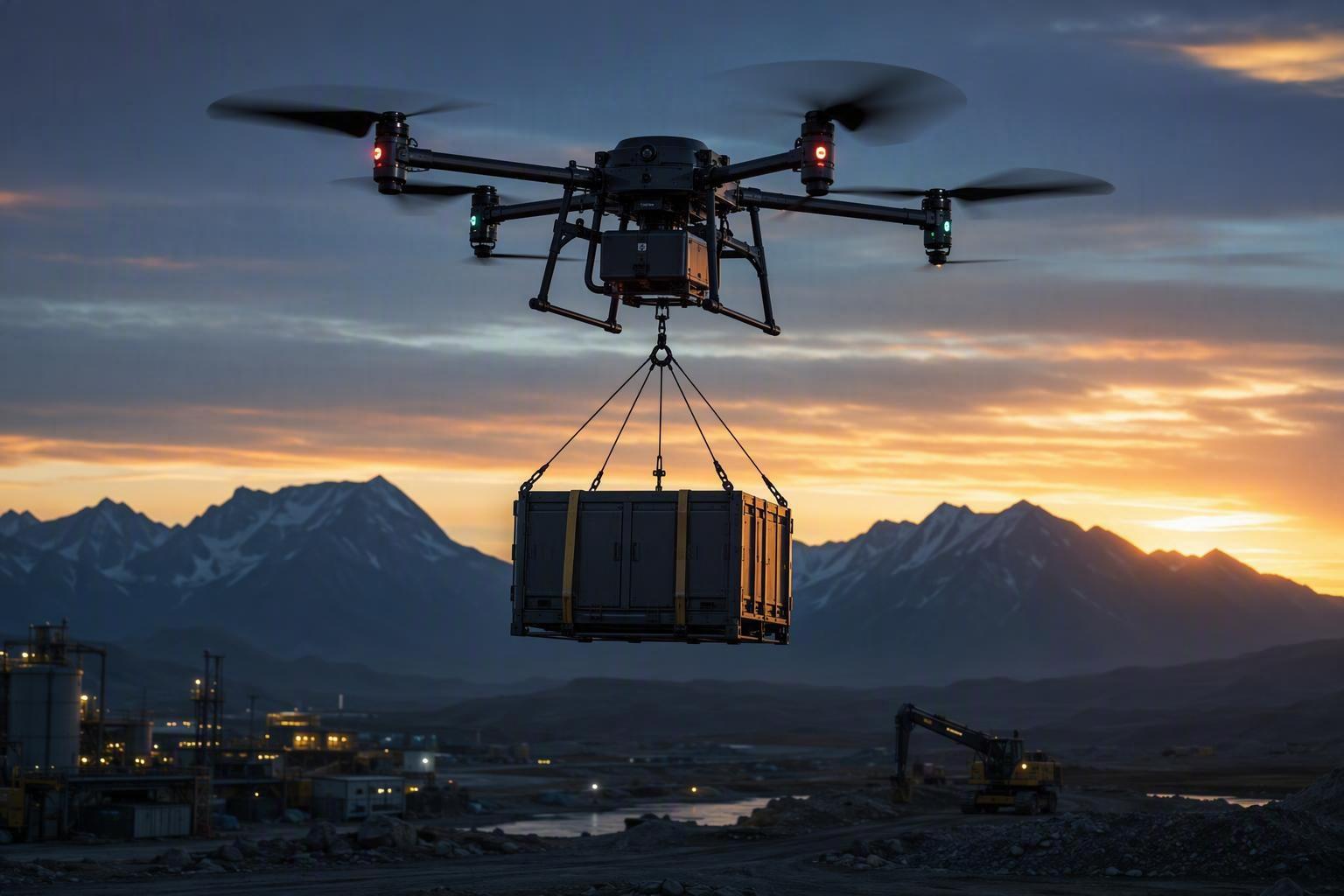
Cargo Logistics: Higher net delivery weight per flight without exceeding MTOW limits.
3. Lower Total Cost of Ownership (TCO)
Enterprise battery decisions should be evaluated by cost per completed mission rather than upfront purchase price alone. Frequent landings for battery swaps require larger spare pack fleets, field generators, and constant ground labor. High-endurance semi-solid packs reduce field battery swaps, lowering required spare inventory and field charging infrastructure—ultimately reducing cost per operation over the fleet lifecycle.
Why Higher Energy Density Does Not Automatically Mean Better Performance
A common pitfall in UAV battery procurement is assuming that a cell specification sheet claiming 350Wh/kg automatically translates into superior field performance. In commercial aviation, cell energy density is only one component of a complex electrical and thermal system. Unvalidated high-Wh/kg packs can fail in the field if fundamental pack-level trade-offs are overlooked.
Evaluation Factor | Cell Spec Sheet Claim | Real-World Pack Engineering Reality | OEM Impact |
|---|---|---|---|
Kepadatan Energi | 350 Wh/kg (Cell Level) | 270–290 Wh/kg (Pack Level) | Enclosure, cabling, and BMS add 12–20% structural overhead. |
Discharge C-Rate | High Burst Rating | Voltage Sag under Climb Load | Internal resistance (DCIR) can trigger low-voltage cutoffs during climb. |
Thermal Behavior | Broad Temperature Range | Internal Resistance Heat Generation | Requires effective thermal dissipation to prevent rapid cell degradation. |
BMS Communication | Basic Protection Board | Smart Telemetry Integration | Flight controller requires real-time per-cell SOC/SOH data to prevent sudden power drops. |
Pack-Level vs. Cell-Level Energy Density
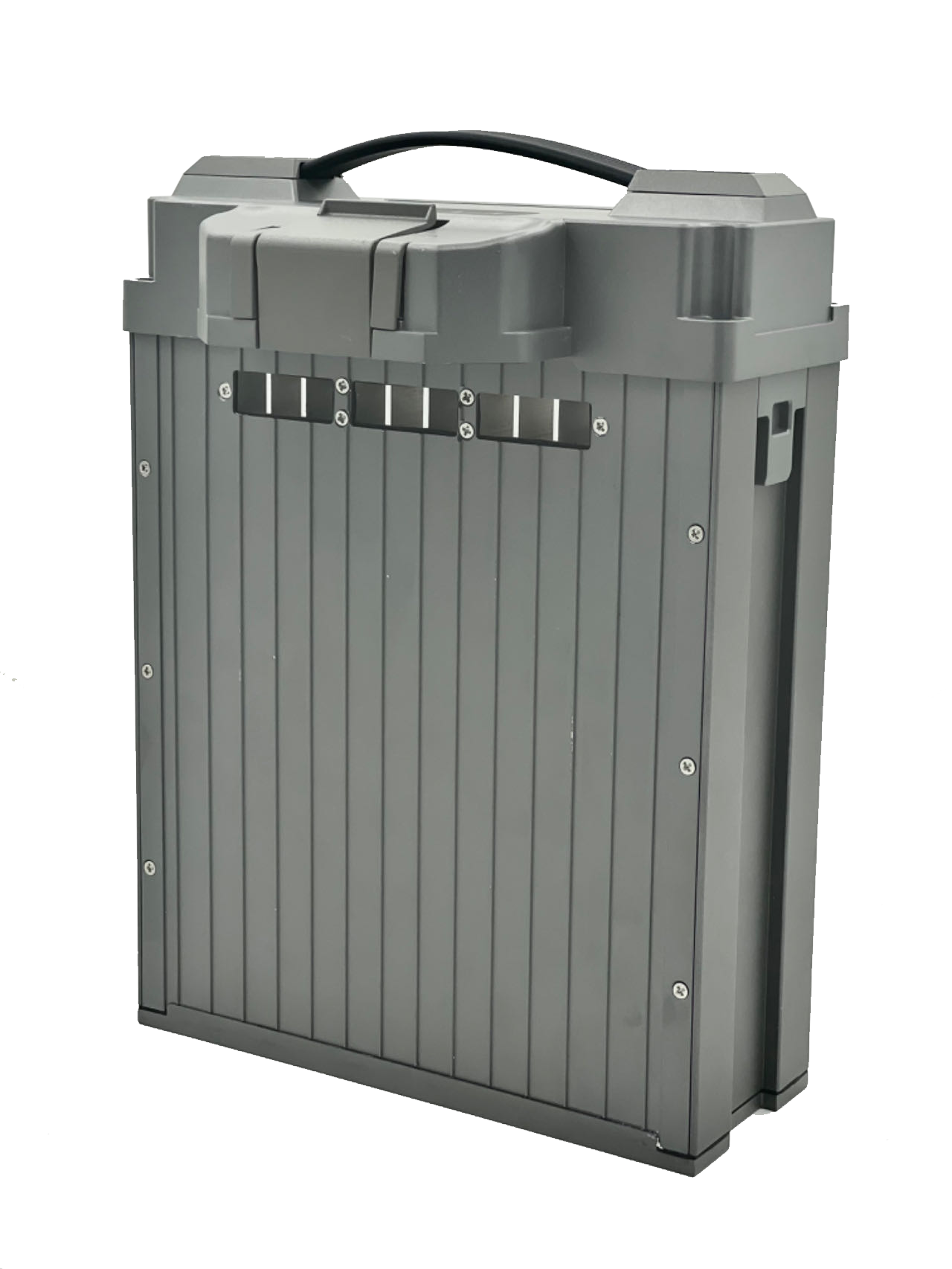
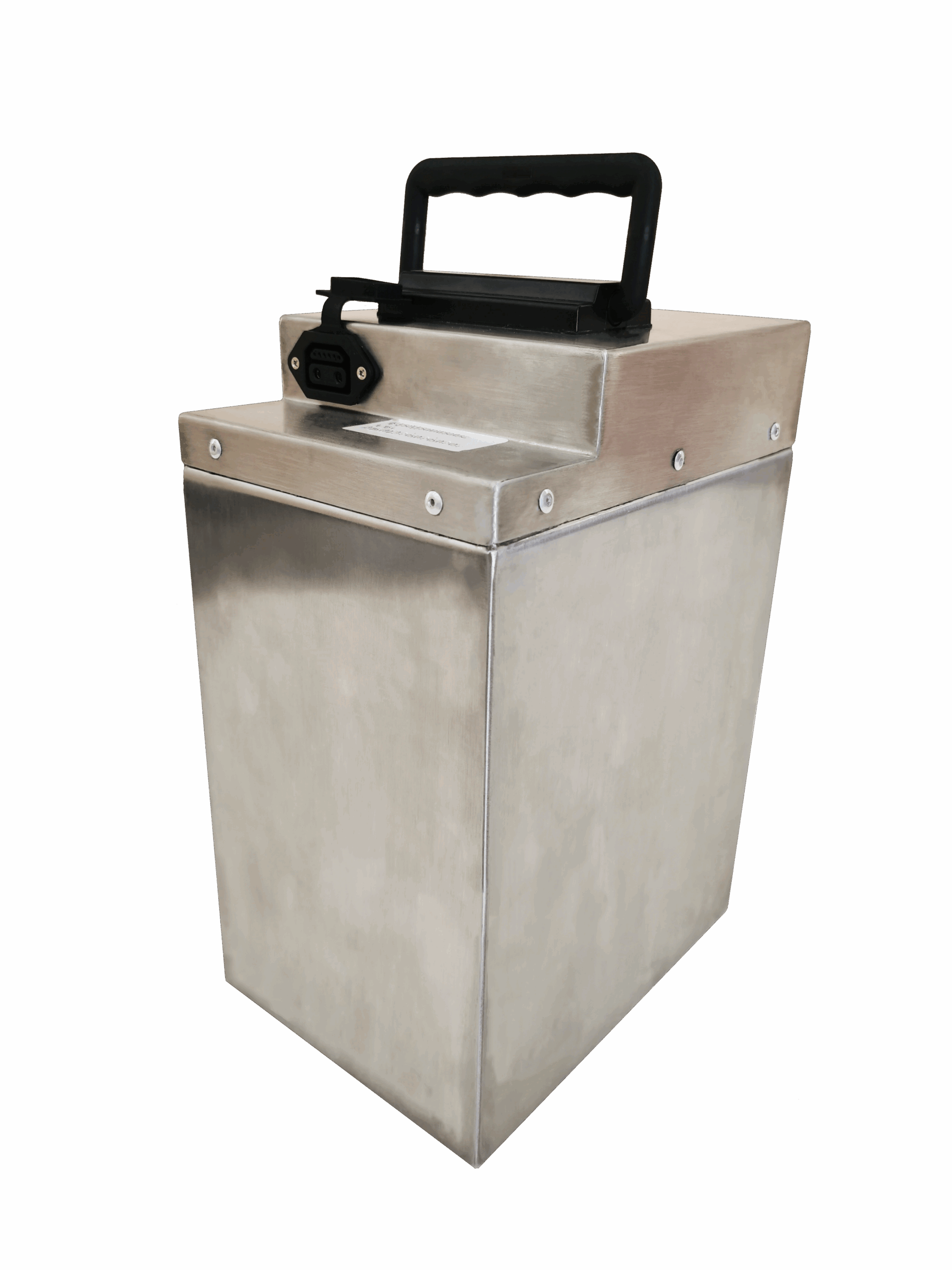
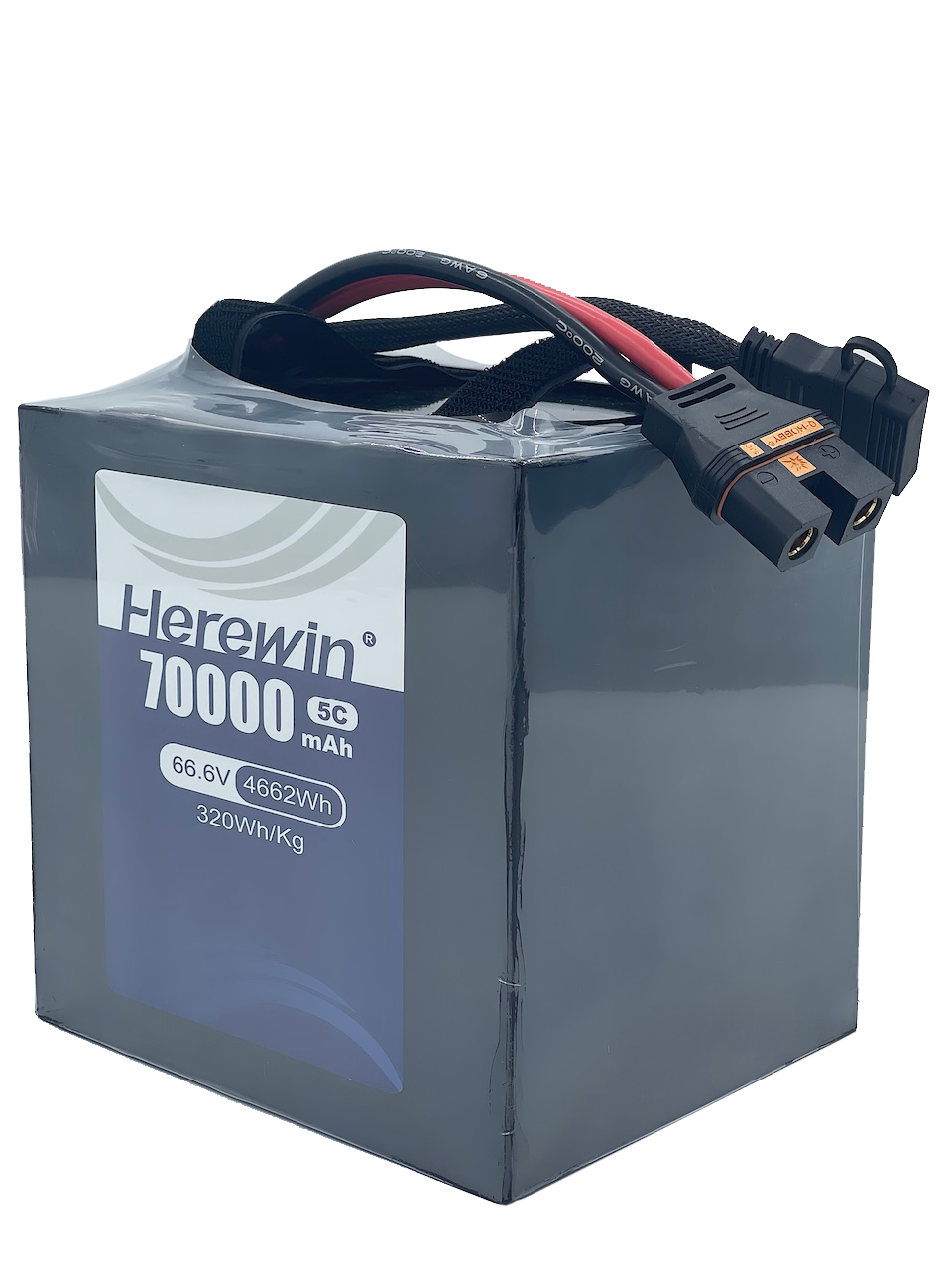
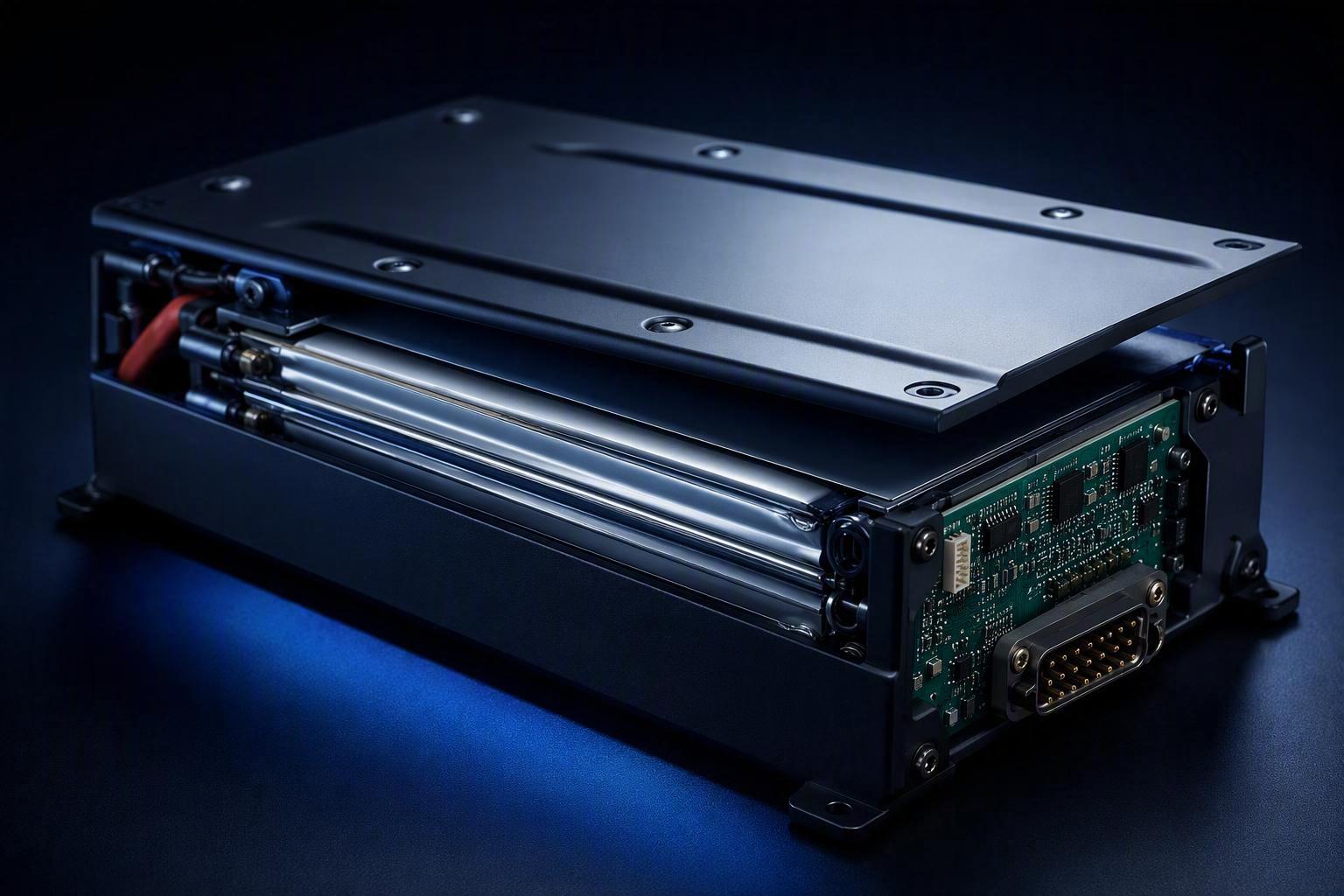
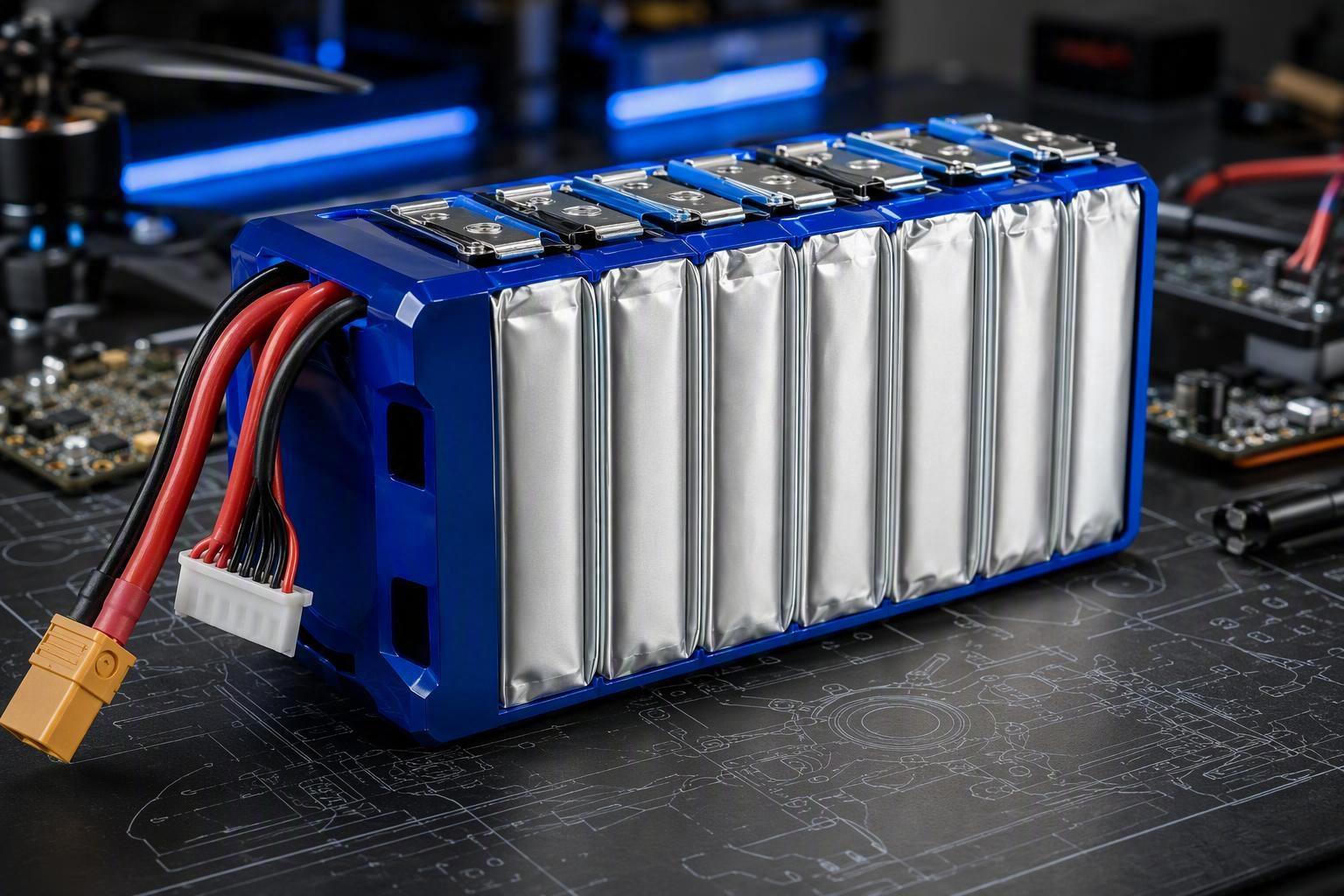
Advertised energy density figures almost universally refer to bare pouch cells. Assembling a flight-ready commercial battery pack requires weather-resistant enclosures (IP64/IP67 ratings), shock absorption, internal busbars, wiring, heavy-duty connectors, and a smart BMS. These structural components add mass, meaning a 320–350Wh/kg bare cell typically yields a lower usable pack density. Buyers should always evaluate supplier RFQs based on audited, usable pack-level metrics.
Continuous Discharge Capability and Voltage Sag
High-density chemistries can exhibit higher internal DC resistance (DCIR) compared to lower-density high-C LiPo packs. During high-power flight maneuvers—such as vertical takeoff, heavy payload acceleration, or wind compensation—a high-impedance cell experiences voltage sag. If the voltage drops below the flight controller’s threshold, the drone may trigger an emergency auto-landing even if nominal energy remains in the pack.
Thermal Management and Discharge Stability
While semi-solid chemistries replace flammable liquid electrolyte with a solid/gel matrix—improving thermal stability and safety margins—high current discharge still generates internal heat. In hot operating environments or rapid charging protocols, improper pack heat dissipation leads to accelerated cell degradation. Enforcing proper thermal management protocols, evaluating discharge voltage curves under real operational current loads, and testing across temperature extremes (-20°C to 50°C) are essential to maintaining long cycle life (800+ cycles).
How UAV Buyers Should Evaluate Semi-Solid Battery Suppliers
Selecting a custom drone battery supplier requires an evaluation process that looks beyond cell energy density to examine pack integration, safety engineering, and manufacturing reliability. Industrial buyers should evaluate prospective suppliers across three core pillars:
Evaluation Phase | Focus Area | Key Verification Checkpoints |
|---|---|---|
Pack Engineering & Performance | Usable Energy & Stability | Audited pack-level Wh/kg, voltage sag profiles under climb loads, and full thermal cycle life. |
BMS Intelligence & Communication | Telemetry & Safety | Real-time SOC/SOH accuracy, active cell balancing, and industrial flight controller protocol integration. |
Execution & Manufacturing Scalability | Turnkey Supply Capability | Custom enclosure/pouch engineering, rapid co-engineering prototyping, and batch consistency across mass production. |
1. Pack-Level Performance Data
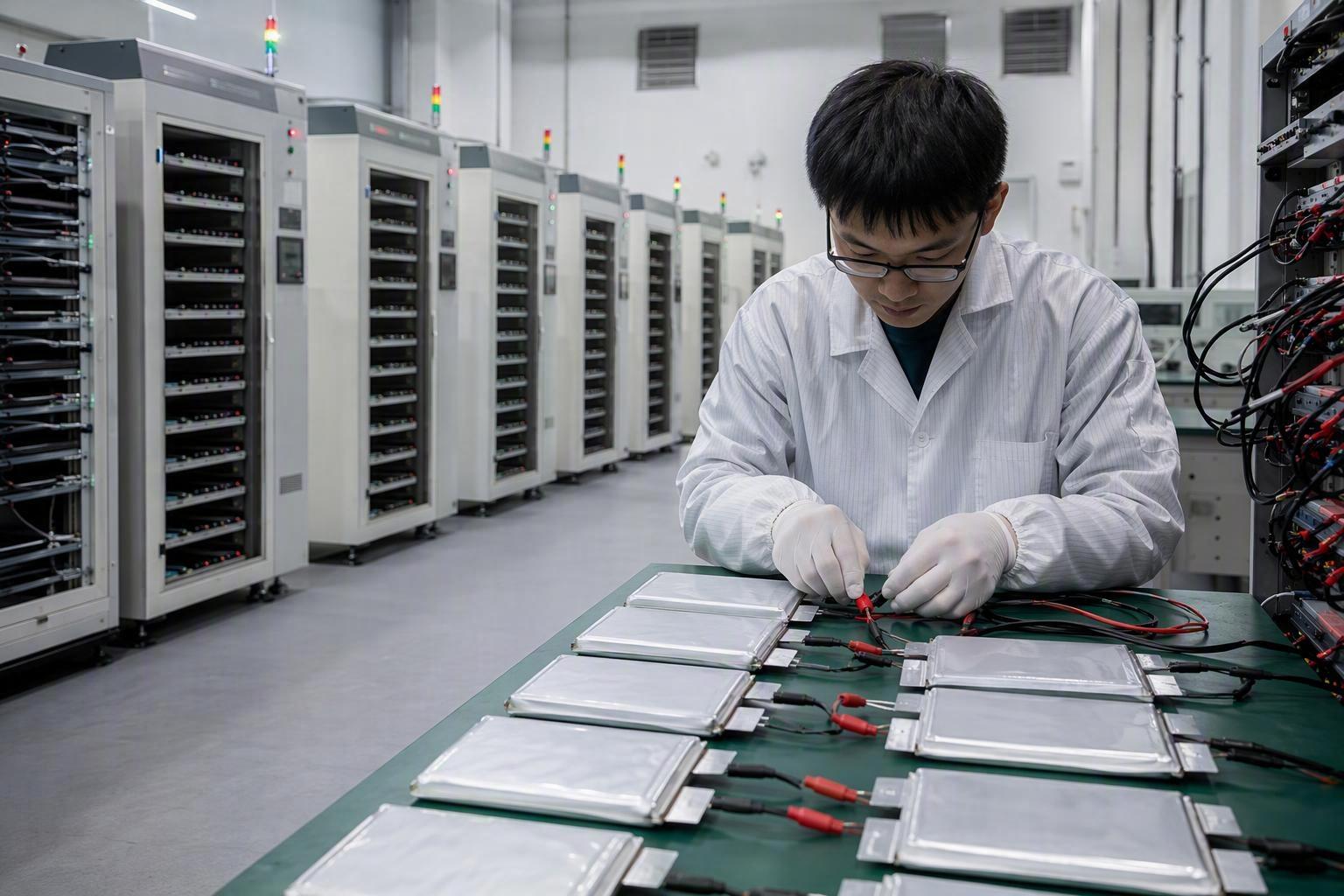
When issuing an RFQ, demand full pack-level test reports rather than bare pouch cell data:
Usable Gravimetric & Volumetric Density: Measured including BMS, wiring, busbars, and IP67 enclosures.
Full-Discharge Voltage Curves: Verified under operational C-rates and extreme temperature ranges (-20°C to 50°C).
Cycle Life Retention: Audited capacity retention curves showing ≥80% capacity after 800–1,200 continuous cycles.
2. Battery Management System (BMS) Intelligence
A high-density cell is only as safe as its controlling electronics. Ensure the supplier’s smart BMS provides:
Accurate SOC & SOH Estimation: Dynamic impedance tracking to prevent unexpected in-flight power drops.
Active Balancing & Thermal Monitoring: Multi-point temperature thermistors preventing cell-voltage delta expansion under heavy loads.
Protocol Compatibility: Seamless telemetry integration with standard flight controllers. For further technical details, see our engineering guide to intelligent drone BMS telemetry and safety protocols.
3. Customization, Prototyping, and Supply Reliability
Off-the-shelf packs rarely fit custom VTOL or multirotor airframes. OEMs should partner with an industrial UAV battery manufacturer that offers:
Tailored Mechanical Design: Custom pouch dimensions, custom busbars, and vibration-proof potting.
Co-Engineering Support: Dedicated engineering collaboration to iterate prototypes quickly during aircraft R&D.
Scalable Manufacturing: Reliable supply chains and international compliance certifications (UN38.3, CE, UL) ensuring consistent mass-production quality.
Partnering for Mission-Driven UAV Power Systems
Higher energy density is not the ultimate goal in commercial drone design—better mission efficiency is. Adopting 280–350Wh/kg semi-solid battery technology is far more than an incremental cell specification upgrade. When engineered correctly at the pack level, high-density batteries unlock transformational flight endurance, payload headroom, and lower operational cost per mission for enterprise UAV platforms.
As the low-altitude economy accelerates globally, drone power systems are evolving from passive energy components into connected, intelligent mission platforms. Capturing these operational advantages requires moving beyond standard off-the-shelf cells and partnering with an engineering-driven battery pack solution provider. By evaluating prospective suppliers through a system-level framework that balances usable pack weight, voltage stability under load, smart BMS telemetry, and co-engineering prototyping, UAV manufacturers can build aircraft platforms that deliver true market competitiveness.
Whether you are designing long-range VTOLs or heavy-payload multirotors, Herewin’s engineering team provides turnkey custom battery design, prototyping, and scalable manufacturing tailored to your aircraft’s specific mission profile. Contact Herewin’s engineering team to discuss custom UAV battery solutions, including semi-solid and high-performance lithium battery platforms.


 Bahasa Indonesia
  English
  Español
  한국어
한국어  Deutsch
  Français
  日本語
日本語  Русский
  ไทย
ไทย  العربية
  Português do Brasil
  Italiano
  Nederlands