
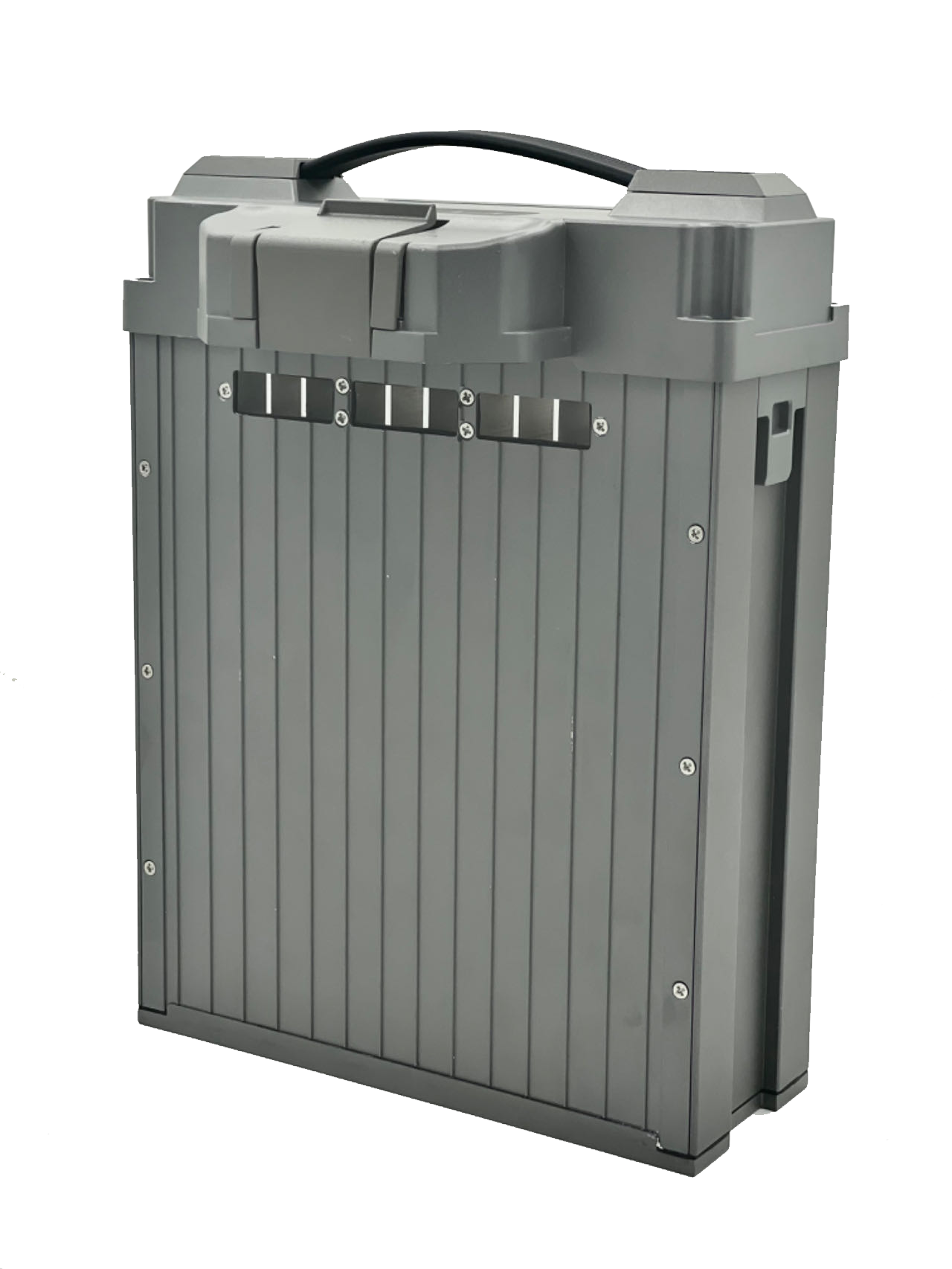
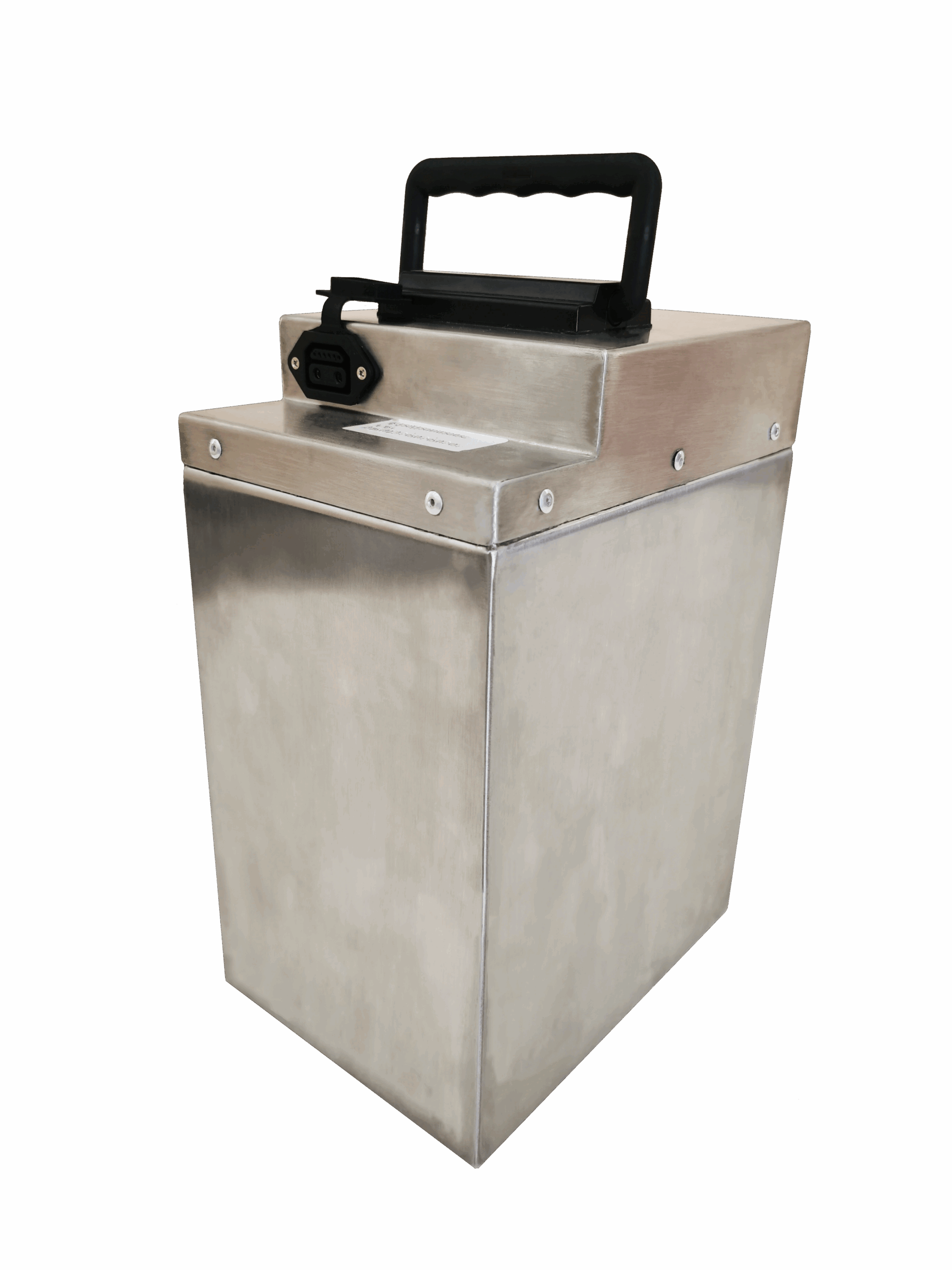





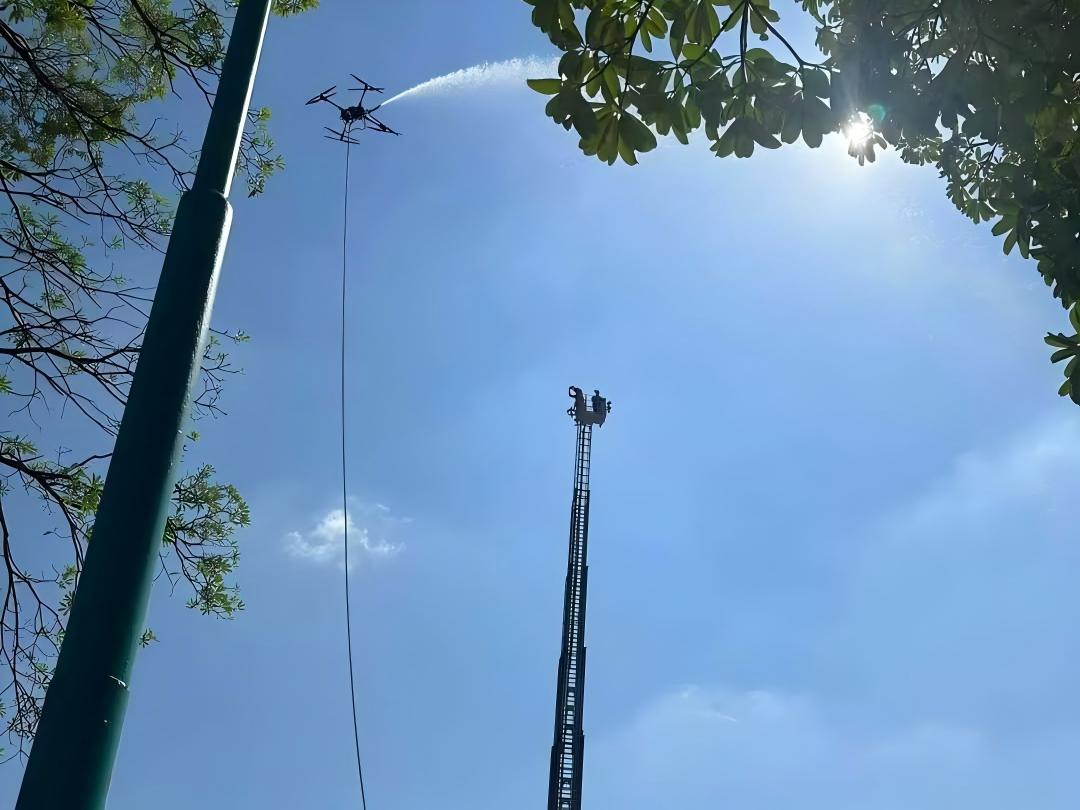
Urban drone programs don’t fail because the aircraft can’t fly; they fail because the power system cannot sustain the mission pattern. In the demanding environment of 24/7 traffic surveillance, operational success isn’t determined by a brochure endurance number, but by a battery’s ability to withstand high-frequency sorties, asphalt heat radiation, and relentless fast-charging cycles. Moving beyond treated laboratory data, this guide analyzes the engineering requirements for a specialized energy infrastructure that eliminates hidden downtime and bridges the gap between flight capability and true mission availability.
Why Standard Urban Traffic Surveillance Batteries Fail in Traffic Enforcement
Why High-Frequency Missions Lead to “Monitoring Gaps”
“24/7 patrol” is not the same thing as a brochure endurance number. In real urban operations, effective mission time shrinks because the battery is asked to do more than a clean lab discharge:
Payload reality: gimbals, spotlights, LTE/5G links, edge AI modules, and encrypted comms increase continuous draw.
Stop-and-go flight profiles: traffic enforcement involves loitering, rapid repositioning, and repeated climbs—often worse for batteries than steady cruise.
Turnaround friction: when you’re swapping packs every few flights, the battery becomes the pacing item—not the drone.
The result is a familiar pattern: a fleet can meet a daily task list on paper, but still suffers monitoring gaps when packs rotate unpredictably, charge windows slip, or a “looks OK” battery suddenly sags under load.
The Engineering Reality of Urban Heat Islands & Duty Cycles
Urban environments punish batteries in ways that rural inspection routes often don’t.
Asphalt and concrete store heat, and in peak sun they radiate it back upward. For low-altitude hovering and repeated takeoff/landing near road surfaces, this increases the thermal baseline.
High-frequency takeoffs and landings create heat accumulation: motors spike current during launch, and fast turnarounds mean the pack can’t fully cool before the next sortie.
In a city heat island, the battery rarely starts a sortie at a “room temperature” baseline. When pavement reflection pushes local ambient toward 45°C, two back-to-back launch/hover cycles can introduce 20C–30C transient discharge pulses (motor spikes + payload draw). That combination is where standard packs tend to show their limits: protection thresholds get hit, power is derated, and the aircraft’s “planned coverage” turns into a forced landing window.
If the battery’s thermal path is weak—or charging is aggressive while the pack is already warm—internal temperature rises faster, and the system starts trading off voltage stability, usable capacity under load, and cycle life.
One operational detail matters more than teams expect: if cell-level voltage drift isn’t detected early, it’s no longer a maintenance issue; it’s a system-level risk that can surface as sudden sag under load. For audit-ready operations, require hardware-level monitoring that keeps SOC error ≤3% under your defined duty cycle.
For a traffic enforcement mission profile, evaluating a battery means evaluating the entire heat story: how the pack sheds heat during discharge and charge, and how it behaves across repeated shifts.
Hidden Costs: Downtime, Maintenance, and Mission Interruption
Most programs notice the “battery problem” only after the hidden costs show up:
Frequent swaps → more hands-on labor and more failure points (connectors, human error, inventory mismatch).
Early aging → capacity drift across the fleet, turning scheduling into guesswork.
Mission interruption risk → the most expensive cost isn’t the pack—it’s the lost coverage when the battery forces an unplanned landing.
This is why procurement can’t treat batteries like generic consumables. In 24/7 urban operations, batteries are an availability system.
24/7 Long-Range Power: Engineering an Urban Traffic Surveillance Battery for Mission Continuity
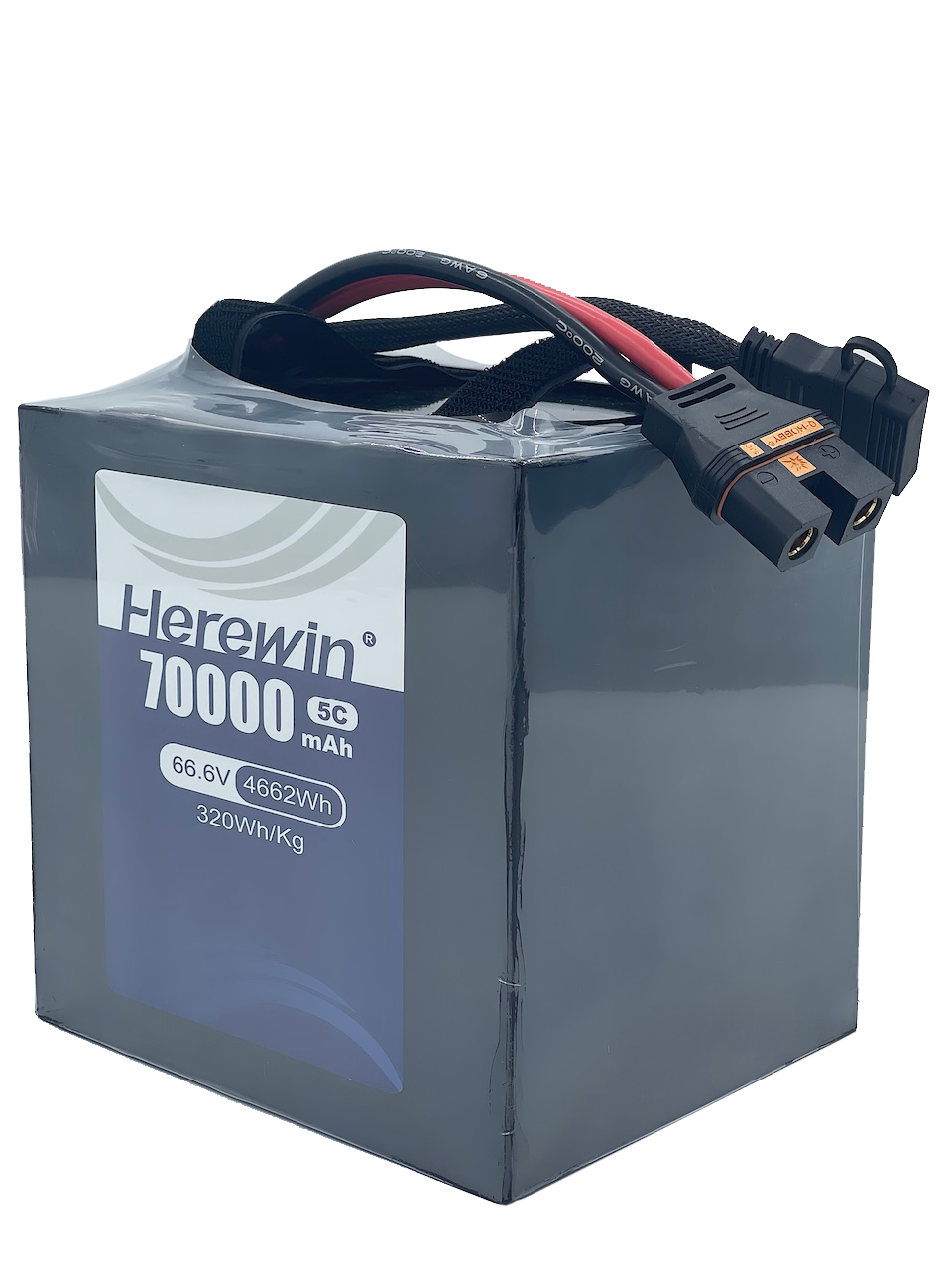
High-Energy Density Chemistry for Extended Mission Time
If your mission requires longer legs (expressway corridor patrol, multi-point evidence capture, or rapid incident response), you’re effectively shopping for a long-range traffic drone battery—but endurance has to be evaluated under your load and your duty cycle.
In industrial UAV packs, higher endurance typically comes from:
higher energy density cell systems
pack-level design that maintains voltage under load
conservative protection and balancing that prevents “one weak cell” from degrading the whole pack
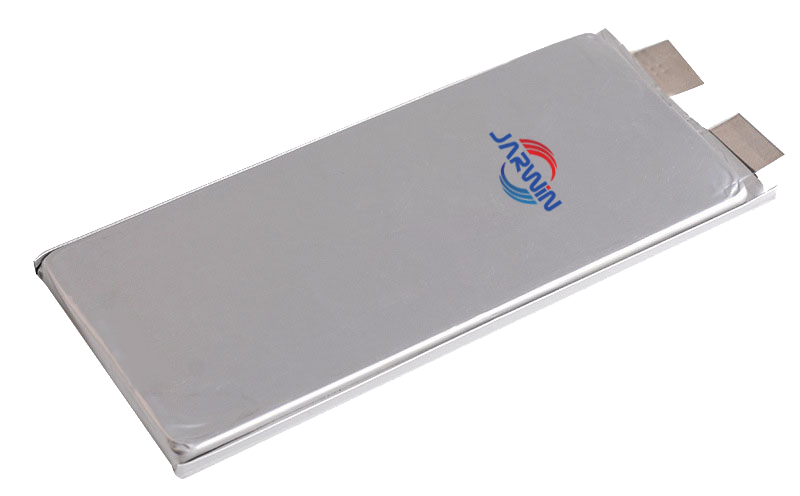
High-energy-density lithium systems are widely used in long-range UAV applications because they can keep voltage more stable under load while packaging more usable energy per kilogram.
From an engineering standpoint, the requirement is simple: cell choice has to be paired with pack design and lifecycle controls (balancing strategy, conservative protection thresholds, and consistency across cells) so one weak cell doesn’t pull the whole pack down early.
In industrial deployments, this typically shows up as a chemistry + pack-design approach that prioritizes usable watt-hours per kilogram without unstable sag behavior—then proves it under repeatable acceptance tests.
Advanced Thermal Management for Repeated Fast-Charging
Fast charging is often presented as a single number. In operations, it’s a system question:
What charge rate is supported without overheating?
How does charging behavior change when packs are rotated continuously?
What protections stop a pack from being “forced” into unsafe charging when it’s already hot?
Across industrial smart-BMS implementations, long-endurance design usually comes down to the same basics: monitoring key parameters (voltage, current, temperature, SOC), applying layered protections, and keeping cell balance tight under repeated fast-charge cycles.
To make this auditable in procurement, define fast-charge performance as a tested envelope, not a marketing claim. A common acceptance-style way to specify it is:
Charge rate (charging C-rate): verify performance across an agreed 2C–4C window (model-dependent)
Thermal protection: confirm a high-temperature protection point at 55°C (and define what “protection” means: derate vs cutoff)
Test conditions: specify ambient temperature, starting pack temperature, allowable peak temperature, and cooldown rules
Note the distinction: the 20C–30C figure referenced earlier is a transient discharge C-rate during motor/payload spikes, while 2C–4C here is the charge C-rate for fast charging.
Warning: Treat any fast-charging claim as conditional until it’s validated under your test conditions.
Visualizing Endurance ROI: Mission Time vs. Battery Configuration
For public-safety traffic programs, the ROI of endurance isn’t “minutes per flight.” It’s coverage per shift.
A simple way to model endurance ROI is to compare two curves:
Mission time per sortie (under real payload) as packs age
Total coverage per day given swap time, charge turnaround, and the number of usable packs
Instead of claiming a universal uplift, use this urban traffic surveillance battery ROI framework:
Input you control | Why it matters | What to record in pilots |
|---|---|---|
Payload power draw (avg/peak) | Determines sag and thermal load | Average current + peak current events |
Sorties per shift | Drives thermal accumulation | Pack temperature at landing + at charge start |
Swap time (minutes) | Converts battery design into uptime | Average swap + error/incident rate |
Charge turnaround | Governs ready-pack availability | Time to return to “dispatch-ready” |
Pack aging profile | Predicts future capacity drift | Capacity vs cycles + resistance trend |
With this data, you can turn “battery choice” into a measurable outcome: fewer swaps, fewer interruptions, and higher daily coverage.
Standard LiPo vs. Smart Drone Battery: What Actually Changes
The difference isn’t marketing. It’s what the battery can prove and how it behaves under stress.
Dimension | Standard LiPo (typical) | Smart drone battery (system-level) |
|---|---|---|
Voltage stability | More prone to sag as load/heat rises | Designed to manage output and protection logic more actively |
Thermal behavior | Heavily dependent on operator discipline | Telemetry + protection helps prevent unsafe thermal states |
Cycle life consistency | Can drift widely across packs | Health visibility enables rotation discipline and early removal |
Operational visibility | Often “manual logs” and guesswork | SOC/SOH + fault records become schedulable data |
Auditability | Limited traceability | Unique ID + records support evidence-chain requirements |
A key operational shift is that the battery stops being a black box. That’s what unlocks fleet-level optimization.
Intelligence Layer: Transforming Batteries into Data Nodes
From Manual Logs to Smart Traffic Fleet Management
Many fleets still rely on manual rotation habits: “use the packs on the left first,” or “label them by tape.” That works until:
a pack drifts in capacity and quietly becomes the weak link
a charger station becomes overloaded and turnaround becomes unpredictable
an incident requires audit-ready records
Smart traffic fleet management starts with the simplest operational truth: if you can’t see battery state, you can’t schedule reliably.
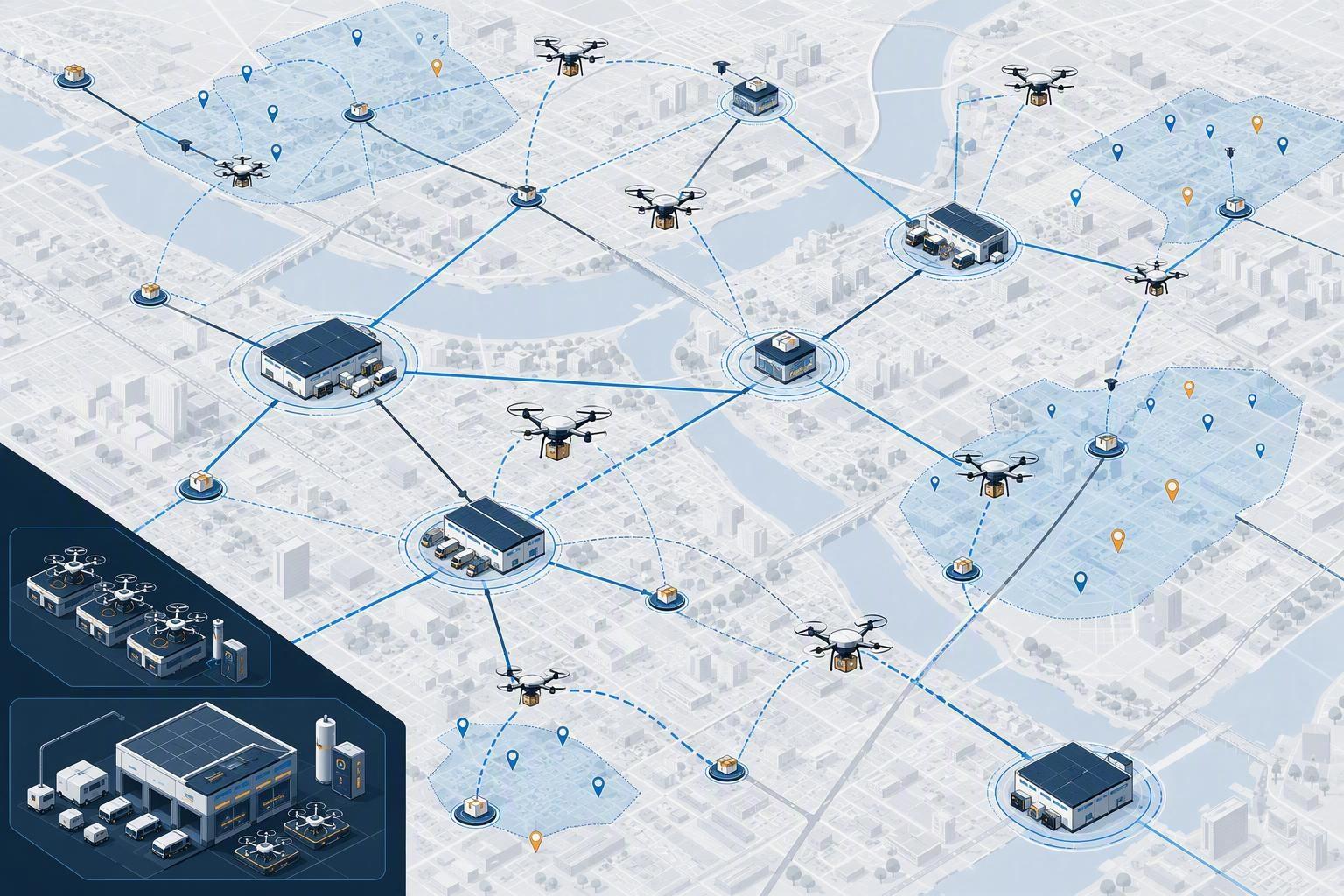
Smart Drone Battery as a System-Level Data Node
A smart traffic drone battery is not just energy storage. It’s a telemetry node that can feed dispatch decisions:
Which packs are dispatch-ready right now?
Which packs are trending toward early replacement?
Which packs experienced abnormal thermal events that require quarantine?
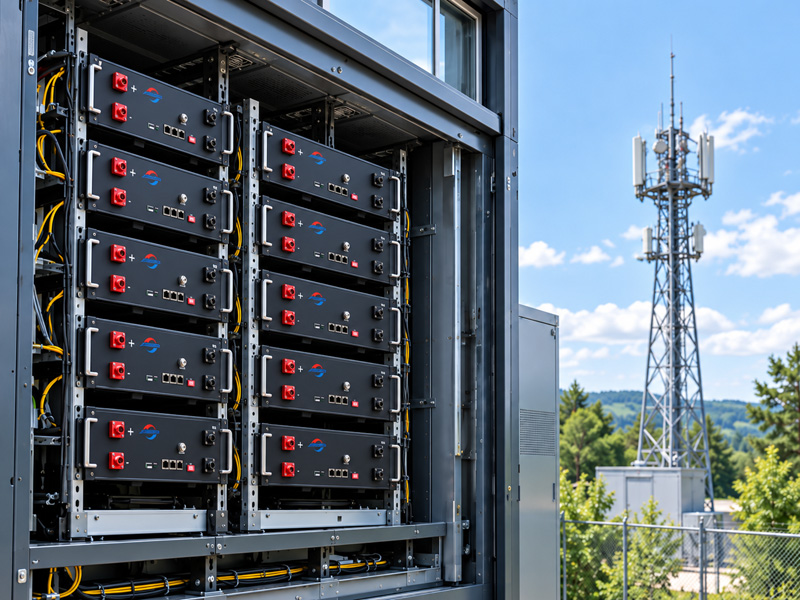
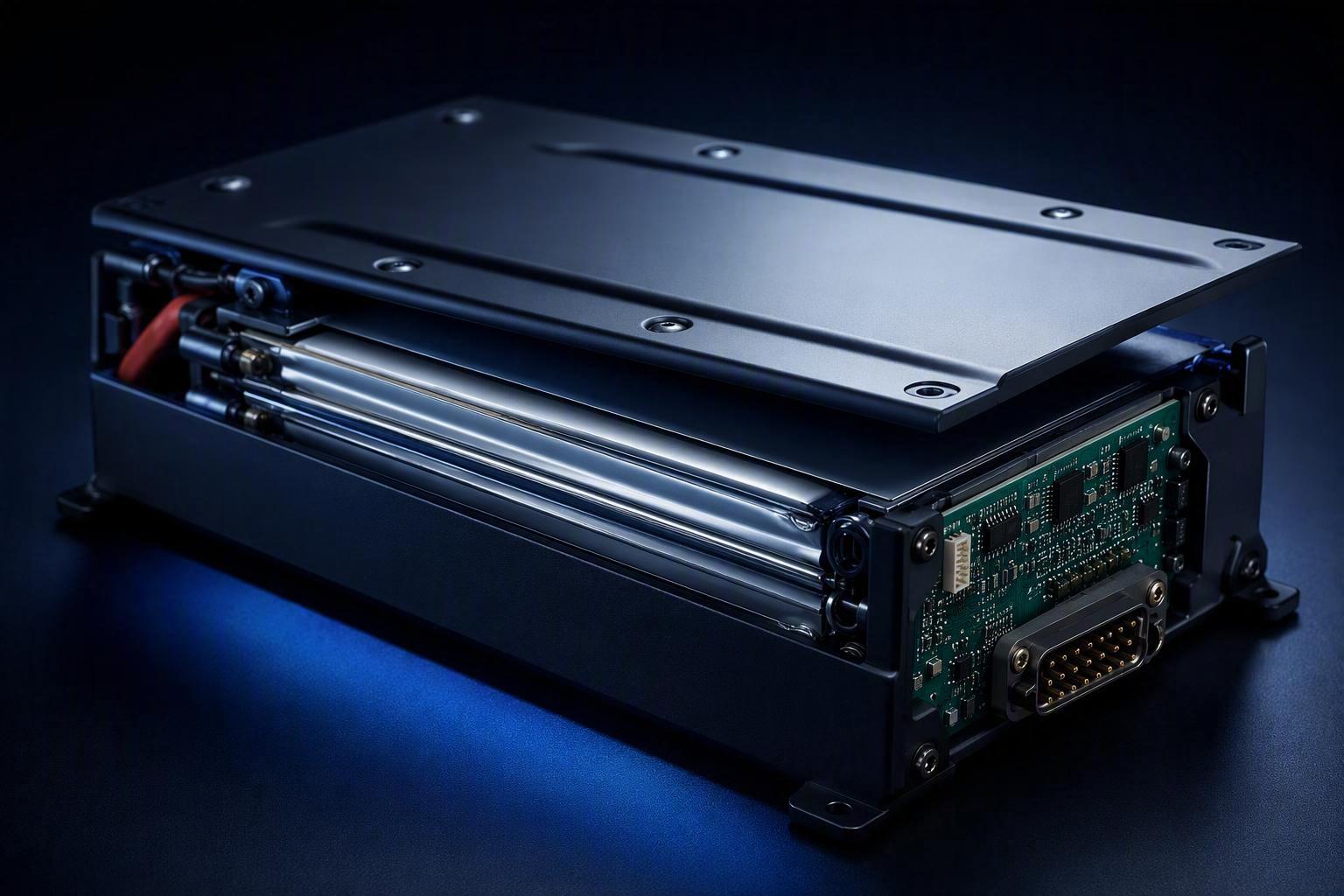
In practice, this is enabled by a smart BMS that keeps remote diagnostics and historical records, so battery data can be used for both safety decisions and fleet readiness. Our smart BMS + long-endurance architecture is one example of how we frame this: battery telemetry becomes operational evidence (what happened, when it happened, and whether the pack should be quarantined).
Real-time SOC & SOH Monitoring via Integrated Smart BMS
At minimum, fleet operations benefit from two numbers:
SOC (State of Charge): “How much energy is left right now?”
SOH (State of Health): “How much usable capacity and performance remains compared to new?”
In practice, SOC/SOH becomes valuable when it can travel across a fleet’s control stack. Our systems reference industrial communication protocols such as CAN bus and RS485 for remote diagnostics and reporting. Whether your system uses CAN, SMBus, or another interface, what matters is the operational contract:
defined data fields (SOC, temperature, cycle count, faults)
consistent sampling and timestamping
secure access controls
Predictive Maintenance: Lowering TCO through Lifecycle Intelligence
Predictive maintenance in batteries isn’t mysterious. It’s pattern recognition:
packs that heat faster than peers
packs that sag earlier under the same load
packs that trigger protective events more often
With health trends, you can prevent expensive failure modes:
over-discharge incidents during rushed deployments
“surprise” capacity collapse during long loiter
pack swelling and connector damage caused by repeated abuse
The operational win is TCO discipline: fewer emergency purchases, fewer grounded aircraft, and fewer avoidable incidents.
For tender documents, it also helps to convert “reliability” into pass/fail thresholds you can audit:
Cycle life target: 1,200 cycles to your defined end-of-life threshold (state the capacity-retention rule in the spec)
Over-discharge protection threshold: for high-rate LiPo use cases, set a more conservative cell-level threshold in the 3.0V–3.2V range to reduce irreversible damage risk (calibrate to the cell datasheet and your discharge-rate profile; define the measurement point and whether it’s per-cell or pack-level)
Key Benefits of Smart Traffic Fleet Management
When battery data is visible and integrated, teams typically gain three improvements:
Higher fleet availability: dispatch decisions stop being guesswork.
Better battery rotation: you can enforce rotation rules based on SOH, not labels.
Lower unexpected failure risk: faults and abnormal thermal events become actionable before the mission.
Security & Compliance Requirements for Law Enforcement Drone Systems
Encrypted Hardware Authentication: Preventing Unauthorized Swaps
For law enforcement and traffic enforcement programs, the battery is also a security boundary.
A tamper-proof law enforcement battery conceptually needs:
an identity (unique ID)
an authentication step (“digital handshake”)
an auditable record of which pack was used, when, and under what conditions
This isn’t only about theft prevention. It supports evidence integrity and reduces the risk of unverified hardware entering an audited fleet.
Physical Anti-Tamper Architecture & Secure Enclosures
Physical anti-tamper measures are often practical engineering choices:
connector protection and retention
sealed enclosures and damage indicators
serial tracking and controlled spares
From an operations perspective, the goal is consistency: a pack should not be “field-modified” in a way that changes its risk profile without detection.
Compliance as a Barrier to Entry: UN38.3, RoHS & Regional Standards
A traffic enforcement drone battery is procured under stricter expectations than a hobby pack.
At a minimum, teams should understand UN38.3, because carriers typically require it for transport. The canonical reference is the UNECE UN Manual of Tests and Criteria, Section 38.3, which defines the test series and test summary requirements.
For vendor-side documentation, what matters is whether you can assemble an audit-ready “compliance pack” that maps each shipped model/SKU to the correct test summaries, declarations, and certificates.
The documentation package should also be consistent about which safety standard applies to your use case—such as IEC’s IEC 62619 industrial battery safety standard vs IEC 62133-2 portable battery safety standard—because that choice can change what procurement screens for.
Key requirement: Don’t accept “we have UN38.3” as a vague statement. Require the test summary to match the exact model/SKU identifiers on labels and shipping documents.
Case Study & ROI: Quantifying Performance in Urban Operations
Deployment Scenario: Expressway Patrols and Incident Response
Consider a typical urban expressway program:
routine corridor patrols to detect congestion patterns and illegal stops
rapid deployment for incident response and evidence capture
repeated short sorties with tight turnaround expectations
The operational risk is not just running out of energy. It’s failing to launch when needed because packs are mid-charge, overheated, mismatched, or degraded.
Measurable Gains: Mission Continuity, Turnover, and Cost Reduction
A realistic ROI model avoids “one big number.” Instead, measure three buckets:
Mission continuity
fewer interruptions per shift
fewer aborts due to sag/over-temp
Turnover efficiency
shorter dispatch-ready time per pack
less labor spent on swaps, triage, and manual logs
Lifecycle cost (TCO)
lower replacement rate per quarter
fewer safety incidents and compliance rework
The more compliance-sensitive the program, the more value comes from documentation completeness and traceability, not just endurance.
A Quick Performance Summary
If you’re evaluating upgrades, these are the outcomes that typically matter most:
Longer task time per sortie (under real payload, not a brochure profile)
More stable output (less voltage sag and fewer thermal-trigger events)
Lower maintenance overhead (health visibility, predictable rotation, fewer surprises)
Traffic enforcement is already moving toward AI-assisted detection and dispatch. In that world, batteries can’t remain “dumb consumables.”
The practical direction is clear: battery telemetry becomes part of the city’s operational stack—AI dispatch + battery health data + compliance records. That’s how fleets move from “we can fly” to “we can sustain coverage.”
Next steps
If you’re building a pilot or preparing procurement documentation:
Establish Verification Criteria: Define a structured compliance checklist for industrial battery packs to be integrated into your tender acceptance standards.
Standardize Telemetry Fields: Use a defined data framework (SOC/SOH, temperature, cycle records) and specific integration protocols (e.g., CAN/RS485) to ensure consistent fleet-wide diagnostics.
Technical Support & Documentation
For detailed engineering parameters or integration-ready documentation for urban traffic drone platforms, you may Request Technical Support via our Official Site.




 ไทย
ไทย  English
  Español
  한국어
한국어  Deutsch
  Français
  日本語
日本語  Русский
  Bahasa Indonesia
  العربية
  Português do Brasil
  Italiano
  Nederlands