










Commercial battery procurement used to be straightforward. Purchasing managers relied on a simple hardware checklist: voltage, nominal capacity, pack weight, and unit price. A battery was treated purely as a passive power box—chemical energy specified to run a vehicle or drone for a set number of minutes.
That passive model works fine when you are running a handful of battery packs. Technicians can log charge cycles in spreadsheets, touch packs after a run to check for abnormal heat, and retire units when they bulge.
When operations scale to hundreds or thousands of packs across drone fleets, delivery vehicles, or industrial mobile equipment, manual oversight falls apart. At fleet scale, your primary battery cost isn’t the initial purchase price—it is unscheduled downtime, unmonitored cell wear, improper field charging, and a complete lack of asset visibility.
To solve these scaling bottlenecks, fleet operators and OEMs are moving away from static battery storage toward intelligent energy management. As a result, smart battery technology is quickly shifting from a premium upgrade to a non-negotiable fleet standard.
Why Traditional Battery Management Fails at Commercial Scale
Traditional “dumb” batteries rely on basic protection circuit modules (PCMs) built for basic cutoff functions. They disconnect the circuit during extreme over-voltage, under-voltage, or short circuits to prevent catastrophic failure. Beyond these basic safety cutoffs, traditional packs offer zero visibility into battery health, usage history, or long-term cell degradation.
This lack of internal telemetry leaves fleet managers with four critical operational blind spots:
Inaccurate State of Charge (SOC): Passive packs estimate remaining energy using basic resting voltage. Under heavy dynamic loads—like a heavy-lift agricultural drone carrying a 50 kg payload at takeoff—voltage sags rapidly. This causes severe SOC miscalculations, triggering false low-voltage warnings or forcing early mission aborts with usable energy still in the pack.
Invisible Degradation and State of Health (SOH): Traditional packs give no warning when internal resistance grows or actual capacity fades. Fleet teams cannot tell a fresh pack from an aged unit near retirement until the older pack suddenly collapses mid-operation.
Unmonitored Field Abuse: Operators frequently fast-charge hot batteries right after heavy discharge or store packs fully charged in warm field conditions—leaving no error logs for maintenance teams.
Reactive Maintenance: Without health diagnostics, maintenance is purely reactive. Teams swap batteries only after field disruptions happen, driving up emergency logistics costs and backup inventory needs.
Operational losses in commercial fleets rarely come from a sudden total battery breakdown. They come from unpredictable performance. Operating without pack-level telemetry forces companies to buy excessive backup inventory and absorb constant downtime.
What Makes a Battery Smart?
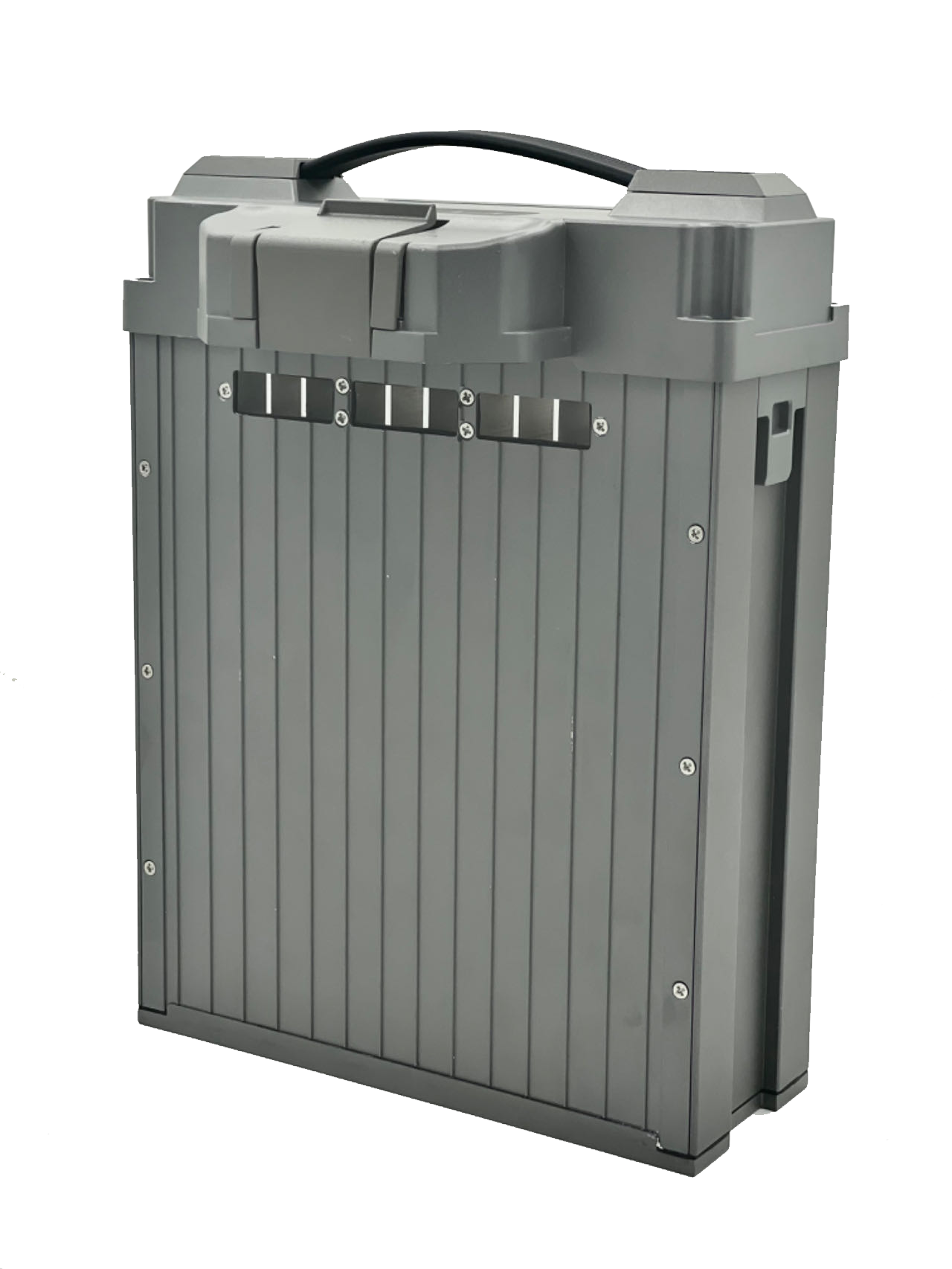
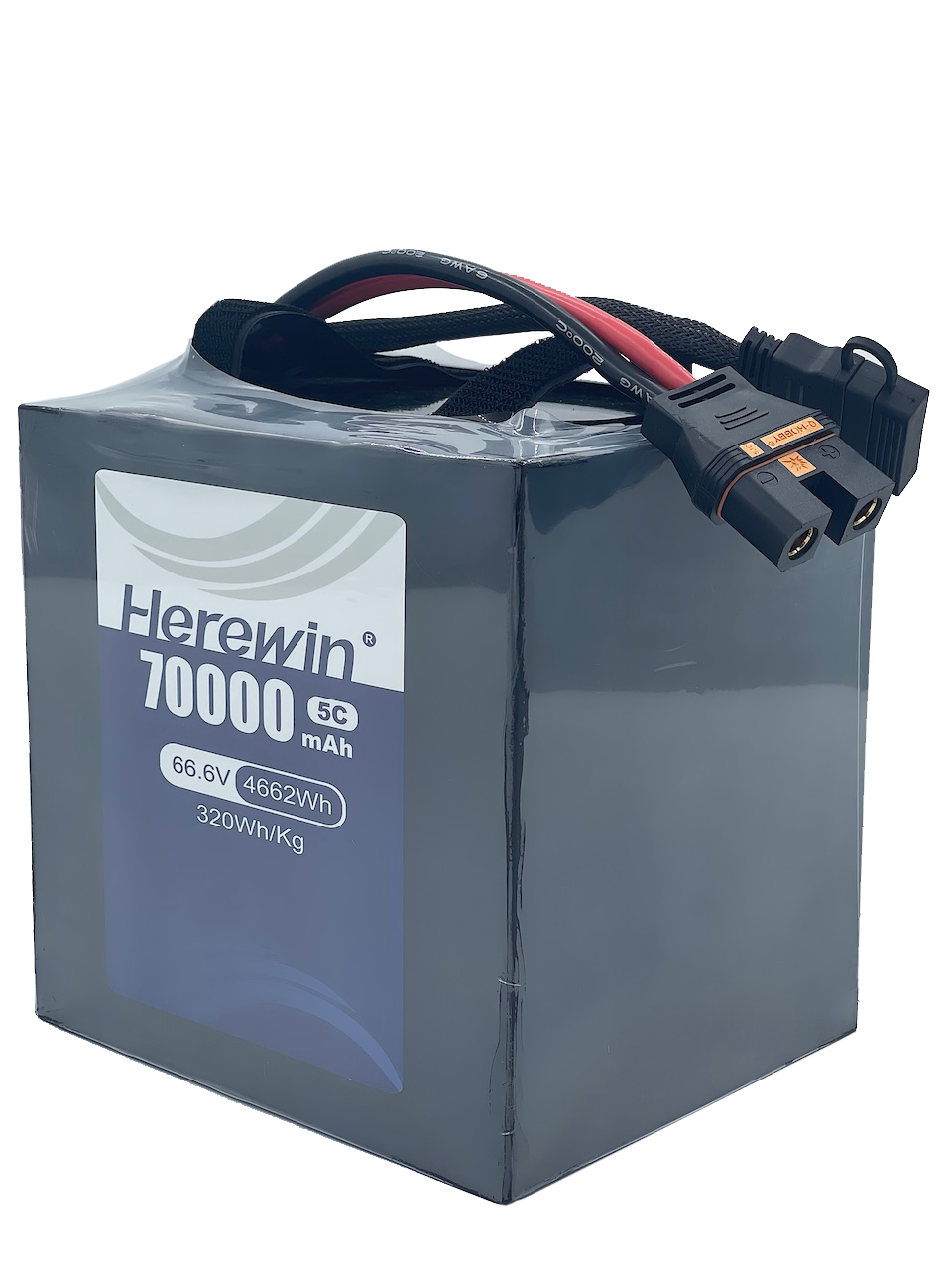
A smart battery turns a chemical power pack into an active data node. It pairs a Battery Management System (BMS) with onboard flash memory, precise sensing circuits, and standard communication protocols like CAN bus, SMBus, or UART. For battery suppliers and OEMs, embedding this telemetry directly into the pack design is now a core requirement for enterprise applications.
Rather than relying on basic voltage measurements, a smart BMS tracks real-time cell conditions and sends structured telemetry straight to the vehicle controller, ground station, or fleet cloud portal.
Cell Sensing (Volt, Temp, Current) → Smart BMS Processing → Onboard Memory & Telemetry Engine → CAN/SMBus Protocol → Vehicle Controller / Fleet Cloud
The table below breaks down key BMS telemetry features and how they translate into daily fleet performance.
Smart Battery BMS Features and Their Operational Benefits
Smart BMS Function | Operational Data & Telemetry Provided | Commercial & Operational Value |
|---|---|---|
Dynamic SOC Estimation | Coulomb counting paired with adaptive state algorithms | Prevents premature mission aborts and eliminates mid-route voltage collapse under dynamic loads. |
Predictive SOH Tracking | Capacity decay trends, internal impedance monitoring | Provides predictive health scoring so operators retire packs based on data rather than mid-operation failures. |
Operational Cycle Logging | Cumulative cycle counts, depth of discharge (DoD) history | Automates inventory rotation to ensure uniform pack aging across distributed operations. |
Thermal Diagnostics | Multi-point temperature monitoring during charge/discharge | Throttles current under extreme temperatures to reduce thermal stress and safeguard asset longevity. |
Audit Fault Recording | Timestamped log of over-voltage, temperature, and over-current events | Delivers indisputable diagnostic records for rapid troubleshooting and transparent warranty resolution. |
Fleet Telemetry Integration | Real-time CAN bus / SMBus output to controllers and telematics | Enables fleet management software to automate dispatch decisions based on individual pack readiness. |
The Business Value of Smart Battery Intelligence
Demand for smart battery management systems is growing across commercial UAV operations, electric mobility, industrial robotics, and mobile equipment OEMs. Across all four sectors, batteries are no longer treated as disposable items—they are managed as high-value fleet assets.
Smart Batteries for Commercial Drone Fleets: Eliminating Mid-Mission Downtime
For commercial UAV operations in spraying, powerline inspection, or BVLOS logistics, battery availability directly sets daily coverage limits. Ground downtime cuts revenue quickly, especially during short weather windows.
As operations grow from test setups to large heavy-lift fleets, unmonitored battery packs create work bottlenecks. Technicians often grab whichever pack is closest on the charger, overworking a fraction of your inventory while other packs sit idle. Assigning an older pack with elevated internal resistance to a heavy flight causes severe voltage drop under high discharge, forcing an automated return-to-base abort.
Smart BMS cycle tracking resolves this by guiding automated pack rotation across your bench. At the same time, continuous checks on cell impedance and temperature gradients flag resistance spikes early, keeping questionable packs out of the air.
Smart Batteries for Electric Mobility & Industrial Fleets: Health Management Across Distributed Assets
Electric light vehicles, delivery trikes, automated guided vehicles (AGVs), and autonomous mobile robots (AMRs) run under demanding schedules. Many commercial operators manage thousands of swappable packs scattered across depot networks, charging kiosks, and warehouses where hands-on checks aren’t feasible.
Field usage varies wildly. Hard acceleration, running packs down to zero, and leaving batteries in hot sun all speed up cell wear. Smart battery architectures log these usage patterns, giving fleet managers the data needed to set automated power caps or optimize driver guidance.
When an issue arises, BMS telemetry pinpoints the specific failing module in a multi-pack system. Rather than pulling an entire vehicle offline, automated alerts direct technicians to pull and inspect that exact serial number.
Smart Battery Systems for OEM Equipment Manufacturers: Resolving Warranty Disputes with Complete Traceability
For OEMs building commercial drones, utility vehicles, and industrial robotics, battery reliability directly affects warranty costs and brand reputation.
Post-sale disputes usually center on one issue: operational abuse versus manufacturing defect. When a pack fails early, customers assume a factory defect. In practice, field data shows many failures stem from misuse—such as fast-charging hot batteries immediately after heavy discharge, storing packs fully charged in high heat, or running them below freezing limits.
Integrating a smart BMS with non-volatile event memory provides complete operational traceability. Engineering teams get an objective record of thermal spikes, over-discharge history, and total charge cycles over the pack’s life. This clear diagnostic log eliminates guesswork during warranty claims, protecting OEMs from invalid liabilities while simplifying customer support.
Smart Battery vs. Traditional Battery: Impact on Total Cost of Ownership
Transitioning to intelligent battery architecture fundamentally alters how commercial enterprises budget for, maintain, and scale their power infrastructure.
The comparison below highlights the structural shifts between passive and intelligent energy management.
Operational Comparison: Traditional vs. Smart Battery Architectures
Operational Dimension | Traditional Battery System | Smart Battery with Integrated BMS | Business Impact |
|---|---|---|---|
Asset Visibility | Offline, unmonitored chemical pack | Real-time telemetry via CAN/SMBus | Shifts maintenance from reactive guesses to real-time data transparency. |
Maintenance Strategy | Reactive (replace after breakdown) | Predictive (schedule retirement by SOH) | Reduces emergency field logistics and prevents sudden operational stops. |
SOC & Range Accuracy | Low (estimated by voltage curve) | High (dynamic Coulomb counting algorithms) | Eliminates voltage collapse and increases usable mission range. |
Fleet Management | Manual spreadsheets and physical tagging | Centralized cloud management via serial API | Reduces labor overhead and enables automated pack rotation. |
Warranty & Auditability | Anecdotal claims, high dispute friction | Non-volatile event logs (Temp, DoD, Charge) | Cuts after-sales warranty processing costs and resolves misuse disputes. |
TCO Structure | Lower upfront CAPEX, high unpredictable OPEX | Slightly higher upfront CAPEX, significantly lower OPEX | Delivers a lower Total Cost of Ownership across multi-year deployments. |
Adding a smart BMS and telemetry circuit slightly increases initial pack hardware CAPEX. However, real-world fleet data shows that preventing battery abuse, balancing pack wear, and cutting downtime yield clear long-term savings. Across multi-year deployments, operators achieve significantly lower replacement costs and predictable operational spending, securing a predictable battery ROI.
Why Battery Manufacturers Are Moving Toward Intelligent Energy Solutions
As the commercial market matures, battery suppliers are realizing that cell energy density (Wh/kg) is no longer the sole competitive differentiator. High-density chemistry is accessible across global supply chains; the true value lies in how reliably, safely, and intelligently that energy is managed and delivered under extreme operational conditions.
Future competition in commercial energy storage will focus on three core pillars:
Chemical and Structural Safety: Advanced cell selection, soft-pack LiPo, semi-solid, or next-generation battery architectures, and robust mechanical packaging.
Thermal and Electrical Protection: Custom thermal management design preventing hot spots during high C-rate discharge and rapid charging.
Data Intelligence and Integration: Custom BMS hardware and software protocols that integrate seamlessly with host vehicle flight controllers, vehicle ECUs, and cloud telematics portals.
This holistic integration model is central to how leading power providers support enterprise customers. As a custom lithium battery pack manufacturer.
By incorporating active cell balancing, precise SOC/SOH algorithms, wide-temperature protection circuits, and open CAN bus/SMBus communication protocols directly into custom battery pack enclosures, these architectures allow drone OEMs and fleet operators to deploy enterprise-grade power systems tailored to their specific operational workflows.
The Future of Commercial Energy: From Hardware Containers to Data-Driven Energy Assets
The commercial transport and aerial robotics industries are undergoing a fundamental transformation similar to the automotive sector’s shift toward software-defined vehicles. Industrial energy is moving from static, hardware-bound chemical containers to intelligent, data-driven energy assets.
In the near future, commercial battery packs will not operate in isolation. They will continuously communicate with smart charging docks, automated battery swap stations, and fleet dispatch software. Charging rates will adjust dynamically based on real-time grid pricing, ambient thermal conditions, and the specific SOH score of each individual pack.
For commercial fleet operators and equipment OEMs aiming to scale operations efficiently, adopting smart battery technology is no longer a luxury reserved for premium prototypes. It is the essential foundation for achieving operational predictability, safety, and long-term financial sustainability.
PERTANYAAN YANG SERING DIAJUKAN
What is the difference between a smart battery and a standard lithium battery?
A standard lithium battery relies on basic protection boards for simple cutoff safety (over-voltage or short-circuit protection) without logging data. A smart battery incorporates an advanced BMS with onboard memory and microprocessors, providing real-time telemetry on SOC, SOH, temperature gradients, and cycle history via industrial protocols like CAN bus or SMBus.
Do all commercial equipment applications require a smart BMS?
Not necessarily for small, localized operations with limited battery packs. However, commercial operations scaling to medium and large fleets benefit significantly from smart BMS intelligence, as automated tracking prevents costly unscheduled downtime, battery misuse, and unbalanced inventory wear.
What industries benefit most from smart battery systems?
Smart battery systems are especially valuable for enterprise applications where power reliability and asset tracking directly impact operational revenue, including commercial drone fleets, electric delivery networks, robotics, and industrial mobile equipment.
Can a smart battery management system extend total battery lifespan?
While a BMS cannot alter basic cell chemistry limitations, it protects packs from degrading conditions such as over-charging, thermal abuse, and deep discharge. By optimizing charge curves and balancing cell wear, a smart BMS prevents premature failure and ensures maximum usable service life.
What parameters can a smart battery telemetry system monitor?
Smart BMS systems monitor real-time voltage, current, cell-level temperature, state of charge (SOC), state of health (SOH), cumulative cycle counts, depth of discharge (DoD) history, and historical diagnostic fault events.







 Bahasa Indonesia
  English
  Español
  한국어
한국어  Deutsch
  Français
  日本語
日本語  Русский
  ไทย
ไทย  العربية
  Português do Brasil
  Italiano
  Nederlands