

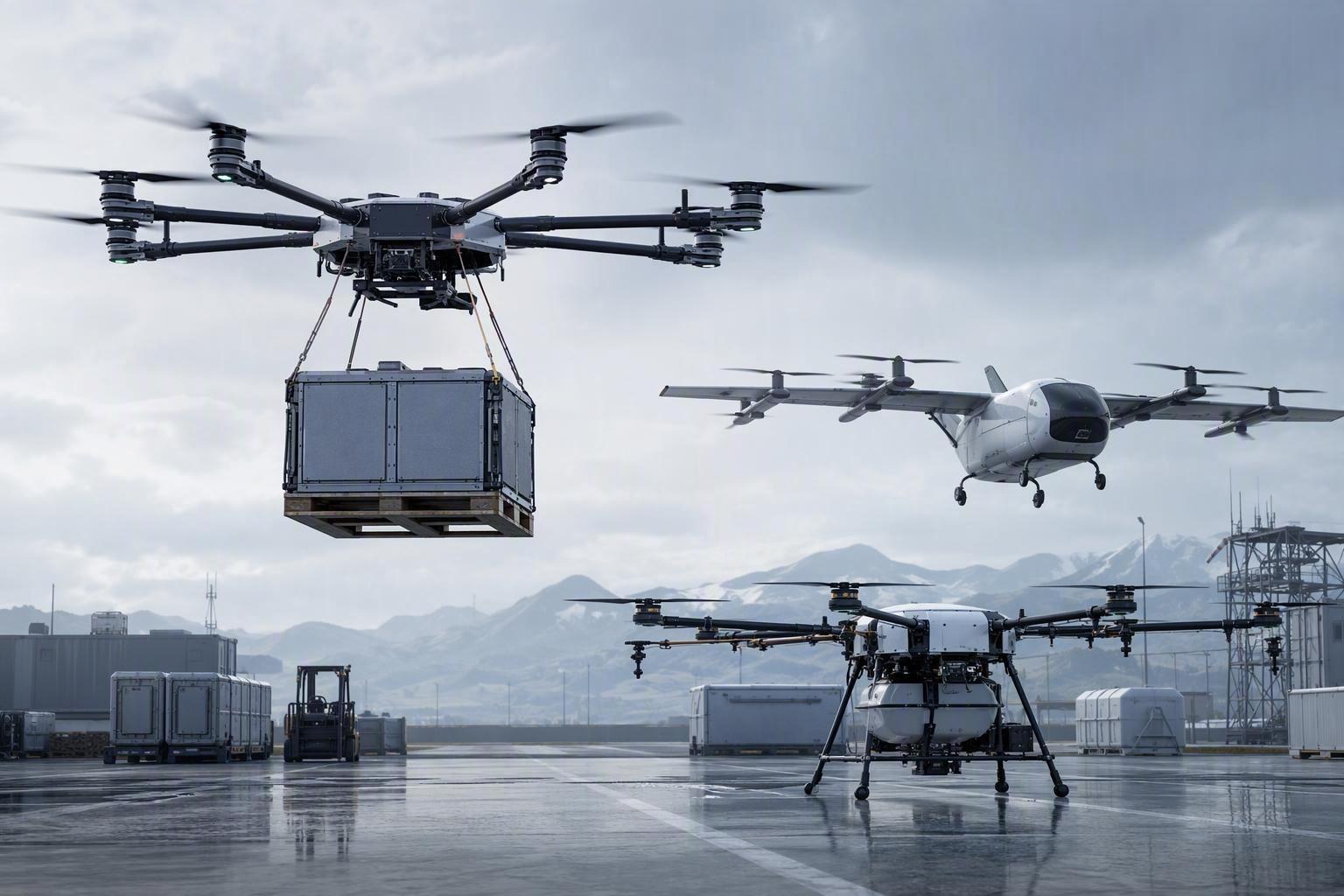
Heavy-lift drone applications are expanding well beyond the technology demonstrations of a few years ago. Payload classes that once stopped at a few tens of kilograms now move past 100 kg, 200 kg, and in some cases well into the hundreds of kilograms. But maximum payload is not the only measure of a manufacturer worth following.
In this article, “heavy-lift” refers broadly to industrial UAV platforms designed for payloads beyond typical consumer and prosumer drones. What changes in 2026 is that the question has shifted from “who can lift the most” to “who is turning lift capacity into dependable commercial operations.” The companies below are selected on that basis, combining payload capability with commercial activity, technology direction, and relevance to industrial UAV markets.
Disclosure: This overview is published by Herewin, a lithium battery manufacturer. The companies below are listed for market context, not as partners or endorsements. Figures are compiled from each vendor’s public product pages as of early 2026, without independent testing, and should be confirmed with the vendor before any procurement decision.
The 2026 Heavy-Lift Drone Landscape
1. DJI
Representative platform: FlyCart 30 and FlyCart 100
Payload: 30–40 kg (FlyCart 30) up to around 100 kg (FlyCart 100)
Focus: Commercial delivery and aerial logistics
DJI is the volume reference point for commercial drone delivery. The FlyCart 30, in global service since 2024, helped establish cargo drones as a practical option for logistics and emergency resupply, while the newer FlyCart 100 raises that to 85–100 kg for heavier industrial delivery. What sets DJI apart is less a single record than the ecosystem behind it: manufacturing scale, support, and a clear path from purchase to field deployment. That is a strong signal that heavy-lift delivery is moving toward an established commercial product category.
2. FlyingBasket
Representative platform: FB3
Payload: Around 100 kg
Focus: European industrial heavy-lift cargo
FlyingBasket is the clearest example of European industrial heavy-lift in active commercial use. Its FB3 is an 8-rotor coaxial platform built around a 100 kg payload, with swappable battery packs and quick turnaround for on-site logistics and construction. Its value is less about headline specifications and more about repeatable industrial deployment in regulated European and North American operating environments.
3. Elroy Air
Representative platform: Chaparral
Payload: Around 230 kg (~500 lb)
Focus: Autonomous long-range cargo and hybrid-electric VTOL
Elroy Air works the middle-mile rather than the last mile. The Chaparral is an autonomous hybrid-electric VTOL cargo aircraft built to carry substantial loads over hundreds of miles without ground infrastructure at the receiving site. Its significance in 2026 is pairing that autonomy with long range, positioning heavy-lift as a more repeatable, self-contained cargo service — still earlier-stage than DJI. In September 2026, Chaparral completed the first authorized uncrewed autonomous cargo flights under the U.S. DOT and FAA eVTOL Integration Pilot Program (eIPP), a public-private program set up to generate operational data for advanced air mobility.
4. XAG
Representative platform: P150 Max
Payload: Up to around 80 kg
Focus: Agriculture and field logistics
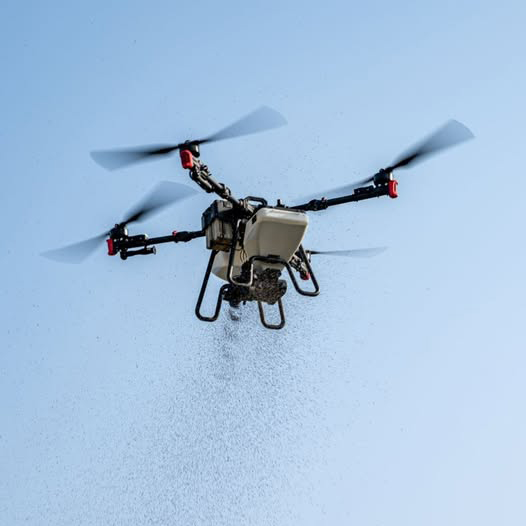
XAG is best understood as a precision-agriculture platform provider that also moves material across farm sites. Its P150 Max ties spraying, spreading, mapping, and field logistics into one workflow, with material transport of up to 80 kg for farm inputs and field logistics.
XAG matters because agriculture is one of the highest-frequency heavy-lift use cases. A farm aircraft is flown many times per day across a season, which pushes reliability and fast turnaround to the center of the design, and makes charging speed, turnover time, and cycle life as important as raw capacity on agricultural platforms.
5. Dronamics
Representative platform: Black Swan
Payload: ~350 kg over long range
Focus: Long-range cargo UAV
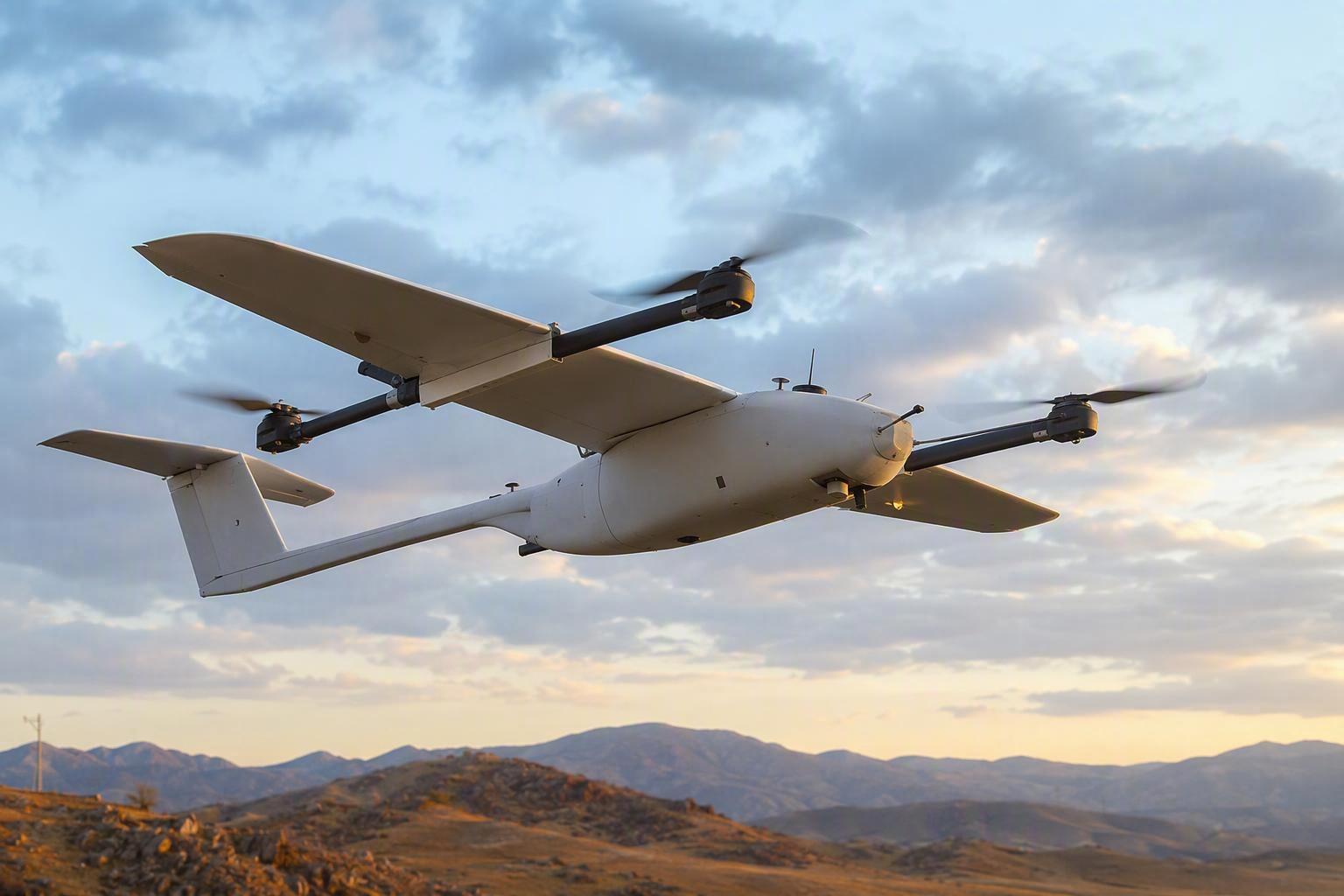
Dronamics is a reminder that heavy payload does not always mean a larger multirotor. The Black Swan is a fixed-wing cargo UAV the size of a small aircraft, designed to carry roughly 350 kg across regional distances for middle-mile logistics.
Its significance is architectural. Where most of this list hovers in the tens of kilograms over short range, Dronamics widens the definition of what a heavy-lift drone can be. It is still earlier-stage commercially, but for buyers evaluating long-range cargo UAVs, battery compliance and power-system selection become part of the overall aircraft design.
6. Griff Aviation
Representative platform: Griff 30 and Griff 60
Payload: Up to 60 kg
Focus: High-payload multirotor and industrial operations
Norway’s Griff Aviation is known for high-payload multirotor systems for industrial and aerial-work applications. Its current Griff 30 and Griff 60 platforms cover payloads up to 60 kg, with the Griff 60 designed for heavier missions. Sustained high-current lifting puts repeated stress on the pack, so power delivery and thermal behavior here matter as much as total energy.
7. Harris Aerial
Representative platform: Carrier H6 family
Payload: Modular heavy-lift classes across electric, hybrid, and hydrogen options
Focus: Mission flexibility with multiple powertrains
Harris Aerial stands out for the breadth of a single airframe family. Its Carrier H6 platform can be configured for electric, hybrid-electric, or hydrogen fuel-cell power, with each configuration designed for different endurance and mission requirements.
This shows that powertrain selection is becoming a mission decision, not a fixed attribute of the aircraft. A U.S.-built, NDAA-focused platform that lets operators choose the energy source per job is a meaningful signal for fleet buyers who need range in some missions and quiet, clean operation in others. Where operators can switch between electric and hybrid power, the battery still defines the electric-mode envelope, so pack energy density and fast replenishment stay central to mission planning.
8. Freefly Systems
Representative platform: ALTA X / ALTA
Payload: Up to around 15 kg, depending on configuration
Focus: Professional payload and aerial-work platform
Freefly Systems is included not because it is the heaviest cargo drone, but because it represents a distinct, valuable category: the professional high-power payload platform. Its ALTA line carries cinema rigs, sensors, and specialized equipment with precise flight control and clean power output.
The reason to watch Freefly is quality of that payload work rather than sheer mass. It reminds buyers that not every heavy-lift requirement is about moving pallets — some are about carrying sensitive, high-value equipment reliably. Do not confuse a professional payload drone with an ultra-heavy cargo hauler; they solve different problems.
9. JOUAV
Representative platform: CW-series VTOL and PH-series multirotors
Payload: From sensor-class up to ~25 kg heavy-lift VTOL
Focus: Industrial payload and aerial sensing applications
JOUAV represents the industrial UAV segment where payload capacity is driven by sensors and mission equipment rather than cargo. Its platforms — spanning fixed-wing VTOL and multirotor designs — carry mapping, inspection, and surveillance payloads for long-endurance missions across surveying, utilities, and public safety, with models like the CW-80E reaching an approximately 20 kg payload.
The value here is less about a headline 25 kg figure and more about what that lift lets operators carry over long missions. For buyers weighing endurance, BVLOS range, and sensor integration, JOUAV shows how payload capability can be aimed at precision industrial work.
10. Sabrewing Aircraft
Representative platform: Rhaegal
Payload: Large autonomous cargo (variant-dependent; development-stage)
Focus: Autonomous heavy cargo / emerging platform
Sabrewing Aircraft is included explicitly as an emerging, development-stage player. Its Rhaegal family is an ambitious autonomous heavy-cargo aircraft whose payload claims sit well above most of this list.
Its relevance is mainly as an indicator of where autonomous heavy-cargo UAVs may be heading, rather than as a near-term procurement option. Very large autonomous cargo drones are still working through certification, operating economics, and fleet scaling before such platforms reach mainstream deployment.
Heavy-Lift UAV Comparison at a Glance
Manufacturer | Representative platform | Payload | Range / endurance | Powertrain | Commercial maturity |
|---|---|---|---|---|---|
DJI | FlyCart 30 / FlyCart 100 | 30–40 kg; 85–100 kg | Short-haul delivery | Battery-electric | In global service since 2024 |
FlyingBasket | FB3 | Around 100 kg | Short-range site logistics | Battery-electric, swappable packs | Active commercial deployment in Europe |
Elroy Air | Chaparral | Around 230 kg | Hundreds of miles | Hybrid-electric VTOL | Flight testing under way |
XAG | P150 Max | Up to around 80 kg | Field-scale operation | Battery-electric | Widely deployed in agriculture |
Dronamics | Black Swan | Around 350 kg | Regional distances | Fixed-wing, fuel-based | Earlier-stage commercially |
Griff Aviation | Griff 30 / Griff 60 | Up to 60 kg | Short-range heavy lift | Battery-electric | Production platforms available |
Harris Aerial | Carrier H6 | Modular heavy lift | Configurable by powertrain | Electric, hybrid, hydrogen | Product platform with configuration options |
Freefly Systems | ALTA X / ALTA | Up to around 15 kg | Professional aerial work | Battery-electric | Established professional platform |
JOUAV | CW-series / PH-series | Sensor-class to around 25 kg | Long-endurance missions | Battery-electric | Deployed industrial platform |
Sabrewing Aircraft | Rhaegal | Large autonomous cargo | Long-range autonomous | Development-stage | Development stage |
platform and payload figures are drawn from each vendor’s public product pages, accessed September 2026. Regulatory references come from the FAA eIPP program page and from IATA and PHMSA on lithium-battery air transport. No manufacturer reviewed this article, and no independent flight testing was carried out.
What These Manufacturers Tell Us About the Market
Payload Growth Is Reshaping Aircraft Design
Payload figures of 100 kg, 200 kg, and 350 kg are becoming common across new heavy-lift programs, but the more useful comparison is how much an aircraft can carry while still meeting its required range and conditions. Two platforms with the same rating can require very different aircraft because one flies short high-lift sorties while the other flies longer routes that trade load against endurance.
Battery Performance Is Becoming an Operational Factor
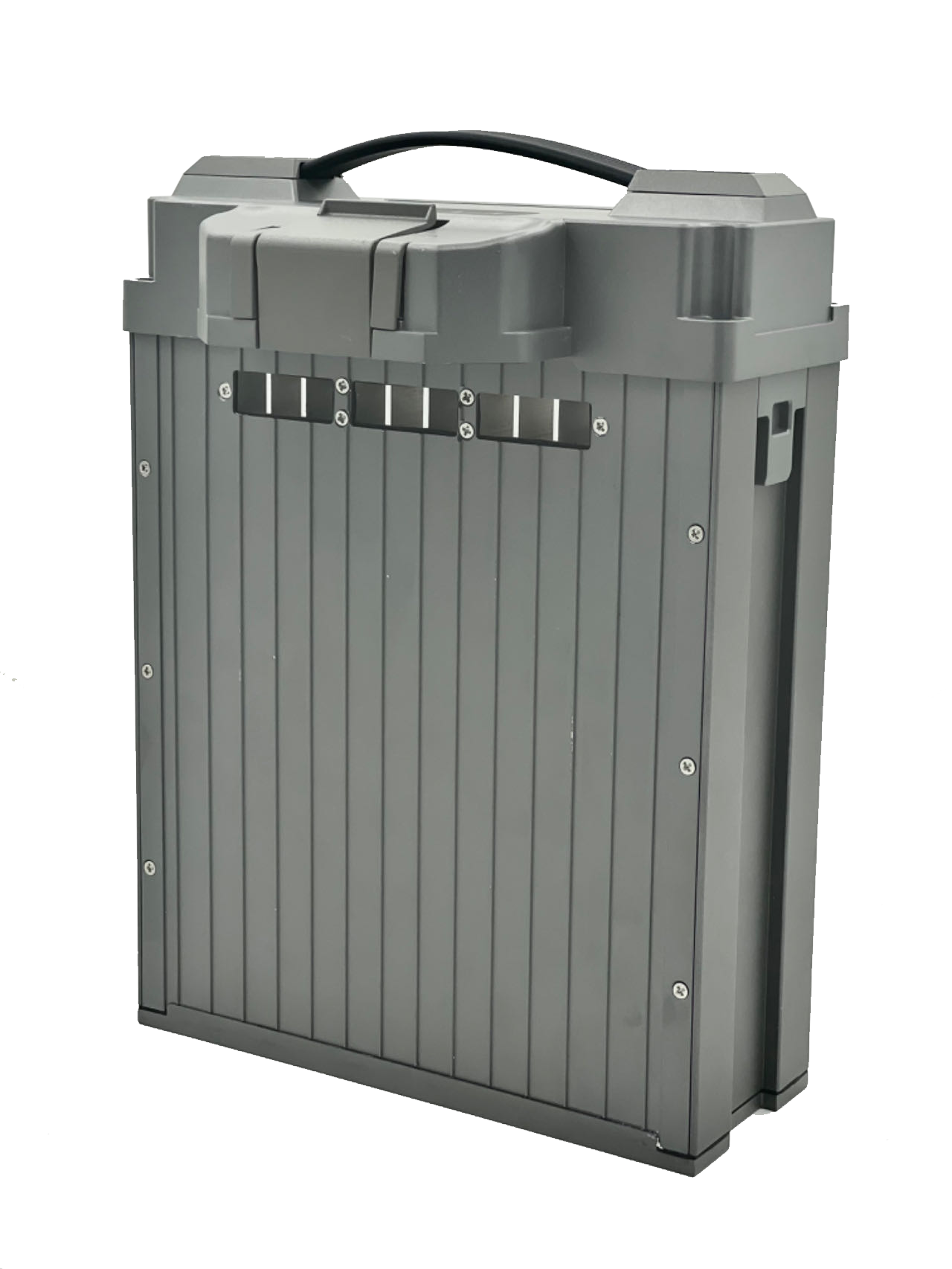
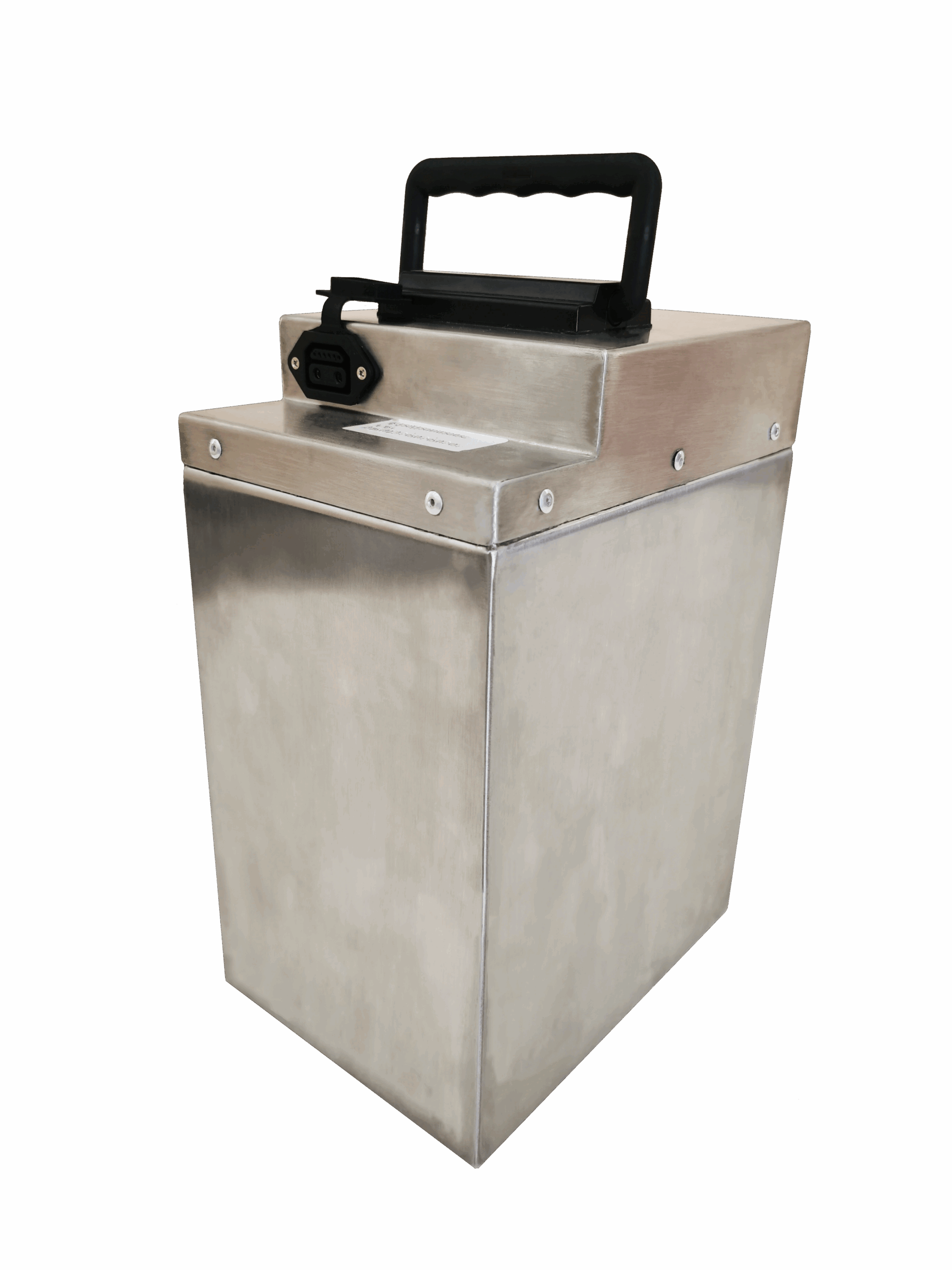
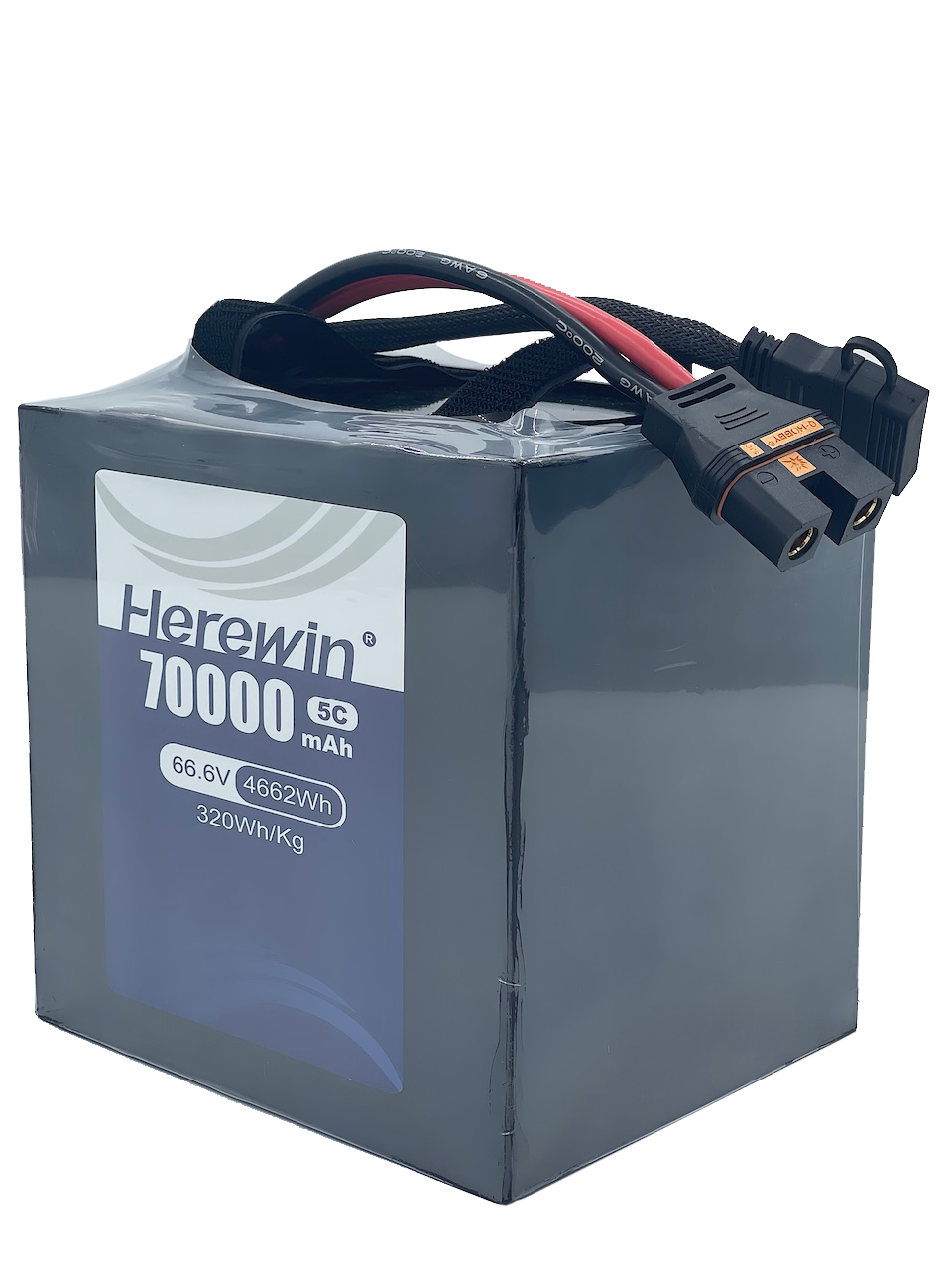
As payload increases, battery performance affects more than flight time. Power output, voltage stability, charging speed, thermal behavior, and cycle life can directly affect how often a UAV can complete missions.
A heavier aircraft draws more current, especially in hover and load transients, and that load shapes the aircraft’s usable operating envelope. On a multi-purpose industrial platform, this pushes battery selection out of the accessories column and into system-level design decisions.
In practice this comes down to a few distinctions. Peak current draw during hover and load transients is often several times the steady cruise value, so the pack’s continuous and burst discharge capability — not just its nominal energy — sets the real payload ceiling. In high-tempo operations such as agriculture or repeated short-haul delivery, charge rate and turnover time can matter more than total energy, because a pack that recharges faster supports more sorties per day. Cycle life then becomes a lifecycle cost question: a pack that degrades quickly raises replacement frequency and cost per flight hour, even if its upfront specs look strong.
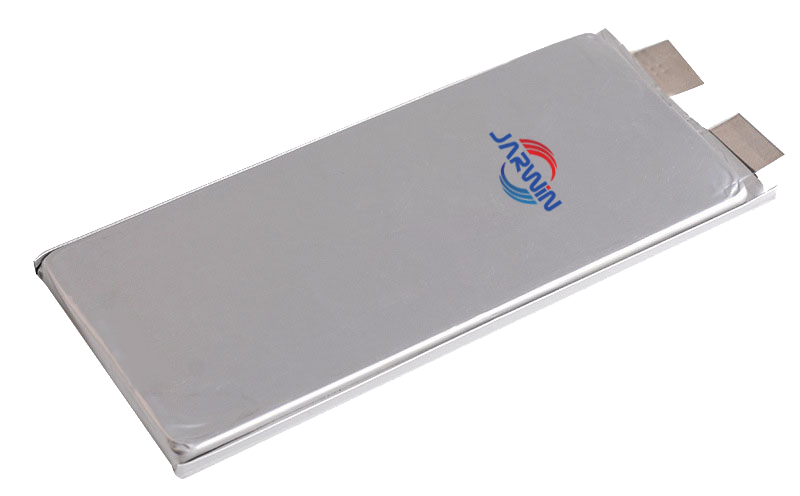
The published ranges on today’s industrial UAV cells reflect those trade-offs. Energy density across current lithium and semi-solid lines runs from roughly 170 Wh/kg up to the 300–350 Wh/kg class, while continuous discharge ratings typically sit between 15C and 25C, with pulse output reaching around 30C and charge rates from 1C to 5C depending on chemistry. Cycle life is quoted from a few hundred cycles up to 2,000 or more, and the spread is deliberate rather than a quality gap — a cell built for long endurance and one built for high-current lifting rarely share the same numbers. What matters for a heavy-lift platform is that the pack is specified against the mission, not chosen purely on the highest single figure.
There is also a regulatory layer that buyers often meet only at the shipping stage. Lithium batteries used in UAVs fall under air-transport dangerous-goods rules, and the baseline requirement is that each cell and pack type has passed the eight tests of UN Manual of Tests and Criteria, Part III, Subsection 38.3 — the same standard referenced by IATA and PHMSA. Depending on how the pack is configured, additional limits may apply, including a state of charge not exceeding 30% for lithium-ion batteries shipped on their own and a cargo-aircraft-only restriction for these shipments. Practically, this means UN38.3 test documentation and the choice between installed, packed-with-equipment, and spare-battery configurations are part of system planning, not an afterthought.
Different Missions Require Different Powertrains
Across the manufacturers above, propulsion is fragmenting deliberately. Some platforms are battery-electric, where high energy density defines endurance. Others use hybrid-electric architectures to extend range with a generator, and hydrogen fuel-cell systems trade clean operation for longer station time. Fixed-wing cargo designs add yet another set of trade-offs around speed and distance versus vertical capability.
There is no single propulsion architecture for every mission. For fleet planners, the takeaway is to define the duty cycle first — payload, distance, turnaround, and environmental conditions — and let that decide which energy architecture fits best.
What Buyers Should Take From This Market
For buyers, the useful comparison starts with four practical checks.
Payload. Read payload together with range and operating conditions, never in isolation. A maximum load rating is usually quoted under best-case conditions, so probe what the aircraft can still carry under the range, altitude, temperature, and wind your operation actually runs in.
Endurance. Compare flight time while carrying the intended payload, not an empty airframe. A heavier load draws more current and drains the pack faster than bench numbers suggest. Endurance only becomes meaningful when it assumes the load you plan to fly.
Power system. On battery-electric platforms, power output under load, charging speed, thermal behavior, and cycle life together determine how many sorties a fleet can complete in a day. That makes the pack part of operating economics — dispatch readiness, spare inventory, and replacement cost per hour — rather than a one-time accessory.
Commercial maturity. Confirm production status, regulatory readiness, support, spare-parts availability, and proof of fleet deployment. A capable prototype is not yet a serviceable product, and that difference usually decides whether a payload promise becomes a working business case.
The heavy-lift UAV market is moving toward higher payloads, longer missions, and more specialized commercial applications. But the most useful comparison is not simply which aircraft can lift the most.
For UAV manufacturers and fleet operators, the more important question is how reliably an aircraft turns its payload capacity, energy system, and operating time into repeatable missions. Read this way, the manufacturers above are not one industry but several developing in parallel — commercial delivery, industrial lifting, autonomous cargo, agriculture, sensing, and long-range freight.
The power system is where that reliability gets decided. On high-payload platforms, the pack sets how much usable operating time an aircraft can actually deliver, so it is engineered against a specific mission profile rather than picked as an off-the-shelf part. Battery systems for heavy-lift and cargo UAVs have to balance energy density, power output, charging, and cycle life against air-transport documentation such as UN38.3 — and those parameters only make sense when measured against the payload, mission profile, and operating conditions of the target aircraft.


 العربية
  English
  Español
  한국어
한국어  Deutsch
  Français
  日本語
日本語  Русский
  Bahasa Indonesia
  ไทย
ไทย  Português do Brasil
  Italiano
  Nederlands