
When discussing UAV batteries, most conversations revolve around two familiar specifications:
- Capacity (Ah)
- Energy density (Wh/kg)
Those metrics certainly matter. They influence flight time, payload efficiency, and overall mission endurance.
However, once you move into the world of heavy-lift UAVs—particularly platforms approaching 200 kg maximum takeoff weight (MTOW)—another parameter often becomes far more important:
Discharge rate (C-rating).
Many operators spend considerable time comparing battery capacity and energy density while overlooking the factor that often determines whether a fully loaded aircraft can take off confidently, respond to sudden load changes, and maintain safe operation in challenging conditions.
For heavy-lift cargo drones and industrial UAVs, battery selection is no longer just about storing energy. It is about maintaining sufficient power reserve.
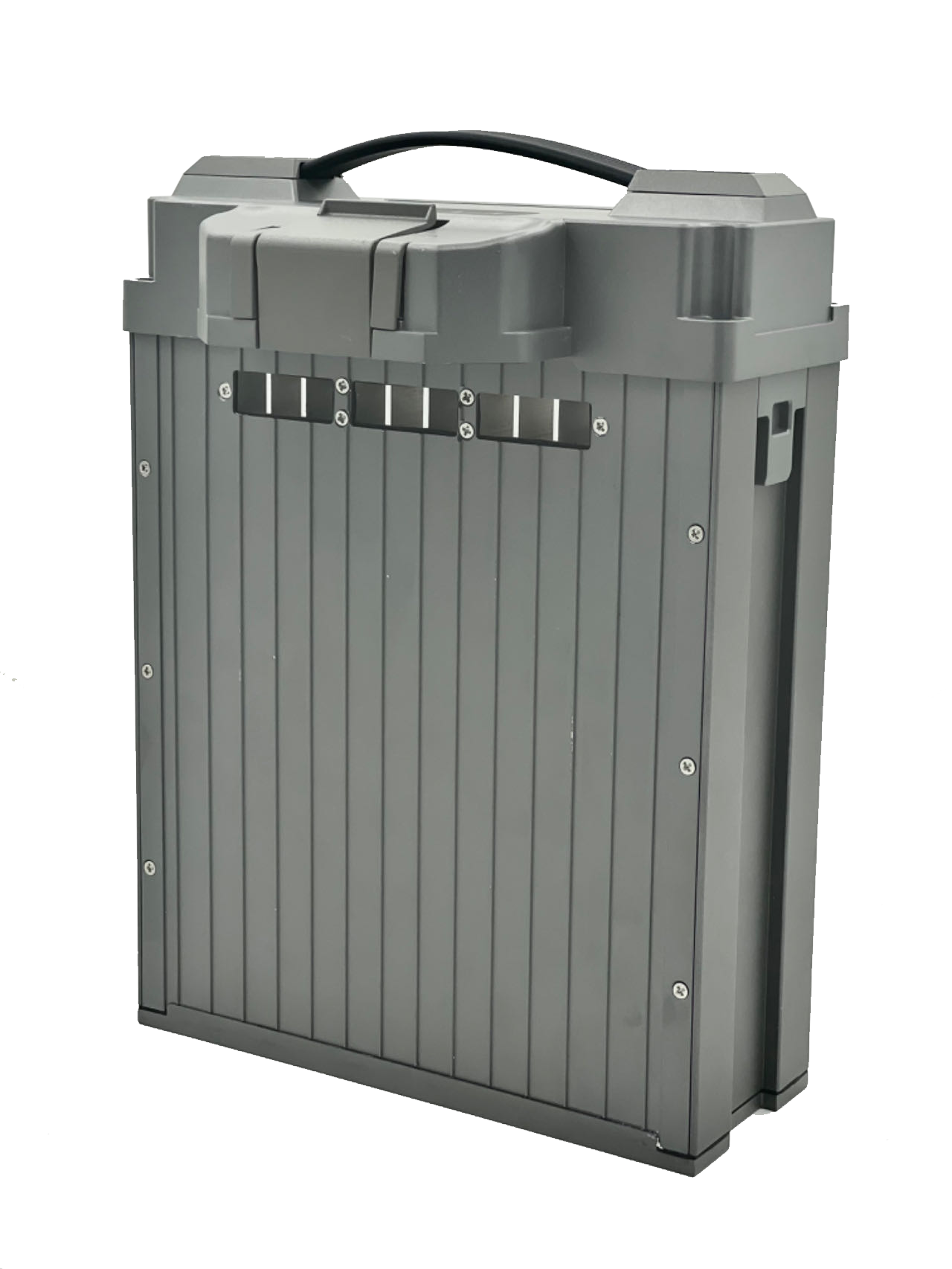
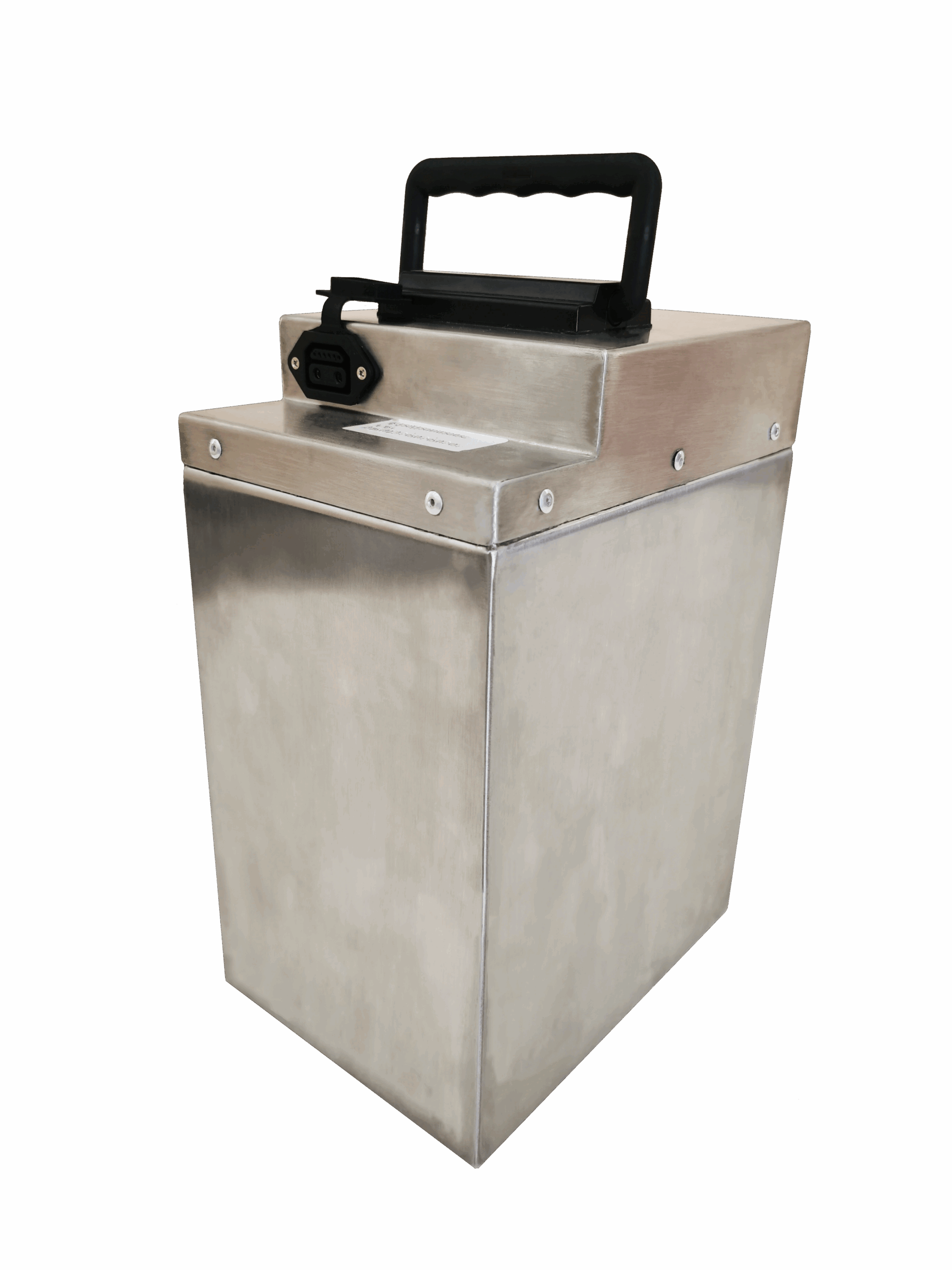
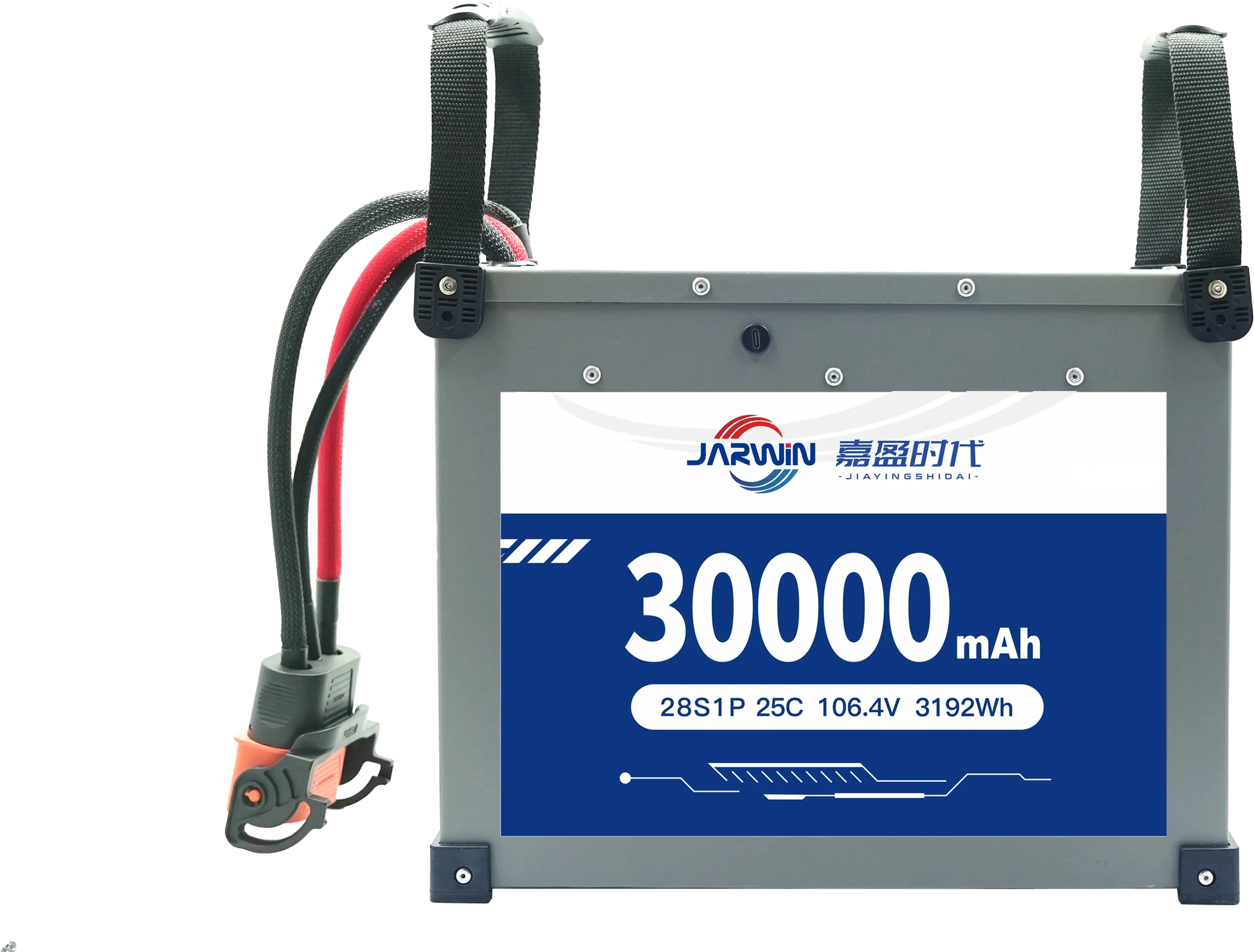
That is why many heavy-lift platforms are increasingly adopting 28S 30Ah 15C battery configurations instead of prioritizing energy density alone.
This article explains the engineering logic behind that choice and why a 15C discharge capability can provide a meaningful operational advantage in demanding UAV applications.
Heavy-Lift UAVs Are Not Steady-State Flying Machines
Many battery discussions assume a relatively stable power demand throughout a flight.
That assumption may hold true for small aerial photography drones or lightweight survey platforms operating under predictable conditions.
Heavy-lift UAVs are different.
Their most demanding moments occur during rapid changes in load and power demand rather than during cruise flight.
Typical mission scenarios include:
Fully Loaded Vertical Takeoff
A heavy-lift UAV carrying cargo must generate substantial thrust immediately after takeoff.
Unlike smaller drones that often operate with large thrust reserves, cargo platforms frequently operate much closer to their design limits.
The battery must be capable of delivering a large amount of power within seconds to support a stable climb.
Sudden Load Variations
Heavy-lift operations often involve situations such as:
- Payload movement during flight
- Shifting center of gravity
- Sling load oscillation
- Uneven cargo distribution
These events can rapidly increase power demand on specific motors and require immediate compensation from the power system.
Wind and Turbulence Compensation
Strong gusts or turbulent air can force the flight controller to command significant thrust increases in a very short period of time.
A battery with limited discharge capability may struggle to respond to these transient power demands.
Continuous High-Power Operation
Industrial logistics, emergency response, material transport, and infrastructure support missions often require prolonged periods of high power output.
Unlike consumer drones that spend much of their time cruising at moderate loads, heavy-lift UAVs frequently operate under sustained electrical stress.
For this reason, heavy-lift aircraft are not simply endurance machines.
They are power-demanding systems that rely on adequate electrical headroom throughout the mission.
This is why experienced operators often evaluate power margin as carefully as flight time.
Understanding the Logic Behind a 28S 30Ah Configuration
Before discussing discharge rate, it is important to understand why 28S 30Ah has become a common architecture in heavy-lift UAV applications.
Why 28S High Voltage Matters
A 28S lithium battery operates at approximately:
- Nominal voltage: 103.6 V
- Fully charged voltage: 117.6 V
The advantage of a higher-voltage architecture can be explained by:
P=V×IP=V\times I
For a given power requirement, increasing voltage reduces the amount of current required.
Lower current delivers several important benefits:
- Reduced cable losses
- Lower connector temperatures
- Less heat generation
- Reduced voltage sag
- Improved system efficiency
In heavy-lift UAVs where hundreds of amps may be required during peak demand, these advantages become increasingly significant.
A lower-voltage architecture would require substantially higher current to achieve the same power output, increasing electrical losses and placing additional stress on the entire power system.
Why 30Ah Is Often a Practical Sweet Spot
Capacity affects both endurance and battery weight.
A larger battery may extend flight time, but it also adds mass that could otherwise be allocated to payload.
A smaller battery reduces weight but limits mission duration.
For many cargo UAVs and industrial heavy-lift platforms, 30Ah represents a practical balance between:
- Flight endurance
- Battery weight
- Payload capacity
- Aircraft efficiency
It provides sufficient energy for meaningful mission duration without excessively reducing payload capability.
However, capacity alone does not guarantee performance.
The true value of a 28S 30Ah battery depends on how quickly that stored energy can be delivered when the aircraft needs it most.
Why 15C Discharge Capability Makes a Difference
This is where discharge rate becomes critical.
For a 30Ah battery:
- 8C = 240 A maximum discharge current
- 10C = 300 A maximum discharge current
- 15C = 450 A maximum discharge current
Using a fully charged voltage of approximately 117.6 V, the theoretical peak power capability becomes:
| Battery Rating | Maximum Current | Peak Power Capability |
|---|---|---|
| 8C | 240 A | ~28 kW |
| 10C | 300 A | ~35 kW |
| 15C | 450 A | ~53 kW |
Compared with a 10C system, a 15C battery provides approximately 50% more peak power capability.
Compared with an 8C system, available peak power is nearly doubled.
For a lightweight UAV, that difference may have limited operational impact.
For a heavy-lift platform operating near maximum payload, it can significantly affect available thrust reserve during critical phases of flight.
Peak Power Demand in Heavy-Lift UAV Operations
A battery that performs adequately during steady flight may still struggle when the aircraft encounters sudden power spikes.
Consider a heavy-lift UAV operating under the following conditions:
- Maximum payload
- High ambient temperature
- High-altitude environment
- Strong headwind during takeoff
- Aggressive climb requirement
In these situations, power demand can increase dramatically within seconds.
The issue is not average power consumption.
The issue is whether the battery can safely support peak power demand without excessive voltage drop.
Understanding Voltage Sag
As current demand increases, battery internal resistance causes voltage to decrease.
A battery operating near its discharge limits typically experiences greater voltage sag.
This can lead to:
- Reduced motor efficiency
- Lower available thrust
- Increased thermal stress
- Reduced system responsiveness
When a heavy-lift aircraft is already operating close to its performance envelope, excessive voltage sag can significantly reduce available power reserve.
Why Power Reserve Matters More Than Peak Power
Many operators focus on the maximum power figure shown on a battery specification sheet.
In practice, the more important metric is often available reserve.
A heavy-lift UAV rarely spends an entire flight drawing 15C.
Typical flight conditions may only require:
- 3C
- 4C
- 5C
The value of a 15C-rated battery is not continuous 15C operation.
The value is having additional headroom available when unexpected conditions occur.
That reserve can be used to handle:
- Sudden wind gusts
- Payload oscillation
- Emergency climb maneuvers
- Rapid thrust corrections
- Temporary overload events
In other words, a 15C battery is not simply a higher-performance battery.
It is a battery designed to preserve operational margin when flight conditions become less predictable.
Why Lower-C Batteries Can Become a Limitation
Lower-discharge batteries are often attractive because they may offer:
- Slightly higher energy density
- Lower cost
- Reduced manufacturing complexity
Under ideal conditions, they may perform adequately.
However, heavy-lift UAV operations rarely occur under ideal conditions.
The challenge appears when multiple variables combine:
- Full payload
- High temperature
- Wind disturbances
- Altitude effects
- Dynamic flight maneuvers
In these situations, a battery with limited discharge capability may consume most of its available power margin simply maintaining normal flight performance.
When an unexpected event occurs, little reserve remains available.
That does not necessarily mean the aircraft will fail.
But it does mean the system becomes increasingly dependent on operating conditions remaining favorable.
For industrial UAV operators, reducing dependence on favorable conditions is often a key reliability objective.
Finding the Balance Between Energy Density and Power Capability
Battery selection is always a balancing exercise.
A higher-energy-density battery can improve endurance.
A higher-discharge battery can improve power delivery and transient response.
Pushing too far in either direction creates tradeoffs.
An extremely energy-dense battery may provide impressive flight-time figures while reducing available power reserve.
An extremely high-discharge battery may increase weight, cost, and thermal management requirements.
For many heavy-lift UAV applications, 15C represents a practical middle ground.
It delivers:
- Strong transient power capability
- Meaningful thrust reserve
- Stabiele spanningsprestaties
- Reasonable energy density
- Competitive lifecycle economics
This balance is one reason why 15C has become a common specification in modern heavy-lift drone battery design.
Why 28S 30Ah and 15C Work Well Together
The effectiveness of this configuration comes from the interaction of all three parameters.
28S High Voltage
Provides:
- Lower operating current
- Improved electrical efficiency
- Reduced system losses
30Ah Capacity
Provides:
- Practical mission endurance
- Balanced battery weight
- Useful payload flexibility
15C Discharge Capability
Provides:
- Takeoff power reserve
- Fast transient response
- Reduced voltage sag
- Greater operational tolerance
Together, these characteristics help address three common challenges in heavy-lift UAV operations:
Reliable Fully Loaded Takeoff
Adequate power remains available even in demanding environmental conditions.
Improved Dynamic Load Handling
The aircraft can respond more effectively to payload shifts, turbulence, and rapid maneuver requirements.
More Consistent Power Delivery Throughout the Mission
Reduced voltage sag helps maintain stable aircraft performance from launch to landing.
For small UAVs, battery discussions often focus primarily on flight time. For heavy-lift UAVs, power reserve becomes equally important—sometimes even more important.
A battery is not judged solely by how much energy it stores.
It must also be evaluated by how effectively it can deliver that energy during the moments that matter most.
This is why many industrial cargo drones and heavy-lift UAV platforms continue to prioritize configurations such as 28S 30Ah 15C.
The objective is not simply achieving higher power output. The objective is maintaining sufficient electrical margin to support stable takeoffs, rapid response to changing conditions, and reliable mission execution across a wide range of real-world operating environments.
In heavy-lift UAV operations, endurance keeps the aircraft in the air. Power reserve keeps the mission under control.


 Nederlands
  English
  Español
  한국어
한국어  Deutsch
  Français
  日本語
日本語  Русский
  Bahasa Indonesia
  ไทย
ไทย  العربية
  Português do Brasil
  Italiano