



In the modern supermarket environment, sales velocity often outpaces the mechanical limits of traditional lead-acid forklift fleets. This imbalance creates a critical “restocking bottleneck” during peak hours—leading to empty shelves, lost revenue, and compromised operational flow.
Resolving this requires more than just a battery replacement; it demands a shift to lithium-ion infrastructure. By integrating high-performance lithium technology, retailers can transform their material handling from a reactive task into a proactive, continuous operation that ensures maximum product availability 24/7.
주요 내용
Uninterrupted Uptime: Reduce forklift downtime by up to 25%, ensuring shelves are replenished in real-time even during peak demand.
Strategic Asset Longevity: Achieve 2x to 4x the service life of traditional batteries, significantly lowering long-term capital expenditure (CAPEX).
Operational Agility: Leverage opportunity charging to eliminate dedicated charging windows and sync power replenishment with natural workflow breaks.
Labor Redirection: Transition to a maintenance-free lithium architecture to eliminate daily watering and acid cleaning, allowing staff to focus on high-value floor operations.
Predictive Reliability: Deploy Smart BMS technology to transition from reactive repairs to predictive maintenance, eliminating unplanned operational halts.
Restocking vs. Sales: Closing the Performance Gap
Fast Charging: Maximizing Inventory Velocity
In high-volume retail, the speed of shelf replenishment must mirror the speed of sales. Traditional lead-acid fleets often fail this test due to 8-hour charging “dead zones,” which usually coincide with your busiest restocking windows.
Lithium-ion technology eliminates this lag. By enabling a 25% improvement in inventory turnover rates, it ensures that forklifts are not tethered to a charger when customer foot traffic is at its peak. This transition allows management to focus on floor readiness rather than equipment availability.
Asset Longevity: Minimizing CAPEX Disruption
Operational efficiency is not just about daily speed; it is about long-term financial stability. Traditional batteries require frequent replacement cycles that disrupt capital allocation every few years.
Advanced lithium-ion solutions extend the replacement horizon to over 10 years, allowing retailers to redirect their budget from recurring battery procurement toward store expansions or digital infrastructure.
Operational Efficiency Comparison(Lithium vs. Lead-Acid):
성능 지표 | Traditional Lead-Acid | Advanced Lithium-Ion | Operational Impact |
Charging Cycle | 8 – 12 Hours | 1 Hours (80% charge) | Eliminate mid-shift downtime |
Service Life | 500 – 800 Cycles | 3,000 – 5,000 Cycles | 6x longer replacement interval |
Projected Lifespan | ~5 Years | 10+ Years | Significant reduction in CAPEX |
Herewinpower’s 5C technology supports an 80% charge in just 30 minutes, enabling a full top-off during a standard staff lunch break.
Strategic Uptime: Mastering Opportunity Charging
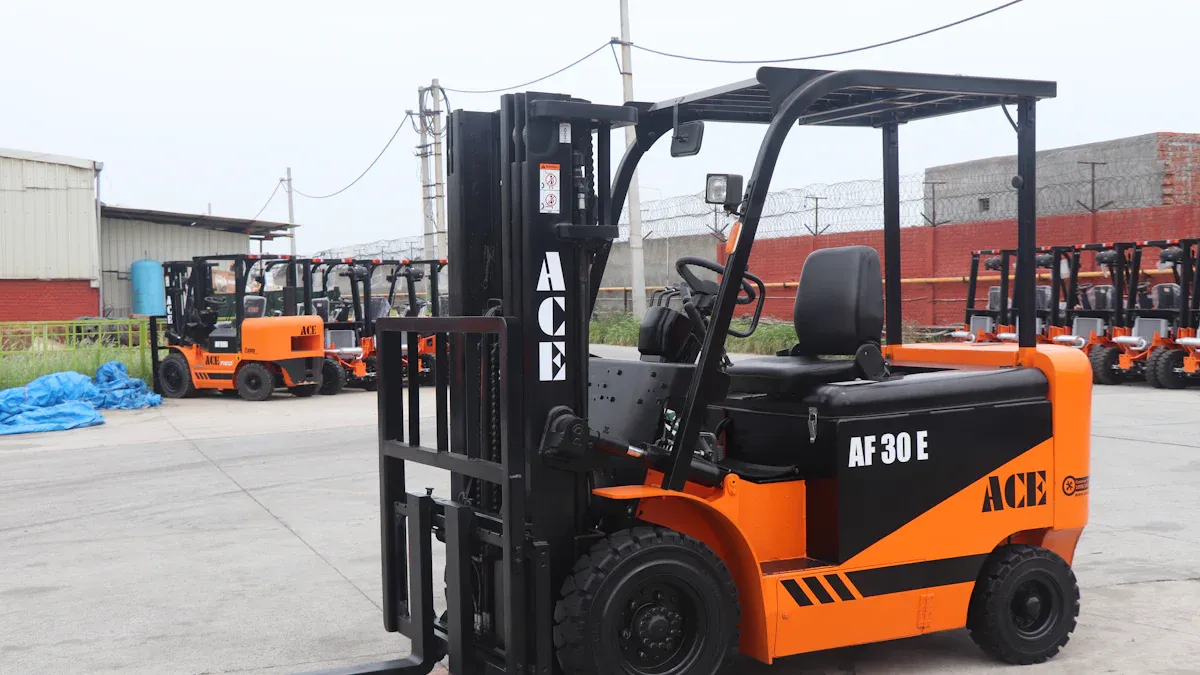
Eliminating the “Charging Room” Constraint
In traditional supermarket logistics, forklifts are tethered to a “hub-and-spoke” model, requiring them to return to dedicated rooms for hours of charging or hazardous battery swaps. These rooms not only consume expensive real estate but also require complex ventilation and fire-safety infrastructure.
Lithium-ion technology enables a decentralized power model. By integrating high-speed charging stations near break rooms or loading docks, retailers can reclaim valuable square footage and repurpose it for high-density storage or expanded cold-chain capacity.
Seamless Power Synchronization
Unlike lead-acid systems, which require a full discharge-recharge cycle to maintain health, lithium-ion infrastructure thrives on “top-off” charging. This allows management to sync power replenishment with natural 15-to-30-minute staff breaks, ensuring the fleet remains at optimal voltage during high-velocity restocking windows.
The Strategic Value of Decentralized Power:
Strategic Benefit | Operational Impact | Business Value |
Asset Availability | Eliminate 1-2 hours of daily battery swap downtime | +40 operating hours/week for a 20-unit fleet |
Real Estate ROI | Remove dedicated charging rooms and ventilation infrastructure | Reclaim premium floor space for inventory or production |
Safety Excellence | End manual battery swapping and acid spill risks | Lower insurance premiums and improved HSE complianc |
Stop viewing charging as a “pause” in operations. In a lithium-powered facility, charging is an integrated micro-task that keeps the supply chain moving without interruption.
Herewinpower: Reliability in Retail Environments
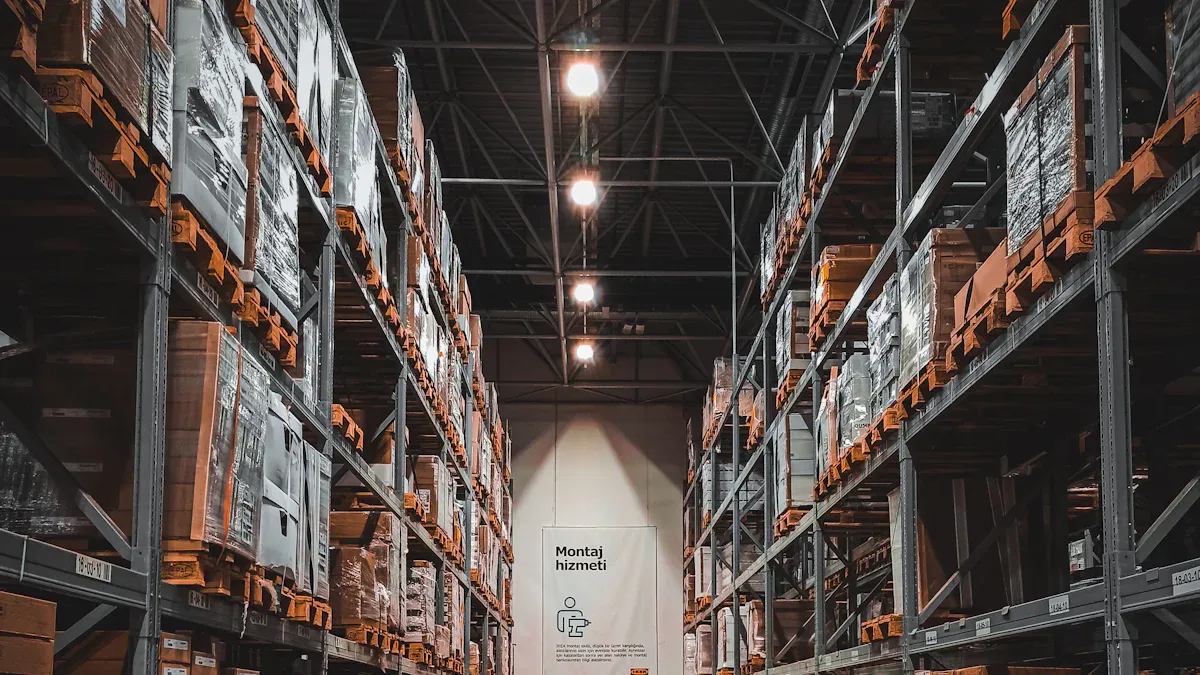
Stable Performance Across the Cold Chain
In retail logistics, environmental transitions are constant—from sub-zero cold storage to ambient temperature sales floors. While lead-acid batteries suffer from massive voltage drops in cold environments, lithium-ion infrastructure maintains stable power delivery even at -20°C. Integrated heating systems ensure that the transition between thermal zones does not trigger system throttling, allowing for consistent restocking speeds regardless of the department.
Proactive Safety in Busy Aisles
Safety in high-traffic supermarket aisles extends beyond mechanical brakes. By utilizing an advanced Smart BMS, the power system actively monitors thermal and voltage parameters in real-time to prevent electrical failure before it happens. This digital oversight ensures the forklift remains a silent, safe presence near customers and fresh produce, with zero acid fumes or emissions.
Engineered for Reliability in Retail Environments:
Key Feature | Technical Specification | Operational Benefit |
Cold Chain Resilience | Operational from -20°C to 60°C | No power loss when moving from cold storage to aisles |
Integrated Thermal Management | Active heating & advanced sensors | Prevents thermal throttling in high-demand peak hours |
Food-Safe Power | Zero emissions or acid fumes | Safe for use near fresh produce and customers |
Predictive Protection | Smart BMS real-time monitoring | Prevents electrical malfunctions and unplanned stops |
Slashing OPEX with Low Maintenance
Maintenance-Free Operations: Redirecting Labor
The most immediate impact on your Operating Expenditure (OPEX) comes from the elimination of daily battery maintenance. Traditional lead-acid fleets require a rigorous schedule of watering, equalizing, and acid cleaning—tasks that consume hundreds of labor hours annually and increase the risk of hazardous spills.
By transitioning to a maintenance-free lithium architecture, supermarket facilities can entirely eliminate these manual interventions. This allows site managers to redirect skilled labor from the battery room to the sales floor, directly enhancing customer service and inventory management efficiency.
Operational Task | Traditional Lead-Acid | Advanced Lithium-Ion | OPEX Impact |
Fluid Management | Weekly watering required | Zero watering needed | 100% labor savings on fluid upkeep |
Cell Balancing | Manual equalizing charges | Automatic BMS balancing | Eliminate specialized maintenance windows |
Surface Cleaning | Periodic acid residue removal | No cleaning required | Prevents terminal corrosion and downtime |
Digital Intelligence: Predictive vs. Reactive Management
Operational efficiency is further maximized through Predictive Safety. Instead of waiting for a battery failure to disrupt the restocking cycle, the integrated Smart BMS provides a transparent, real-time view of your fleet’s health across multiple locations.
By leveraging cloud-based monitoring of State-of-Health (SOH) and charging history, facility managers can transition from reactive repairs to proactive interventions. This digital oversight allows you to identify potential issues before they escalate into unplanned downtime, ensuring your supply chain remains uninterrupted during critical peak hours.
Digital Feature | Operational Capability | Business Value |
Cloud Monitoring | Remote access to real-time SOH and charging data | Fleet-wide visibility for multi-store managers |
Predictive Alerts | Automatic detection of voltage or thermal anomalies | Zero unplanned stops during peak restocking |
Historical Analytics | Tracking of usage patterns and cycle history | Optimized ROI and accurate asset lifecycle planning |
Moving to lithium is more than a battery upgrade; it’s a transition from manual labor to digital asset intelligence, resulting in up to a 30% reduction in total cost of ownership over five years.
Transitioning to lithium-ion is more than a battery upgrade; it’s a shift from manual maintenance to digital asset intelligence. By delivering up to a 30% reduction in TCO over five years, this architecture allows you to redirect critical labor from “managing batteries” to “serving customers”.
Ready to optimize your restocking cycles? Our team is available to provide a detailed energy efficiency audit and a transition strategy tailored specifically to your supermarket operations.
Consult with our technical specialists today
자주 묻는 질문
How does lithium-ion technology specifically improve supermarket restocking?
Unlike traditional batteries that require 8–12 hour charging “dead zones,” lithium-ion supports opportunity charging during 15-minute staff breaks. This ensures forklifts are always available during peak hours, potentially improving inventory turnover by 25%.
Is it safe to use these batteries near fresh produce and customers?
Yes. A primary advantage of lithium-ion is its maintenance-free, zero-emission architecture. Unlike lead-acid batteries, they do not release acid fumes or hydrogen gas during use or charging, making them ideal for high-traffic sales floors.
How do these batteries perform in cold storage or walk-in freezers?
Advanced lithium solutions are engineered for the cold chain, maintaining stable power delivery at temperatures as low as -20°C. Integrated heating systems prevent voltage drops, ensuring consistent performance when moving between cold storage and ambient temperature aisles.
What is the real-world impact on labor costs?
By eliminating manual tasks such as watering, equalizing, and cleaning, facilities can entirely redirect maintenance labor to high-value floor operations. This transition typically results in a 30% reduction in total cost of ownership (TCO) over a five-year period.
참고 항목
Boosting ROI for AGV Fleets Through Lithium Battery Efficiency
Addressing Cold Storage Battery Performance Issues for Forklifts
Enhancing Food Truck Operations with Quiet Lithium Power Solutions


 한국어
한국어  English
  Español
  Deutsch
  Français
  日本語
日本語  Русский
  Bahasa Indonesia
  ไทย
ไทย  العربية
  Português do Brasil
  Italiano
  Nederlands