
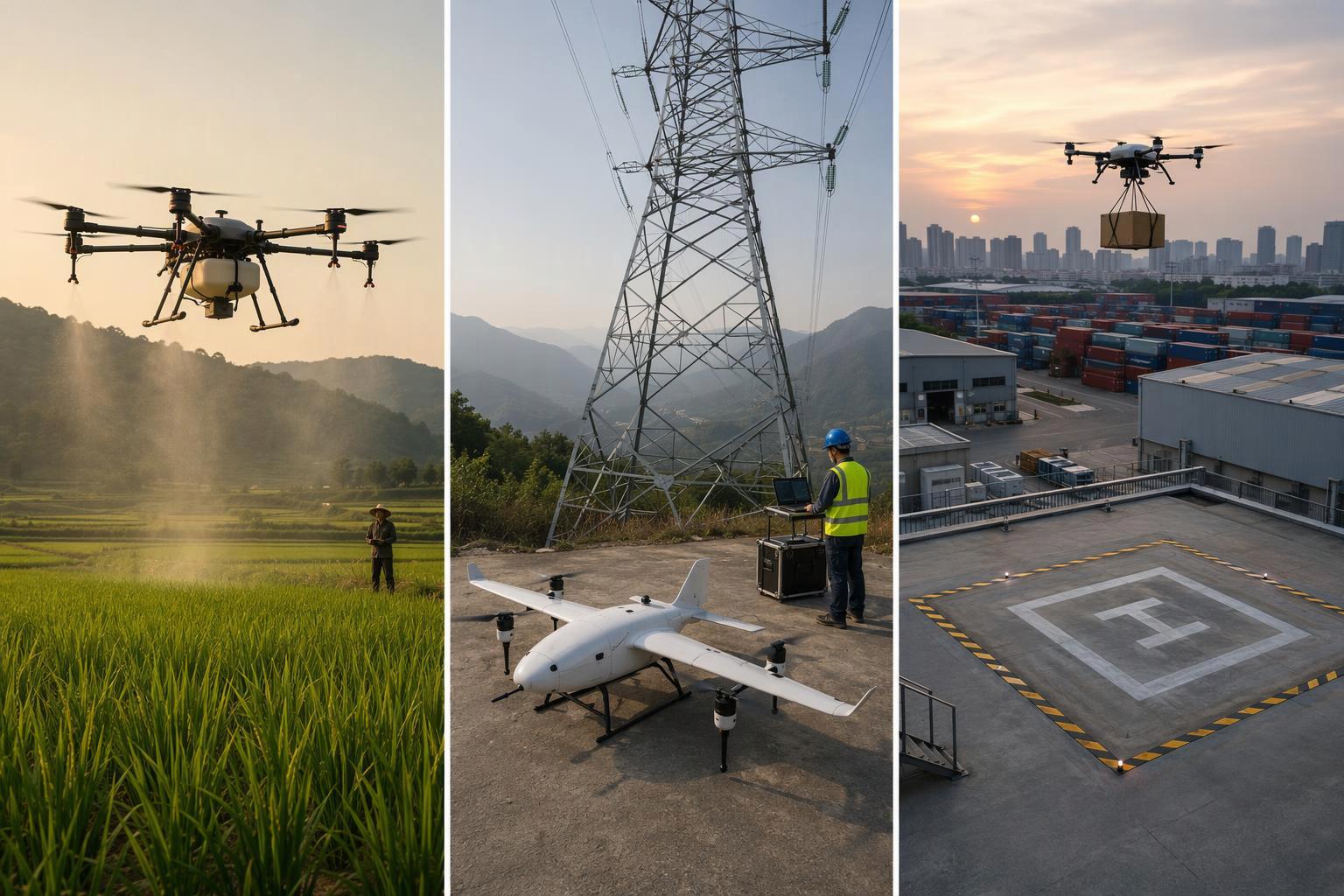
China’s UAV industry isn’t one market. Agricultural spraying, industrial inspection, surveying, cargo logistics, public safety and specialised missions each run on different platforms, and each is served by companies with very different roles.
That breadth is the overseas buyer’s first practical problem. A company listed as a “drone manufacturer in China” may be a full-platform OEM, an application specialist, a service operator with no factory, or a component supplier whose products sit inside someone else’s aircraft. Knowing which one you’re talking to determines what you can ask for, what can be customised, and where the supply risk sits.
The profiles below describe what each company builds, which applications it serves and what a buyer should check. They rely on publicly available company information reviewed as of November 2026, and availability or commercialisation status can change, so confirm current details directly with the company in question.
This map is published by Herewin, a Shenzhen-based lithium battery manufacturer whose customers include UAV manufacturers and integrators. No company profiled here is a customer endorsement, a ranking or a commercial recommendation, and no aircraft manufacturer or component supplier below is paid for inclusion.
Understanding China’s Civilian UAV Industry
China’s civilian UAV sector is large and still expanding. According to the China Low-Altitude Economy Development Index Report (2026), the total output value of China’s civilian UAV complete aircraft reached RMB 176.1 billion in 2025, approximately 20% higher than in 2024. Industrial-grade UAVs accounted for RMB 125.9 billion, compared with RMB 50.2 billion for consumer-grade UAVs. That split matters for reading the companies below, most of which sit in the industrial segment.
Regulation has moved in step with that growth. China’s Interim Regulations on the Flight Management of Unmanned Aircraft took effect on 1 January 2024, establishing requirements for areas including aircraft identification, registration, flight activities and operational management. Requirements such as airworthiness certification, operator qualifications, remote-pilot credentials, real-name registration and flight approvals vary according to the aircraft category, operating scenario and applicable regulatory provisions.
For an overseas buyer, the practical consequence is that compliance claims should be read against a specific aircraft category and mission, not as a general property of a company.
Major UAV Application Segments
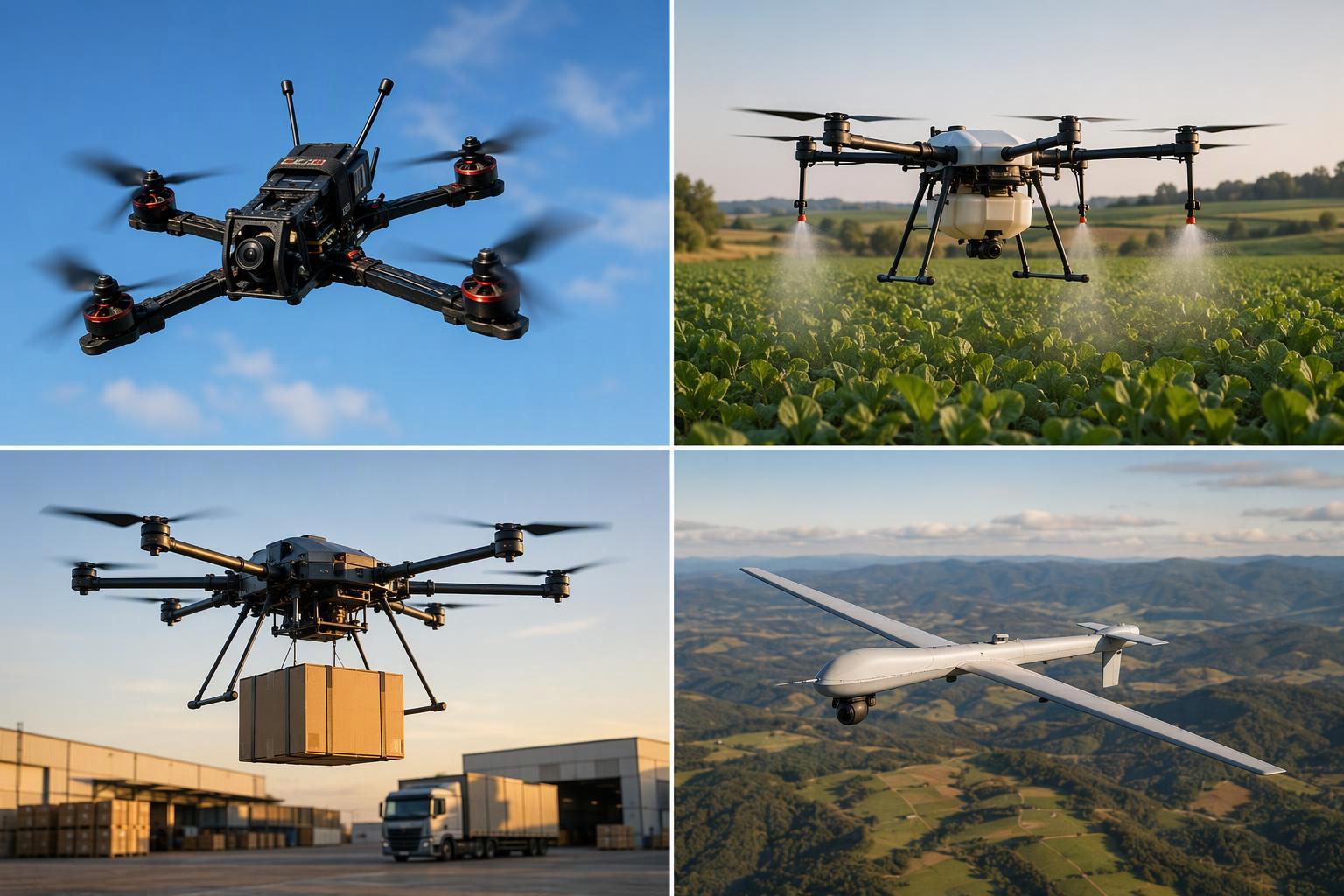
Civilian UAV work in China clusters into a handful of application segments. Each implies a different platform architecture, a different duty cycle and a different set of procurement questions. These categories describe common application areas rather than mutually exclusive aircraft types — one platform can serve several missions depending on its configuration and payload.
Application segment | Primary use |
|---|---|
Agriculture | Spraying, spreading, field operations |
Industrial inspection | Power, energy and infrastructure inspection |
Surveying and mapping | Terrain mapping, geospatial data capture |
Cargo and logistics | Industrial transport, remote-area delivery |
Public safety and emergency response | Search and rescue, firefighting, incident monitoring |
Specialised operations | Sector-specific mission work |
The platform a segment implies matters more than any specification sheet. An agricultural UAV flies repeated short sorties from the same field edge and lives or dies on turnaround time. A mapping fixed-wing flies a long, planned grid and depends on stable, repeatable data capture. A cargo platform must balance payload, route distance, energy reserves and take-off and landing requirements at both ends of its route. These are also the platform classes the company sections below are organised around.
Who Makes Up the UAV Ecosystem?
Four roles recur across the Chinese UAV industry, and separating them is usually the first thing to establish about a company.
UAV manufacturers are responsible for developing or supplying complete unmanned aircraft platforms. They typically control or coordinate the aircraft design and major system integration, although some manufacturing and subsystem work may be outsourced.
System integrators combine a flight platform with payloads, software and control systems into an application solution. They may buy airframes rather than build them, and their value sits in the configuration, the data workflow and the deployment.
UAV operators actually fly drones to deliver agricultural, inspection, logistics or other services. They are buyers and users of platforms, not usually their designers.
Component suppliers provide the motors, ESCs, flight controllers, batteries, communication and navigation modules that platforms are built from. Their customers are the manufacturers and integrators above them.
These roles overlap in practice — a manufacturer may also integrate and operate, and an integrator may develop its own airframe — but keeping them separate while reading a company list prevents a common error: treating every company with “drone” in its description as an aircraft OEM.
Key Chinese UAV Manufacturers and Ecosystem Companies
Each section below takes one platform role and a few companies that illustrate it.
Agricultural UAV Platforms
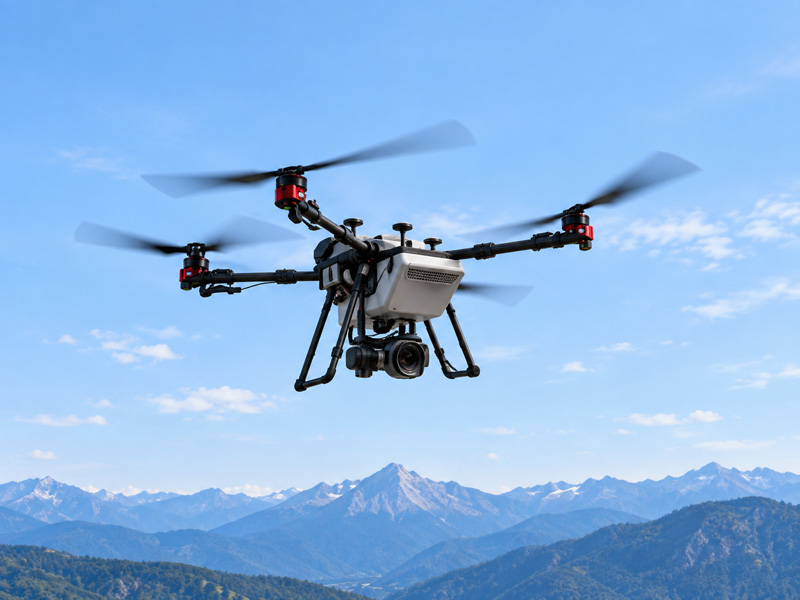
Agricultural platforms are used for orchard spraying, fertiliser spreading and field monitoring, and some systems add imaging and data analysis for crop assessment. Payload sets part of the range, but the operating routine sets just as much: aircraft configuration, spraying or spreading equipment, battery turnaround and ground support all affect daily productivity.
XAG (Guangzhou) builds agricultural spray and spread drones — the P-series tops out with the P150 Max at 80 kg payload, an 80 L liquid tank and a 115 L granule container — together with ground equipment and farm-management software. Because the package extends beyond the airframe, the scope of a quotation matters: verify which parts of a field operation are included and how far the aircraft depends on that surrounding kit. Several other industrial multirotor makers list agricultural configurations as well, some selling complete operating packages with ground equipment and others selling aircraft to existing service providers.
DJI (Shenzhen) sells the Agras line, currently led by the T100 at 100 kg payload with a 100 L spray tank and a 150 L granule container, inside a much larger consumer and enterprise portfolio. Commercialisation is not in question for these models; the open question is fit. Scale and dealer reach say nothing about willingness to customise a platform or adapt a power system for your airframe, so treat the agricultural line as a standards-based purchase rather than an OEM starting point unless the company confirms otherwise.
Industrial and Surveying UAV Platforms
Industrial UAVs cover inspection, surveying, security, energy and public safety. The companies profiled here own and manufacture platforms; operators who only fly aircraft are excluded.
JOUAV (Chengdu) builds VTOL fixed-wing platforms: its CW-series runs from small electric airframes to hybrid long-endurance models, with published payloads in the 1–25 kg band depending on model, alongside automated hangars and fleet-management software. Its commercial position can also be checked independently — it has been listed on the Shanghai Stock Exchange’s STAR Market since 2021 under code 688070, so revenue, segment reporting and R&D spending appear in public filings rather than only in a brochure. Verify one thing: which of its catalogue items are delivered as one integrated system and which you’d source and support separately.
Autel Robotics (Shenzhen) covers inspection and emergency response with enterprise multirotors and a fixed-wing VTOL line; the Dragonfish tiltrotor family is published from 1.5 kg payload on the Standard up to 10 kg on the Dragonfish-25, so the class you need decides which model applies. The company’s overseas distribution is broad, but distribution is not local after-sales support — confirm which entity handles repair, spare-parts stock and technical support in your own market before assuming the global footprint extends that far.
United Aircraft (Shenzhen) builds mainly around coaxial unmanned helicopters: the TD220 carries around 50 kg and the TD550 up to 200 kg at sea level, a lift band above standard multirotor payloads and below the cargo eVTOL class. Rotor and drive integration separates this configuration from multirotor and fixed-wing platforms, which is where its aero-structures background matters. Verify which models are actually offered for logistics work, and treat the R6000 tiltrotor as a separate aircraft category with its own maturity.
Many more multirotor, VTOL and unmanned-helicopter suppliers operate in this segment, and model availability shifts quickly. Unmanned helicopters in particular deserve evaluating on their own terms: payload, endurance and mission integration behave differently from multirotor platforms.
Cargo and Logistics UAV Platforms
This is the segment where product announcements, certification, delivery and routine commercial operation are most often confused with one another. Not every player here is an independent Chinese aircraft manufacturer, and not every one is an aircraft supplier at all.
AutoFlight (Shanghai) has progressed through the cargo eVTOL certification sequence to a more advanced stage than most programmes in this segment: its CarryAll (V2000CG) carries 400 kg in a 3.2 m³ bay over a published operational range of about 200 km, and has held type, production and airworthiness certificates from China’s civil aviation authority since 2025, with a validated type certificate in Indonesia in 2026. Those milestones are what make the case useful — certification, first customer deliveries and routine commercial operations remain three different things, so establish which one the programme you’re discussing has actually reached. Its passenger programme is outside the scope of this map.
Phoenix Wings is an SF Express-backed cargo UAV manufacturer based in Ismaning, Germany — a China-linked international business rather than a domestic OEM. Its PW.Orca carries 15 kg in a 96 L bay, with range published at up to 100 km on smaller payloads and around 60 km at maximum load. Verify what the SF Express relationship does and doesn’t cover: backing should not be read as evidence that its aircraft are available through SF Express’s domestic network.
Payload capacity alone decides very little here. Route requirements, landing conditions, operating permissions, payload handling and ground support determine whether a platform is usable. Operator-led urban delivery programmes run by large Chinese platform businesses are useful references for infrastructure and route approval, but they are rarely aircraft procurement options.
Specialised UAV Platforms and Applications
Not every platform sits inside an application category. This section covers companies whose product is defined by a specialised mission rather than by the industry they sell into. Consumer imaging drones are left out on purpose: they are part of China’s drone industry, but they don’t answer the platform and supply-chain questions below.
DAMODA (Shenzhen) supplies automated swarm performance systems — drones plus fast-charging nests — for light shows and large-scale aerial displays. The company reports more than 30,000 shows in over 500 cities without stating a reporting period or counting method. Its vehicle-mounted show system is publicly described as cutting setup from roughly four hours with 20 people to about a minute with one operator, which points at where the real cost sits.
Swarm work needs far more than coordinated flight control. Fleet charging, transport, aircraft preparation, show programming and on-site deployment all affect reliability, so compare the supporting infrastructure as closely as the aircraft — deployment time and labour per show tell you more about operating cost than aircraft count does. The few suppliers in this niche tend to work as much as systems integrators as aircraft makers, and buyers should establish which of those two roles they are actually contracting.
UAV Ecosystem and Component Companies
Platform development depends on a wider supply network covering propulsion, flight control, navigation, communications, payloads and power. The companies here are not aircraft OEMs, and describing them as such would misrepresent what they sell. Their customers are the manufacturers and integrators described above.
Sub-segment | What this layer supplies |
|---|---|
Flight control | Autopilots, stabilisation and autonomous flight software |
Propulsion | Motors, ESCs and propellers |
Navigation and communication | GNSS and RTK positioning, telemetry and datalinks |
Payload systems | Cameras, LiDAR, multispectral and mission sensors |
Battery systems | Cell selection, pack design, BMS and charging |
Ground infrastructure | Automated hangars, charging and battery-swap systems |
The table maps the layers a platform depends on; it is not a claim that every layer is represented by a named company here. Two examples follow.
T-MOTOR (Nanchang) supplies motors, ESCs, propellers and integrated propulsion systems, sold as matched modules: its A-series pairs motor, ESC and propeller for maximum thrust from about 3.5 kg to 158 kg with 6S to 24–28S battery support, and separate families cover VTOL and fixed-wing airframes. That span is the practical reference point — it tells you roughly which thrust class and pack voltage a platform sits in, and whether its spec sheet is internally consistent.
JIYI (Shanghai) supplies flight controllers and autopilots, with distinct models for different airframe types rather than one controller for everything — agricultural spraying, industrial multispectral work, rescue and survey, and VTOL fixed-wing each draw on a different part of the range. Where a platform uses its hardware, the model and firmware release matter more than the product family, so ask which controller is actually fitted.
Every layer holds more suppliers than are named here. Flight-control and navigation suppliers often build around open-source firmware ecosystems, while ground-infrastructure suppliers — automated hangars, charging stations, swap mechanisms — have to be checked platform by platform, since interoperability is rarely announced in advance.
How China’s UAV Ecosystem Is Structured
Most of the companies above occupy more than one role at once, and some of them sell both complete aircraft and components. What matters to a buyer is less the label than how the work is divided between the parties involved.
How different companies work together
Platform manufacturers are typically responsible for the aircraft design and overall platform development, although some production or subsystem work may be outsourced. System integrators configure aircraft, payloads, software and mission systems for specific applications. Component suppliers provide the subsystems used in those platforms, while operators contribute mission requirements and operational feedback. These relationships are rarely linear. A manufacturer may integrate its own payloads, an integrator may develop its own airframe, and a supplier may sell both to OEMs and directly to operators.
Who controls which design decisions?
The scope of customisation depends on which design elements a company controls in-house and which are provided by external suppliers. Before assuming a company can change something for you, establish who holds each of the following:
Airframe and structural design
Flight-control system
Payload integration
Power architecture and battery interface
Communication systems
Mission software and data workflow
This is also where accountability sits. A manufacturer is generally responsible for the aircraft it supplies; an integrator is responsible for the integration work within its agreed scope; and an operator is responsible for the service it provides. The exact contractual responsibilities should be defined in each agreement, and a buyer should know which of these they are contracting.
When should component suppliers be involved?
For projects involving platform customisation, component requirements should be discussed early enough to identify interface, weight, power and integration constraints before the design is finalised. Any proposed component change should also be evaluated through sample testing and system-level validation before it is approved for production. A battery specified after the airframe is fixed may not fit the available volume or the voltage architecture, and a payload selected after the power budget is set may not be supportable.
How Overseas Buyers Can Evaluate Chinese UAV Companies
No company named above will be right for every project, and the profiles are a starting point rather than a shortlist. The five dimensions below are the ones that most reliably separate a viable partner from an impressive-looking one.
Most buyers start from the platform class their mission implies. This is where each class usually leads:
Your platform class | Where to start | First question that decides it |
|---|---|---|
Multirotor for spraying, spreading or short-range inspection | Agricultural and multi-role multirotor makers | Payload, tank or hopper size and turnaround per sortie |
VTOL fixed-wing for mapping, corridor or long-line inspection | VTOL and fixed-wing platform makers | Endurance, ground-control setup and data consistency |
Unmanned helicopter above multirotor payloads | Coaxial or single-rotor helicopter developers | Lift class, rotor-drive integration and service depth |
Cargo or logistics platform | Cargo eVTOL and VTOL cargo developers | Delivery milestones and landing-site requirements |
Swarm or display systems | Specialised system integrators | Fleet control, charging infrastructure and deployment labour |
A platform you intend to customise | Manufacturers with in-house design authority | Which design elements they control |
If you need a service rather than an aircraft, the shortlist moves to operators — and the first question there is whether the operator sells aircraft to third parties at all.
1. Product and Platform Maturity
The first question is whether the company has a platform it can actually deliver. This means confirming a specific product model, its current production status, published technical specifications and whether the company can provide units for delivery. A product page or specification sheet alone does not establish current production capacity or delivery availability.
Distinguish four stages that are routinely presented as one: a design or prototype, a product listed for sale, an aircraft actually delivered to a customer, and a fleet in routine operation. Trade-show displays, renderings and launch announcements point to the first two only. Evidence of delivered units or identifiable operating fleets is a stronger basis for evaluation.
For each candidate, ask for the model, current production status, technical documentation and at least one deployment reference that matches your application. A demonstration video alone does not establish commercial deployment.
2. Application Fit
A platform that performs well in one application may be poorly suited to another, even within the same broad category. The fit question is about whether the platform’s operating characteristics match the way you will actually use it.
Agricultural operators should evaluate tank or hopper capacity, application rate, hectares covered per hour, battery turnaround, charging arrangements and ground-support requirements. Daily productivity depends on the entire operating cycle, not just the aircraft’s payload capacity.
Industrial inspection projects should assess payload compatibility, mission duration, environmental operating limits, positioning accuracy and the consistency of the data collected. The relevant platform is the one that can complete the required inspection workflow reliably, not necessarily the one with the longest advertised flight time.
Cargo projects should evaluate payload capacity under the intended operating configuration, route distance, reserve requirements, take-off and landing conditions, payload-handling arrangements and operating cost per delivery.
In practice, matching happens in three steps. Write down the mission first — hectares per day, kilometres of corridor, kilograms per trip — before looking at any brochure. Then check whether the closest candidate platform has a published configuration that reaches that figure, and what it assumes about ground support. Only then compare companies, because two platforms with the same payload number often differ more in turnaround, charging and site setup than in the aircraft itself.
If none of the profiles above matches your mission closely, that is a result in itself: it usually means you need a system integrator rather than an off-the-shelf platform, or a component supplier who will work to your own airframe.
3. OEM, Customisation and Integration Capabilities
Buyers looking for an OEM or ODM partner need to establish which parts of the platform can be modified, who controls each design decision, and how engineering changes are tested and approved. They should also confirm the supplier’s technical communication process and post-delivery support arrangements.
A distinction that is often missed: airframe customisation and component customisation are different capabilities. A company that will modify an airframe is not necessarily a company that will develop a custom battery pack, and vice versa. Do not assume that a company selling aircraft is an OEM factory; many are integrators or distributors with no design authority over the airframe.
It helps to split the question into five separate capabilities rather than one:
Airframe customisation
Payload integration
Flight-control integration
Battery pack customisation
Software and communication integration
For each one, buyers should identify which modifications are handled in-house, which depend on external suppliers, and how sample testing and design validation are managed. Outsourcing does not necessarily indicate a lack of capability. What matters is whether the supplier clearly identifies the responsible parties, manages interface requirements and remains accountable for validation and delivery within the agreed scope.
4. Component and Battery Compatibility
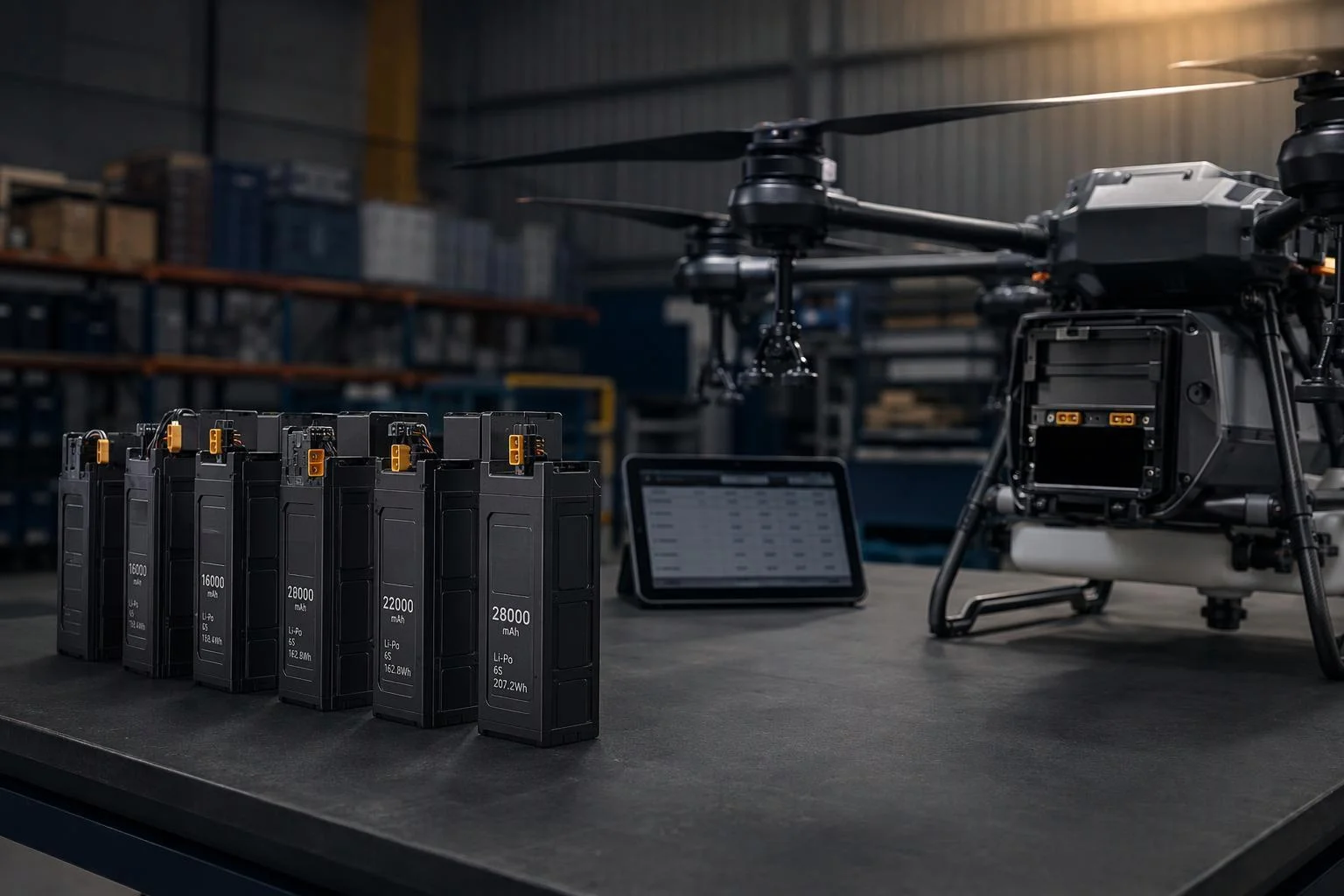
Battery compatibility deserves particular attention when evaluating a UAV platform. Buyers should confirm the battery’s voltage configuration, continuous and peak discharge requirements, pack weight, installation dimensions, BMS communication interface and charging specifications. For OEM projects, they should also establish whether the battery is a standard component or a pack developed around the aircraft’s power architecture.
The specific questions worth putting to any platform supplier are:
Is the battery a standard purchased item, or a pack designed for this platform?
Does the pack voltage match the aircraft’s power architecture, and can the system accommodate changes in voltage or battery configuration without redesigning other components?
Do the continuous and peak discharge capabilities meet the platform’s requirements under its actual operating profile?
Where battery telemetry is required, does the BMS support the communication protocol used by the aircraft’s battery-monitoring or control system?
Is there a defined charger, swap and maintenance arrangement, or is charging left to the operator?
Which parties are responsible for battery sample validation, system integration and subsequent production supply?
These questions are useful regardless of which battery supplier a platform uses, because they reveal how thoroughly the platform’s power system has been engineered. A platform whose battery interface is well documented is easier to support, maintain and adapt than one where the battery is an afterthought.
5. Export, Documentation and After-Sales Support
Overseas buyers carry risks that domestic buyers do not, and the last dimension is about whether the company can support you after the aircraft leaves China.
The points to confirm are concrete: export experience for the specific product; technical documentation in a usable form; compliance evidence for your target market; spare parts availability; repair arrangements; warranty terms; technical support channels; and whether there is a local distributor or service partner in your country. A company that sells internationally does not automatically provide any of these.
One caution applies here. It is not accurate to assume that Chinese UAV companies hold international certifications or export clearance for every product and destination market. Export controls may apply to certain UAVs, components, software or related technologies, while import and operating requirements vary by destination. Buyers should verify the applicable export requirements, product documentation and local regulatory approvals for the specific aircraft and intended market.
Battery Requirements Across Different UAV Platforms
Different UAV platforms place different demands on their batteries. These demands are shaped not only by cell chemistry, but also by the aircraft’s power architecture, payload, flight profile and ground-operation requirements. A pack of the same nominal capacity can be well suited to one platform and poorly suited to another, because capacity is only one of several parameters that determine whether it works in a given aircraft.
Platform type | Typical operating profile | Battery considerations |
|---|---|---|
Agricultural UAV | Frequent sorties, repeated take-offs and landings | Discharge capability, cycle life, charging and swap arrangements |
Industrial inspection UAV | Mission-specific flight duration and payload requirements | Mission duration, usable energy, battery monitoring and operating reliability |
Surveying UAV | Planned mapping missions and consistent data collection | Energy capacity, weight, continuous power demand and mission-duration requirements |
Cargo UAV | Payload-dependent power demand and route requirements | Continuous and peak power, system voltage, weight-to-energy balance |
Automated UAV operations | Recurring or remote missions with limited manual intervention | Battery monitoring, charging infrastructure and operational reliability |
Three questions explain most of the variation.
Why does the same capacity not suit different platforms?
Because capacity describes stored energy, not the rate at which it can be delivered or the weight a platform can afford to carry. The usable energy available from a pack varies with discharge rate, operating temperature, voltage limits and the aircraft’s power-management settings, and a higher-capacity pack adds weight that comes straight out of the mission payload. The capacity figure is a starting point, not a specification.
Why must voltage, discharge capability and communication protocol match the aircraft?
The battery is part of a power system, not an accessory. Its voltage needs to suit the aircraft’s power architecture, and its discharge capability needs to cover the platform’s peak and continuous loads. Where battery telemetry is required, the BMS or battery-management interface must support the communication method used by the aircraft’s monitoring or control system. A mismatch may affect power delivery, telemetry, charging behaviour or communication with the flight-control system, and how far it matters depends on the platform architecture and its battery-management implementation.
Why do charging efficiency, cycle life and battery management affect operating economics?
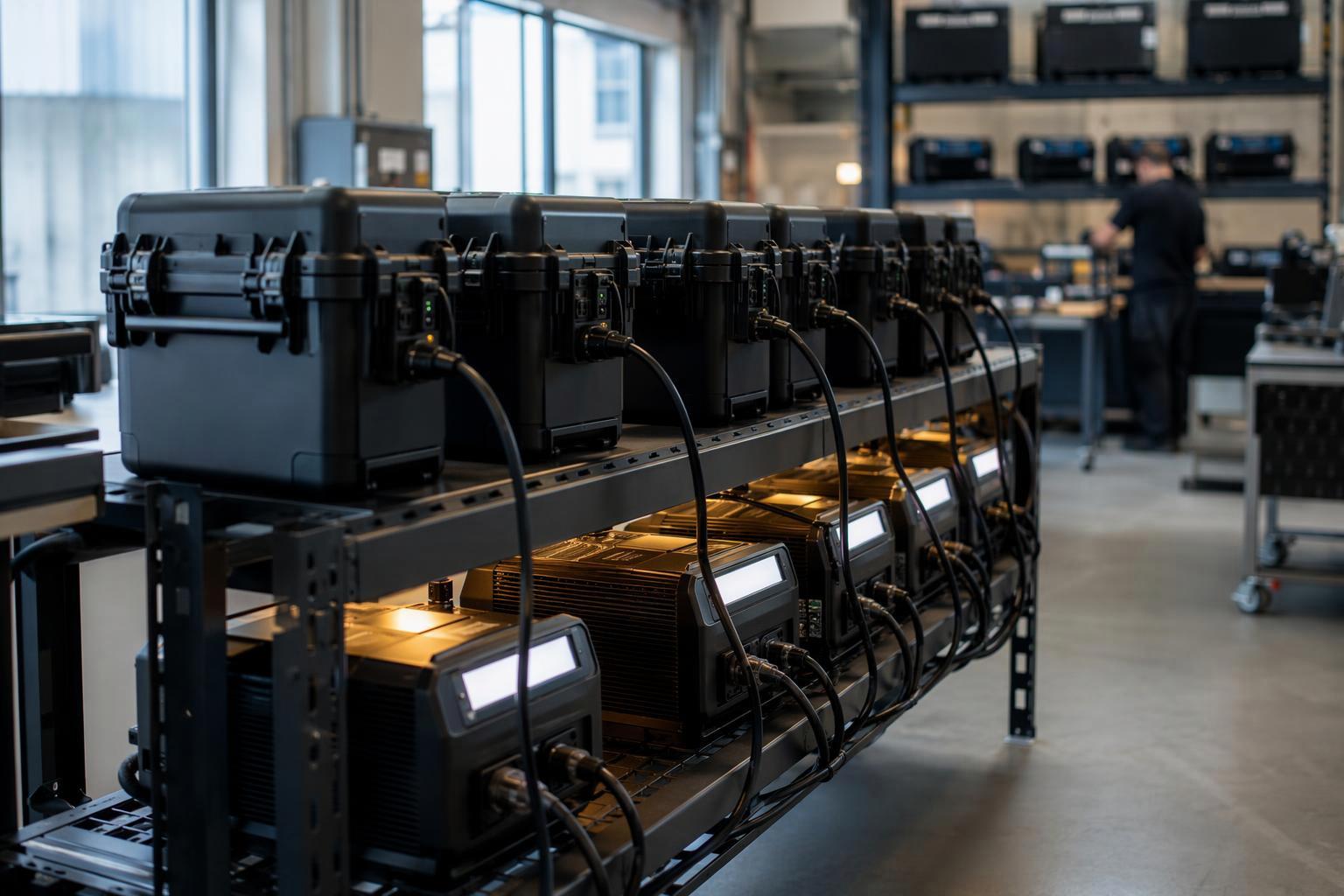
For fleets with frequent sorties, the number of battery sets required per aircraft depends on flight duration, turnaround time, charging time and the number of missions scheduled each day. Cycle life and charging conditions then set how often packs are replaced. Charger availability, operating tempo, swap procedures and temperature push the same numbers around, so battery management is an operational decision rather than a maintenance detail.
Related technical guides go deeper on heavy-lift drone batteries, UAV battery management systems そして battery SOC management and swapping strategies.
Where Battery Suppliers Fit into the UAV Industry
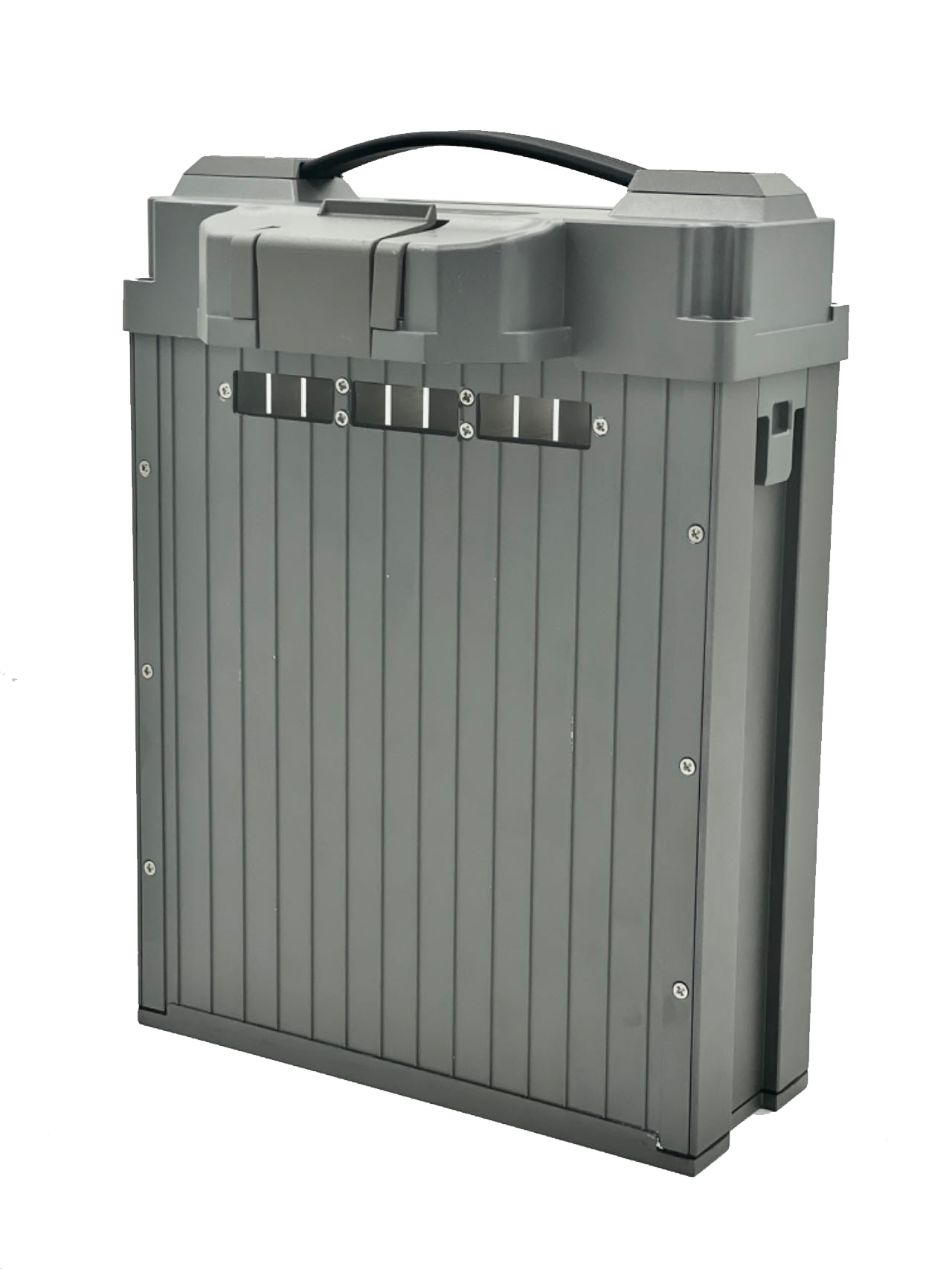
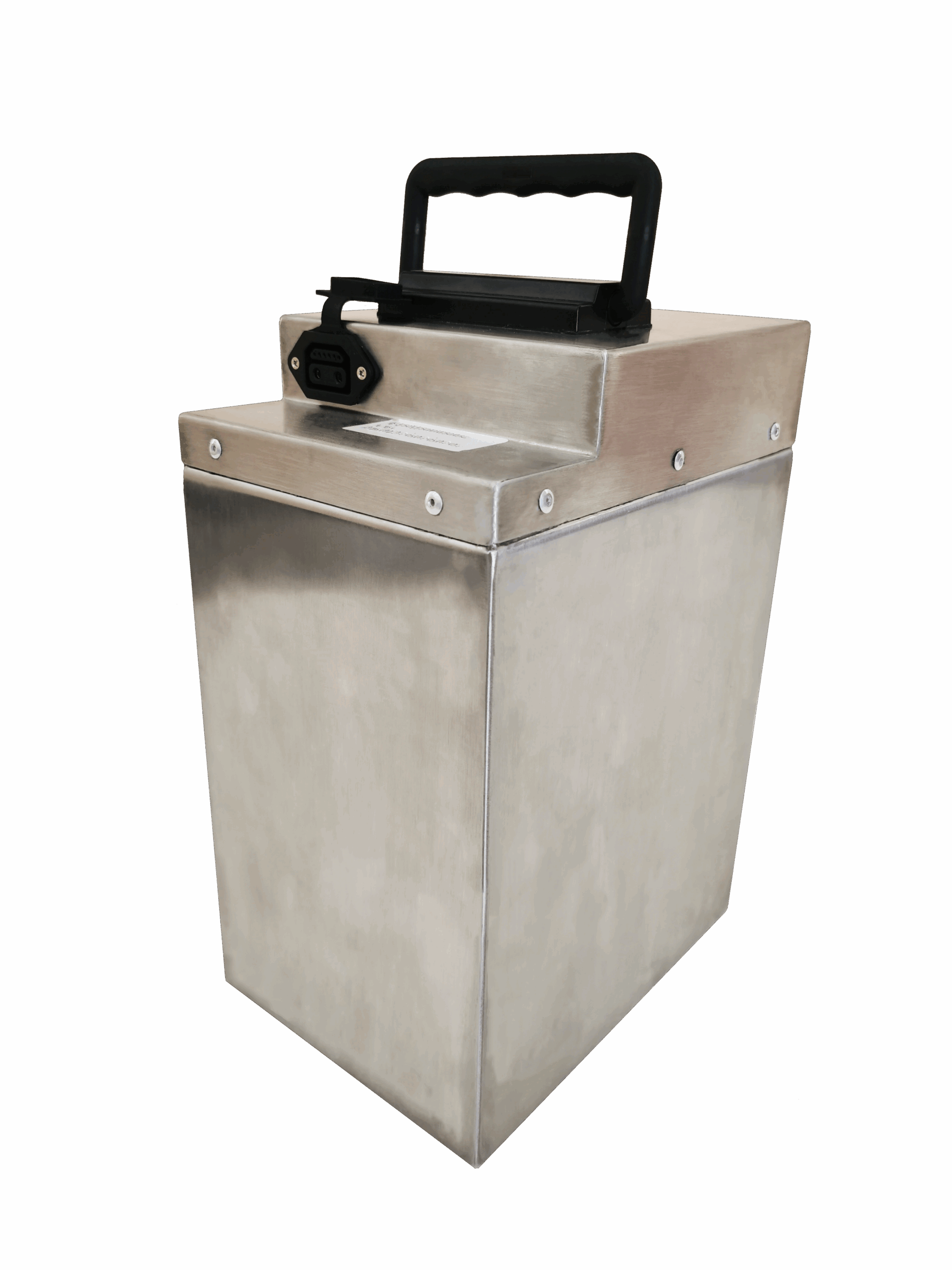
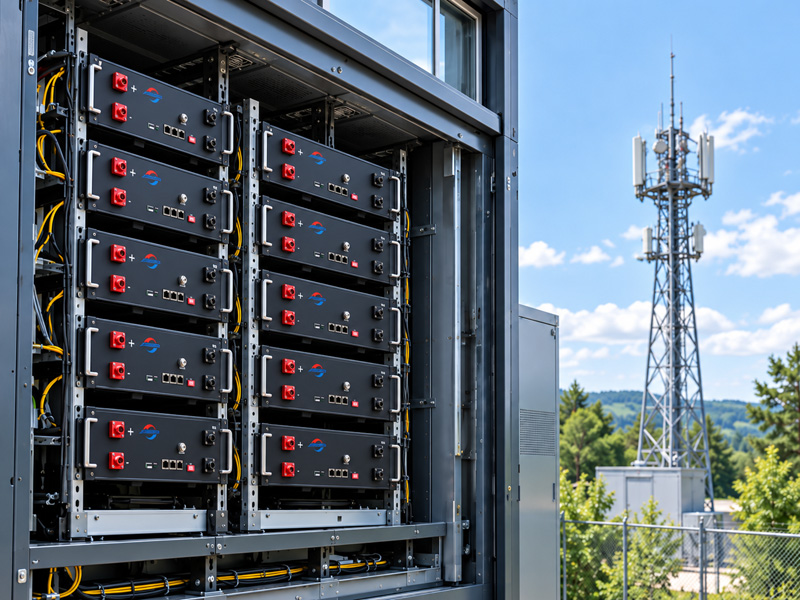
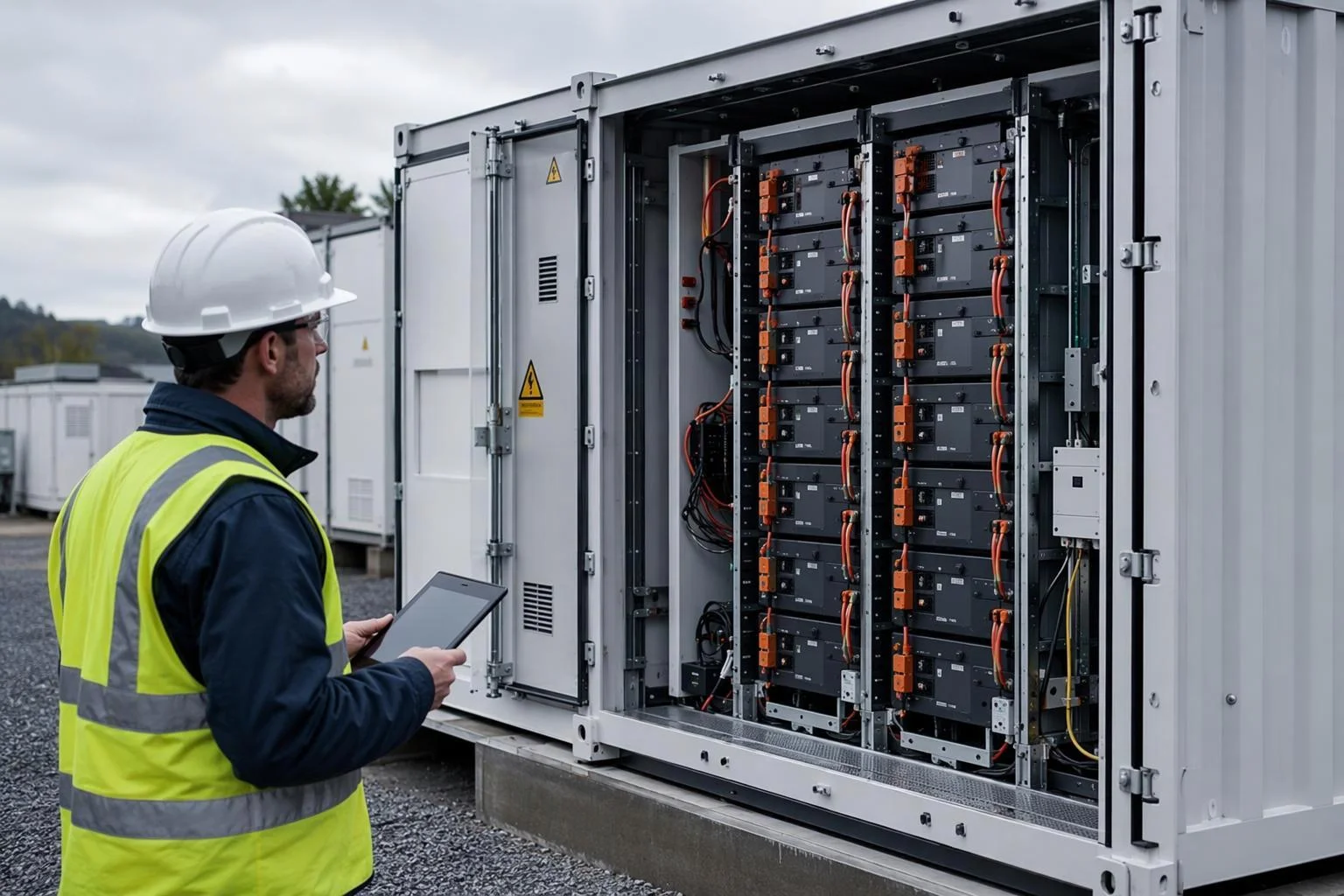
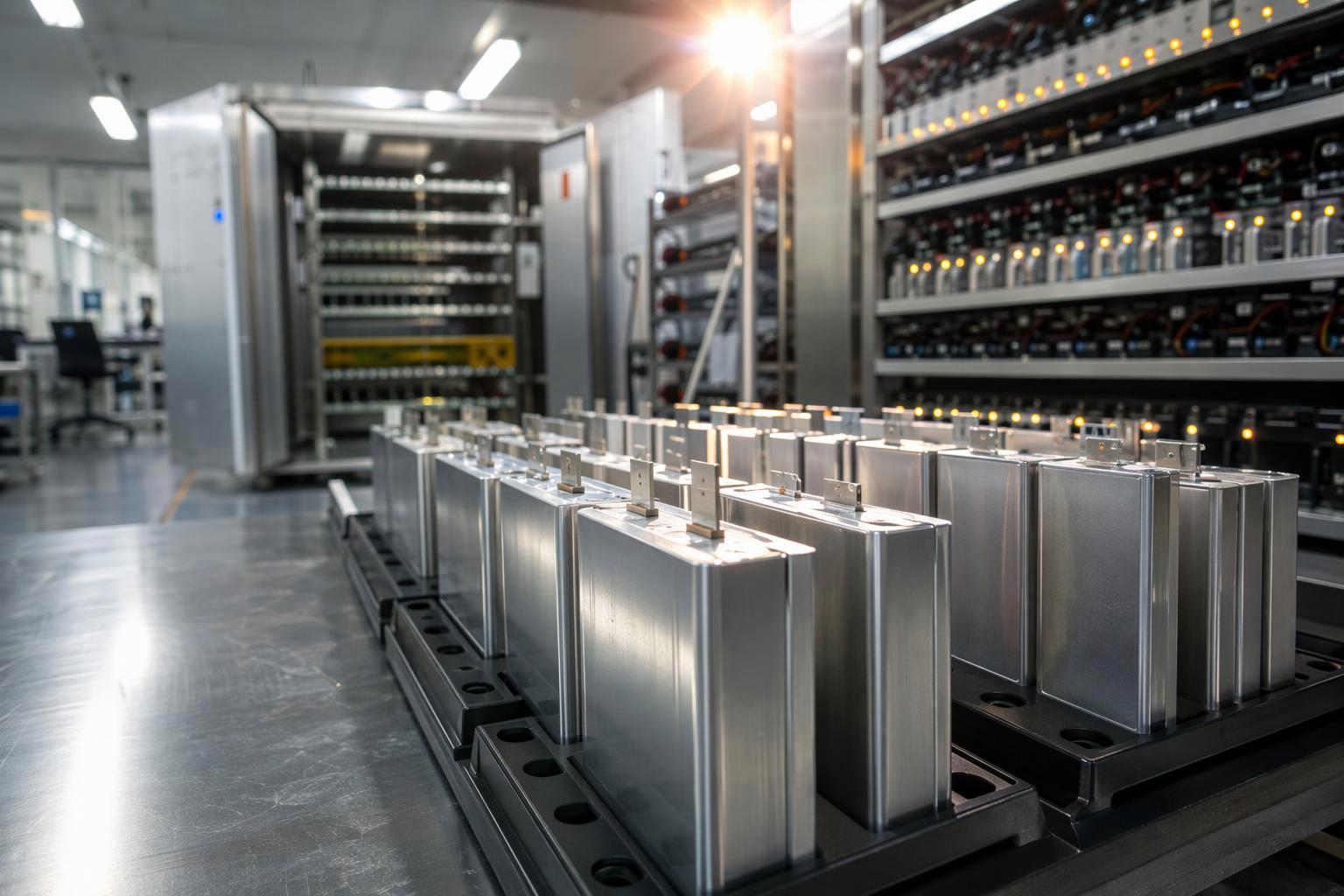
Battery suppliers sit one layer down from the aircraft, which is why their value shows up as integration rather than as a catalogue item. The work covers pack design and mechanical layout, electrical architecture and connectors, BMS configuration, communication interfaces and charging-system compatibility. Depending on the project, that may mean supporting a UAV manufacturer during platform development, helping an integrator keep component interfaces consistent, or supplying replacement packs and lifecycle support to operators running fleets.
Timing decides how much of that is still changeable. Battery volume, weight and mounting are bounded by the airframe, and the airframe usually freezes before the power system does. Bringing the battery supplier in while the layout is still open leaves fewer compromises than specifying a pack against a finished structure — and those early decisions shape how easily the platform can be serviced later.
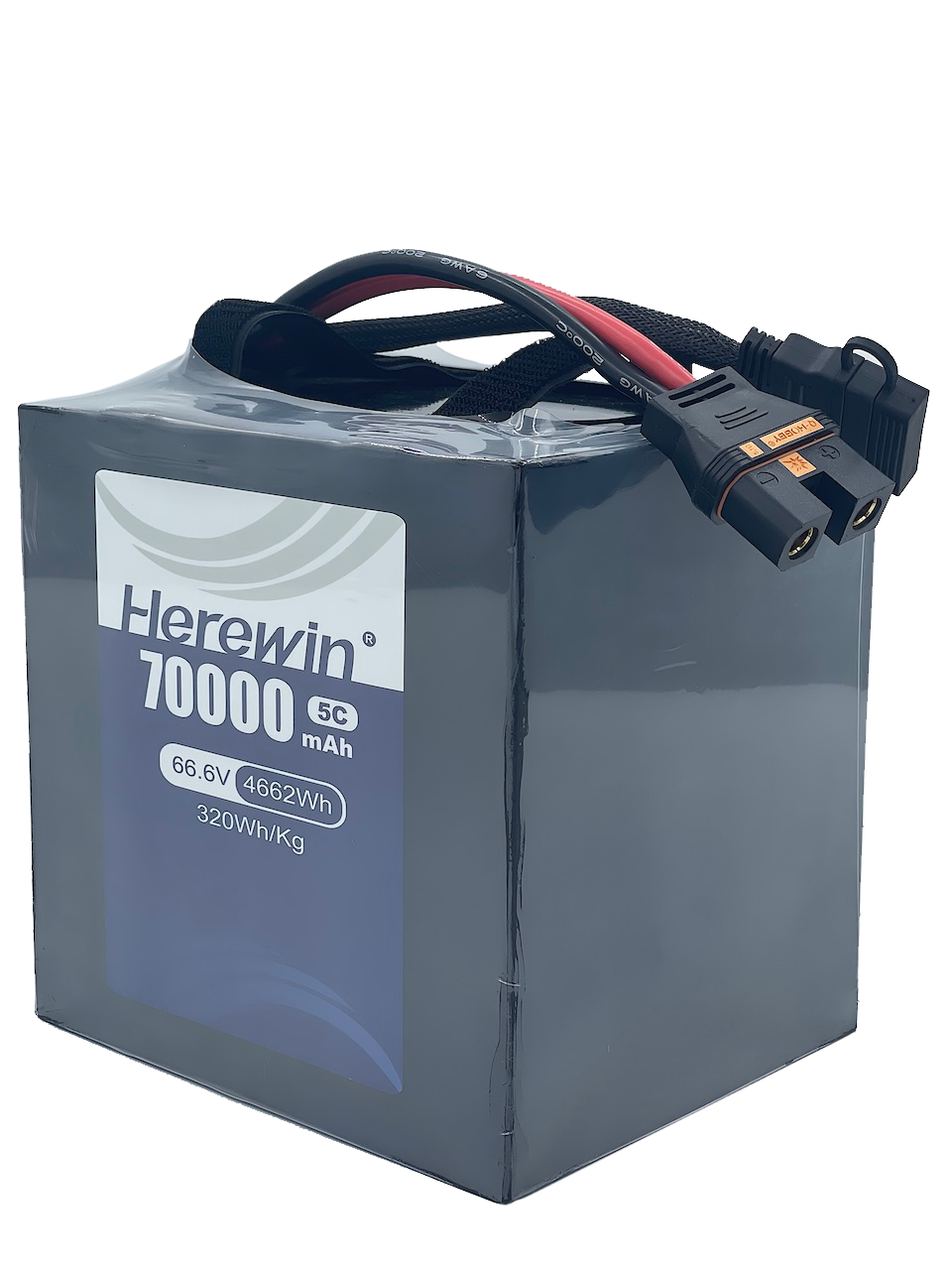
This is where Herewin works. We build industrial lithium battery solutions for UAV applications, including agricultural and specialised platforms, and OEM work covers pack configuration and development. On an existing aircraft, we start from the electrical architecture, payload budget and operating profile, then work back to a pack that fits them; on a platform still in development, the useful conversation happens before the battery envelope is fixed.
If you’re at that stage, you can review our drone battery solutions or send us the platform requirements — voltage architecture, mission profile and constraints are usually enough to say whether a standard pack will work or a custom one is needed.
Matching the Right Partner to Your UAV Application
China’s UAV industry is made up of distinct platform types and distinct company roles, and the companies filling them differ widely in capability and commercial maturity. The point of this map isn’t to name the largest manufacturer but to help you match a partner to the mission — and to know who you’re actually buying from.
Read back across the profiles and the shortlist mostly follows the platform class: multirotors for field and short-range work, VTOL fixed-wing and unmanned helicopters for corridor and lift requirements above multirotor payloads, cargo eVTOL for logistics programmes, swarm systems for mission-defined operations, and the component layer for anything you intend to design and build yourself.
That check should extend to the supply chain behind the aircraft. Battery, propulsion, payload and communication requirements are easiest to evaluate while the design is still open, and settling them early reduces integration risk and makes responsibilities clearer across manufacturers, integrators and component suppliers.


 日本語
 English
 Español
 한국어
 Deutsch
 Français
 Русский
 Bahasa Indonesia
 ไทย
 العربية
 Português do Brasil
 Italiano
 Nederlands