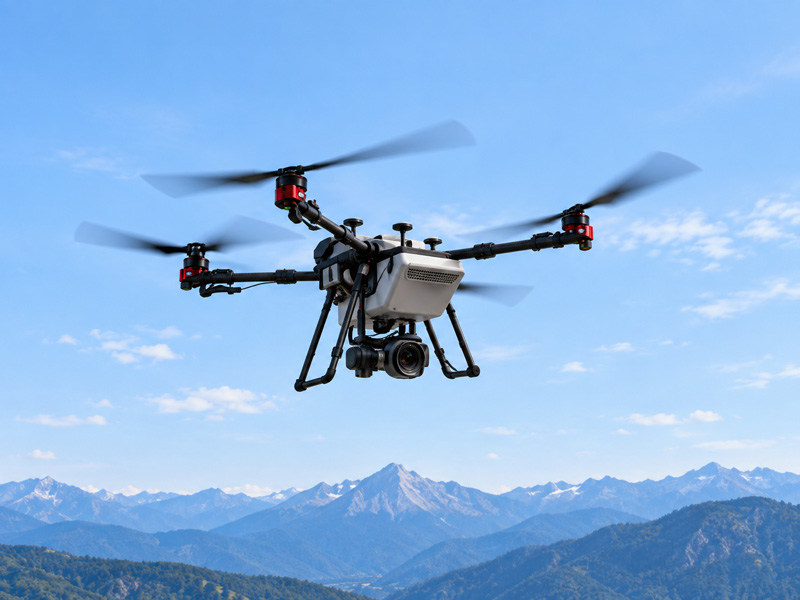


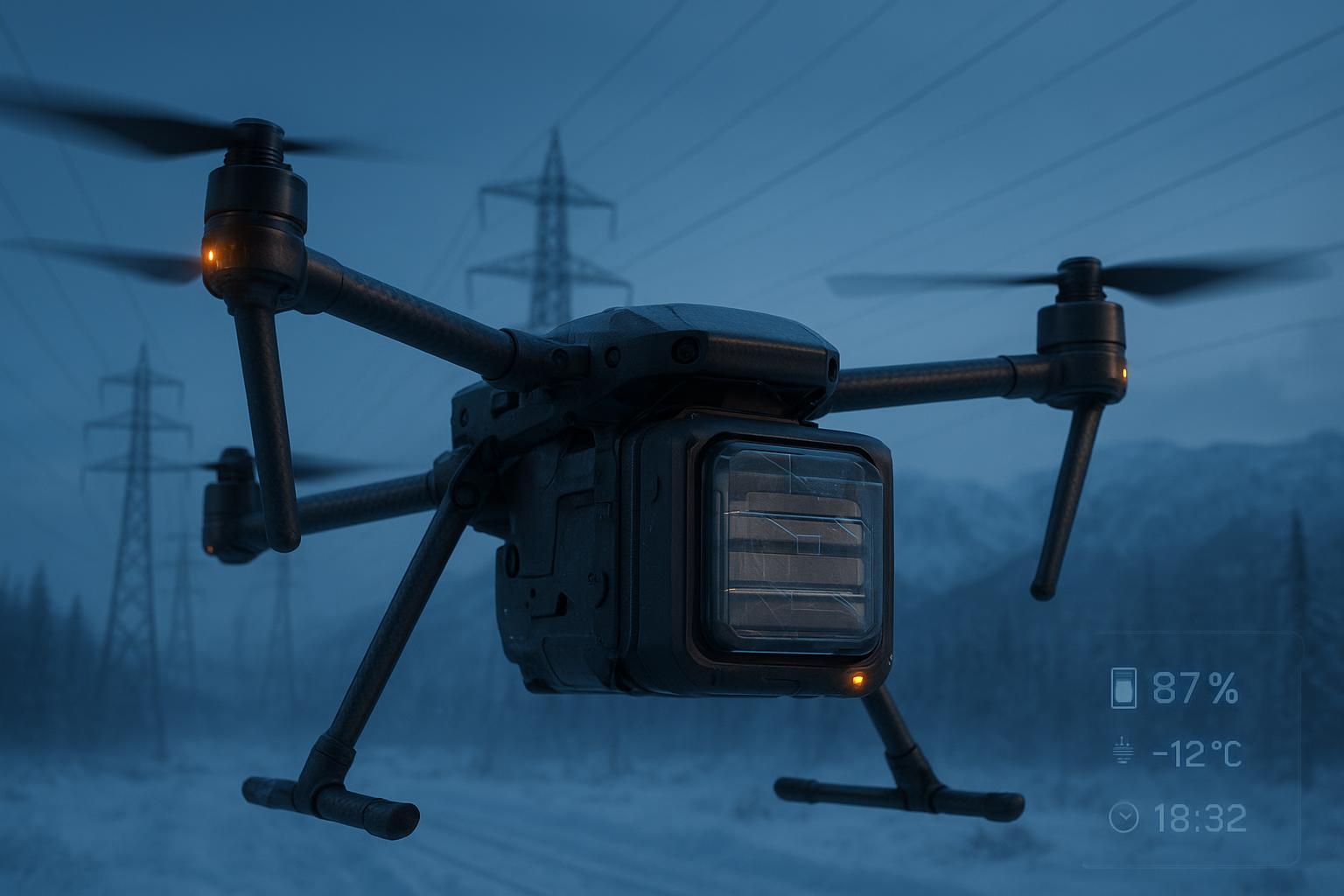
As UAV operational radii continue to expand in 2026, energy density has become the primary bottleneck constraining critical mission success in sectors such as power grid inspection, polar research, and emergency response. Semi-solid-state batteries, emerging as the most viable architecture for immediate deployment, are currently redefining the endurance ceilings of conventional lithium-ion systems.
This guide focuses on auditable performance metrics and validating efficacy under real-world operational conditions. It is designed to provide engineering teams with transparent data benchmarks and a technical framework to evaluate how semi-solid architectures shift the trade-off between power, safety, and flight duration under intense operational pressure.
Strategic Selection: 2026 Battery Architectures
Below is an engineering-first view of what’s practical to ship in 2026, and what still carries program risk.
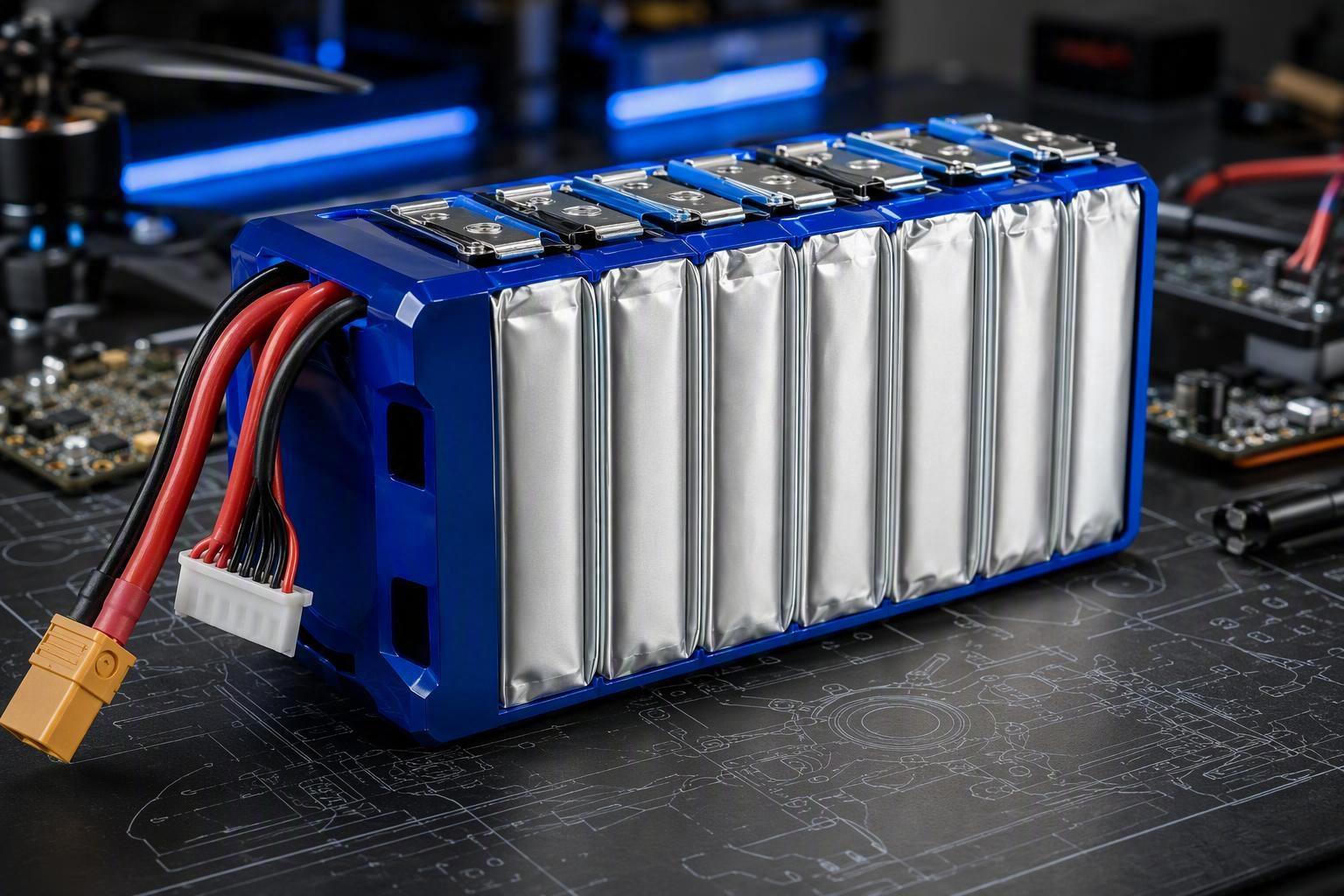
Semi-solid (2026 Mainstream for Industrial UAVs): A hybrid architecture retaining a small liquid fraction (~5–10%) to optimize interfacial wetting. By leveraging modified Li-ion manufacturing, it has achieved the necessary scale for 2026 deployment, offering a pragmatic balance of safety and energy density.
All-solid (Pre-commercial/Pilot Phase): While promising higher abuse tolerance, 2026 hurdles remain around interface resistance, stack-pressure management, and processing yields. These systems are currently reserved for defense pilots or advanced technology demonstrators.
Conventional Li-ion (The Compliance Baseline): The lowest-risk choice for missions where standard endurance suffices. It remains the global benchmark for mature documentation, UN 38.3 logistics, and cost-efficiency.
注: The superior ionic conductivity of sulfide electrolytes comes with a critical trade-off: toxic H2S gas generation upon moisture exposure. To mitigate EHS (Environment, Health, and Safety) risks in rugged 2026 operations, the industry is pivoting toward oxide-based semi-solid architectures, which offer inherent chemical stability and “no-leak” safety profiles.
Why Interface Engineering Defines 2026 Performance
Lab-grade energy density doesn’t win missions. Power delivery, high‑voltage stability, and repeatable cycle life do. In 2026, interface engineering is often the difference between a semi‑solid pack that holds voltage under dynamic flight loads—and one that shows early sag and accelerated aging.
What matters in practice
Interfaces convert lab numbers into usable flight performance. For integrators, the fastest way to think about this is a simple performance mapping.
Interface topic | Engineering KPI it drives | What to measure in validation | Why it matters in flight |
|---|---|---|---|
Interface impedance | Power delivery (voltage sag under throttle) | Voltage sag at peak C‑rate; impedance/EIS trend over cycling | Prevents brownouts during rapid climbs, avoidance maneuvers, and gust response |
Oxide stability | Supply-chain robustness (scale-up without extreme handling) | Process/handling requirements; yield stability; documentation traceability | More predictable lead times and fewer special handling bottlenecks in 2026 production |
High-voltage stability | Usable Wh/kg (not peak Wh/kg) | Charge cutoff tolerance; capacity fade vs cycles in the actual voltage window | High-voltage endurance that doesn’t collapse after early aging |
SEI/interphase robustness | High‑C cycle life (surviving current shocks) | Resistance growth under burst profiles; cycle-life vs duty-cycle stress | Longer service life under frequent high-current UAV profiles |
Evidence note : Interface-modification work such as ACS Applied Materials & Interfaces (2024) and oxide-electrolyte processing studies such as ACS Applied Energy Materials (2025) support the direction of these levers under controlled test conditions; validate against your pack stack-up and mission profile.
Semi‑solid is best understood as a deliberate trade—a very small liquid fraction buys you “on-demand” power response (lower contact resistance and better wetting) while keeping many of the safety and stability benefits of solid phases. You’re not choosing it to “try something new.” You’re choosing it because it can behave like a high‑performance Li‑ion pack when you slam the throttle, but with a more forgiving safety envelope.
At integration time, make the supplier prove the interface story with data you can audit: voltage sag at your peak C‑rate, impedance growth over cycling, the exact charge cutoffs for any ≥4.4 V system, and cold‑start behavior with and without preheat. All‑solid remains a roadmap bet until interfaces stay stable under pressure, voltage, and high‑rate cycling at pack-production yields.
2026 performance benchmarks for semi-solid UAV packs
The numbers below are planning ranges, not guarantees. Always bind to test conditions (C-rate, ambient, preheat, cutoff, packaging). Where a claim originates from vendor pages or sector directories, mark it as vendor/announced and recommend RFQ validation.
Cell specific energy only matters if the voltage window is sustainable. The “headline” cell-level numbers typically assume a high‑voltage cathode system (≈4.45 V class) and a charge cutoff that’s controlled tightly enough to prevent accelerated interphase breakdown. Treat any vendor “up to” claims as targets until validated under your duty cycle and aging window; see UST’s solid-state supplier overview and a representative Foxtech vendor-declared listing.
Pack specific energy is a packaging problem, not just a chemistry problem. The range in the table assumes conservative housing/BMS/thermal overhead. In RFQs, require the cell‑to‑pack ratio, enclosure spec (including IP rating if relevant), and full discharge curves at the stated ambient and C‑rate.
Cold performance depends on preheat + derating discipline. Any “−20°C retention” figure is inseparable from the preheat protocol, thermal soak time, and discharge limits. Ask for the exact preheat setpoints and the current limits used to produce the curve.
Cycle life is earned through DoD and thermal control. The table’s cycle-life band assumes ≤80% DoD and a BMS/thermal strategy that avoids chronic overcharge, deep discharge, and cold charging. For industrial UAV duty, the practical goal is reducing replacement cadence and improving TCO—so request cycler logs tied to your stress profile, not generic ESS-style curves.
Several suppliers publish semi‑solid validation guidance and cold‑weather operating procedures; for one neutral example, ヘレウィン has published semi‑solid explainers and low‑temperature SOPs that can be used as inputs to RFQs and test plans, but any published ranges should be treated as indicative until replicated under your own conditions.
Comparison table: conventional Li‑ion vs 2026 semi‑solid
Metric | Conventional Li‑ion (2026 typical) | Semi‑solid UAV packs (2026 indicative) |
|---|---|---|
Cell specific energy | ~230–260 Wh/kg | ~330–350 Wh/kg (vendor-announced up to ~400 Wh/kg; verify) |
Pack specific energy | ~180–210 Wh/kg | ~260–300 Wh/kg (design/packaging dependent) |
−20°C usable capacity | ~50–65% (profile-dependent) | Up to ~80% with preheat + derated C-rate (Validation required for specific duty cycles) |
Cycle life @ ≤80% DoD | ~500–800 cycles | ~1,000–1,200 cycles (Industrial UAV duty; integration- and thermal-dependent) |
Abuse tolerance | Flammable liquid electrolyte; high thermal runaway risk. | Reduced thermal runaway risk; improved puncture behavior (No open flame in standard nail tests). |
Operational ROI | High maintenance cost due to frequent battery replacement. | Significantly lower TCO via ~2x mission life extension. |
Notes: Values are planning bands. Pack-level density (~260–300 Wh/kg) reflects structural weight reduction via semi-solid safety, enabling higher CTP efficiency. Always specify C-rate and preheat factors in RFQs.
2026 commercial readiness
Semi-solid: ship-ready, but validate the claims
Commercial UAV pack lines with integrated BMS are listed today. Cell specific-energy claims are typically vendor-declared and should be treated as RFQ test targets, not guarantees.
All-solid: a forward-looking note
In 2026, all‑solid remains primarily pilots and demos, with limited evidence of broad, compliance-ready UAV pack supply; see the American Ceramic Society’s CES 2026 snapshot.
Borrow the automotive supply chain, don’t bet your schedule on it
Mid‑decade automotive scale-up of hybrid/condensed-electrolyte concepts can provide tooling and process learning that UAV suppliers can reuse. Treat roadmaps as signals, not guarantees—and ask for dated evidence of shipments when selecting suppliers.
Cost: directional only (avoid precision without quotes)
Solid-state (semi‑solid and all‑solid) carries a near‑term pack premium that’s often discussed as roughly ~40–60% in industry commentary. For a baseline view of how conventional chemistries benefit from scale, reference Argonne National Laboratory’s 2024 BatPaC modeling (it does not model solid-state costs).
Program planning tip: If you’re piloting ASSBs, budget extra DV/PV loops and yield buffers; validation timelines often run longer than semi-solid.
Certification and manufacturability: what procurement should require in 2026
Compliance anchors for cross‑border programs:
Transport foundation: UN 38.3 test series compliance for cells and packs. Keep certificates current and traceable in your RFQ package. A concise regulatory context is summarized in the UNECE/CSIRO‑ACCC lithium report excerpt: UN 38.3 and related standards overview.
Product safety and environmental standards: IEC 62133 (portable) and IEC 62619 (industrial) are the baseline for cell and pack safety. However, for 2026 missions in harsh environments, procurement should also mandate IEC 60529 (IP67 or higher) to ensure the semi-solid pack’s ruggedized housing is fully protected against dust and water ingress. Always use accredited labs and request detailed test scope notes.
Hazardous locations (ATEX/IECEx): For explosive atmospheres, certification typically applies at the equipment/system level under IEC 60079/ATEX directives; coordinate early with a notified body.
Manufacturability and documentation to request in RFQs/RFPs:
Pack-level Wh/kg at stated ambient and C‑rate with preheat assumptions and full discharge curves, EIS snapshots optional.
−20°C capacity retention (with/without preheat), cycle‑life logs at specified DoD and temperature window.
BMS data dictionary and interface protocol; charge algorithm limits for any high‑voltage (≈4.45 V) cathode systems.
Quality system references (ISO/traceability), batch/lot genealogy, and UN 38.3 reports per configuration.
Strategic Selection Logic: 2026 Thresholds
If–Then selection thresholds
If you need >25% endurance uplift versus conventional Li‑ion at your design ambient, then semi‑solid is the default 2026 path (validate against your exact payload, C‑rate, and cutoff voltages).
If you have sustained −20°C duty, then treat semi‑solid as eligible only with a documented preheat + derating strategy and telemetry-backed curves; otherwise, assume the mission is at risk.
If your delivery cadence is prototype → series in ≤12 weeks, then prioritize semi‑solid suppliers with audited lines and stable lead times; treat all‑solid as a schedule risk unless you have explicit buffers.
If your compliance scope includes UN 38.3 + IEC 62133/62619 and operational requirements such as IP67 / IEC 60529 (and potentially ATEX/IECEx at the system level), then prioritize architectures with established documentation packages and test scopes in hand—typically semi‑solid programs in 2026.
Exclusion logic (keep procurement decisions clean)
In 2026, semi‑solid is generally the compliance‑ready, normal‑lead‑time route. All‑solid is excluded by default because supply, validation timelines, and pack-level compliance evidence are still high-variance; only consider it when the program explicitly accepts pilot risk and extended DV/PV cycles.
Integration in 2026: BMS and thermal practices that actually move the needle
Cold performance hinges on temperature control and current limits. Preheat packs to a safe operating band before high-C draws; avoid charging below freezing to reduce plating risk. Rich telemetry—cell voltages/temps, current, SoC/SoH—enables conservative derating and auditability. For UAV operators, the conservative approach is to codify cold‑mode charge and staged warm‑up in testable procedures. See a neutral UAV‑oriented procedure set in the cold‑weather battery SOP and an extended −20°C risk‑control guide in the −20°C operations SOP.
High‑voltage cathodes (~4.45 V systems) paired with semi‑solid electrolytes demand clarified charge algorithms and BMS cutoffs. Precise BMS calibration matters here—small overcharge/overdischarge errors can accelerate electrolyte/interphase degradation and erase the cycle‑life gains you’re paying for. As an engineering sanity check, even a ~50 mV systematic offset at the top of charge can materially change stress in high‑voltage stacks; treat that as a red‑flag until validated on your exact chemistry and thermal window.
Treat the charge profile as part of your safety case. If the supplier can’t provide a clear charge algorithm, cutoff tolerances, and validation evidence for your duty cycle and temperature window, assume you don’t yet have a production-ready configuration.
For broader integration context around high‑energy UAV packs and BMS calibration, see this engineering explainer on high‑energy UAV batteries and BMS integration.
2026 Mission-Critical Deployments: Where Semi-Solid Defines the Edge
In 2026, semi-solid architecture is no longer a lab curiosity but a strategic requirement for missions where conventional Li-ion reaches its physical limits.
Energy Infrastructure Inspection
The Edge: Higher Wh/kg at the pack level (~260–300 Wh/kg) and improved −20°C retention extend flight windows at high altitudes and remote sites.
Protocol: Ensure UN 38.3 documentation accompanies global mobilizations; align site safety rules with the reduced-leakage profile of semi-solid cells.
Emergency Rescue & Crisis Response
The Edge: Enhanced abuse tolerance and the Oxide Advantage (eliminating toxic H2S risks during crashes or water ingress) are non-negotiable in debris-heavy sorties.
Hardware Standard: Mandate IP67-rated enclosures (IEC 60529) and robust BMS logging to ensure reliability in torrential rain or heavy dust.
Precision Environmental Monitoring & Science
The Edge: Superior endurance under high-wind resistance and extreme cold favors the stable voltage curve of semi-solid stacks.
Protocol: Specify telemetry granularity for post-mission traceability; plan for derated C-rates during sub-zero data collection to maximize SoH.
Medical & Specialized Logistics
The Edge: Predictable energy delivery under cold-chain constraints reduces mission aborts when terrain and weather complicate remote landings.
ROI Factor: The ~2x cycle life extension (up to 1,200 cycles) significantly lowers the cost-per-delivery, making semi-solid the more sustainable long-term commercial investment.
よくあるご質問
Are semi‑solid batteries compatible with existing charging equipment?
Generally yes, but high-voltage systems (≥4.45 V) require specific charge algorithms. Do not use standard Li-ion profiles without vendor approval, as even minor voltage deviations can compromise the battery’s safety and lifespan.
What cycle life should we expect in 2026 for semi‑solid packs?
Expect ~800–1,200 cycles (at ≤80% DoD). While lower than stationary storage standards, this is a ~2x improvement over the 500–800 cycles typical of high-performance conventional drone packs, significantly lowering your TCO.
What should procurement watch for on logistics and safety?
Beyond UN 38.3 transport rules, watch for sulfide-electrolyte sensitivity. Unlike the oxide-based semi-solid cells we recommend, sulfide cells can generate toxic H₂S gas if exposed to moisture. For mission-critical reliability, insist on IP67-rated enclosures.
Next steps
In 2026, semi-solid-state technology is no longer a luxury—it is the pragmatic baseline for high-endurance industrial UAVs. To lead the market, your integration strategy must move beyond generic specs and focus on three auditable pillars:
Oxide-Based Safety: Eliminate environmental hazards with chemically stable architectures.
High-Voltage Stability: Unlock >25% endurance gains via validated ≥4.45V systems.
Industrial Compliance: Mandate UN 38.3 and IP67 as non-negotiable standards.
By aligning your RFQ with these benchmarks, you ensure a fleet that is not just flight-ready, but future-proof.


 日本語
日本語  English
  Español
  한국어
한국어  Deutsch
  Français
  Русский
  Bahasa Indonesia
  ไทย
ไทย  العربية
  Português do Brasil
  Italiano
  Nederlands