




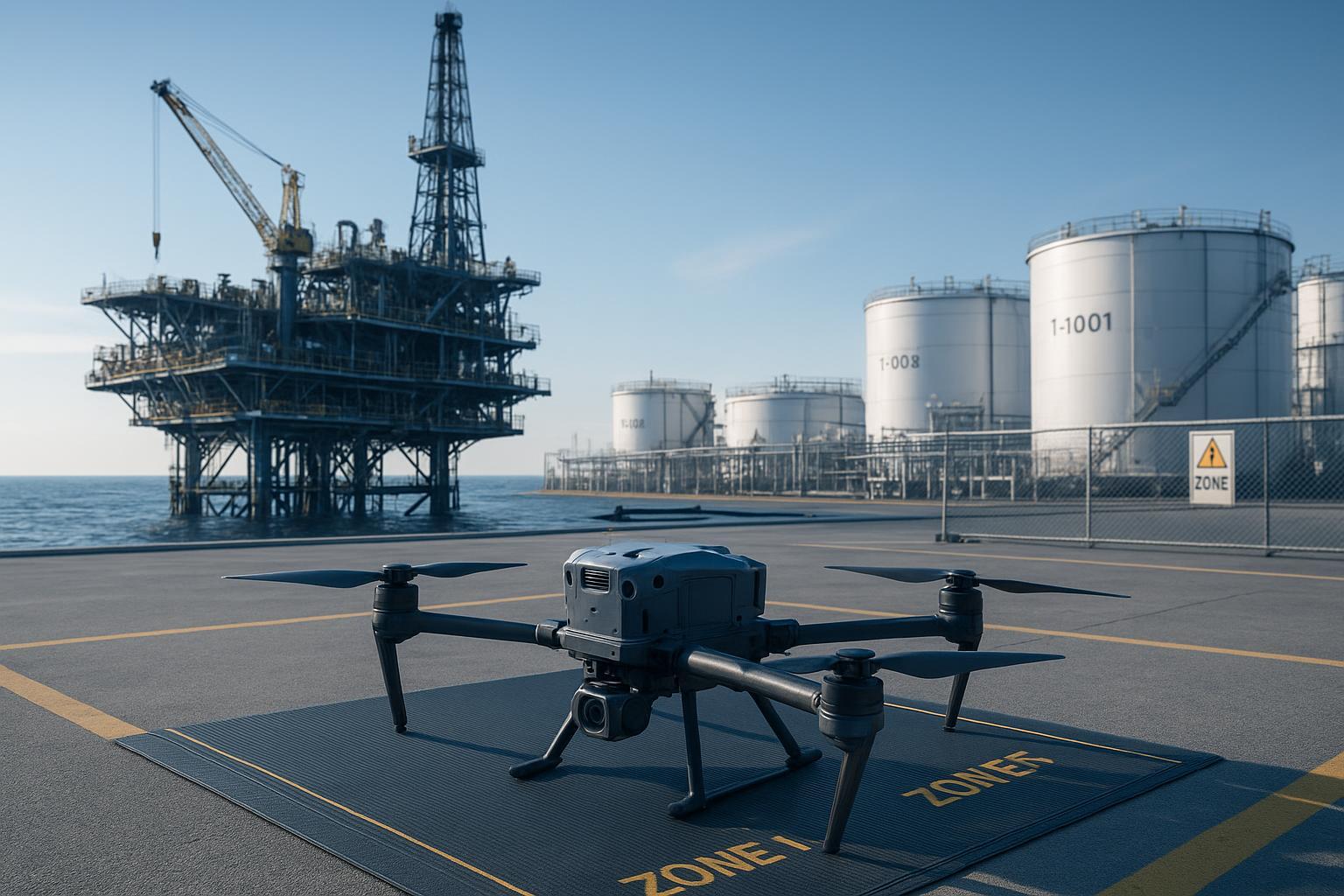
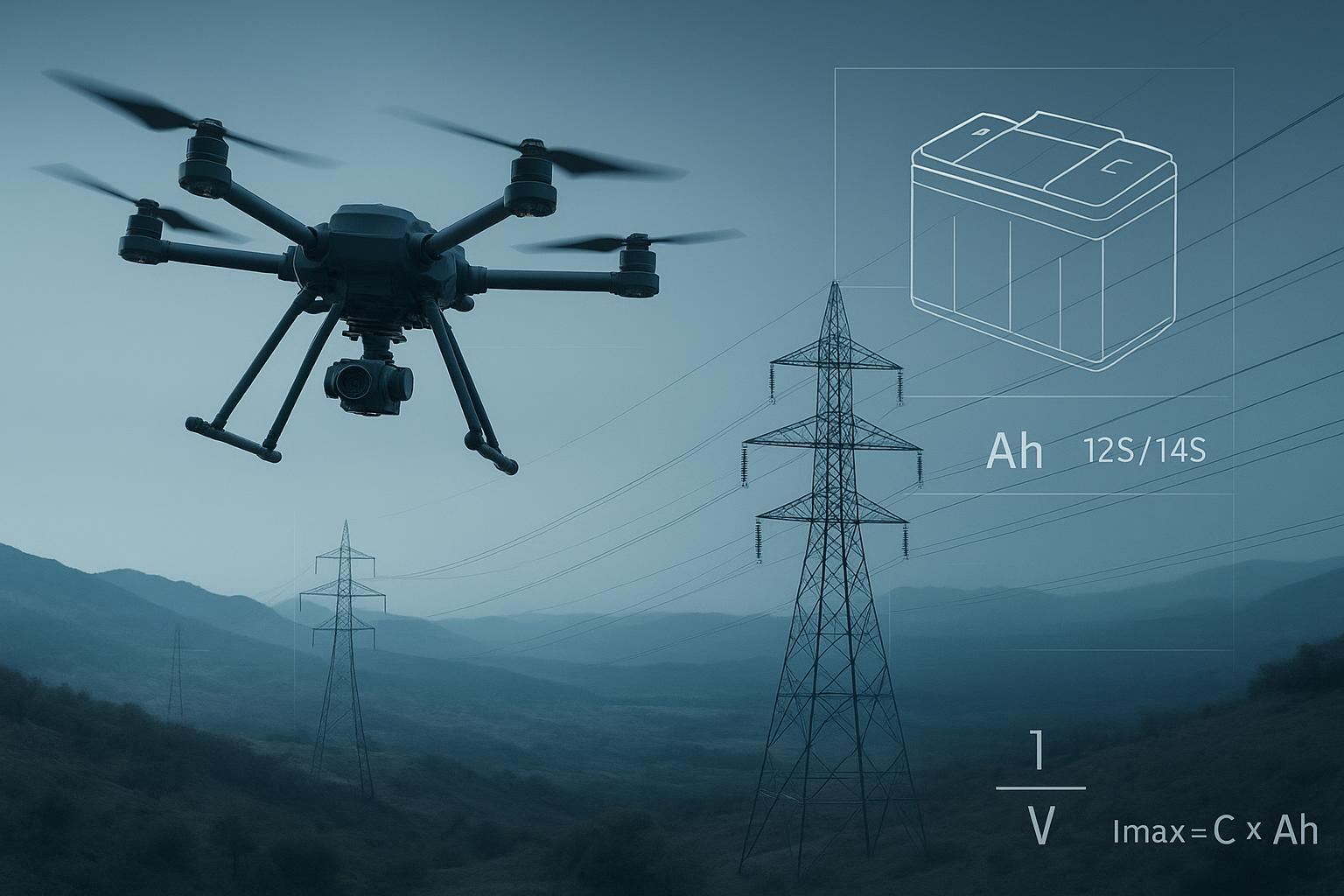
Industrial drones are transforming how inspections get done in refineries, tank farms, and wildfire responses. But in Zone 1/2 hazardous areas, a lithium battery can become an ignition source if things go wrong. This guide explains how to specify and operate an intrinsically safe battery for hazardous areas, with a focus on semi‑solid cell design, audit‑ready BMS telemetry, and ATEX/IECEx compliance.
Scope and evidence boundaries (read first):
- Compliance boundary: Certification status is 1C—certification is in process/pilot. This guide does not claim current ATEX/IECEx certification for a complete battery pack. All compliance discussion focuses on principles, standards, and engineering constraints.
- Evidence policy: Quantitative statements rely on public, citable sources. Where hard numbers aren’t publicly available, we use mechanism‑based explanations and conditional language.
- Integration path: IEC 61850 (MMS/GOOSE/logical nodes) is the reference pathway for audit‑grade data flows from BMS to OT systems.
Why Thermal Runaway Can Become an Ignition Source in Hazardous Areas
Thermal runaway (TR) is a self‑accelerating failure mode that can eject hot particles and flammable gases. In an explosive atmosphere, that’s exactly the wrong kind of “spark.” UL describes UL 9540A as a method to characterize fire propagation and off‑gassing during battery failures—data that Authorities Having Jurisdiction (AHJs) use to inform separations, ventilation, and suppression strategies, especially in energy storage contexts. See UL’s overview of TR propagation testing and regulatory alignment in the United States and globally in 2024–2026 on the UL site: Your guide to battery energy storage regulatory compliance.
NFPA’s research also flags the explosion potential of off‑gases from lithium‑ion failures and why prevention‑first design matters. If you want a deeper standards-and-testing perspective (primarily written for ESS, but still useful for understanding gas/explosion controls), see the NFPA Research Foundation’s explosion prevention/control guidance project for energy storage systems (Phase 1, 2023).
The Refinery Nightmare: Failure Modes that Defeat Explosion Protection
In Zone 1/2, protection concepts (e.g., intrinsic safety “i”, flameproof “d”, increased safety “e”, encapsulation “m”) aim to prevent ignition. But a failing battery can inject new hazards: hot ejecta, conductive debris, and flammable vent gases. If surface temperatures or internal arcs exceed limits tied to the area’s gas group and T‑rating, the device defeats the facility’s explosion protection assumptions.
Beyond the Electrolyte Window: Chemistry Behind Flammable Gas Generation
Liquid electrolytes operate within an electrochemical stability window; abuse (over‑charge, internal short, external heating) can decompose solvents and salts, producing combustible gases and exothermic reactions. Materials research since 2023 shows that gel polymer and semi‑solid electrolytes can stabilize interfaces and reduce dendrite‑induced shorts—mechanisms that help lower the likelihood of such events.
Escalation Paths in Petrochemical and Fireground Conditions
In refineries or on wildfire scenes, once a pack vents hot gases, nearby combustibles and radiant heat can escalate to secondary events. Codes and standards don’t give UAV‑specific recipes; instead, they require that equipment within hazardous zones cannot ignite the atmosphere under normal or fault conditions, or they constrain where and how you stage and operate the equipment. The practical takeaway: minimize the probability of TR at the cell level, add robust detection and logging at the pack level, and operate under site‑approved SOPs that respect zone classifications.
Semi‑Solid Design—Building Intrinsic Security into the Cell
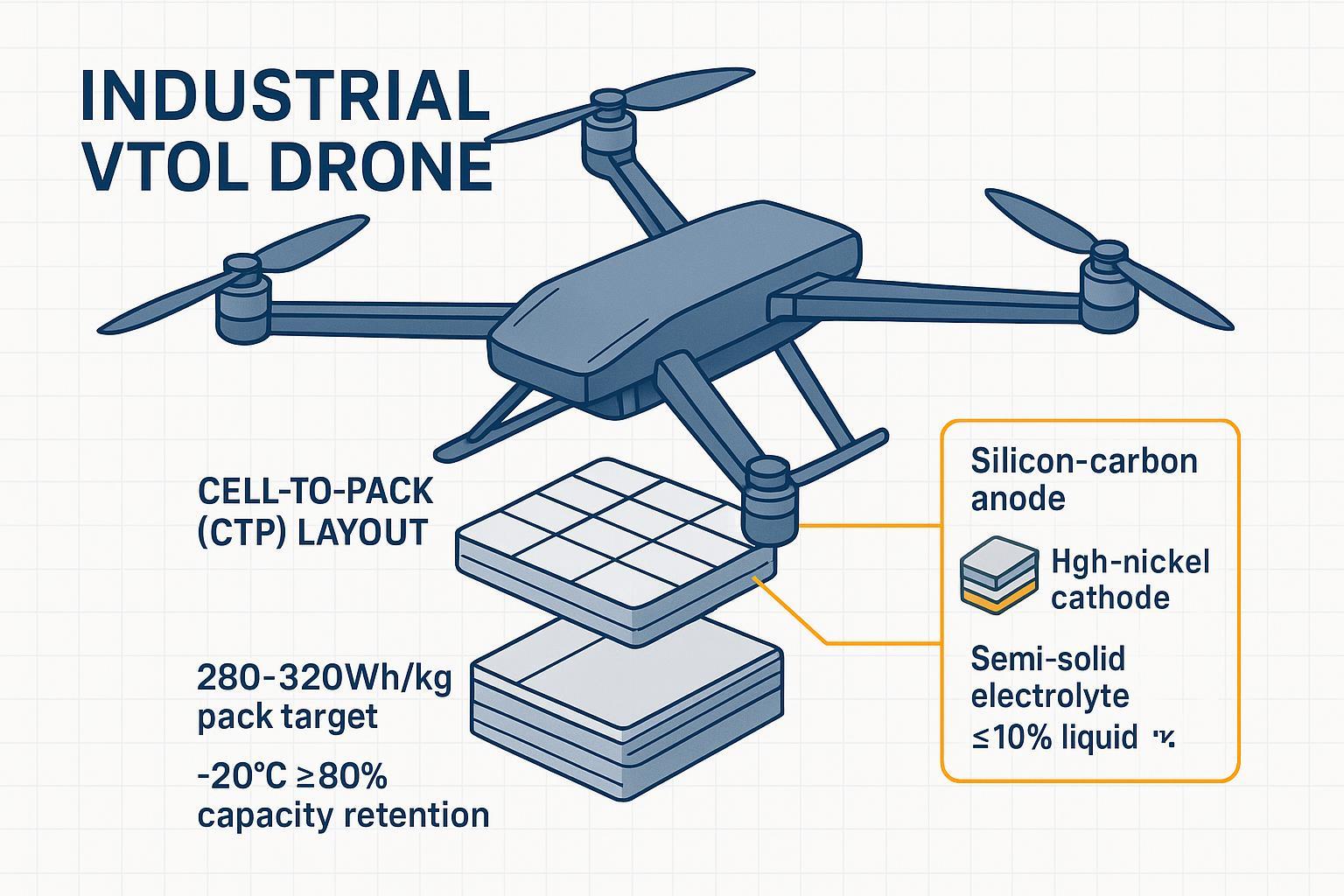
Semi‑solid (gel‑rich) electrolytes reduce free liquid content and can improve interfacial stability. While not a silver bullet, this design direction is aligned with intrinsic safety principles: lower propensity for leaks, better mechanical containment, and material‑level barriers against the failure modes that trigger ignition.
Less Free Liquid, More Stability: What Semi‑Solid/GPE Changes in Practice
Compared with conventional liquid systems, semi‑solid or gel polymer electrolytes (GPEs) offer higher mechanical integrity and can form more uniform solid–electrolyte interphases. These changes can dampen thermal and chemical runaways initiated by localized hotspots or over‑charge conditions. Evidence from peer‑reviewed literature supports improved interfacial stability and dendrite suppression mechanisms: see the 2023 GPE review (open access) and ACS AMI 2024 findings.
Dendrite Inhibition and Internal‑Short Prevention Under Heat/Load
Lithium dendrites can pierce separators and create internal shorts. GPE matrices provide both ionic pathways and mechanical resistance that promote uniform ion flux, reducing dendrite initiation. Fewer internal shorts mean lower odds of sudden heat spikes—the kind that push surfaces past T‑limits in gas group IIC zones.
Why Native Semi‑Solid Designs Ease T‑rating Audits vs. Retrofit Shells
From a certifier’s perspective, intrinsic safety is a circuit‑ and materials‑level discipline. Adding a heavy “explosion‑proof” shell to a liquid pack may not resolve cell‑level failure energy. Native semi‑solid designs help address fuel availability (less free solvent), leakage behavior, and short‑circuit propensity—all factors that make it easier to meet surface temperature limits and energy‑limiting criteria under IEC 60079‑11 testing. For background on Edition 7’s implications, see the IEC 60079‑11:2023 listing and interpretation sheet: IEC 60079‑11:2023 and Interpretation Sheet 1 (2024).
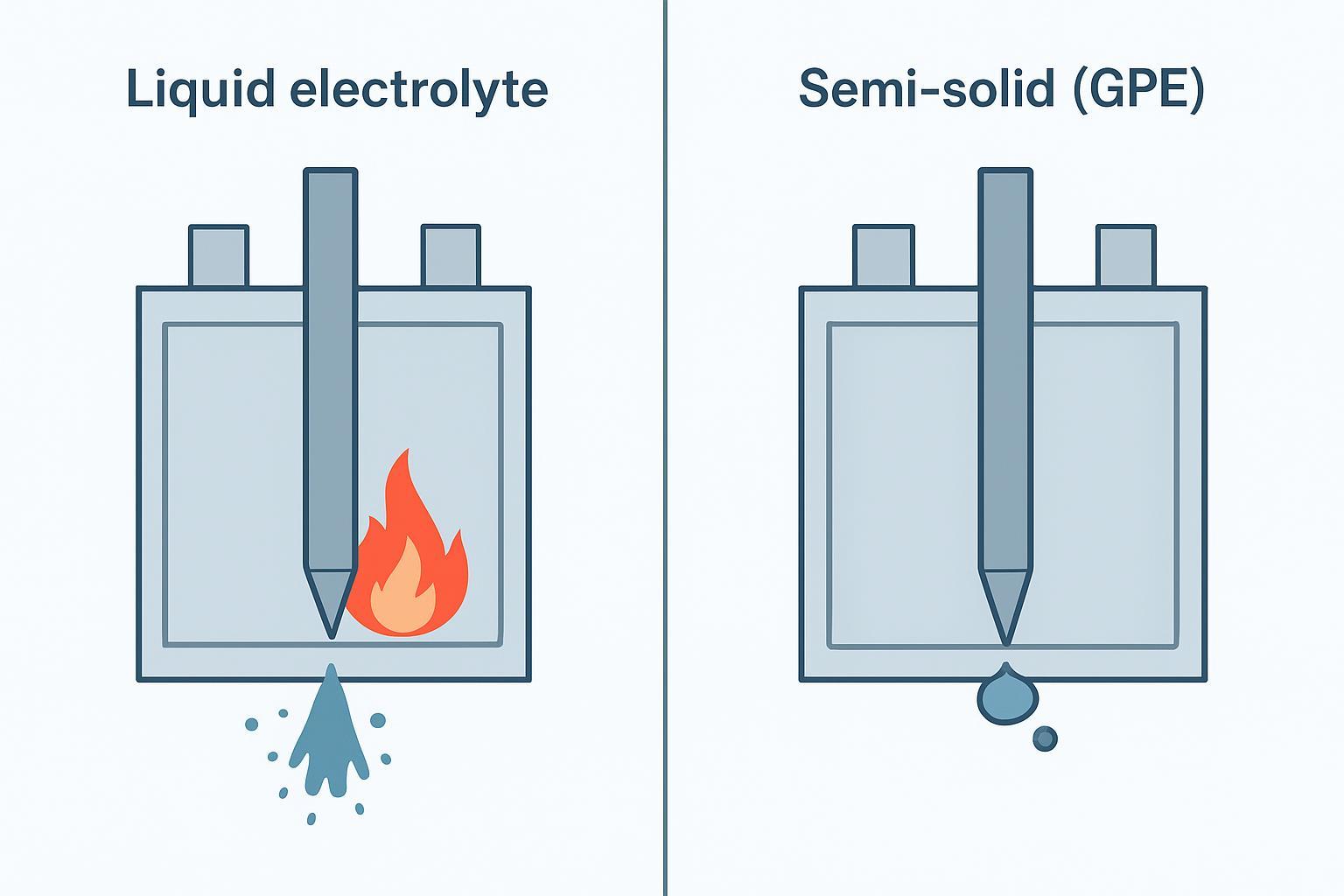
Note: The illustration is conceptual. Always rely on third‑party test reports for quantitative comparisons.
For readers seeking more background on semi‑solid concepts, see the overview pages on Herewin: semi‑solid advantages and semi‑solid vs. traditional lithium comparison.
BMS as the Second Safety Barrier—From Protection to Audit Asset
Protection is only half the story; you also need proof. A modern BMS should detect out‑of‑family behavior early, enforce limits, and generate logs that stand up to audits. Think of it as your battery’s flight data recorder.
Predictive Diagnostics and IR/Temperature Drift Patterns
Changes in internal resistance and temperature gradients often precede visible failure. A pragmatic approach is to model “normal envelopes” for per‑cell voltage, current, and temperature, then flag deviations for pre‑emptive derating or lockout. Avoid absolute promises; instead, configure thresholds with the AHJ and your safety committee based on verified test data and operating history.
IEC 61850 Integration: GOOSE for Fast Events; MMS Reports for Traceability
Turning BMS data into an auditable asset requires structure. IEC 61850 provides two complementary mechanisms widely used in critical power systems:
- GOOSE: multicast, low‑latency event messages suited to immediate interlocks (e.g., over‑temperature trip flags). See SEL’s application materials that explain GOOSE/MMS fundamentals in substation environments: SEL Bay Control Unit in an IEC 61850 environment.
- MMS Reports: buffered or unbuffered datasets delivered to SCADA/EMS/DMS or an OT historian for traceability, including sequence‑of‑events timestamps and quality flags. Reference SEL RTAC documentation for report/control concepts: SEL RTAC docs. For ecosystem context on cross‑domain integrations, the Open Charge Alliance provides a whitepaper archive that discusses 61850 interoperability patterns.
Implementation tip: Many BMS speak CAN or Modbus by default; protocol gateways can map those signals into IEC 61850 logical nodes and SCL models so your safety events appear natively in the plant’s OT network.
Certifications that Matter—ATEX/IECEx and the IEC 60079-11 Update
ATEX (EU 2014/34/EU) and IECEx share a common Ex marking syntax that concisely encodes suitability for gas/dust zones, gas groups, protection concepts, and temperature classes.
Decoding Ex Markings for Zone 1/2
Below is a quick decoder (example values only; always consult the actual certificate and conditions of use):
| Field | Example | Meaning |
|---|---|---|
| Scheme | IECEx / ATEX | Certification system |
| Protection concept | Ex ia | Intrinsic safety, highest level for Zone 0/1 circuits |
| Gas group | IIC | Hydrogen/acetylene class (worst‑case gas group) |
| Dust group | IIIC | Conductive dusts |
| Temperature class | T4 | Max surface 135°C for gases |
| EPL | Gb / Db | Equipment Protection Level for Zone 1 (gas) / Zone 21 (dust) |
| Full example (gas) | Ex ia IIC T4 Gb | IS device for Zone 1 gas with T4 limit |
| Full example (dust) | Ex ia IIIC T135°C Db | IS device for Zone 21 dust, 135°C limit |
Public overviews: EU ATEX 2014/34/EU page; IEC listings for 60079‑14 (2024) and 60079‑17 (2023).
Reducing Re‑Certification Burden with Native Compliance
IEC 60079‑11:2023 (Edition 7) tightened numerous intrinsic‑safety requirements, which means retrofit enclosures around high‑energy liquid cells often struggle in thermal and energy‑limiting tests. A native design that addresses fuel, fault energy, and surface temperature at the source reduces the risk of 6–12 month re‑certification cycles after changes. For authoritative context, see IEC 60079‑11:2023 and Interpretation Sheet 1 (2024).
On‑Site Operations—Standardizing Zero‑Spark Procedures for an Intrinsically Safe Battery for Hazardous Areas
Operations inside or near classified areas must follow site permits, MOC, and Ex SOPs. Treat the following as principles aligned with IEC 60079 installation and maintenance guidance.
Safe Staging, Storage, and Logistics for Offshore Rigs and Tank Farms
- Stage and store packs in anti‑static containers outside classified zones unless the equipment carries a certificate explicitly covering that zone. Apply corrosion protection and sealing suitable for salt‑mist and humid heat.
- Control ESD: bond/ground during handling per facility procedures.
- Maintain traceable logs for charging state, cycle count, and firmware version; tie these to your permit‑to‑work system.
Authoritative overviews: IEC 60079‑14 (selection and installation) and IEC 60079‑17 (inspection and maintenance).
Live‑Plant Inspections: Safe‑Area Charging/Swaps and Swap‑Frequency Reduction Strategy
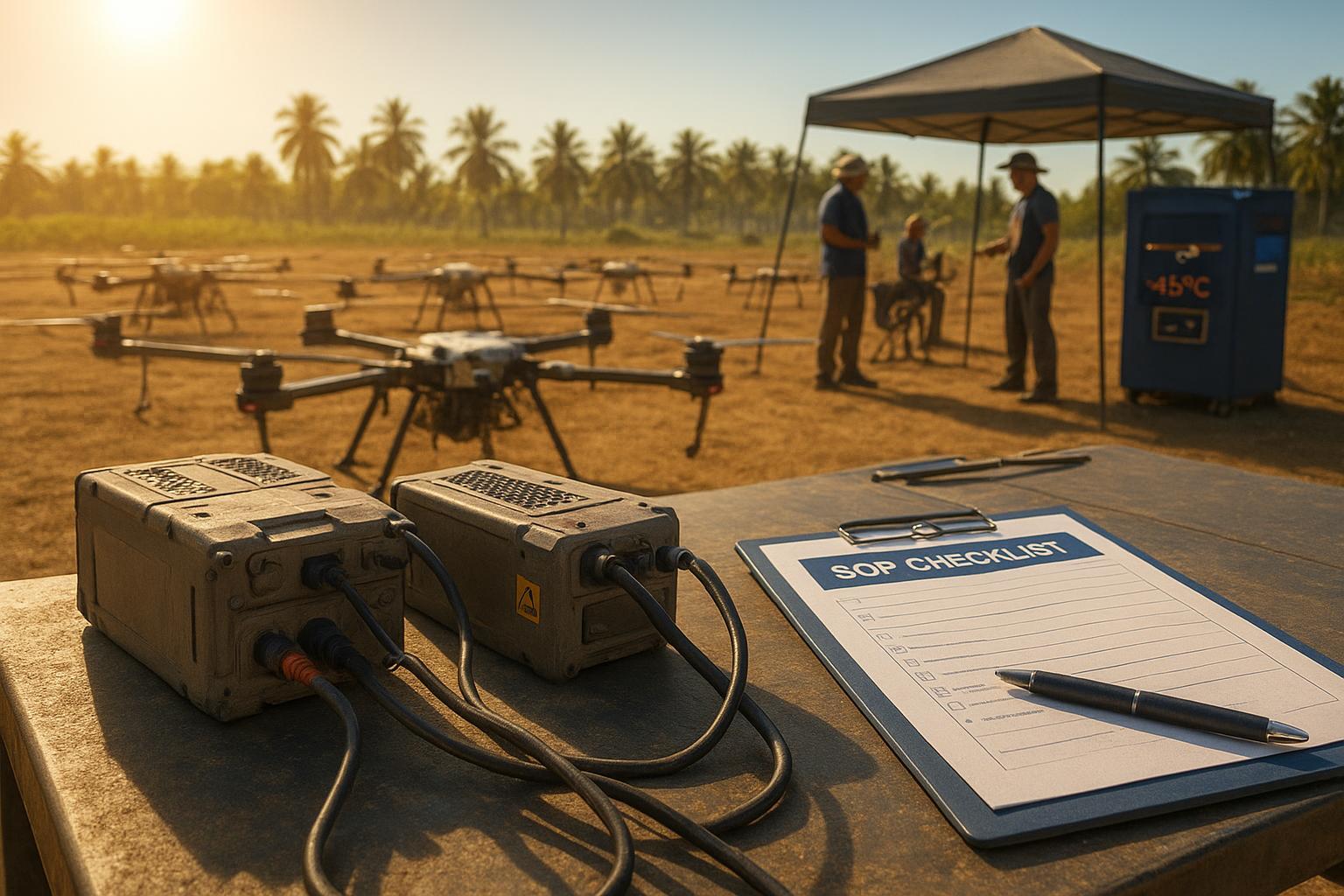
- Charging and battery swaps should occur in designated safe areas unless your complete system is certified for the classified location under the applicable protection concept.
- To reduce interventions inside hazardous areas, consider higher‑capacity packs alongside conservative mission planning. This is an engineering strategy, not an SOP exemption.
- Keep a strict red line: no ad‑hoc charging in Zone 1/2. Respect the certificate’s conditions of use and the site’s Ex rules.
For broader context on thermal‑runaway mitigation concepts, see the note: Addressing thermal runaway with advanced safety solutions, and for operating in hot climates, high‑temperature UAV battery management.
Emergency Response to Thermal Runaway—What EHS Needs Ready
Immediate Suppression and Containment
In early stages, manufacturers may permit ABC dry chemical; once TR is established, copious water is often recommended by fire authorities primarily for cooling to prevent propagation. NFPA public resources summarize the challenges of Li‑ion fires and the evolving guidance for responders. See NFPA’s lithium‑ion safety resources. UL also provides general workplace guidance for large Li‑ion systems: Safety guidelines for large lithium‑ion battery systems.
Always defer to the site’s emergency response plan and local fire authority instructions.
Data Forensics: Post‑Incident Log Analysis via BMS
Treat the BMS as your black box. After an event, export sequence‑of‑events logs, temperature maps, and protection triggers. If you’ve integrated via IEC 61850, retrieve buffered MMS reports with timestamps and quality flags; correlate with plant historian data to document root cause and corrective actions for audits.
Scenario Playbooks—O&G Offshore vs. Wildland Firefighting
Offshore Rig Resilience: Salt‑Mist, Corrosion, and Sealing
- Seal connectors and housings against salt ingress; specify conformal coatings compatible with intrinsic‑safety creepage/clearance rules.
- Use anti‑static storage and transport containers; keep packs outside classified areas unless certified for Zone 1/2.
- Validate charge/discharge profiles in high humidity to confirm surface temperature margins relative to T‑ratings.
Wildfire Thermal Protection: Managing Radiant Heat on the Move
- Shield packs from radiant heat during staging; log ambient and pack temperatures before launch.
- Favor mission profiles that minimize hover time near high‑heat plumes.
- Capture SOE and alarm data for after‑action reviews; use IEC 61850 reports where available for audit traceability.
What’s Next in 2026—AI Health Forecasting and Toward Full Solid‑State
Fleet‑Level Predictive Audits Using IEC 61850 Data Pipelines
Once BMS events and measurements are modeled as IEC 61850 datasets, you can apply fleet analytics to predict cells trending out of family and schedule proactive maintenance.
Roadmap to Full Solid‑State: Eliminating Liquid‑Phase Risks
Semi‑solid is a step toward reducing free liquid and improving mechanical stability. Full solid‑state aims to remove the liquid phase entirely, further lowering leakage and flammability risks. As vendors progress along this path, rely on third‑party standards, certifications, and peer‑reviewed primers for deployment decisions—and treat vendor explainers only as background context, not evidence.
If you operate UAVs in hazardous areas, build safety from the cell up and verification from the data out. Specify semi‑solid designs to reduce fuel and shorts at the source. Instrument your packs with a BMS that can both protect and prove, and integrate it via IEC 61850 so your logs answer audit questions before they’re asked. Keep charging and swaps in safe areas unless your complete system is certified for the classified location, and run every change through your MOC process. Finally, align with ATEX/IECEx via native intrinsic‑safety design rather than retrofit shells, referencing IEC 60079‑11:2023 and site SOPs for installation and maintenance.
This guide uses current, public sources and does not assert existing ATEX/IECEx certifications for a complete battery pack. For definitive requirements, consult the actual standards, your notified body, and the facility’s AHJ.

 English
  Español
  한국어
한국어  Deutsch
  Français
  日本語
日本語  Русский
  Bahasa Indonesia
  ไทย
ไทย  العربية
  Português do Brasil
  Italiano
  Nederlands