





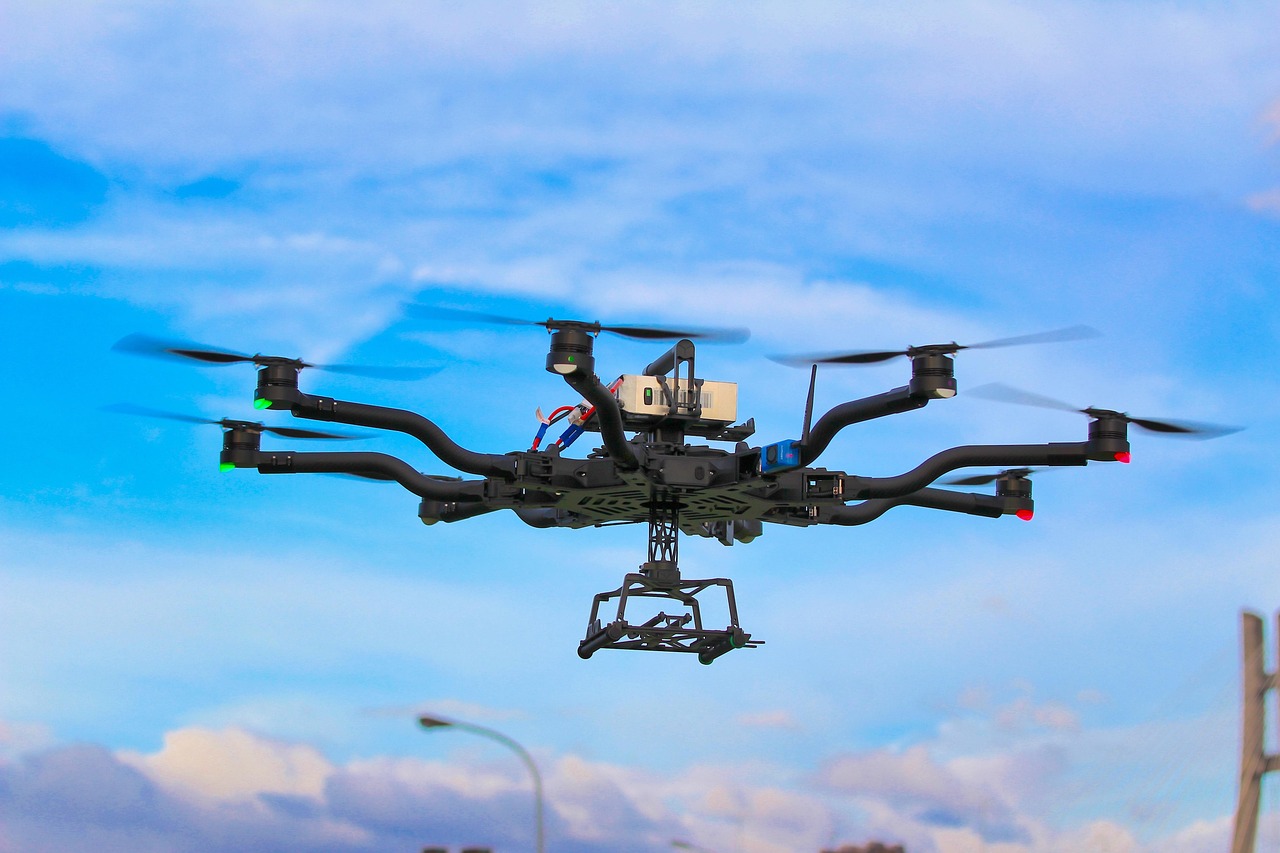
In high-stakes industrial operations, lithium power modules can no longer be viewed as simple consumables; they are Strategic Energy Assets that directly dictate mission success. Industry analytics reveal a sobering reality: 60% of drone fleet failures are rooted not in pilot error, but in systemic negligence within charging and storage protocols.
By shifting to a data-driven maintenance framework—built on thermal equilibrium protocols and precise impedance auditing—operators can significantly extend hardware lifespan. In environments as demanding as the tropical corridors of Brazil, adhering to these high-reliability benchmarks remains the most reliable path to transforming battery maintenance from a cost center into a Profit Multiplier.
Key Takeaways
Asset-First Mindset: Treat energy modules as high-value infrastructure. Professional management is a Profit Multiplier, not a cost center.
Thermal Equilibrium Charging: Enforce the 35°C( 95°F) Cool-Down Protocol. Never initiate charging until the cell core stabilizes, preventing chemical scarring of the Solid Electrolyte Interphase (SEI).
Stabilized Storage (3.85V): For high-heat climates, maintain a precise 3.85V per cell to inhibit electrolyte decomposition and parasitic reactions.
Structural & Impedance Audits: Conduct weekly inspections of pin integrity and casing seals to prevent humidity-induced micro-shorts and corrosion.
DoD Discipline: Strictly avoid discharges below 20% (DoD). Preserving this chemical buffer prevents irreversible structural collapse of the cathode at high-delithiation states.
Foundational Energy Asset Protocols for Industrial Drone Batteries
Treat Batteries as Critical Energy Assets
In industrial aviation, batteries must be managed as high-value infrastructure, not consumables. Every maintenance action directly influences the Total Cost of Ownership (TCO) and mission reliability. Professional management requires moving beyond generic care to protocol-based handling. This starts with using Intelligence-Linked Chargers that synchronize with the battery’s internal BMS to prevent impedance mismatching—a leading cause of localized cell overheating and premature failure.
Architectural Divergence: Semi-Solid vs. Legacy LiPo
Effective maintenance requires understanding the fundamental shift in cell chemistry. Traditional LiPo batteries utilize a porous separator and significant liquid electrolyte (approx. 25%), making them susceptible to leakage and rapid thermal runaway.
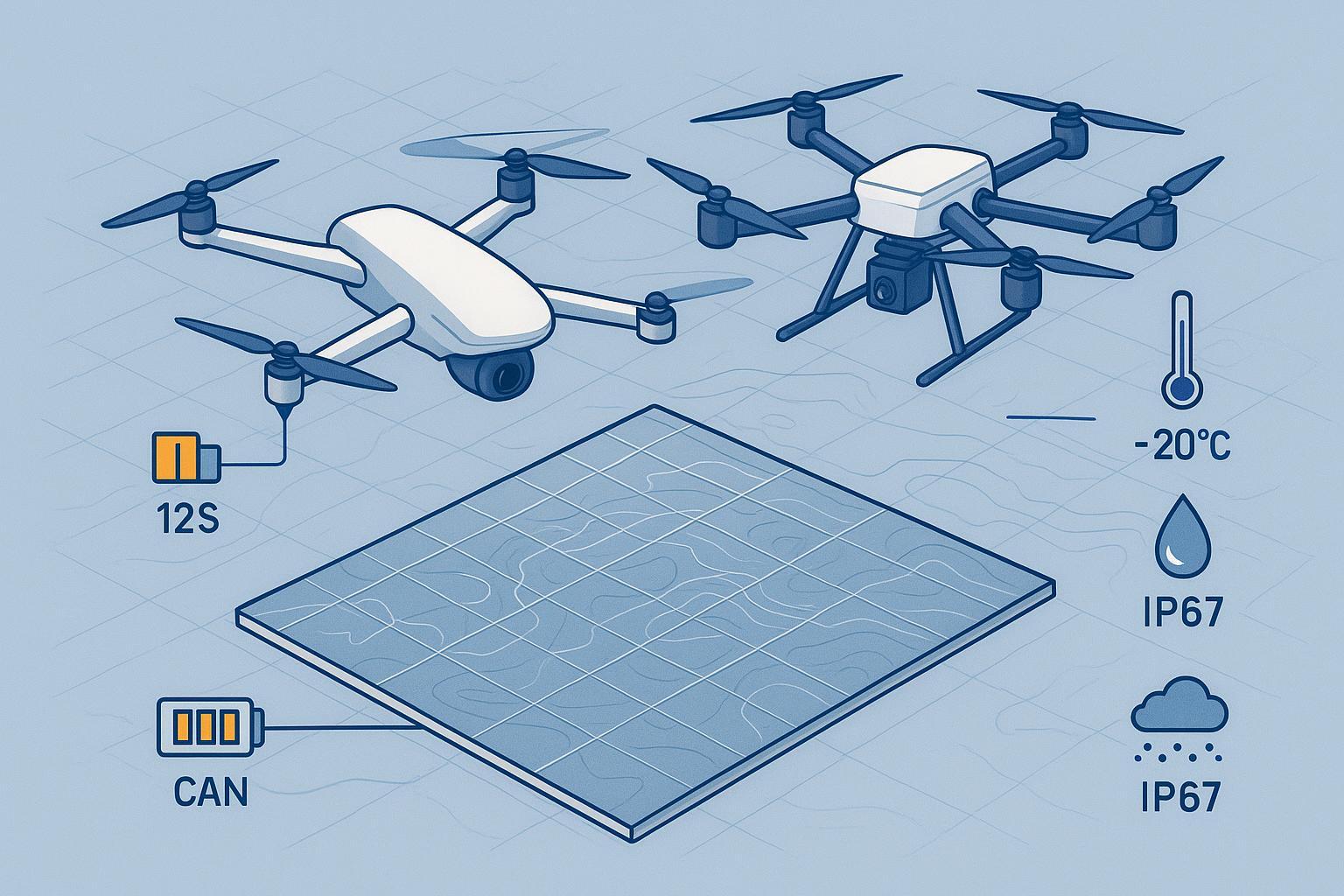
The Semi-Solid Advantage Semi-solid technology reduces liquid content to only 5–10% and utilizes an alumina-coated separator—30% thinner than legacy versions—to minimize ion resistance. This architecture enables stable operation from -20°C to 60°C and supports a benchmark of 1,200+ cycles.
Preservation Protocols To maximize this asset’s lifespan, operators should enforce Thermal Equilibrium (charging only when core temperatures are <35°C) and maintain a 3.85V storage equilibrium to prevent electrolyte decomposition.
Charging Management: Efficiency & Thermal Discipline

Standardized Charging Protocols
In industrial aviation, charging is a sophisticated chemical recovery phase. Adhering to a standardized protocol is essential to maintain cell equilibrium and fleet readiness:
Impedance-Aligned Charging: Utilize only the official smart charger. This ensures a precise handshake between the power source and the battery’s BMS, matching the charging current to the cell’s real-time DCIR (Direct Current Internal Resistance) to minimize waste heat.
Environmental Optimization: Charge in an ambient window of 20–30°C. Extreme cold hinders ion mobility, while excessive ambient heat compounds internal thermal stress.
The Pre-Charge Inspection: Verify the absence of casing swelling or terminal oxidation. Any debris on the pins can create localized high-resistance points, leading to fire hazards during high-current charging.
Thermal Equilibrium: The 35°C (95°F) Threshold
Thermal management is the most critical factor in securing the 1,200+ cycle benchmark, particularly in high-temperature environments like Brazil. Following high-intensity sorties, industrial batteries retain significant residual heat that must be dissipated before charging begins. Standardizing a strict 35°C (95°F) threshold is essential to prevent “Chemical Scarring”—an irreversible thickening of the SEI layer. When a battery is charged while hot, this parasitic reaction effectively turns the cell into an insulator, increasing Internal Resistance (DCIR) and leading to permanent capacity loss.
According to Herewin’s technical audits, neglecting this cool-down period directly compromises mission resilience and shortens flight times. Operators must prioritize real-time sensor data over arbitrary timers; a “15-minute wait” is often insufficient in 40°C ambient conditions if the battery core has not achieved true thermal equilibrium. By mandating this temperature-gated start, fleet managers protect the structural integrity of the semi-solid architecture and ensure long-term asset profitability.
Intelligent Hardware Integration
Modern industrial batteries, particularly Semi-Solid architectures, require dynamic current modulation.
Intelligent Overcharge Prevention: Smart chargers communicate with the BMS to monitor cell-level voltage deltas. If a delta exceeds the 0.05V safety limit during charging, the system automatically adjusts the C-rate to perform a “Balance Charge,” preventing cell-level over-voltage.
Thermal Monitoring: Unlike generic chargers, smart systems will throttle or terminate current if internal temperatures spike abnormally, providing a secondary fail-safe against Thermal Runaway. By utilizing protocol-aligned hardware, you transform charging from a risk factor into a profit-preserving asset management tool.
Industrial Drone Lithium Battery Storage: Guidelines & Preservation
3.85V Equilibrium for High-Heat Climates
Storing cells at a precise 3.85V is essential for electrochemical stability, especially in high-heat regions like Brazil. Storing batteries at full charge (4.2V+) accelerates electrolyte oxidation and causes the Cathode Electrolyte Interphase (CEI) to thicken prematurely. Conversely, deep discharge risks copper current collector dissolution.
The 3.85V Window: This level minimizes chemical potential difference, slowing the degradation of SEI/CEI films.
Thermal Limits: Keep storage between -10°C and 35°C (14°F – 95°F). While cells can withstand brief spikes up to 45°C, prolonged exposure to heat above 35°C catalyzes irreversible capacity loss.
Active vs. Hibernation Storage Modes
Effective fleet management requires categorizing battery assets based on their operational readiness requirements:
Active (Ready in <72 hours): Maintain SoC between 40% and 60%. This ensures rapid deployment while avoiding the high-voltage stress of a 100% charge.
Hibernation (>7 days): A mandatory discharge to 3.85V is required. Use the “Storage Mode” on smart chargers to balance cell voltages and prevent individual cell over-discharge from BMS self-consumption.
Conduct Weekly Pin & Casing Integrity Audits
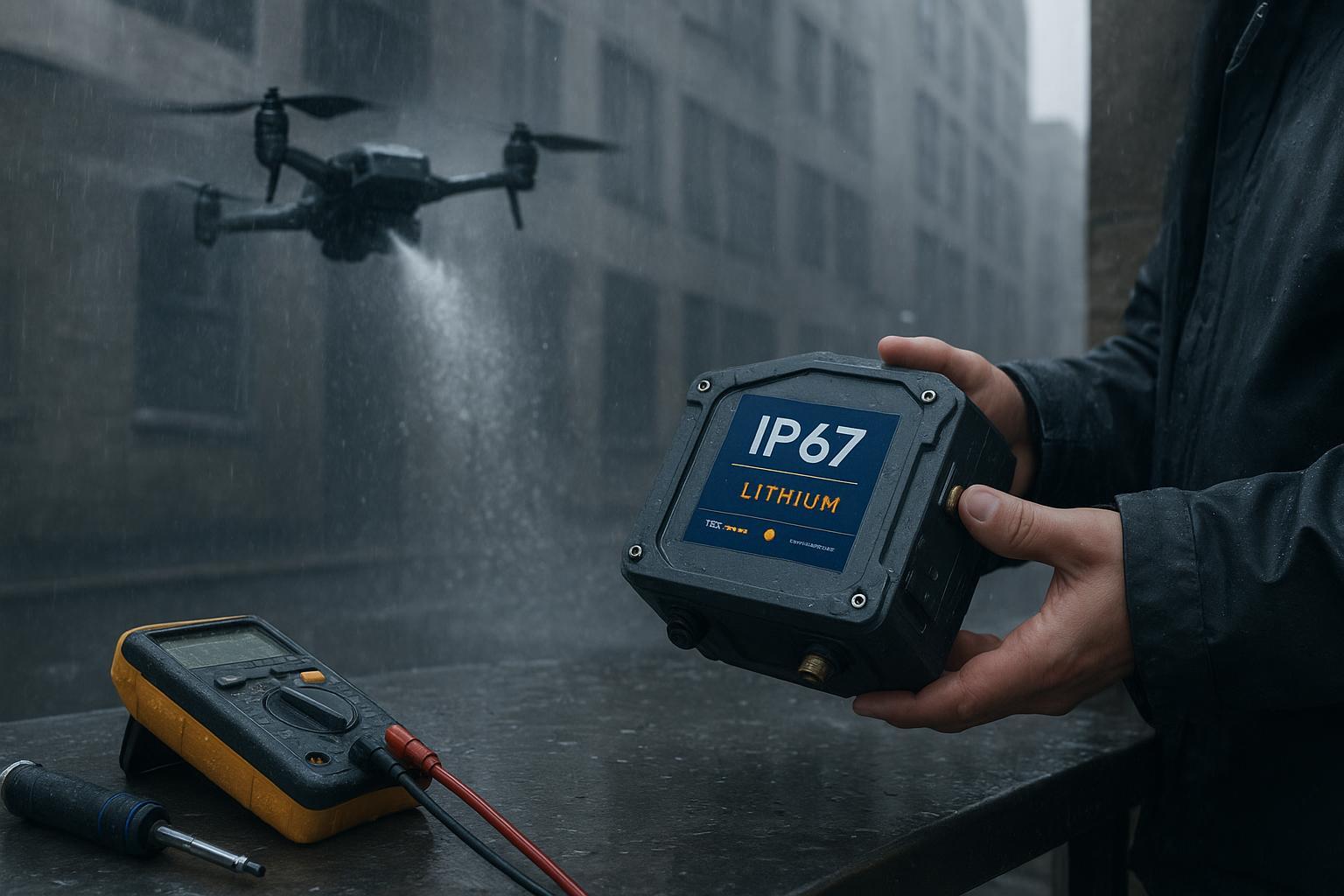
In tropical corridors, humidity is as dangerous as heat. Moisture ingress can trigger micro-shorts long before a battery is ever connected to a drone.
Interface Integrity: Inspect connectors for signs of green or black oxidation (corrosion). Corroded pins increase contact resistance, leading to localized Joule heating and potential port melting during high-current sorties. Use a non-conductive electronic cleaner to maintain the IP65-rated interface.
Casing & Seal Audit: Check for casing swelling (off-gassing) or breaches in the ultrasonic welding seams. Any structural compromise that threatens the internal vacuum or humidity seal necessitates immediate decommissioning to prevent internal electrolyte leakage.
Lifecycle Optimization & Capacity Retention
Operational DoD Discipline
Maximizing the service life of an energy asset requires strict Depth of Discharge (DoD) Discipline. In industrial operations, “running to empty” triggers irreversible structural damage at the molecular level.
The 20% Safety Floor: Always initiate the “Return-to-Home” (RTH) sequence with at least 20% State of Charge (SoC) remaining.
The Science of Structural Integrity: According to electrochemical audits, deep discharge causes “High Delithiation,” where the removal of too many lithium ions forces the cathode’s crystal lattice to shift or collapse. By maintaining a 20% buffer, you preserve the structural stability of the Semi-Solid architecture, preventing the premature loss of active material that leads to capacity fade.
Predictive Analytics & Cycle Health Trends
Data-driven maintenance transforms reactive replacement into Predictive Asset Management. Operators should move beyond simple logbooks to integrated health analytics:
Track DCIR Growth: Internal Resistance (IR) is the most accurate predictor of battery aging. A consistent upward trend in DCIR indicates the thickening of the SEI layer and loss of electrolyte connectivity.
Capacity Retention Audits: Every 50 cycles, perform a controlled discharge test to verify the actual capacity against the factory baseline.
Operational Reassignment: Assets showing a 15% increase in IR should be reassigned from “High-C Spraying/Lifting” sorties to “Lightweight Surveillance” missions to mitigate the risk of thermal stress-induced failure.
The 1,200+ Cycle Reliability Standard
The 1,200+ cycle standard is the essential benchmark for any cost-efficient drone program. This reliability level represents the optimal intersection of hardware endurance and operational ROI.
The TCO Multiplier: While standard industrial LiPos typically peak at 500–800 cycles under controlled conditions, their real-world lifespan often drops significantly in high-load or extreme thermal environments. By upgrading to a 1,200+ cycle standard, fleet managers can effectively halve their long-term battery expenditure.
Standardized Validation: Use precision testing docks to monitor cell equilibrium and impedance. Maintaining a Voltage Delta ≤0.05V and stable IR at the 800-cycle milestone provides the ultimate validation of your SOPs. It confirms that your thermal management and DoD protocols are successfully preserving the semi-solid architecture, ensuring the asset remains on track to surpass the 1,200+ cycle target.
Advanced Diagnostics & Troubleshooting
Audit Cell Health via the ≤0.05V Delta Standard
In a high-performance pack, cell health is governed by the Weakest Link Principle. Monitoring the Voltage Delta—the variance between the highest and lowest cell—is the primary diagnostic for identifying latent defects before they lead to mission failure.
The 0.05V Redline: Adhere to a ≤0.05V Delta Standard across both static and high-load states. A delta exceeding this threshold indicates a critical Impedance Mismatch within the pack.
Digital Telemetry: Leverage the Smart BMS Data Link to analyze real-time discharge curves. A cell that “sags” disproportionately during high-throttle maneuvers is a leading indicator of premature chemical aging.
Corrective Protocol: If a delta >0.05V persists, perform a 0.5C Controlled Balance Charge. If the imbalance remains after two cycles, the pack must be decommissioned to mitigate the risk of catastrophic in-flight power failure.
Internal Resistance (IR) as a Key Health Indicator
Internal Resistance (IR) is the primary Key Health Indicator (KHI) for lithium assets. Based on the Joule Heating Law (Q = I²R), even a marginal increase in resistance triggers an exponential rise in thermal energy during high-current sorties, directly compromising safety.
ACIR vs. DCIR Tracking: Prioritize DCIR (Direct Current Internal Resistance) via the smart charger’s diagnostic port. While ACIR measures cell connectivity, DCIR reveals the actual degradation of the SEI layer and electrolyte conductivity.
Critical Thresholds: Flag any IR spike exceeding 15–20% of the factory baseline. These deviations typically correlate with localized electrolyte depletion or cathode structural decay. High IR is not merely a performance issue; it is a leading precursor to Thermal Runaway, especially in high-ambient heat environments.
Decommissioning Criteria & Safe Disposal
Safety in industrial aviation depends on the structural integrity of the energy system; chemical degradation is irreversible. Batteries that fail to meet performance benchmarks must be systematically removed from service:
Visual Rejection Criteria: Immediately decommission any pack showing signs of casing swelling (off-gassing), electrolyte leakage, or terminal charring. These symptoms indicate advanced internal decomposition.
The 80/20 Retirement Benchmark: Assets reaching 1,200+ cycles or falling below 80% capacity retention should be retired from primary operations. These units may be reassigned to non-critical ground testing or secondary tasks if internal resistance remains stable.
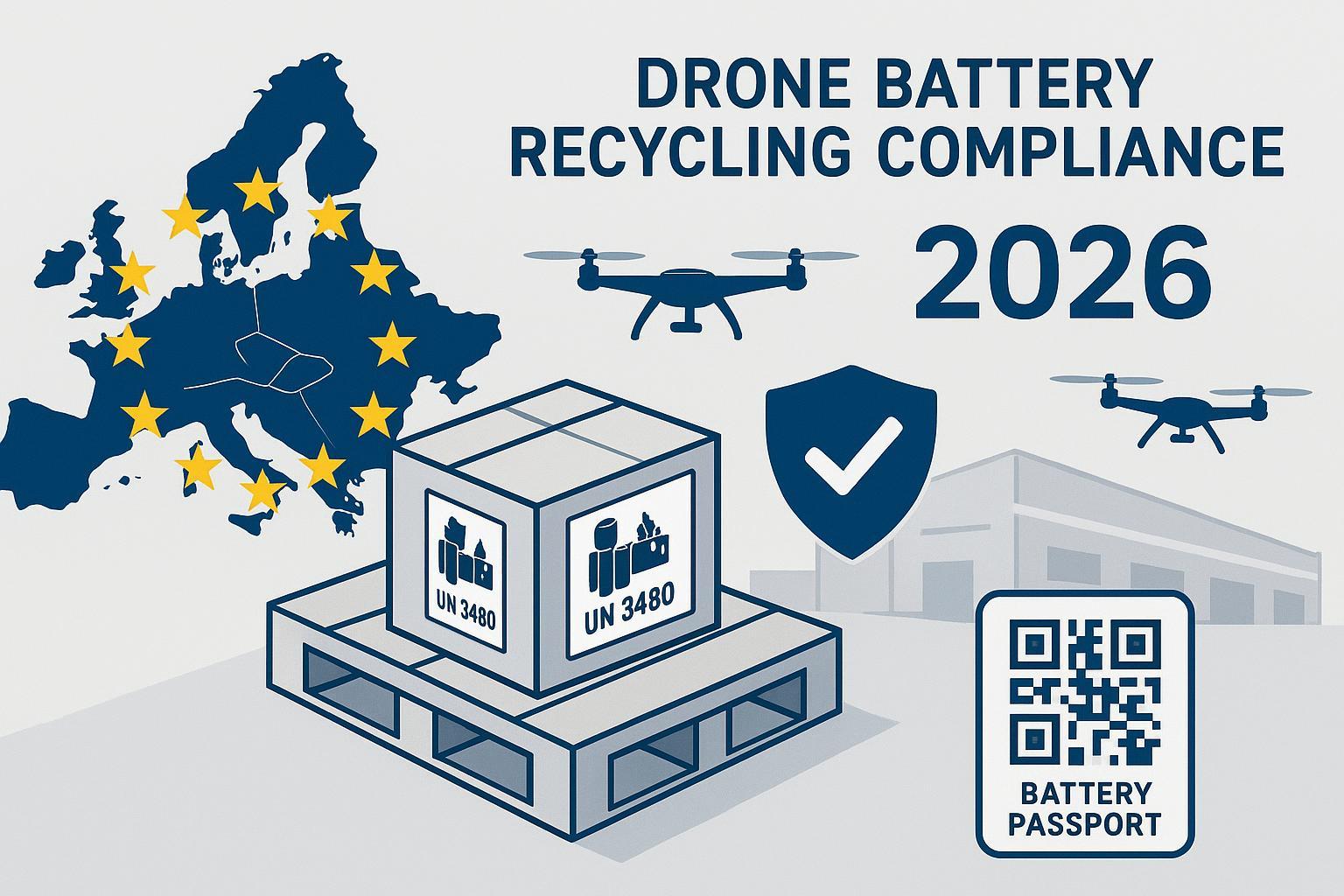
Safe Disposal & Neutralization: To prevent thermal events during transport, neutralize stored energy using a specialized discharge load to reach 0V. Always adhere to local hazardous waste regulations for lithium-polymer disposal.
Customized Maintenance for High-Intensity Operations
High-Intensity Fleet Rotation
In intensive operational environments—such as 24/7 agricultural spraying or industrial inspections—the battery fleet undergoes rapid thermal and chemical cycling. Standardizing a “Rotation Buffer” is essential to prevent cumulative thermal stress:
The 3-1-3 Rotation Strategy: Maintain a ratio of 3 batteries per drone (1 in flight, 1 in the Thermal Equilibrium Phase, 1 in active smart charging). This ensures no battery is subjected to charge current while its core is thermally saturated.
Dynamic Cycle Balancing: Utilize the Smart BMS Cloud to track individual cycle counts. Systematically rotate older units (800+ cycles) into lighter surveillance sorties while reserving high-health units for heavy-lift missions.
Active Cooling Intervention: In ambient temperatures exceeding 35°C, utilize forced-air cooling docks to accelerate the transition to the 35°C Threshold, ensuring the semi-solid electrolyte maintains its optimal ion-conduction interface.
Protecting Assets During Transport in Rugged Terrains
Transporting high-energy assets across unpaved or mountainous terrains (common in Brazilian rural sectors) introduces high-frequency vibrations that can compromise internal cell connectivity.
Vibration Protection: Use transport cases lined with high-density EVA foam and IP65-rated seals. An airtight seal is essential to prevent humidity and saline dust from triggering micro-corrosion on the signal pins.
Pre-Flight Impedance Verification: Before deployment in the field, use the BMS handheld terminal to run a self-test. A sudden spike in ACIR (Ohmic Resistance) post-transport often indicates a loosened internal connector or micro-cracks in the ultrasonic welding seams—detecting this early prevents a mid-air power loss.
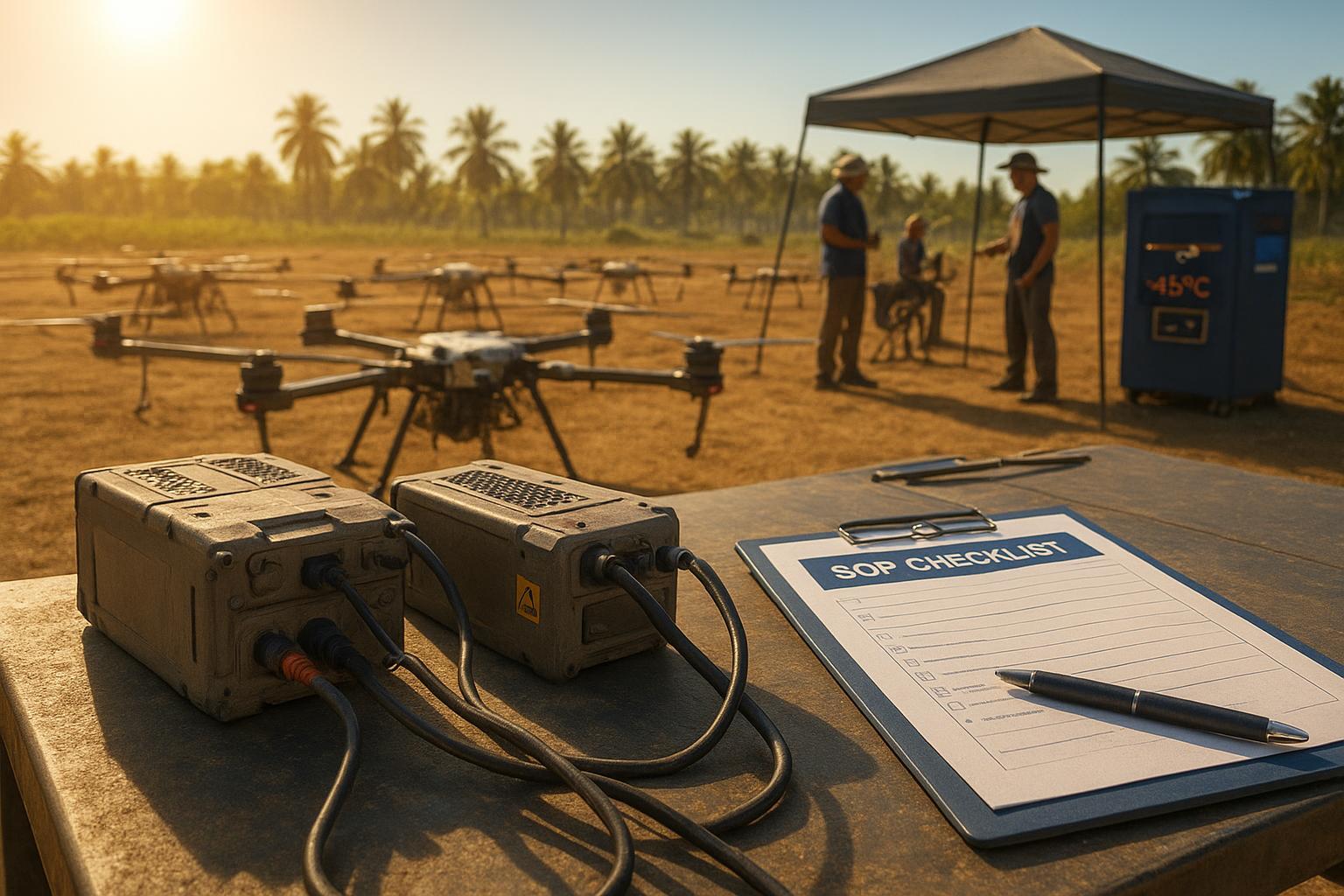
The Data-First On-Site Checklist
Field technicians must adhere to a “Data-First” inspection protocol to ensure mission resilience. Replace manual guesswork with the following standardized audit:
Interface Integrity Audit: Inspect power terminals for “carbonization” or green oxidation. Clean pins using a non-residue electronic contact cleaner to ensure a low-resistance connection.
BMS Health Handshake: Connect to the diagnostic app to verify that the Voltage Delta is ≤0.05V and ensure no “High IR” flags are present.
Casing Integrity Audit: Inspect for any signs of “pillowing” (swelling). In semi-solid cells, swelling indicates gas generation from internal electrolyte decomposition—a critical failure that mandates immediate decommissioning.
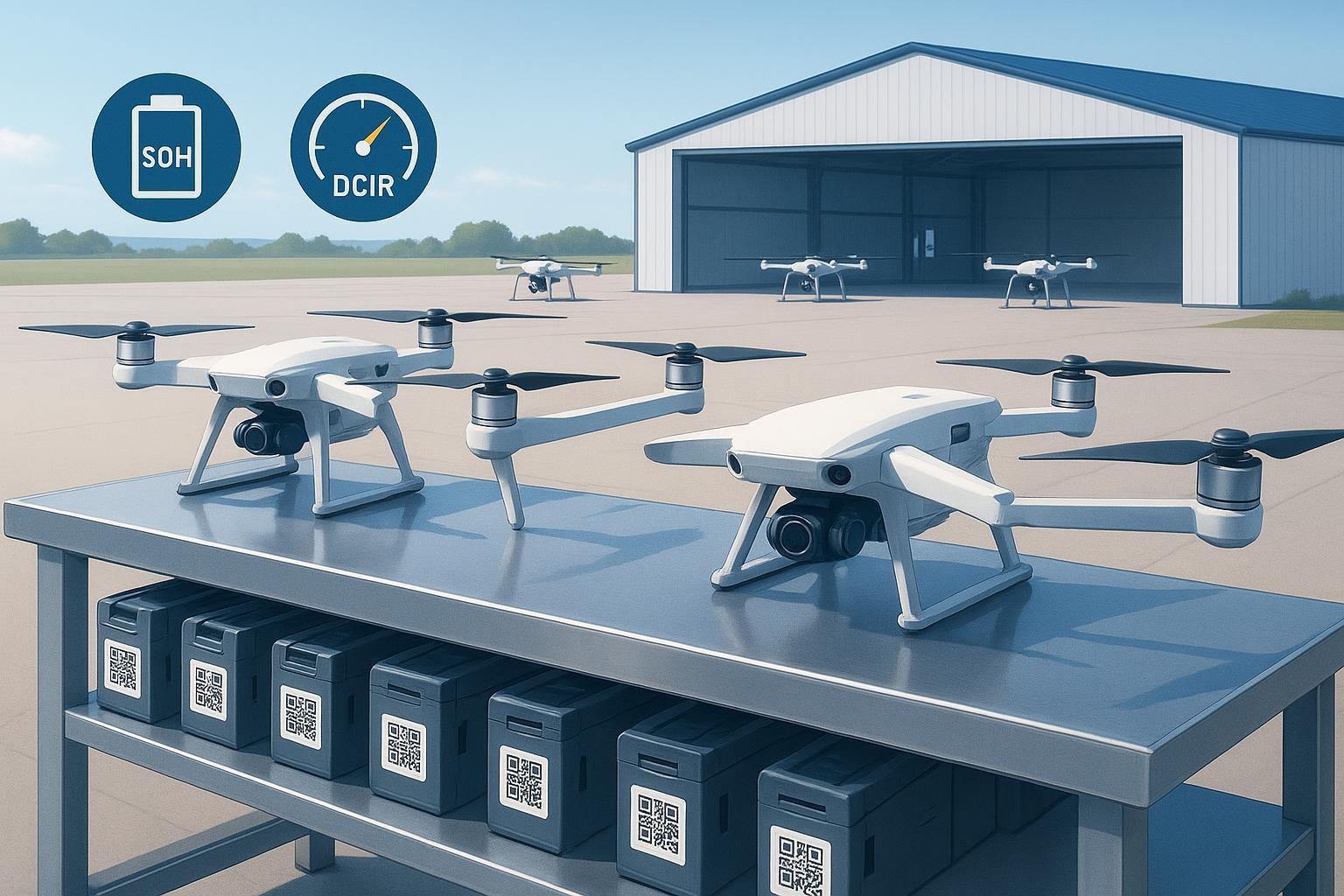
Operational Log Synchronization: Sync field data to the central management system to update the TCO and SOH (State of Health) predictive models.
Adhering to these maintenance standards is the most effective way to reduce Total Cost of Ownership (TCO). By prioritizing thermal discipline, storage equilibrium, and precise cell diagnostics, operators can fully leverage the 1,200+ cycle reliability of the semi-solid architecture—turning battery management into a long-term competitive advantage.
Learn More For more information on optimizing battery longevity or to discuss a Customized Fleet Health Audit tailored to your mission profiles, please feel free to consult our technical team. We are here to help you navigate your specific environmental challenges and maximize your asset performance.
FAQ
Can I charge batteries immediately after landing to increase turnover?
No. In high-heat environments, cells remain thermally active post-flight. You must adhere to the 35°C (95°F) Cool-Down Protocol. Charging a hot battery causes “Chemical Scarring” and permanent capacity loss. Always wait for the core temperature to stabilize below 35°C.
What should I do if my Voltage Delta exceeds the 0.05V standard?
A delta above 0.05V indicates cell imbalance. Perform a slow balance charge at a low C-rate (0.5C). If the imbalance persists after two cycles, the battery must be retired from primary operations to prevent in-flight power failure.
What is the most critical storage factor in tropical climates?
Voltage equilibrium and humidity control. Always stabilize storage at 3.85V per cell. Since high humidity accelerates connector corrosion, store batteries in a climate-controlled area (relative humidity <60%) and conduct weekly inspections of pins and casing seals.
Can a slightly swollen (puffed) battery be repaired?
Prohibited. Swelling is caused by irreversible internal gas generation. There is no repair for physical cell deformation. For the safety of your fleet, any swollen battery must be immediately decommissioned and neutralized for disposal.
How do I actually achieve the 1,200+ cycle life benchmark?
Success depends on strict DoD (Depth of Discharge) Discipline. Set your “Return-to-Home” (RTH) trigger at 20% SoC. Combining this buffer with the 35°C charging rule is the most effective path to maximizing TCO and reaching the 1,200+ cycle target.



 English
  Español
  한국어
한국어  Deutsch
  Français
  日本語
日本語  Русский
  Bahasa Indonesia
  ไทย
ไทย  العربية
  Português do Brasil
  Italiano
  Nederlands