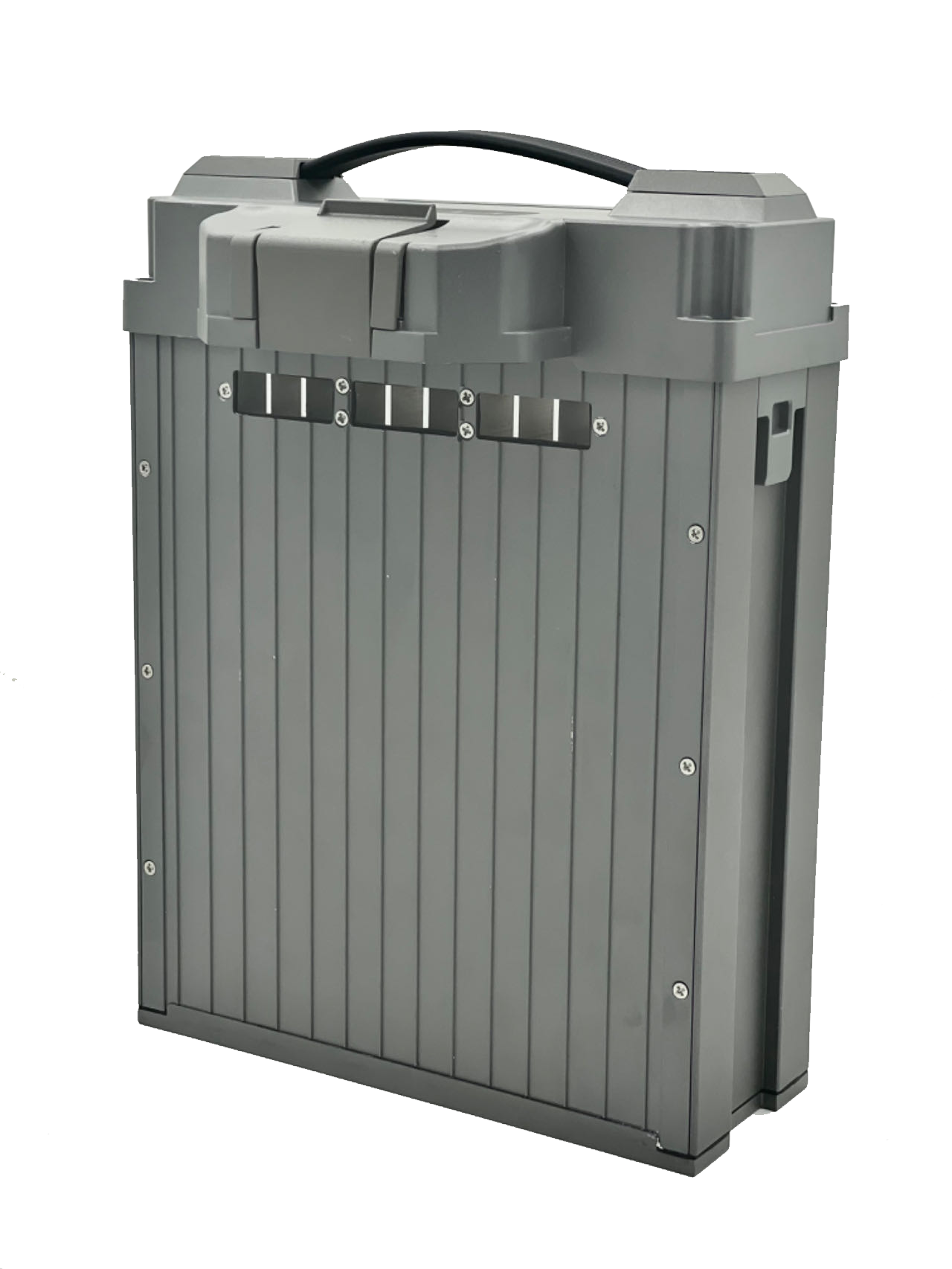
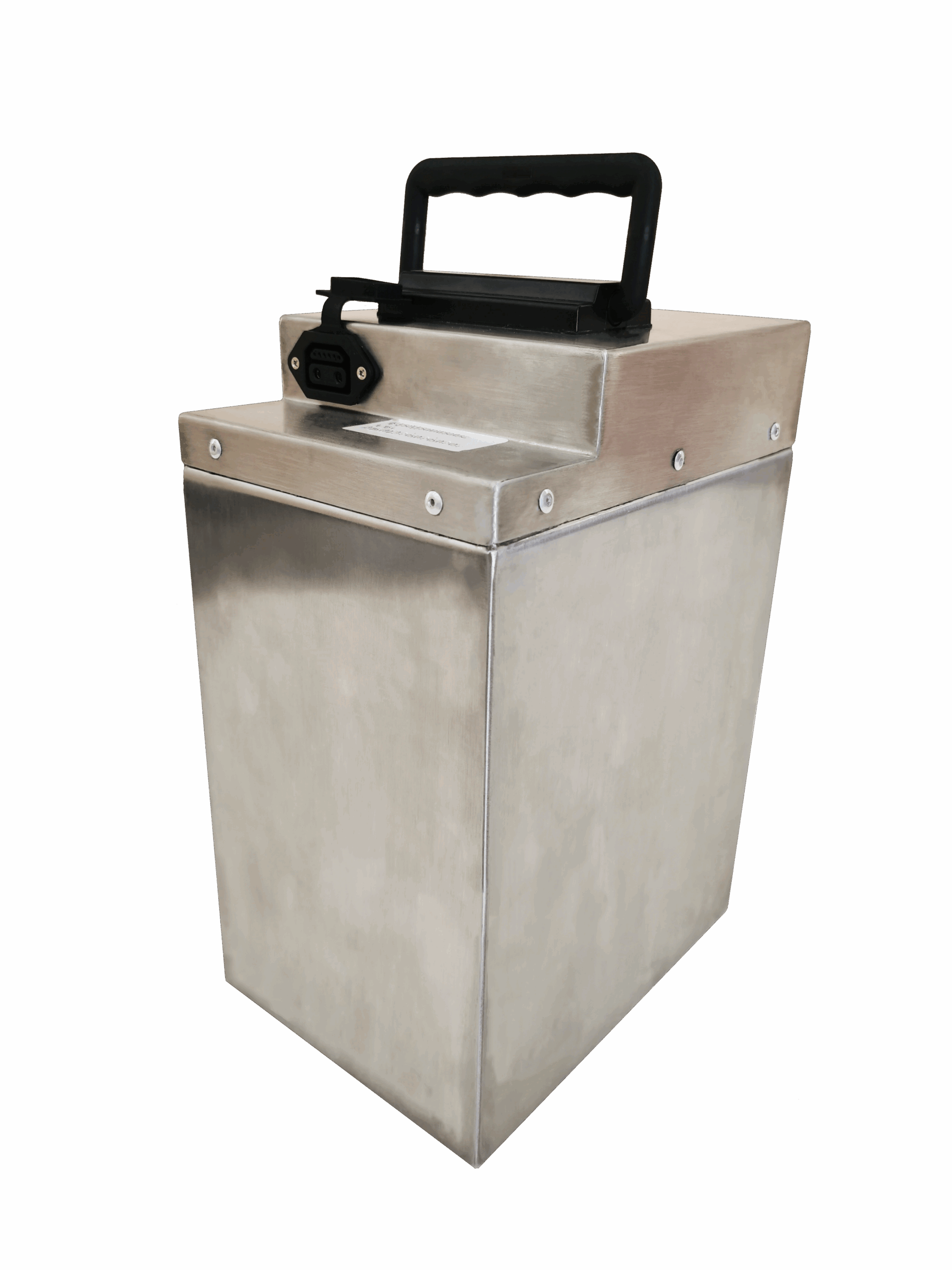
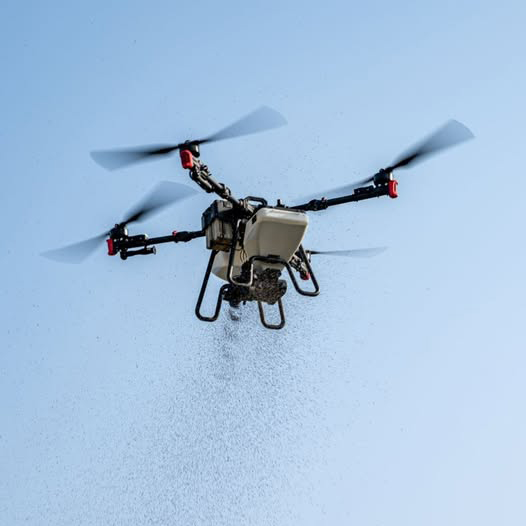

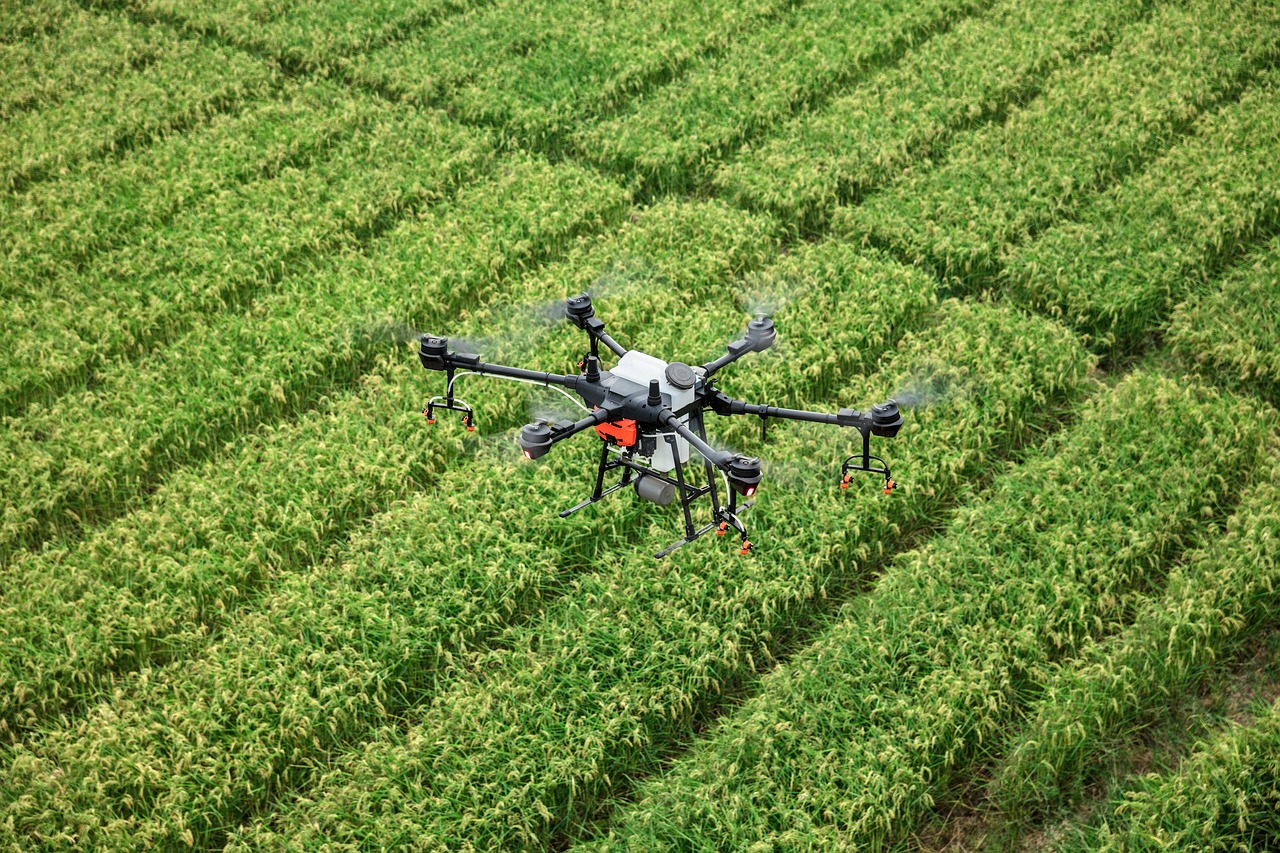
Indonesia experiences extreme weather, with temperatures ranging from 30°C to 60°C. This environment poses a significant threat to the return on investment (ROI) of your agriculture drone battery, as high heat accelerates electrolyte decomposition and causes swelling. Selecting the right battery is crucial for enhancing productivity in palm oil estates, ensuring stable performance even under these harsh conditions. By matching professional technology with specific operational scenarios, you can achieve higher yields and lower long-term costs.
Key Takeaways
Choose batteries with an IP65+ rating to protect against heavy rain and humidity. Ensure the battery features ultrasonic welding and double-layered sealing rings to prevent short circuits during the monsoon season.
For large estates, prioritize 12000mAh to 16000mAh batteries to support over 50 mu(approx. 3.3 hectares) per flight and reduce swap frequency. For small plots, 5200mAh to 10000mAh models offer the best balance of weight and cost-performance.
Invest in quality batteries with a cycle life of ≥500 times to drive mu-costs as low as 0.04 RMB. High-quality cells prevent “fake capacity” and ensure reliable long-term savings.
Look for the UN38.3 certification, the international safety standard for lithium battery transport and use, alongside local compliance.
Implement an intelligent Battery Management System (BMS) with five-fold protection and smart balance charging to optimize performance and extend battery lifespan.
Engineering Standards for Indonesia’s Monsoons

In the complex agricultural environments of Southeast Asia, high humidity and water vapor can easily penetrate battery enclosures, leading to capacity decay or catastrophic short circuits. To ensure operational continuity during the monsoon season, batteries must adhere to rigorous engineering standards designed for moisture resistance and mechanical durability.
Importance of IP65+ Rating
A professional-grade agriculture drone battery must achieve at least an IP65+ protection rating. This certification guarantees that the unit is completely dust-tight and can resist low-pressure water jets from any direction.
Key Identification: When evaluating batteries, users should verify the presence of integrated ultrasonic welding on the shell and double-layered sealing rings at all interfaces.
Operational Limit: It is critical to note that IP65 does not mean the battery is soakable; the surface and interfaces should always be wiped dry after operations in the rain.
Role of Ultrasonic Welding
Traditional adhesives or gaskets can degrade over time in humid environments, compromising the battery’s seal. High-standard manufacturers, utilize ultrasonic welding to create robust, seamless joints that are inherently more resistant to moisture ingress.
Mechanical Resilience: These welded joints are designed to withstand the mechanical stress and temperature fluctuations typical of Indonesian estates.
Waterproofing Verification: Technical standards suggest a verification test with small amounts of water to ensure no leaks or indicator malfunctions occur at these seams.
Rainy Season Maintenance Protocol: To maximize ROI, avoid operating in heavy rain. Immediately after short rain exposure, clean the shell and inspect the sealing rings for signs of aging or degradation.
Agriculture Drone Battery Capacity Selection
Selecting the right battery capacity is crucial for optimizing agricultural drone performance. In Indonesia’s diverse agricultural landscape, the capacity must accurately match the operation scenario to balance endurance, weight, and investment costs.
Capacity for Large Estates
For large-scale operations like palm oil plantations characterized by continuous plots (over 100 mu), large-capacity batteries are prioritized to maximize coverage.
Operational Coverage: These batteries support over 50 mu of coverage per flight, significantly reducing the frequency of battery swaps.
Heavy-Duty Performance: High-capacity models should feature a 25C high-rate discharge to provide stable power for climbing and hovering in dense plantations.
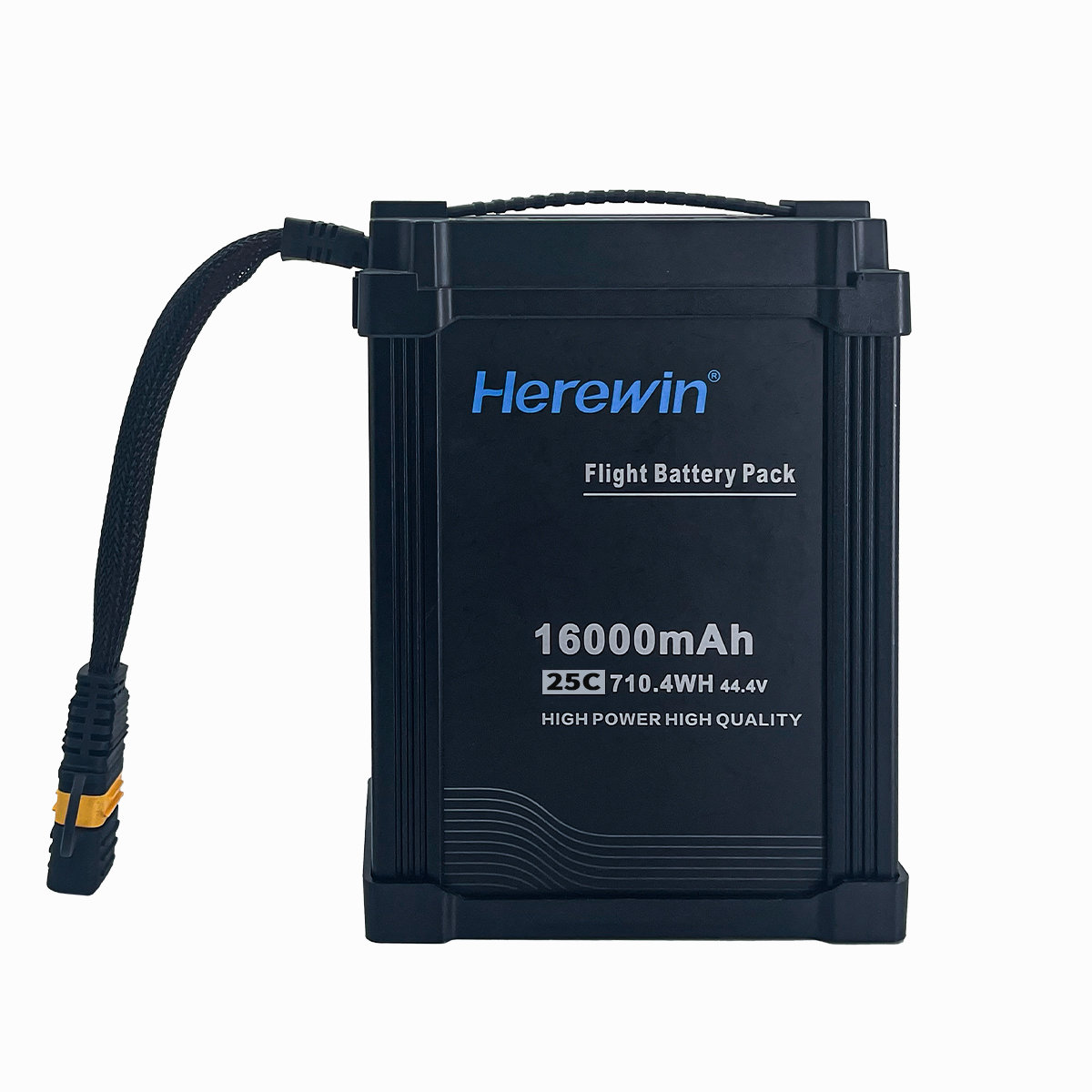
Reliable Lifespan: Professional-grade cells, such as those in Herewin’s 16000mAh series, are rated for ≥500 cycles, ensuring long-term reliability for large farms.
Specification | Role in Performance | Technical Standard |
Capacity | Determines flight duration and area coverage | 5,200 – 16,000 mAh |
Discharge Rate | Measures power delivery efficiency | ≥25C |
Cycle Life | Impacts long-term ROI and replacement frequency | ≥500 Cycles |
Capacity for Small Plots
For small agricultural plots like rice terraces (1–5 mu), medium-capacity batteries are recommended for better cost-performance.
Economic Efficiency: Batteries ranging from 5200mAh to 10000mAh meet the operation needs of 20–50 mu while avoiding excessive weight and high unit prices.
Frequent Maneuverability: The lower weight is essential for the frequent take-offs and landings required by scattered plots.
Finding a balance between battery capacity and weight is essential for optimal flight. Always verify that the battery weight is stable; a deviation of more than 10% from the standard specification may indicate the use of inferior materials.
ROI Cost Analysis for Agriculture Drone Batteries
Understanding the total cost of ownership is essential for the commercial success of drone operations. By accurately calculating costs, you can transition from viewing batteries as an expense to seeing them as a strategic investment.
Cost Calculation Methodology
The most effective way to evaluate battery value is through the Cost per Use formula: Cost per Use = Purchase Price / Cycle Life
Factors that directly influence this calculation include:
Initial Purchase Price: While quality batteries have a higher upfront cost, they offer significantly lower costs per flight due to their longevity.
Cycle Life: Professional-grade batteries, are engineered for ≥500 cycles. Lower-quality batteries often suffer from “fake capacity” and premature swelling, leading to higher replacement costs and operational downtime.
Operational Scale: The efficiency of your operation—whether smallholder or large estate—determines your final cost per mu.
Long-Term Savings from Quality Batteries
Investing in high-endurance batteries leads to significant savings through optimized efficiency and reduced replacement frequency.
The following cost estimates illustrate how strategic battery selection impacts daily operational expenses based on standard Indonesian field conditions:
Operational Model | Battery Choice | Cycle Life | Estimated Cost per Mu |
Smallholder (≤50 mu) | 8000mAh | ≥500 Cycles | ~0.06 RMB/mu |
Large-Scale (≥100 mu) | 16000mAh | ≥500 Cycles | ~0.04 RMB/mu |
Note: 15 mu is approximately equal to 1 hectare.
How Quality Enhances Your ROI:
Extended Lifespan: Premium cells last longer even in high temperatures (30°C-60°C), reducing the frequency of costly replacements.
Fast Charging Compatibility: High-quality batteries support continuous operations with 3500W fast chargers, allowing large farms to cover 400-720 mu daily.
Smart BMS Optimization: A high-quality Battery Management System (BMS) prevents over-discharge and overheating, minimizing wear and maximizing the return on every dollar spent.
By selecting professional-grade batteries that are specifically engineered for high-temperature and high-humidity environments, you significantly reduce long-term operational costs. This strategic choice, combined with precise scenario-based capacity matching, ensures better crop management and maximizes your overall investment profitability.
Professional Procurement Checklist for Agriculture Drone Batteries
Selecting the right agriculture drone battery requires a rigorous evaluation of technical standards and safety certifications. Use this checklist to ensure your procurement meets the specific demands of Southeast Asian environments.
Essential Certifications
Certifications are the first line of defense in ensuring battery safety and regulatory compliance.
UN38.3 Certification: This is the mandatory international safety standard for lithium battery transport and use. Always verify that the certificate number matches the specific battery batch you are purchasing.
Standard Compliance: Ensure the product follows ISO 9001 and other international safety assurances.
Local Compliance: In addition to international safety standards, ensure products meet regional requirements such as TKDN and SNI to facilitate legal operations and local industry support.
Advanced Battery Management Systems (BMS)
A professional BMS is a critical safety component that directly extends battery lifespan and ROI.
Five-Fold Safety Protection: A high-standard BMS must include protection against overcharge, over-discharge, over-current, short circuit, and temperature.
Intelligent Features: Look for “smart balance charging” and “millisecond fault response” in technical manuals to ensure optimal cell health and immediate intervention during faults.
Health Monitoring: The system must continuously track voltage, temperature, and charge cycles to prevent mid-flight failures.
Technical Quality & Performance Audit
Beyond certifications, use these data-driven indicators to identify high-quality batteries:
Feature | Technical Standard (Source-Aligned) | Impact on Operation |
Wide Temperature Range | -20°C to 60°C stable discharge | Handles both high-altitude morning flights and extreme midday heat |
Fast Charging Support | Compatible with 3500W fast chargers | Supports continuous operation and minimizes downtime for large farms |
Energy & Payload | High-density cells with stable discharge | Enables longer spraying duration and increased payload capacity per flight |
Quality Identification Checklist
Weight Verification: High-quality batteries use premium cells with stable weights. A deviation of more than 10% from the standard specification may indicate inferior materials.
Waterproofing Inspection: Verify the presence of integrated ultrasonic welding and double-layered sealing rings at all interfaces.
Low-Temperature Stability: High-quality batteries should maintain ≥80% capacity at 0.5C discharge after 6 hours at -20°C. This is a key indicator of chemical stability in Southeast Asia’s high heat.
The key to battery ROI in Southeast Asia is “Environment Adaptation + Scenario Matching”. By selecting technology that thrives in Indonesia’s 30°C–60°C heat , you can reduce operational costs to as low as 0.04–0.06 RMB/mu. To maintain these efficiencies over the long term, follow this essential protocol:
Quick Maintenance Guide (For ≥500 Cycles):
Charging & Cooling: Always allow batteries to reach room temperature before charging to prevent thermal stress.
Storage Environment: Keep at 10°C–25°C with humidity ≤60%; use desiccant or explosion-proof boxes during the monsoon season.
Health & SoC Management: Maintain 40%–60% SoC; check voltage every 2-3 months to ensure cells stay above 3.0V.
Post-Rain Care: Wipe shell/interfaces clean immediately after use and check sealing rings for signs of aging.
If you require a battery solution tailored to your specific estate size or terrain, our team of experts is available to help you find the ideal match.
FAQ
What is the ideal battery capacity for small agricultural plots?
For scattered plots like rice terraces (1-5 mu), a capacity between 5,200mAh and 10,000mAh is ideal. This range provides sufficient power for 20-50 mu operations while maintaining efficiency through reduced weight for frequent take-offs.
How can I extend the lifespan of my agriculture drone battery?
Beyond maintaining a 40%-60% SoC during storage, it is critical to allow the battery to cool to room temperature before charging. Always store batteries in a ventilated area at 10°C-25°C with humidity at or below 60%.
What certifications should I look for in agriculture drone batteries?
In addition to local TKDN and SNI compliance, look for the UN38.3 certification, which is the international safety standard for lithium battery transport and use. You should also verify that the battery is manufactured under ISO 9001 standards.
How does temperature affect battery performance?
High temperatures (30°C-60°C) accelerate electrolyte decomposition, leading to capacity decay and swelling. A high-quality battery must demonstrate stability by maintaining ≥80% capacity during a -20°C discharge test.
What is a Battery Management System (BMS)?
A professional BMS provides five-fold protection (overcharge, over-discharge, over-current, short circuit, and temperature). It optimizes health through smart balance charging and ensures a millisecond fault response for flight safety.
See Also
Enhance Your Investment: Key Metrics for Drone Battery Management
Top Drone Batteries for Farmers: 2025 Comprehensive Review
Empowering Thailand’s Smart Agriculture: Herewin Drone Battery Solutions
Large-Capacity Drone Batteries for U.S. Agricultural Needs
Aerial Cargo Transport in Australia: Effective Drone Battery Solutions
 English
  Español
  한국어
한국어  Deutsch
  Français
  日本語
日本語  Русский
  Bahasa Indonesia
  ไทย
ไทย  العربية
  Português do Brasil
  Italiano
  Nederlands