




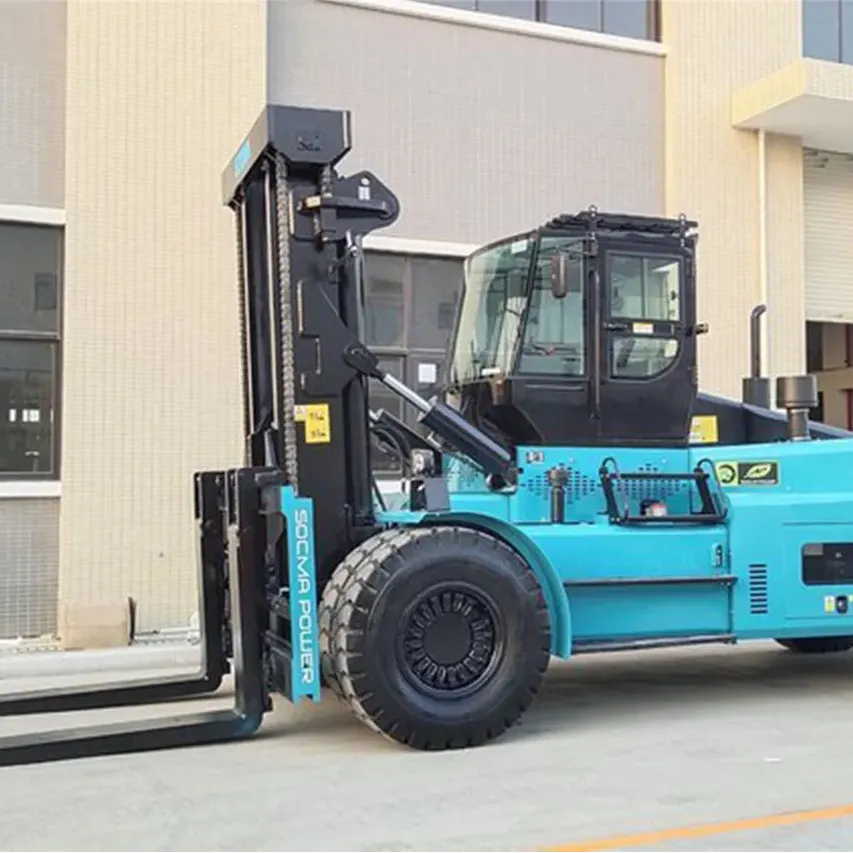

Automated Guided Vehicles (AGVs) play a vital role in smart manufacturing and material handling. However, traditional lead-acid batteries impose significant limitations. They often require extensive maintenance, which can drive up costs. Charging these batteries takes longer and may require cooling periods, leading to operational inefficiencies. This downtime severely restricts AGV uptime, posing a major obstacle to maximizing your return on investment (ROI). To overcome these challenges, high-power lithium for AGV fleet scaling emerges as a critical strategy for enhancing performance. By maximizing uptime, lithium technology helps you accelerate your ROI effectively.
Key Takeaways
Switching to high-power lithium batteries can significantly reduce maintenance costs and downtime, enhancing your AGV fleet’s efficiency.
Fast charging capabilities of lithium batteries allow AGVs to operate continuously, maximizing productivity and reducing the need for larger fleets.
Implementing opportunity charging during workflow breaks can increase AGV utilization by up to 35%, leading to better operational performance.
A comprehensive Total Cost of Ownership (TCO) assessment is essential for understanding the long-term financial benefits of upgrading to lithium technology.
Upgrading to lithium batteries not only improves operational efficiency but also contributes to sustainability through reduced energy consumption.
Traditional AGV TCO Traps
Lead-Acid Battery Hidden Costs
When you rely on lead-acid batteries for your AGVs, you encounter hidden costs that can significantly inflate your total cost of ownership (TCO). Regular maintenance is essential for these batteries. You must consistently water them, clean terminals, and perform periodic equalization. These ongoing maintenance needs lead to increased service interventions, which can accumulate significant costs over time.
For example, a lifecycle cost comparison for a typical high-throughput AGV might look like this (costs aggregated over 5 years):
Battery Type | Lifecycle Cost Components (5-Year Estimate) |
Lead-acid batteries | (Initial purchase × Average 3 replacements)+labor/material for watering & equalization + Floor space/HVAC cost +significant downtime losses |
LiFePO4 solution | Initial purchase (1 unit) + minimal labor/material for inspection + Infrastructure upgrade costs |
Operational downtime resulting from battery failures creates significant disruptions to workflows. This downtime can lead to costly labor idle time and delays in critical shipments. The combined impact can amount to $100–$300 per hour, depending on your operation’s scale.
Downtime and Productivity Loss
Downtime is a major concern when using lead-acid batteries in AGVs. Charging pit stops can result in a loss of 5-10 minutes of productive time per cycle. In fact, AGVs can consume 15-20% of their operational time waiting for power. To compensate for this downtime, companies often maintain AGV fleets that are 20-35% larger than necessary.
The inefficiencies associated with charging account for 20-30% of total robot operational time. This can slow down order fulfillment, reducing overall operational efficiency by up to 15%. By addressing these downtime issues, you can significantly enhance productivity and reduce costs.
With high-power lithium batteries, you can achieve substantial downtime reduction, allowing your AGVs to operate more efficiently and effectively.
Lithium Tech for Uptime Gain

Fast Charging and Opportunity Charging
High-power lithium batteries revolutionize the way you charge your AGVs. These batteries charge approximately four times faster than traditional lead-acid batteries. This rapid charging capability allows you to maximize operational time and reduces the need for multiple batteries. In AGV applications, quick turnaround is crucial.
Opportunity charging further enhances uptime. This method allows AGVs to charge during natural workflow breaks, such as loading or unloading. The benefits of opportunity charging are significant:
Evidence Type | Description |
|---|---|
Dramatic Utilization Improvement | Opportunity charging can increase AGV utilization by up to 35%, extracting significantly more value from existing fleet investments. |
Enhanced Operational Flexibility | Vehicles remain available for urgent tasks without waiting for charge cycles to complete. |
Zero Production Interruptions | AGVs charge during natural workflow breaks without impacting production schedules or creating bottlenecks in material flow. |
Optimized Fleet Sizing | Higher vehicle availability through continuous operation means fewer AGVs are needed to maintain required throughput. |
Eliminated Labor for Battery Management | Labor previously devoted to power management can be redeployed to higher-value activities. |
By implementing fast charging and opportunity charging, you can significantly reduce downtime and improve overall productivity.
Constant Voltage Output and BMS
The performance of high-power lithium batteries is further enhanced by their advanced Battery Management System (BMS). A BMS plays a crucial role in extending the lifespan of your lithium batteries in AGV fleets, while also mitigating safety risks inherent to the chemistry.
It ensures optimal battery performance through several key functions:
Function | Description |
|---|---|
Voltage and current balance | Ensures optimal energy distribution among cells to prevent degradation. |
Temperature control | Maintains safe operating temperatures to avoid thermal damage. |
State of Charge (SOC) | Monitors battery charge levels to prevent over-discharge and overcharge. |
Cell balancing | Equalizes charge across cells to enhance overall battery performance. |
Short circuit protection | Prevents damage from electrical faults, ensuring safety and longevity. |
Real-time diagnostics | Provides ongoing health assessments for predictive maintenance. |
Integration with vehicle systems | Ensures smooth operation and communication with vehicle control units. |
With real-time monitoring, you can track battery performance and make informed decisions about maintenance. This proactive approach helps you avoid unexpected failures and ensures that your AGVs operate at peak efficiency.
By leveraging fast charging, opportunity charging, and a robust BMS, you can significantly enhance the uptime of your AGV fleet. This not only improves productivity but also accelerates your return on investment.
Uptime to Accelerated ROI Logic
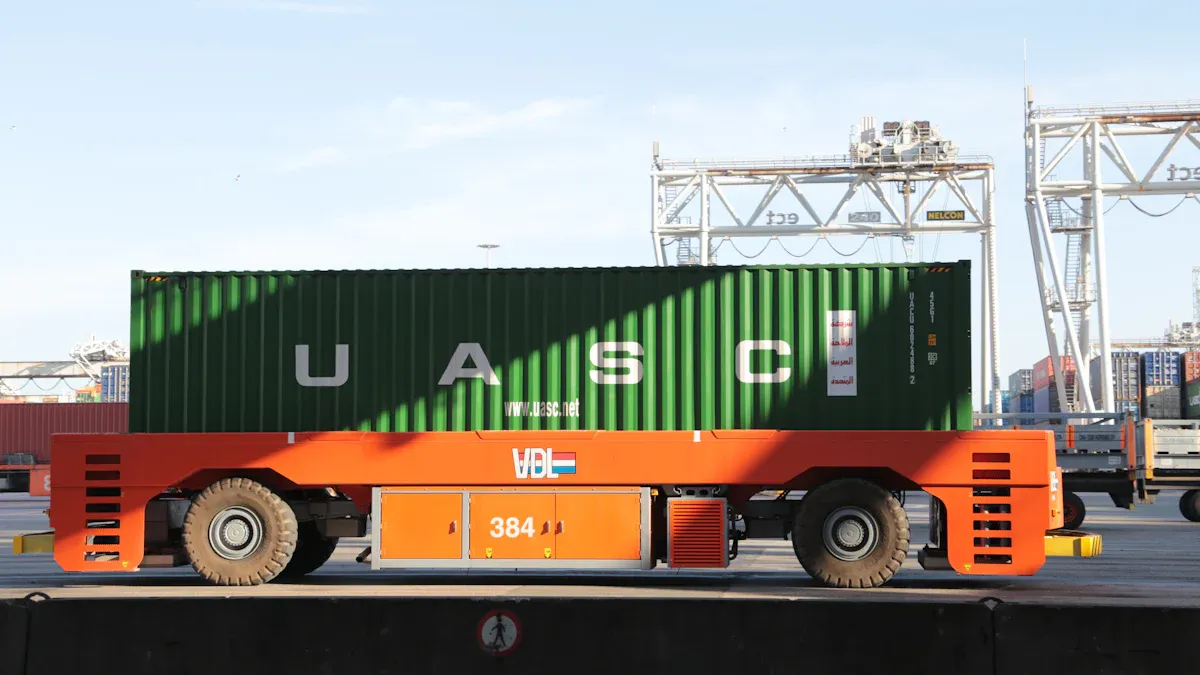
Fleet Streamlining and Throughput
Maximizing uptime directly correlates with enhanced throughput in your automated material handling operations. When you implement high-power lithium batteries, you unlock several advantages that streamline your fleet’s performance:
Power-in-Motion Technology: This innovative feature allows AGVs to charge while moving along their operational routes. You no longer need dedicated charging areas, which saves valuable floor space.
Continuous Operations: By eliminating the need for inflated fleets to cover downtime, you ensure that your AGVs operate continuously. This leads to a more efficient workflow and higher productivity levels.
Automated Guided Vehicles are essential in modern production lines. They streamline material flow and boost throughput. Their integration into operations enhances safety and provides valuable data-driven insights for continuous improvement.
Transitioning to lithium batteries also means you can reduce your fleet size. Lithium-ion batteries provide nearly 95% energy efficiency. This efficiency leads to more work done per charge and increased productivity. Faster charging times—1-2 hours for lithium compared to 6-8 hours for lead-acid—minimize downtime, which is crucial for continuous operations. Additionally, opportunity charging allows for quick recharges during breaks, further enhancing uptime.
Reduced Maintenance and Lifecycle Cost
Switching from lead-acid to lithium batteries significantly reduces maintenance costs. You can save approximately 40-50% in total cost of ownership (TCO) over five years. Lithium batteries offer advantages such as longer lifespan, faster charging, and lower maintenance requirements.
Consider the lifecycle cost difference between lithium and lead-acid batteries in AGV applications:
The total cost of ownership per usable kWh is about 2.8 times lower for lithium-based solutions compared to lead-acid solutions.
Although lithium technology has a higher initial cost, the cost per stored and supplied kWh is significantly lower due to its intrinsic qualities and reduced transportation costs.
While lead-acid batteries may seem financially advantageous in the short term, lithium-ion batteries present a more favorable long-term value when you consider total ownership costs.
Advanced battery management systems provide real-time insights into battery health and performance. This capability helps you prevent unexpected downtime and ensures that your AGVs operate at peak efficiency. By focusing on predictive maintenance, you can address potential issues before they escalate, further enhancing your fleet’s reliability.
AGV Fleet Modernization Path
Long-Term Returns of Lithium Upgrade
Upgrading your AGV fleet to lithium-ion batteries offers significant long-term returns. You can expect several benefits that enhance operational efficiency and reduce costs over time:
Reduced Downtime: Lithium-ion batteries charge faster, allowing your AGVs to spend less time waiting for power. This leads to improved efficiencies in warehouse operations.
Lower Maintenance Costs: With fewer moving parts and no need for regular watering or equalization, lithium-ion technology requires less maintenance than traditional batteries.
Increased Lifespan: Lithium batteries typically last longer than lead-acid batteries. You can expect a lifespan of up to five years longer, which translates to fewer replacements and lower overall costs.
Despite the higher initial investment, the savings from reduced downtime and maintenance make lithium upgrades a smart financial decision. You will find that the overall energy efficiency of lithium-ion batteries leads to lower operational costs, making them a worthwhile investment for your AGV fleet.
TCO Assessment and Conversion Project
When considering a conversion project for your AGV fleet, a comprehensive Total Cost of Ownership (TCO) assessment is essential. This assessment should go beyond initial costs and include all factors that influence the economic viability of the upgrade, ensuring a well-informed, long-term investment decision:
Initial Capital Expenditure: Compare the purchase price of lithium-ion batteries (typically higher) against lead-acid options.
Maintenance and Operational Costs: Evaluate the long-term savings from reduced maintenance needs (no watering, equalization labor, or material costs).
Energy and Infrastructure Expenses: Consider the energy costs for operating your AGVs, plus the necessary capital investment for deploying high-power charging equipment and potential upgrades to your facility’s electrical grid.
Incentives and Funding: Look into any available government grants, tax credits, or industry incentives for converting to electric power.
End-of-Life (EoL) Costs: Evaluate the potential fees or revenue associated with the recycling, disposal, or secondary use of lithium battery packs.
While the benefits of upgrading are significant, you may encounter challenges during the modernization process. These extend beyond general AGV operational issues and include hurdles specific to the battery technology upgrade:
Challenge Category | Explanation | Lithium Conversion Specifics |
Technical Integration Complexity | Proper management of AGVs is crucial to avoid accidents and ensure efficient operation. | The new battery’s BMS must be seamlessly integrated with the existing AGV’s Vehicle Control Unit (VCU), which often requires specialized software and hardware adjustments, going beyond simple “plug-and-play.” |
Infrastructure Investment | Facility owners must consider all costs associated with AGVs, including power, layout reorganization, and technology. | High-speed opportunity charging requires new high-power chargers and may necessitate upgrading the existing electrical distribution system to handle large, simultaneous current loads. |
Safety and Environmental Compliance | The potential for collisions with other equipment necessitates careful planning of navigation layouts. | Compliance with specialized fire and safety protocols for lithium-ion storage and handling is essential, along with planning the battery’s End-of-Life recycling path. |
Layout and Speed Limitations | Converting older navigation lanes to pathways suitable for AGVs is a significant hurdle, and AGVs may have speed restrictions. | Ensure the upgraded lithium battery can maintain or enhance performance without requiring structural modifications to the AGV chassis. |
By addressing these technical challenges and focusing on a thorough TCO assessment, you can ensure a successful transition to lithium-ion technology. When selecting a conversion partner, look for a trusted solution provider that can offer customized, high-energy-density lithium battery options and possess:
Proven BMS Integration Experience: To ensure the battery communicates smoothly with your existing AGV fleet.
Minimal Maintenance Design: Leveraging the intrinsic advantages of lithium technology to minimize service needs.
High-power lithium uptime is crucial for maximizing your ROI in AGV automation investments. By transitioning to lithium batteries, you can significantly enhance operational efficiency and reduce costs.
Consider the following benefits of lithium upgrades:
Extended Endurance: Lithium batteries allow AGVs to operate continuously for 8-10 hours on a single charge.
Fast Charging Capability: Charge lithium batteries within 1-2 hours, enhancing AGV utilization.
Environmental Benefits: Reduced energy consumption and a significantly reduced environmental impact due to battery longevity and lower maintenance waste.
To realize the next generation of AGV efficiency, adopt “lead-to-lithium” conversion solutions. Conduct a comprehensive TCO analysis to understand the long-term advantages. For your comprehensive TCO assessment and conversion project planning, we welcome you to consult with the Herewin team today.
FAQ
What are the main benefits of switching to lithium batteries for AGVs?
Switching to lithium batteries offers faster charging, longer lifespan, and reduced maintenance costs. You can expect improved uptime and operational efficiency, leading to a higher return on investment.
How long does it take to charge lithium batteries?
Lithium batteries typically charge within 1 to 2 hours. This rapid charging capability allows your AGVs to minimize downtime and maximize productivity.
Can I retrofit my existing AGVs with lithium batteries?
Yes, you can retrofit your existing AGVs with lithium batteries. Herewinpower provides customized solutions to ensure compatibility and optimal performance for your fleet.
What is the expected lifespan of lithium batteries in AGVs?
Lithium batteries generally last 5 to 10 years, depending on usage and maintenance. Their longer lifespan reduces the frequency of replacements compared to lead-acid batteries.
How do I assess the total cost of ownership (TCO) for lithium upgrades?
To assess TCO, consider initial purchase costs, maintenance expenses, energy consumption, and potential downtime savings. A comprehensive analysis will help you understand the long-term financial benefits of lithium upgrades.
See Also
Effective Lithium Capacity Planning For RVs: 200Ah To 600Ah
Enhancing Data Center Reliability And Safety With Lithium ESS
Addressing Cold Storage Battery Performance Issues In Low Temperatures
The Importance Of Advanced Battery Solutions For Drone Logistics





 English
  Español
  한국어
한국어  Deutsch
  Français
  日本語
日本語  Русский
  Bahasa Indonesia
  ไทย
ไทย  العربية
  Português do Brasil
  Italiano
  Nederlands