






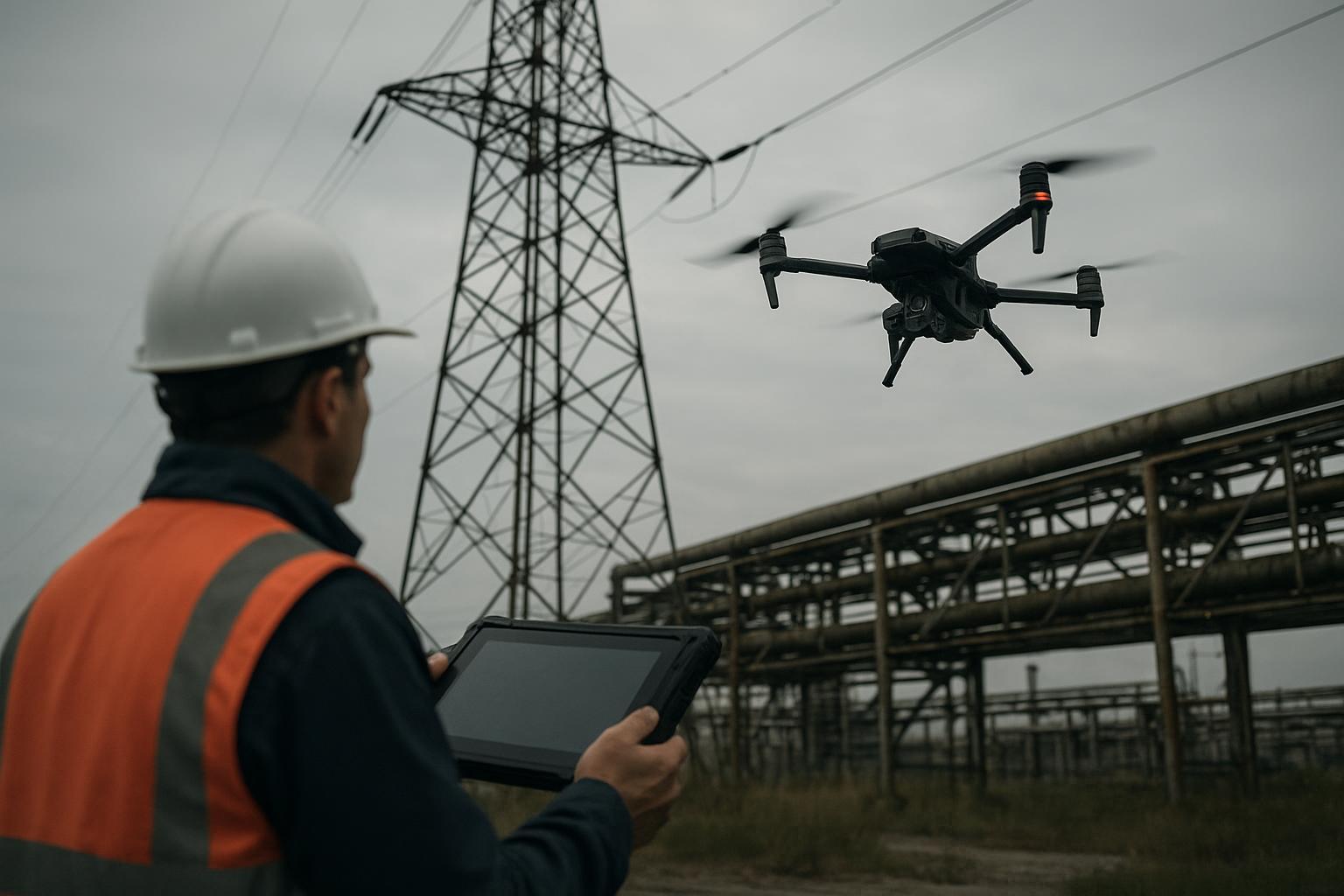
Battery capacity is only one part of industrial UAV performance.
A drone may display 40% battery remaining, but still run into power limitation a few minutes later—right when you climb out with a heavy payload, fight a headwind, or fly in cold air. The operator sees “40%” and expects margin. The aircraft, however, may be living on a different reality: rising internal resistance, voltage sag under high current, or temperature-driven derating.
That gap is why SOC (state of charge) should be treated for what it is: a remaining energy estimate. SOC is valuable. It’s the number pilots and dispatch systems can understand quickly, and it’s foundational for flight time estimation. But SOC alone does not tell a flight controller whether the battery can deliver the power you need right now, whether the pack is operating inside safe thermal boundaries, or whether aging has already narrowed the power margin.
For an industrial UAV, the flight controller’s role goes beyond displaying a percentage—it needs to keep the power system deterministic under dynamic load and environment. As industrial drones move toward heavier payloads, longer sorties, more autonomous behavior, and fleet deployment, small estimation or integration gaps can become safety events, mission aborts, or maintenance headaches across hundreds of flights.
This article explains the key battery parameters that help UAV OEMs build safer, more reliable systems—and how to think about battery telemetry as part of flight controller integration.
Why SOC Alone Isn’t Enough for Industrial UAVs
SOC is still useful—especially for operator display และ mission energy budgeting. But SOC is a remaining-energy estimate, not a real-time measure of what the pack can safely deliver right now.
In the field, two packs can report the same SOC and behave very differently under the next climb or payload event. The difference usually comes from factors SOC doesn’t fully capture on its own:
Power capability under load: voltage sag and rising resistance can reduce available power even when SOC looks “healthy.”
Thermal limits: temperature-driven derating can cap output before SOC reaches a low threshold.
Aging effects: as usable capacity and resistance change over life, SOC can drift if it isn’t continuously corrected.
For a deeper SOC estimation discussion, see NXP’s application note AN14881.
UAV Battery Telemetry: The Data Flight Controllers Need for Reliable Operation
For simpler UAV applications, SOC combined with basic protection may be sufficient. For industrial UAVs, the flight controller needs telemetry that supports four mission-time questions:
How much energy is left? (energy)
How much power can the battery deliver now? (power)
Is the battery operating safely? (safety)
How healthy is the battery over life? (lifetime)
To make this scannable, you can think of flight-controller-facing telemetry like this:
Control goal | Battery parameter(s) that matter most |
|---|---|
Energy / mission planning | SOC |
Power / performance margin | Voltage, current |
Safety / derating decisions | Temperature, fault flags |
Lifetime / fleet consistency | SOH (often based on capacity loss and resistance growth) |
SOC helps with energy planning. The rest of the telemetry is what keeps the aircraft deterministic when conditions change.
SOC: Mission Energy Estimation
SOC remains the most practical “energy left” signal for operators and mission planning. For the flight controller, it’s best treated as an energy-budget input—not a real-time power guarantee. In industrial operations, SOC should be paired with voltage, current, and temperature so the FC can distinguish between “low energy” and “limited power due to load, thermal limits, or aging.”
Voltage: Real-Time Power Availability
Voltage is the fastest reality check under load. When current spikes, voltage sag reveals whether the powertrain is approaching its margin.
For the flight controller, voltage supports:
Low-voltage protection (LVP): set reliable thresholds (and appropriate filtering) to prevent sudden power loss.
Voltage sag detection: distinguish “SOC is fine but the pack is collapsing under load” from true depletion.
Power limitation logic: when sag exceeds a defined window, reduce commanded power before triggering emergency protection.
Understanding Dynamic Power Demand
An industrial UAV is not a constant load. Current is the signal that tells you what the aircraft is demanding right now.
Typical high-stress segments include takeoff and stabilization, climb and acceleration, and payload events (spraying, winch systems, imaging power spikes).
Current telemetry helps the flight controller:
Estimate power demand (when paired with voltage)
Detect overload conditions and define protection ladders (warn → limit → abort)
Separate “aggressive maneuver” from “battery weakness” when combined with voltage sag patterns
Even if you don’t use current directly in control loops, logging current profiles by mission segment is one of the fastest ways to diagnose: “Is this a battery problem, or a propulsion/control-demand problem?”
Temperature: Managing Thermal Safety
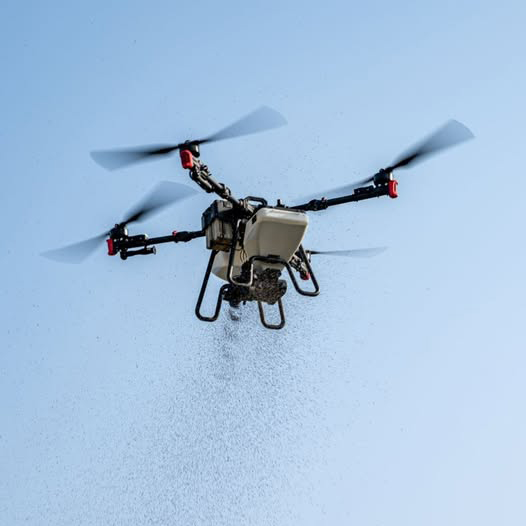
Industrial UAVs don’t fly in lab conditions. They fly agricultural routes in hot climates, inspection missions near infrastructure, and long sorties where packs heat-stack from repeated cycles.
Temperature is the parameter that turns battery management from “energy” into safe power delivery.
Flight-controller value:
Thermal derating: limit output power when temperature approaches the boundary (instead of waiting for a hard trip).
Safety protection: enforce conservative rules when sensors indicate out-of-window operation.
Important consideration: A pack that is “40% SOC” may still have limited usable power if thermal protection is active. Thermal derating should be part of the flight control strategy, not only a last-stage protection response.
SOH: Managing Battery Lifetime and Fleet Reliability
OEMs often use SOH as the actionable “fleet signal.” Many SOH approaches are based on both capacity fade and resistance growth, because those two changes are what show up in the aircraft as reduced flight time and increased voltage sag.
In practice, resistance growth also affects how predictable the pack is under load. A high-resistance (or imbalanced) pack will show deeper voltage sag และ more heating at the same current, which can force earlier derating even when SOC looks acceptable. That’s why some OEMs treat unusual sag/heat patterns as a maintenance flag and apply a more conservative mission envelope (or retirement threshold) for that pack.
SOC answers: “What’s left in the tank today?”
SOH (state of health) answers: “How much has the tank shrunk—and how much has the power margin degraded?”
SOH matters to OEMs because it directly touches:
Warranty exposure (premature degradation, unpredictable failure)
Maintenance planning (which packs need inspection/retirement)
Replacement strategy (avoid mixing weak packs into mission-critical rotations)
From a flight controller integration perspective, SOH is what allows mission logic to be fleet-aware:
Aged packs with higher resistance may show normal SOC but experience deeper voltage sag in climb.
A consistent SOH signal lets you set different power limits or mission envelopes per pack class instead of applying a one-size-fits-all safety margin.
Battery–Flight Controller Communication: Turning Telemetry Into Actionable Data
Telemetry only helps if it arrives reliably, with clear semantics, and with known failure behavior.
A simplified architecture looks like this:
Battery Pack
↓
BMS
↓
CAN/UART/SMBus
↓
Flight Controller
At integration time, OEMs typically evaluate three things:
The goal isn’t simply transferring data—it’s ensuring the flight controller receives trusted, time-aligned information it can safely use for decisions.
Protocol compatibility
What does the flight controller support natively (CAN variants, UART framing, SMBus expectations)?
What’s the expected behavior under EMI, harness length, and connector constraints?
Telemetry quality
Does the BMS provide the parameters you actually need (not just SOC)?
Are there fault flags, validity bits, and update-rate expectations so the FC can decide what to trust?
Customization and support
Can the battery partner adapt the data model and message timing to match your FC logic?
Can they support logging and traceability requirements for fleet operations?
What UAV OEMs Should Consider When Selecting a Smart Battery Partner
If you only optimize for Wh/kg, you’ll miss the engineering work that actually determines whether the aircraft behaves deterministically in the field.
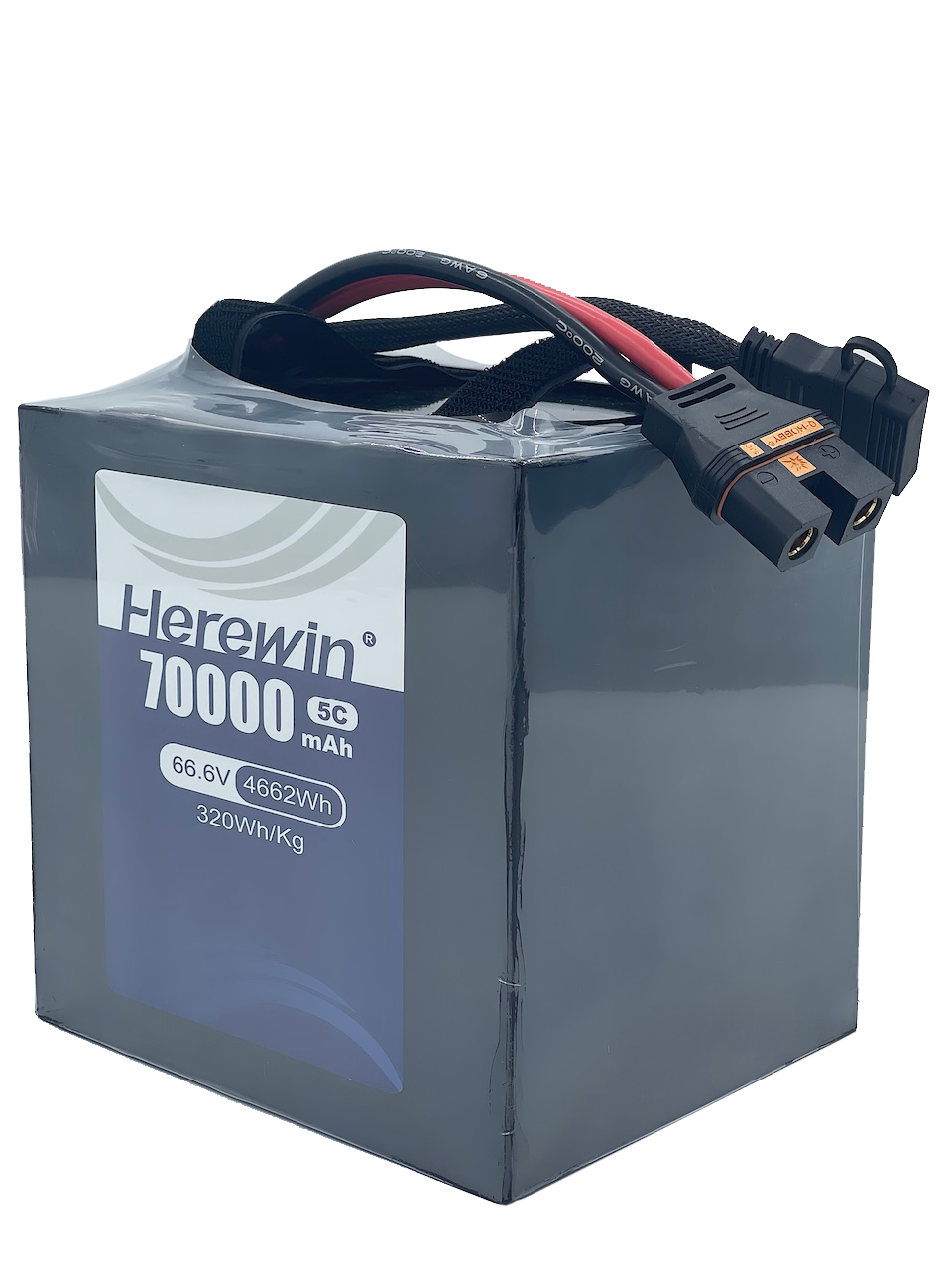
A smart battery partner should be evaluated as a battery system integration partner, not only as a pack supplier. A smart UAV battery is not only a high-energy-density pack—it’s a pack that can communicate clearly, report reliable telemetry, and behave predictably under real mission loads.
Here is a simpler way to frame it:
What you need | Supplier capability to look for |
|---|---|
Reliable power output under dynamic load | Telemetry beyond SOC plus a defined protection/derating strategy |
Easier FC integration | CAN/UART/SMBus support, clear message definitions, known failure behavior |
Stable operation in hot/cold duty cycles | Temperature monitoring, sensor placement rationale, temperature-aware limits |
Fleet consistency over life | SOH strategy plus pack ID, cycle tracking, and maintenance flags |
When those capabilities exist, SOC becomes more useful—not less—because it is grounded by the signals that explain when SOC does not equal usable power.
This is why many UAV OEMs evaluate battery suppliers based on integration capability, not cell specifications alone.
For OEMs who want an ODM/OEM partner for customized pack design, BMS integration, communication support, and validation workflows, Herewin summarizes its scope in Herewin ODM/OEM Battery Solutions.
Conclusion
Industrial UAV reliability depends on treating the battery as an intelligent power system, not just an energy tank.
SOC is still the best “energy left” signal for operators and mission planning. But real-world performance and safety also depend on voltage, current, temperature, and SOH—because those signals explain whether the pack can deliver the required power right now and how that capability changes over life.
If you’re defining your next battery/FC interface, start with a clear spec: required telemetry, trusted update rates, and conservative fallback actions when data is missing or out-of-range. That document becomes the integration contract between your UAV platform and your battery partner.
A complete battery specification should define not only capacity and voltage, but also telemetry requirements, communication protocols, protection behavior, and integration expectations.


 ไทย
ไทย  English
  Español
  한국어
한국어  Deutsch
  Français
  日本語
日本語  Русский
  Bahasa Indonesia
  العربية
  Português do Brasil
  Italiano
  Nederlands