

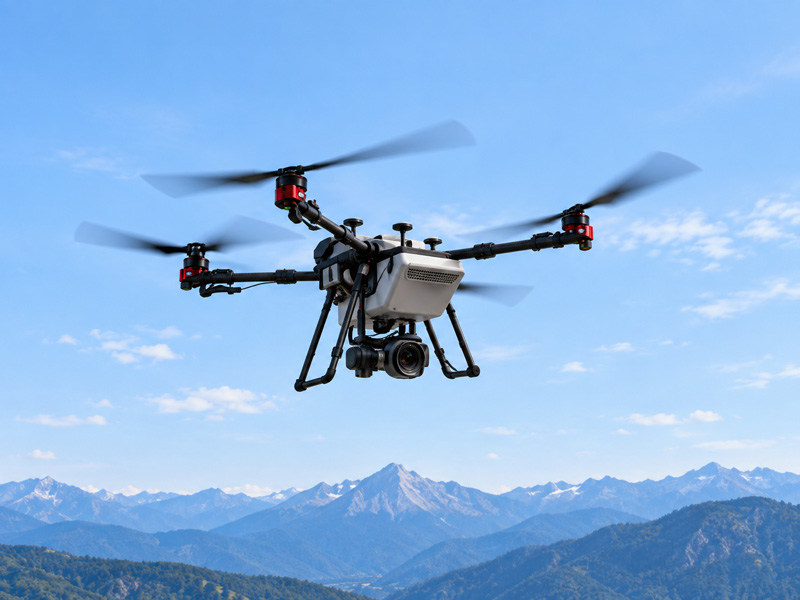


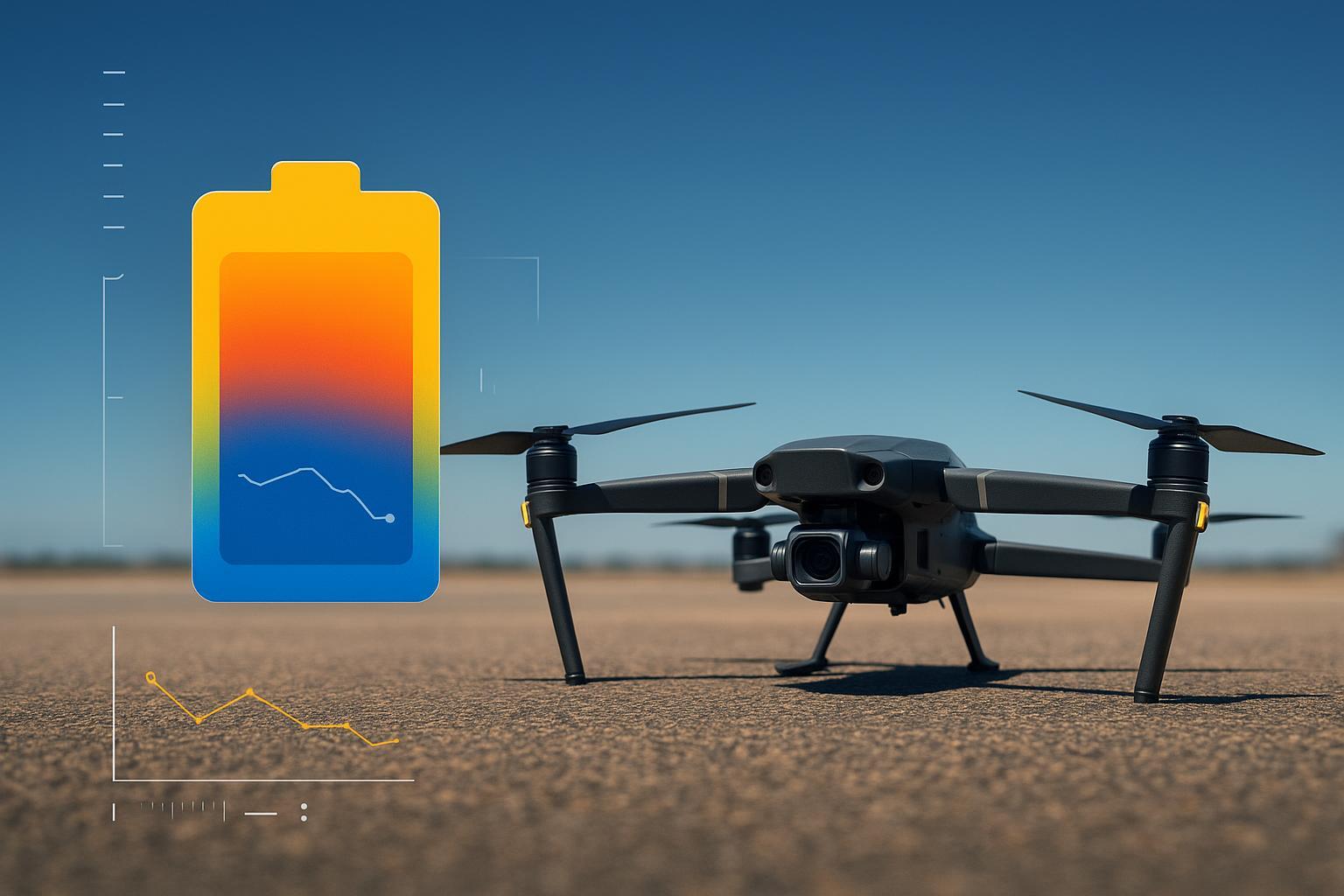
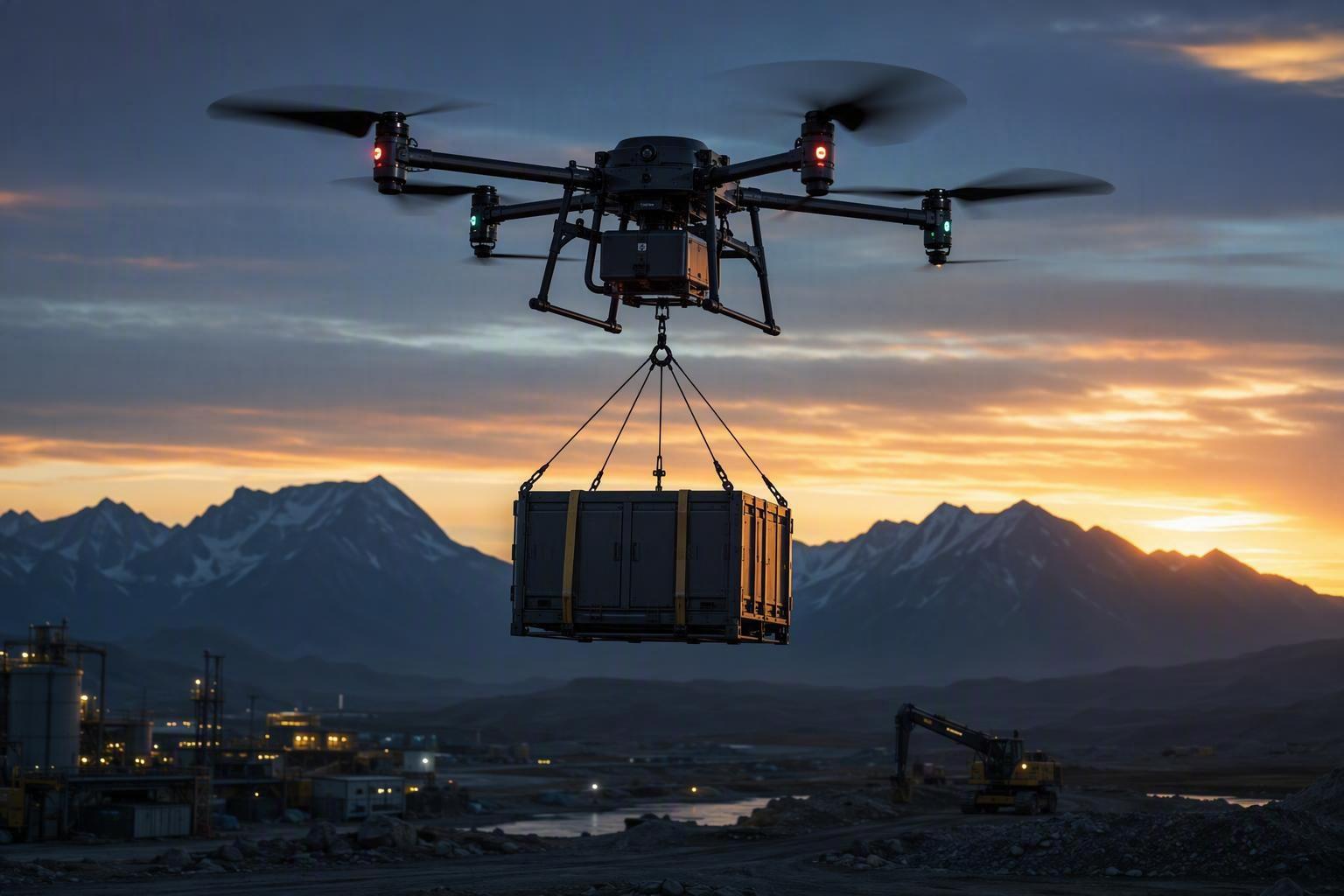
Commercial drone fleets are spending more time in conditions that feel less like “summer weather” and more like an uncontrolled test chamber.
Agricultural spraying in Brazil doesn’t wait for mild mornings. Utility-scale solar inspections run across exposed sites with little shade. Southeast Asian logistics routes stack flights and charge cycles into tight windows. In the Middle East, hot-soak conditions aren’t occasional—they’re normal operations.
In those duty cycles, the problem usually isn’t a single dramatic overheat event. It’s something quieter and more expensive: flight times become less consistent, turnaround slows because packs need longer to cool before they can be charged or dispatched again, voltage becomes less stable under heavy loads, and daily sortie capacity drops—not because the fleet is smaller, but because the batteries spend more of the day “recovering”.
For fleet managers, that means high heat is shifting from an environmental variable to a practical reliability test. It reveals whether a battery system can stay predictable—electrically, thermally, and operationally—across repeated missions.
This article breaks down why heat stress is rising, what the first operational signs look like, and how to evaluate commercial drone batteries for hot-climate deployment without relying on vague marketing claims.
Why More Commercial Drone Projects Are Reaching Their Thermal Limits
The issue isn’t simply that temperatures are rising. High heat is the operational stress test that commercial drone batteries are increasingly evaluated against—because it exposes how predictable a pack remains under repeated commercial duty cycles.
High-temperature deployments are increasing. Multi-sortie workdays are becoming standard. Payload power draw is trending upward. Put those together and many commercial drone batteries are being asked to operate with less thermal headroom than they were designed for.
It’s not that batteries suddenly became worse—it’s that operational duty cycles have crossed a thermal threshold where degradation mechanisms become visible in real-world performance.
The Expansion of Commercial Drone Operations Into Hotter Environments
High-temperature drone operations are no longer niche.
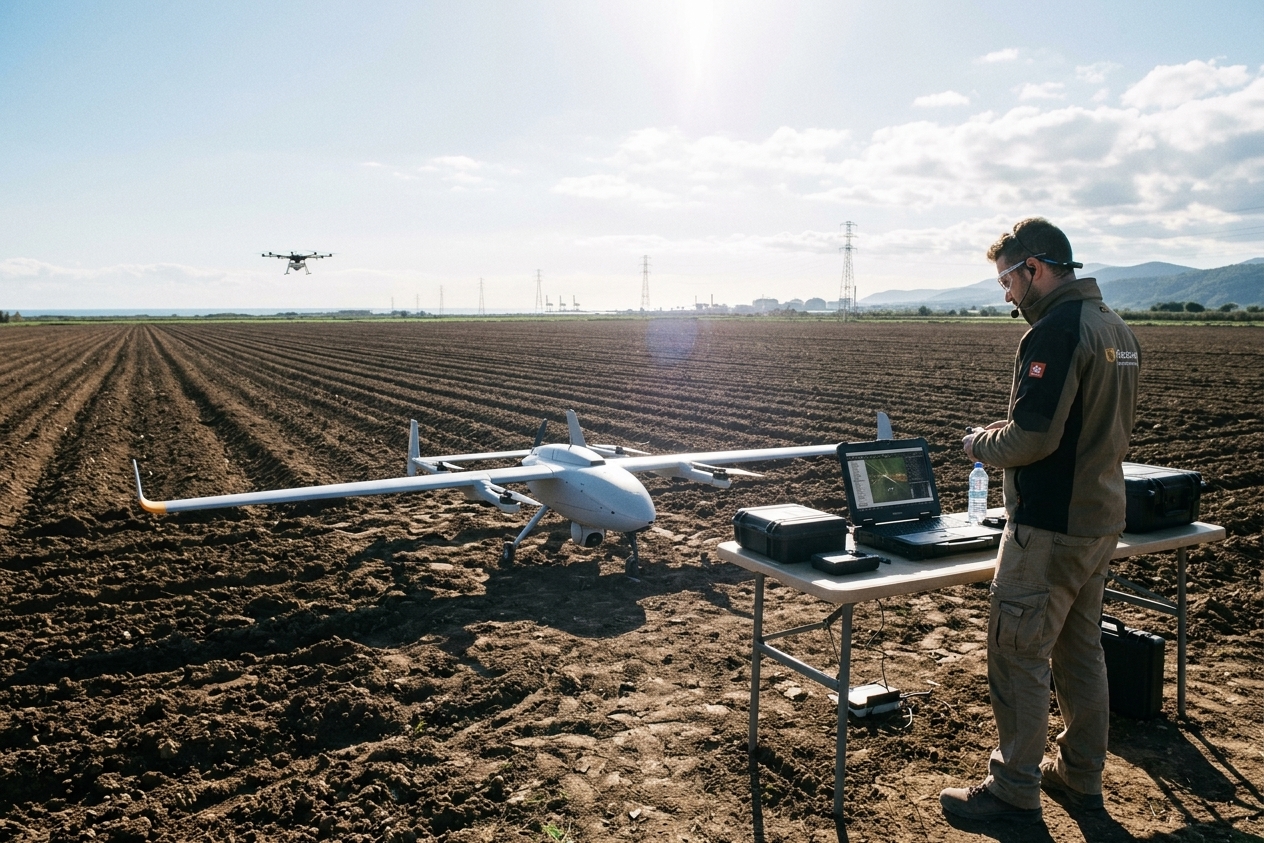
Hot climate drone applications are expanding because drones are moving from “special missions” into daily infrastructure:
agriculture spraying in Brazil and other tropical/subtropical regions
logistics and delivery networks in Southeast Asia with dense routing and frequent launches
inspection work in the Middle East, including long stretches of sun exposure on open terrain
In practice, that means 35°C+ commercial drone operations are becoming routine rather than exceptional.
How Multi-Sortie Missions Accelerate Heat Accumulation
A fleet doing multi-sortie drone operations doesn’t give batteries the same thermal recovery window that “single flight per pack” missions do.
The pattern looks like this:
fly
land and swap or charge
take off again
Repeat that long enough and battery heat accumulation becomes a system behavior. Packs often start the next mission warmer than they started the previous one.
And once a pack begins a sortie already warm, you’ve reduced the margin for:
high current draw during takeoff/climb
wind margin at the end of the flight
fast charging without accelerating aging
That’s when continuous drone missions turn heat from a “risk to watch” into a throughput limiter.
Why Heavy-Duty Applications Expose Hidden Battery Limitations
Heavy-lift drone battery and spraying missions share a common stressor: high current.
Spraying loads can drive sustained high discharge because motors are working harder while auxiliary systems run.
Logistics payloads create continuous load profiles that leave less room for “easy segments” where the pack can cool.
In both cases, a high-discharge drone battery is converting more energy into heat through I²R losses. As resistance increases with aging, that heating can rise further for the same current draw.
This is why commercial UAV battery performance increasingly depends on repeatability under duty cycle, not just nameplate capacity.
The First Operational Signs of Heat Stress in Commercial Drone Batteries
Most fleets don’t first notice heat stress as “the battery is hot.”
They notice it as variance.
Heat stress shows up as operational symptoms that appear earlier, fluctuate more, and are harder to plan around. If you run a commercial fleet, the warning signs are usually visible in logs and in scheduling friction.
Shorter Flight Times and Less Predictable Endurance
In hot conditions, drone battery performance in hot weather can shift from “slightly shorter endurance” to “unreliable endurance.”
That’s the key change: shorter drone flight times are inconvenient; unpredictable flight times break dispatch.
Mechanistically, high temperature accelerates degradation pathways that increase internal losses and reduce usable capacity over time. Reviews on lithium-ion heat aging and thermal impact consistently show high temperature accelerates degradation and can raise impedance, which translates into less deliverable energy under load (see the ACS Omega review mirrored on PMC and thermal-impact reviews on ScienceDirect).
According to an open-access version of an ACS Omega review on heat generation and degradation mechanisms in lithium-ion batteries (2022), high-temperature aging has material impact on performance and safety.
A broader review of temperature effects and thermal impact in lithium-ion batteries explains how temperature couples with resistance/heat generation and changes pack behavior.
For fleets, the “felt” outcome is simple: battery endurance becomes less deterministic.
To make heat-driven variance auditable (and supplier claims comparable), log three things consistently across sorties:
Start pack temperature at takeoff
Peak pack temperature during the highest-load segment
Voltage sag under takeoff/climb load at a defined SOC window
Faster Voltage Sag Under Heavy Loads
Voltage sag is the moment your logs tell you the battery is losing its ability to hold voltage during high current events.
In commercial operations, voltage sag under load tends to show up at the exact moments where you have the least tolerance for surprises:
payload takeoff
climb out
gust response
late-flight return segments
And as packs get hotter (or start the sortie already warm), sag often deepens. The practical consequence is that you hit low-voltage thresholds earlier—even if state-of-charge looks acceptable at a glance.
Slower Battery Turnaround Between Missions
Battery turnaround time is where heat becomes visible as an operations constraint.
You can often run a sortie on a warm pack. What you can’t always do is charge and redeploy it on the schedule you planned—especially if your SOP avoids charging packs above a temperature threshold.
Drone battery cooling delays matter because they don’t scale linearly:
a few extra minutes per pack becomes hours of lost availability across a 100-pack rotation
delays cluster during peak field hours, so the fleet feels “short” exactly when demand is highest
Even if the drones are ready, the energy system can become the pacing item.
Rising Battery Temperatures and Frequent Thermal Warnings
Thermal warnings are the late-stage operational symptom. They typically show up after the earlier three symptoms are already present.
When drone battery overheating warnings become frequent, it’s a sign the pack is repeatedly approaching limits—limits that were meant to be rare events.
At that point, the operational chain is usually visible:
Heat Stress → Flight Time Variability → Voltage Sag → Cooling Delays → Warnings become routine
How Heat Stress Begins to Reduce Fleet Productivity
This is the section most battery content misses.
In commercial operations, a battery problem only becomes “real” when it turns into a scheduling problem.
Heat does that by increasing turnaround time variance and reducing how many reliable sorties your fleet can produce per day.
Why Cooling Delays Can Disrupt Mission Scheduling
Mission scheduling assumes a repeatable cycle time:
flight time
swap/charge time
turnaround buffer
When battery cooling delays expand unpredictably, the buffer gets consumed. Then small slippages cascade:
crews wait
aircraft sit
charging bays become congested
the day’s mission plan has to be rewritten in the field
This is why heat is becoming a practical reliability test for commercial drone batteries: it exposes whether cycle time stays stable when missions become repetitive, ambient temperatures rise, and thermal recovery windows shrink.
Fewer Daily Sorties and Lower Asset Utilization
Drone fleet productivity is often constrained by a single bottleneck. In hot climates, that bottleneck is frequently energy availability rather than airframe count.
Asset utilization drops when:
packs are rotated out early due to thermal flags
packs require longer rests before charging
high-load sorties must be shortened to protect thermal headroom
If your KPI is daily sorties, heat can become a direct limiter even if nothing “fails” in an obvious way.
Why Small Performance Losses Can Become Major Operational Bottlenecks
A 5–10% performance loss sounds tolerable until you translate it into a fleet system.
Small Performance Losses → Longer Turnaround → Reduced Sorties → Lower Productivity → Higher Operating Costs
Here’s a simple table you can use to make the throughput impact auditable. (Values below are example assumptions—replace with your own fleet data.)
Fleet throughput input | What to measure | Why heat changes it |
|---|---|---|
Average flight time per sortie | minutes in-air under typical payload | Heat increases losses and pushes earlier cutoffs |
Average cooldown time before charge / redeploy | minutes on the ground | Hot packs need longer to return to a safe charging/dispatch window |
Charging time to dispatch SOC | minutes at your SOP charge rate | Charging may be derated in heat to protect longevity and safety margin |
Packs available per aircraft per day | count | More packs get quarantined or rotated out earlier |
Sorties per day per aircraft | count | Cycle time expands and variance increases |
Cost per sortie (energy + labor + downtime) | $/sortie | Downtime and schedule disruption raise effective cost |
If you’re evaluating a battery supplier, the question isn’t only “How long can it fly?”
It’s: How stable is the cycle time across the day when ambient is high and sorties are stacked?
What Heat Reveals About Battery Design and Safety Margin
Once heat becomes frequent rather than occasional, you’re not only fighting performance loss. You’re seeing which packs maintain electrical stability, thermal headroom, and operational predictability under sustained duty cycle.
Accelerated Battery Aging and Capacity Loss
Sustained heat exposure speeds up side reactions and degradation pathways.
The ACS Omega review cited earlier details how high-temperature aging can materially impact performance and safety.
เอ 2023 review of lithium-ion battery thermal management challenges also highlights that high temperature causes accelerated degradation—making thermal control a lifecycle issue, not just a safety one.
Practically, this is when “it still works” becomes “it works, but not predictably, and not for as long.”
Growing Cell Imbalance and Internal Resistance
As cells age unevenly, you can see:
widening cell-to-cell voltage spread under load
increasing internal resistance (IR)
deeper sag on the weakest cell group
That matters because the battery behaves like a series system: one weak group pulls the whole pack into protection sooner.
This is one reason fleets start to see unpredictable behavior even when average capacity tests look acceptable.
Shrinking Thermal Safety Margins During High-Duty Operations
Thermal safety isn’t only about maximum temperature. It’s about headroom.
When ambient is high and duty cycle is intense, you have less margin for:
a connector resistance increase
a cooling airflow reduction
a charger mismatch
an unexpected high-wind segment
Sustained heat exposure → Faster aging → Reduced consistency → Higher reliability risks
As thermal headroom shrinks, fleets are operating closer to the conditions where protective interventions become more likely. The concern is not that thermal runaway suddenly occurs, but that the margin separating normal operation from protective limits becomes progressively smaller.
At the fleet level, that turns into more quarantined packs, higher replacement rates, and more “mystery faults” that are expensive to root-cause.
What Predictable Pack Behavior Looks Like Under Heat
The goal here isn’t to “handle heat” as an edge case.
It’s to keep thermal behavior predictable across repeated sorties.
Cell Chemistries Designed for Better Thermal Stability
In procurement discussions, look for evidence that the cell choice and pack design are meant for high-temperature drone battery duty cycles, not repurposed from consumer use.
Ask for:
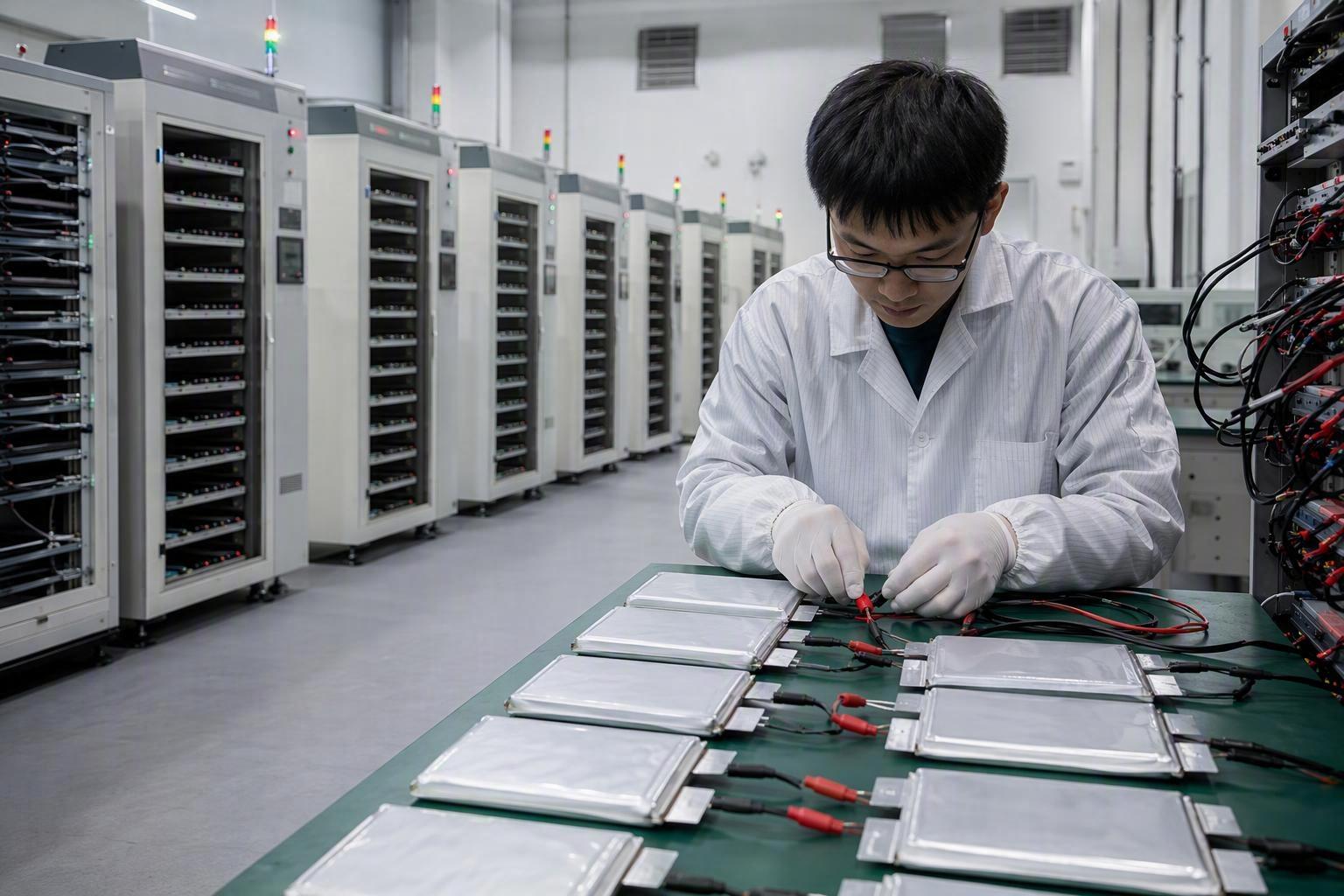
dynamic discharge characterization across temperature (not just room temperature)
behavior at low SOC under high load (where sag and cutoffs usually happen)
cycle aging characterization that includes elevated temperature exposure
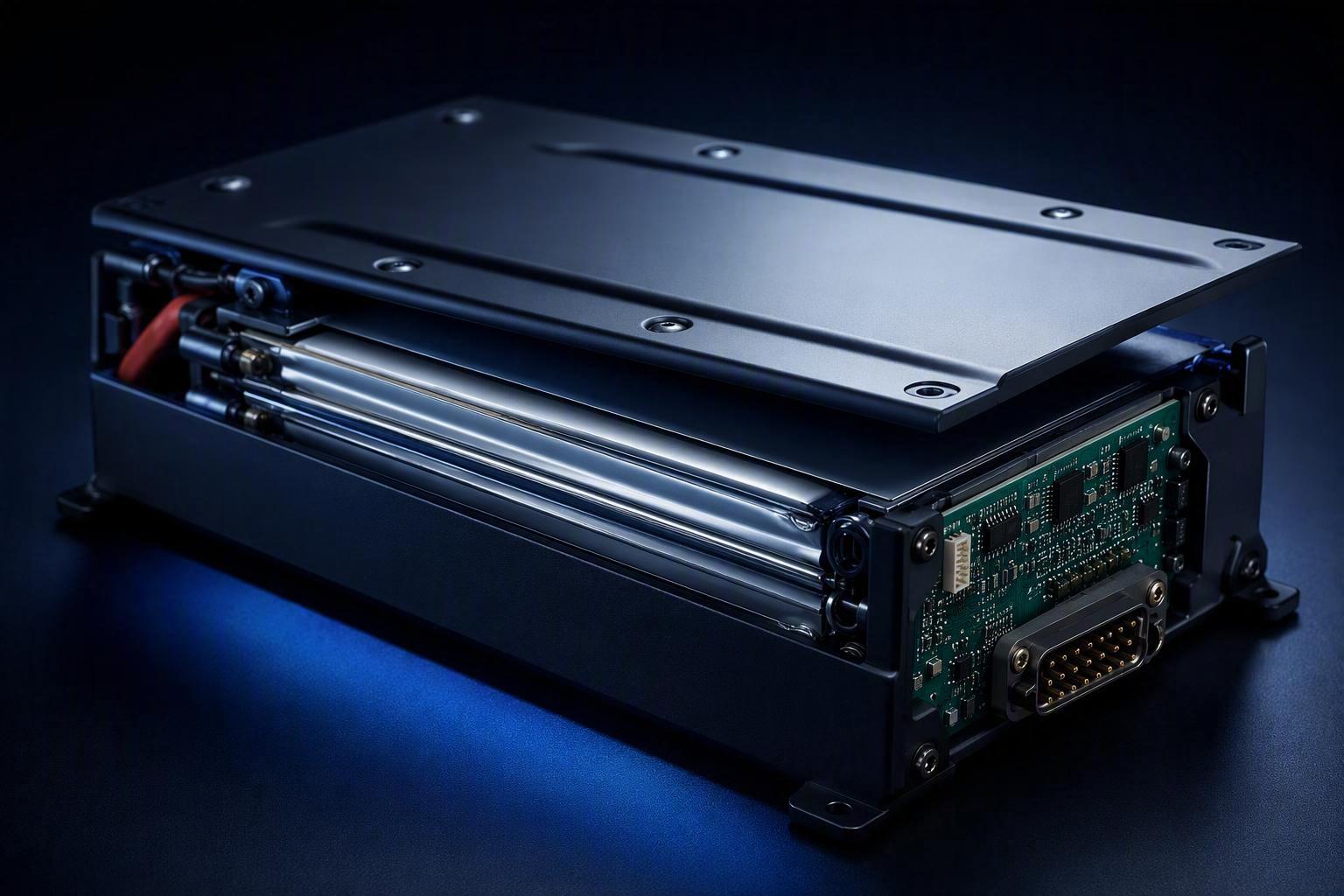
Real-Time Temperature Monitoring and Smart BMS Protection
In hot-climate operations, the battery management system isn’t a “nice to have.” It’s what turns heat from a surprise into a managed variable.
A smart drone battery should provide (at minimum):
per-cell voltage visibility
temperature monitoring in locations that actually track pack heat rise
fault codes / logs that allow post-mission diagnosis
protection behavior that is consistent and explainable
If you want a general overview of what to look for, Herewin outlines this in the role of BMS in drone battery performance, safety, and lifespan.
Battery Architectures Optimized for High-Frequency Operations
High-frequency drone operations punish weak interfaces.
In practice, thermal problems are often power-path problems:
connector contact resistance
harness gauge and strain relief
pack-to-airframe integration
Because those resistive losses concentrate heat in small areas.
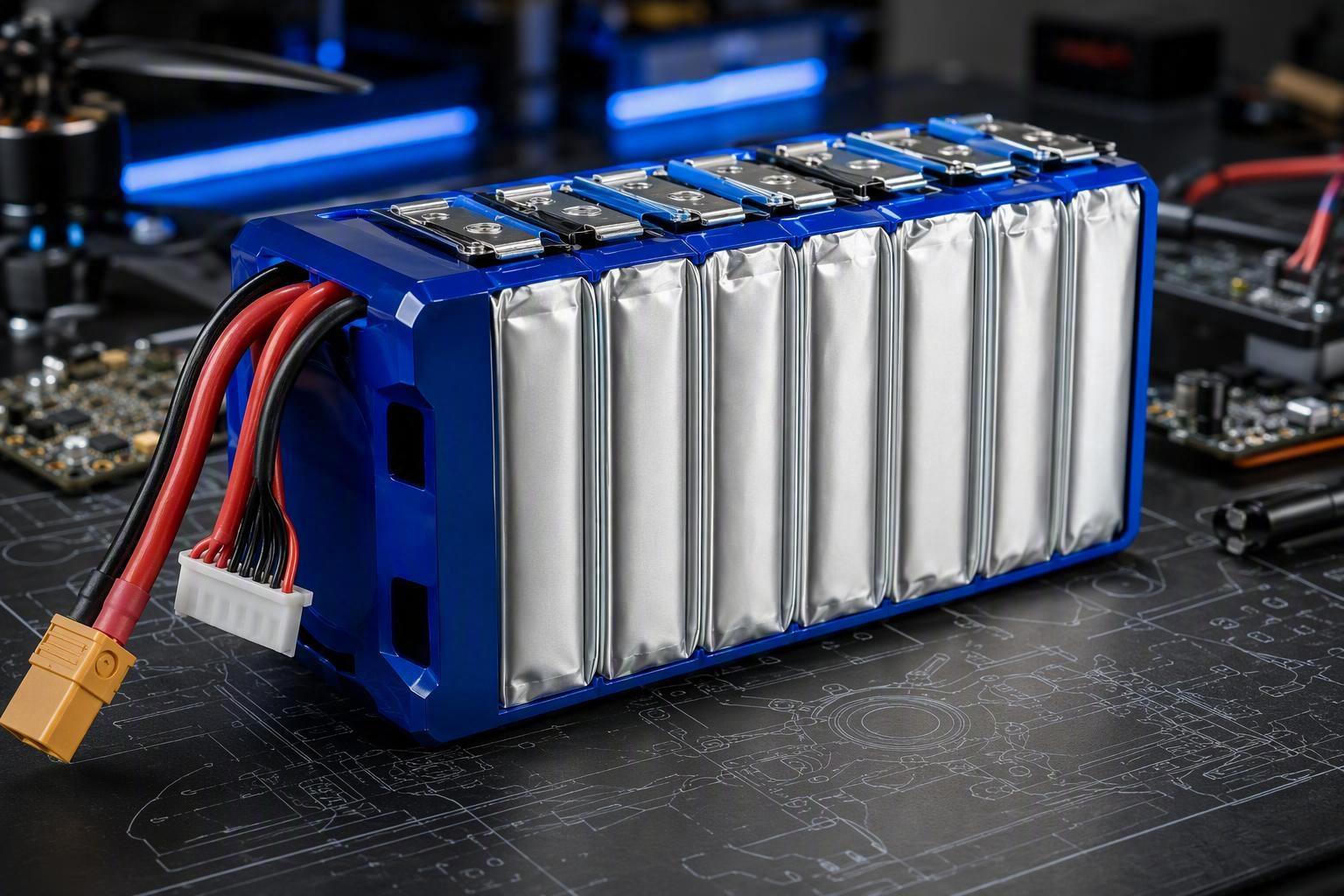
A pack architecture optimized for commercial UAV battery design should prioritize:
stable connectors and joints under vibration
thermal monitoring that detects localized hot spots
charge control that avoids pushing heat-soaked packs harder than they can safely accept
On the “charging control” side, BMS-to-charger communication is one practical indicator that the system is designed for repeatability.
Heat resilience isn’t a single spec. It’s the combination of cell behavior, pack thermal design, and the system’s ability to observe and control temperature under duty cycle.
Key Questions Fleet Operators Should Ask When Evaluating Drone Batteries for Hot-Climate Deployment
If heat is becoming your reliability test, your evaluation questions have to change.
Instead of asking only for capacity and C-rating, you want evidence that the battery stays predictable above 35°C and across repeated sorties.
How Does the Battery Perform Above 35°C?
Ask for discharge curves and sag behavior above 35°C under a representative load, recorded pack temperature rise during the worst mission segment, and clearly documented protection behavior and thresholds (what triggers derating vs. cutoff).
How Quickly Does Heat Accumulate During Continuous Missions?
Ask for:
a multi-sortie test: flight → charge → flight cycles with recorded temperature start/peak values
cooldown time required to meet charging SOP
whether fast charging is validated under hot ambient or requires controlled cooling
How Consistent Is Battery Performance Across Multiple Daily Sorties?
Ask for:
pack-to-pack variance across a lot (how wide is the distribution?)
IR trend reporting and measurement conditions
criteria for quarantine / rotation decisions
Consistency is the real commercial drone productivity lever.
What Monitoring and Protection Mechanisms Are Built Into the Battery Pack?
Ask for:
what temperature sensors exist and where they’re placed
whether per-cell voltage + temperature data is accessible
whether fault logs can be exported for audits and root-cause analysis
how charging control is enforced (including charger communication where applicable)
These questions make commercial drone battery selection less about hope and more about evidence.
Conclusion
High heat is increasingly exposing the hidden limits of commercial drone battery systems. In high-frequency operations, the challenge is no longer simply preserving flight time during summer.
Thermal stress affects turnaround efficiency, sortie consistency, fleet productivity, long-term reliability, and operating costs. As deployments expand into hotter and more demanding environments, high heat is increasingly functioning as a real-world reliability examination for commercial drone batteries.
It reveals whether a battery can remain electrically stable, thermally manageable, and operationally predictable across the duty cycles fleets actually run. In that sense, heat is no longer merely an environmental condition—it has become one of the most demanding tests of commercial drone battery quality and operational readiness.



 ไทย
ไทย  English
  Español
  한국어
한국어  Deutsch
  Français
  日本語
日本語  Русский
  Bahasa Indonesia
  العربية
  Português do Brasil
  Italiano
  Nederlands