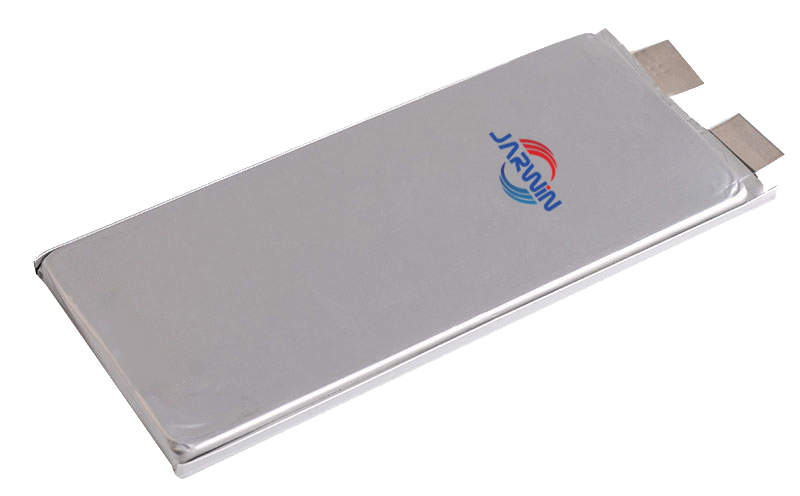
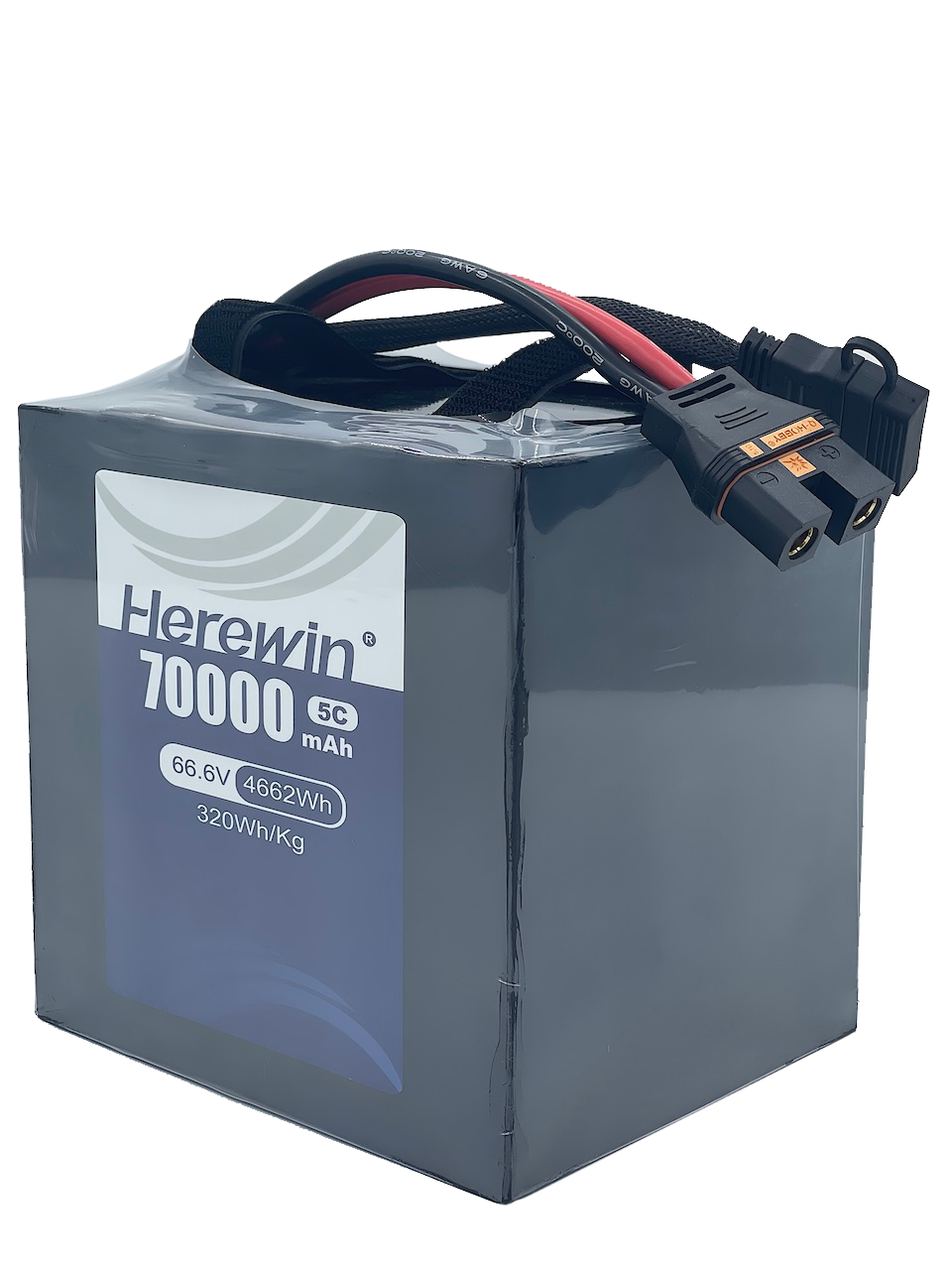
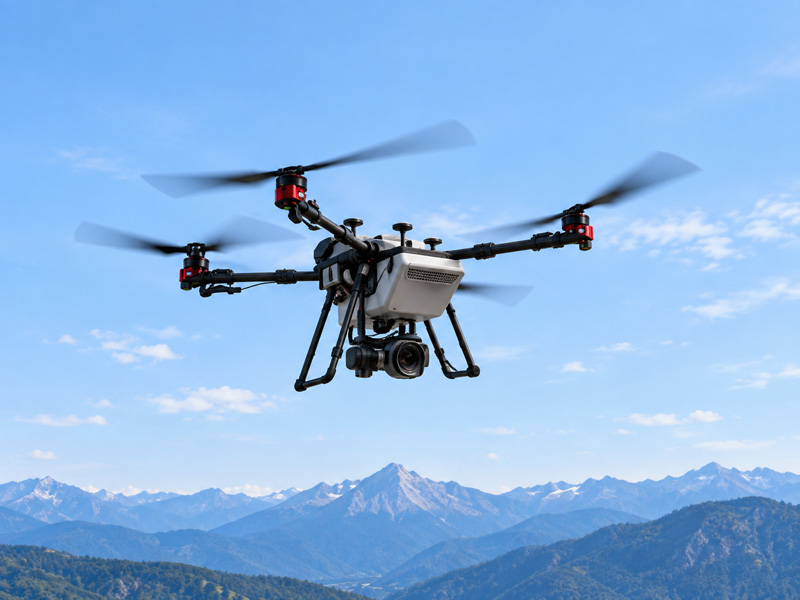

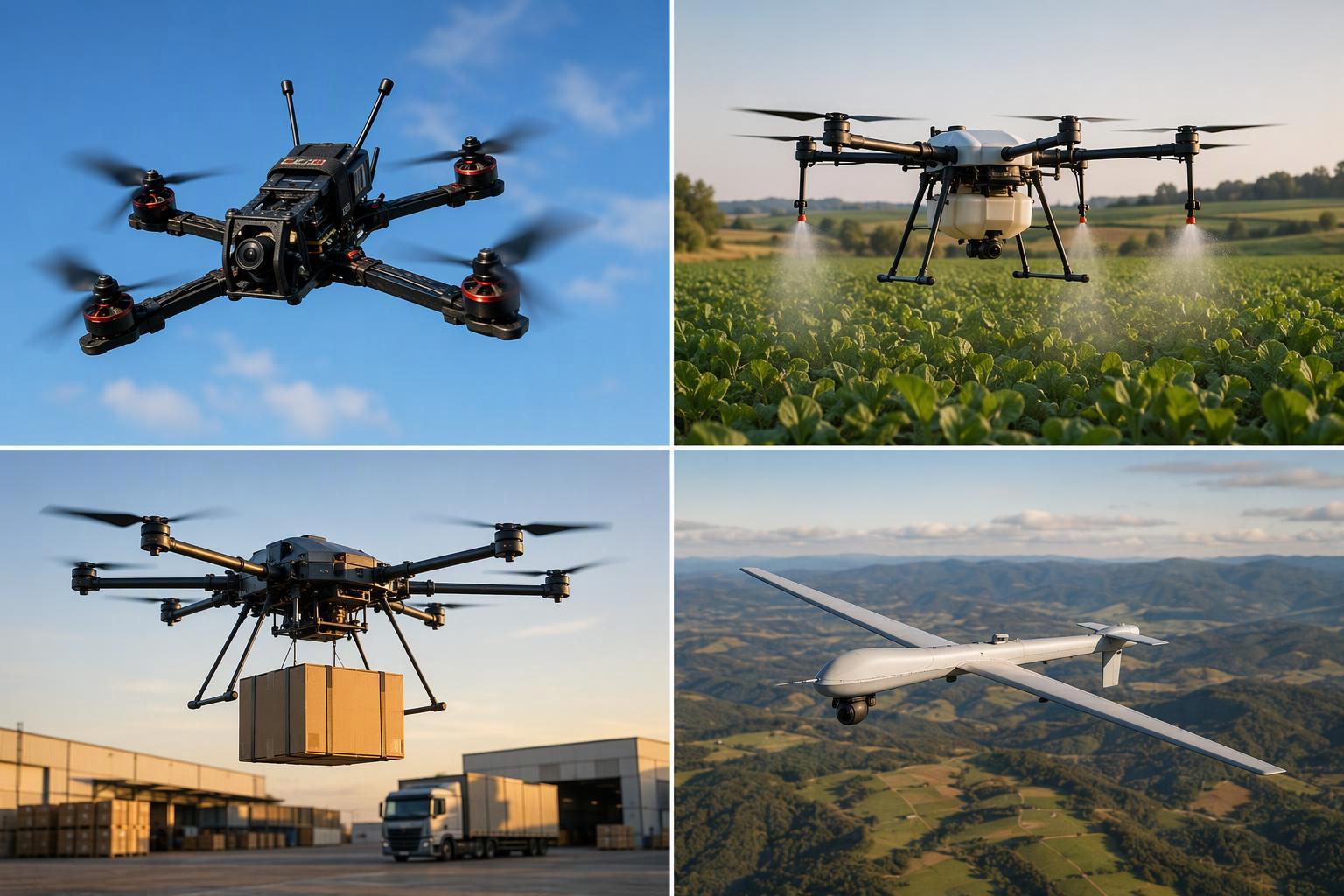
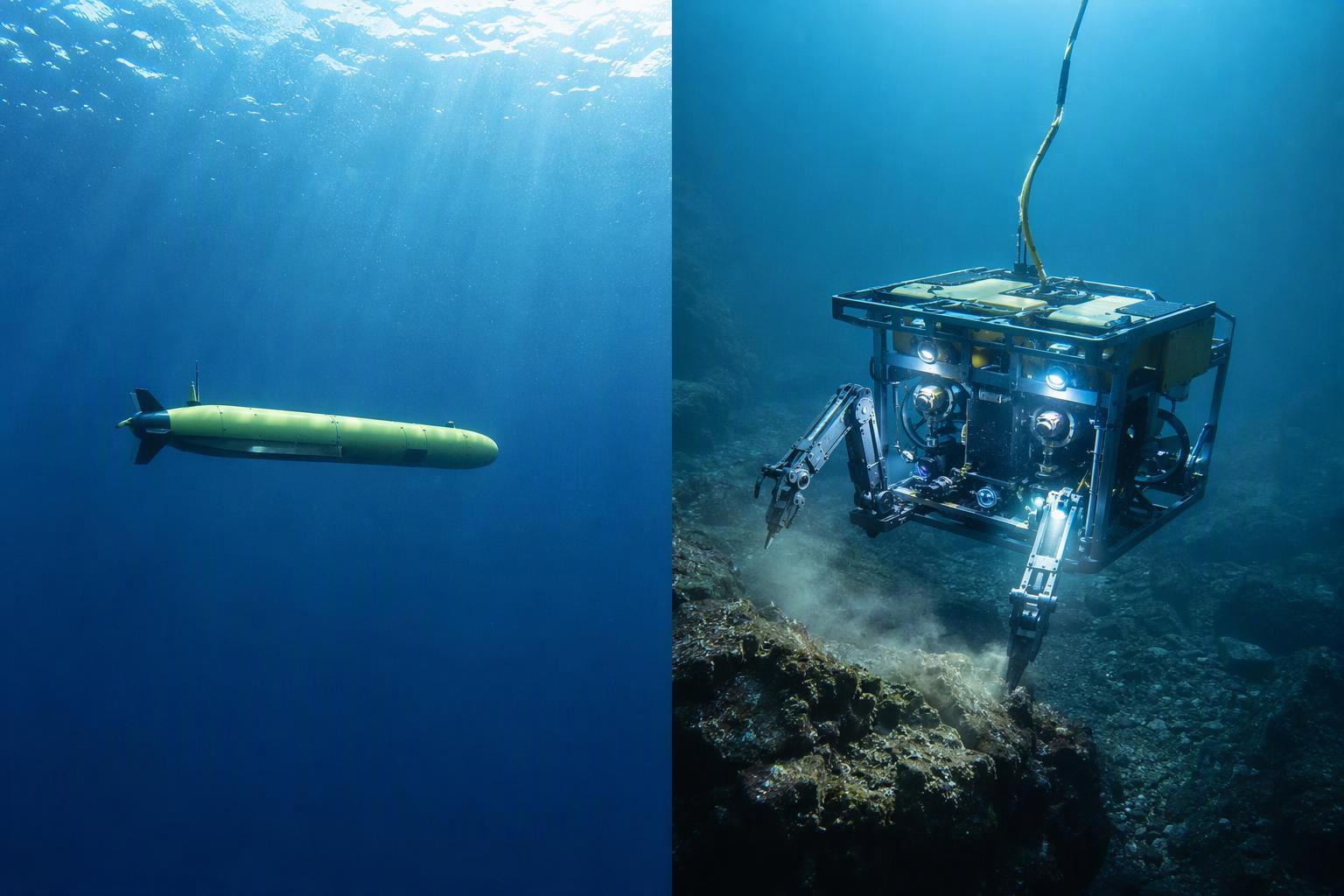
A 7-inch FPV quad, a 30L sprayer, a heavy-lift cargo platform and a mapping fixed-wing don’t have the same battery requirements. The FPV build needs burst current that holds voltage through hard throttle. The sprayer needs sustained output across a full tank and repeated turns. The cargo platform is constrained by voltage architecture, total energy and pack mass, while the mapping aircraft trades every gram against mission duration. A single amp-hour figure can’t answer all four.
Herewin’s UAV battery portfolio runs in four directions: high-rate, high-voltage, smart and large-capacity, and high-energy-density. Between them they cover professional packs above 5Ah — from 100C-class FPV packs, through high-voltage LiHV and semi-solid architectures, to large-capacity packs built around 67Ah single cells.
Each direction answers a different mix of power demand, voltage architecture, energy requirement and system integration. What follows walks through the applications behind each line, the configurations that represent it today, and the parameters worth checking before you pick a model.
Herewin UAV Battery Portfolio at a Glance
The portfolio is grouped by the platform problem each line solves rather than by capacity alone. The table gives one representative configuration per direction, enough to see the shape of the range before drilling into a specific model.
Product direction | Representative configuration | Main application need | Typical platforms |
|---|---|---|---|
High-rate UAV batteries | 6S1P 22.2V 5Ah (up to 100C max discharge, FPV); 14S1P 53.2V 21Ah 25C (industrial) | Burst power and continuous discharge capability | FPV, agricultural and industrial UAVs |
High-voltage UAV batteries | 18S1P 71.1V 67Ah | Higher pack voltage on a high-voltage-cell platform | Heavy-lift and logistics UAVs |
Smart and large-capacity UAV batteries | 28S2P 103.6V 70Ah; 28S2P 106.4V 60Ah | Large energy reserve plus BMS monitoring and system integration | Heavy-payload and industrial UAVs |
High-energy-density UAV batteries | 14S1P 51.1V 39Ah, 400Wh/kg cell | Reducing stored-energy mass for long-endurance designs | Mapping and long-endurance UAVs |
Read by platform, the range separates cleanly. FPV frames take the 5Ah–10Ah 6S and 8S high-rate packs; agricultural and industrial aircraft take the 14S and 18S high-rate families; heavy-lift and logistics platforms take the 55.3V and 71.1V 67Ah packs; and mapping or long-endurance airframes take the 39Ah and 34Ah high-energy-density models.
Those four rows are directions in the range, not sealed categories. One pack often serves two. The 18S 71.1V 67Ah sits in the high-voltage line but also carries a large energy reserve, and the 28S packs are large-capacity and smart at once. What the grouping doesn’t mean is that packs are interchangeable: a 6S FPV pack and an 18S industrial pack belong to different electrical architectures.
High-Rate UAV Batteries for FPV and Industrial Drones
High-rate packs are specified by the current they can supply, and the two families below answer opposite duty cycles: short bursts for FPV, sustained output over long working shifts for agricultural and industrial aircraft.
FPV Battery Options
Our FPV line runs from 5Ah to 25Ah in 6S and 8S formats, and the 100C configurations sit at the high-capacity end, including the 6S1P 23.1V 10Ah and 8S1P 30.8V 10Ah semi-solid LiHV packs. Two smaller models show the shape of the everyday range. The 6S1P 22.2V 5000mAh pack weighs 760g; the 8S1P 29.6V 5000mAh pack weighs 1020g. Both are 100C-rated, ship with XT60 as a common connector option, and can be customized on request.
The range doesn’t stop there. It extends to a 6S1P 22.8V 8000mAh pack at 1034g and to larger 6S and 8S formats, which between them cover 7–10 inch quads, long-range builds, cinelifters and 13–15 inch large frames.
FPV flight is a burst problem. Throttle punches and lift recovery pull short current spikes well above cruise level, and the pack’s internal resistance turns part of that into voltage sag. How much that costs depends on the airframe: sag reduces the voltage available to the propulsion system, which can soften power response when the pilot demands rapid acceleration or recovery, and may trigger low-voltage warnings or protection depending on how power management is configured. Our guide to drone battery voltage sag goes deeper into how severity is measured.
Weight, frame space and connectors often decide the rest. Within the same 5000mAh capacity, our 8S 29.6V pack weighs 1020g against 760g for the 6S 22.2V version: the higher-voltage format can draw less current at equal power once the airframe is built for that bus, but the extra cells add mass and take a larger bay. The 8S 29.6V model is listed for 8–15 inch platforms, so the mass penalty buys headroom on bigger frames rather than on a 7-inch build.
We publish 100C as a maximum discharge rate, not a continuous one. When a project’s duty cycle needs the burst figure, tell us the throttle profile and we’ll share the continuous rating and the test conditions behind it. The high-rate drone battery range lists the current FPV configurations.
Agricultural and Industrial UAV Battery Options
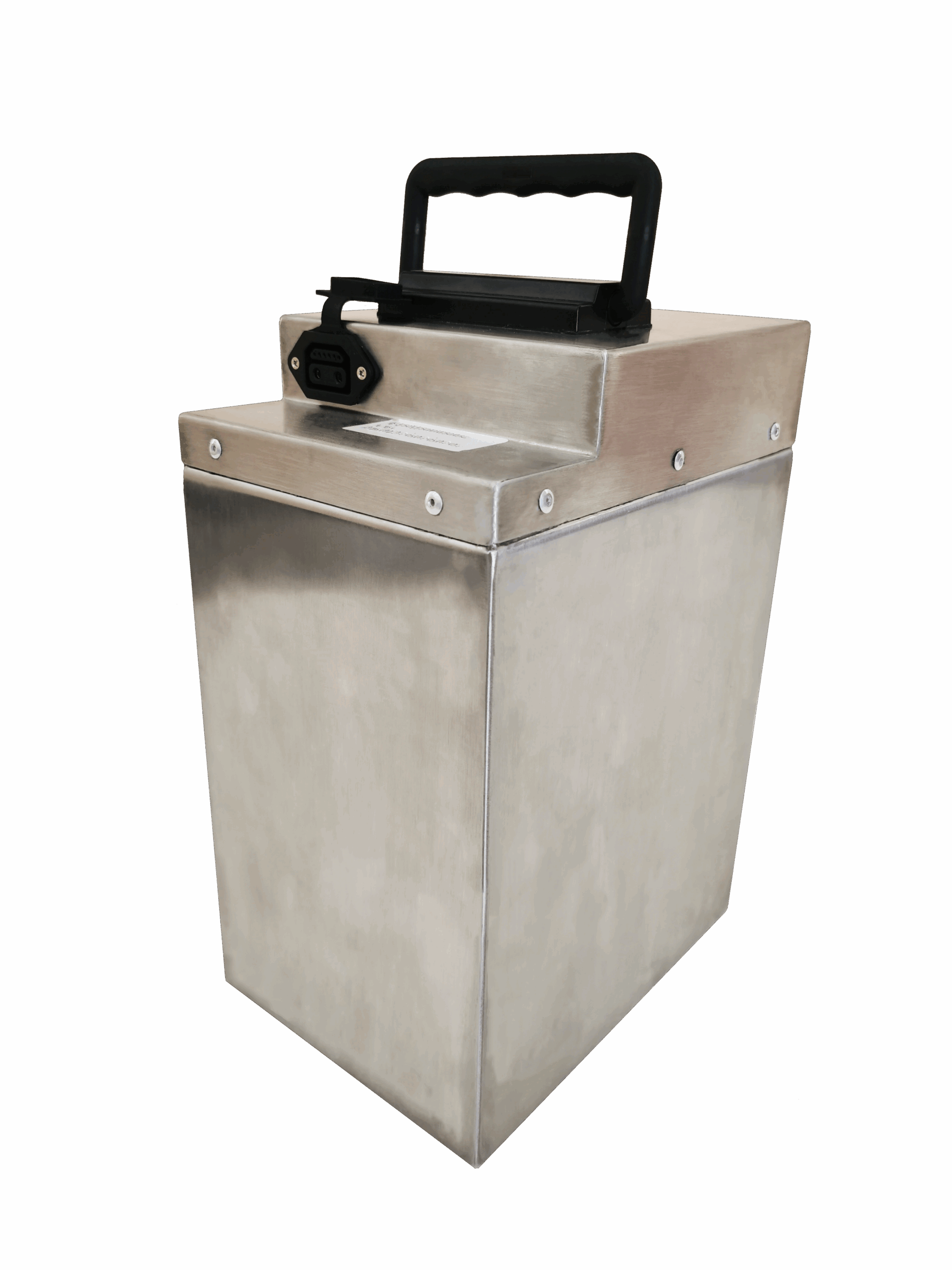
Our Standard High Rate line moves to 14S and 18S architectures with lower C-ratings and much larger packs. It includes 14S1P 53.2V 21Ah at 25C (1117.2Wh), 14S1P 53.2V 30Ah at 15C (1596Wh) and 18S1P 68.4V 30Ah at 25C (2052Wh).
An agricultural sprayer doesn’t fly a burst profile. It lifts a full tank, holds altitude across a field, turns at the headland and repeats, so current draw stays close to a sustained level for most of the sortie. That makes continuous discharge rating and thermal behaviour the governing numbers.
The two 30Ah packs show why C-rating alone doesn’t settle it. The 18S1P 68.4V 30Ah is published at 25C continuous discharge, 2052Wh nominal energy, 10200g pack weight and at least 1,000 cycles. The 14S1P 53.2V 30Ah is rated 15C continuous, with 1596Wh at 7930g and at least 750 cycles. Voltage, energy and mass all move together here, so weigh the choice against the aircraft’s voltage architecture, the energy it needs per sortie and the payload budget — not against C-rating alone.
That rating is also a ceiling, not a target. Buying more discharge capability than the mission calls for may add cost or constrain other design priorities without buying anything practical. Run a 15C pack past its continuous rating, on the other hand, and you get excessive heating, accelerated degradation or protection events. The input that matters is the aircraft’s measured current profile across a full load cycle, together with the expected temperature rise and the pack weight tolerance. A few hundred grams shifts the centre of gravity on a sprayer.
Both the 14S and 18S high-rate families serve agricultural and industrial platforms, and each configuration in the range carries its own published continuous rating.
High-Voltage UAV Batteries for Heavy-Lift Platforms
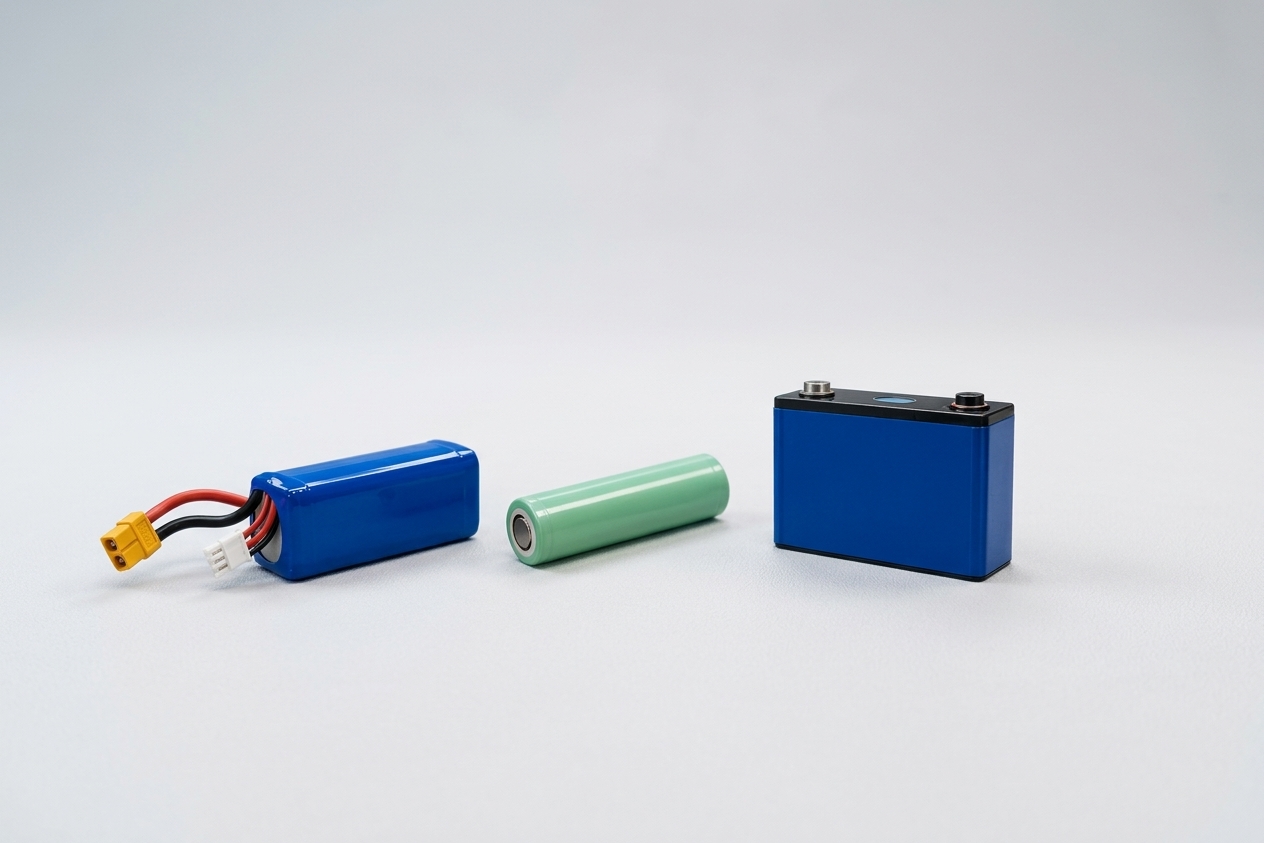
The high-voltage line is built on high-voltage cells with a nominal voltage of 3.85–3.95V and a published cell-level energy density of 280Wh/kg and above. Two cell technologies appear across the range — LiHV LiPo (LCO) and semi-solid — and the 67Ah models at the top of the line are semi-solid. Because that split affects charge voltage, energy density and cycle life, check the cell type on the specific product page rather than treating the line as one specification. Large-format cells of up to 67Ah cut the parallel count and the number of electrical connection points, which keeps the pack architecture simpler and more compact.
Because the cell nominal itself sits above 3.7V, the same series count lands above a conventional pack. At equal power, the higher voltage draws less current — a result that only pays off when the rest of the powertrain is rated for that bus.
The configurations below show the direction across different product lines. They are not one series with three capacity steps.
Configuration | Nominal voltage | Capacity | Cell type | Energy density as listed |
|---|---|---|---|---|
14S1P | 55.3V | 67Ah | Semi-solid | 300Wh/kg |
18S1P | 71.1V | 67Ah | Semi-solid | 300Wh/kg |
14S1P | 53.9V | 28.5Ah | LiHV LiPo (LCO) | Not specified |
The two 67Ah packs are the large end of this line, sized for heavy-lift work and long duty cycles. Connector options differ by voltage — QS8, QS10 or AS150 on the 14S 55.3V version, AS150, QS10 or QS12 on the 18S 71.1V version — and either configuration can be customized on request. Where a published rating for a specific model matters to your design, confirm the continuous discharge and charge figure for that model, since not every configuration in the range carries the same rating.
The 53.9V 28.5Ah pack is listed at 10C discharge, 1C charging and at least 300 cycles, at 5480g in the LiHV LiPo version and 5290g in the semi-solid version. The same 28.5Ah capacity also appears as 6S 23.1V (2410g) and 12S 46.2V (4700g) packs, each of which exists in both technologies — so check the cell type before assuming a lower-voltage version shares this pack’s chemistry.
High voltage and semi-solid describe different aspects of a battery — electrical architecture on one side, cell technology on the other — so a single pack can be both. Several in this table are.
Nominal voltage isn’t the whole specification. High-voltage cells charge above what a conventional 3.7V-cell platform expects, so these packs are not drop-in replacements. Motors, ESCs, chargers, the BMS and the airframe’s protection thresholds all have to accept the full-charge and cut-off limits, and the higher voltage shifts current, harness gauge and connector choice across the powertrain. Send us your voltage window and we’ll confirm full-charge voltage, pack weight and platform compatibility for the model in question. The high-voltage and high-energy-density range lists the current configurations.
Smart and Large-Capacity UAV Batteries
Capacity and smart management are two different buying questions that often land on the same pack. Capacity sets usable energy and pack mass; smart management covers monitoring, protection, communication and system integration. A pack can be large without being smart, and smart without being large.
Large-Capacity Packs
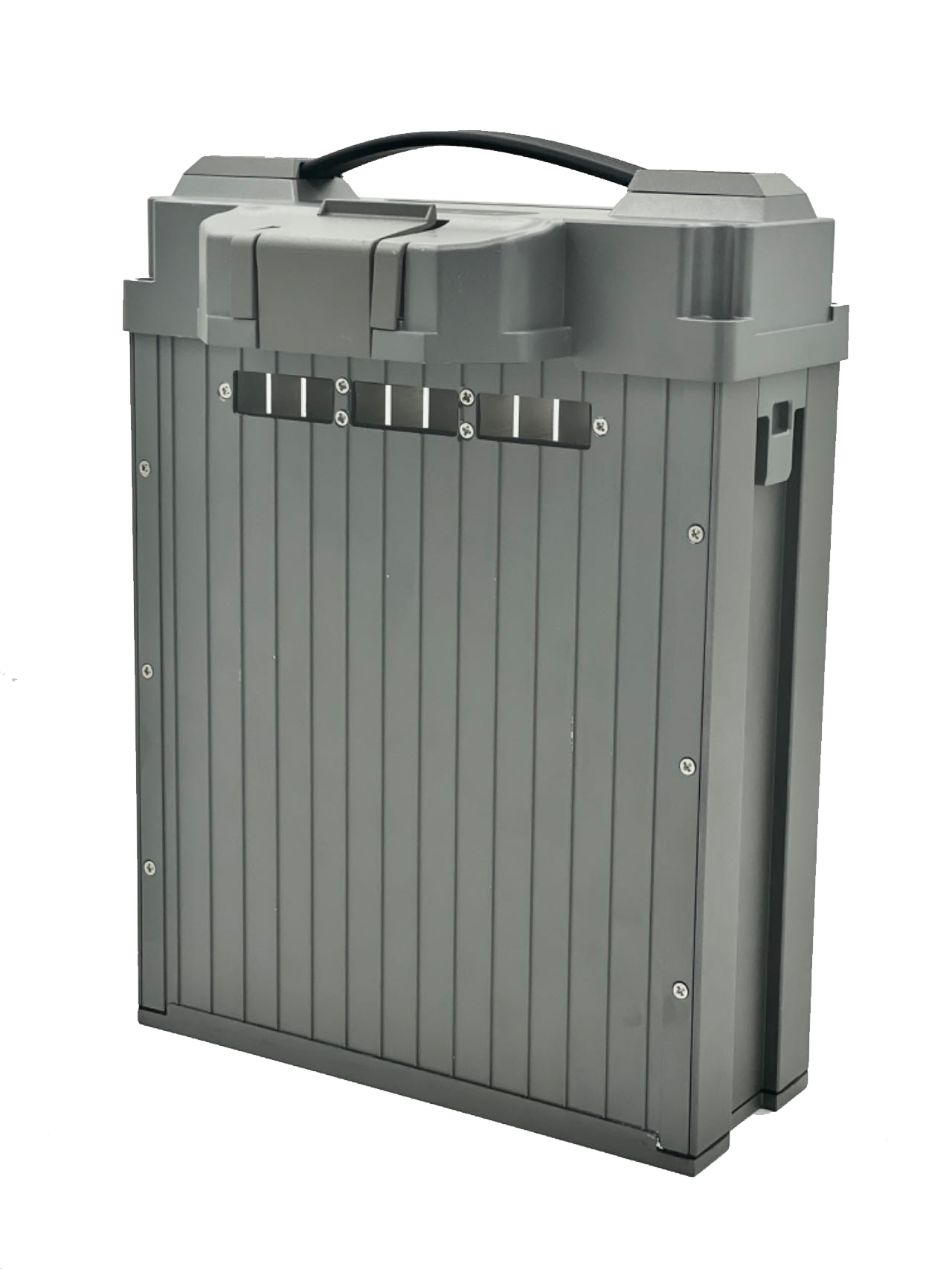
Our largest configurations are the 28S2P 103.6V 70Ah pack, published at 10C discharge, 29000g and at least 500 cycles, and the 28S2P 106.4V 60Ah pack, published with a maximum continuous discharge rate of 10C at its own nominal voltage. Both sit at the top of the energy range, but they aren’t interchangeable capacity steps of one platform. Mass is what you pay for, so size them against a payload budget in energy per kilogram of complete pack rather than in amp-hours — the reason a bigger battery doesn’t always mean longer flight.
Smart Battery Management
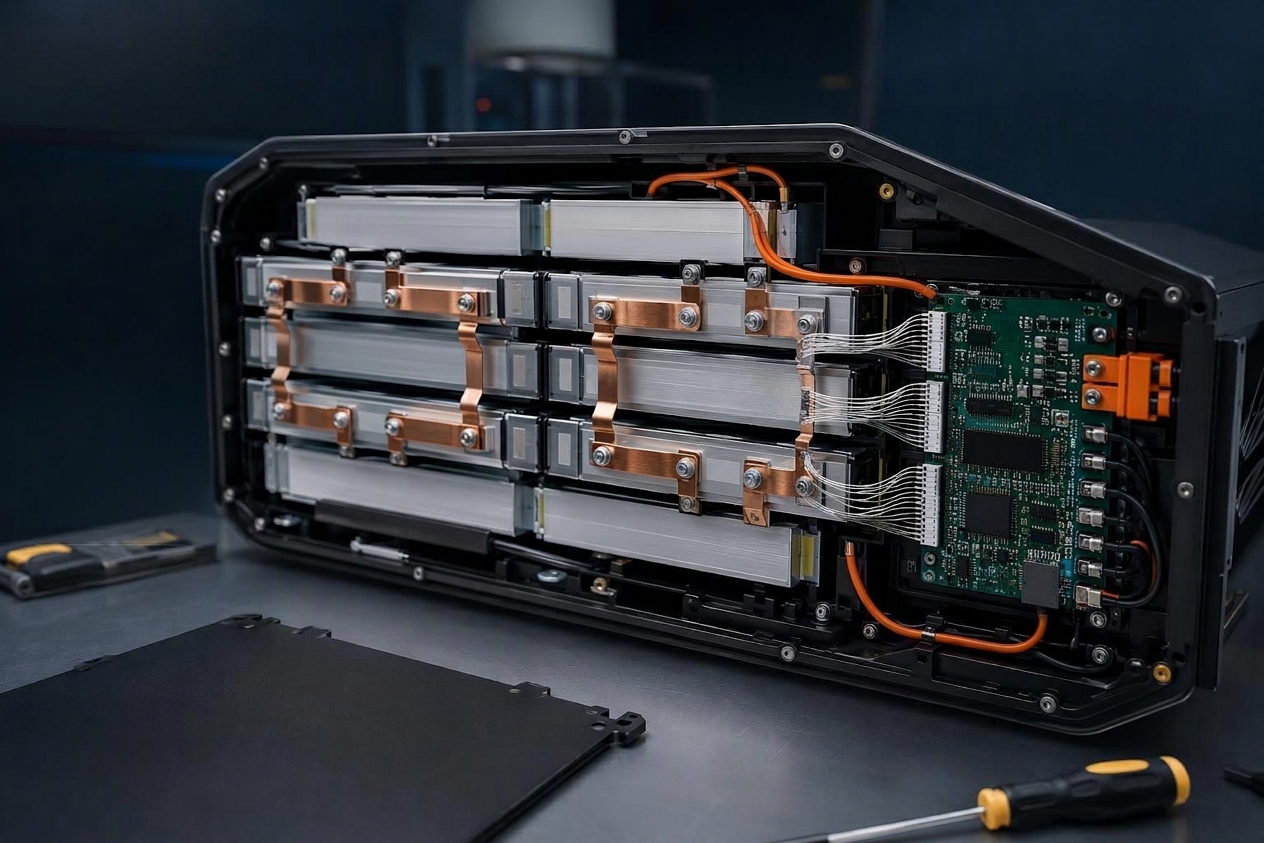
Smart packs pair that energy reserve with an integrated BMS. It reports voltage, current, temperature and operating status in real time, and handles protection and communication with the flight controller or ground station. Beyond that, the line comes in several shapes: lightweight smart pouch packs and aluminium-alloy packs, compact 21Ah units for restricted battery bays, 22Ah packs for agricultural platforms, and 28S–32S high-voltage smart systems. Cycle life runs from at least 500 to at least 1,000 cycles depending on model, and multi-module parallel operation is supported for heavy-lift platforms.
Integration is mostly protocol work. Which protocol and data fields? Which connector and pin definition? What does the pack do on a fault, and can the flight controller read its messages? Those answers are cheaper to settle before the pack is built than after — and they’re model-specific, so confirm them against the exact configuration rather than the line as a whole. Our drone BMS communication protocol guide covers CAN, SMBus and UART in more detail. The smart drone battery range lists the current configurations.
High-Energy-Density Batteries for Long-Endurance UAVs
High-energy-density UAV batteries prioritize stored energy per unit mass. Discharge capability still depends on the specific cell and pack design, so compare continuous and peak discharge ratings alongside energy density.
Semi-solid and high-energy-density packs sit in this direction. The configurations below show how the line spreads across S counts and capacities.
Configuration | Capacity | Pack weight | Discharge / charging | Energy density as published |
|---|---|---|---|---|
14S1P 51.1V | 39Ah | 5600g | 8C / 0.5C max | 400Wh/kg |
12S1P 43.8V | 39Ah | 4800g | 8C / 0.5C max | 400Wh/kg |
18S1P 65.7V | 39Ah | 7400g | 8C / 0.5C max | 400Wh/kg |
18S 66.6V (NMC) | 34Ah | 7090g | 8C / 1C max | Not specified |
14S1P 51.8V (semi-solid) | 34Ah | 5570g | 8C / 1C max | 340Wh/kg |
12S1P 44.4V (semi-solid) | 34Ah | 4800g | 8C / 1C max | 340Wh/kg |
Those density figures are reproduced from the published product data and refer to the cell, not the assembled pack; where no figure is published, the table says so rather than estimating. A complete pack adds interconnects, control electronics, structural parts and an enclosure, so pack Wh/kg always lands below cell Wh/kg. A 400Wh/kg cell does not make a 400Wh/kg pack — which is why pack-level mass and energy should be quoted under stated conditions.
Higher cell energy density does change pack design. For the same stored energy, fewer or lighter cells are needed, which frees mass for payload or extends duration. The link between pack mass and endurance isn’t linear, though, and no flight-time gain can be derived from a Wh/kg figure alone.
Cycle life varies too: the 400Wh/kg 39Ah packs are listed at 400 cycles or more, the 340Wh/kg 34Ah semi-solid packs at 300 or more. Treat those as published ratings for the models in question, then check them against your own duty cycle — a stated cycle count means little without the depth of discharge and temperature it assumes.
Read together, these figures make the line a reasonable fit for duration-driven airframes with moderate burst demand, rather than a universal upgrade over high-rate LiPo. The high energy density UAV battery range lists the current configurations, and if the burst rating is the constraint on your platform, our guide to continuous vs peak C-rating covers how to read the two figures. How semi-solid cells differ from conventional LiPo is set out in our semi-solid vs LiPo system guide.
How to Select a UAV Battery for Your Platform
Matching a pack to a platform means answering five questions in order, each of which can rule out a candidate before the next is reached.
Selection factor | What the buyer must confirm |
|---|---|
Voltage | Pack nominal, full-charge and cut-off voltages sit inside the airframe’s operating range, and motors, ESCs and chargers are rated for the full window |
Discharge | Continuous current, peak current and the duration of the peak cover the measured mission current profile, and any published figure is clearly identified as continuous or peak |
Capacity and weight | Added capacity keeps total pack mass inside the platform’s allowable limit and centre-of-gravity envelope |
Physical compatibility | Pack dimensions, mounting, retention, connector type and harness gauge fit the battery bay and current path |
BMS and validation | Communication protocol, protection logic, temperature rise and sample testing meet project requirements |
The order matters because the checks aren’t independent. A pack that clears the voltage check but blows the mass budget fails at step three, and no amount of BMS capability recovers it. Platform type only changes which check comes first. On FPV builds it’s peak current and frame space; on sprayers, continuous discharge and thermal behaviour; on heavy-lift airframes, voltage architecture and total energy; on mapping aircraft, pack-level energy density.
What comes out of that exercise is a parameter set: voltage window, continuous and peak current with durations, allowable mass, bay dimensions, connector and protocol. Most airframes combine two or three of the priorities above, so a workable configuration is defined by those numbers rather than a headline rating.
For OEM and ODM projects, start there. Share the voltage window, measured current profile, allowable pack mass and installation requirements, and we can evaluate suitable configurations against those constraints. If you’d like the complete picture first, request the full UAV battery catalog — it lists the current configurations, published pack weights and ratings across the high-rate, high-voltage, smart and high-energy-density lines. The more of the parameter list you can supply, the shorter the evaluation.
Contact our team with your parameter set to start that evaluation.

 ไทย
 English
 Español
 한국어
 Deutsch
 Français
 日本語
 Русский
 Bahasa Indonesia
 العربية
 Português do Brasil
 Italiano
 Nederlands