
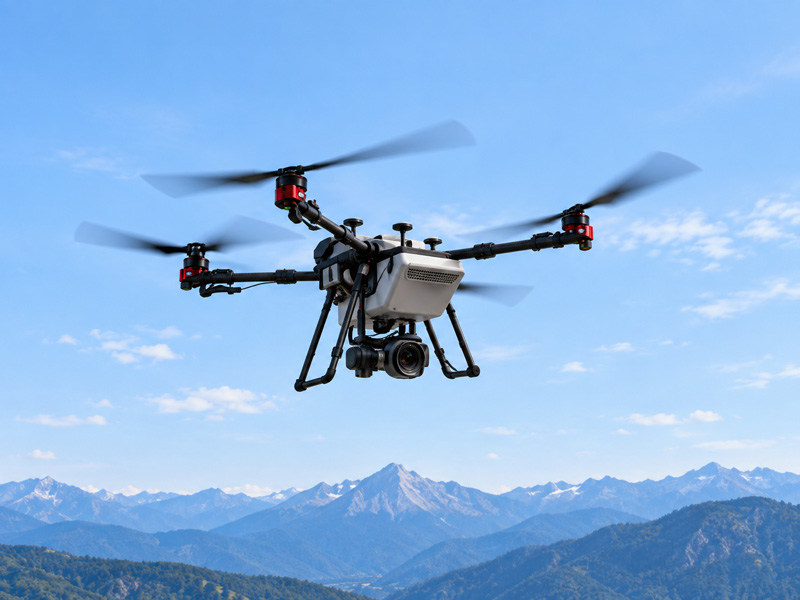
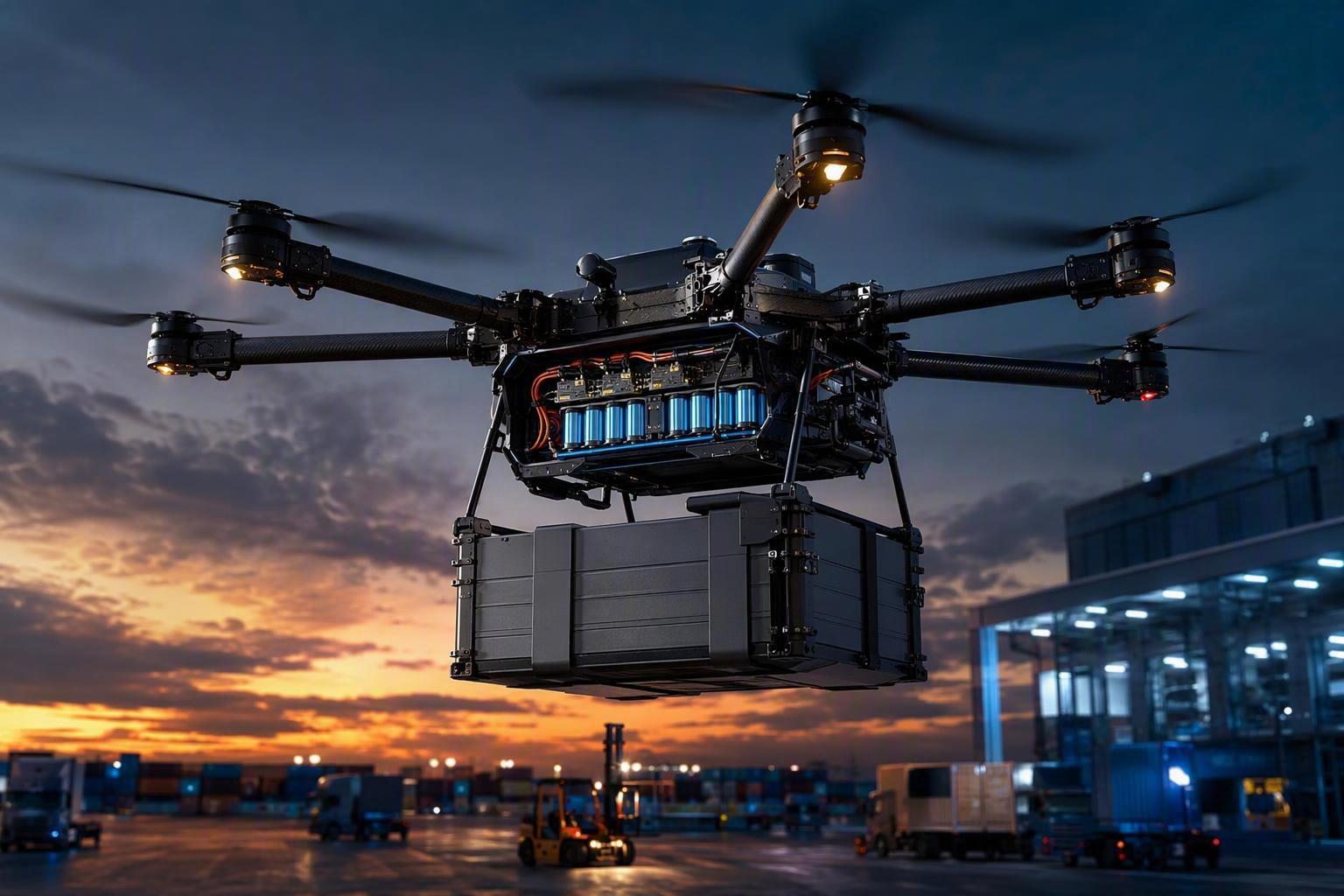
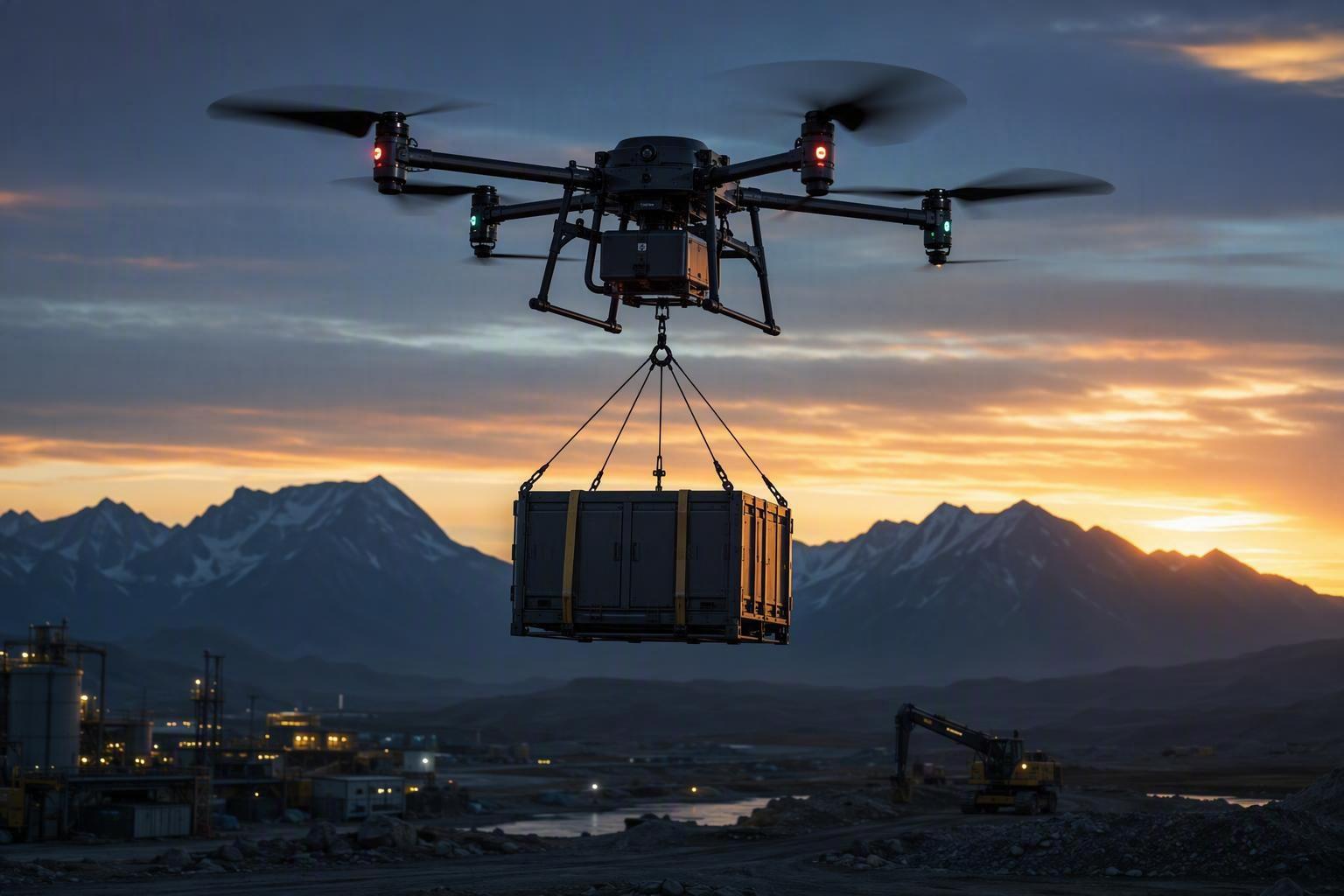
A 20 kg delivery drone can move a package across a city quickly and economically. This type of operation is increasingly routine and commercially viable. What it cannot do is move a pallet of spare parts to a mountain worksite, resupply a construction tower, or translate three truck trips into one flight.
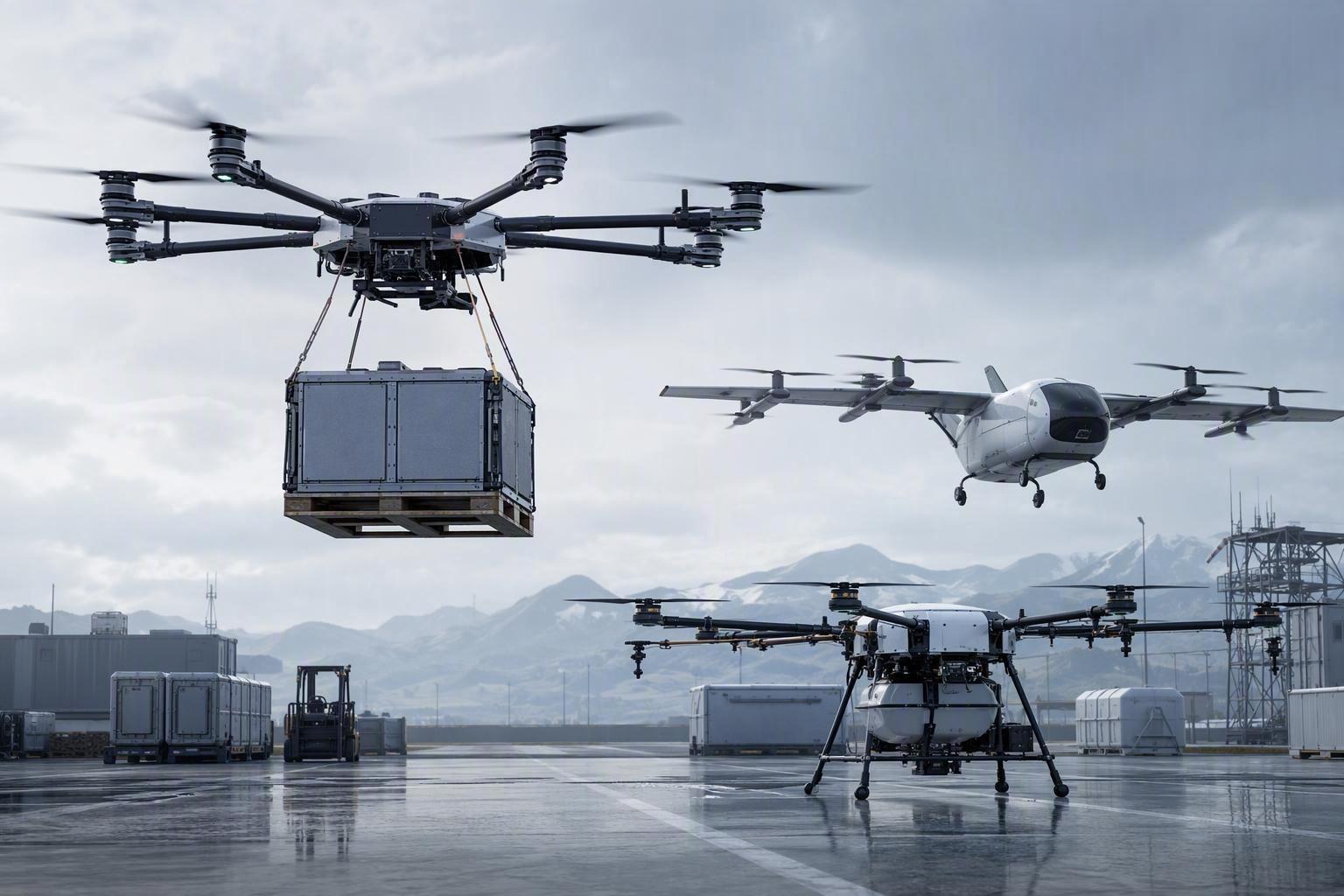
That gap is why more commercial cargo programs are migrating to heavier platforms. Once payload enters the 100 kg+ class, the aircraft stops behaving like a scaled-up delivery drone and starts behaving like a small air-freight system. The demands change for propulsion, battery energy, peak power, structure, flight time, and operating economics.
The common assumption is that this is a battery-capacity problem: raise the payload, raise the capacity, extend the flight time. The reality is different. Payload scaling is a power-system re-design, and the constraint that usually decides the outcome is a feedback loop we call the weight trap. Understanding that loop is the difference between a platform that carries its mission and one that carries its own battery.
Why Cargo Drones Are Getting Bigger
The shift toward heavier cargo drones is not driven by a single application. It is spread across several markets that share one requirement: moving heavier equipment and material in fewer trips.
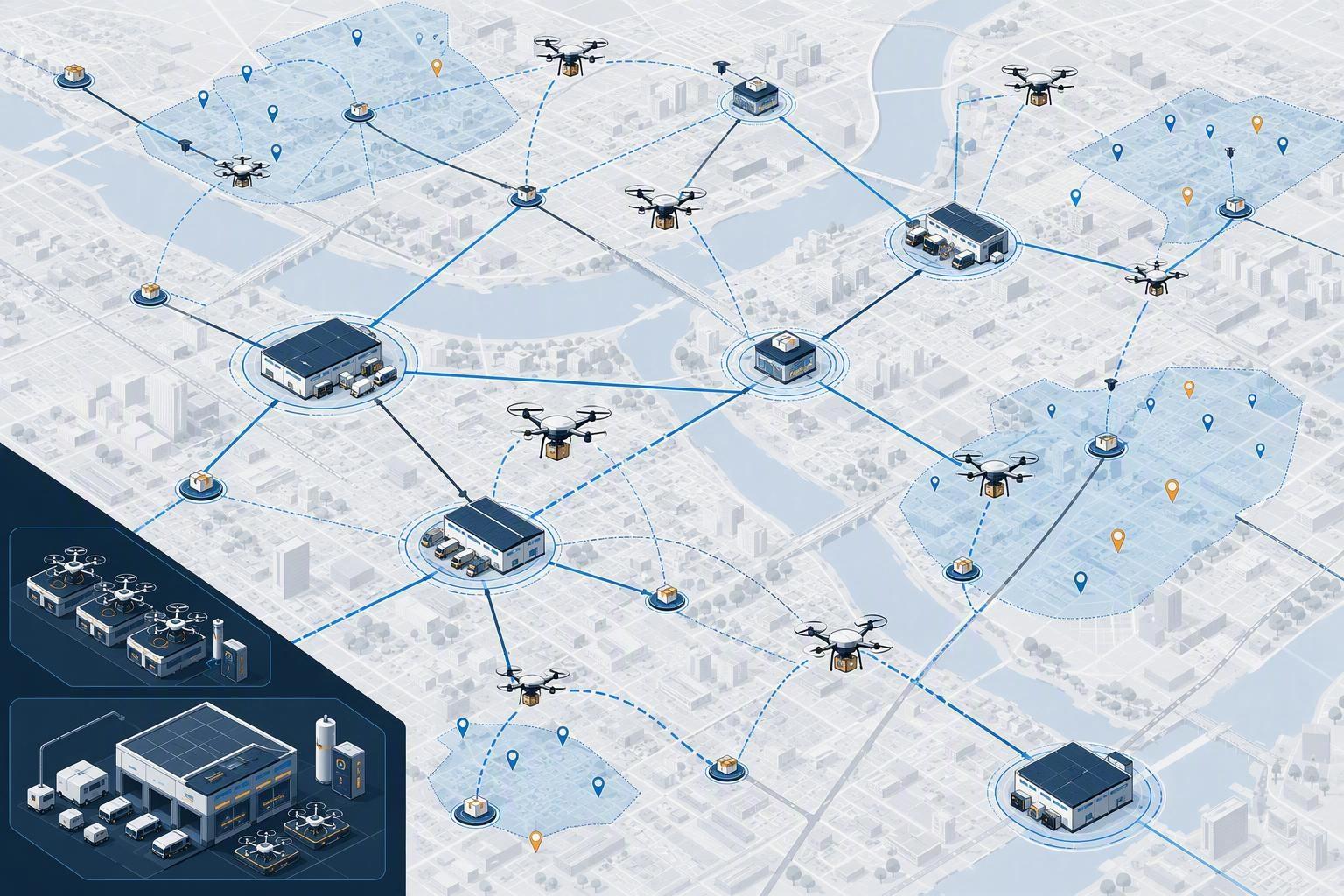
Logistics and regional delivery — inter-hub freight and rural resupply where road transport is slow, expensive, or blocked.
Industrial transport — moving tools, components, and consumables to sites that are difficult to reach by ground.
Agricultural logistics and heavy-lift operations — larger dispersal and tank loads that reduce turnaround time across big fields.
Construction and infrastructure — hoisting materials, inspection gear, and tools to elevated worksites.
Emergency response — delivering medical supplies, firefighting loads, and rescue equipment when surface access fails.
In each case, small-payload platforms work fine for small parcels. Commercial operators pushing beyond that need heavier equipment moved with fewer sorties, which pushes the useful load well past what a light multirotor can carry.
This is visible in the market data. Global Market Insights’ cargo drone forecast points to the heavy (>100 kg) payload tier as one of the market’s strongest growers, and similar analysis elsewhere flags higher-payload classes as fast-rising segments. Alongside that, operators are moving past headline payload numbers toward usable payload, endurance, and regulatory readiness. They no longer ask only how much a drone can theoretically lift; they ask how much it can carry reliably, repeatedly, and at a route the rest of the logistics chain can depend on.
What Changes When Payload Reaches 100 kg+
Crossing 100 kg is not just carrying more weight. It changes the whole aircraft because every subsystem is now sized against a heavier, more demanding load case. For a buyer, the useful takeaway is what that means for the battery.
Structure — the airframe needs stronger arms and better load distribution, and every kilogram reinforced into the structure is mass that no longer goes to payload.
Propulsion — larger payloads require more thrust, which raises power demand and puts stronger requirements on the battery to hold sustained output under load.
Power output — takeoff and load transients can demand far more than steady cruise, which is why heavier platforms move toward higher-voltage architectures to keep currents manageable.
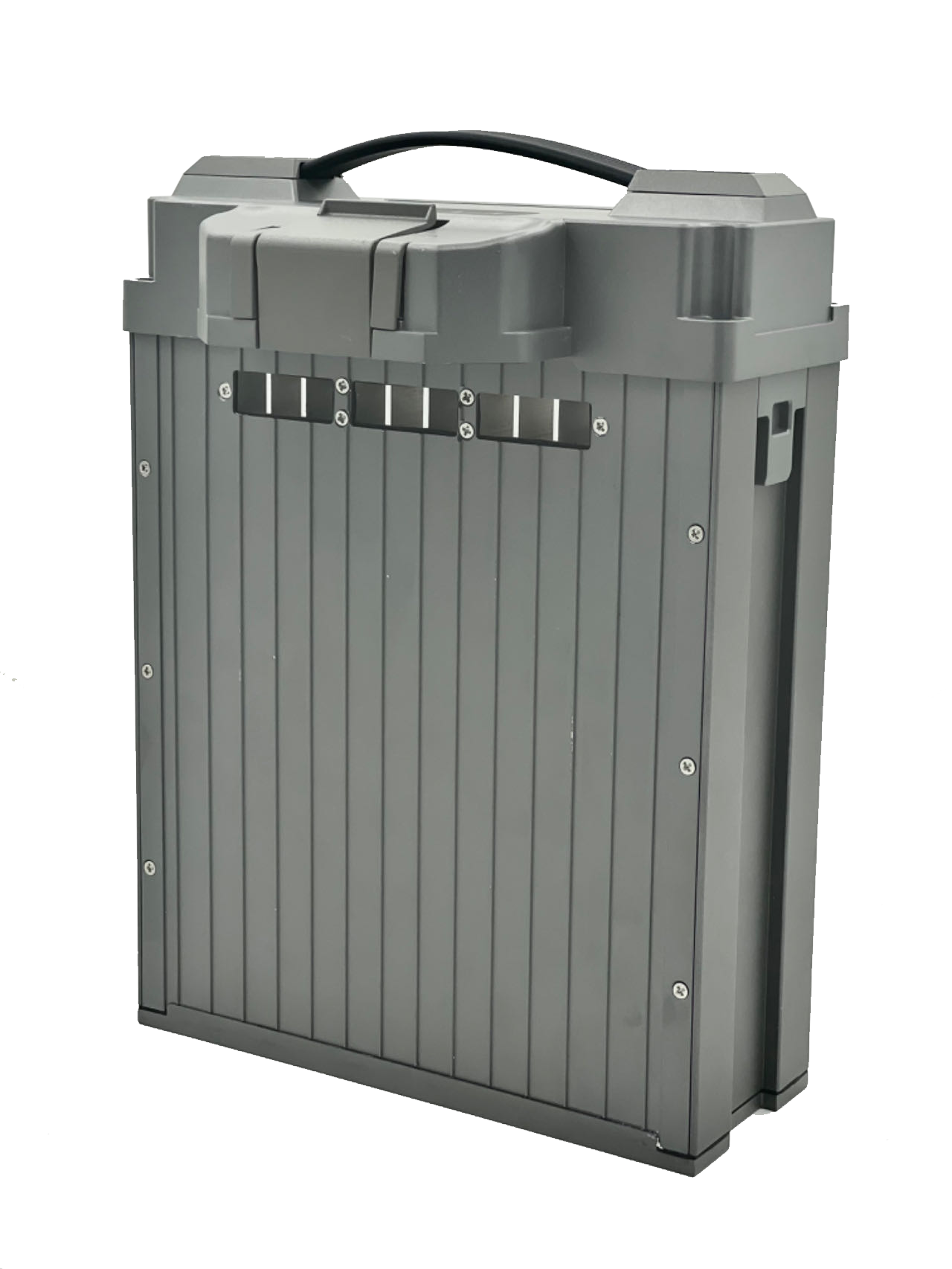
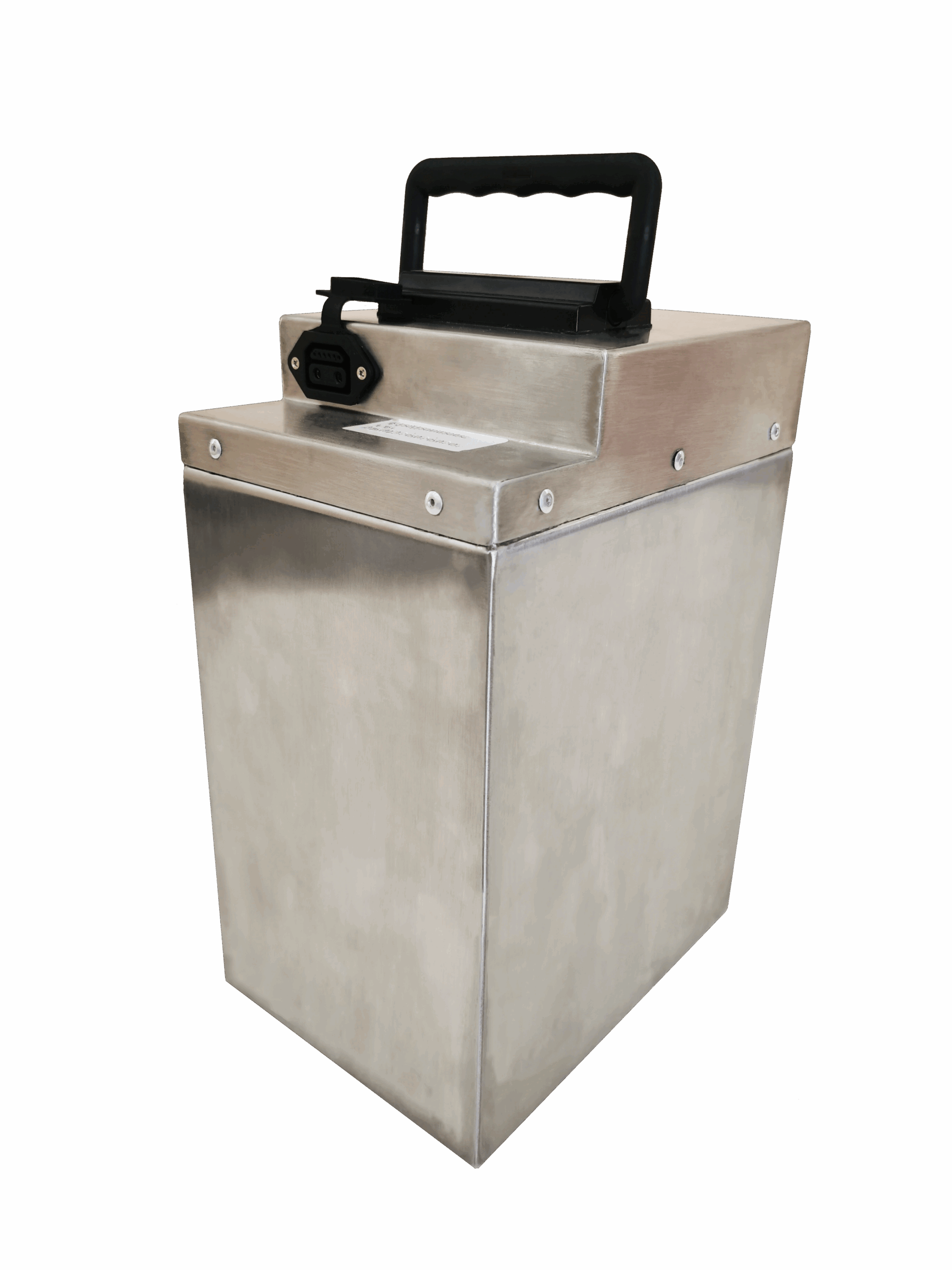
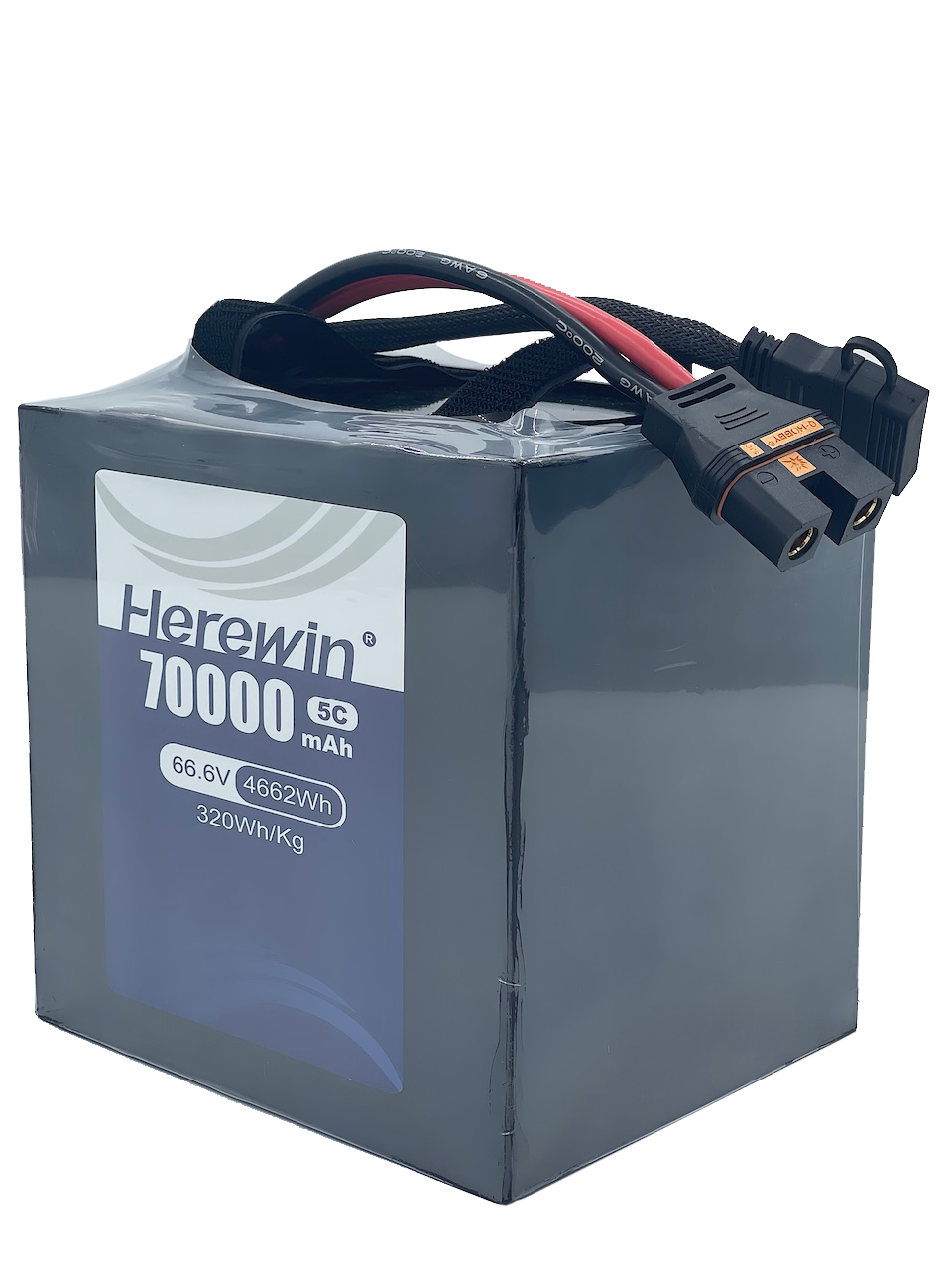
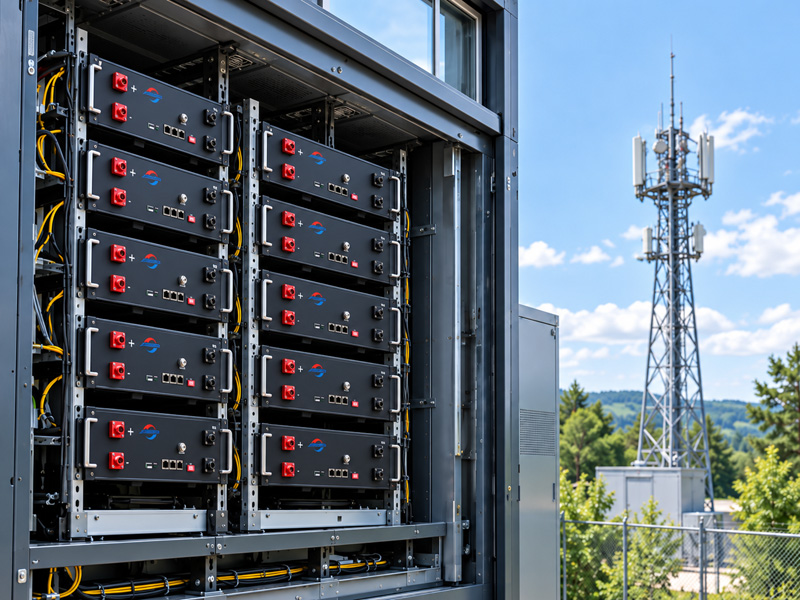
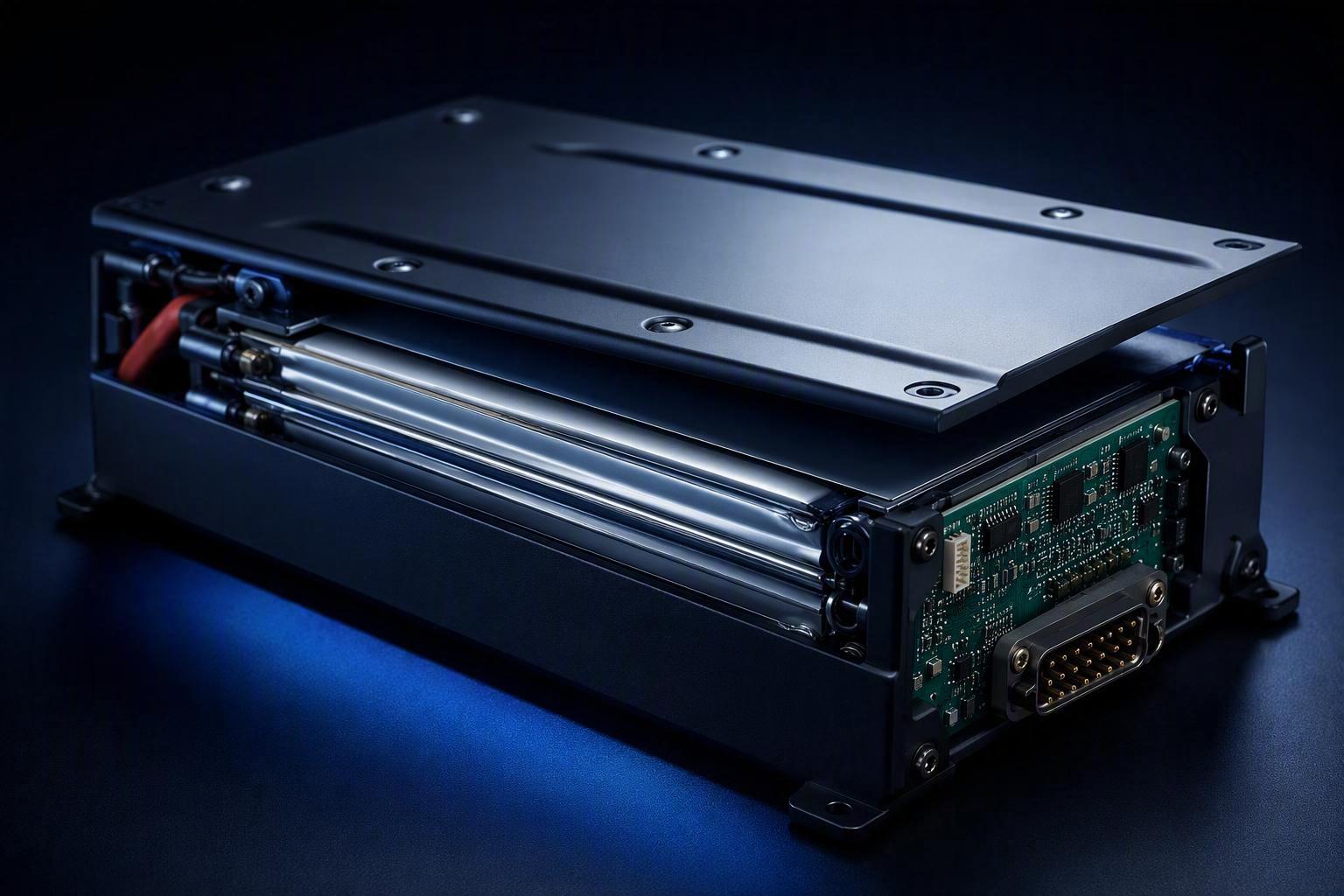
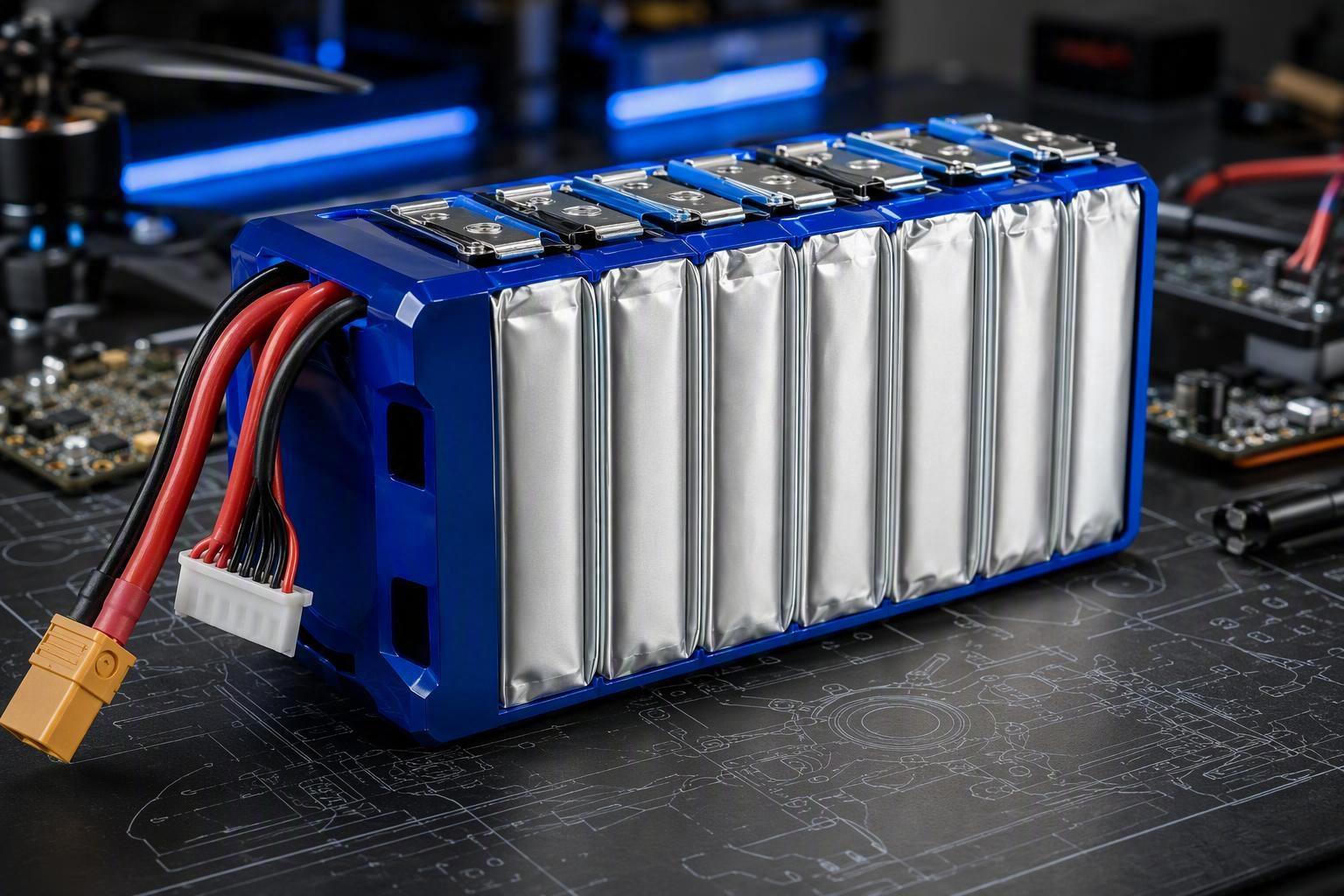
Battery — the pack must simultaneously satisfy energy (for range), power (for load and climbs), weight (so it does not eat payload margin), thermal performance (for sustained high-current flight), and cycle life (for fleet economics).
Safety and redundancy — become more important as payload and aircraft size increase, making battery monitoring and protection part of the overall system design.
These constraints move together. Increasing battery capacity alone does not solve the problem.
Why Battery Becomes the Bottleneck
For heavy-lift cargo drones, battery selection becomes a system-level optimization problem.
The wrong question is, “Which battery has the highest capacity?” The useful question is, “Which battery provides enough energy and power without consuming too much of the aircraft’s payload budget?”
This is the weight trap. On paper, a larger battery adds watt-hours, which should extend flight time. But the battery is also part of the mass the rotors must lift. Add battery mass and the following chain tightens:
Payload up → aircraft weight up → required battery energy up → takeoff weight up → power demand up → battery weight up.
Add battery mass and the propulsion system must work harder to carry it, which eats into the very payload budget the pack was meant to support. Beyond a certain ratio, endurance shows diminishing returns and can even reverse. That trade-off between energy density and discharge capability is one we walk users through in our guide to high-C versus energy density: a pack optimized only for capacity may physically fit and still be the wrong fit for the mission.
What Battery Requirements Matter for 100 kg+ Cargo Drones?
The trend translates into a concrete set of battery priorities, and each one maps back to what a heavy-lift mission asks of the aircraft.
Requirement | Why It Matters |
|---|---|
Energy density | More energy without excessive pack mass, so payload fraction is preserved. |
Power capability | Supports takeoff, climb, and sustained flight. |
Weight | Protects usable payload. |
Thermal performance | Supports stable performance under sustained load. |
Cycle life | Affects replacement frequency and long-term fleet operating cost. |
BMS & telemetry | Supports protection, monitoring, and fleet operation. |
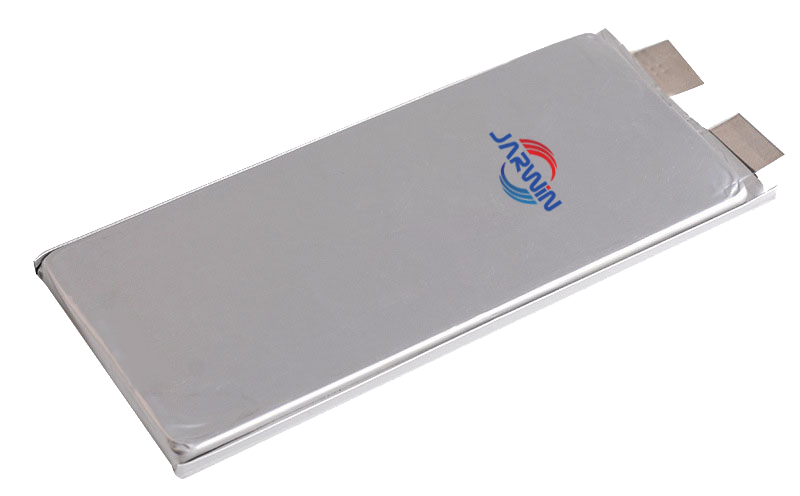
Higher pack-level energy density helps preserve payload by reducing battery mass, but density is only one axis. A high-density cell that cannot sustain the required load current can be just as limiting as a heavier pack with too little energy. On a heavy-lift platform, energy and power must be sized together.
The 100 kg+ Class Is Not One Standard
The 100 kg+ figure is better treated as a reference payload class rather than a universal regulatory category — because what the battery has to deliver depends on the mission, not the number alone.
Take two airframes that share the same nominal payload, for example. A 100 kg platform built for short, high-lift sorties — repeated lifting and lowering around a worksite — is driven by sustained peak power and fast turnaround, with endurance playing a secondary role. A 100 kg aircraft flying a long regional route leans the other way, prioritizing capacity and efficiency far above burst output. Same headline number, different battery.
Classifying by a single number hides the real engineering decision, which is how the battery is sized for the mission.
What Should Cargo Drone OEMs Ask a Battery Supplier?
Because the battery has to be sized for the mission rather than a single number, the questions you ask a supplier become the most direct way to move from a spec sheet to a design that works.
Start from the mission profile — payload, takeoff weight, flight time and range, cruise and peak power demand, operating temperature, and charging/turnaround requirements — and let those define the pack. Before committing, ask a battery supplier:
What are the continuous and peak current capabilities?
What is the pack-level energy density?
What is the pack weight at the required voltage and capacity?
How does the BMS report voltage, current, temperature, and state of charge?
What thermal limits apply under sustained high-load operation?
Can the pack be customized to the aircraft’s voltage and power architecture?
This mission-first framing is the same one behind the battery guidance we publish: the heavy-lift industrial drone battery selection guide covers 10–200 kg platforms, while the logistics drone battery compliance and selection guidance handles long-range, high-payload operations. Sort out regulatory and certification requirements early too, especially for commercial heavy-lift work.
In the 100 kg+ class, battery selection is upstream of aircraft performance. Size the pack from the mission profile, not from a capacity number.
Treat battery selection as an architecture decision rather than a capacity decision. If you are evaluating a heavier design, bring the mission profile — load currents, peak demands, mission envelope, and BMS expectations — and test candidate packs against it. That is the fastest way to tell whether a battery fits the mission rather than just the spec sheet.


 Nederlands
  English
  Español
  한국어
한국어  Deutsch
  Français
  日本語
日本語  Русский
  Bahasa Indonesia
  ไทย
ไทย  العربية
  Português do Brasil
  Italiano