
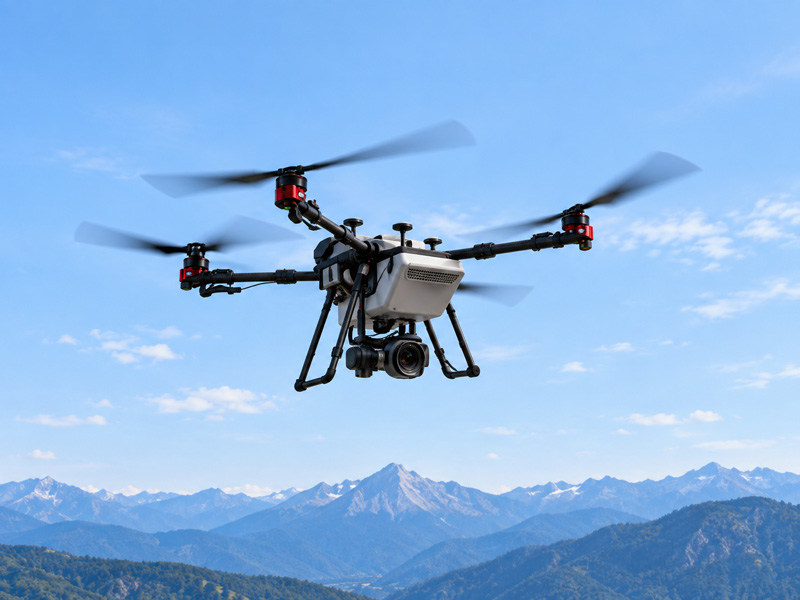


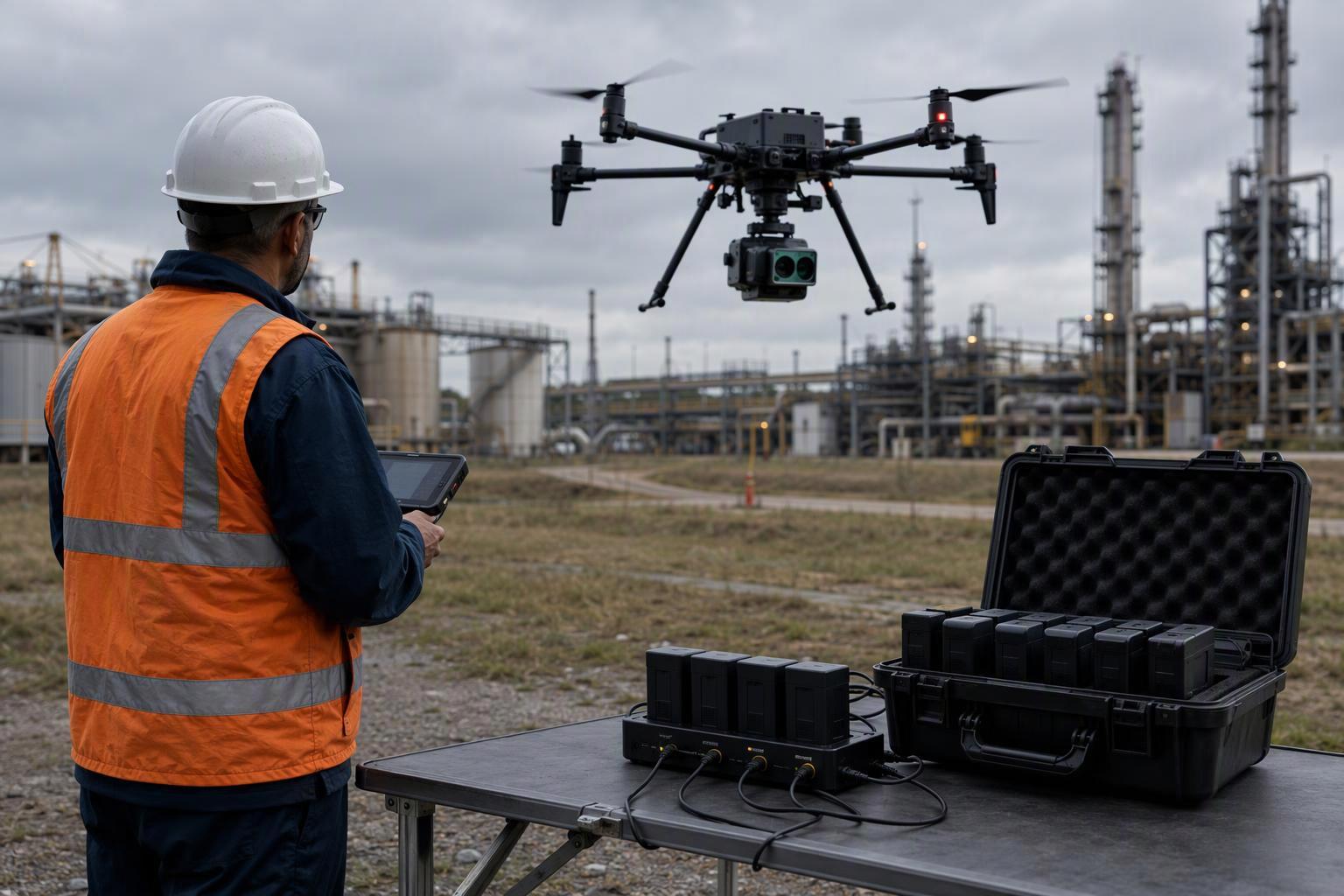
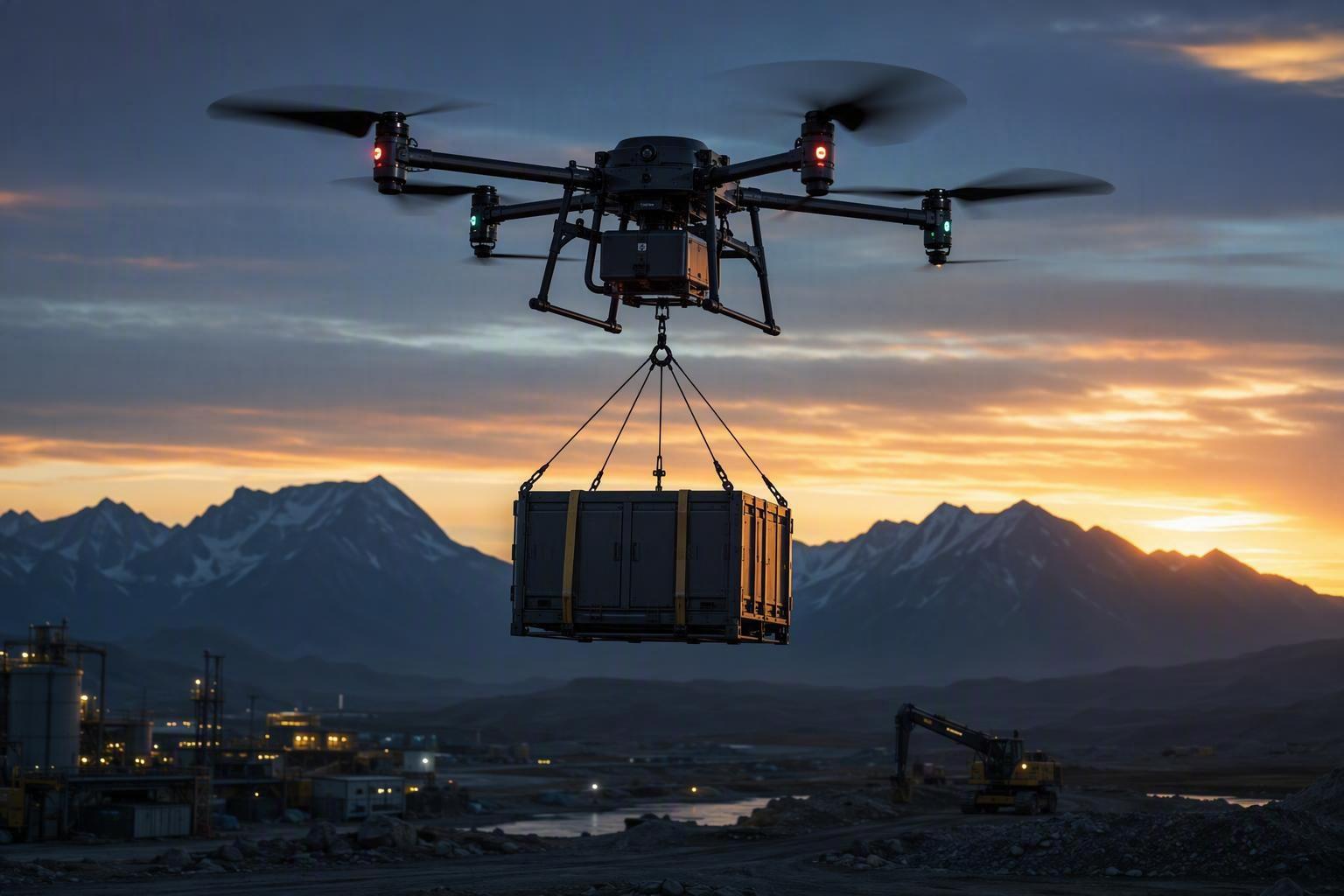
An inspection drone can carry the right sensors, the right software and the right airframe and still fail the mission, because the battery decides how much of that payload actually flies. Arcsky’s published figures for the X55 heavy-lift multirotor show usable flight time falling from 45 minutes empty to 35 minutes with a 6 lb mapping camera, 30 minutes with a 12 lb LiDAR unit and 23 minutes with a 17 lb multi-sensor array. That is roughly half the empty-aircraft endurance once a full sensor load is mounted, and capacity alone does not predict the curve. The same principle applies to any inspection mission where payload and operating conditions reduce usable flight time.
This guide treats industrial drone battery requirements as a sizing problem against the real operating cycle: flight, land, cool, charge, ready, next mission, run as a pack rotation rather than a single pack. That framing moves the specification away from a single-flight requirement and toward a repeatable operating one. By the end, your inspection drone battery specification will be expressed as voltage window, continuous and peak current, usable energy, charging rate, cycle life, connector, protocol and operating temperature, together with the evidence worth requesting from any supplier before a fleet commitment.
Why Battery Requirements Matter in Industrial Drone Inspection
Inspection programs are judged on missions completed per week, not on the speed of a single flight. Compressing an inspection cycle from days to hours raises how often the aircraft flies, and at that cadence the power system, not the sensor, becomes the operational constraint.
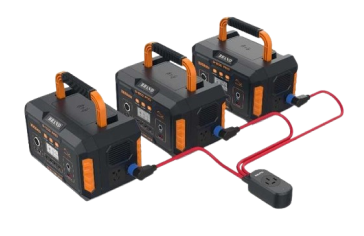
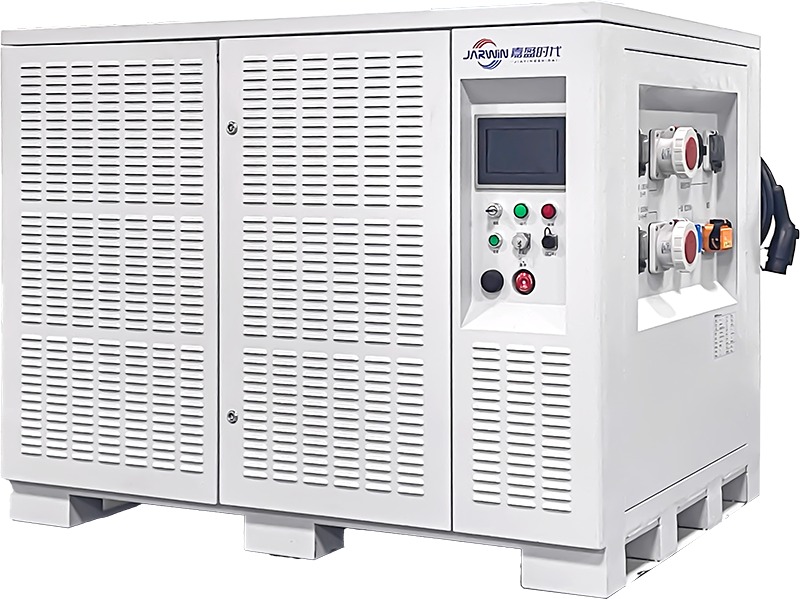
The recharge step shows the effect most clearly. At a nominal 1C rate, the constant-current portion of charging is on the order of one hour, but the complete cycle runs longer because current tapers off near full state of charge (SOC) and the pack’s BMS and thermal management shape the final leg. In a sequential charging setup, where packs wait their turn on a single hub, that extra time compounds: several packs queued one after another can push the last pack’s ready time hours past the first. A multi-channel charger cuts the wait by charging several packs in parallel. Charger channel count, not airframe capability, then sets how many missions an aircraft can actually fly in a day.
Once inspection is fast, the bottleneck moves from data capture to power-system throughput.
Defining industrial drone battery requirements around the operating cycle, rather than around a single flight, is what keeps that throughput predictable. Those requirements break down into the nine areas below, each of which maps to a specific failure in the field.
What an Industrial Inspection Drone Battery Needs to Support
The table below pairs every requirement with the reason it matters on an inspection flight, so you can tell a real specification from a marketing line.
|
Requirement |
Why it matters in inspection |
|---|---|
|
Energy capacity |
Determines usable flight time |
|
Continuous and peak current |
Supports takeoff, hover and payload demand |
|
エネルギー密度 |
Balances endurance against aircraft mass |
|
サイクル寿命 |
Determines replacement frequency |
|
Charging rate |
Controls turnaround time |
|
Low-temperature performance |
Affects missions in cold environments |
|
BMS communication |
Enables monitoring and fleet integration |
|
Thermal management |
Helps maintain stable performance |
|
Environmental and mechanical protection |
Supports demanding field conditions |
Two of these rows carry the most confusion. Low-temperature performance is not a comfort feature: cold conditions can materially reduce both usable capacity and available power output, which is why a pack specified for a mild climate may fall short in a winter inspection program. Cycle life is equally slippery, because a “cycle” only means something when the load, temperature and cutoffs are defined; the exact threshold and counting method can differ between suppliers, so confirm the definition behind any rating you are quoted.
Start With the Mission, Not the Battery Capacity
Calculate the load before choosing a pack. Drone battery flight time is set by the mission profile, not by the mAh printed on the label.
Begin with aircraft mass, payload mass, and the flight profile. An inspection flight that hovers in wind can have a very different power profile from one that cruises at a relatively steady speed, so the same pack delivers different usable energy across two inspection tasks. Add the ambient temperature range, the reserve policy, and the return-to-home margin your operation requires, then multiply by the number of cycles flown per day.
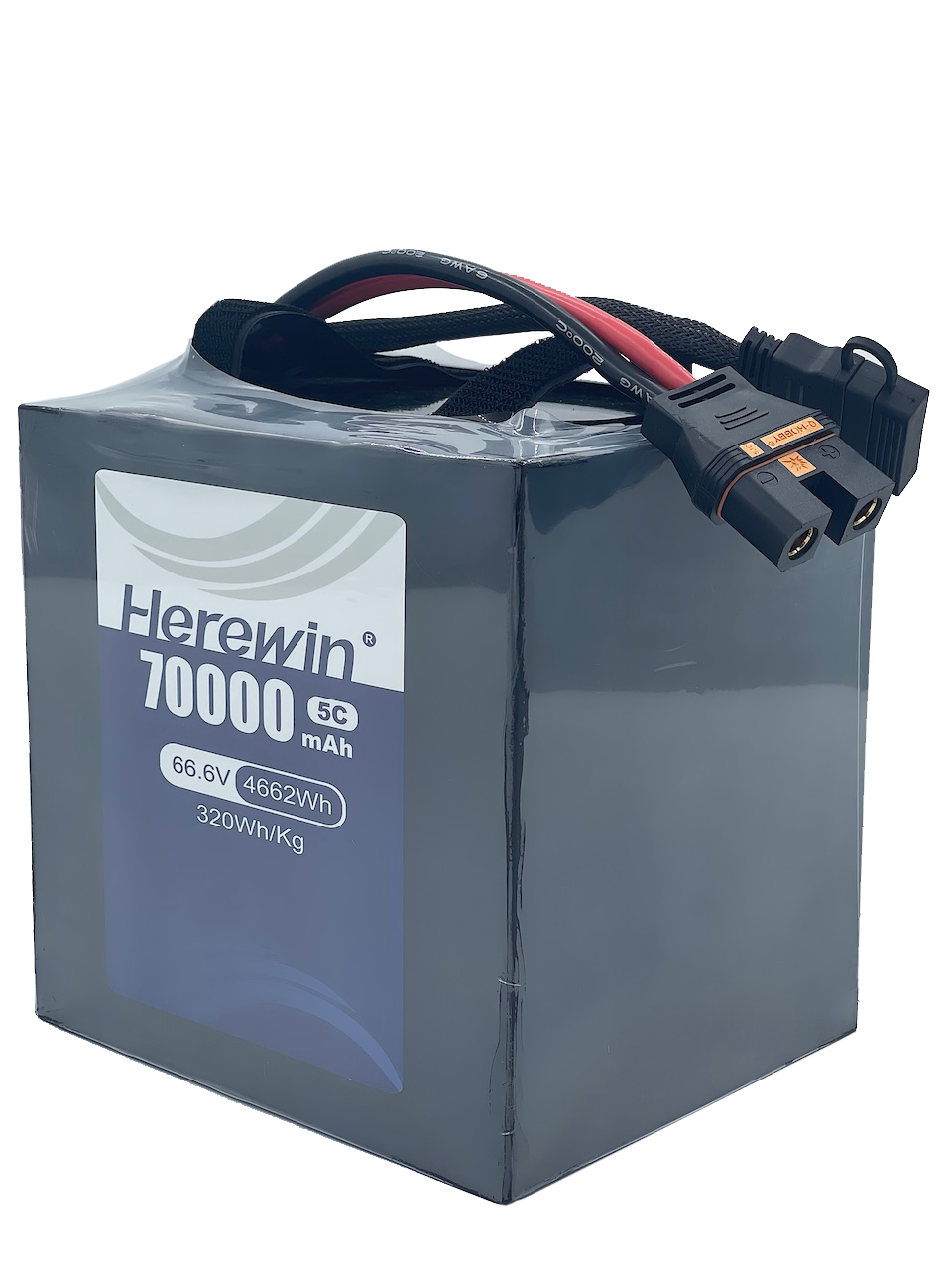
The mass penalty is real. Because the battery itself adds mass, increasing capacity does not always produce a proportional increase in flight time: past a certain point the aircraft spends more energy lifting the extra weight than the added capacity returns. A larger pack is not automatically a longer flight. When mass budget is the binding constraint, a high-energy-density UAV battery addresses endurance from the energy side, storing more energy per unit of mass instead of simply adding capacity.
Before locking the pack size, confirm that predicted usable energy still covers your reserve plus the return-to-home leg at the heaviest payload and the coldest expected temperature.
Flight Endurance and Usable Energy
A flight-time rating is a design reference, not a promise. A pack rated for 30 to 45 minutes is rated under a specific mass, payload, profile and temperature, and every one of those variables moves the number down in service.
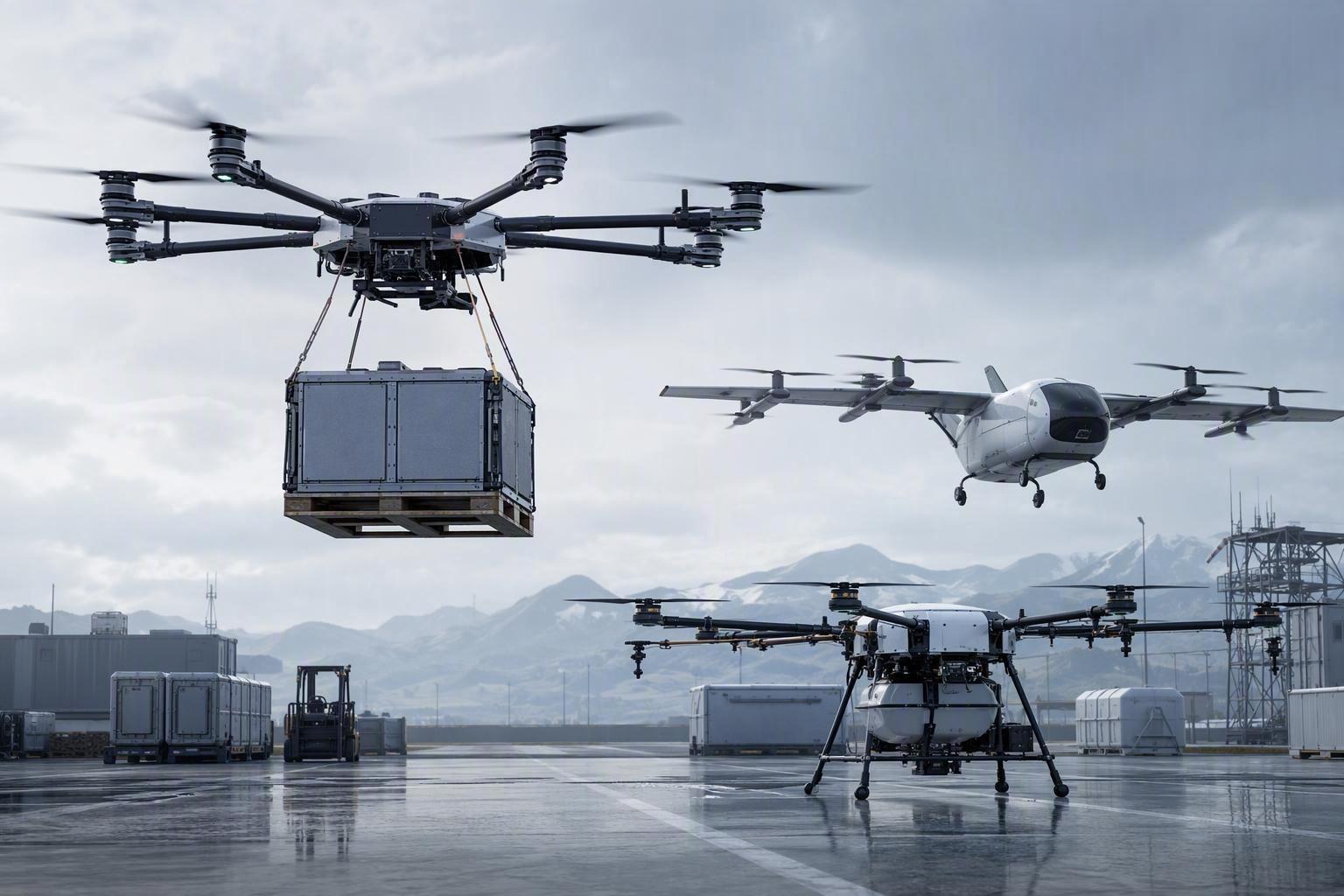
Payload is the clearest derating factor. On the same X55 heavy-lift airframe, the published flight-time figure fell from 45 minutes empty to 35, then 30, then 23 minutes as payload increased, a 49% reduction from the empty configuration to the 17 lb payload. The usable figure ends up lower still once reserve policy, wind and payload are applied.
Size the pack against reserve-adjusted endurance at your heaviest payload, not the datasheet figure.
Battery Power and Payload Demand
Payload choice is also a power-system decision. A gimbal swap changes two variables at once: the current the pack must deliver and the mass it must lift.
Continuous current tracks hover and cruise demand. Peak current tracks the transient that occurs when the aircraft climbs, holds position in wind, or recovers from a gust with the payload fitted. A heavier camera or LiDAR head raises both, because the airframe needs more thrust to hold altitude at the same mass margin. Specify continuous and peak current as ranges with the payload, ambient temperature, and flight phase they were measured at, and ask the supplier for the discharge curve at that load rather than a single headline figure.
Charging Requirements for Repeated Inspection Missions
Drone battery charging requirements decide how many inspections one aircraft can fly in a day. The binding constraint is rarely the flight itself; it is the wall-clock time between landing and the next launch.
That turnaround is a fixed sequence: flight, landing, cooling, charging, ready, next mission. Charging cannot start until the pack is back inside its allowed temperature range, so cooling time belongs to the turnaround budget rather than counting as an optional pause. Charging immediately after landing, before the pack has cooled into that range, risks accelerated degradation.
A higher charge rate compresses the charging leg of the sequence, but the benefit scales with the profile the pack, charger and BMS can actually sustain. In one published field reference, a segmented profile that tapers from 5.0C (110 A) at 10–50% SOC down to 0.8C (17.6 A) at 90–100% SOC cuts recharge turnaround from roughly 60 minutes to 18 minutes at 3C and to 12 minutes at 5C. Read these as an example configuration of what is achievable, not a rate every pack or charger is expected to meet.
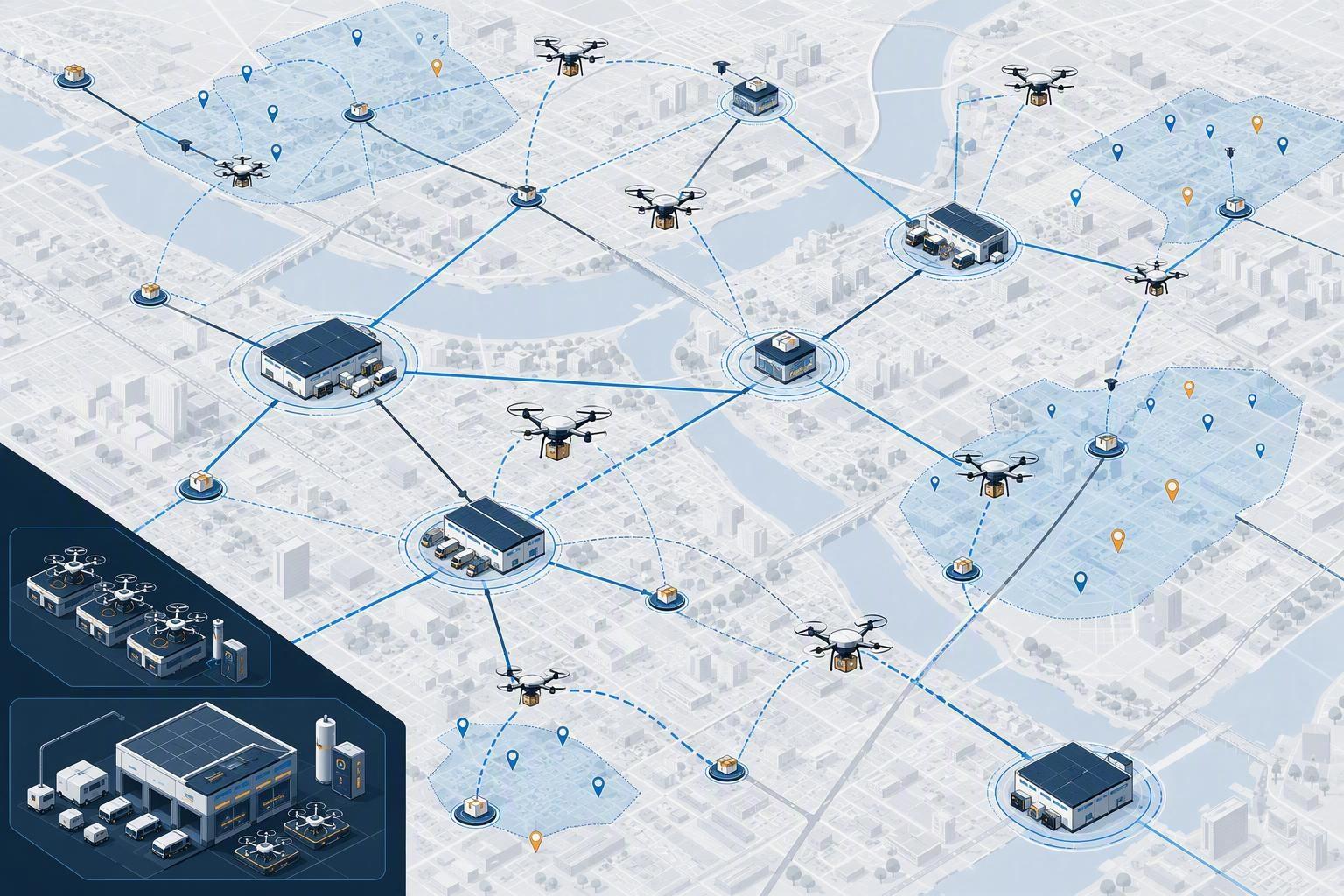
Fleet throughput then follows from the charge rate you specify. The number of packs an aircraft needs depends on flight duration, charging rate, cooling time and mission frequency, and a higher charge rate combined with multi-channel charging can reduce the number of spare packs required for continuous operations. Herewin’s published charger strategy illustrates this as a working example rather than a general rule, matching pack count to charge rate and operating cycle, with manual swaps kept under two minutes. Where turnaround is the binding constraint, a BMS-governed charge profile paired with multi-channel chargers brings several packs back into service in parallel instead of one at a time.
Before fleet deployment, confirm the charger recognizes the pack and negotiates the intended charge current, and that BMS telemetry reports cell temperature and SOC correctly through the full cycle.
Battery Life and Fleet Economics
A pack’s real cost is not its price tag but its price divided by the usable cycles it delivers, because that division is what turns a datasheet number into a budget line. Take the cost-per-cycle comparison as the starting point: divide a $1,200 pack rated for 1,200 cycles, and the simple purchase-cost equivalent is $1 per cycle; divide a $1,500 pack rated for 700 cycles the same way, and it works out to about $2.14 per cycle. Both figures ignore charging, maintenance, downtime and the usable portion of each cycle. Treat them as a vendor model rather than a measured fleet result, and substitute your own purchase price and cycle rating to get your number.
How a cycle is counted matters as much as the rating itself. Depth of discharge is one of the major factors affecting drone battery cycle life: shallower cycling generally reduces stress compared with running the pack through its full usable range, though the right SOC window should follow the cell and BMS manufacturer’s validated limits. Confirm both the counting method and the SOC window before comparing two cycle ratings.
Environmental Requirements
Temperature is the environmental variable that changes the pack you need, not a separate topic from battery selection. Usable capacity falls sharply below freezing. As one published field reference reports, UAV lithium packs can retain roughly 80 to 90 percent of rated capacity at 0 °C, 60 to 75 percent at −10 °C, 40 to 60 percent at −20 °C, and under 40 percent at −40 °C, so a flight that runs 40 minutes at room temperature can drop to 20 or 25 minutes at −20 °C. Treat these figures as indicative rather than fixed, since actual derating depends on cell chemistry, pack design and load.
Cold-weather operations also carry operational rules of their own: the FAA’s guidance on operating in winter conditions covers battery-related precautions that sit alongside the pack-level data here.
That derating feeds straight back into pack architecture. Charging at or below 0 °C risks lithium plating, so cold-weather packs may use cell heating or other thermal-management measures to bring the cells into an acceptable charging range before charging. Humidity, salt mist, dust and vibration add enclosure, sealing and connector requirements on top.
BMS, Communication and System Compatibility
A connector that fits proves nothing about compatibility. What matters is whether the battery management system (BMS) speaks a message set your flight controller already understands, and whether its voltage window, state-of-charge (SOC) reporting and protection flags match what your autopilot expects.
The message layer is where integration surprises appear. BMS communication should provide the data the aircraft and fleet system actually need, such as pack voltage, SOC, temperature, cycle count and protection status. CAN, DroneCAN, SMBus and UART can all be used in UAV battery systems, but protocol support alone does not guarantee compatibility. The message definitions and data mapping must match the aircraft’s integration requirements.
For integration, the documented message set matters more than the protocol name alone. For an inspection drone battery, confirm four things in writing before you commit: the exact message set, the voltage window, how SOC is reported, and which protection flags the pack raises. Then verify those same fields reach your fleet software, not just the flight controller.
How to Specify an Industrial Inspection Drone Battery
Turn the industrial drone battery requirements you have confirmed into a specification a supplier can quote against. Hand over these inputs in writing, because a supplier who receives only voltage and capacity has too little information to specify a pack around the actual mission.
Aircraft and mission inputs
-
Maximum takeoff weight, payload mass, and the current draw of the payload at hover and at peak
-
Required flight time per sortie, reserve policy, and return-to-home margin
-
Fleet size, missions per aircraft per day, and the turnaround window between sorties
-
Ambient temperature range for storage, charging, and operation
Pack inputs
-
Nominal voltage and full charge voltage, stated as a range with the cut-off the airframe expects
-
Continuous and peak discharge current, with the duration of the peak
-
Usable energy, not nameplate capacity, plus the mass budget the pack may occupy
-
Connector type, mounting envelope, and the communication protocol the autopilot reads
Evidence to demand with the quote
-
A UN 38.3 Test Summary covering the T.1 to T.8 test series, with the model and version matching your shipping documents — a missing record can block lithium battery transport. The test series itself is defined in the UN Manual of Tests and Criteria, and a compliance walkthrough covers how the record maps to shipping paperwork.
-
Discharge curves at the temperatures and currents you specified, DCIR figures, and cycle-life data to a stated end-of-life threshold
-
Batch consistency records, and the BMS protocol documentation your integration team needs
よくあるご質問
What specifications should I confirm before ordering an industrial drone battery?
Confirm the voltage window your airframe accepts, continuous and peak discharge current, usable energy at your mission temperature, connector type, BMS protocol, and the UN 38.3 Test Summary that may be required for lithium battery transport and shipping documentation. Ask for the discharge curve and DCIR at your expected ambient temperature, not just the nominal capacity on the label. If a supplier cannot produce a test summary or a temperature-specific discharge curve, treat the specification as unverified.
How much flight time does an inspection drone battery actually need?
Size endurance from the flight profile, not from the pack’s headline capacity. Payload-driven endurance loss on a heavy-lift airframe means a heavier sensor gimbal or a larger pack can shorten useful flight time once added mass is accounted for. Work backwards from the longest single pass you must complete, add your reserve and return-to-home margin, then check that the remaining usable energy covers it.
What charging rate do I need for repeated missions?
Higher charge rates can compress turnaround from roughly an hour toward minutes, depending on the pack, charger and charging profile, and that turnaround is what determines how many sorties an aircraft can fly in a day. Confirm the pack, charger and BMS all support the same rate, and check the temperature window the manufacturer allows for fast charging. A rate the pack accepts only at 25 °C is not a rate you can rely on in the field.
How long should an industrial drone battery last?
Life is counted in cycles, so first agree on what counts as one cycle: a full discharge, or the cumulative throughput the manufacturer defines. Shallower cycling generally extends battery life compared with repeatedly using the full usable range. The actual effect depends on the cell chemistry, C-rate, temperature and BMS limits. Convert the rated cycle count into a replacement interval and a cost per mission before you compare prices.
Can the same battery handle cold, humid and corrosive environments?
Usable capacity falls sharply below freezing, so a pack rated for your mission duration at 20 °C may not complete the same flight at −10 °C. Preheating before charging can help bring the cells into the manufacturer’s specified charging temperature range. For humid or corrosive sites, confirm the enclosure rating and connector sealing rather than assuming a standard pack will survive.
The result is a battery specification tied to the mission rather than a capacity number chosen in isolation: once voltage, current, flight time, charging, temperature and communication requirements are defined, they can be taken to a supplier and developed into a validated pack. If your inspection platform has those inputs in hand, the Herewin engineering team can work from them through pack design, BMS integration and validation, and the existing custom UAV battery solutions are a useful starting point for that specification discussion.

 日本語
日本語  English
  Español
  한국어
한국어  Deutsch
  Français
  Русский
  Bahasa Indonesia
  ไทย
ไทย  العربية
  Português do Brasil
  Italiano
  Nederlands