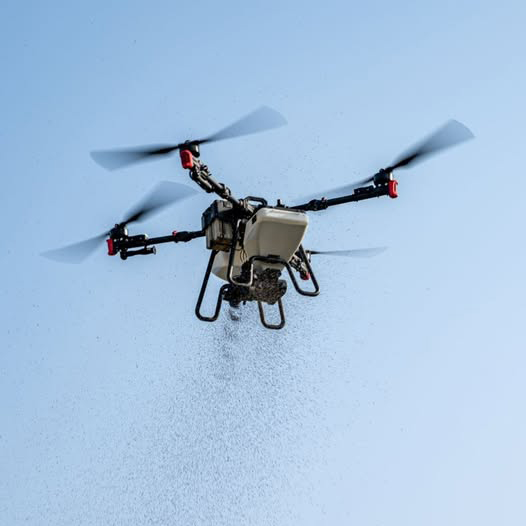


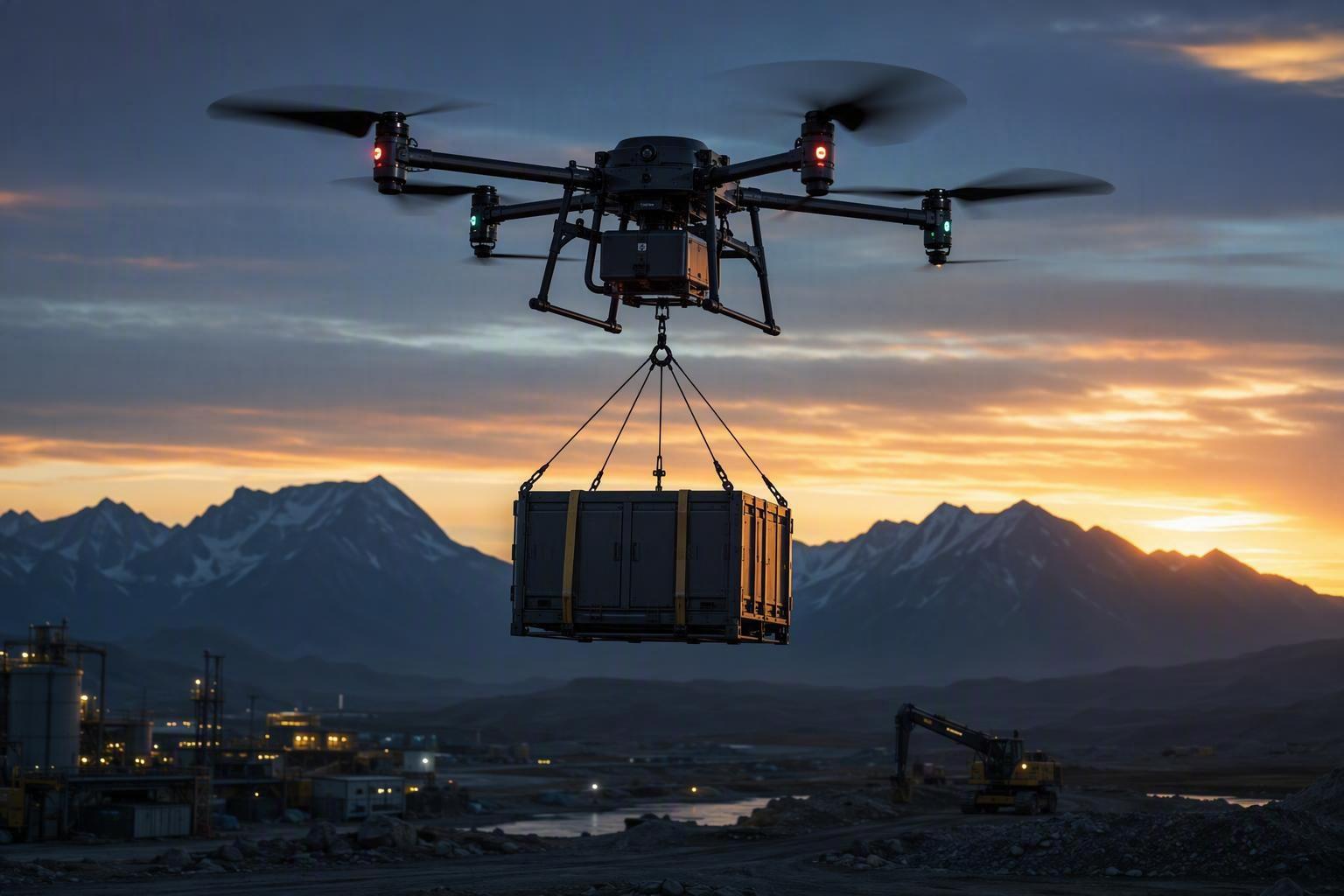
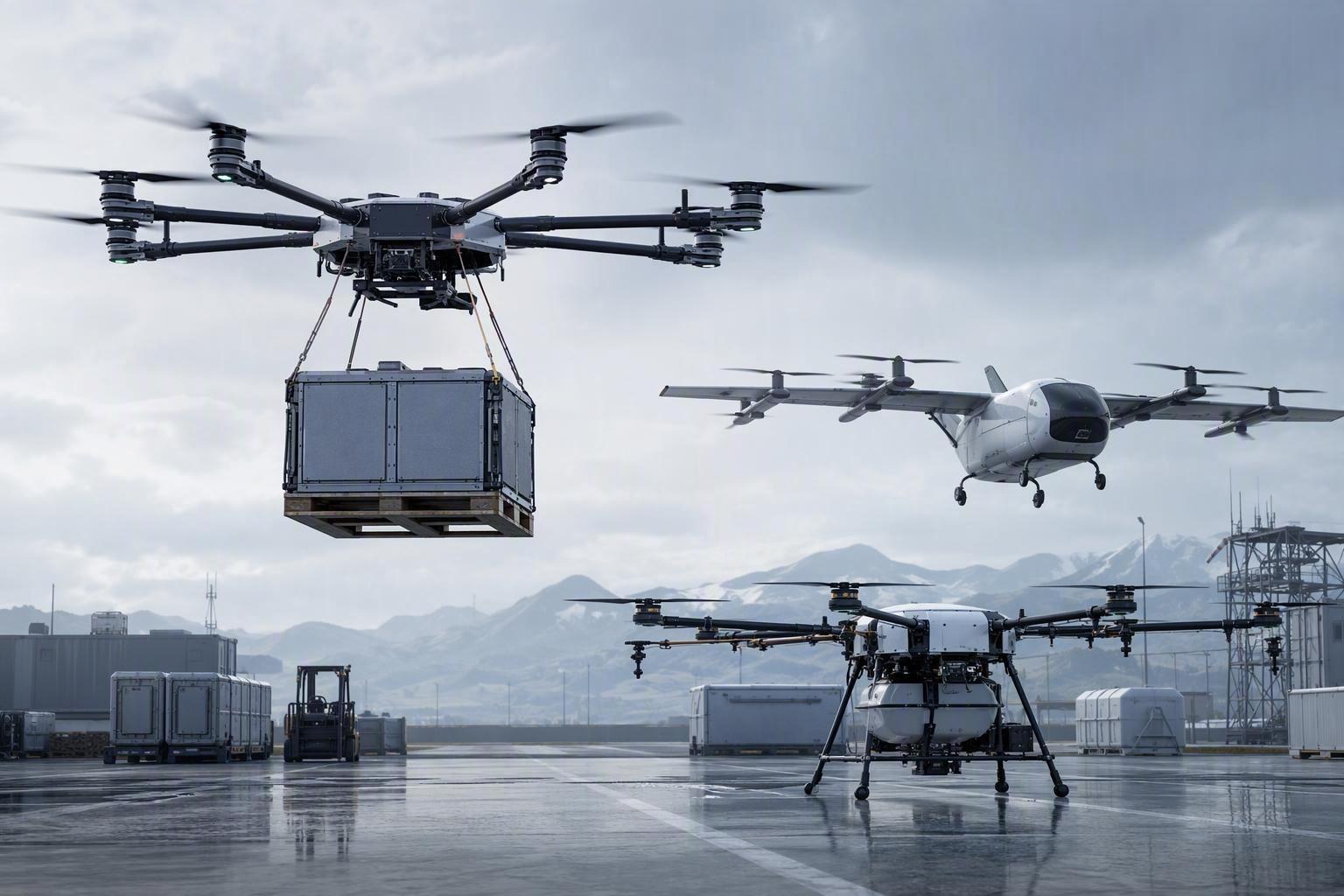
A heavy-lift drone can already move equipment, supplies, or cargo through places where conventional transport is slow, expensive, or simply impractical. The harder question is whether it can do that repeatedly—as a predictable, commercially viable operation, not a one-off demonstration.
In the U.S., that question is increasingly becoming a regulatory one.
American regulators are rethinking how large, highly automated drone systems integrate into the national airspace. The question isn’t simply whether a given aircraft can carry a given load. It’s whether operators can build a business around repeatable missions: fixed routes, recurring transport, fleet-level management. How regulators frame that question shapes what the rules actually mean for heavy-lift operators in the field.
Disclosure: This article is published by Herewin, a manufacturer of lithium battery systems for UAV and industrial applications, with in-house cell and pack production and ODM/OEM services for drone platforms. We have a commercial interest in the growth of heavy-lift drone operations.
Why Heavy-Lift Drone Operations Have Been Hard to Scale
The technical capability to build drones that carry meaningful cargo loads has existed for years. The commercial scalability has not kept pace. The gap is regulatory—specifically, it involves three structural problems that have limited how operators can build recurring businesses.
Weight changes the regulatory pathway
The FAA’s Part 107 framework—the foundation of commercial drone operations in the U.S.—was designed around small UAS weighing less than 55 pounds. The FAA officially describes Part 107 as governing small unmanned aircraft systems, meaning aircraft weighing less than 55 pounds at the time of flight.
A heavy-lift drone does not simply become a larger version of a Part 107 operation.
Once an aircraft exceeds the small-UAS framework or falls outside the conditions of Part 107, the operator may need a different combination of aircraft approval, operational authorization, airworthiness evidence, and safety documentation. The exact path depends on the aircraft and the proposed operation. That difference translates directly into operational friction for any operator whose aircraft falls outside the small-UAS model.
BVLOS has been the bigger scaling problem
Payload capacity and regulatory weight class matter. But the more consequential scaling barrier for heavy-lift commercial operations has been BVLOS—beyond visual line of sight.
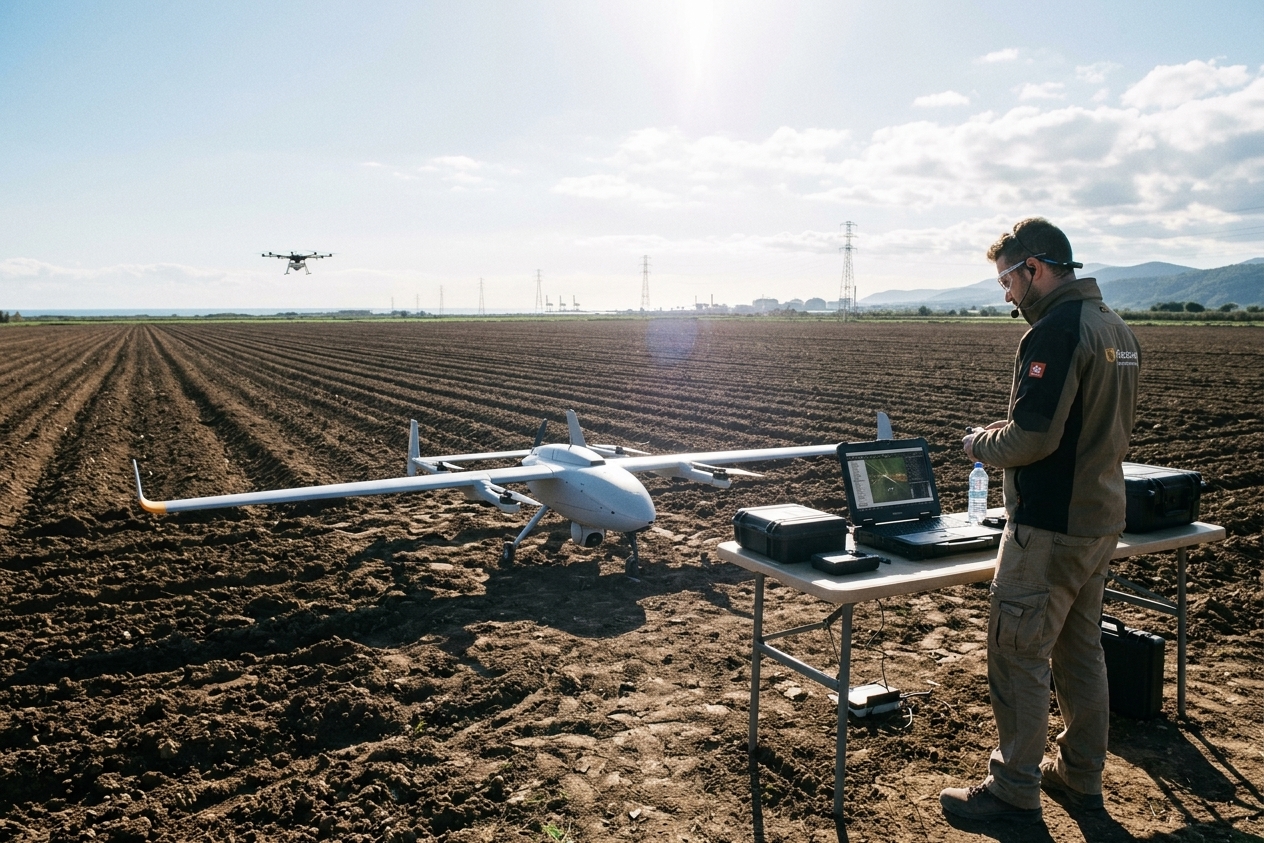
VLOS operations require the aircraft to stay within the operator’s permitted visual operating conditions, which limits how far many commercial missions can extend. That constraint is fine for close-range inspection or photography. It falls apart for regional logistics, industrial supply chains, or remote-site cargo delivery. The commercial uses that make heavy-lift drones worth building at all — moving parts to a construction site, resupplying a remote energy installation, delivering medical equipment to a rural facility — often involve distances or operating areas that ordinary VLOS conditions can’t support.
BVLOS operations under Part 107 have historically required a waiver: an individual authorization from the FAA demonstrating that the proposed operation can be conducted as safely as if all Part 107 requirements were met. The FAA describes these waivers as allowing operators to deviate from certain regulations when they can demonstrate their alternative approach maintains equivalent safety.
A waiver-based system can support demonstrations and limited operations, but it makes long-term planning, route expansion, and fleet deployment more difficult.
One-off approvals are difficult to build a business around
Under the historical waiver-based model, operators often had to build and maintain operation-specific safety cases. Changes to the aircraft, route, operating area, or mission profile could trigger additional approvals, revised conditions, or further safety demonstrations, making route expansion and fleet deployment more difficult. That structure may be manageable for a technology demonstrator, but it creates additional friction for logistics companies, industrial service providers, and operators building recurring revenue around scheduled aerial transport.
Regulatory predictability is a prerequisite for commercial scalability. When each operation requires individual authorization, operating costs remain high regardless of how capable the underlying technology is.
What Is Changing in the U.S. Regulatory Framework
The regulatory shift that matters for heavy-lift drones isn’t a rule written just for big aircraft. It’s the slow construction of a more structured BVLOS framework — one that could also cover larger unmanned aircraft and repeat industrial missions.
From Part 107 toward a dedicated BVLOS framework
U.S. drone regulation has been moving from a waiver-dependent model toward a more standardized operational framework. The FAA published its Notice of Proposed Rulemaking for what is designated Part 108—formally titled “Normalizing Unmanned Aircraft Systems Beyond Visual Line of Sight Operations”—in 2025.
The goal, as stated in the proposed rule published in the Federal Register, is to establish performance-based regulations for UAS operating at low altitudes beyond visual line of sight, including requirements for UAS traffic management services that support these operations.
The shift in logic matters: rather than every operator assembling a safety case from scratch for each mission, the proposed framework aims to establish standardized requirements that could serve as the basis for repeatable operations. The case-by-case model would likely remain in some form, but the proposed framework envisions a pathway toward operational authorizations that would not require starting from zero for each mission.
Historically common model: Operation-specific case → Waiver or other authorization → Limited operation
Potential emerging model: Standardized requirements → Operator authorization → More repeatable BVLOS operations
Part 107 remains in force. Part 108 does not replace it—VLOS operations continue under Part 107. But the proposed Part 108 framework would create a distinct, more structured regulatory path for operators whose missions inherently require going beyond visual range.
As of publication, Part 108 has advanced beyond the original NPRM stage and is under review as a draft final rule, with its current status tracked on the FAA’s BVLOS rulemaking page and the Office of Information and Regulatory Affairs review record for RIN 2120-AL82. It is not yet in effect, and no operator holds Part 108 authority. Until a final rule is published and becomes effective, operators must continue to rely on the existing FAA approval pathways applicable to their specific operations.
Larger UAS are now part of the regulatory conversation
The Part 108 proposed framework contemplates aircraft significantly larger than those covered by Part 107. As described in the 2025 NPRM published in the Federal Register, the proposed framework contemplated unmanned aircraft up to 1,320 pounds including payload. That figure describes the outer scope of the proposal, not an automatic authorization for aircraft in that weight range, and the final rule could differ.
Part 108 is not a heavy-lift drone authorization program. It is a BVLOS framework that encompasses a wide range of unmanned aircraft, including larger platforms. The significance is that the proposed framework reaches beyond the small-UAS operating model associated with Part 107—bringing larger unmanned aircraft into the same broader discussion around scalable BVLOS operations, although aircraft-specific eligibility and operating requirements would still need to be satisfied.
From individual flights to operational systems
The proposed framework also changes what regulators ask operators to demonstrate.
The question is not only “Can this drone fly safely on this mission?” The emerging regulatory logic asks a broader question: “Can this operator run this type of operation safely, on a recurring basis, at scale?“
That shift has practical implications. The proposed framework involves requirements across multiple dimensions: aircraft standards and airworthiness, operational limitations, maintenance and safety management, remote identification, airspace integration, and the infrastructure of automated operations. Rather than a single-flight safety demonstration, operators would need to establish that their systems—not just their aircraft—can support reliable, repeatable operations.
According to the FAA’s BVLOS fact sheet, the proposed rule includes requirements for manufacturing, operations, keeping drones safely separated from other aircraft, operational authorizations, security, information reporting and recordkeeping, and remote identification.
That scope reflects a maturation in regulatory thinking—from evaluating individual operations toward establishing requirements for repeatable operating models.
Why This Matters More for Heavy-Lift Drones
Regulatory changes that benefit BVLOS operations at scale are not equally valuable to all drone categories. Heavy-lift operators may benefit particularly from a more structured framework, because their commercial models depend heavily on recurring routes, longer operating areas, and fleet-level planning—requirements that small drone operations do not share to the same degree.
Longer routes become more realistic
For heavy-lift operations, the practical effect—where BVLOS authorization is in place—is range. The value proposition of a cargo-carrying drone often depends on covering distances that VLOS alone cannot support.
Remote construction sites, rural industrial installations, offshore platforms, extended infrastructure corridors—these are not locations adjacent to an operator’s control station. A more standardized BVLOS authorization path could make these routes easier to plan and operate under defined regulatory conditions, rather than relying as heavily on case-by-case approvals. That is a fundamental difference for anyone trying to build a heavy-lift logistics operation.
Fixed logistics routes become more practical
For recurring heavy-lift logistics, the commercial model isn’t a single flight — it’s being able to repeat the same mission reliably. The value of an aerial logistics asset scales with how many times it can do the job.
Consider use cases where recurring operations matter more than one-off demonstrations:
Distribution hub to remote construction site
Regional warehouse to rural medical facility
Industrial base to offshore or high-terrain worksite
Maintenance staging area to infrastructure corridor
Each of these routes has a recurring demand profile. If regulatory authorization must be substantially rebuilt each time an operator wants to expand a route, the economics become much harder to justify, regardless of the aircraft’s capability.
Fleet operations become more practical
A repeatable, standardized BVLOS framework could improve the planning economics of fleet deployment. When operations can be planned against consistent requirements rather than variable per-mission authorization processes, operators can think in terms of fleet utilization—multiple aircraft, defined operating areas, remote supervision, and recurring mission profiles.
Infrastructure, airspace coordination, and safety management stay real challenges. But the direction of the framework points at reducing one of the clearest structural barriers between a single-aircraft demo and a multi-aircraft operation.
Where Heavy-Lift Drones Could Gain the Most Opportunity
Those capability changes matter most in specific markets. Not all markets will benefit equally from a more structured BVLOS framework. The use cases that gain the most are those where the specific constraints of the old model—per-flight authorization, range limitations, operational unpredictability—were the primary obstacles rather than technology or cost.
Logistics: The last difficult mile
Consumer package delivery gets most of the attention in drone logistics talk. Heavy-lift drones are solving a different problem — not last-mile residential drops, but destinations that are genuinely hard to reach by ground: remote, scattered, or barely connected by road.
Distance isn’t always the issue. It’s the mix of distance, terrain, timing, and few alternatives. A replacement component stuck at a remote worksite. Specialized gear needed where road access means hours over rough ground. Medical supplies for a facility serving a spread-out population with little ground transport. Industrial tools for maintenance at a site built long before decent roads existed.
These are not consumer convenience problems. They are operational bottlenecks where the cost of not reaching the destination—in delayed production, halted maintenance, missed care windows—significantly exceeds the cost of an aerial alternative. A more reliable BVLOS authorization path would make it more feasible to build logistics services around these use cases rather than treating each one as a custom mission.
Industrial transport: Where roads are inefficient
Industrial environments may offer some of the clearest near-term use cases for heavy-lift drone operations. Construction, energy, utilities, mining, and infrastructure maintenance all involve frequent cargo movement in environments where road-based transport is either unavailable, slow, or costly relative to the value of what is being moved.
The logic is straightforward: heavy-lift drones become valuable when the cost of reaching a destination by conventional means exceeds the cost of flying there. Remote worksites, distributed infrastructure installations, and terrain-constrained project sites create exactly that calculus. Unlike one-off logistics missions, these industrial movements may recur throughout the life of a project, making route repeatability and fleet utilization especially important.
A replacement part grounded at a central depot, needed at a drilling location or a transmission tower site, follows a simple decision path: ground transport involves hours and a difficult drive, while aerial delivery can provide a more direct route and potentially reduce the time required to reach the site. The regulatory constraint has been that the aerial option required case-by-case authorization that made it difficult to build into operational planning. A more standardized framework could make defined corridors and recurring operating areas more practical to authorize and manage. It would not automatically approve every route, but it could reduce the need to rebuild the regulatory case from the beginning for each expansion.
Emergency response: Bypassing damaged infrastructure
Emergency and disaster response scenarios highlight one of the clearest advantages of aerial logistics over ground-based alternatives. When infrastructure fails—floods, wildfires, earthquakes, hurricanes—the ground-based systems that conventional logistics depends on fail with it. Roads are blocked, bridges are damaged, and vehicles cannot reach areas that need supplies most urgently.
Aerial logistics can bypass some ground infrastructure failures. A drone operating toward a disaster-affected area may not need a functional road along the entire route, but it still needs an authorized operating area, reliable communications, sufficient power, and a safe destination or handoff point.
The gap between individual emergency drone missions and a scalable emergency logistics capability is not only technical. Regulatory authorization and operational coordination also play an important role. Public safety and emergency response operations are explicitly listed among the use cases addressed in the proposed Part 108 framework. A more standardized authorization path could make it easier to move from special missions requiring additional coordination and mission-specific authorization toward a repeatable emergency response capability that can be incorporated into standard operating procedures.
The Biggest Change May Be the Operating Model, Not the Drone
One important outcome of a more mature BVLOS framework would be a change in the operating model for heavy-lift drone services—a shift from demonstration-oriented to infrastructure-oriented operations.
Earlier Operating Model | Emerging Operating Model |
|---|---|
Demonstration flight | Routine operation |
VLOS constraint | BVLOS authorization |
One-off authorization | Standardized framework |
Single mission | Repeated routes |
Pilot-centric | Operator and system-level management |
Individual aircraft | Fleet operations |
Technology demonstration | Logistics infrastructure |
The commercial takeaway is narrower than it sounds. A standardized model could make recurring routes and fleet deployment easier to plan — it doesn’t make them profitable or approved on its own. Rules don’t create demand. What they do is remove one stubborn commercial barrier: the uncertainty around whether an operation can scale at all.
The Power-System Side of the Equation
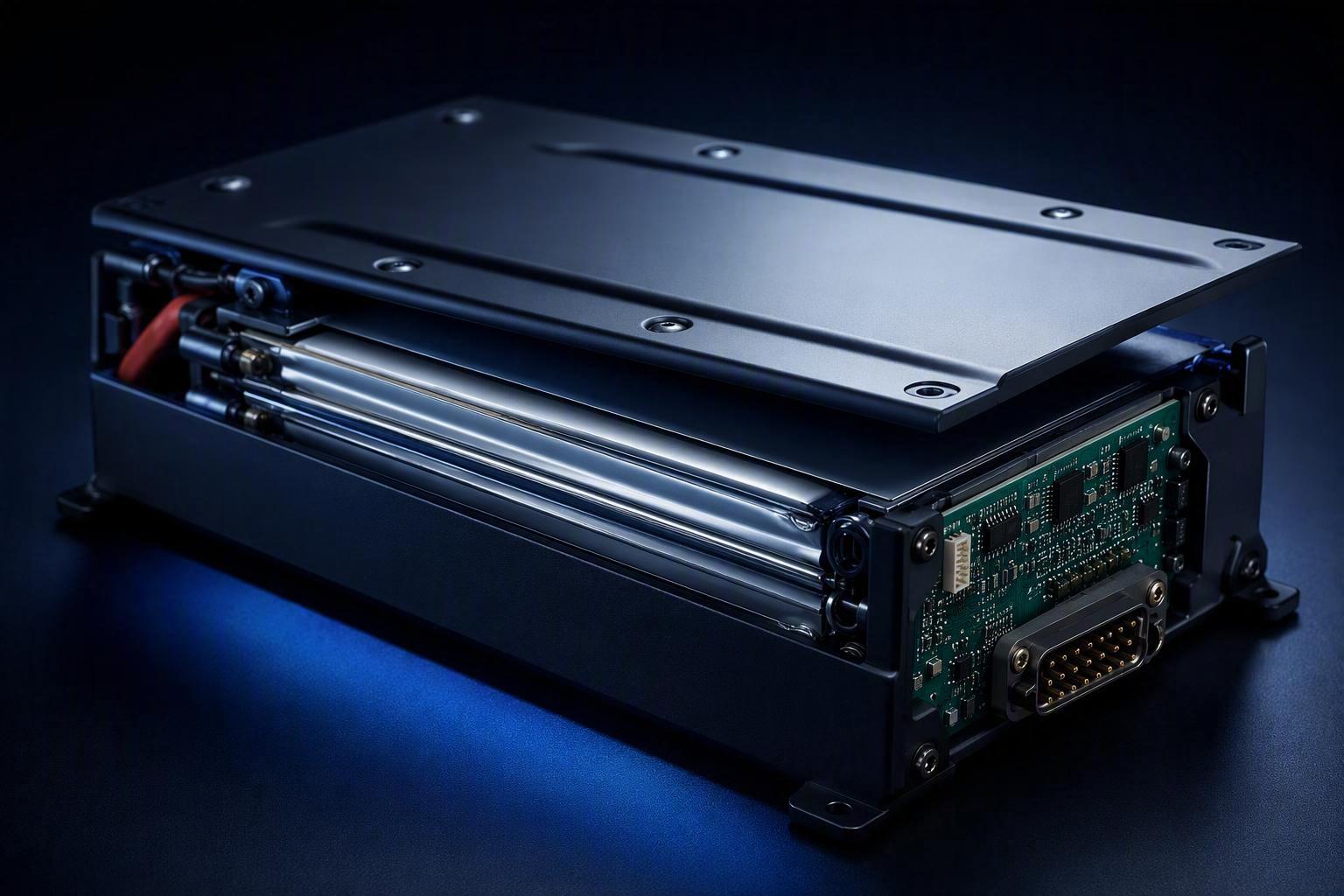
Regulatory change is only half the equation. Even with a clearer authorization path, heavy-lift operations still depend on what the aircraft can actually do once it flies farther and carries more — and that question increasingly comes down to the power system.
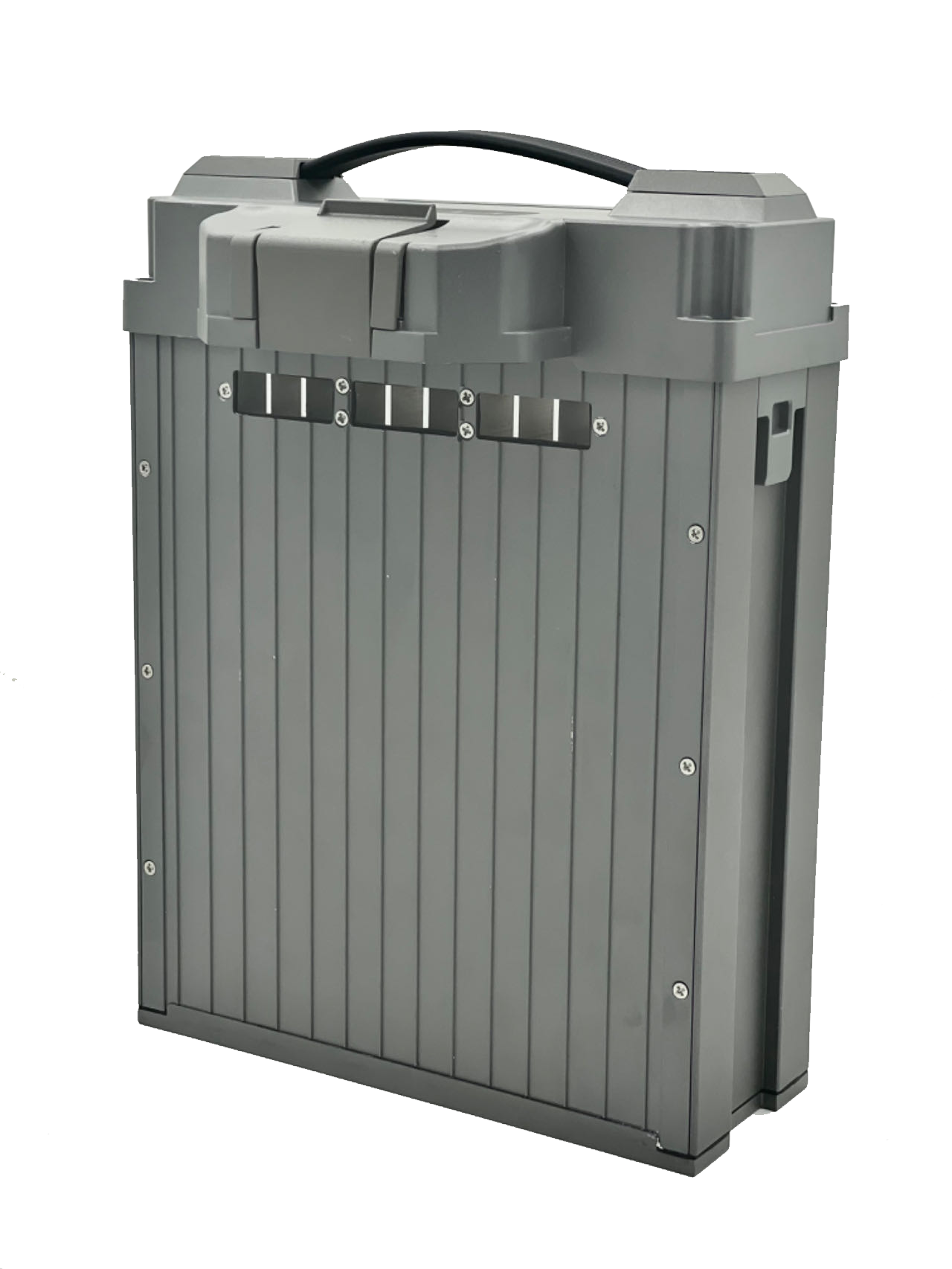
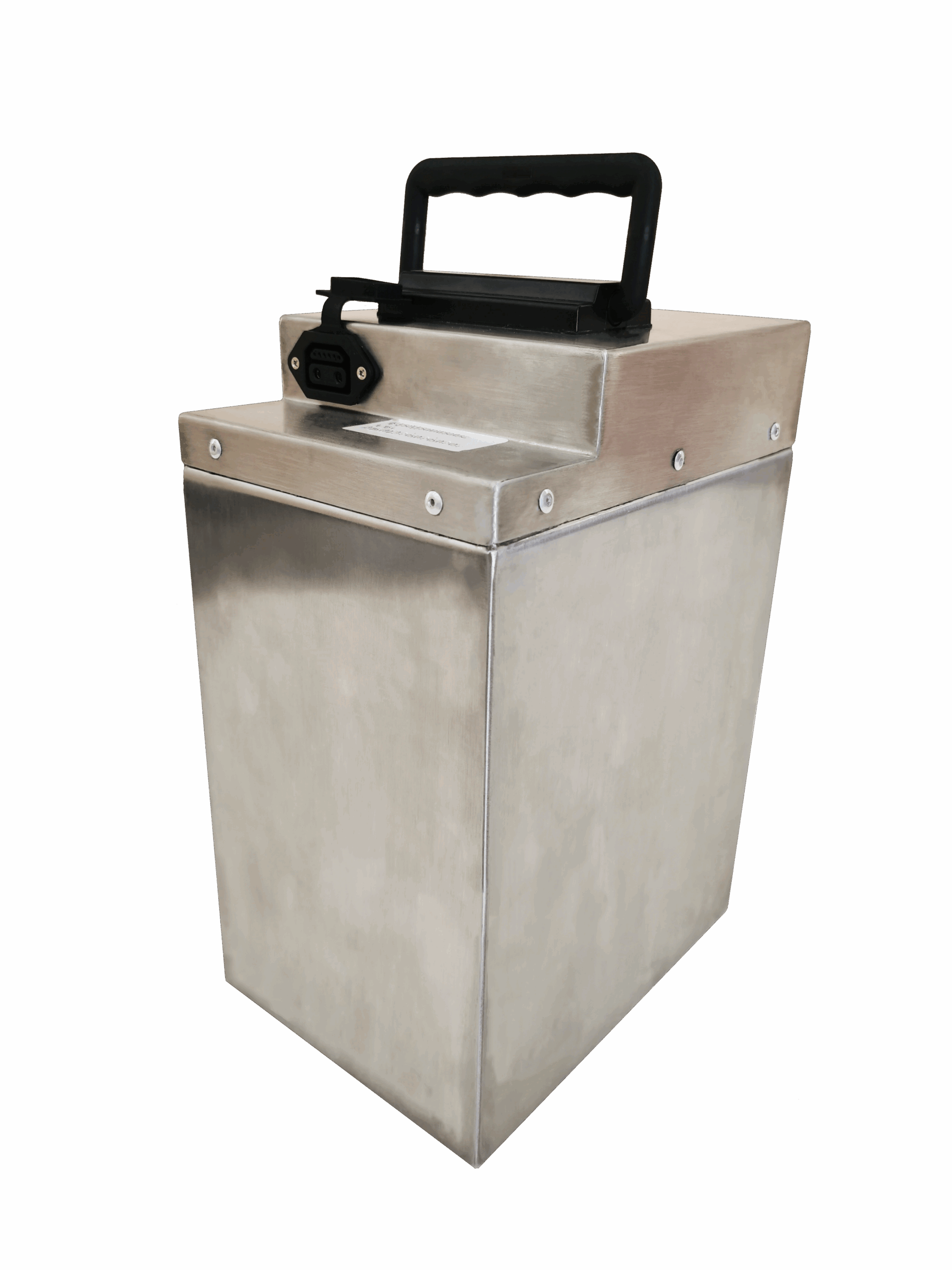
Range and payload are usually discussed as airframe problems. In practice, they are often limited by the battery. A BVLOS route that looks straightforward on a map can turn into a weight-and-endurance trade-off — how much cargo, how much reserve, how many cycles before the pack needs attention. When operators plan fixed routes instead of one-off flights, those numbers stop being theoretical. Duty cycles, fast-charge turnarounds, and pack lifespan begin to shape the operating cost per mission.
This is where the regulatory story and the engineering story meet. A more predictable authorization path doesn’t just unlock longer missions; it changes how the power system factors into planning, moving it from an afterthought toward a genuine design input. For any heavy-lift platform, that raises a concrete specification question: how the aircraft and its battery system are sized together, given how the platform is actually expected to operate.
The trade-off itself is fairly well characterized. A common first-order estimate treats flight time as roughly battery capacity divided by average current draw (flight time ≈ capacity in mAh ÷ average current in mA). The catch is that average current rises with payload: a platform drawing about 5,000 mA with a 5,000 mAh pack lands near one hour, but adding roughly 10 kg of payload can push the current to around 8,000 mA — so sustaining the same duration requires a pack of 8,000 mAh or more. Payload, range, and speed therefore have to be solved together, not sequentially.
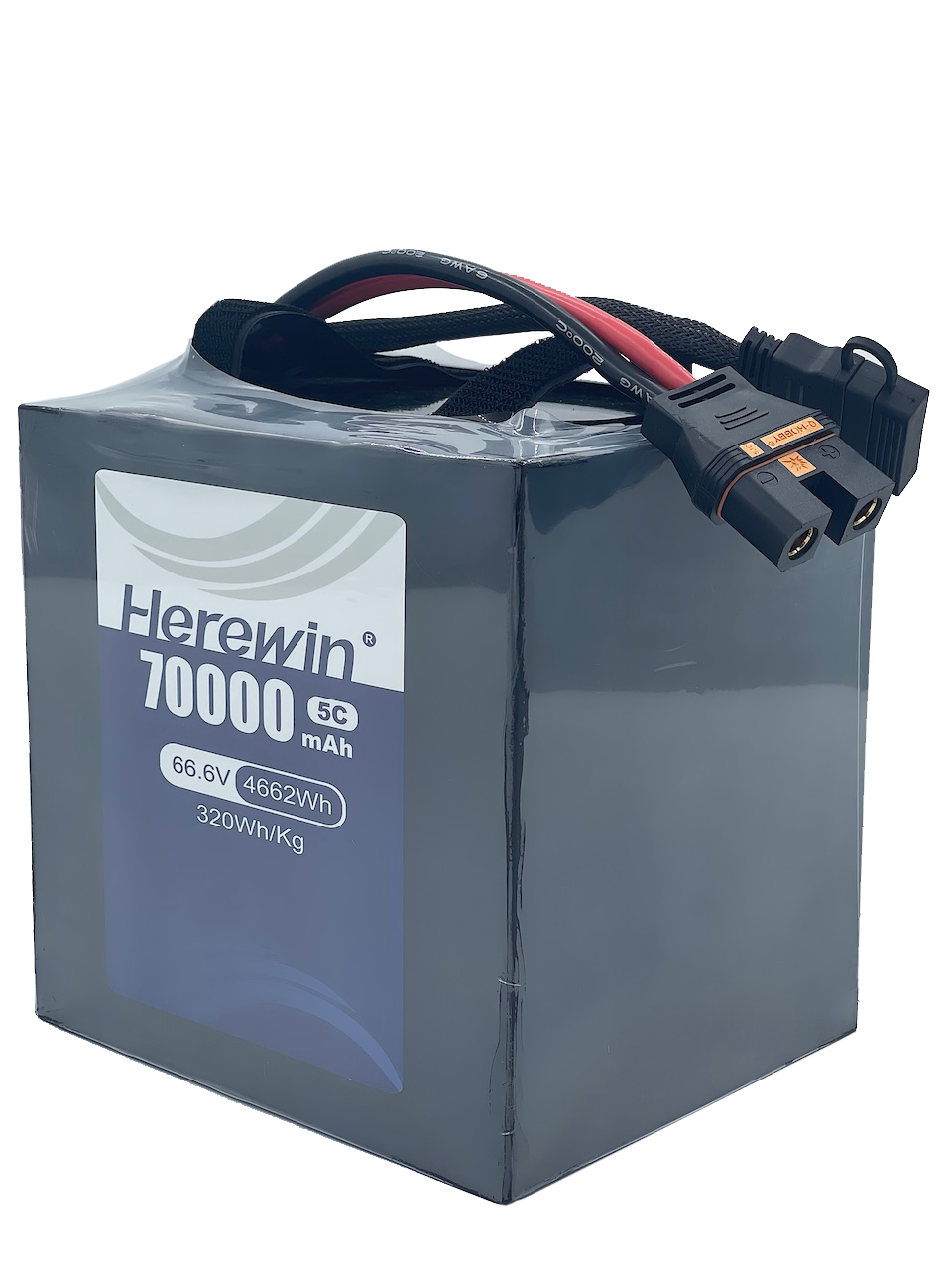
Energy density sets how much of that capacity can be carried. Conventional lithium-ion cells sit in the roughly 100–260 Wh/kg range, while semi-solid and solid-state chemistries can exceed 300 Wh/kg — which matters at the heavy end, where a heavier pack directly eats into usable payload. Discharge rate (the C value) is the other side of the same coin: higher payloads demand higher continuous current. Industrial platforms in the 10–50 kg class commonly run 20–30C packs, with the rating rising as payload increases; an undersized C value shows up as weak takeoff, altitude loss, or loss of control rather than as a simple range reduction.
In practice, operators end up working across weight bands with fairly different priorities:
Payload class | Typical battery approach | Primary constraint |
|---|---|---|
10–50 kg | Small high-density LiPo, ~6S, 10,000–15,000 mAh, 50–80C | Frequent, short sorties; portability and response |
50–100 kg | Higher-capacity Li-ion / optimized LiPo, 3S–6S, 15,000–25,000 mAh, 30–50C | Endurance and safety over long, remote missions |
100–200 kg | Custom high-spec or semi-solid/solid-state, 25,000 mAh+, 50C+ | Heavy payload and long-range stability |
One operational detail carries real weight: pack voltage (the S count) has to match the ESC and motor KV, and since recurring routes turn cycle life into a cost driver, how the pack is cycled — staying within about 1C on charge and avoiding over-discharge — feeds directly into the cost-per-mission numbers that fixed schedules make visible. That is the practical link between a regulatory framework and a power system: routes determine duty cycles, and duty cycles define what the battery has to deliver. It is also where the remaining obstacles begin — not in the aircraft alone, but in everything an operation needs to run reliably at scale.
What Still Has to Be Solved Before Heavy-Lift Drones Scale
A regulatory framework being proposed is different from a regulatory framework being finalized, and finalization is different from commercial deployment at scale. Several structural challenges remain regardless of how the regulatory environment evolves.
Approval is a pathway, not a green light
Part 108 is not yet final, and no operator holds Part 108 authority today. Even after finalization, the framework would open a path — it wouldn’t guarantee that any given operator could walk it without heavy investment in safety cases, operational infrastructure, and compliance paperwork.
For some commercial package-delivery models, Part 135 certification — the FAA’s framework for air carrier operations — remains a key consideration. It’s not the universal path for every heavy-lift industrial operation, though. What applies depends on the aircraft, the cargo, the operating model, and the authority in play. According to the FAA’s BVLOS fact sheet, certain small-package BVLOS operations flown for compensation or hire may need Part 135 certification plus associated exemptions or waivers.
Regulatory clarity cuts uncertainty. It doesn’t erase the work of running a compliant aviation business.
Airspace integration is still the hard part
Even with a friendlier BVLOS framework, fitting heavy-lift operations into existing airspace is about more than a piece of paper. It means real-time coordination with manned aviation, automated deconfliction with other UAS traffic, and communications infrastructure solid enough to support remote management.
Part 108 anticipates third-party UAS traffic management services for exactly this. That infrastructure is developing alongside the rule, but it isn’t mature enough yet to handle complex multi-aircraft operations in busy airspace without a lot of coordination overhead.
And size invites scrutiny. Large unmanned aircraft flying near infrastructure, over populated areas, or close to manned operations will draw more institutional attention than a small recreational drone. The proposed framework sets requirements around aircraft standards, safety management, maintenance, and operational authorization — and satisfying them for higher weight classes with longer range and more complex missions takes serious engineering evidence and oversight. Regulation can grant permission without granting readiness, and that gap is where most early heavy-lift programs will spend their time.
A regulatory boost for heavy-lift drone operations is not the same as a regulatory free-for-all. The framework under development establishes more structured pathways—it also establishes more demanding requirements. Operators who treat regulatory progress as permission to bypass serious safety and compliance work are misreading the direction of travel.
For many industrial UAV developers, the constraint is not only the aircraft itself. It is the operating envelope—the defined routes, altitudes, and site conditions under which an operator can reliably fly the same mission. A regulatory framework matters most when it makes that envelope predictable enough to design a service around.
What This Means for the U.S. Heavy-Lift Drone Market
The regulatory shift underway in the U.S. does not produce an immediate change in commercial heavy-lift drone operations. It changes the planning horizon and the investment logic for operators and platform developers. Understanding what that means requires separating near-term, medium-term, and longer-term implications.
Near term: The clearest opportunities sit in specialized operations that already have a strong case for authorization — industrial sites, emergency response, government and public safety work, and remote locations where the ground alternative is expensive. None of these need a finished Part 108 to move forward; existing mechanisms can carry them.
Next stage: If Part 108 or an equivalent framework moves into effect, repeatable regional routes and recurring industrial transport may become more practical to plan and authorize. Fixed corridors, scheduled logistics to defined destinations, and recurring maintenance supply chains could become more practical operating models rather than remaining primarily one-off demonstrations. This is the stage where fleet operations may become easier to evaluate on a commercial basis.
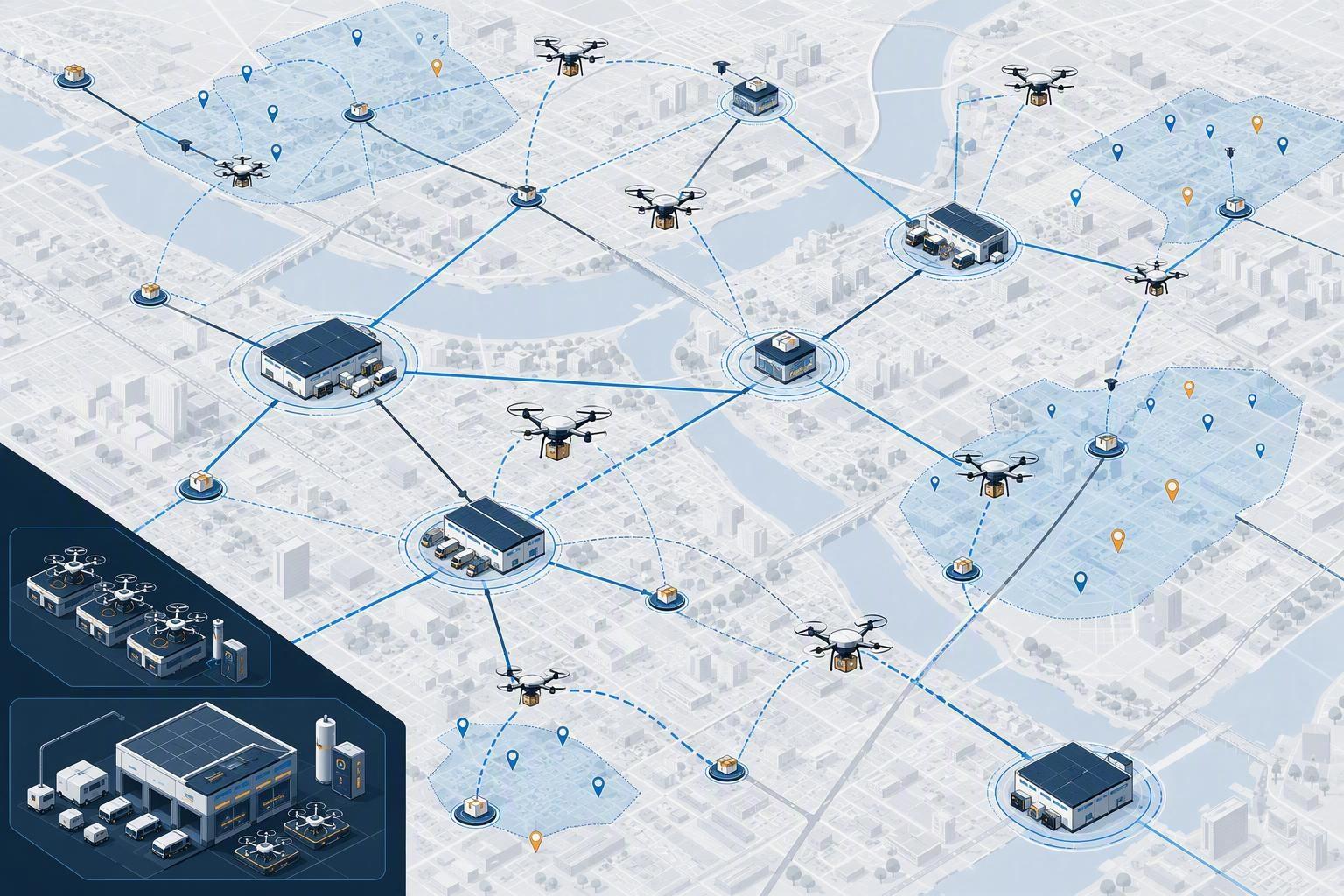
Longer term: Drone logistics networks—integrated systems involving multiple aircraft, defined operating areas, remote supervision infrastructure, and coordinated airspace management—become more realistic as a longer-term operating model. This is the stage where heavy-lift platforms designed for industrial BVLOS operations become components in a logistics infrastructure rather than standalone capabilities.
The regulatory opportunity for heavy-lift drones isn’t really about making heavier aircraft legal to fly. It’s about whether larger drone operations can become routine enough to support dependable transport and industrial services in the U.S. That’s what platform developers, logistics operators, and industrial buyers weighing aerial transport as a real alternative are watching.
The technology stopped being the only question a while ago. As the U.S. framework evolves, the harder question is whether heavy-lift operations can become repeatable, authorized, and commercially viable.
Written by the Herewin engineering team. This piece reflects our reading of the U.S. regulatory landscape at the time of writing; Part 108 is still moving through the rulemaking process, so check current status and any Part 135 requirements with the FAA, OIRA, and the Federal Register before relying on it. It is not legal or regulatory advice.



 Français
  English
  Español
  한국어
한국어  Deutsch
  日本語
日本語  Русский
  Bahasa Indonesia
  ไทย
ไทย  العربية
  Português do Brasil
  Italiano
  Nederlands