




As we approach 2026, the pressure of Zero-Emission Zones (ZEZ) on last-mile logistics in Germany has reached a tipping point. As major hubs like Berlin, Munich, and Hamburg tighten urban access, 2026 stands as the definitive compliance deadline. For fleet managers, the challenge is twofold: avoiding prohibitive non-compliance penalties and navigating the skyrocketing CO2-based tolls (LKW-Maut) that now affect commercial vehicles over 3.5t.
Upgrading your delivery vans and Light Commercial Vehicles (LCVs) through Advanced Lead-to-Lithium conversion is no longer just a sustainability goal—it is a strategic financial imperative. By integrating industrial-grade LiFePO4 technology, you secure unrestricted access to urban markets while drastically lowering your Total Cost of Ownership (TCO). This transition not only ensures compliance but also maximizes payload capacity and operational uptime, keeping your urban delivery network agile and future-proof.
Key Takeaways
Ensure 100% compliance with 2026 ZEZ mandates to avoid service disruptions and heavy fines in Germany’s Tier-1 cities.
Leverage the KsNI funding program and extended CO2-based Maut (toll) exemptions for zero-emission vehicles to offset significant conversion costs.
Transition to advanced LiFePO4 technology to achieve 3,000 – 5,000 charge cycles and over 20% reduction in energy consumption compared to traditional lead-acid systems.
Deploy high-performance lithium solutions with integrated thermal management to ensure consistent logistics performance, even in Germany’s sub-zero winters.
Proactive alignment with the 2026 subsidy cycle maximizes asset longevity and operational efficiency.
Decoding ZEZ: The Survival Standard for German Fleets
The Cost of Non-Compliance
For German fleet managers, Zero-Emission Zones (ZEZ) are no longer a distant environmental goal—they are an operational boundary. Non-compliance by the 2026 deadline triggers a cascade of financial and logistical risks:
Skyrocketing Tolls (LKW-Maut): With German tolls now extended to vehicles over 3.5t, diesel fleets face heavy CO2-based surcharges. Transitioning to lithium enables graduated Maut exemptions until 2031. For lighter LCVs, this move secures a long-term low-cost advantage as urban emissions regulations tighten.
Urban Lockdown:As major hubs like Munich and Stuttgart progressively ban Euro 5/VI diesel engines, unrestricted 24/7 urban access is reserved exclusively for verified zero-emission vehicles. For existing electric fleets, transitioning to lithium is the definitive path to meeting the 2026 ZEZ compliance standards while ensuring the operational reliability required for dense delivery schedules.
Supply Chain Exclusion: Major German logistics hubs and “Green Logistics” partners now mandate emissions reporting (CSRD). Older fleets risk losing Tier-1 contracts to electrified competitors.
2026 Regulatory Landscape for German Fleets:
Regulatory Factor | 2026 Compliance Standard | Fleet Impact |
Urban Access (ZEZ) | Zero local emissions required in Tier-1 city centers. | Non-compliant fleets face fines up to €2,500/entry. |
LKW-Maut (Tolls) | Graduated relief for ZEVs >3.5t; currently exempt for <3.5t. | Diesel fleets pay €0.15–0.35/km in CO2 surcharges; Lithium LCVs maintain a low-cost advantage. |
Asset Depreciation | Accelerated 40% tax write-off in Year 1 for ZEV upgrades. | Massive balance sheet advantage for lithium-converted fleets. |
Euro VII Transition | Stricter NOx and particulate limits for all ICE vehicles. | Retrofitting with Lithium avoids the high cost of Euro VII engines. |
Unlocking Federal Subsidies and Tax Benefits
Transitioning to zero-emission operations is supported by a renewed 2026 fiscal framework. By timing your Lead-to-Lithium conversion correctly, you can capitalize on:
KsNI Funding Program: Federal grants covering up to 80% of the additional investment costs for climate-friendly commercial vehicles and related infrastructure.
Renewed 2026 Purchase Incentives: A multi-billion Euro fund (KTF) reintroducing grants of up to €5,000 per vehicle for corporate electric transitions.
10-Year Motor Vehicle Tax Exemption: All battery-electric conversions registered by the end of 2025/early 2026 remain tax-exempt until December 31, 2035.
Special Depreciation (AfA): For vehicles purchased or converted between 2024 and 2028, companies can deduct 40% of the value in the first year, significantly boosting short-term cash flow.
Lead-to-Lithium: Maximizing Asset Resilience
Beyond Simple Conversion
Transitioning from lead-acid to lithium is a strategic upgrade that redefines fleet uptime. By integrating high-performance LiFePO4 modules, fleet managers move beyond simple compliance to achieve a superior operational standard:
Extreme Longevity: While traditional lead-acid batteries typically fail after 500–800 cycles, advanced lithium-ion systems deliver between 3,000–5,000 cycles. This extended lifespan ensures that Herewin’s industrial-grade cells effectively outlast the vehicle’s service life, drastically reducing long-term CAPEX by eliminating frequent battery replacements.
Dramatic Operational Efficiency: Achieve over 20% savings in energy costs due to lithium’s high charge-discharge efficiency compared to lead-acid’s inherent energy loss.
Significant CO2 Emissions Reduction: Transitioning to lithium technology delivers a 21% reduction in CO2 emissions compared to traditional lead-acid systems. This performance-driven sustainability not only ensures 100% compliance with ZEZ mandates but also enhances your brand’s reputation as an environmentally responsible operator in the German market.
All-Weather Operational Resilience: Well-adapted to Germany’s demanding climate, Herewin’s systems feature integrated thermal pre-heating. This ensures full performance and rapid charging even in sub-zero winter conditions, maintaining fleet agility year-round.
Optimizing Payload and Agility
In urban logistics, every kilogram of payload translates to profit. High-energy-density lithium technology transforms vehicle dynamics by balancing weight and performance:
Significant Weight Reduction: Lithium packs are typically 60% lighter than lead-acid counterparts of the same capacity. This weight saving allows for increased cargo payload and reduces wear on tires and braking systems.
Tailored Battery Sizing: Unlike bulky lead-acid systems, lithium’s compact footprint allows you to choose battery sizes based on specific route demands. This flexibility ensures you don’t carry unnecessary battery weight, optimizing both energy cost and vehicle agility.
Fast Opportunity Charging: Advanced lithium-ion technology supports rapid opportunity charging during short driver breaks. Unlike lead-acid batteries that require 8+ hours of uninterrupted charging and cooling, this system eliminates the need for time-consuming battery swaps and maximizes daily vehicle availability for demanding delivery schedules.
Enhanced Energy Recovery: Advanced systems integrate seamlessly with regenerative braking, capturing energy during frequent stop-start urban cycles to further extend daily operating range.
BMS-Driven Digital Compliance
A robust Battery Management System (BMS) serves as the critical bridge between vehicle hardware and regulatory auditing. For the 2026 ZEZ landscape, a sophisticated BMS provides the essential data infrastructure for transparent operations:
State-of-Health (SoH) Diagnostics: Real-time tracking of battery health and energy throughput ensures fleet reliability and supports predictive maintenance schedules.
CSRD-Ready Data Infrastructure: Integrated telematics allow for the automated collection of energy usage and efficiency data, significantly simplifying compliance with the EU Sustainability Reporting Directive (CSRD).
Automated Emissions Reporting: Digital tools integrated with the BMS enable managers to analyze and report fleet-wide energy performance, providing the verified data required for ZEZ access permissions and green logistics audits.
Predictive Thermal Safety: Advanced monitoring algorithms prevent thermal runaway by tracking cell-level temperature fluctuations, ensuring maximum safety in high-density urban environments.
Bridging the Gap: Industrial Standards for ZEZ Operations
To meet the stringent 2026 ZEZ requirements, fleet upgrades must go beyond simple battery swaps. The transition requires a system-level approach that addresses the unique challenges of the German logistics environment.
Automated Thermal Management for German Winters
A primary hurdle for lithium adoption in Germany is the performance drop in sub-zero temperatures. Herewin’s LiFePO4 (Lithium Iron Phosphate) systems address this through an integrated thermal management architecture. By utilizing an internal pre-heating cycle, the cells are maintained at an optimal operating temperature (10℃ to 25℃) before charging. This ensures that Light Commercial Vehicles (LCVs) maintain full operational range and efficient charging performance even in the depths of winter.
Data Transparency and Digital Compliance
As ZEZ mandates evolve toward digital auditing, battery data becomes a critical asset. Herewin module is equipped with a high-precision Automated BMS that provides millisecond-level monitoring of cell-level health at the hardware layer. This data integrates seamlessly with fleet telematics via standard CAN-bus protocols, supporting second-level data uploads and real-time diagnostics. This ensures fleet managers have the verified energy-usage data required for CSRD reporting and municipal emissions audits.
Modular Engineering for Reduced Conversion Costs
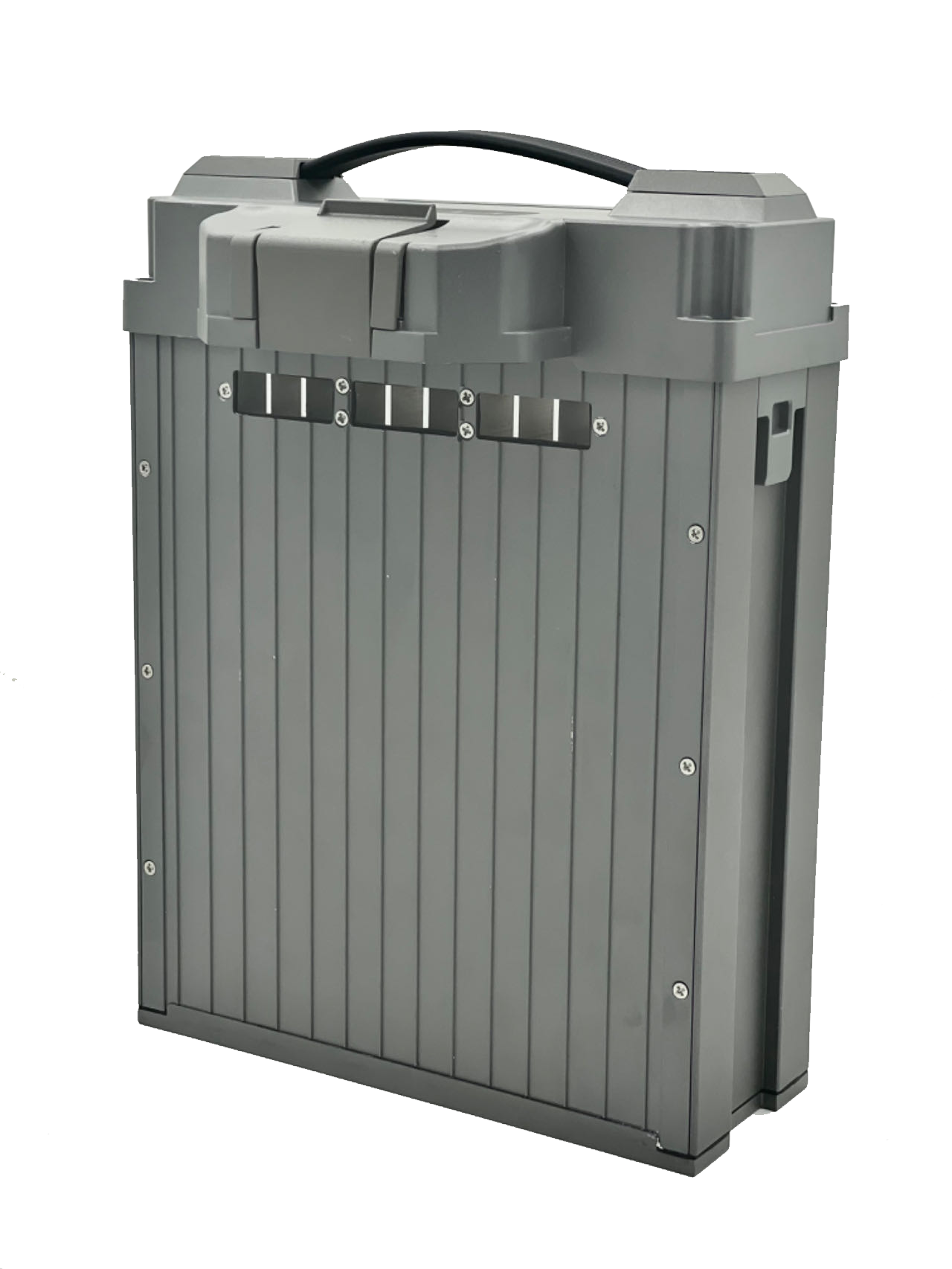
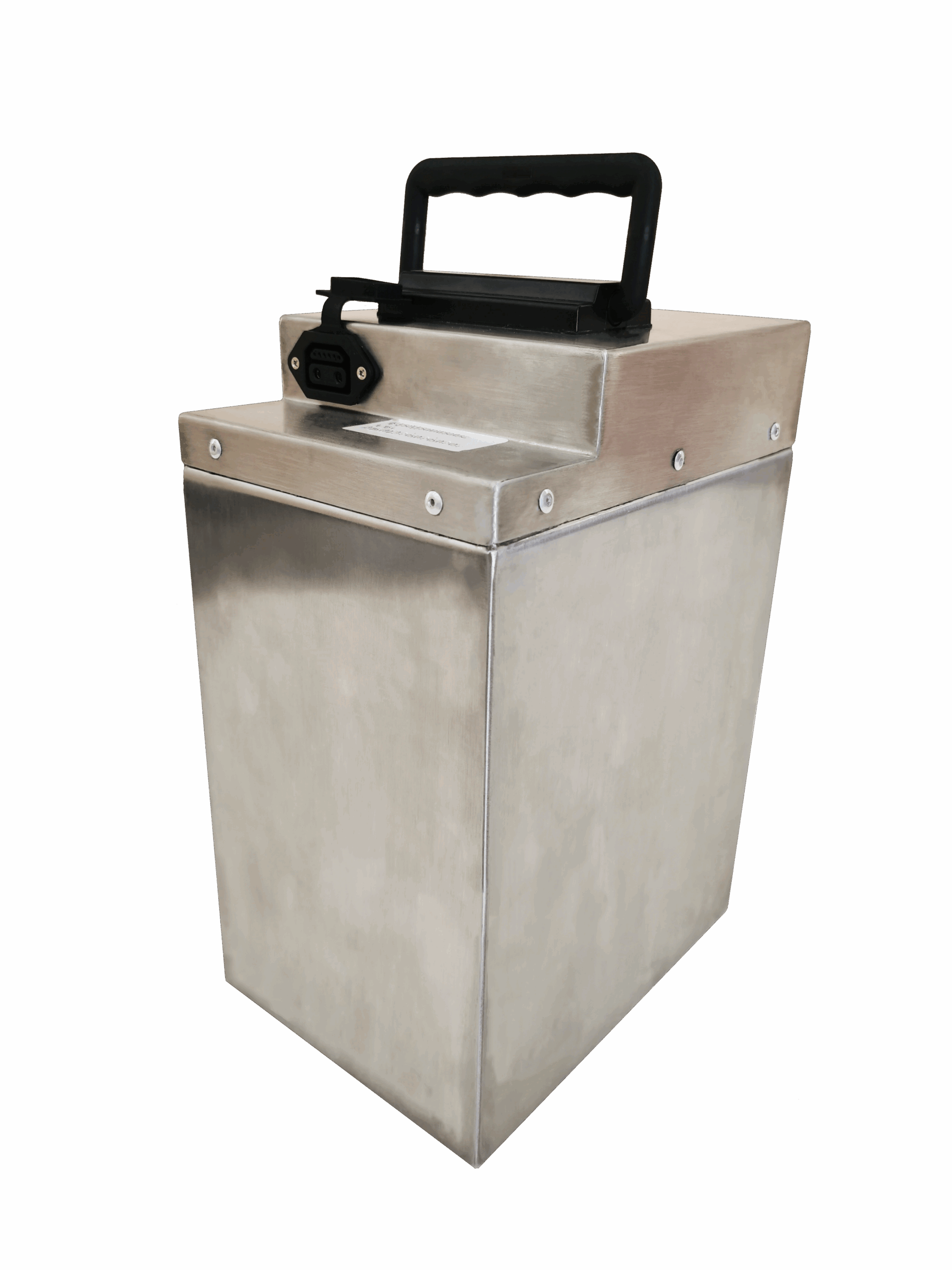
The economic viability of a Lead-to-Lithium conversion depends on deployment efficiency. Herewin utilizes a modular form factor designed to fit the standard battery compartments of common logistics vehicles. This engineering philosophy enables minimal structural modification, significantly reducing the complexity of electrical distribution and mounting. By shortening workshop downtime and optimizing labor costs, this approach allows your logistics assets to return to the market in record time.
Feature | Standard Market Solutions | Herewin Industrial LFP System |
Operational Lifecycle | ~2,000 Cycles | 3,000 – 5,000 Cycles |
Environmental Adaptation | Passive cooling only | Active Thermal Pre-heating |
Monitoring Precision | Standard sampling rates | Millisecond-level Cell Monitoring |
Installation Complexity | Significant structural changes | Minimal Structural Modification |
Financial ROI: Future-Proofing Your Fleet
Calculating the TCO Advantage
Transitioning from lead-acid to lithium is not merely a technical upgrade; it is a strategic financial decision. When analyzed over a five-year operational horizon, the Total Cost of Ownership (TCO) for light commercial vehicles (LCVs) and industrial equipment reveals a decisive advantage:
Up to 50% TCO Reduction: By eliminating the frequent replacement cycles of lead-acid batteries (which typically fail after 500–800 cycles) and replacing them with 3,000–5,000 cycle systems, fleet operators can cut long-term capital and maintenance expenditure by half.
Operational Efficiency: The 95% charge-discharge efficiency of lithium systems, compared to approximately 75% for lead-acid, directly lowers electricity overhead.
Elimination of Spare Assets: Because lithium supports fast opportunity charging, the need for “spare” batteries and the dedicated labor for battery swapping is removed, significantly reducing operational complexity and cost.
Capitalizing on the 2026 Subsidy Window
The 2026 ZEZ compliance deadline serves as a critical fiscal window. The German government has structured incentives to offset the initial CAPEX of Lead-to-Lithium conversions and new electric vehicle procurement:
Incentive Type | Description & Strategic Value |
Expanded Subsidy Limits | Increased gross price limit for state subsidies for e-vehicles to €100,000. |
Long-term Tax Exemption | Complete vehicle tax exemption for electric vehicles valid until 2035. |
Infrastructure Support | Funding for commercial depot charging, reducing the cost of onsite power integration. |
LCV Toll Incentives | Exempt for <4.25t ZEVs; secures €0 toll cost versus rising CO2-based surcharges for diesel vans. |
Strategic Alignment for 2026 Compliance with ZEZ mandates serves as a strategic benchmark for modernizing fleet resilience. By aligning transition timelines with the 2026 regulatory framework, operators can effectively integrate available fiscal incentives while ensuring a seamless, risk-managed deployment. Strategic planning today ensures that fleet assets remain both compliant and competitive as European logistics standards evolve.
Every logistics network has unique operational demands. Contact our engineering team for a technical consultation to determine the most stable and cost-effective transition path for your fleet.
FAQ
Is Lead-to-Lithium a simple battery swap?
It’s a system upgrade. Beyond cells, it involves integrating an intelligent BMS and CAN-bus communication to ensure the battery talks to your vehicle telematics and charging infrastructure.
What is the most immediate financial benefit of the 2026 subsidy?
The increased €100,000 subsidy limit and vehicle tax exemptions until 2035 drastically lower your initial CAPEX, speeding up your ROI break-even point.
Will lithium batteries fail in German winters?
Not with the right specs. Industrial-grade LFP systems with integrated pre-heating maintain optimal performance and charging speeds even in sub-zero temperatures.
How does the BMS assist with ZEZ/CSRD compliance?
It acts as a data hub, providing the verified energy-usage and CO2 emissions reports required for mandatory CSRD audits and ZEZ access permissions.
How long will my vehicles be out of service during conversion?
Using a modular, minimal-modification design, most light commercial vehicles (LCVs) can be upgraded and returned to operation within just a few days.
See Also
Optimizing Senior Mobility Vehicles With Lead-to-Lithium Approaches
Boosting AGV Fleet Manager Returns Through Lithium Performance
Effective RV Lithium Capacity Planning: Strategies From 200Ah to 600Ah
The Essential Benefits of Transitioning Forklifts to Lithium Batteries
Empowering Vietnam’s Eco-Friendly Transportation With Lithium Battery Solutions



 English
  Español
  한국어
한국어  Deutsch
  Français
  日本語
日本語  Русский
  Bahasa Indonesia
  ไทย
ไทย  العربية
  Português do Brasil
  Italiano
  Nederlands