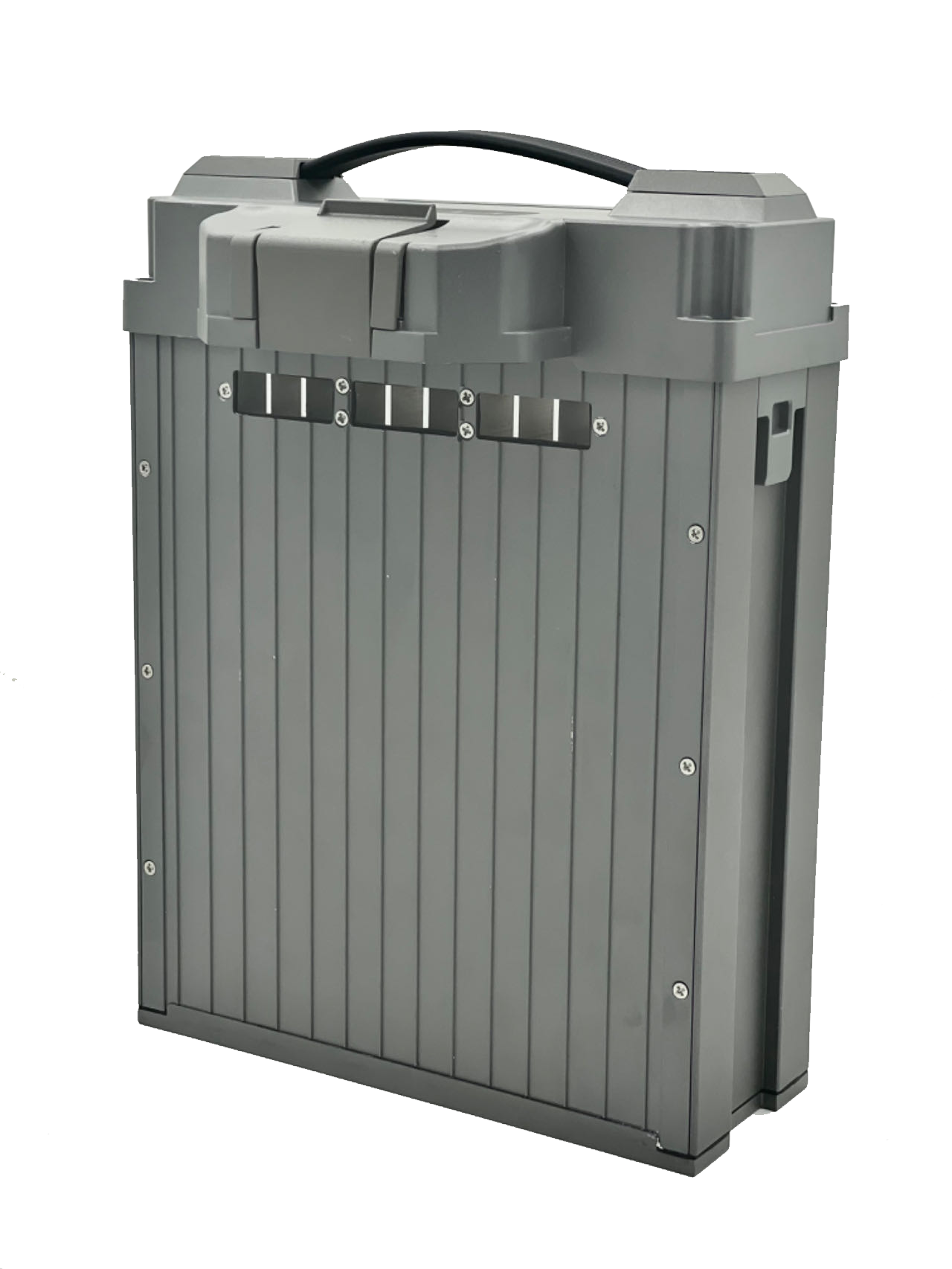
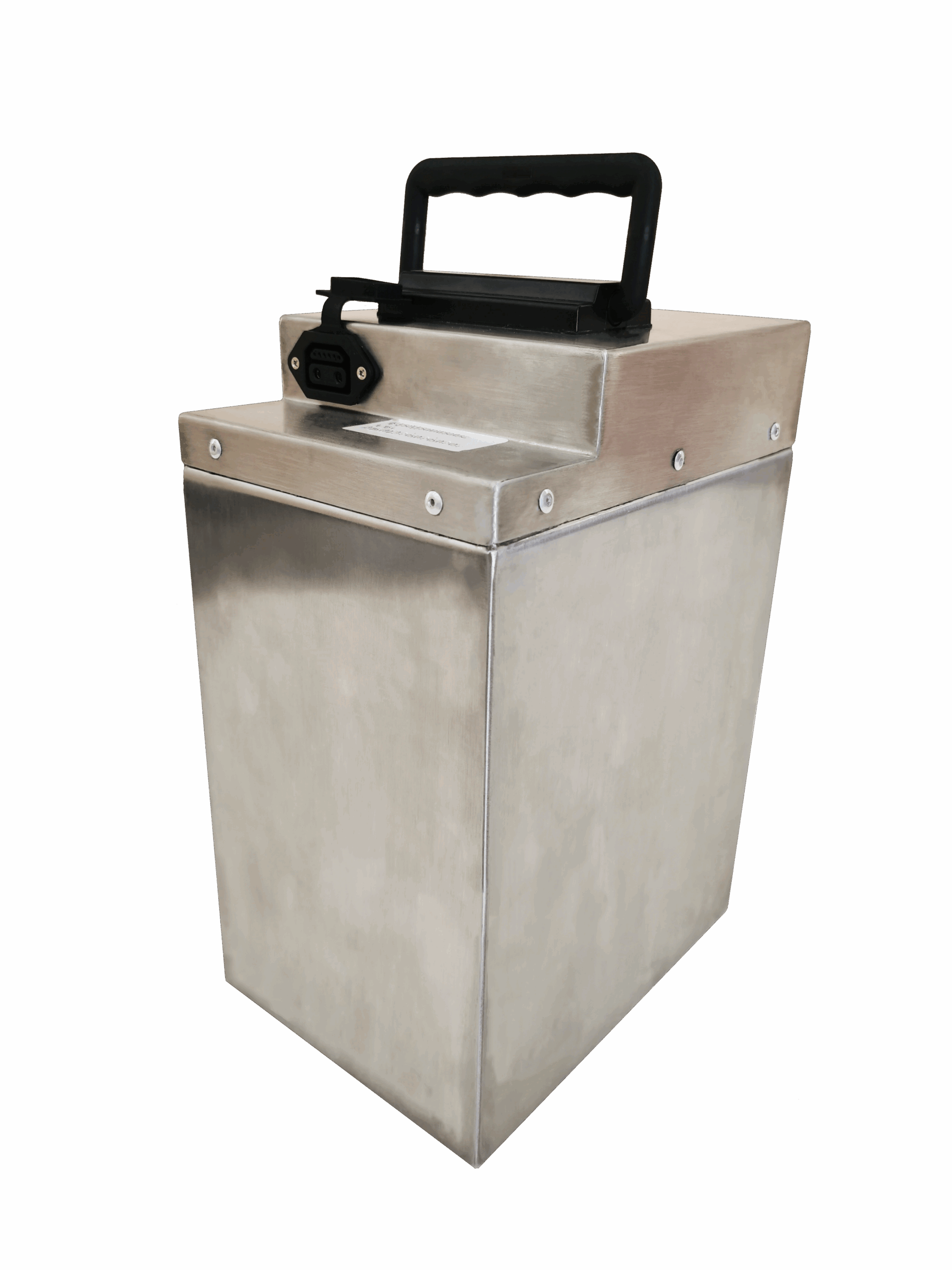






In space-constrained Western European healthcare facilities, traditional lead-acid UPS systems impose a heavy TCO burden. Their high operational expenses and large footprints limit your ability to optimize space. You must prioritize power reliability, as it is non-negotiable in healthcare. A high-density, maintenance-free lithium battery UPS emerges as a strategic solution for Healthcare Lithium UPS TCO Reduction. This technology not only addresses TCO challenges but also enhances energy efficiency, making it an ideal choice for modern healthcare environments.
Key Takeaways
Switching to lithium UPS systems can save healthcare facilities significant money. Over ten years, maintenance costs for lithium systems are dramatically lower, typically saving three-quarters of the expense compared to lead-acid.
Lithium UPS systems last longer than lead-acid systems. Expect a lifespan of over 10 years for lithium, compared to only 3 to 5 years for lead-acid.
The compact design of lithium UPS systems saves valuable space in healthcare facilities. They require only 4 square feet compared to 10 square feet for lead-acid systems.
Lithium UPS systems enhance safety with features like thermal stability and non-toxic materials. These systems meet strict healthcare safety standards.
Investing in lithium technology leads to a quick return on investment. Hospitals can expect payback within about 4 to 5 years due to lower operational costs.
The Financial Case for Lithium in Healthcare UPS
Maintenance Cost Analysis
When you consider the maintenance costs of uninterruptible power supply (UPS) systems, lithium battery UPS systems offer significant advantages over traditional lead-acid systems. The operational cost advantages of Lithium Iron Phosphate (LFP) batteries stem from their lower annual maintenance requirements.
Annual Maintenance Costs:
Lead-Acid UPS: Approximately four times higher than LFP.
Lithium UPS: Significantly lower, often saving 75% annually.
This difference translates to substantial long-term savings. Over a decade, you could save a considerable sum just on maintenance alone.
Regular maintenance for lead-acid systems often includes battery checks, electrolyte level monitoring, and cooling system maintenance. In contrast, lithium systems require minimal upkeep, allowing your staff to focus on more critical tasks.
Replacement and Disposal Costs
Replacement costs further highlight the financial benefits of lithium UPS systems. Traditional lead-acid batteries typically need replacement every 3 to 5 years, leading to additional expenses. In contrast, LFP batteries can last at least 10 years, with some models exceeding 6,000 cycles.
Battery Type | Service Life | Cycle Stability |
|---|---|---|
Lithium (LiFePO4) | At least 10 years | More than 6000 cycles |
Lead-Acid | 15-20x shorter | Significantly lower |
The initial purchase price of lithium UPS systems may be higher, averaging around 2 to 3 times the cost of lead-acid systems. However, when you factor in the total cost of ownership over ten years, lithium systems prove to be more economical.
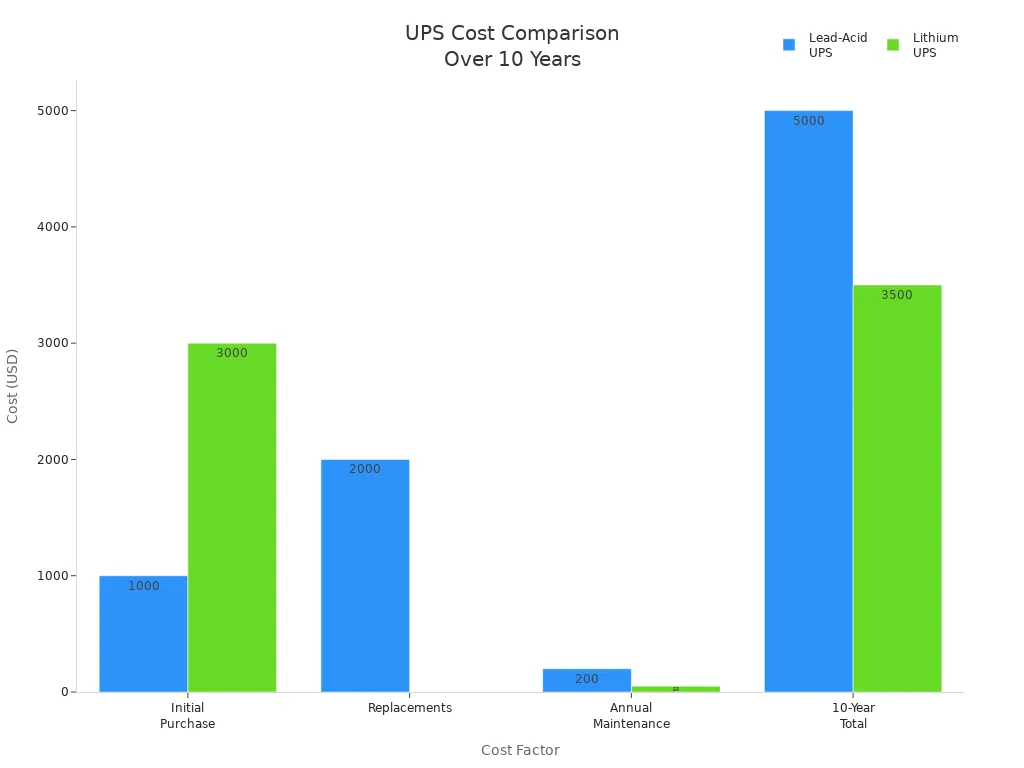
Note: The visual comparison confirms that while the initial investment (shown in this industry model in USD) for lithium is higher, this cost is quickly offset by the elimination of replacements and dramatically lower maintenance, resulting in 30% lower TCO over 10 years.
Financial Conclusion and ROI:
Data from the Stationary Energy Storage Analysis confirms that lithium UPS systems deliver 30% lower total cost of ownership over a decade.
When factoring in additional operational savings, you can typically achieve a return on investment (ROI) within 4.7 years (Uptime Institute 2024).
This rapid payback is achieved through:
Elimination of frequent battery replacement costs.
Dramatically reduced annual maintenance expenses.
Savings from reduced cooling demands and minimized downtime.
The 4.7-year payback period is calculated by dividing the differential initial investment (approximately 2 to 3 times the cost of a lead-acid system) by the total annual operational savings.
Note on Disposal Costs: While lithium disposal involves specialized processes, the fact that this cost is incurred only once per decade provides a significant TCO advantage over the repeated disposal costs associated with frequently replaced lead-acid units.
Optimizing Space for Critical Medical Facilities

Density vs. Footprint: The Technical Advantage
Lithium battery UPS systems provide a significant advantage in terms of density and footprint. These systems are compact and lightweight compared to traditional lead-acid UPS systems. You can install them in smaller spaces without sacrificing performance. This compact design allows you to maximize your available area, which is crucial in healthcare settings where every square foot counts.
Key Benefits of Lithium UPS Systems:
Smaller size reduces the overall footprint.
Higher energy density means more power in less space.
Lightweight design simplifies installation and relocation.
Quantifying Saved Space
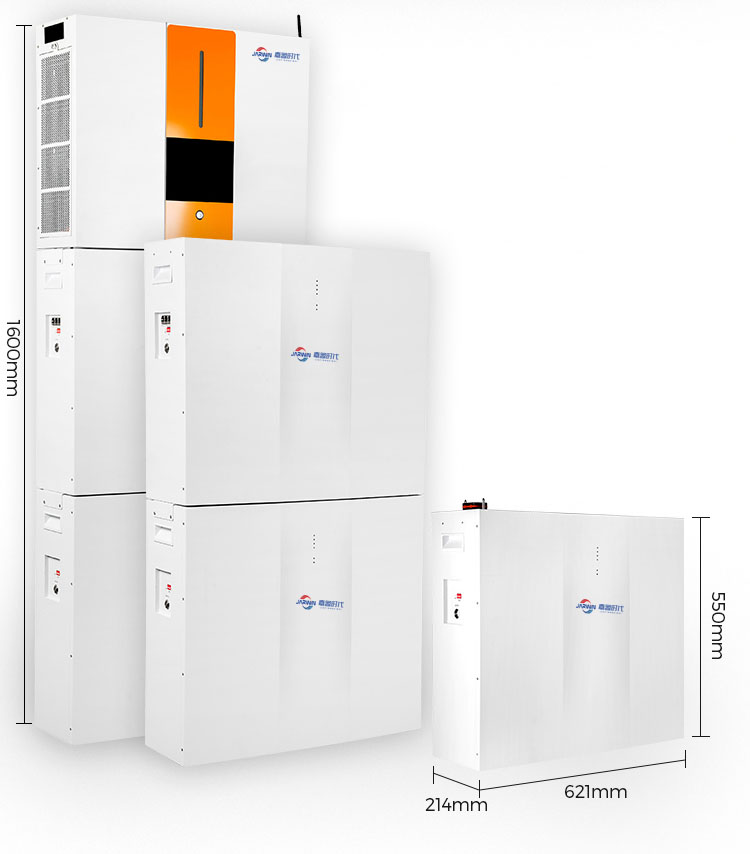
When you switch to lithium batteries, you can save considerable space in your facility. For example, a typical lead-acid UPS might occupy 10 square feet, while a lithium battery UPS can fit into just 4 square feet. This difference allows you to reclaim valuable space for other essential equipment or patient care areas.
In addition to saving physical space, lithium UPS systems also enhance energy efficiency. They require less cooling and ventilation, further reducing the space needed for installation. This efficiency translates into lower operational costs, allowing you to allocate resources to other critical areas of your healthcare facility.
By optimizing your layout with lithium UPS systems, you can enhance workflow efficiency and improve patient outcomes.
Safety and Seamless Integration for Clinical Environments
LFP: The Foundation for Medical-Grade Safety
When it comes to healthcare, safety is paramount. Lithium iron phosphate (LFP) batteries stand out as a reliable choice for uninterruptible power supply (UPS) systems in clinical environments. These batteries offer several safety features that align with the stringent requirements of healthcare facilities.
Key Safety Features of LFP Batteries:
Thermal Stability: LFP batteries have a high thermal stability, reducing the risk of overheating and thermal runaway.
Non-Toxic Materials: They use non-toxic materials, making them safer for both patients and staff.
Robust Battery Management System (BMS): This system monitors battery health, ensuring safe operation by preventing overcharging and deep discharging.
These features help you meet the safety standards required in medical settings.
Modular Design and High-Reliability Deployment
The modular design of lithium battery UPS systems allows for easy integration into existing healthcare infrastructure. You can deploy these systems without major renovations, ensuring minimal disruption to your operations.
Benefits of Modular Design:
Scalability: You can easily expand your energy capacity as your needs grow.
Flexibility: Modular systems fit into various spaces, accommodating the unique layouts of healthcare facilities.
High Reliability: These systems are designed for continuous operation, ensuring that critical medical equipment remains powered during outages.
To illustrate how lithium UPS systems prioritize safety, consider the adherence to these stringent requirements:
Electrical Safety Requirements: Addresses stringent requirements for electrical installations in sensitive medical locations.
Power Supply System Reliability: Focuses on safety requirements for ensuring continuous and reliable power supply systems in healthcare settings.
Central System Compliance: Ensures that the central power supply system design adheres to general requirements for independent energy supply.
By focusing on these safety requirements, lithium battery UPS systems enhance your facility’s safety profile. You can trust that these systems not only provide reliable energy but also prioritize patient and staff safety.
Herewinpower Solutions for Healthcare
Herewinpower offers innovative solutions and specialized services that significantly reduce total cost of ownership (TCO) in healthcare settings. By partnering with us, you enhance your facility’s energy efficiency and long-term reliability.
Commercial-Industrial Energy Storage Solutions
Herewinpower’s commercial-industrial energy storage solutions are engineered for the robust and continuous support required by healthcare facilities. These systems feature high energy storage capacity and rapid response times.
Customized Design: We provide tailored systems to meet the specific power load and runtime requirements of your critical medical equipment.
Expert Remote Support: Benefit from our dedicated expert team, providing comprehensive remote guidance to ensure seamless integration and long-term operational efficiency.
Scalability: Our modular solutions are designed for easy expansion, ensuring your power capacity can grow as your facility needs evolve.
Lead-to-Lithium Battery Conversion
The lead-to-lithium battery conversion solution allows you to upgrade existing lead-acid UPS infrastructure with our high-density lithium technology, maximizing the life of your current assets.
Expert Integration: We provide specialized assessment and implementation to ensure the conversion process causes minimal disruption to critical operations.
Certified Products: Our lithium systems comply with stringent safety and performance requirements for clinical environments.
TCO Consultation: We offer comprehensive TCO modeling and lifecycle cost analysis to help your facility quantify the long-term operational savings.
By implementing our solutions, Herewinpower establishes a strategic partnership committed to enhancing your facility’s energy resilience and ensuring reliable power for critical medical equipment.
Contact our expert team today to request a comprehensive site assessment and TCO consultation tailored specifically to your facility’s needs.
FAQ
What are the main benefits of switching to lithium UPS systems?
Switching to lithium UPS systems offers lower maintenance costs, longer lifespan, and reduced footprint. You can also expect improved energy efficiency and enhanced safety features, making them ideal for healthcare environments.
How long do lithium UPS systems last compared to lead-acid systems?
Lithium UPS systems typically last over 10 years, while lead-acid systems last only 3 to 5 years. This longevity significantly reduces replacement costs and enhances overall reliability.
Are lithium UPS systems safe for healthcare facilities?
Yes, lithium UPS systems, especially those using lithium iron phosphate (LFP) technology, provide high thermal stability and robust safety features. They meet stringent safety standards required in healthcare settings.
How do I determine the right size of lithium UPS for my facility?
To determine the right size, assess your facility’s power requirements and critical equipment needs. Consulting with an expert can help you choose a system that meets your specific demands.
Can I retrofit my existing lead-acid UPS with lithium technology?
Yes, you can retrofit your existing lead-acid UPS systems with lithium technology. Herewinpower offers lead-to-lithium conversion solutions that enhance performance and reduce operational costs.
See Also
Enhancing Data Center Reliability And Safety With Lithium ESS
Essential Maintenance Strategies For Extending Lithium Battery Lifespan
Why Lithium ESS Is The Future Of Telecom Backup Solutions
Strategic Planning For RV Lithium Capacities From 200Ah To 600Ah






 English
  Español
  한국어
한국어  Deutsch
  Français
  日本語
日本語  Русский
  Bahasa Indonesia
  ไทย
ไทย  العربية
  Português do Brasil
  Italiano
  Nederlands