


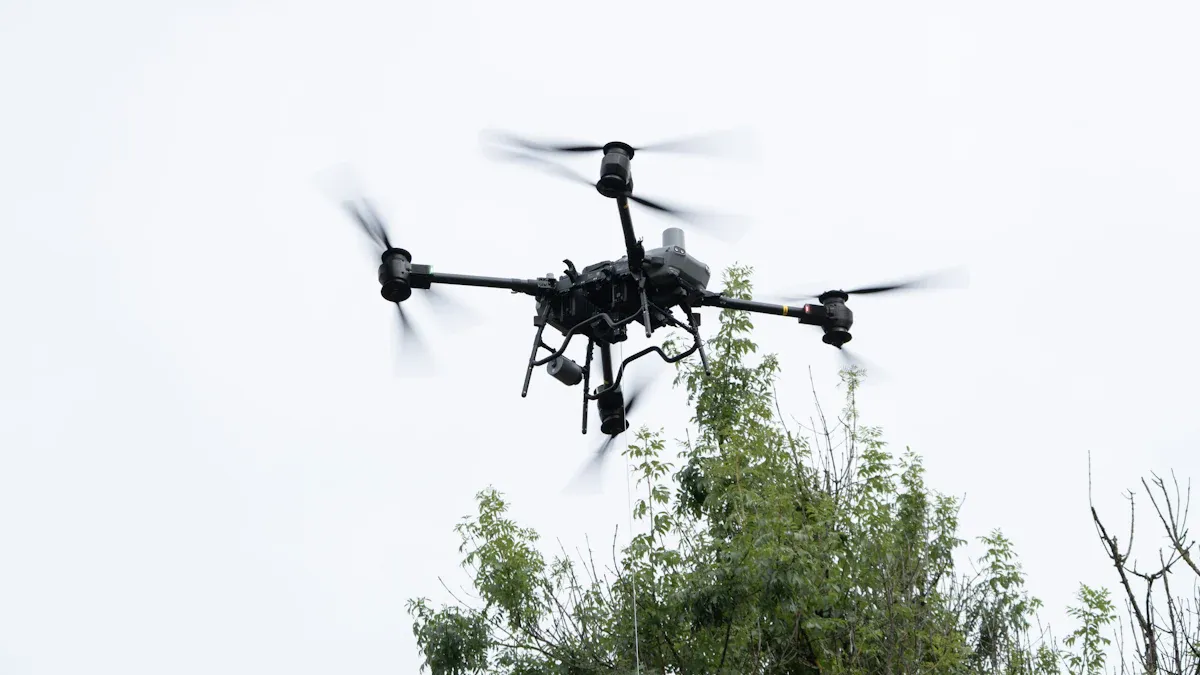
In the landscape of 2026, an industrial drone battery is no longer a mere consumable; it is a Critical Energy Asset. While low-cost procurement may seem appealing, it often conceals significant “Risk Premiums”—where saving on battery costs can lead to the total loss of high-value sensors and airframes due to power instability.
This guide introduces a strategic framework designed to elevate industry practices. Through a focus on Semi-Solid State architectures and Internal Resistance (IR) precision, we enable fleet operators to optimize their ‘Operational Window’ and maximize mission resilience across challenging global environments.
Key Takeaways
The Semi-Solid Standard: Transition to hybrid electrolyte systems (5%-10% liquid) to suppress lithium dendrites, ensuring “zero-flame” safety and higher energy density.
Silicon-Carbon Advantage: Prioritize Silicon-Carbon anodes to break the 300Wh/kg barrier, extending flight endurance by up to 30% for heavy-lift missions.
Precision Specs: Audit suppliers based on a Voltage Delta of ≤0.05V and ultra-low Internal Resistance (IR) to eliminate the “Short-board Effect” and extend asset life.
ROI-Driven Procurement: Shift focus from “Initial Purchase Price” to Total Cost of Ownership (TCO), targeting a lifecycle of 1,200 cycles to minimize long-term operational costs.
Key Basics of Industrial Drone Batteries
The Technology Shift: From Liquid to Semi-Solid
The 2026 industrial benchmark is defined by a strategic move away from traditional liquid-state lithium batteries. Unlike conventional LiPos that rely on a ~25% liquid electrolyte, Semi-Solid State systems utilize a hybrid architecture, reducing liquid content to a critical 5%-10%.
While LiFePO₄ batteries for industrial drones offer high thermal stability, the trend favors Semi-Solid architectures for the required energy-to-weight ratio in mission-critical deployments.
This is not a marginal upgrade—it is a safety revolution. The solid electrolyte host acts as a physical barrier that suppresses lithium dendrite growth, the primary catalyst for internal short circuits and thermal runaway. For fleet operators, this shift eliminates the risk of catastrophic fire during physical punctures, while simultaneously raising the ceiling for energy density.
Energy Density: The Role of Silicon-Carbon Anodes
Energy density directly dictates the “Mission Window” of any unmanned aircraft. To surpass the theoretical limits of traditional graphite, the industry has pivoted to Silicon-Carbon (Si-C) Anodes. Silicon offers up to ten times the lithium-ion storage capacity of carbon, but its application requires high-precision engineering to manage material expansion.
By integrating nano-silicon composites, these batteries achieve a 30% increase in capacity without adding physical volume. In practical terms, this technology pushes industrial flight endurance from the standard 25-minute plateau toward the 40-minute+ benchmark, effectively reducing the total battery inventory required for large-scale operations.
Structural Integrity: Pouch-Cell & Thermal Efficiency
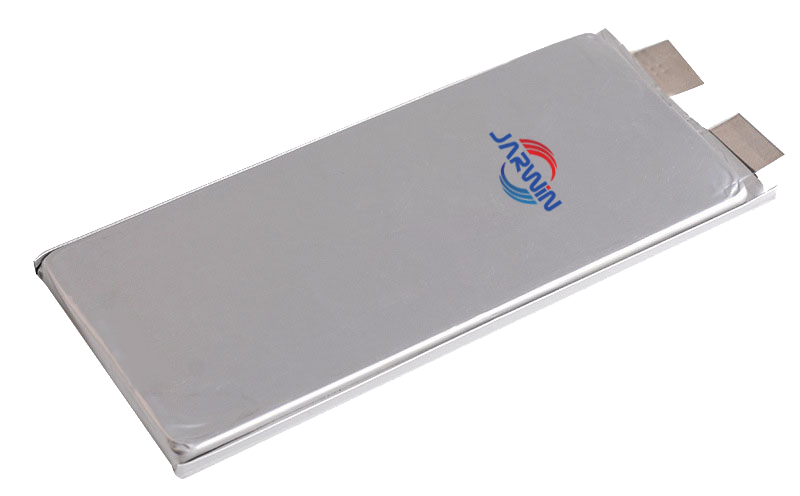
The physical architecture of a cell determines its survivability in high-torque environments. Industrial-grade energy solutions prioritize Pouch-Cell construction over rigid prismatic or cylindrical formats. This vacuum-sealed aluminum-plastic film design sheds 20% of unnecessary weight compared to metallic casings and provides a superior surface area for heat dissipation.
When coupled with In-situ Solidification technology, pouch cells maintain structural integrity across an extreme temperature spectrum from -20°C to 60°C. This ensures that the pack remains resilient against “swelling” and voltage fluctuations, whether performing high-altitude surveying in freezing conditions or heavy-lift agricultural spraying in tropical heat.
Must-Know Specifications for Industrial Drone Battery Selection
Internal Resistance (IR): The Pulse of Performance
Internal Resistance (IR) is the most critical diagnostic for a battery’s health and discharge efficiency. High IR acts as a thermal bottleneck, converting stored energy into wasted heat. For fleet operators, this manifests as “Voltage Drop”—a sudden power deficit during high-torque maneuvers such as vertical climbs or heavy-lift takeoffs.
Low-IR batteries, achieved through high-precision manufacturing, ensure maximum power delivery to the motors with minimal thermal stress. Monitoring IR is not merely a performance preference; it is a safety imperative that prevents premature cell degradation and extends the overall lifespan of the asset.
Voltage Consistency: The ≤0.05V Delta Standard
Consistency across cells is the cornerstone of pack stability. In professional procurement, the industry benchmark is a Voltage Delta of ≤0.05V. When the voltage gap between cells exceeds this threshold, the “Short-board Effect” is triggered: the entire pack’s performance is limited by the weakest cell, leading to premature low-voltage cutoffs and unpredictable flight behavior.
Strictly adhering to the ≤0.05V standard ensures uniform discharge. This precision is non-negotiable for missions requiring millimetric control, such as LiDAR surveying or precision spraying, where power fluctuations can jeopardize both data integrity and aircraft safety.
Discharge C-Rates: Balancing Stability & Burst Power
The C-rate dictates a battery’s ability to sustain power under load. While industrial applications require high “Burst” C-rates for emergency maneuvers, long-term reliability depends on “Continuous” discharge stability.
The strategic goal is to match the C-rate to the specific mission profile. Over-speccing adds unnecessary weight and heat, while under-speccing risks thermal runaway. A professional-grade battery must maintain a stable thermal profile even at peak discharge, ensuring the drone has sufficient “punch” for heavy-lift tasks without compromising the chemistry’s long-term integrity.
Procurement must distinguish between drone performance (Range/GPS) and battery-specific metrics.
The following table defines the 2026 benchmarks for cell-level selection:
Specification | Industrial Benchmark (2026) | Business Impact |
Cycle Life | 1,200 Cycles | Significantly reduces TCO across the asset’s service life. |
Energy Density | ≥300 – 400 Wh/kg (Si-C Anode) | Extends “Mission Window” to 40min+ |
Voltage Delta | ≤0.05V | Eliminates “Short-board Effect” & early cutoffs |
Temp Resilience | -20°C to 60°C | Enables year-round global operations (80% capacity @ -20°C) |
Application-Specific Selection Framework
The operational demands of an industrial drone are dictated by its mission environment. Selecting a one-size-fits-all battery often leads to inefficiencies. To optimize fleet ROI, procurement must match the battery’s chemical and structural profile to the specific rigors of the application.
Precision Agriculture: Anti-Corrosion & Rapid-Cycle Durability
Agricultural missions are defined by high-frequency deployment and exposure to corrosive fertilizers and pesticides. In these “high-turnaround” environments, the primary concern is the Daily Sortie Rate.
The Technical Standard: Prioritize batteries with IP64+ rated encapsulation and anti-corrosion signal connectors.
Operational Imperative: Focus on 2C-5C Rapid Charging capabilities and high-cycle durability (1,200 cycles). This ensures the fleet can sustain continuous spraying operations with minimal batteries on-site, effectively lowering the cost-per-acre.
The 2026 Benchmark: Solutions that integrate reinforced structural casing provide the necessary resilience against the mechanical vibrations of heavy-lift multi-rotors in field conditions.
Industrial Logistics: High-Density Systems for 40min+ Missions
Logistics drones prioritize the “Payload-to-Range” ratio. Every gram of battery weight saved is a gram of extra cargo capacity.
The Technical Standard: Adoption of Silicon-Carbon (Si-C) Anodes is mandatory to achieve energy densities exceeding 300 Wh/kg.
Operational Imperative: To bridge the gap toward the 40-minute+ mission window, the battery must maintain a flat discharge curve. This ensures consistent power delivery even as the pack nears 20% SOC (State of Charge), preventing “power sag” that could jeopardize heavy cargo delivery during the final landing phase.
Remote Surveying & Inspection: Resilience in Extreme Environments
Infrastructure inspection and surveying often take place in high-altitude or extreme-latitude regions where standard LiPos fail.
The Technical Standard: Look for Wide-Temperature Electrolytes and Semi-Solid State architectures that maintain structural integrity under pressure.
Operational Imperative: The battery must demonstrate 80% capacity retention at -20°C. In high-altitude surveying, where air density is low and motors run at higher RPMs, the energy system must provide stable voltage consistency to ensure the accuracy of LiDAR and photogrammetry sensors.
Always audit the battery’s Real-World Discharge Profile against your most demanding mission environment. Technical resilience in the field is the ultimate safeguard for your aerial assets.
Industry alignment is key: Leading solutions providers, have proactively aligned their R&D with these mission-critical requirements—delivering a specialized portfolio that spans from anti-corrosive agricultural power-packs to semi-solid systems for long-endurance logistics.
2026 Brand Audit: Evaluating Industrial Battery Manufacturers
In the maturing drone economy of 2026, the market has undergone a critical bifurcation. On one side are “System Assemblers” who source generic third-party cells; on the other are Cell-Level Manufacturers who maintain absolute control over the chemical and structural R&D. For fleet operators managing high-value aerial assets, procurement has moved beyond comparing labels; it has become a rigorous audit of Manufacturing Pedigree.
Manufacturing Pedigree: Cell R&D vs. Third-Party Assembly
The most significant hidden risk in industrial energy remains the “Black Box” of sourced cells. Manufacturers who lack in-house cell-level R&D often struggle with batch-to-batch inconsistency, leading to unpredictable internal resistance (IR) spikes and premature degradation. To mitigate this, Tier-1 standards now prioritize Cell-to-Pack (CTP) integration.
Manufacturers like Herewin, which leverage over 20 years of experience in cell production, ensure that every individual cell is physically and chemically matched. This long-term engineering focus is the foundation for achieving a consistent 1,200 cycle life, as it eliminates the parasitic energy losses caused by mismatched cell impedance.
Reliability Benchmarks: Real-World Swelling Rates
Beyond chemistry, physical stability serves as the final arbiter of manufacturing discipline. In 2026, the industry benchmark for reliability is a Real-World Swelling Rate of <1% throughout the asset’s service life. Achieving such tight tolerances requires more than just high-quality materials; it mandates production in Class 1,000 clean-room environments and the application of advanced In-situ Solidification technologies. When an energy system maintains its structural integrity under the high-vibration and high-torque environments of heavy-lift operations, it is a testament to the manufacturer’s mastery of thermal and gas-evolution management.
Global Compliance & Digital Traceability
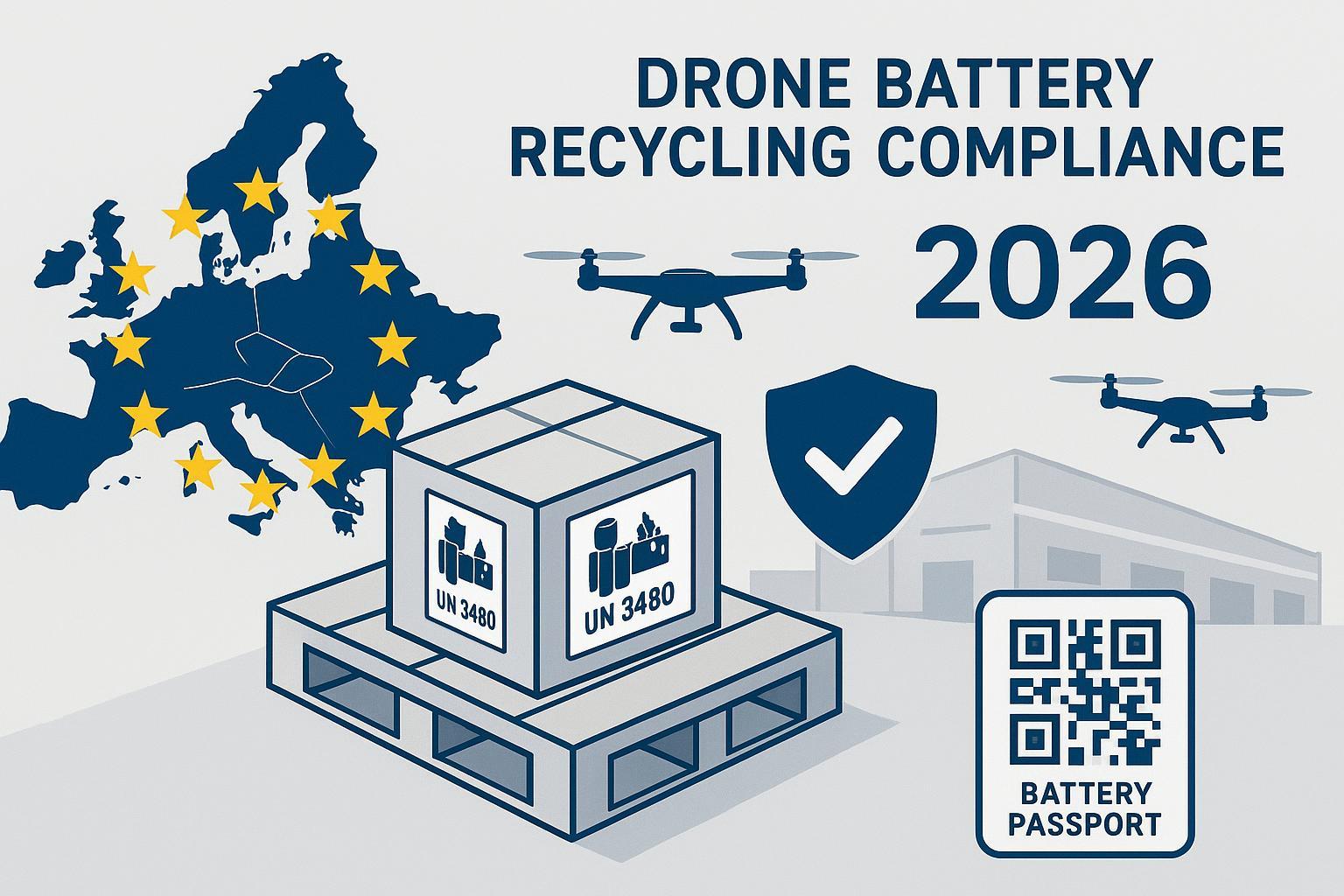
A battery without a verifiable digital pedigree is a liability in a regulated airspace. In 2026, international logistics and government contracts mandate strict adherence to Global Traceability Standards. Look for brands that offer full transparency on cell grading and batch consistency through verifiable certifications such as UN38.3, CE, and UL. This compliance ensures that the energy system is not only safe for operation but also fully scalable within the global regulatory landscape. Choosing a brand with a proven compliance record is the single most effective way to secure your fleet’s long-term operational license.
Financial Modeling: ROI & TCO Optimization
For a professional drone fleet, energy is not a variable expense—it is a strategic investment. Maximizing ROI requires a transition from “Unit Price” thinking to a comprehensive Total Cost of Ownership (TCO) framework.
TCO Analysis: The Economics of High-Cycle Lifespans
The true cost of a battery is not the purchase price, but the Cost per Flight. While high-performance batteries carry a higher upfront premium, their extended cycle life significantly amortizes this cost over a longer operational period.
The Math of Longevity: Transitioning from conventional 500–800 cycle limits to 1,200 cycles effectively doubles an asset’s utility.This shift drastically reduces replacement frequency and long-term CAPEX for large-scale fleets.
Operational Efficiency: High-cycle batteries minimize fleet downtime and procurement overhead. By reducing the replacement frequency, operators cut hidden costs associated with testing, labeling, and logistical handling of new inventory.
Sustainability Advantage: Longer lifecycles mean lower hazardous waste output, aligning fleet operations with corporate ESG (Environmental, Social, and Governance) mandates.
Capacity Integrity: Eliminating the “Label Inflation” Risk
Accurate industrial drone battery capacity calculation is essential for mission planning; procurement must ensure label integrity to avoid operational deficits. In a competitive market, “Label Inflation”—where manufacturers overstate nominal capacity—is a prevalent hidden cost. Selecting a battery based on inflated specs leads to failed missions, unexpected battery sag, and a significant increase in the “Risk Premium” of your operations.
Verification Standards: Procurement should demand Third-Party Compliance (such as UN38.3, CE, and UL certifications). These are not merely safety marks; they are technical guarantees of performance honesty. A battery that delivers its stated milliamp-hours (mAh) allows flight controllers to predict “Return to Home” (RTH) triggers with mathematical certainty, protecting the drone from catastrophic power-outs.
Transparency as Value: To ensure mission predictability, procurement should prioritize manufacturers that provide verifiable Capacity Integrity. Benchmarking data from precision-manufactured packs, such as those by Herewin, confirms that a “22,000mAh” rating must translate into 22,000mAh of usable energy under actual operational loads. This true-to-label performance is the only way to guarantee flight-path precision and mission success in demanding industrial environments.
Risk Premium: Lowering Crash Rates via Power Stability
The most overlooked cost in drone operations is the Risk Premium—the financial impact of a power-related crash. A stable energy supply is the most cost-effective insurance for high-value payloads (LiDAR, multispectral cameras, etc.).
Minimizing Internal Resistance (IR): Low IR ensures efficient power delivery without thermal spikes, preserving the chemical health of the cell.
The ≤0.05V Delta Guardrail: Consistent voltage across all cells prevents the “Short-board Effect,” where one weak cell triggers an emergency landing.
Stable Discharge Profiles: High-precision cells handle sudden “Burst” demands during emergency maneuvers, protecting the multi-thousand-dollar airframe from catastrophic power failure.
Recommendation: Always conduct a rigorous Pre-Selection Audit. The “cheap” battery is often the most expensive component when factoring in crash risks and shortened replacement cycles. Technical diligence is the ultimate safeguard for your operational bottom line.
Customized & Specialized Energy Solutions
As industrial drone applications diversify, “off-the-shelf” battery packs often hit their physical limits. For heavy-lift logistics and polar-latitude operations, mission success depends on bespoke energy engineering tailored to specific voltage and thermal profiles.
High-Voltage Platforms (48V-72V) for Heavy-Lift Operations
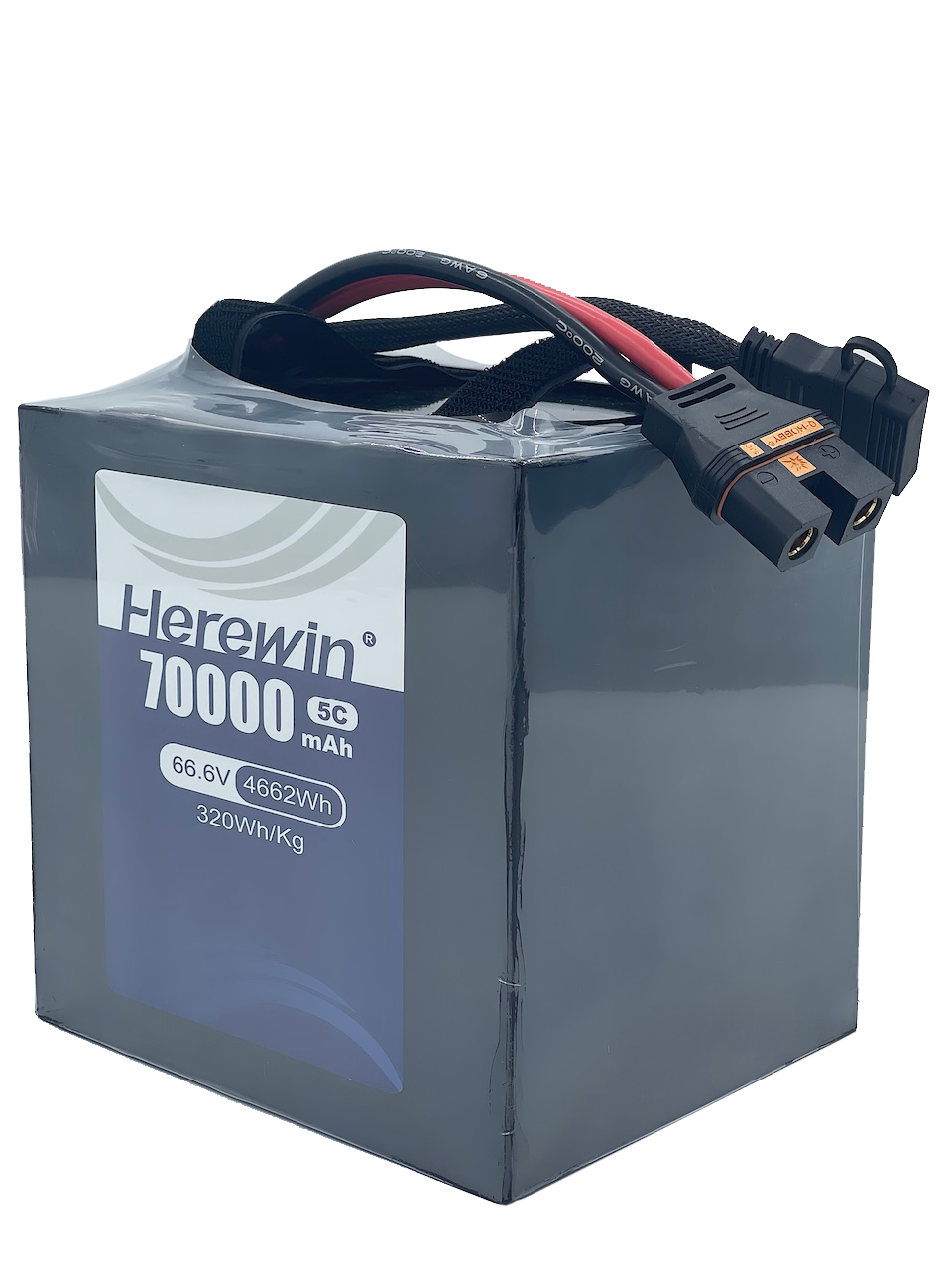
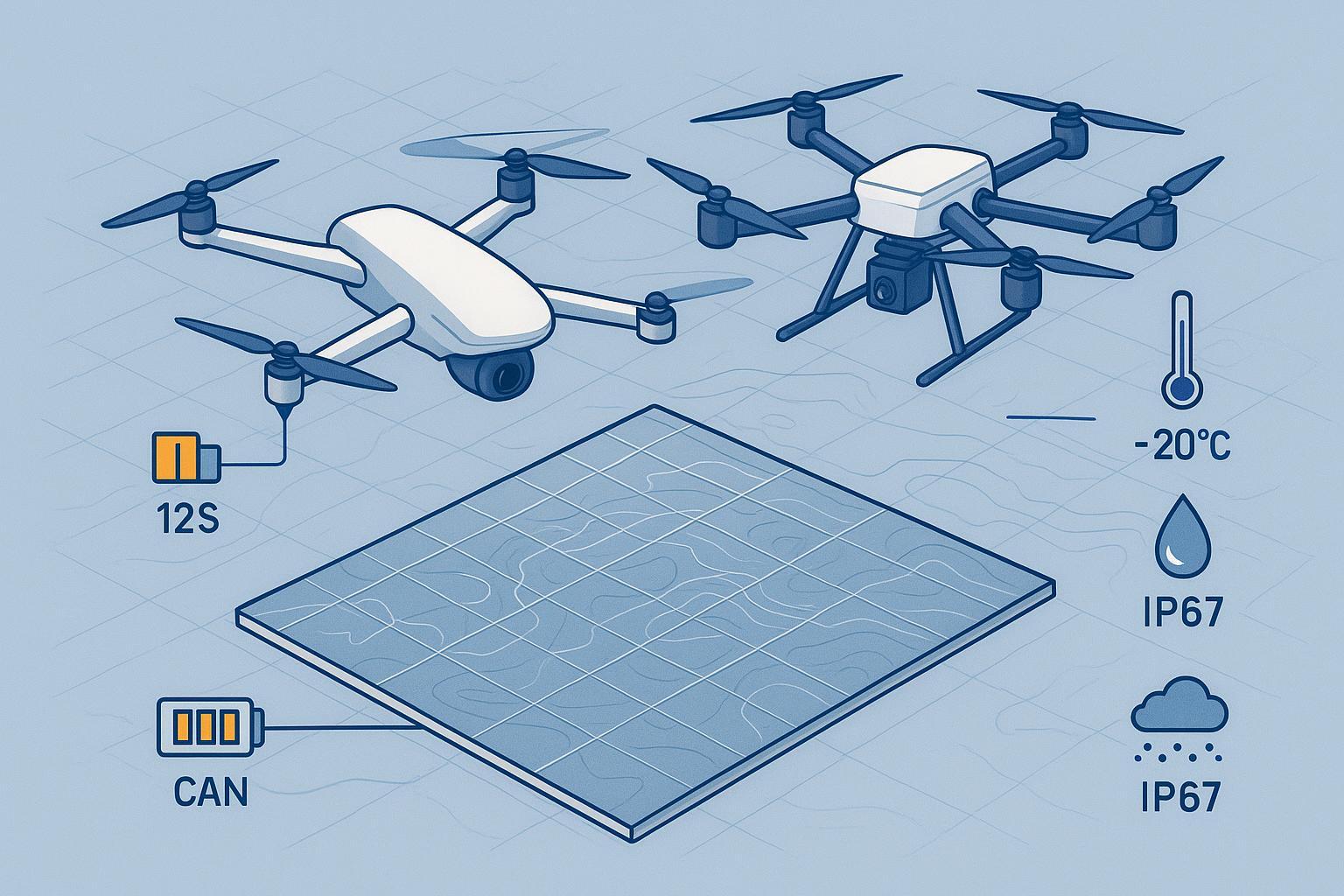
The shift toward heavy-lift multi-rotors (25kg+ MTOW) has mandated the transition to high-voltage energy systems. Moving from standard 12S (44.4V) to 14S (51.8V) or 18S (66.6V) platforms significantly enhances motor efficiency and reduces amperage draw.
The Engineering Edge: By utilizing high-voltage architectures, operators can minimize thermal build-up in the ESCs and wiring, allowing for sustained high-power output without heat-induced performance throttling.
Performance Impact: Solutions engineered by companies like Herewin for these platforms prioritize energy density and stability, facilitating longer mission windows for heavy cargo delivery. This high-voltage precision is essential for maintaining the “thrust-to-weight” ratio required for stable flight in turbulent or high-altitude environments.
Cold-Weather Resilience: Optimized -20°C Performance
Thermal instability is the primary cause of battery failure in high-latitude inspection and winter surveying. Standard lithium chemistry experiences a sharp increase in internal resistance when temperatures drop below freezing, leading to sudden voltage collapses.
Advanced Material Integration: Specialized solutions utilize low-temperature electrolytes and Semi-Solid architectures to maintain ionic conductivity in freezing conditions.
The Performance Benchmark: A true industrial-grade solution must demonstrate over 80% capacity retention at -20°C. Precision-engineered systems for extreme climates maintain stable discharge curves through optimized electrolyte chemistry rather than relying on excessive internal heating. This technical resilience effectively prevents “low-battery” emergency landings and unpredictable voltage sags during critical winter missions.
For extreme-condition deployment, always prioritize batteries designed with Thermal Structural Integrity. Choosing a cell chemistry optimized for your specific climate is the single most effective way to prevent mid-flight power failure.
As we move through 2026, the delta between a “low-cost fleet” and a “high-performance operation” is defined by energy management. The transition from a “parts buyer” to a “Strategic Investor” is no longer optional—it is a prerequisite for scaling in a competitive landscape.
Technical precision—specifically the adherence to the ≤0.05V voltage delta and uncompromising capacity integrity—is the foundation of predictable commercial returns. When you prioritize a compliant (UN38.3/CE), high-cycle energy system, you are not just buying power; you are constructing a “Competitive Moat.” This moat protects your high-value payloads, minimizes the financial drain of mid-mission failures, and optimizes your fleet’s TCO over hundreds of thousands of flight hours.
In the evolving drone economy, your energy strategy is your most resilient asset. By aligning with proven engineering standards today, you secure the operational efficiency and mission reliability of tomorrow. For fleet operators seeking to align their procurement with these 2026 benchmarks, technical consultation and tailored motor-battery selection advice are available to ensure optimal mission resilience.
Technical Support & Consultation
To ensure your fleet is equipped with energy systems that meet these industry benchmarks, the Herewin Engineering Team provides comprehensive technical support, ranging from cell-level selection to advanced TCO modeling.
FAQ
What is the 2026 industry standard for battery lifespan?
The benchmark is 1,200 cycles (>80% retention). Since standard LiPos typically peak at 500–800 cycles, this technology effectively doubles the asset’s utility and drastically reduces the frequency of battery replacement, leading to a much lower long-term TCO.
Why is the ≤0.05V Voltage Delta so critical?
A delta higher than 0.05V indicates cell imbalance. The weakest cell will trigger an early low-battery cutoff, causing the drone to land prematurely despite other cells having power. This precision is non-negotiable for mission-critical reliability.
Can I save costs by using third-party battery packs?
Third-party packs often lack cell-level traceability and precise Internal Resistance (IR) matching. While the upfront cost is 20% lower, the risk of mid-flight power failure poses a high-value threat to your airframe and sensors.
What is the “Golden Rule” for battery storage?
Never store batteries at 100% or 0% SOC. For optimal chemistry health, maintain a storage voltage of 3.80V–3.90V per cell in a cool (15°C–25°C), dry environment.
Which certifications are mandatory for international operations?
UN38.3 (Transport), CE/RoHS (Safety & Environment), and UL/IEC 62133 (Cell Integrity). These certifications are the only guarantee that the battery has survived rigorous impact, vibration, and thermal stress testing.


 English
  Español
  한국어
한국어  Deutsch
  Français
  日本語
日本語  Русский
  Bahasa Indonesia
  ไทย
ไทย  العربية
  Português do Brasil
  Italiano
  Nederlands