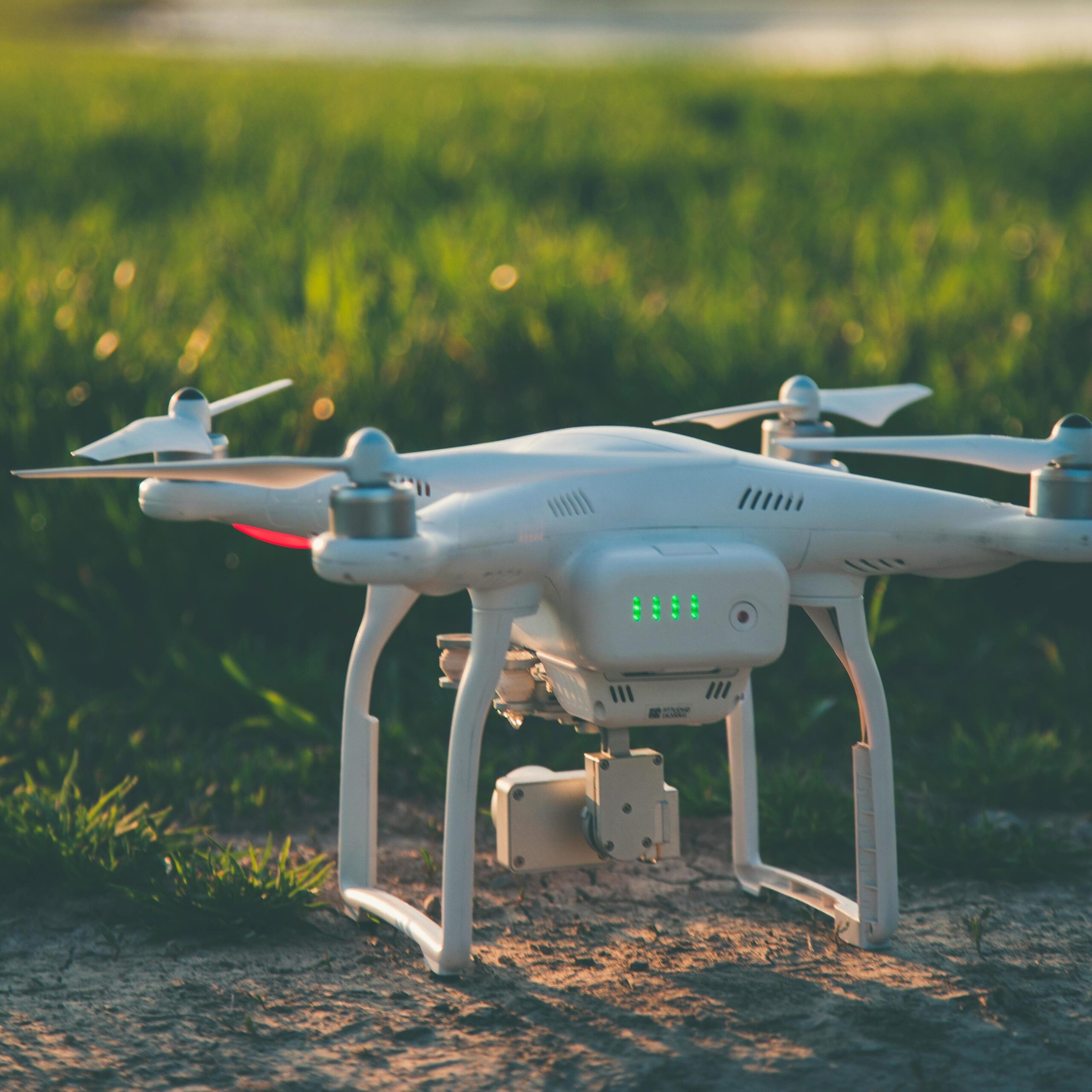


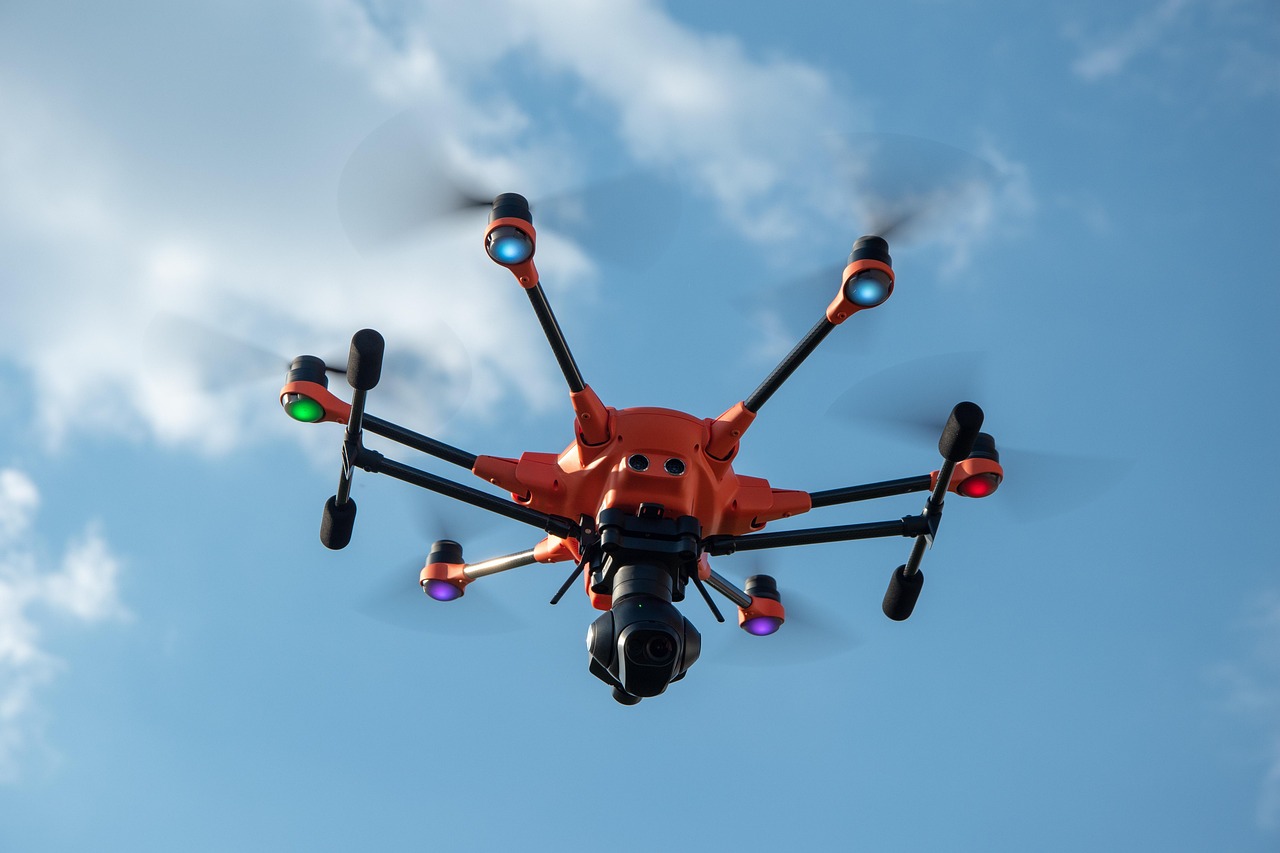
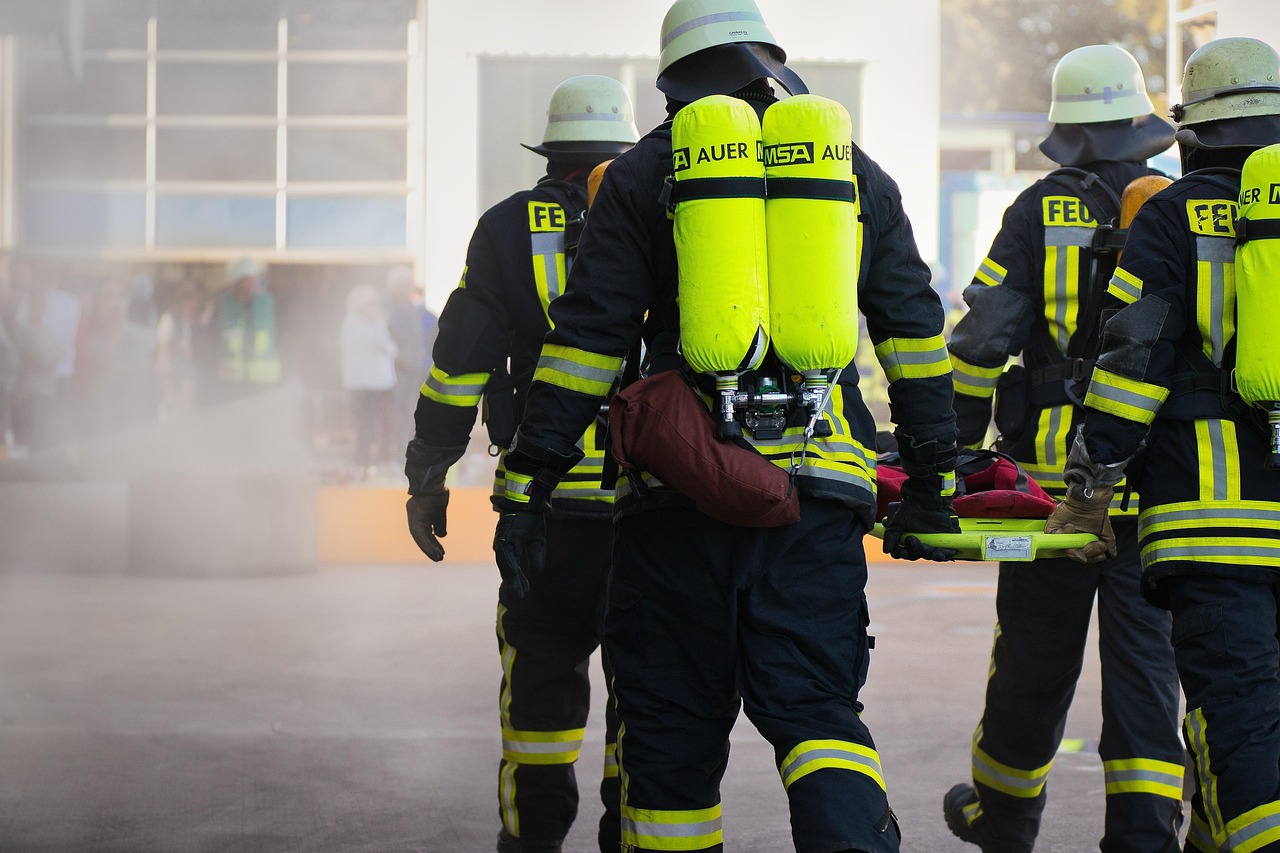
Firefighters operate in intense environments defined by extreme thermal flux and zero visibility. In these high-stakes sorties, a drone is the primary sensory organ for fire commanders, providing real-time intelligence from the heart of the crisis. However, mission integrity is only as resilient as its energy core. Standard lithium-ion systems often succumb to the intense radiant heat of a fireground, leading to sudden voltage drops or catastrophic thermal runaway that jeopardizes both the mission and high-value payloads.
The shift toward semi-solid state architecture represents a fundamental pivot in emergency energy safety. By transitioning from volatile liquid electrolytes to a hybrid solid-state matrix, drone operations move beyond incremental improvements to a baseline of absolute thermal stability. For the modern fire service, adopting a rigorous semi-solid standard is no longer an optional upgrade—it is the mandatory foundation for operational survival in deep-zone missions.
Key Takeaways
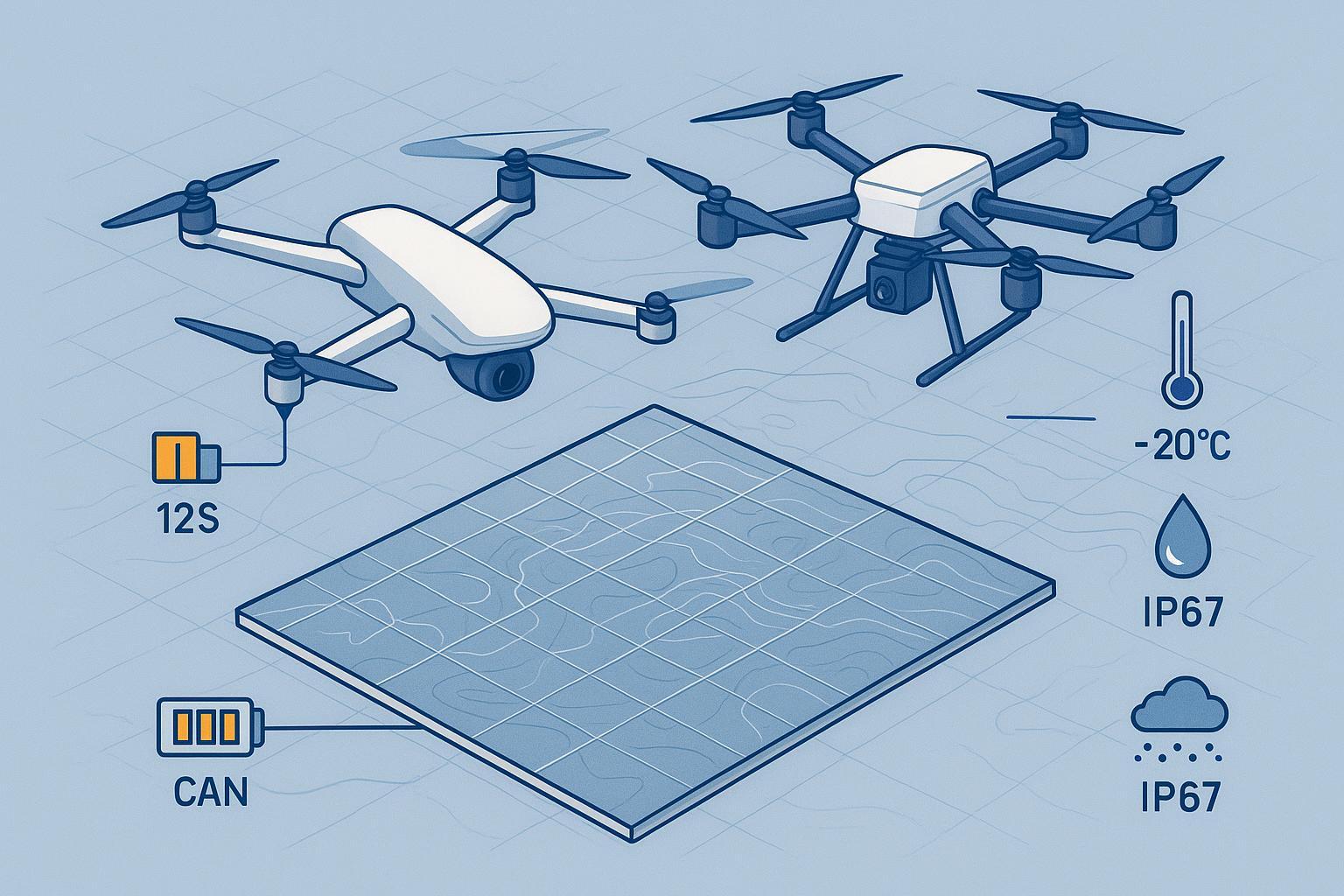
Ensures stable discharge and voltage consistency from high-altitude morning sorties to active fireline environments through a verified -20°C to 60°C (-4°F to 140°F) operational spectrum.
Prioritizes hybrid electrolyte architecture to elevate the flash point and provide a critical buffer against high-heat stress, significantly suppressing thermal runaway risks.
Minimizes downtime and supports high-intensity firefighting operations through standardized ‘Slide-and-Lock’ quick-swap protocols and field-charging infrastructure.
Drastically reduces the Total Cost of Ownership (TCO) and protects high-value drone platforms from thermal-related power failures with benchmarked 2,000+ cycle reliability.
Encompasses real-time temperature monitoring, terminal maintenance, and structured cooling phases within a standardized field SOP to maximize fleet readiness.
Strategic Requirements for Fire Emergency Drone Batteries
Fire Emergency Drone Battery -20°C to 60°C Spectrum
In fire emergency scenarios, the 60°C (140°F) threshold represents a critical physical limit for standard energy storage. Beyond this point, conventional liquid electrolytes undergo accelerated decomposition, leading to a sharp decline in discharge capacity and structural integrity. Industry-leading standards now mandate a robust operational envelope—typically from a -20°C (-4°F) minimum for high-altitude/winter sorties to a 60°C maximum for active fireline deployment. Operating outside this spectrum risks immediate voltage sags, jeopardizing drone propulsion and mission success.
Fire Drone Battery Thermal Runaway Prevention
Fire drone battery thermal runaway prevention is a foundational safety requirement in high-radiance environments. Thermal failure typically originates from three critical vectors:
Exothermic Cascade: Sustained external heat triggers the breakdown of the SEI (Solid Electrolyte Interphase) layer, leading to self-heating.
Interfacial Instability: Manufacturing variances or high-current stress can cause internal micro-shorts, accelerating thermal accumulation.
Structural Imbalance: Inadequate structural integration can lead to localized “hot spots,” increasing the probability of catastrophic cell venting. Mitigating these risks requires an electrochemical architecture that prioritizes non-volatile components and high-temperature interfacial stability.
High-Current Discharge for Dual-Payload Fire Drones
The integration of dual-payload systems (e.g., thermal imaging and high-zoom optical sensors) significantly intensifies the discharge requirements of a fire emergency drone battery. Heavier payloads necessitate higher motor RPMs and larger propeller torque, resulting in:
Sustained High-Current Draw: Increasing the internal temperature of cells due to parasitic Joule heating(I²R losses).
Reduced Flight Windows: Where conventional energy density fails to meet the 40–55 minute endurance benchmark required for continuous situational awareness. By transitioning to semi-solid technology, responders can achieve higher gravimetric energy density without the parasitic weight of traditional liquid-heavy packs, ensuring dual-payload drones maintain peak maneuverability.
High-Stability Fire Scenario Drone Battery Selection Guide
Architectural Superiority: Solid-Liquid Hybrid Electrolytes
Semi-solid architecture establishes a new safety baseline for high-radiance drone operations. Unlike traditional cells containing >25% liquid electrolyte, semi-solid systems leverage a hybrid matrix with liquid content reduced to 5%-10%. This shift optimizes fireground performance across three key dimensions:
Thermal Runaway Suppression: The hybrid electrolyte significantly elevates the flashpoint and reduces volatile vapor pressure, preventing the “exothermic cascade” common in liquid LiPos.
Enhanced Energy Density: Optimizing the electrode-electrolyte interface allows for gravimetric densities exceeding 350Wh/kg, providing the endurance necessary for extended search and rescue (SAR) missions.
High-Temperature Interfacial Stability: The semi-solid matrix facilitates the formation of a thermally robust SEI (Solid Electrolyte Interphase). Unlike traditional liquid-phase interfaces that degrade at elevated temperatures, this stabilized interphase maintains high ionic conductivity and prevents electrolyte depletion, even as ambient temperatures reach the 60°C (140°F) threshold.
Fire Drone Battery Flame-Retardant Standards (UL94 V0)
Internal resilience is reinforced by Alumina-coated separators, which function as a ceramic “heat shield” to maintain mechanical integrity under intense thermal flux.
Separator Technology | Thermal Shrinkage (150°C / 30 min) | Performance Lift | Safety Profile |
Alumina-Coated (Ceramic) | < 2% | +33% Load Capacity | Notable delay in thermal runaway |
Traditional Polyolefin | > 20% | Baseline | Significant risk of internal shorting |
To complement internal safety, UL94 V0-rated flame-retardant housing ensures the external casing self-extinguishes within 10 seconds of fire exposure, meeting the most stringent emergency response protocols.
DCIR Control: Minimizing Parasitic Heat Generation
Precise Direct Current Internal Resistance (DCIR) management is essential for preserving cell health during high-load firefighting maneuvers. In rapid vertical ascents, high DCIR triggers parasitic Joule heating (I²R losses), which accelerates chemical aging.
Impedance Optimization: Semi-solid electrolytes reduce interfacial impedance, ensuring lower DCIR than liquid counterparts at elevated temperatures.
2,000+ Cycle Reliability: By suppressing internal heat accumulation, DCIR control preserves electrochemical stability, enabling a benchmarked service life of 2,000+ cycles.
Voltage Stability: Low internal resistance prevents sudden “voltage sags” during the high-burst power demands of dual-payload drones.
Emergency Energy Supplement & Rapid Replacement
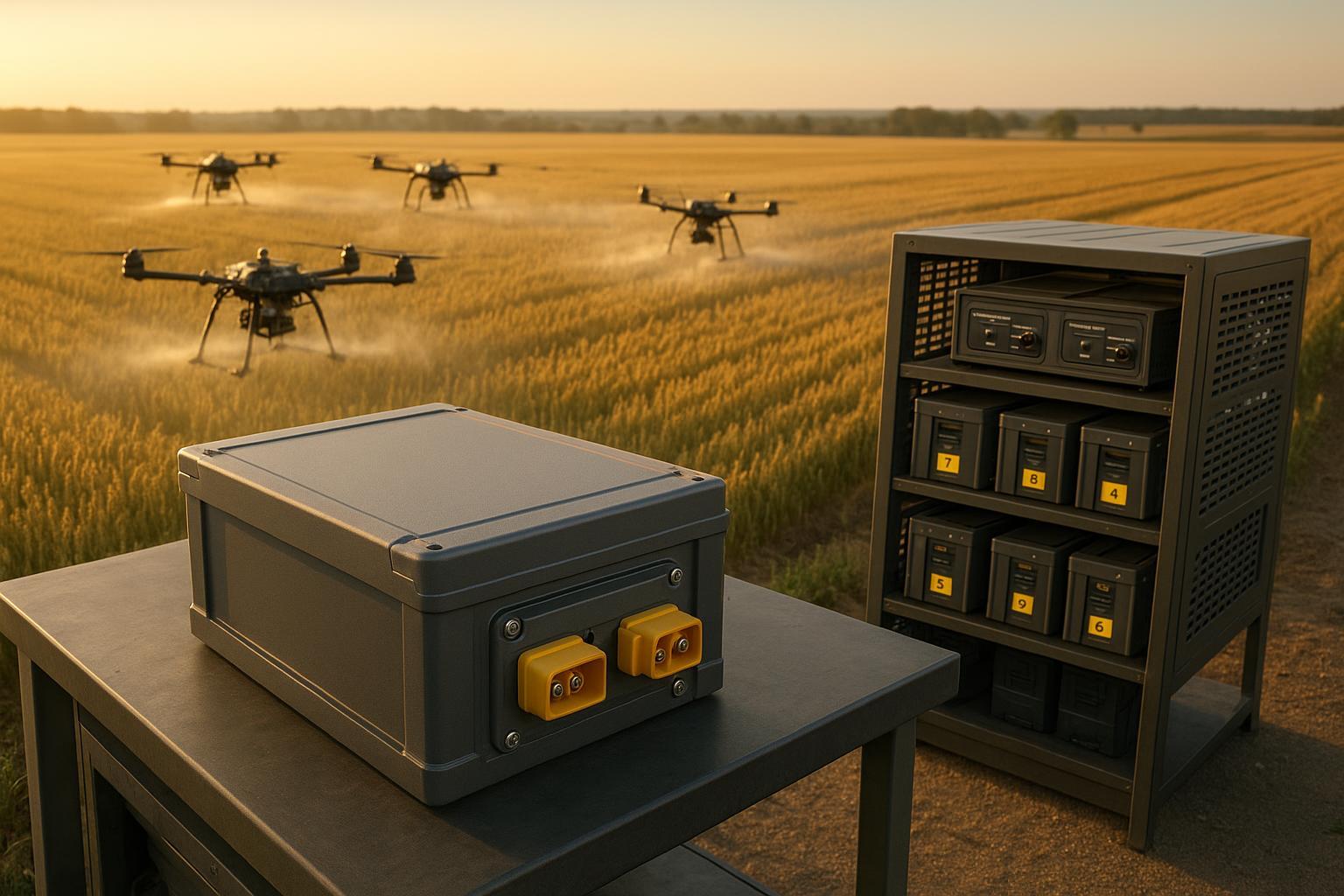
Emergency Drone Battery Quick Swap: Slide-and-Lock Protocol
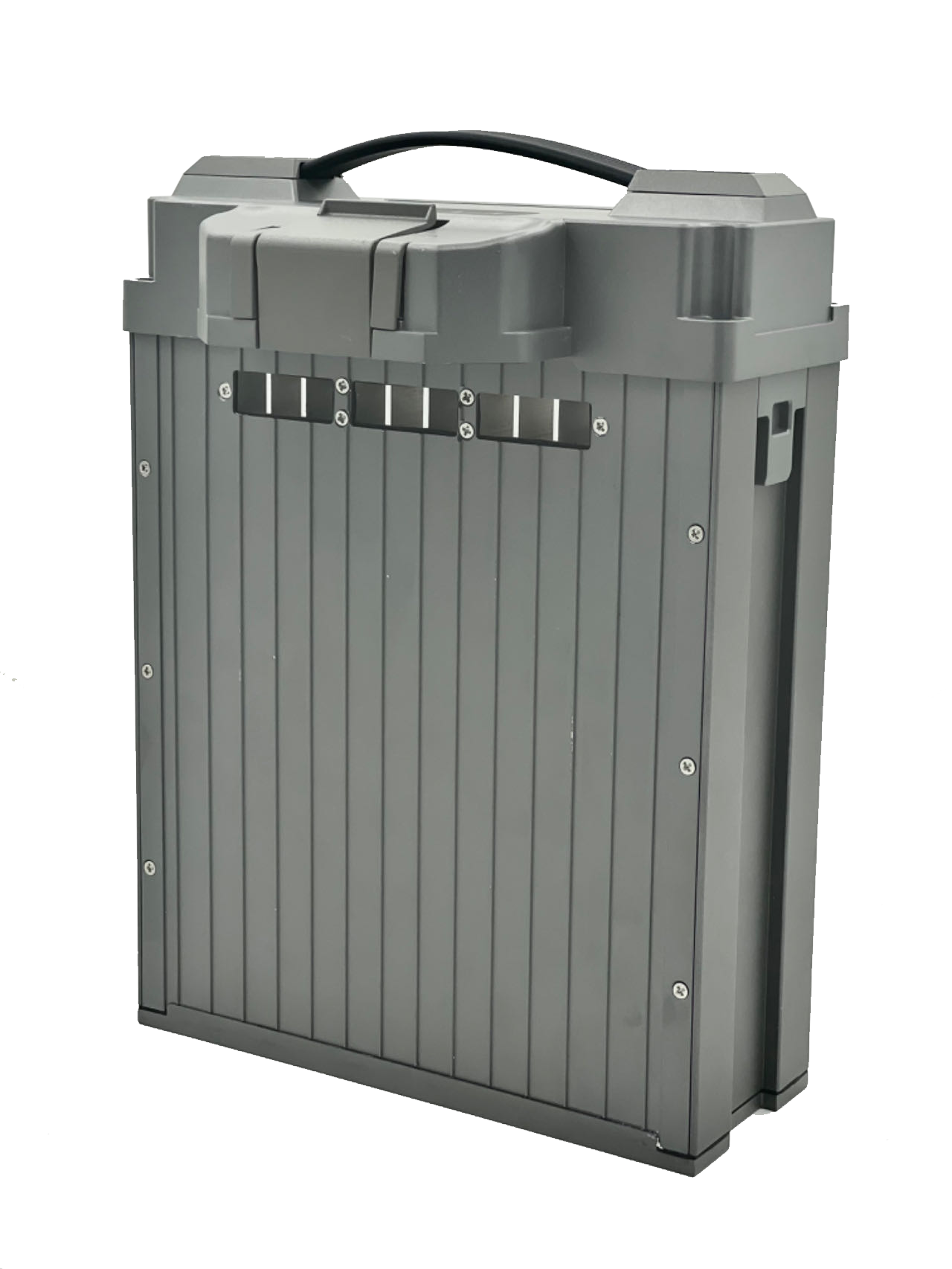
In high-intensity fire suppression, every second of aerial downtime represents a gap in situational intelligence. The ‘Slide-and-Lock’ protocol enables near-zero latency in mission rotation by leveraging the structural precision of the semi-solid soft-pack architecture. Field technicians execute the replacement according to the following protocol:
Depleted Pack Removal: Unlock the safety latch and slide the depleted pack out of the vibration-dampened rails.
Tactical Insertion: Align the fresh energized pack with the guide rails and slide until the physical ‘click’ confirms a secure electrical interface.
Status Verification: Perform a 2-second visual check on the controller interface to ensure 100% telemetry synchronization.
Instant Sortie: Re-deploy the drone immediately; the lightweight aluminum-laminate casing protects the cell stack from mechanical stress.
Fast Charging Solutions & Fire Drone Mobile Charging Hubs
Post-mission thermal management is critical when ambient temperatures hover near 60°C. To maintain the 2,000+ cycle chemistry, the battery must reach thermal equilibrium before high-current charging begins.
This process is governed by several core principles:
Atmospheric Stabilization: Active convection in high-velocity ventilation zones dissipates… significantly outperforming passive cooling.
Gradient Charging Logic: Modern BMS systems execute intelligent charging that adjusts amperage based on real-time thermal feedback, preventing the lithium plating risks associated with charging overheated cells.
Structural Integrity Checks: Operators should briefly inspect interface sealing rings for smoke-particle contamination, ensuring the IP-rated protection remains uncompromised for the next cycle.
Field Deployment SOP & Integrated Energy Hubs
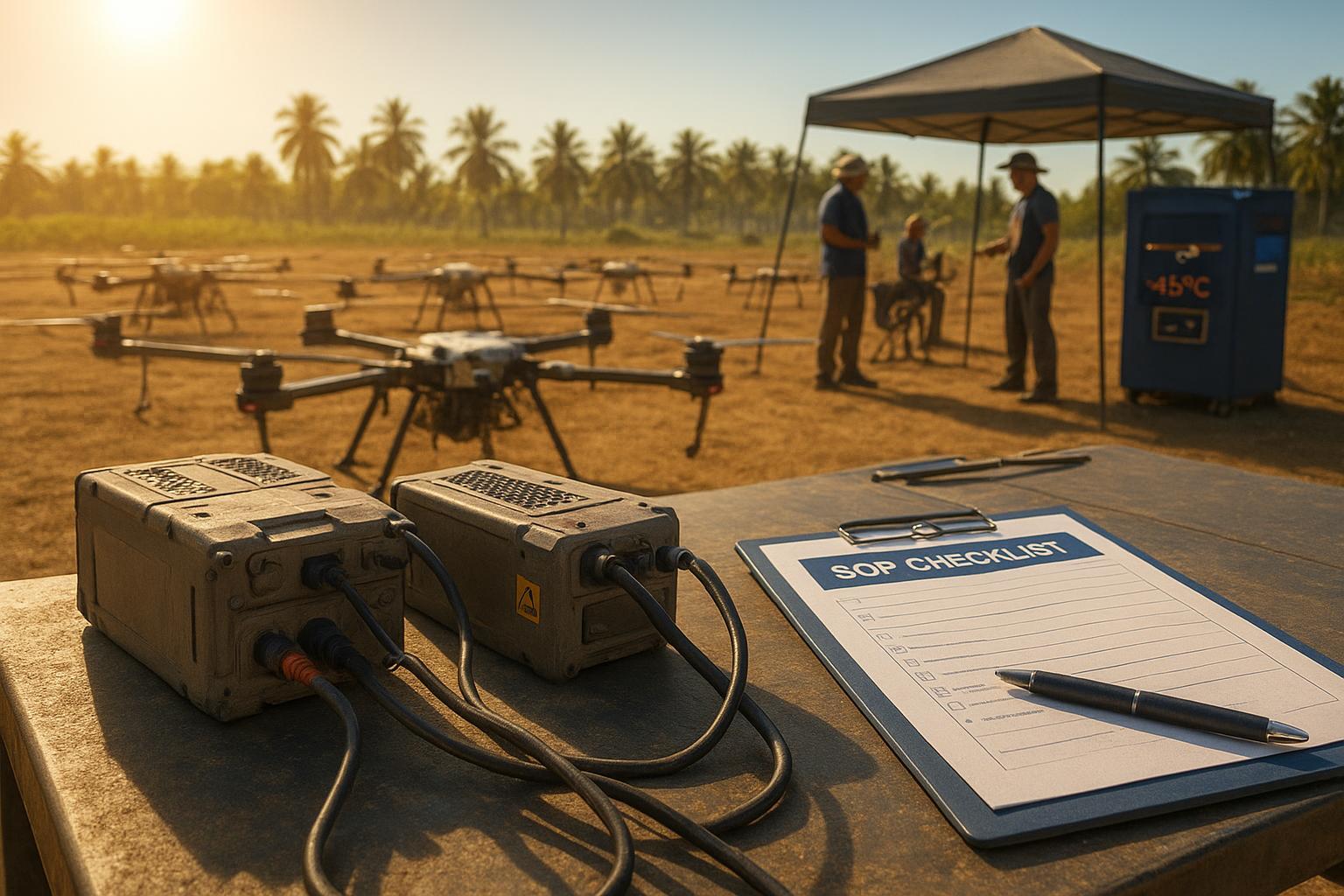
A rigorous SOP translates raw capacity into operational endurance.Establishing a standardized energy loop ensures fleet readiness under extreme pressure:
Smart Inventory Rotation: Maintain a sequential stock of semi-solid packs, ensuring each unit undergoes a BMS-led health check before redeployment.
Mobile Hub Deployment: IP65-rated ruggedized enclosures ensure mission continuity under high-pressure water spray and fire-ground precipitation.
Terminal Hygiene Management: Clean electrical contacts using specialized wipes to prevent carbon buildup from fire-ground smoke, ensuring peak power transfer.
Post-Action Audit: Record mission-specific thermal data to optimize the long-term ROI of the high-cycle battery fleet.
Beyond rapid response, this standardized energy loop ensures that the semi-solid architecture operates within its peak electrochemical window, transforming tactical maintenance into long-term fleet resilience.
Complex Environment Safety: IP67 & Terminal Protection
Fire Emergency Drone Battery IP67 Protection
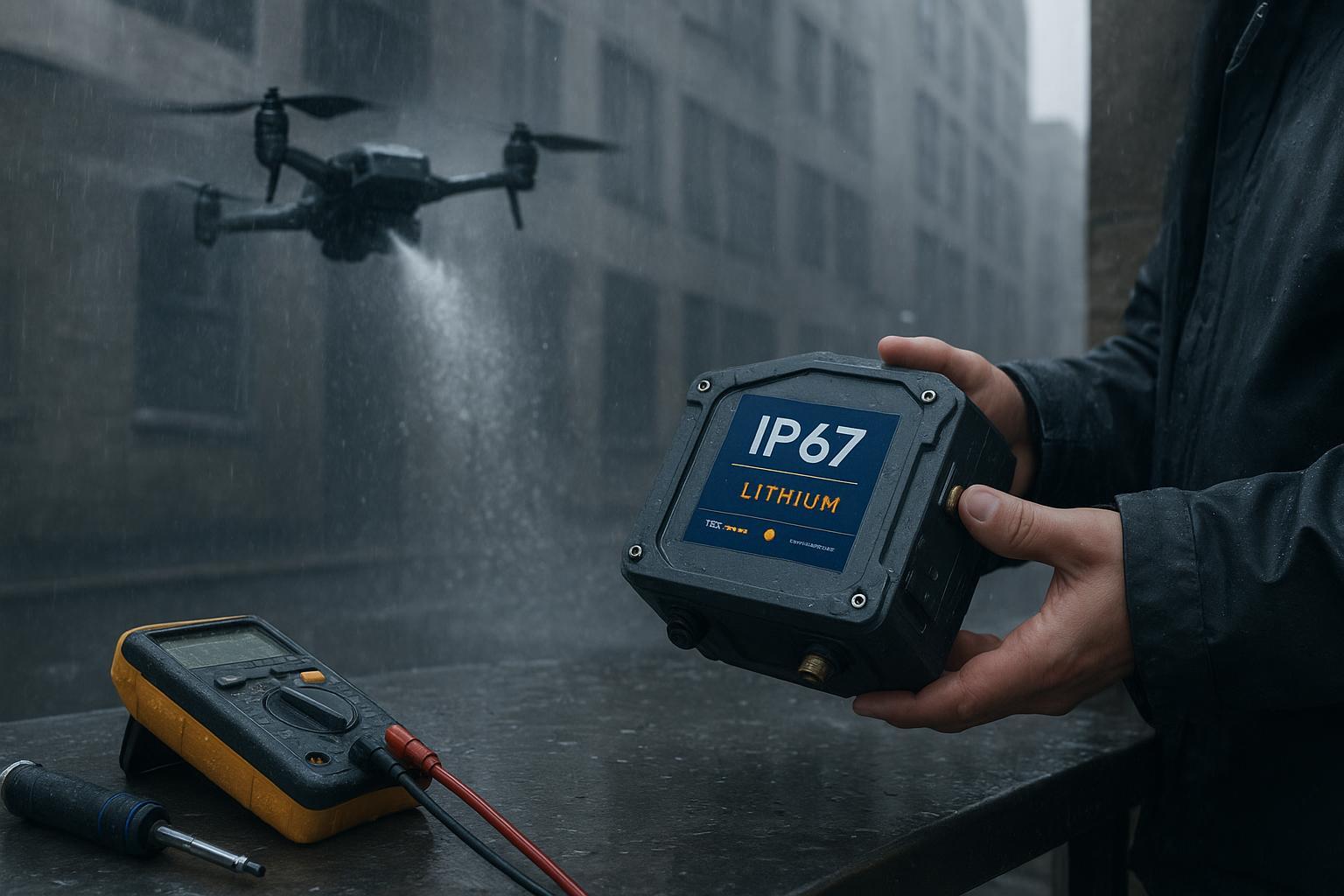
For high-intensity fire emergency sorties, robust Fire Emergency Drone Battery IP67 Protection is a mission-critical mandate. While standard industrial packs often settle for IP65 rain resistance, these custom-engineered semi-solid packs leverage IP67-rated sealing to ensure the core remains operational even after temporary immersion or exposure to high-volume fire hoses.
The imperative for IP67 sealing stems from specific electrochemical risks:
Impedance Stability: Water ingress triggers micro-shorts between electrode tabs, potentially causing a 38% drop in internal impedance and leading to localized thermal spikes.
Self-Discharge Control: Moisture exposure can accelerate self-discharge rates by up to fivefold. The integration of dual-layer sealing rings and high-precision ultrasonic welding ensures the semi-solid architecture remains isolated from the external aqueous environment.
Fire Drone Battery Terminal Cleaning & Anti-Oxidation
The fireground atmosphere is characterized by ionized smoke and acidic ash, posing a severe risk to electrical continuity. To combat this, advanced anti-oxidation terminal engineering is implemented:
Surface Treatment: High-conductivity nickel or gold-plated contacts prevent the formation of non-conductive oxide layers.
Particulate Shielding: Physical shrouds minimize terminal exposure to airborne soot and fire-suppressant residues.
Standardized SOP: Adhering to a fire drone battery terminal cleaning protocol after every 10 sorties ensures power transfer efficiency remains at 100%, even in heavy smoke zones.
Thermal Containment: UL94 V0-Rated Flame-Retardant Housing
The structural safety of the battery hinges on its external casing. In compliance with UL94 V0 standards, the housing must demonstrate self-extinguishing properties within 10 seconds of direct flame exposure. This feature is critical for:
Preventing External Ignition: Ensuring the battery housing does not become an accelerant during close-proximity fire monitoring.
Mechanical Strength: Maintaining structural rigidity at the 60°C (140°F) operational ceiling to prevent cell shifting within the pack.
Semi-Solid Soft-Pack vs. Cylindrical Li-ion Architectures
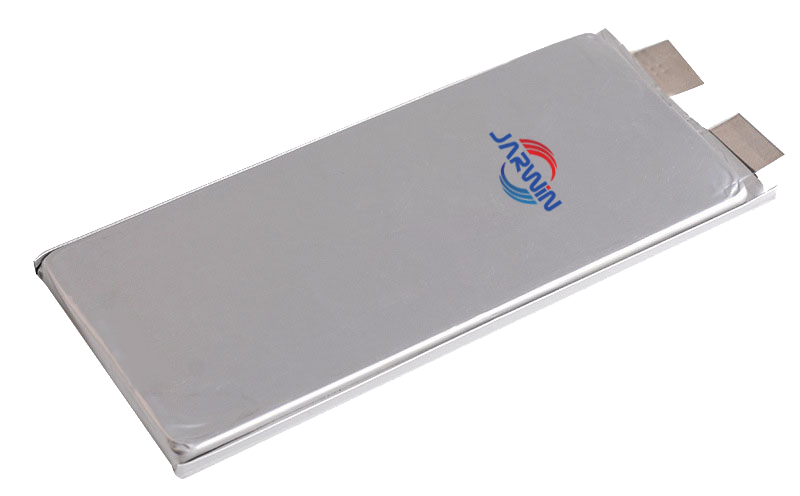
Selecting the optimal cell form factor is paramount for mission-critical maneuverability. The semi-solid soft-pack (pouch cell) is the superior choice for firefighting:
Feature | Semi-Solid Soft-Pack (Pouch) | Cylindrical Li-ion (18650/21700) |
Weight Efficiency | 20% Lighter (Aluminum laminate) | Heavier steel/nickel casing |
Heat Dissipation | Superior surface-to-volume ratio | Prone to core heat accumulation |
Burst Power | Up to 50C-100C discharge | Limited discharge rates |
Safety Profile | Non-explosive pressure release | Potential for projectile venting |
By utilizing the soft-pack format, fire emergency drones benefit from a lighter footprint and the high-current burst capability required for instant vertical acceleration with dual payloads.
Scenario-Specific Solutions: ROI & Resilience
Forestry Firefighting: Long-Endurance & Thermal Stability
In expansive forestry monitoring, drones must maintain continuous situational awareness. The tactical bottleneck hinges on the gravimetric energy-to-weight ratio. While LiFePO₄ chemistry provides inherent stability, its limited energy density often imposes restrictive flight windows. High-temperature lithium batteries for fire drones utilizing semi-solid NCM chemistry offer a superior alternative:
Extended Mission Windows: High gravimetric density (up to 350Wh/kg) enables sustained 40–55 minute flight times, essential for tracking fire progression across remote terrain.
Operational Continuity: Hot-swappable protocols minimize ground-time, allowing for persistent aerial surveillance during 24-hour fire suppression cycles.
Alpine-to-Peak Performance: Reliable discharge at -20°C ensures that alpine rescue drone low-temperature batteries are not compromised by sudden voltage sags during high-altitude sorties.
Explosion-Proof Batteries for Petrochemical Fire Response
High-rise urban rescues and petrochemical fires demand extreme burst power and absolute containment. Our explosion-proof lithium batteries for petrochemical fire response provide a critical safety buffer:
High-Current Burst for Rapid Ascent: Supports heavy dual-payloads during vertical climbs, providing instantaneous current (up to 50C-100C) for rapid positioning.
Explosion-Proof Integrity: Reducing volatile liquid electrolytes to 5-10% minimizes internal pressure buildup. Even under extreme heat, the cells exhibit non-explosive venting behavior rather than the projectile venting common in standard Li-ion.
Enhanced Maneuverability: Achieving a 20% weight reduction over cylindrical counterparts, semi-solid packs enhance drone agility in complex industrial structures.
Strategic Asset ROI: Preventing High-Value Payload Loss
Battery reliability is the single greatest factor in the Total Cost of Ownership (TCO) of a drone fleet. A power failure doesn’t just destroy the battery—it risks $20,000+ optical/thermal payloads.
Performance Metric | Impact on Strategic ROI | Financial Advantage |
2,000+ Cycle Life | Reduces annual fleet replacement frequency | Lowering depreciation costs by up to 40% |
Thermal Resilience | Protects high-value sensors from crashes | Eliminating accidental asset write-offs |
IP67 & V0 Protection | Extends service life in corrosive environments | Reducing maintenance and cleaning overhead |
Investing in the “Semi-Solid Standard” transforms energy from a consumable expense into a long-term strategic asset. By aligning 2,000+ cycle reliability with rigorous SOPs, emergency departments can maximize mission success while significantly improving their return on investment.
In the high-stakes, zero-visibility environments of fire emergency response, battery performance is no longer a standard consumable—it functions as a mission-critical safety redundancy. Transitioning to the “Semi-Solid Standard” establishes a new operational baseline, prioritizing absolute thermal stability and structural integrity over incremental flight-time gains.
By aligning a verified -20°C to 60°C thermal spectrum with benchmarked 2,000+ cycle reliability, fire departments can safeguard high-value drone assets while achieving a 40-50% reduction in annual fleet depreciation. In professional fleet management, long-term reliability is the primary driver of financial efficiency. Integrating these semi-solid technical benchmarks into procurement standards ensures predictable mission outcomes in the most demanding deep-zone environments.
Secure your mission integrity. Contact our engineering team for a “Mission-Critical Fleet Energy Audit“ to evaluate your department’s operational readiness and transition to the next generation of energy resilience.
FAQ
What is the verified operational spectrum for these batteries?
The standard range is -20°C to 60°C (-4°F to 140°F), ensuring stable performance from high-altitude winter sorties to active fireline environments.
How does semi-solid technology achieve a 2,000+ cycle lifespan?
By stabilizing the SEI layer and reducing liquid electrolytes to 5-10%, the architecture minimizes chemical degradation under thermal stress, enabling a benchmarked 2,000+ cycle reliability.
What safety features should I look for in drone batteries?
Batteries must pass UN38.3 international testing and utilize UL94 V0-rated flame-retardant housings to ensure structural integrity in high-radiance zones.
How do semi-solid batteries differ from traditional liquid LiPos?
They utilize a hybrid solid-liquid matrix that suppresses thermal runaway while delivering higher energy densities (up to 350Wh/kg) for extended 40–55 minute missions.
Is specialized charging infrastructure required?
Yes. Smart chargers interfaced with the battery’s BMS are mandatory to execute gradient charging and protect the 2,000-cycle investment.

 English
  Español
  한국어
한국어  Deutsch
  Français
  日本語
日本語  Русский
  Bahasa Indonesia
  ไทย
ไทย  العربية
  Português do Brasil
  Italiano
  Nederlands