



Drone batteries directly determine flight time, payload capacity, and operational reliability. Soft-pack LiPo drone batteries are widely used in commercial and industrial UAVs because they combine high energy density, low weight, and stable power output.
In 2026, industrial fleets can’t evaluate batteries by fresh-pack specs alone—especially for heavy-lift work like 30L–50L agricultural spraying and industrial inspection. What matters is predictable behavior you can manage as an operational asset: repeatable voltage sag, heat rise, and aging across a batch.
How this guide validates suppliers: run a short mission-profile acceptance test across a sample batch, log voltage/current/temperature (and cell delta if available), and export the results for fleet tracking. Numeric examples in this article (prices, cycle tiers, ROI) are illustrative only—replace them with your airframe data, duty-cycle logs, and supplier quotations.
Soft-pack LiPo drone battery basics: what it is and why it’s common
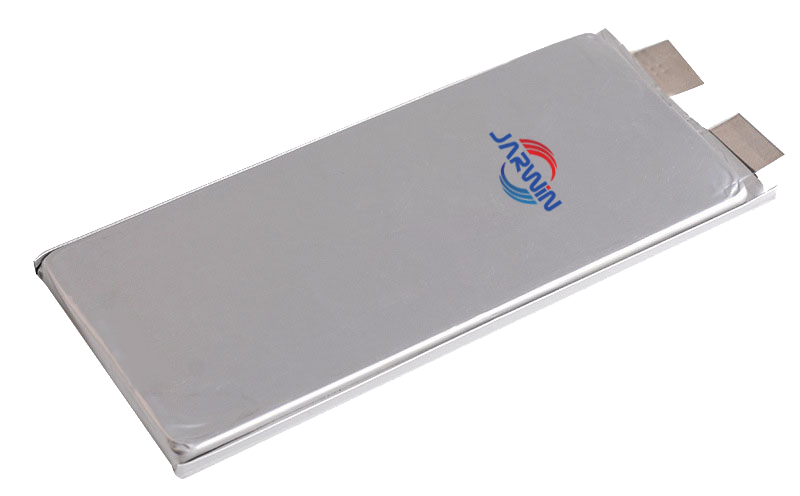
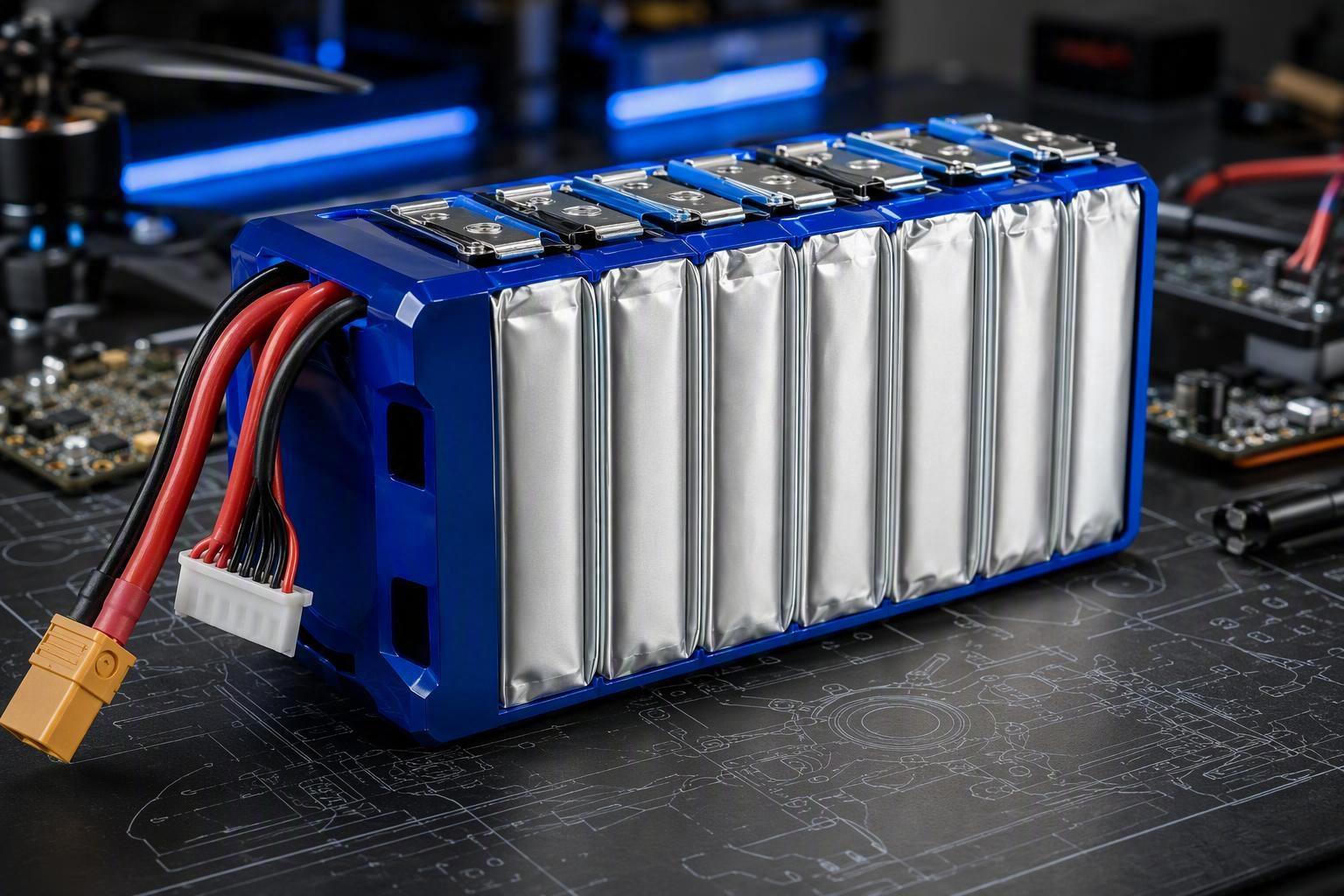
A soft-pack LiPo drone battery uses pouch cells (a flexible laminated film) instead of a rigid metal can. In UAV design, that packaging choice often matters as much as chemistry because it affects how you manage weight, cooling, and pack shape.
Soft-pack LiPo vs hard-case packs
|
What buyers compare |
Soft-pack LiPo drone batteries |
Hard-case packs |
|---|---|---|
|
Packaging |
Flexible pouch (soft pack) |
Rigid shell/housing |
|
Fit and integration |
Easier to package into tight airframes |
Often bulkier but more protected |
|
Weight |
Often lower packaging weight |
Often higher due to casing |
|
Heat behavior in real duty cycles |
Depends on pack design and airflow; evaluate with mission-profile tests |
Depends on casing and thermal path; evaluate the same way |
|
Procurement takeaway |
Prioritize repeatability (thermal rise + impedance drift) over “headline” specs |
Same: prioritize variance control and validated logs |
This covers the baseline concepts most buyers start with. From there, the focus shifts to what industrial operators need next: predictable performance, health monitoring outputs, and a procurement SOP you can defend.
The 2026 procurement shift: from spec compliance to variance control
A spec sheet tells you what a fresh pack can do. Procurement needs to know what a fleet of packs will do after months of high-load cycles.
Industrial fleets often see a similar failure chain repeat:
-
a small subset of packs begin to drift (higher internal resistance, earlier voltage sag)
-
thermal alarms and derates cluster on those packs
-
the fleet compensates with extra spares and conservative dispatch rules
-
cost-per-sortie rises, even if the sticker price looked “competitive”
So the procurement objective in 2026 is not to chase the highest headline numbers. It is to bound variance and convert battery behavior into a predictable maintenance schedule.
Battery health monitoring and semi-solid soft-pack LiPo
Uptime in industrial fleets depends on what the battery system can actually track and act on in the field.
A procurement-grade answer isn’t “the BMS protects the battery.” It’s a clear view of what’s monitored, how it’s estimated during operation, and how those outputs translate into maintenance actions.
Battery health monitor: what it measures
For high-power UAV packs, health monitoring is less about a single SOC gauge and more about tracking the variables that drive field failures:
-
Internal resistance / impedance trend (pack-level and cell-level)
-
Cell consistency drift (how far one cell deviates from the group)
-
Thermal rise under representative load (not a lab idle condition)
These signals are practical because they predict the two things that break missions first in heavy-load duty cycles:
-
voltage sag under load (insufficient thrust margin / early low-voltage cutoff)
-
excess heat (derates, cooldown delays, or protection-triggered aborts)
Battery monitoring: what you can reliably ask a supplier to provide
For industrial procurement, it’s safest to separate two things:
-
What the pack’s BMS can monitor in real time (typically voltage, current, temperature, and protection status)
-
What your acceptance test can quantify and archive (mission-profile discharge logs and repeated measurements over time)
Some suppliers may discuss internal resistance/impedance concepts, but unless the vendor provides a clearly defined method and an exportable output, treat “real-time impedance tracking” as an optional capability that must be demonstrated, not a baseline promise.
Operationally, the procurement ask is simple: require clean, exportable logs (voltage/current/temperature and cell delta where available) from a representative mission-profile test, so you can compare pack-to-pack repeatability and detect early drift.
Cell consistency: early warning signals
In series UAV battery packs, one weak cell becomes the limiter long before the “average capacity” looks bad. In a fleet, that shows up as early low-voltage cutoffs, higher thermal spread, and longer turnaround.
Procurement doesn’t need a lab report here. It needs a practical consistency signal that can be reviewed across packs, such as:
-
cell-to-cell voltage delta under load
-
recurring imbalance after charge
-
cell-to-cell impedance delta trend (if available)
If a supplier can’t provide clean logs or a clear SOH method, the fleet ends up replacing packs late—after they’ve already disrupted missions.
Where semi-solid soft-pack LiPo fits
Semi-solid designs can be a compelling path when they improve variance control or usable cycle life under your real duty cycle—but they should be treated as an optional procurement track, not an automatic upgrade.
The practical question for fleet ops isn’t the label. It’s whether a given pack family is fit for your airframe and mission profile:
-
Weight and packaging: does mass/volume force payload reductions or shorten sortie windows?
-
Discharge profile match: can it sustain your C-demand without earlier voltage sag?
-
Thermal gates in spraying duty cycles: does it stay inside your temperature limits without slowing turnaround?
If you want chemistry-level context, see Herewin’s semi-solid vs. traditional lithium battery comparison. But for procurement, the acceptance-test question remains:
-
Under your duty cycle, does this pack family hold tighter variance in thermal rise and impedance drift than the packs you’re replacing?
If the answer is yes—and you can prove it with logs—you can treat batteries like managed assets instead of consumables.
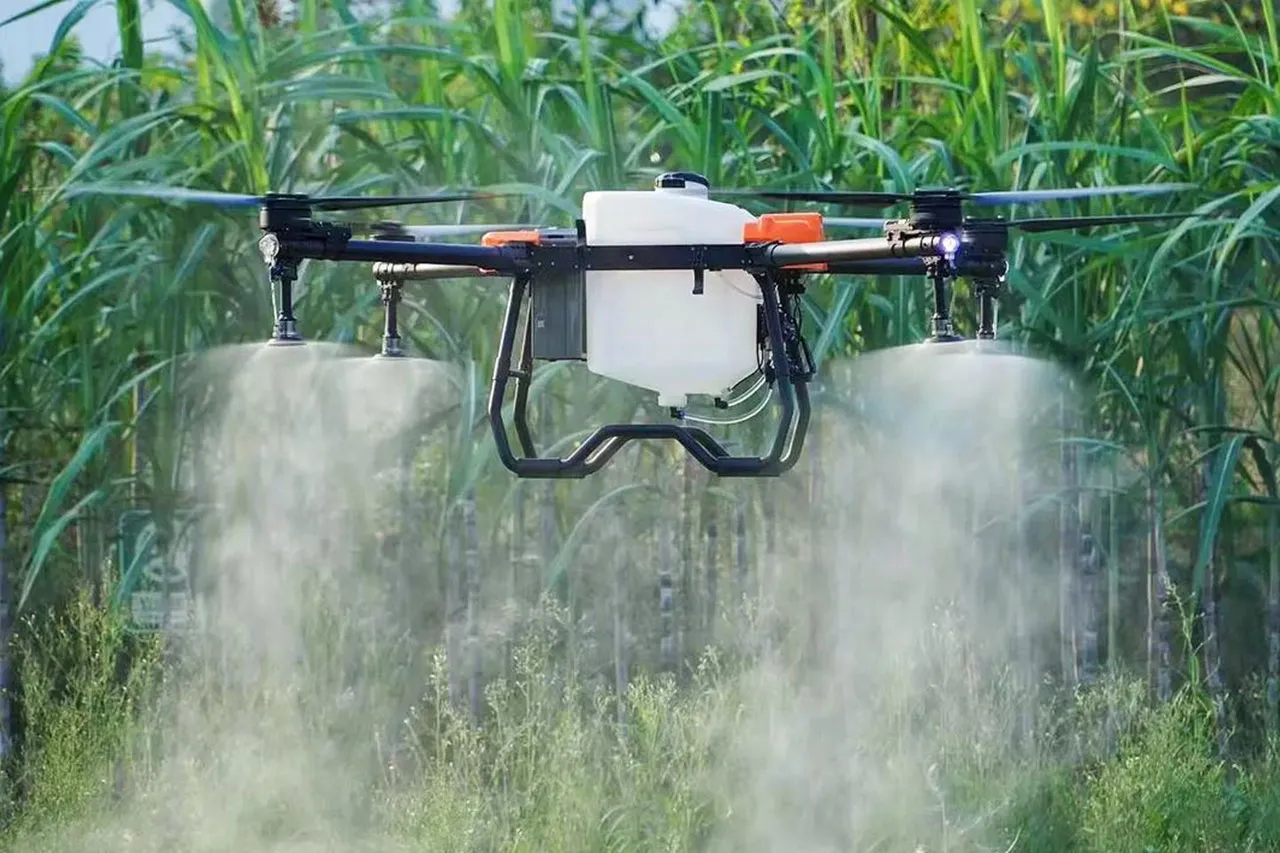
Heavy-lift reality: 30L–50L spraying fleets are constrained by heat and weight
Consumer UAV examples can be a useful reference point, but they don’t capture what breaks first in heavy-load spraying fleets. In heavy-load spraying, the battery is doing two jobs at the same time:
-
deliver high current reliably without excessive voltage sag
-
stay inside thermal gates long enough to sustain turnaround speed
Thermal behavior under high C demand
In 30L–50L spraying missions, power draw is not a brief spike. It is sustained high load during:
-
takeoff and climb with liquid payload
-
hover and low-altitude maneuvering
-
repeated accelerations and course corrections
The operational consequence is simple:
-
Joule heating scales with current (higher current → more heat).
-
when heat accumulates, the system derates or forces cooldown.
A procurement-grade evaluation therefore focuses on repeatability:
-
thermal rise profile across packs (pack-to-pack variance)
-
how that profile changes after hundreds of cycles (aging behavior)
-
whether the system remains stable across the ambient band you operate in
Weight-to-payload tradeoff
In heavy-lift fleets, battery mass is not “just weight.” It is payload you can’t carry.
Reducing battery mass can create value in two ways:
-
More chemical payload per sortie (higher productivity)
-
or more endurance margin at the same payload (fewer aborts and fewer partial loads)
The engineering relationship is straightforward:
-
For drone battery systems, flight time is approximately energy divided by power (t = E / P), but real-world performance is also constrained by thermal limits and voltage sag under load.
-
power required in hover rises as total weight rises (and rises sharply in multirotors)
So if a procurement decision improves energy density (more Wh/kg) without increasing risk, the fleet can often reclaim payload or schedule margin.
Industrial drone battery selection matrix and checklist
Use this matrix to align procurement, engineering validation, and fleet ops acceptance.
|
Decision dimension |
What to measure / request |
-20°C to 0°C (cold operations) |
0°C to 40°C (typical ops) |
40°C to 60°C (hot operations) |
Why it matters to procurement |
|---|---|---|---|---|---|
|
Resistance/aging indicators |
Defined method for pack IR/impedance checks (and cell delta where available) + log export |
Expect higher apparent IR; require preheat protocol + stable measurement conditions |
Baseline; require repeatability |
Aging accelerates; require thermal derate mapping |
Predicts voltage sag, heat, and downtime |
|
Thermal rise under load |
Temp rise curve during representative mission profile |
Cold can raise sag risk; validate power margin |
Evaluate stability |
High-risk zone; require conservative thermal gates |
Affects turnaround speed and mission abort rate |
|
Cell consistency |
Cell voltage delta under load + imbalance recurrence |
Imbalance can worsen without preheat |
Manageable with good balancing |
High-temp imbalance/aging risk |
One weak cell drives pack removals |
|
Pack-to-pack variance |
Distribution across a sample batch |
Variance often widens in cold |
Primary acceptance gate |
Variance control is critical |
Determines spare ratio and scheduling buffers |
|
Compliance artifacts |
UN38.3 test summary + packing/shipping docs |
Mandatory for global shipping |
Mandatory |
Mandatory |
Determines customs, insurance, and air freight eligibility |
Note: capacity retention and exact thresholds depend on cell chemistry, pack design, and duty cycle. The table below is a decision tool, not a published test report.
For the underlying UN transport testing baseline, the UNECE publishes the UN Manual of Tests and Criteria Section 38.3 as Manual Rev5 Section 38.3, and Intertek summarizes practical requirements in its UN 38.3 testing overview.
Cycle life ROI and TCO: 650 vs 750 cycles
Cycle life becomes ROI only when it changes replacement frequency and reduces operational risk.
Why this comparison (and when to change it)
For agricultural spraying fleets, the most useful TCO comparison is often between two adjacent, commonly-procurable cycle-life tiers (for example, 650-class vs 750-class), because they’re more likely to share the same pack form factor, C-rate limits, and thermal behavior. That makes the cost difference easier to validate in a short acceptance test.
If you’re evaluating a higher-cycle technology (e.g., 1000–1200 class), treat it as a separate decision track and confirm it fits your airframe’s weight, discharge profile, and thermal gates—otherwise the “rated cycles” won’t translate into usable fleet life.
Illustrative assumptions (replace with your own numbers)
The figures below are a worked example for procurement modeling only—they are not a claim about any specific supplier’s pricing or guaranteed cycle life.
-
Standard industrial LiPo pack (illustrative ≈650-cycle tier): $480
-
Higher-cycle soft-pack LiPo (illustrative ≈750-cycle tier): $540
-
Fleet usage (illustrative): 250 cycles per pack per year
Step 1: Cost per cycle
Cost per cycle = Pack price / Rated cycles
|
Option |
Pack price |
Rated cycles |
Example cost per cycle |
|---|---|---|---|
|
Standard pack |
$480 |
650 |
$0.738 / cycle |
|
Higher-cycle pack |
$540 |
750 |
$0.720 / cycle |
Result: ~2.4% lower example cost-per-cycle (before downtime and spares).
Step 2: Annualized replacement budget
Annual pack cost = Pack price × (Cycles per year / Rated cycles)
|
Option |
Cycles/year |
Example annual pack cost |
|---|---|---|
|
Standard pack |
250 |
$184.62 / year |
|
Higher-cycle pack |
250 |
$180.00 / year |
Result: $4.62 lower per operating slot per year (example).
Step 3: 4-year spend at 250 cycles/year
|
Option |
Packs needed (equivalent) |
4-year spend |
|---|---|---|
|
Standard pack |
1000/650 = 1.54 packs |
$738.46 |
|
Higher-cycle pack |
1000/750 = 1.33 packs |
$720.00 |
Result: $18.46 lower per operating slot over 4 years (example).
What usually matters even more than pack price
When the cycle-life gap is modest (650 vs 750), the big savings usually come from operations, not the price-per-cycle math. Add line items for:
-
spare inventory carry cost
-
downtime from thermal gates / cooldown time
-
early removals driven by inconsistency across packs
This is where variance control and usable health-monitoring outputs often beat a “cheaper” sticker price.
Fleet SOP for 2026: how to buy batteries like managed assets
Basic safety tips are not enough for industrial fleets. The procurement SOP should require a small set of measurable artifacts.
1. Acceptance testing protocol (batch-level)
Require a supplier to support:
-
batch traceability identifiers
-
a representative mission-profile discharge test (your payload profile)
-
thermal rise logging during the test
-
health monitor export (voltage, current, cell deltas, temperature)
2. Health-monitoring data deliverables (pack-level)
At minimum, ask for:
-
impedance/IR estimate trend definition (method + sampling conditions)
-
cell consistency metrics exposed (delta under load, not just at rest)
-
an export format that your fleet toolchain can ingest (even a clean CSV is better than screenshots)
3. Retirement and rotation policy
Define before you scale:
-
trigger conditions for rotation out of primary missions
-
trigger conditions for retirement
-
how those triggers change by ambient band (-20°C to 60°C)
Deterministic delivery and global compliance
Industrial fleets do not only buy electrochemistry. They buy supply continuity.
A US-facing procurement package should include:
-
UN38.3 transport documentation and test summaries (to reduce shipping/insurance friction)
-
applicable market compliance documentation (commonly cited by suppliers include CE and quality-system certifications such as ISO9001; ask for UL only if your application or customer requires it)
-
consistent labeling, packing, and document completeness for customs
Practical note: exact required documents and marks vary by destination market, pack configuration, and shipment mode, so confirm the deliverable list per model and per order.
For overseas procurement risk reduction, a supplier’s global delivery track record and process discipline matter. The practical next step is to request the supporting artifacts (recent shipment record summary format, clearance documentation methodology, and certification files) and align them with your internal vendor qualification process.
Procurement questions to lower TCO
If you are building a 2026 procurement strategy for heavy-lift fleets, use these questions to force clarity.
If your team can’t answer them confidently, your battery procurement plan is likely carrying hidden operational risk.
-
What variance band (impedance drift, thermal rise) is acceptable before dispatch reliability drops?
-
What health-monitoring outputs are required to predict removals before they disrupt the schedule?
-
What is your true planning horizon (2 years vs 4 years), and how do you annualize replacement?
-
What compliance artifacts and shipping documentation are mandatory for your lanes?
For a deeper consultation, contact Herewin to align on your mission profile, define an acceptance-test SOP, and shortlist pack options that support predictive battery health monitoring—so you can purchase on ROI, not guesswork.
Drone Battery FAQs
What is the best drone battery?
The “best” drone battery depends on your airframe, payload, and duty cycle. For industrial UAV fleets, a good LiPo battery isn’t just the one with the highest capacity—it’s the one with predictable performance across a batch (tight variance in thermal rise and impedance drift), clear health-monitoring outputs, and compliance documentation that supports shipping and insurance.
How long does a drone battery last?
It depends on how you define “last.” Flight time per charge depends on energy (Wh) and mission power draw. Service life depends on cycle life under your load and temperature conditions. In heavy-load operations, packs are often rotated out based on rising internal resistance, increasing heat, or worsening cell imbalance—even if the nameplate capacity still looks acceptable.
Why do LiPo drone batteries get hot?
Heat mainly comes from internal resistance: when high current flows, losses turn into heat (often described as I²R heating). In heavy-lift missions where high power is sustained (not just brief spikes), heat can accumulate fast—leading to derates, cooldown delays, or protection-triggered aborts.
Can you use any battery in a drone?
No. A drone battery must match the required voltage (cell count), continuous discharge capability, connector and mechanical fit, and the aircraft’s power and safety system expectations. For industrial UAV use, you also need packs with consistent batch quality and transport compliance (such as UN38.3) so procurement and logistics don’t become the hidden bottleneck.




 English
  Español
  한국어
한국어  Deutsch
  Français
  日本語
日本語  Русский
  Bahasa Indonesia
  ไทย
ไทย  العربية
  Português do Brasil
  Italiano
  Nederlands