




For organizations leading drone training and academic research, the operational bottleneck is rarely the airframe—it’s the predictability and safety of the power system. In high‑density teaching environments, small charging or handling errors can compound quickly, so the goal isn’t just “compliance,” but repeatable, auditable control.
This article translates industrial power-management practices into actionable protocols for academic drone labs and professional flight training centers. It focuses on engineering levers that matter in campus operations: intrinsic-safety choices at the cell/pack level, disciplined BMS telemetry, and a modular ecosystem that can span 1S–16S without fragmenting procedures or data logs.
Educational Drone Battery Safety Beyond Standards
Classroom density multiplies risk: frequent impacts, mixed chargers, and periods of continuous charging create more “opportunities” for small mistakes to stack up. Compliance is mandatory—but engineering for intrinsic safety gives you an extra buffer when misuse happens.
Intrinsic safety engineering for high-density teaching labs
Thermal events typically escalate when internal heat generation grows faster than the pack can shed that heat to its surroundings. In teaching labs, the practical triggers are familiar: impact damage, crushed packs in student bags, charger/profile mix‑ups, and repeated charge cycles with limited supervision. Two material‑level design choices can reduce some of these failure pathways:
Semi‑solid or gel polymer electrolytes: These use a polymer matrix swollen by liquid electrolyte. By partially immobilizing the electrolyte phase, this architecture can reduce leakage risk after minor mechanical damage and help form more mechanically robust interphases that slow dendrite growth—both of which can improve abuse tolerance compared with fully liquid systems. Materials research describes gel polymer systems that stabilize interfaces and suppress dendrites in relevant chemistries; see ACS Applied Materials & Interfaces: In‑situ formed gel polymer electrolytes and interface stability (2024).
Ceramic or alumina‑coated separators: These are designed to raise melt/shrink temperatures and improve puncture behavior, helping limit internal short risks during impacts. To further mitigate the risk of internal short circuits during high‑impact training sessions, alumina‑coated separators are employed to raise the effective melt and shrinkage temperatures of the internal membranes. Compared to standard polymer separators, this ceramic layer improves puncture behavior and maintains structural integrity even under elevated thermal stress. By providing this additional mechanical buffer, the battery architecture better tolerates the localized physical abuse common in student‑led drone projects.
Physical Resilience for Student Drone Projects
In teaching labs, drones hit the floor. Ruggedized enclosures, strain‑relieved leads, and shock‑isolated mounting in the airframe can materially reduce abuse to the cells and interconnects. Pair those mechanical protections with separators that resist shrinkage and puncture, and you have a stack of defenses that better tolerates everyday mishaps.
In a high-density academic environment, physical resilience and intelligent management work in tandem. Think of it this way: materials and mechanics should buy you time, while BMS protections and SOPs make use of that time.
Standardizing 1S–16S Drone Battery Systems
A unified power ecosystem is the definitive strategic response to the fragmentation of mismatched battery inventories. In academic environments, the core objective is to deploy a single power framework capable of supporting an entire research spectrum—from 1S micro-drones used in foundational aerodynamics to 16S heavy-lift platforms for advanced sensor testing—without escalating operational overhead.
Standardizing BMS telemetry and labeling across the 1S–16S range enables synchronized data logging and cross-cohort auditing. This ensures that safety protocols and performance benchmarks remain uniform, regardless of a specific airframe’s mass or power budget.
Scalable Architecture from Micro to Heavy-Lift Drones
Managing a diverse fleet often leads to significant “configuration latency.” To mitigate this, industry leaders are moving toward a standardized BMS architecture that scales linearly from 1S upward. This approach maintains consistent sense-line topology and cell balancing logic throughout the laboratory.
For institutions seeking to optimize mixed-fleet operations, We recommend a Unified Operational Framework:
Uniform Monitoring Stack: Implementing a BMS family that utilizes the same telemetry protocols across all cell counts.
Mechanical Error-Proofing: Standardizing connectors and physical keying to eliminate cross-voltage mating errors.
Metadata Integration: Utilizing QR-coded labeling for chemistry, cycle history, and storage SOC to bridge the gap between physical hardware and digital flight logs.
Frictionless Integration for Research Labs
When a power system integrates into an airframe without manual pinout configuration, researchers can focus on mission parameters and flight safety rather than troubleshooting hardware. This “frictionless” deployment can be achieved through keyed connectors and a strict visual taxonomy, such as color-coded wraps designated for specific voltage classes.
By centralizing on a charging infrastructure that covers the full 1S–16S range with per-chemistry safeguards, laboratories achieve faster equipment turnover and a measurable reduction in human error. Furthermore, for outdoor field deployments, industrial-grade sealing (up to IP65) ensures that critical telemetry connections remain resilient against environmental exposure and rigorous field handling.
Institutions can achieve seamless integration across mixed fleets by adopting modular 1S–16S battery solutions that feature a unified BMS architecture and integrated telemetry. To support the practical implementation of these frameworks, Herewin offers technical consultation for laboratory leads—assisting with power-system mapping, connector standardization, and EHS-aligned infrastructure setup.
SOC Accuracy and Battery Lifecycle Management
Unmodeled voltage drops and estimator drift are the primary catalysts for mid-mission aborts—particularly during transient load phases such as takeoff or aggressive payload actuation. In a professional research environment, mitigating these risks requires a shift from “estimated guessing” to disciplined State-of-Charge (SOC) and State-of-Health (SOH) management.
Eliminating Failures with Accurate SOC Estimation
Modern SOC estimation has evolved beyond static look-up tables. By synthesizing high-frequency coulomb counting with model-based observers—such as Extended Kalman Filters (EKF)—it is possible to maintain SOC errors within a ±3% margin, even under fluctuating thermal and current profiles.
To translate estimation theory into fleet reliability, institutional programs should adopt a three-tier operational policy:
Dynamic Abort Thresholds: Define safety buffers based on real-time voltage-sag behavior during high-discharge phases, rather than relying on fixed “empty” cell voltages.
Mission-Specific Pre-flight Validation: Enforce stringent SOC minimums that are dynamically scaled to the power requirements of specific sensor suites (e.g., LiDAR or hyperspectral imaging).
Post-flight Energy Auditing: Log residual SOC to iteratively refine mission energy models. This turns every flight into a data point for future risk assessment.
Extending Battery Lifecycle and Reducing Costs
A high-performance battery program is, at its core, a cost-avoidance strategy. While industrial-grade cells often baseline a cycle life exceeding 1,500 cycles under controlled 2C–4C charging, achieving this longevity in a high-utilization lab requires proactive chemical stewardship.
To maximize the Return on Investment (ROI) of a battery fleet, We recommend the following lifecycle protocols:
Optimized Utilization Windows: For routine flight training, utilizing a narrower SOC band (e.g., 20%–80%) significantly mitigates chemical stress and lattice strain within the cell electrodes.
Thermal Discipline: Maintaining packs within prescribed temperature envelopes during both discharge and rapid-charging cycles is essential to prevent accelerated impedance growth.
C-Rate Optimization: Select pack capacities that prevent chronic high-C discharge sessions. Over a semester, this conservative sizing approach dramatically reduces premature cell retirement and stabilizes fleet availability.
By implementing these data-driven safeguards, laboratories move beyond the cycle of constant procurement. The engineering logic is clear: By protecting the cell’s internal chemistry, the chemistry protects the research budget.
Battery Safety Protocols for Drone Operations
A robust battery program is built on the integration of hardware safeguards and disciplined Environmental Health and Safety (EHS) policies. By aligning laboratory operations with established institutional benchmarks—such as the MIT EHS Lithium-Ion Safety Guidance and the University of Michigan’s EHS protocols—research leads can create a scalable safety backbone for high-density campus environments.
Best Practices for Storage and Handling
Effective management of lithium-based assets requires a lifecycle approach to storage and logistics:
Storage Stewardship: Maintain packs at a stable mid-range State-of-Charge (SOC) in climate-controlled environments. Segregate compromised units immediately and maintain a serialized inspection log to track physical degradation.
Regulatory Compliance: Ensure all flight packs maintain UN 38.3 certification and adhere to the latest IATA 2026 shipping regulations regarding packaging and SOC limits for transit.
Pre-Flight Checks and Anomaly Response
To ensure high-discharge safety during active flight sessions, laboratories should implement a streamlined Pre-Flight Checklist to be posted in all charging and deployment zones:
Validated Charging: Utilize designated balance-charger profiles specific to the pack’s chemistry and S-count; strictly prohibit unattended charging.
Structural Integrity Audit: Inspect enclosure seals, connector seating, and thermal stabilizes before every mission.
Threshold-Based Abort: Mandate an immediate landing and quarantine protocol upon the detection of anomalies, including atypical swelling, odors, or rapid voltage sag under nominal loads.
Case Study: Standardizing a Drone Fleet
A prominent university lab—operating a mixed fleet ranging from 1S micro-drones for fundamentals to 12S heavy-lift platforms for capstone research—previously faced recurring downtime due to mismatched inventories and untracked cell aging.
By standardizing on a Unified Monitoring Stack and a compatibility matrix, the lab eliminated “configuration fatigue.” Within a single academic term, instructors achieved 100% confidence in pack-to-airframe assignments, while post-flight telemetry showed a significant reduction in voltage-sag aborts.
Smart BMS for Drone Battery Monitoring
Centralized dashboards allow supervisors to identify outliers before they escalate into safety incidents. Industrial-grade hardware, such as Herewin’s Smart BMS series, provides the high-fidelity data hooks necessary for this level of oversight.
Key technical baselines for institutional safety include:
Dual-Channel Voltage Monitoring: Enforcing strict 4.2V max / 2.8V min thresholds per cell at the hardware layer.
High-Precision Thermal Sensing: Utilizing NTC sensors with ±0.5°C accuracy across the full operating envelope (-20°C to 60°C).
Digital Integration: These systems offer pre-configured monitoring profiles that integrate seamlessly with campus safety dashboards, allowing research leads to calibrate alert thresholds against specific mission profiles.
Ensuring Data Integrity in Drone Missions
High-value sensor payloads—such as LiDAR and multispectral cameras—require a stable voltage platform to ensure data consistency. By defining pre-mission SOC minimums and bench-validating payload current draw, “mystery crashes” are replaced by predictable, avoidable aborts. When battery policy is tied to the known error bands of the BMS estimator, the result is protected equipment and intact research data.
To explore the underlying logic of how advanced telemetry enhances safety and performance, please refer to our technical resource: Innovation in BMS for Battery Safety and Performance.
Battery Compliance for University Procurement
In an academic research environment, transport and safety compliance are the non-negotiable pillars of a sustainable drone program. The following framework is designed to facilitate seamless procurement approvals, risk management filings, and international logistics synchronization.
Battery Procurement Checklist
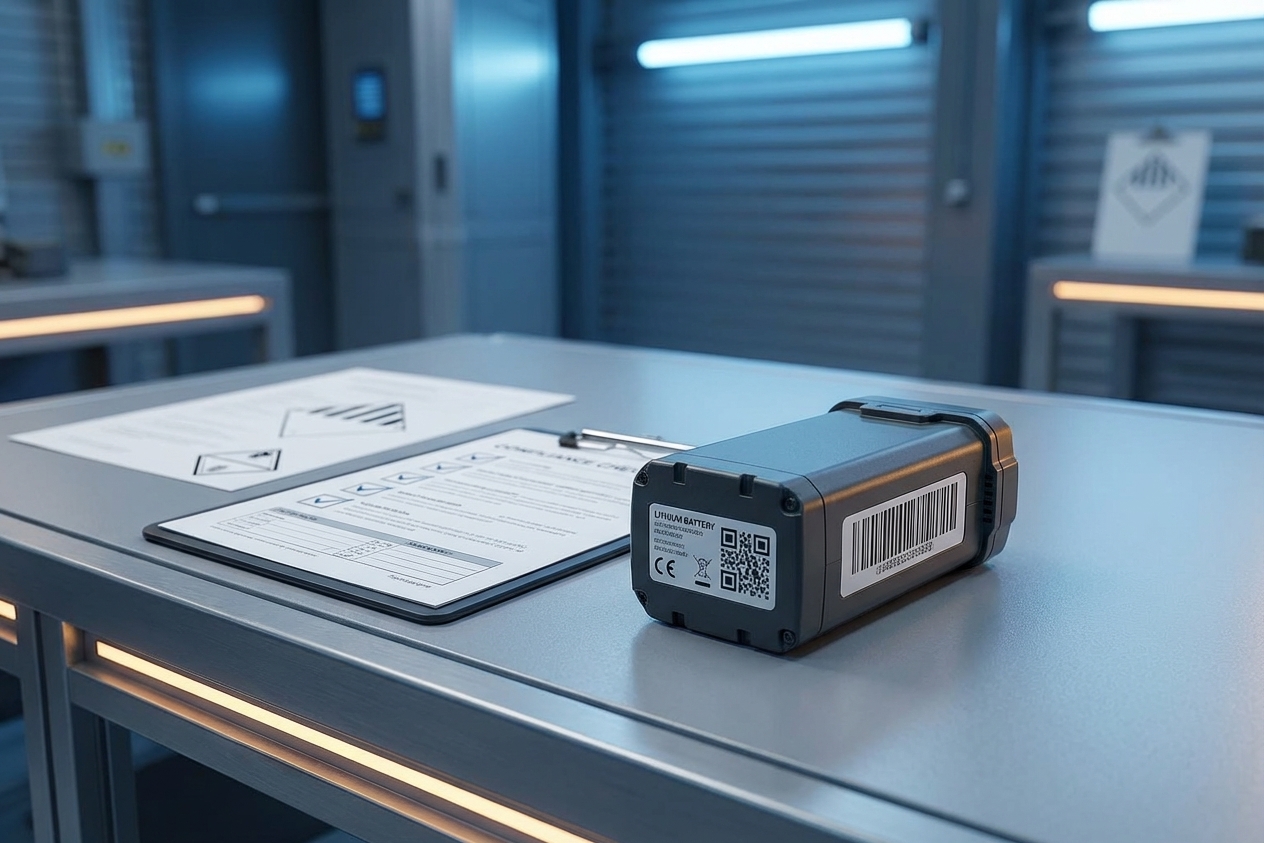
UN 38.3 Test Summaries: Mandatory verification for the specific battery design type. Logistics must be strictly aligned with current IATA State-of-Charge (SOC) mandates to ensure legal and safe transit.
IEC 62133-2 Certification: The definitive global benchmark for portable lithium pack safety, covering both standard operational parameters and foreseeable misuse conditions.
UL Safety Mapping: Institutional verification of cell-level integrity (UL 1642) and pack-level enclosure resilience (UL 2054).
Operational Dossier: A complete compliance package including Safety Data Sheets (SDS), charger compatibility statements, and campus-aligned SOPs (covering supervised charging and mid-SOC storage protocols).
Validation Logs: Empirical evidence supporting SOC accuracy claims and a standardized, term-based calibration procedure for laboratory instructors.
Key Battery Standards and Applications
Standard | Scope | Institutional Application |
UN 38.3 | Transport safety protocols | Shipping evidence and vendor due diligence. |
IATA DGR 2026 | Air transport & SOC regulations | Field deployments and import/export compliance. |
IEC 62133-2 | Portable pack safety benchmarks | Procurement screening for lab-kits and research hardware. |
UL 1642 / 2054 | Cell & Pack-level abuse testing | North American institutional approval for power systems. |
ЧАСТО ЗАДАВАЕМЫЕ ВОПРОСЫ
What distinguishes a professional educational battery from a standard hobbyist pack?
The core distinction lies in Intrinsic Safety Engineering. While hobbyist packs prioritize power-to-weight ratios at the expense of protective margins, professional systems utilize material-level defenses—such as semi-solid electrolytes and ceramic-coated separators—housed in ruggedized, vibration-isolated enclosures. These layers, combined with active BMS monitoring, ensure the battery remains stable even under the localized physical abuse typical of a classroom environment.
How frequently should SOC calibration be performed in a research laboratory?
To maintain Scientific Data Integrity, a baseline calibration is recommended once per academic cohort or following any period of inactivity exceeding 60 days. Performing a full discharge/charge cycle resets the BMS estimator’s reference points, effectively eliminating the measurement drift that can otherwise lead to unmodeled voltage drops and mission failure.
Are these battery kits eligible for air transport to international field sites or competitions?
Yes, provided the system maintains a valid UN 38.3 Test Summary and adheres to current IATA 2026 regulations, specifically the ≤30% State-of-Charge (SOC) mandate. Herewin provides the necessary compliance dossiers to ensure seamless acceptance by air couriers and institutional logistics departments.
Does our laboratory require both IEC 62133-2 and UL certifications?
This depends on your specific Institutional Compliance Mapping. IEC 62133-2 is the globally recognized baseline for portable lithium safety, while UL 1642 (cells) and UL 2054 (packs) are often required by North American university EHS departments. We recommend selecting a supplier that provides both to ensure universal interoperability across campus safety jurisdictions.
What is the single most critical factor in preventing battery-related incidents?
Strictly supervised, chemistry-correct charging on fire-resistant surfaces. Regardless of how advanced the hardware is, consistent adherence to this Operational Redline is the final, most effective barrier against human error. Standardizing this protocol within your laboratory’s SOPs ensures that even rare hardware anomalies are identified and quarantined before they can escalate.
A resilient educational drone program is the fusion of intrinsic engineering defenses, intelligent telemetry, and disciplined SOPs. By layering hardware-level safeguards with rigorous standards documentation, institutions can effectively raise the “safety floor” without compromising research momentum.

 Русский
  English
  Español
  한국어
한국어  Deutsch
  Français
  日本語
日本語  Bahasa Indonesia
  ไทย
ไทย  العربية
  Português do Brasil
  Italiano
  Nederlands