





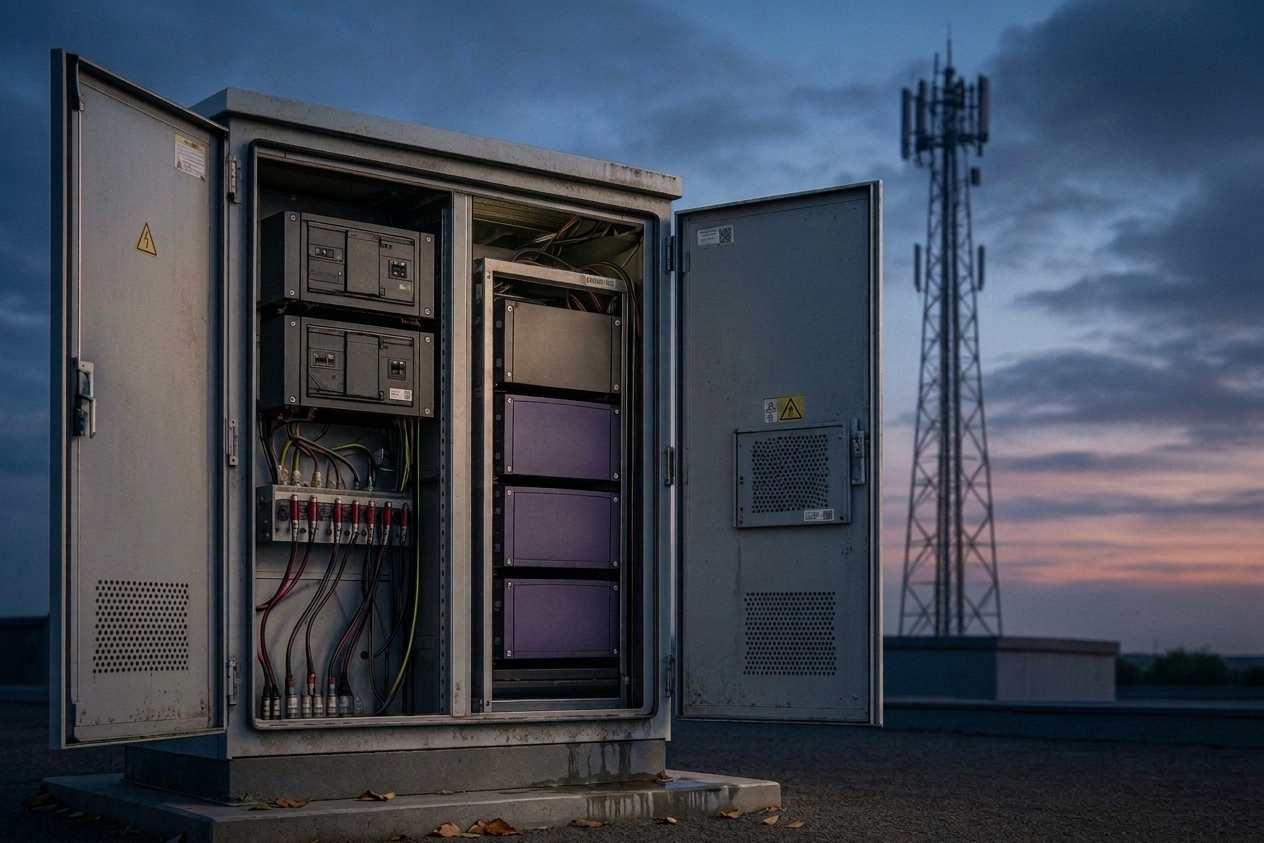
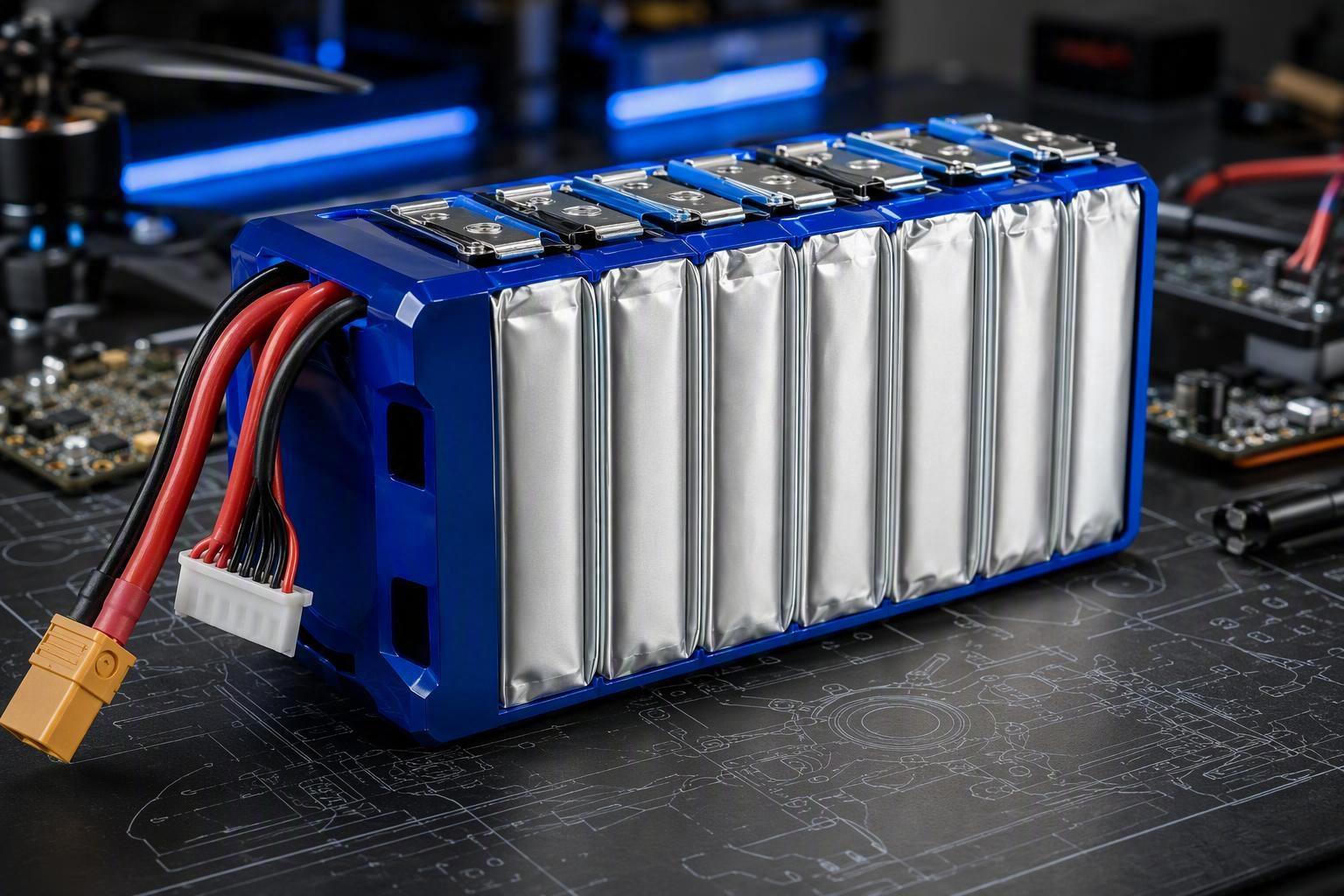
As telecom operators densify 5G networks, LiFePO4 battery systems for telecom base station backup are increasingly replacing traditional VRLA strings.
For teams planning VRLA replacement, the question isn’t whether lithium works—it’s whether the system delivers predictable runtime under real site constraints: tight cabinets, higher heat load, and limited maintenance access. When the grid drops, the site either rides through on DC backup—or it turns into a coverage and SLA incident.
That’s why the conversation has shifted from “Which battery is cheaper?” to “Which battery reduces operational risk over the next 5–10 years?” In that decision framework, LiFePO4 is often the default—provided the design matches the trade‑offs you actually manage on site: space, thermal behavior, and service life.
This is also why lithium battery vs lead acid battery for telecom backup power comparisons have shifted from upfront cost toward lifecycle reliability and site-level constraints.
Why traditional VRLA batteries are becoming challenging for modern telecom sites
VRLA batteries became dominant because they were mature, widely available, and easy to service at scale. Most engineers also have years of operational muscle memory around them.
But modern sites amplify VRLA’s weak points.
1) Limited space and heavy weight
VRLA batteries are bulky for the usable energy you get. In practice:
Rooftop or wall‑mounted sites hit structural limits.
Outdoor cabinets run out of volume (battery competes with rectifiers, breakers, and airflow).
In contrast, lithium systems are commonly cited as having 3–5× higher energy density than VRLA, delivering the same backup energy in a smaller footprint (and with less weight). As a rough engineering reference, VRLA is often in the ~30–40 Wh/kg range, while telecom-grade LiFePO4 systems are commonly designed around ~120–160 Wh/kg, depending on packaging and protection requirements. That’s one reason they’ve become common in critical power designs.
2) Shorter service life in hot cabinets
Temperature is the silent killer in telecom power.VRLA life is typically specified around 20–25°C. In the real world, outdoor cabinets and cramped indoor closets often run hotter—especially in summer.
A widely used rule of thumb is that lead‑acid battery life is reduced by about 50% for each ~8–10°C rise above 25°C. Schneider Electric notes this guidance in their UPS battery life recommendations (Schneider Electric blog post). The exact multiplier depends on battery design, float voltage, and duty profile—but the takeaway is stable: higher average temperature drives faster aging and earlier replacement.
3) Higher maintenance burden and higher variance risk
Even when a VRLA string looks “fine” on a calendar schedule, field experience shows that:
performance can drift unevenly (one weak block limits the string)
capacity testing and impedance checks consume operational bandwidth
replacement work introduces risk windows (human error, cable issues, downtime during swap)
At fleet scale, the cost isn’t only the battery—it’s the time on site and the uncertainty in delivered runtime as strings age unevenly.
Why LiFePO4 batteries fit telecom backup requirements better
This isn’t about chemistry in isolation. It’s about how the battery system performs under telecom constraints.
For telecom programs, battery selection isn’t only about cell chemistry. It also depends on cell consistency, pack architecture, BMS communication, and deployment‑specific customization.
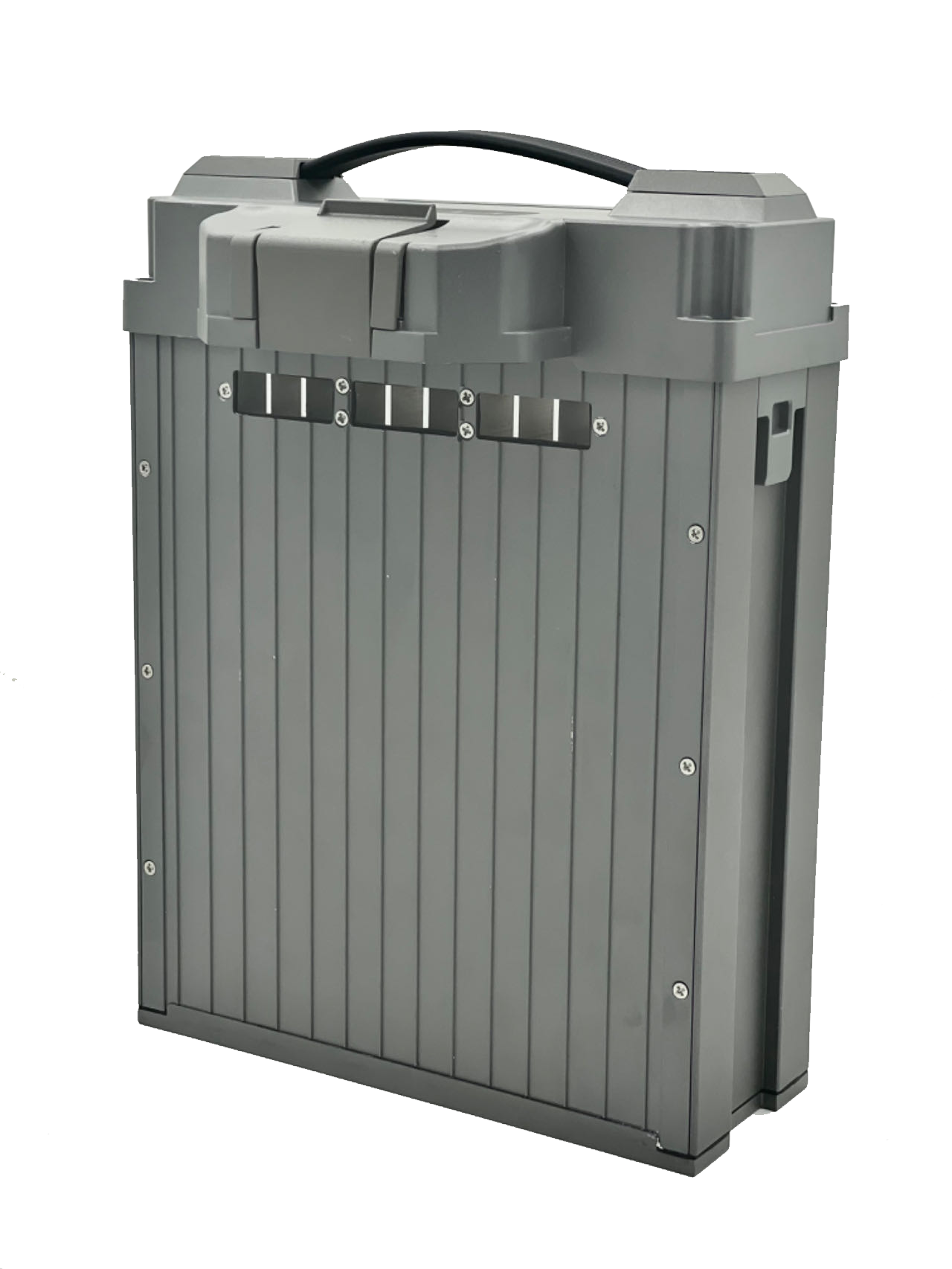
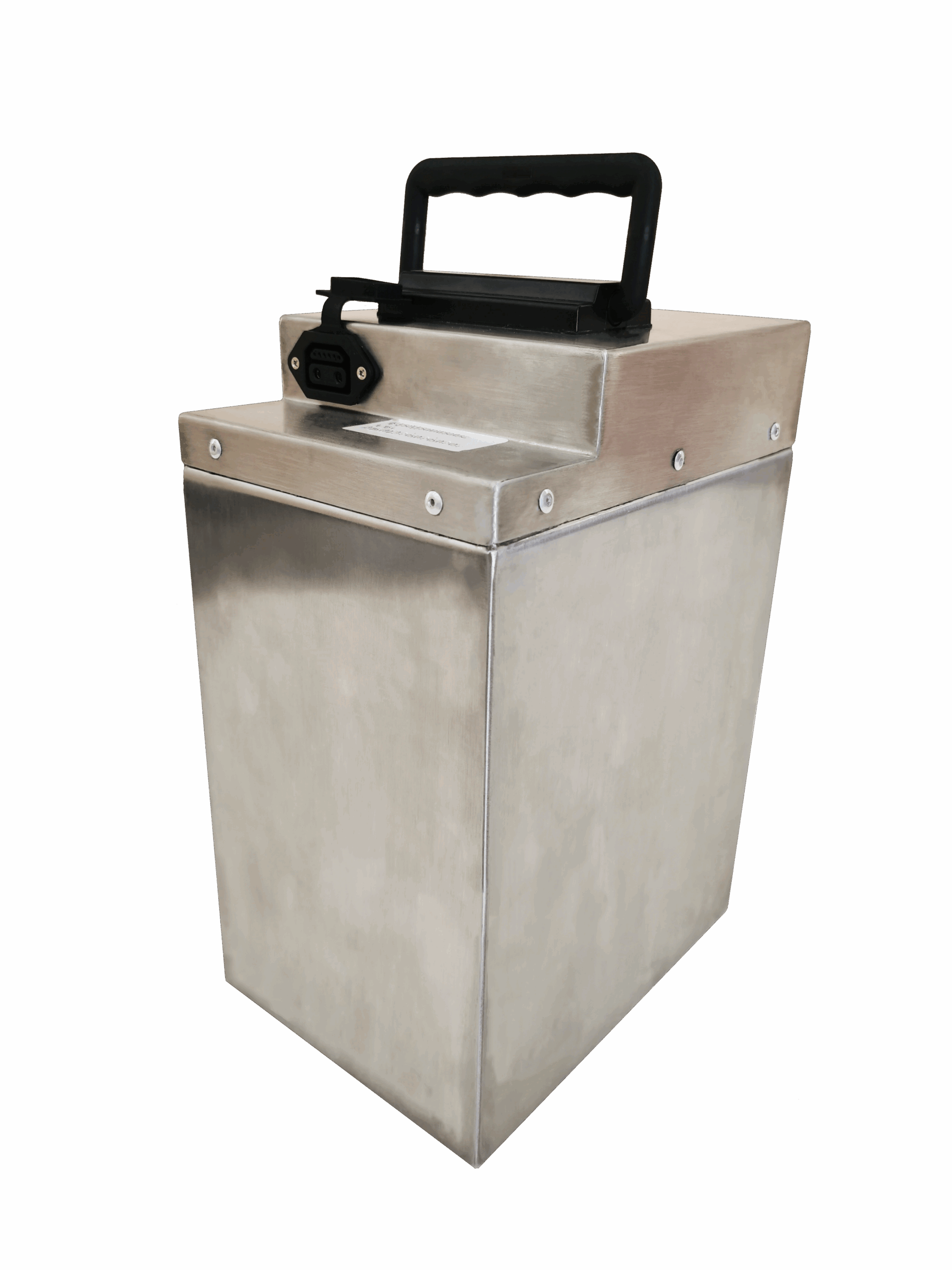
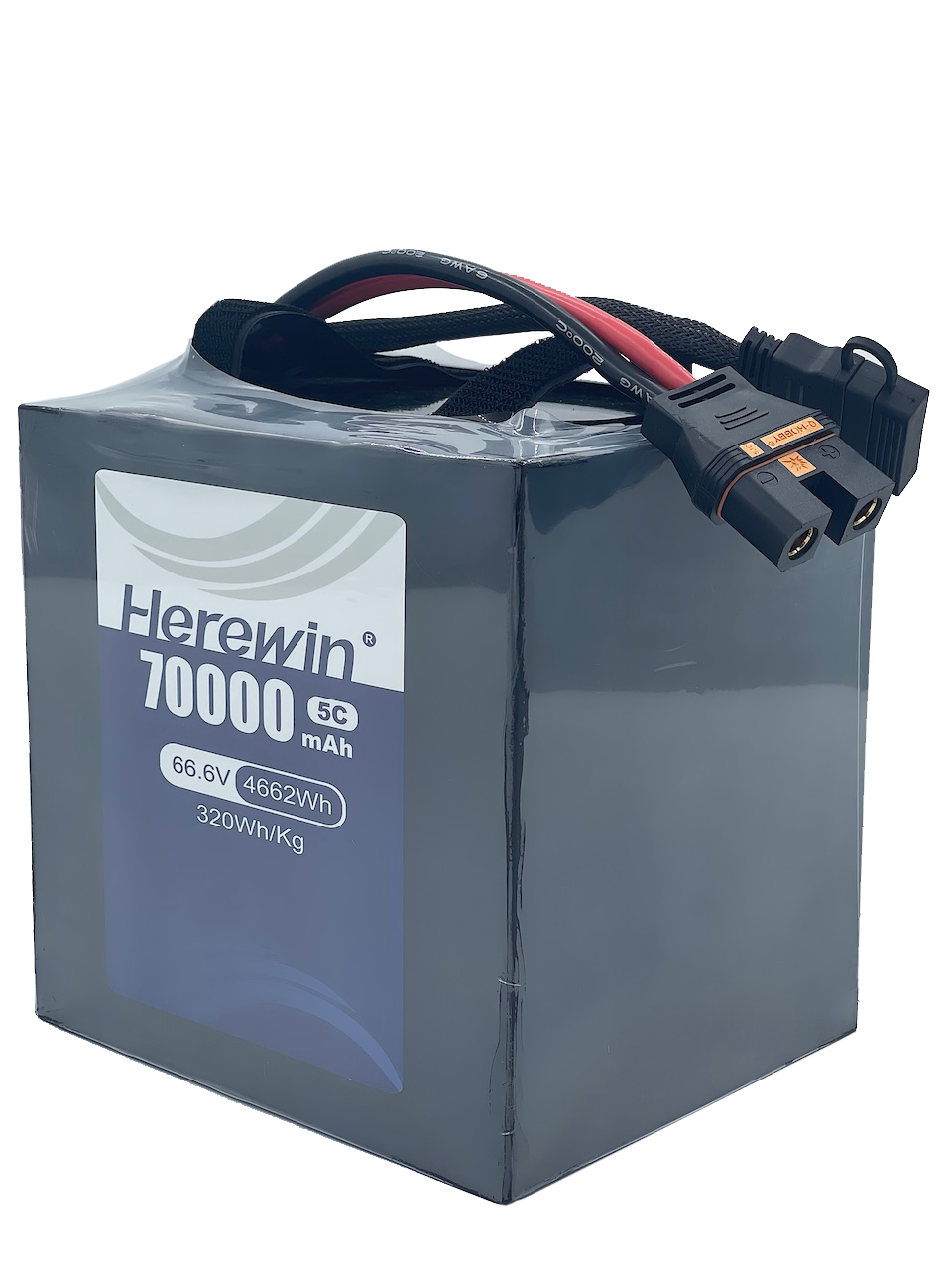
That system-level view is why suppliers like Herewin focus on engineered LiFePO4 battery systems—configurable voltage and capacity, selectable BMS communication (such as RS485/CAN), and enclosure options designed for industrial backup deployments.
If you want a quick view of how a system is typically packaged for base stations, Herewin’s overview of Telecom Backup Power Solutions can help you align voltage class, monitoring expectations, and enclosure constraints before you write an RFQ.
1) Higher energy density for space‑constrained sites
A LiFePO4 battery for telecom base station backup can often deliver the same autonomy with a smaller physical envelope. That directly supports:
rooftop and wall‑mount deployments
dense urban cabinet sites
edge nodes where battery space competes with IT or radio equipment
If your upgrade program includes “drop‑in” replacements, density matters because it reduces the amount of enclosure rework you need.
2) Longer service life reduces replacement frequency
Cycle life numbers alone can be misleading because telecom backup is usually float + occasional discharge + recharge, not daily deep cycling.
What matters operationally is replacement cadence:
VRLA often needs earlier replacement in warmer sites.
LiFePO4 can hold capacity more predictably over years when properly managed.
Fewer replacements usually translate into fewer site visits—and fewer chances to introduce errors during swap work.
3) Higher efficiency and more usable energy
Efficiency matters in two places telecom teams feel immediately:
Recharge window after an outage (how fast you get back to fully protected)
Generator runtime (if the site depends on diesel during extended outages)
Many industry comparisons cite LiFePO4 round‑trip efficiency in the mid‑90% range versus significantly lower values for lead‑acid systems. Even if your exact numbers vary, the planning logic is consistent: higher efficiency reduces wasted energy and cabinet heat.
LiFePO4 tends to win on space, efficiency, and replacement cadence—when properly engineered and integrated. Otherwise you can trade one failure mode (VRLA aging) for another (BMS or thermal issues).
How to balance space, thermal management, and battery lifetime
Space, heat, and lifetime aren’t independent variables inside a telecom cabinet:
More compact packing improves space utilization but increases thermal resistance.
Hotter operation accelerates aging and can trigger protection limits.
Shorter life increases replacement frequency—and the number of on‑site interventions.
Treat this as the trade‑off you’re optimizing, not three separate checkboxes.
One practical way to think about it: when you push for maximum packing density, you usually shrink airflow channels and reduce heat-transfer area. That increases thermal resistance, which raises cell temperature during charge and discharge. Over time, higher average temperature can accelerate aging and may force earlier BMS derating in hot cabinets—directly reducing usable backup time when you need it.
Compact design: density without hotspots
A compact LiFePO4 module helps you fit energy where you need it—but the design must avoid local hotspots and uneven aging.
What to look for is not “maximum density” in a brochure. It’s whether the pack design supports:
predictable airflow paths (or conductive paths in fanless designs)
consistent cell temperatures across the module (large temperature differences can accelerate uneven aging and reduce consistency)
serviceable mechanical layout (replaceable modules, accessible terminals)
base station battery thermal management: keep the battery in its stable band
You don’t need exotic cooling. You need a strategy that matches the site.
Common options include:
Passive thermal design (heat spreading, enclosure layout, conduction to cabinet)
Smart fan control (variable speed based on measured temperature)
Cabinet‑level ventilation/AC (when the site thermal budget demands it)
For VRLA, heat mainly drives faster aging. For LiFePO4, it affects both aging and protection limits.
For RFQs and acceptance testing, ask for a thermal test report at the target load (or worst‑case cabinet conditions) showing maximum cell temperature, module-to-module temperature spread, and the BMS derating / fan-control thresholds used to keep the pack within its operating band.
Intelligent BMS control: make lifetime predictable, not just “long”
In practice, the BMS determines whether a LiFePO4 telecom backup pack is easy to operate at scale.
In base stations, the BMS has two jobs:
Keep the pack inside safe limits (voltage, current, temperature).
Make backup runtime predictable (SOC/SOH estimation, balancing, alarms).
For large-scale telecom deployments, remote monitoring is increasingly important. A capable BMS can provide SOC/SOH estimation, cell balancing, temperature monitoring, and alarm communication—helping operators reduce unnecessary site visits and catch issues before they become SLA incidents.
For telecom deployment, must‑have functions generally include:
cell voltage and temperature monitoring
over/under‑voltage and over‑current protection
balancing to prevent one weak cell from limiting the pack
SOC/SOH reporting and event logs
communications for integration (telecom lithium battery BMS monitoring is often done via RS485/CAN depending on the site controller)
Where LiFePO4 telecom backup batteries deliver the most value
Instead of one-off “case studies,” here are common scenarios engineers recognize.
Urban rooftop and cabinet sites
What breaks first: space and heat.
What to prioritize: compact footprint, predictable thermal behavior, and telemetry.
Remote towers and low-access sites
What breaks first: maintenance cadence.
What to prioritize: long replacement cycle, fault logging, and remote alarms tied to clear field actions.
Extreme climate sites
What breaks first: environmental stress.
What to prioritize: correct IP rating for the enclosure, a temperature strategy (including heater options when needed), and a BMS policy aligned with extremes.
In cold regions, don’t treat “–20°C capable” as a label—confirm the charge and discharge limits at low temperature. Many LiFePO4 systems restrict charging when cells are cold, so field-ready designs often include controlled pre‑heating (or charge‑inhibit logic) to avoid lithium plating and to keep runtime estimates reliable.
How to choose a LiFePO4 battery for telecom base station backup
This is the procurement section that prevents “it looked good on paper” failures.
1) Confirm DC power system compatibility (start with –48V reality)
Most telecom infrastructure is built around –48V DC power architecture. Analog Devices gives a practical overview of the –48V ecosystem and why it persists in telecom designs (Analog Devices’ –48V DC power design overview).
Your battery choice must match:
nominal system voltage (often 48V / 51.2V class packs)
rectifier charge behavior and allowable charge voltage range
end-of-discharge thresholds in the site controller
Treat “48V” as an interface, not a label. Validate the operating window against your rectifier/controller settings.
2) Size telecom base station battery backup 48V systems using usable energy, not nameplate Ah
Two systems with the same “Ah” rating can deliver different usable backup energy depending on:
allowable depth of discharge
voltage sag under load
temperature derating
Instead of guessing, model it with a simple input table.
Sizing input | What to enter | Why it matters |
|---|---|---|
DC bus voltage (V) | e.g., 48 V / 51.2 V | Must match rectifier/controller window |
Site load & required autonomy | e.g., 1200 W for 4 h | Converts directly to required Wh/kWh |
Usable capacity policy | allowable DoD and minimum voltage | Determines real backup time, not nameplate Ah |
Ambient cabinet temperature | site-specific | Drives derating and aging |
3) Specify monitoring and communications up front
If you want predictable operations, specify the monitoring interface in the RFQ:
SOC, SOH, cycle count
alarms and fault codes (and the action each code triggers)
comms: RS485 or CAN (plus gateways if your site controller needs it)
Make protocol support explicit—this is where comparisons often miss real integration work.
For RFQs and FAT/SAT, validate not just the interface name but the operational details: SOC/SOH update rate with timestamps, event/fault log retention, and an alarm & fault-code mapping that your controller/NMS can parse into clear field actions.
4) Ask for documentation that matches real deployment risks
At minimum, ensure you have:
transport/shipping documentation (often UN38.3 for lithium)
safety and quality documentation appropriate for your region
commissioning guidance: acceptance tests, recommended limits, and integration notes
Telecom LiFePO4 battery evaluation checklist
Parameter | Why it matters |
|---|---|
DC voltage range | Compatibility with rectifier/controller window |
Capacity and autonomy target | Confirms real backup duration under site load |
Operating temperature range | Drives derating, aging rate, and charge limits |
BMS communication protocol | Enables remote monitoring via RS485/CAN (or gateways) |
Certifications and shipping docs | Supports deployment approval and logistics (e.g., UN38.3 where applicable) |
What to evaluate in a telecom LiFePO4 battery supplier
Even with the right chemistry, outcomes depend heavily on the supplier’s engineering and delivery discipline. For telecom backup projects, evaluate:
Customization capability: voltage window, capacity/autonomy configuration, and enclosure options that fit cabinet constraints.
BMS integration: RS485/CAN support, alarm mapping, and alignment with site controller and rectifier settings.
Quality consistency and testing: cell matching, production traceability, and pack-level inspection to reduce variance across large fleets.
Documentation and field support: shipping/safety documentation (for example, UN38.3 where applicable), commissioning support, remote troubleshooting, and a replacement strategy that fits fleet operations.
ЧАСТО ЗАДАВАЕМЫЕ ВОПРОСЫ
Can LiFePO4 replace VRLA batteries in telecom base stations?
Often yes, but it’s not an automatic drop‑in. Validate rectifier/controller voltage settings, protection limits, and monitoring integration (alarms, SOC reporting).
Can lithium batteries be used in existing telecom cabinets for retrofit projects?
Often yes—validate physical fit, electrical compatibility (rectifier window/protection), and monitoring integration to the site controller/NMS.
What is the difference between a 48V telecom lithium battery and a 51.2V LiFePO4 battery?
“48V” often refers to the telecom DC bus class, while 51.2V describes a common LiFePO4 nominal voltage (often 16‑series). What matters is whether the charge/discharge range matches your rectifier and controller settings.
Make the upgrade an integration project
Choosing a LiFePO4 battery for telecom base station backup is usually justified by a simple operational logic:
you’re buying back cabinet space
you’re reducing replacement frequency
you’re making backup runtime more predictable
You get those wins when the system is engineered and commissioned for the site: rectifier/controller voltage window, real cabinet thermal conditions, and BMS telemetry that matches your monitoring workflow.






 Русский
  English
  Español
  한국어
한국어  Deutsch
  Français
  日本語
日本語  Bahasa Indonesia
  ไทย
ไทย  العربية
  Português do Brasil
  Italiano
  Nederlands