



If you’re buying batteries for an industrial UAV fleet in 2026, it’s usually more productive to focus on what you can verify than to chase 400+ Wh/kg headlines.
A pack that looks great on paper only becomes a safe spec after it’s been validated as a system—typically with a defined fast‑charge protocol, temperature/SOC gates, and audit‑ready cycle‑life data.
This 2026 industrial drone battery buying guide is for procurement and engineering teams writing RFPs, running bench + flight validation, and defending total cost of ownership (TCO). We’ll separate what’s ready to buy from what’s still pilot‑stage.
Use it in two passes: procurement can start with the snapshot table and the supplier checklist, while engineering can focus on the validation workflow, thermal guardrails, and protocol‑matched cycle data.
Quick 2026 procurement snapshot (skim this first):
Note: Actual field performance will vary with payload, ambient temperature, wind conditions, SOC windows, cooling architecture, and mission profile—treat any spec sheet as a starting point until it’s validated on your platform.
|
Procurement goal |
What to prioritize in 2026 |
Common pitfall to avoid |
|---|---|---|
|
Longer endurance at fixed payload |
Pack‑qualified energy density with full BOM disclosure |
Paying for cell‑level Wh/kg marketing without pack evidence |
|
Faster turnaround between sorties |
2C–3C charging with temperature/SOC gates + matched charger power |
Defaulting to 4C without thermal headroom + aging data |
|
Lower fleet TCO |
Usable‑capacity assumptions + cycle life proven under your protocol |
Modeling TCO from nameplate capacity and best‑case lab cycles |
|
Compliance and shipping readiness |
UN38.3 documentation + IATA alignment + UL/IEC evidence |
Discovering missing test files after a design change |
In short:
For most industrial UAV fleets, validated semi‑solid packs in a realistic pack‑level energy‑density class plus disciplined 2C–3C charging deliver the best balance of endurance, turnaround time, TCO, and operational reliability.
If a supplier proposes 4C+, treat it as a special case and require protocol‑matched aging data, explicit temperature gates, and pack‑level thermal evidence before it becomes a default spec.
The three battery trends that actually matter in 2026 for buyers
Industrial UAV operations aren’t a science fair. They’re a reliability exercise under budget and compliance constraints. Here’s what should drive your 2026 short list.
Semi‑solid architectures are attracting a lot of procurement attention in 2026, but they aren’t automatically the correct answer for every UAV fleet. Mission profile, charging cadence, temperature range, certification pathway, and replacement economics still determine whether a platform benefits more from semi‑solid designs, high‑power LiPo, or mature Li‑ion configurations.
For many fleets, mature Li‑ion and high‑power LiPo systems will remain the operational baseline through 2026—especially where procurement stability, power density, and predictable maintenance matter more than maximizing specific energy.
Semi‑solid at pack level 260–300 Wh/kg and why it’s procurement‑relevant
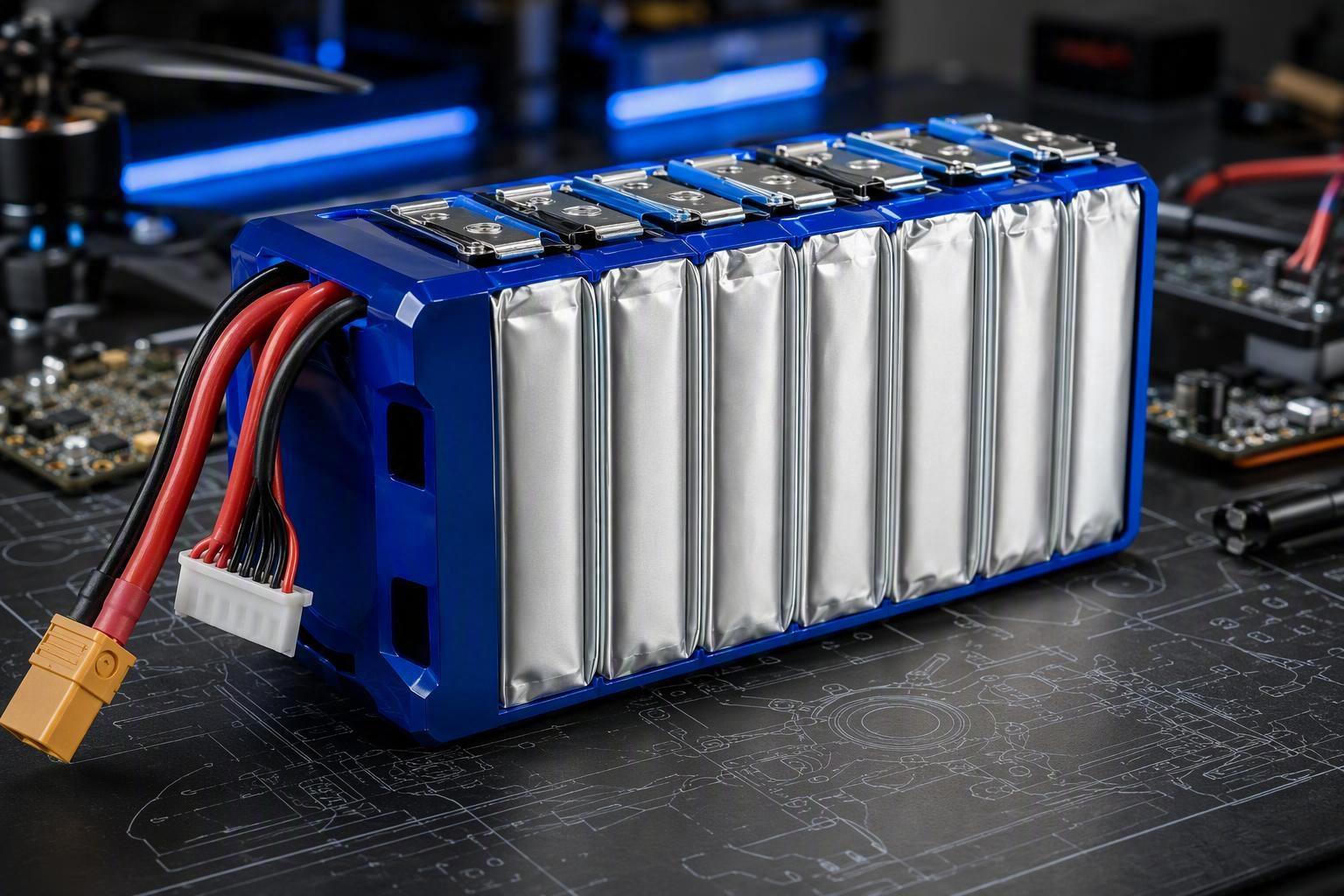
Most public “breakthrough” numbers you see are cell‑level demos. Packs tell the real story once you add BMS, structure, thermal hardware, and safety margins. In 2026, validated pack‑level performance in the 260–300 Wh/kg range is best treated as an emerging, high‑end procurement band—often available selectively and only when it’s backed by supplier data and qualified‑lab verification. Independent outlooks (for example, IDTechEx’s solid‑state batteries outlook 2026–2036) forecast commercialization emerging through 2026–2028, with UAVs among addressable applications but not the first segment to scale.
At the same time, it’s reasonable to see 350–400 Wh/kg discussed for high‑quality semi‑solid cells. Treat that range explicitly as cell‑level unless proven otherwise. Whether it becomes a meaningful pack‑level advantage depends on systems engineering: BMS limits, thermal architecture, mechanical protection, wiring, connectors, and safety margins.
Planning context matters. Across 2024–2026, many industrial UAV packs using mature Li‑ion or LiPo landed around 180–250 Wh/kg at pack level once enclosures, wiring, and safety overheads are included.
If you can move into a validated, pack‑qualified semi‑solid design in the next band up, you may see immediate endurance gains at fixed payload—or payload gains at fixed endurance. For background on energy density trade‑offs across chemistries and ROI, see the internal perspective in LFP vs LiPo vs semi‑solid for 2026 ROI and safety.
Keep two guardrails in view: demand a clear distinction between cell‑level and pack‑level Wh/kg with the full BOM included, and treat >300 Wh/kg pack claims as pilot/demo unless the supplier provides test matrices you can audit.
If you want a quick way to sanity-check claims, keep these ranges in your head:
-
~180–250 Wh/kg (pack-level): common planning band for mature industrial Li‑ion/LiPo packs once housings and safety overhead are included.
-
~260–300 Wh/kg (pack-level): a defensible semi‑solid procurement target class when validated.
-
~350–400 Wh/kg (cell-level): a frequent semi‑solid talking point that only matters if it survives packaging, thermal, and safety requirements.
-
400+ Wh/kg (typically cell-level): roadmap/demo territory unless a supplier provides pack-level evidence under mission-realistic conditions.
High energy density trajectory above 400 Wh/kg and what to treat as roadmap
You’ll encounter headlines touting 400–500 Wh/kg and beyond. Much of that is early‑stage or automotive‑focused data at cell level. For instance, automotive partnerships have publicized high‑energy cells with promising cycle and fast‑charge behavior, but pack‑qualified, certifiable products for UAVs are still working through validation. Use these as directional signals, not purchase criteria, unless your supplier can document pack‑level performance under mission‑realistic conditions with third‑party or accredited‑lab data. Energy‑agency and market reports echo this tempo: limited production through 2026, broader commercialization in the 2027–2028 window, with domain‑specific timelines. The broader commercialization arc is summarized in the IEA Global EV Outlook 2024.
Bottom line for a 2026 industrial drone battery buying guide: base procurement decisions on pack‑qualified candidates you can validate, and keep higher headline numbers in your watchlist until suppliers can prove them at pack level under mission‑realistic conditions.
One more engineering reality that gets lost in Wh/kg debates: energy density doesn’t equal mission suitability. Heavy‑lift and other high‑burst profiles (VTOL transitions, gust compensation, emergency climbs, spray loads) can be limited by discharge capability, transient voltage sag, connector heating, and thermal resilience—not just nameplate energy. In those cases, mature high‑power LiPo packs or hybrid architectures may remain more operationally practical than aggressively optimized high‑energy designs, even if the Wh/kg number looks less impressive.
Fast charging at 2C–4C and why 2C–3C is the golden range
Fleet utilization hinges on turnaround. In the EV literature, “extreme fast charging” is often framed as reaching ~80% SOC in about 10 minutes, which can imply ~4–6C charge rates under strict controls. A 2025 Royal Society of Chemistry review is a useful benchmark for what those limits look like in practice. See Principles and trends in extreme fast charging lithium‑ion batteries (2025).
What happens above 3C charging? This is where selection stops being about charger power and starts being about degradation risk.
Once you push into 4C+ territory, three things tend to show up quickly: lithium plating risk rises (especially at low temperature or high SOC), thermal control becomes a gating factor rather than a nice‑to‑have, and cycle degradation accelerates if you don’t enforce tight SOC windows and temperature gates. Peer‑reviewed mechanistic work illustrates the onset and localization of plating during fast charge, including ACS Energy Letters operando analyses (2024).
For most fleets in 2026, 2C–3C often represents the most practical operational balance between turnaround time and replacement interval—assuming you enforce temperature and SOC gates and can control pack hot spots.
If you must spec 4C, make it evidence‑led: require protocol‑matched aging data (same temperature band, cooling method, SOC cutoffs) and explicit thermal gates. For thermal guardrails, EV pack safety literature is a reasonable starting point, as summarized in the NIH/PMC review on battery safety and BTMS (2025)—but you still need UAV‑specific validation.
A procurement shorthand that stays defensible:
-
1C–2C: conservative baseline
-
2C–3C: 2026 operational default
-
4C+: special case; require proof under your protocol
Spec‑to‑scene mapping for four industrial applications
Each mission profile optimizes the triangle of endurance, turnaround, and safety. Use these cues to map specifications to outcomes without over‑spending.
A simple procurement hierarchy helps keep teams aligned when stakeholders push for “the highest Wh/kg available”:
-
Baseline (must-buy in 2026): validated, pack‑qualified candidates in a realistic energy‑density band, proven under your mission protocol.
-
Stretch band (selective): higher‑energy options only when the number is verifiably pack‑level for your form factor, or when cell‑level gains translate into a qualified pack design.
-
Roadmap (watchlist): 400+ Wh/kg narratives, which are typically cell‑level demos or early pilots until pack‑level evidence and certification pathways are clear.
If you’ve ever tried to standardize batteries across (1) long‑haul logistics hubs that depend on “charge‑while‑loading” workflows, (2) high‑cycle industrial inspection fleets that live and die by turnaround time, and (3) certification‑driven eVTOL programs, you already know the punchline: mission profiles diverge fast, and spec‑to‑scene matching beats chasing a single headline number.
Many industrial UAV battery projects fail not because the pack lacks headline performance, but because the operational assumptions behind the validation protocol never matched the real deployment environment. Payload swings, ambient deltas, inconsistent charging discipline, connector heating, maintenance variance, and even firmware mismatches can erase the gains you thought you bought on paper.
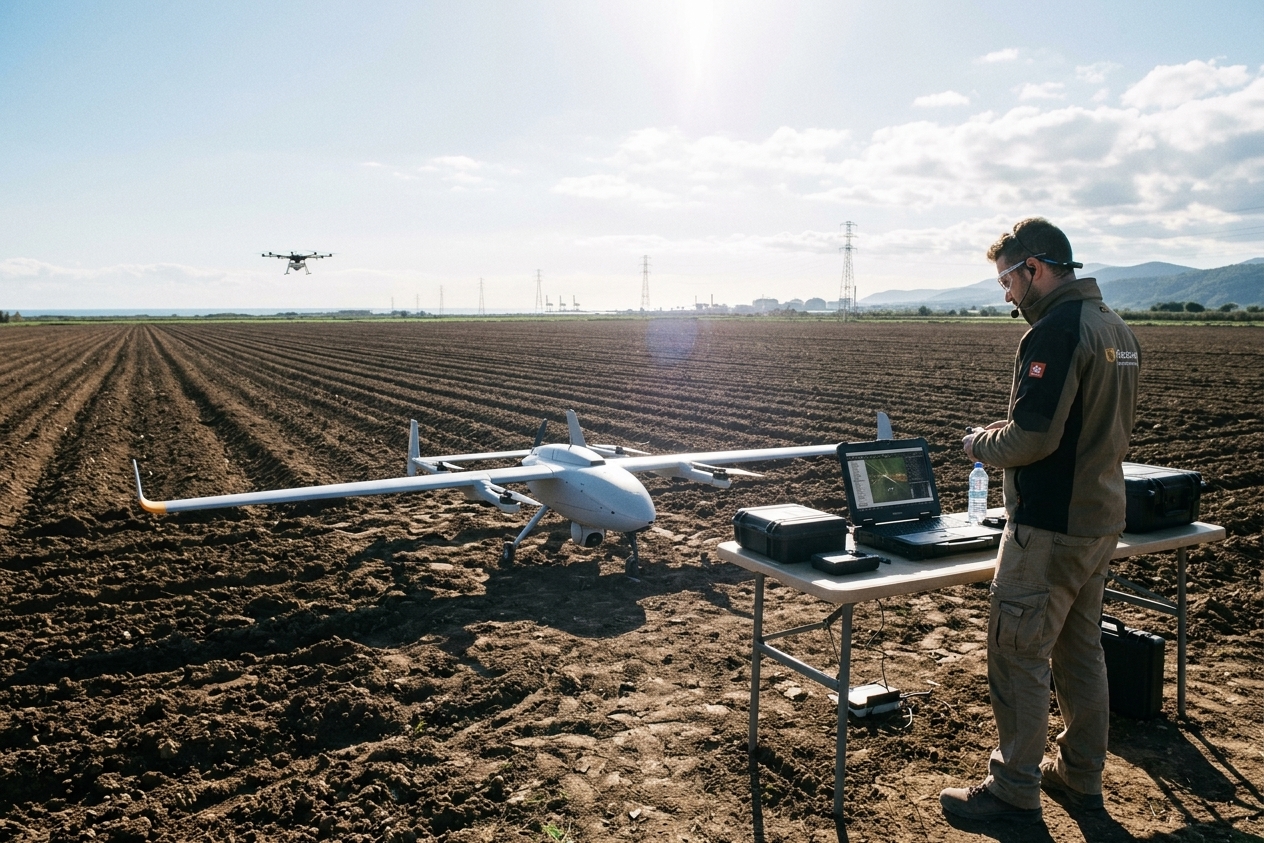
Agriculture and forestry missions prioritize endurance and cost per flight hour
Agriculture fleets usually win by reducing swaps and idle time, not by chasing a single spec. In practice, that means standardizing your field SOP—preheat rules, temperature gates, and consistent SOC windows often protect both endurance and cycle life more than small headline gains.
On the economics side, it’s better to model cost per flight hour than to fixate on pack price. Higher usable energy paired with stable cycle life can beat buying extra packs because it increases sortie productivity and cuts crew idle.
Treat “Input → Output” coverage claims as assumptions until you fly-test. Acres/day will swing with payload, wind, spray rate, SOC window, and ambient temperature. If you operate below freezing, add preheating and temperature gates; practical controls at −20 °C are outlined in drone battery operations at −20 °C and risk controls.
For 2026 procurement, assume most real-world packs still land around ~180–250 Wh/kg once housings and safety overhead are included. If you’re evaluating higher‑energy options, focus on what translates into measurable field outcomes (fewer swaps, fewer returns-to-base, and predictable replacement intervals) under your payload, wind band, and turnaround cadence.
Logistics and delivery emphasize turnaround and sortie frequency
Logistics teams will often talk about 350–400 Wh/kg to push route length and payload, but apply the same discipline: confirm whether the number is pack‑level or cell‑level, and require protocol‑matched evidence before you price it into your ops model.
If you’re exploring 4C charging to lift parcel turns per hour, make it evidence‑led. Require cycle‑life data under your intended protocol with explicit temperature control and cooling architecture. Many fleets will land on 3C charging with SOC windows and thermal headroom that keep degradation more predictable while still enabling a “charge while loading” cadence.
In logistics operations, throughput is where thermal architecture and charging discipline become visible. Define the “charge‑while‑loading” window, set temperature gates, and align charger power and cooling capacity so you’re not asking for 4C behavior from a pack that’s thermally constrained.
For measurement, anchor on time to 80% SOC within your allowed temperature gates and available charger power. Basic queueing analysis matters: shaving even five minutes off charge time can multiply daily deliveries when aircraft rotate through limited pads.
Emergency response values wide temperature operation and safety margins
Emergency-response fleets often operate in temperature extremes where charging speed, thermal control, and preheating discipline become operational constraints rather than optional safeguards. Favor chemistries and pack designs prioritized for safety and predictable behavior under abuse tests, and lock in 2C–3C fast charge only if your thermal system can control hotspots. Endurance bumps from semi‑solid candidates matter for search grids, but don’t trade away robustness for a spec sheet. Keep preheating SOPs and BMS alarms tight.
eVTOL and urban air mobility depend on certification maturity
Energy density headroom matters, but certification maturity and safety validation are the gating factors that set procurement timing. Treat 400+ Wh/kg narratives as roadmap until pack‑level evidence and aerospace approvals are at hand. Fast‑charge ambitions must reconcile with thermal and airworthiness constraints. If you’re scoping 2026 activities, prioritize risk‑reduction pilots and supplier documentation audits rather than fleet‑wide conversions.
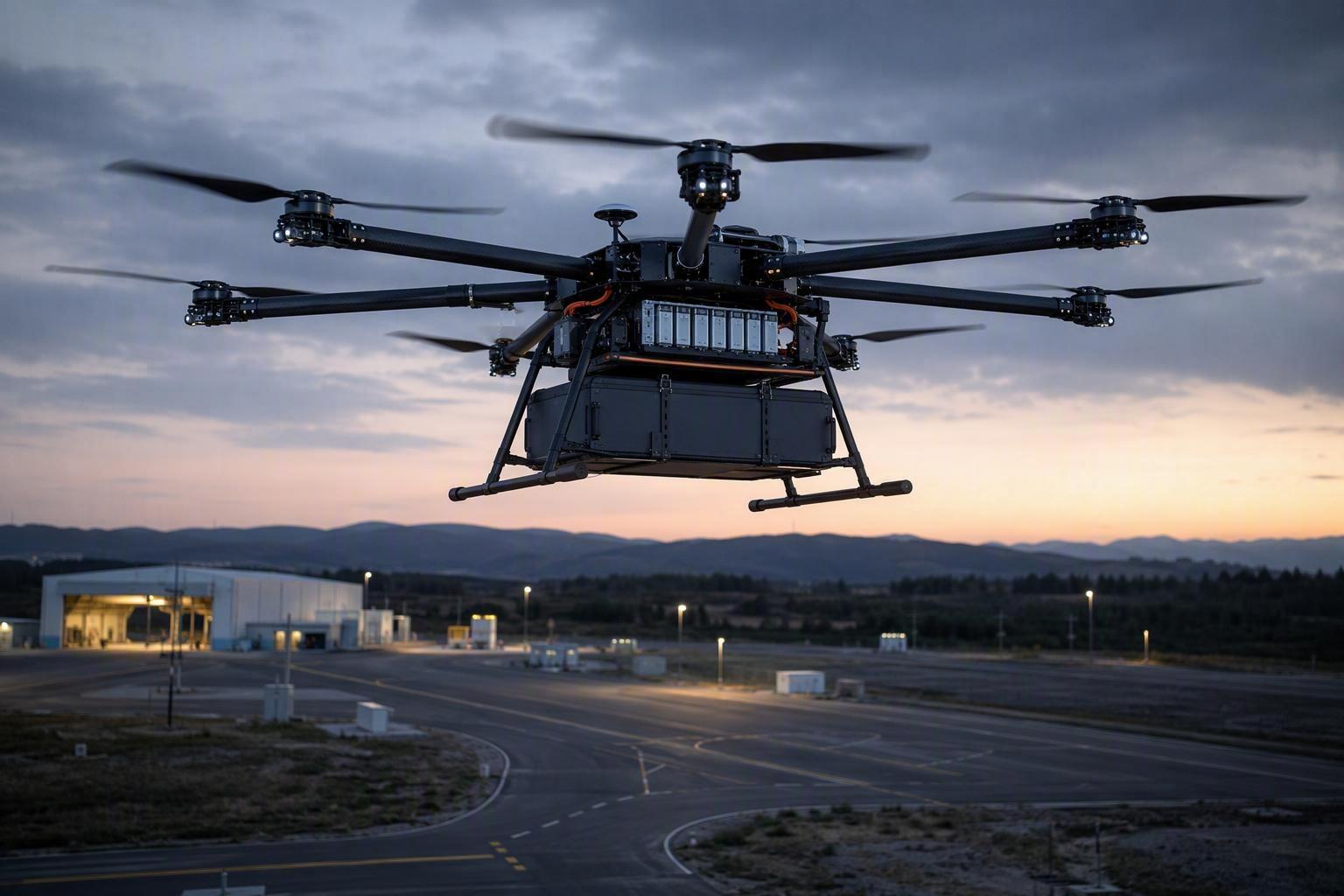
For architecture implications in heavy‑lift and long‑range airframes, see heavy‑lift industrial drone battery selection for 10–200 kg payloads.
2026 industrial drone battery buying guide: procurement strategy, TCO, and risk controls
You don’t buy chemistry; you buy documented performance under your mission conditions. Anchor decisions to timing and numbers you can defend.
When to buy in 2026 by business priority
-
Q1–Q2 (the early‑adopter window): best for programs with high mission criticality and higher budgets (for example, emergency response teams that value readiness and wide‑temperature margins, and eVTOL risk‑reduction efforts). Use this window to lock down requirements, request document packs, and run bench + flight validation.
-
Q3–Q4 (the value and scale window): best for fleets that win on TCO and repeatability (for example, agriculture, inspection, and logistics networks that only scale once reliability KPIs are stable). Use this window to expand pilots, negotiate supply terms (spares, warranty triggers, retest clauses for design changes), and convert the best-performing pilots into fleet rollouts and next‑year contracts.
How industrial UAV fleets actually validate batteries
Claims don’t become specs until they survive your test protocol. A practical validation workflow looks like this:
-
Bench screening: capacity and DCIR/impedance baselines, balance behavior, and connector losses on multiple samples.
-
Fast‑charge protocol test: run your target C‑rate with defined SOC windows and temperature gates; log current, voltage, cell temps, and cell‑to‑cell deltas.
-
Thermal characterization: map hotspots during charge and discharge under mission‑realistic airflow or cooling assumptions.
-
Aging signals: track impedance rise, capacity fade, and BMS event logs to spot early degradation patterns.
-
Field validation: repeatable mission profiles (payload, wind band, ambient range) with flight logs to confirm endurance and turnaround assumptions.
If a supplier can’t provide raw logs or a clear test matrix, treat performance claims as provisional and price that uncertainty into your risk model.
Procurement pitfalls to avoid
-
Buying on cell-level Wh/kg headlines: require pack-level Wh/kg with the full BOM (BMS, enclosure, connectors, thermal hardware) and test conditions.
-
Ignoring protocol mismatch: cycle life must be reported under your C‑rate, SOC window, temperature gates, and cooling method — not a vendor’s best-case lab script.
-
Treating 4C as a default: if you need 4C, pair it with explicit thermal controls and aging data; otherwise keep 2C–3C as the operational baseline.
-
Skipping change-management language: define what counts as a “design change” (cells, BMS firmware, mechanical structure) and what triggers UN38.3 re-testing or re-qualification.
-
Under-specifying logs and acceptance criteria: require BMS data access for temperature, current, voltage, SOC/SOH, and events, plus clear incoming QC thresholds (IR/impedance, capacity, balance, insulation resistance).
TCO math you can defend for batteries and charging
Think in kWh‑throughput and flight hours, not just pack sticker price. A simple levelized model:
To make the model operationally honest, include variables that drive real fleet cost: charger utilization and queueing, spare‑pack ratio, technician time, downtime and failed‑flight cost, thermal staging/preheat time, connector replacement, and the pack retirement threshold you enforce (for example, at a given impedance rise or capacity fade).
Cost per kWh‑throughput = Battery total cost / (Validated cycle count × Usable capacity)
Make “usable capacity” match your protocol. If you cap charge at 90% and land at 20% for life reasons, use 70% of nameplate. Then translate to mission economics:
Cost per flight hour = (Cost per kWh‑throughput × Average kW draw) / Average endurance hours
To keep discussions concrete, teams often run a sensitivity case using an 800–1,200 cycle planning range—and then bracket the model with your protocol‑verified cycle life.
Keep in mind that higher energy‑density chemistries can trade away long‑term cycle stability under aggressive charge/discharge conditions, especially in high‑throughput fleet operations.
Sensitivity test at least three variables: fast‑charge C‑rate, ambient temperature band, and cycle‑life assumption. Mechanistic studies indicate higher C‑rates and cold ambients accelerate plating and side reactions, eroding cycles; this is why 2C–3C with temperature gates often wins on TCO.
Note on Cycle Life: Treat 800–1,200 cycles as a planning range drawn from market‑observed field outcomes—not a guaranteed result. Throughput will vary with charge rate, temperature band, SOC window, cooling, and retirement criteria.
If you need a deeper dive into BMS‑driven safety controls that protect TCO, see the industrial drone BMS safety guide.
Supplier due diligence checklist for 2026
Use this as a baseline request set for any pack candidate in your procurement baseline or fast‑charge proposal. Include it in your RFP and require documents before bench testing.
If you reference supplier resources (including vendor blogs) for background, treat them as starting points—not endorsements—and ask for third‑party or accredited‑lab evidence for any performance claim that affects safety, cost, or compliance.
-
UN38.3 transport test summary and report references for the offered pack design, aligned with current IATA/ICAO rules for UN3480 shipments. The PHMSA Lithium Battery Guide 2024 explains the T1–T8 tests and change‑management triggers.
-
IATA Lithium Battery Guidance Document 2026 confirmation that the pack and shipper procedures meet Packing Instruction 965 or relevant categories. Reference the IATA Lithium Battery Guidance Document 2026 in your RFP.
-
Applicable safety certifications and standards evidence. Typical requests include UL 1642 for cells, UL 2054 for packs, UL 3030 for UAV systems, and IEC 62133 or 62619 where applicable. Ask for accredited test reports or certificates from recognized labs. Explore requirements via UL и IEC portals.
-
Third‑party or accredited‑lab performance data showing cycle life under the exact fast‑charge protocol you intend to run, including SOC windows, temperature gates, cooling method, sample size, and error bars.
-
If the supplier markets “15 minutes to ~80% SOC,” require protocol‑matched proof (charger power, temperature control, cooling method) plus paired aging data.
-
Evidence of a compatibility/fit test process before scale purchase (bench + flight validation plan, logging requirements, and acceptance criteria). It is highly recommended to prioritize candidates that support rigorous pre-procurement engineering validation to baseline performance on your specific platform.
-
Thermal management description that keeps operating temperatures in a moderated band and minimizes cell‑to‑cell delta during charge. Principles are summarized in the EV BTMS safety review (cited earlier), but require UAV‑specific validation.
When auditing suppliers for these 2026 benchmarks, the key is transparency. Whether you choose a vertically integrated partner or a specialist pack assembler, ensure they provide the same level of data depth before moving to bench testing.
ЧАСТО ЗАДАВАЕМЫЕ ВОПРОСЫ
How much flight time does pack-level energy density add?
It means the full pack with BMS and structure delivers that energy density, not just the bare cell. Depending on your airframe and payload, moving from ~220 Wh/kg to ~280 Wh/kg at pack level can add double‑digit percentage endurance gains or allow payload increases at the same endurance.
Is 4C fast charging safe for UAV fleets?
Sometimes, with the right chemistry, SOC windows, and strong thermal control — but not by default. Plating risks rise with C‑rate and temperature extremes. Use 2C–3C as a baseline and require supplier aging data if you plan to go faster. The RSC 2025 fast‑charge review summarizes why controls matter.
How should I prepare for cold weather operations in 2026?
Preheat, set temperature gates for charge and discharge, and monitor impedance trends. Protocols that perform well at 25–35 °C can degrade fast at −10 °C. For field SOPs and risk controls at −20 °C, review cold‑weather UAV battery operations guidance.
What documents are non‑negotiable for shipping and market access?
UN38.3 test summary and references, IATA DGR compliance for the shipment type, and applicable UL/IEC safety evidence. If you place packs on the EU market, expect obligations rolling in from the EU Battery Regulation 2023/1542 and prepare a technical file.
Are 400 Wh/kg drone battery packs realistic in 2026?
Treat them as pilots or demos unless a supplier presents pack‑level data, safety evidence, and certification pathway clarity. Many public numbers are cell‑level; don’t conflate those with pack‑qualified products.
Summary and next steps
Match before max. In 2026, the winning play for most fleets is validated semi‑solid packs in the 260–300 Wh/kg class combined with disciplined 2C–3C fast charging, governed by temperature and SOC gates. Build your RFP around audit‑ready documents and protocol‑specific aging data, model TCO in kWh‑throughput and flight hours, and pilot on your own platform before scaling.
Before locking a fleet specification, many operators now run compatibility reviews that benchmark pack‑level performance, charging behavior, and thermal integration under mission‑realistic conditions.
In practice, many fleet operators now evaluate suppliers less on headline energy density and more on data transparency, validation support, and long‑cycle operational predictability.
Suppliers capable of supporting protocol‑level validation, thermal integration review, and mission‑profile testing are generally better positioned for industrial fleet deployment.
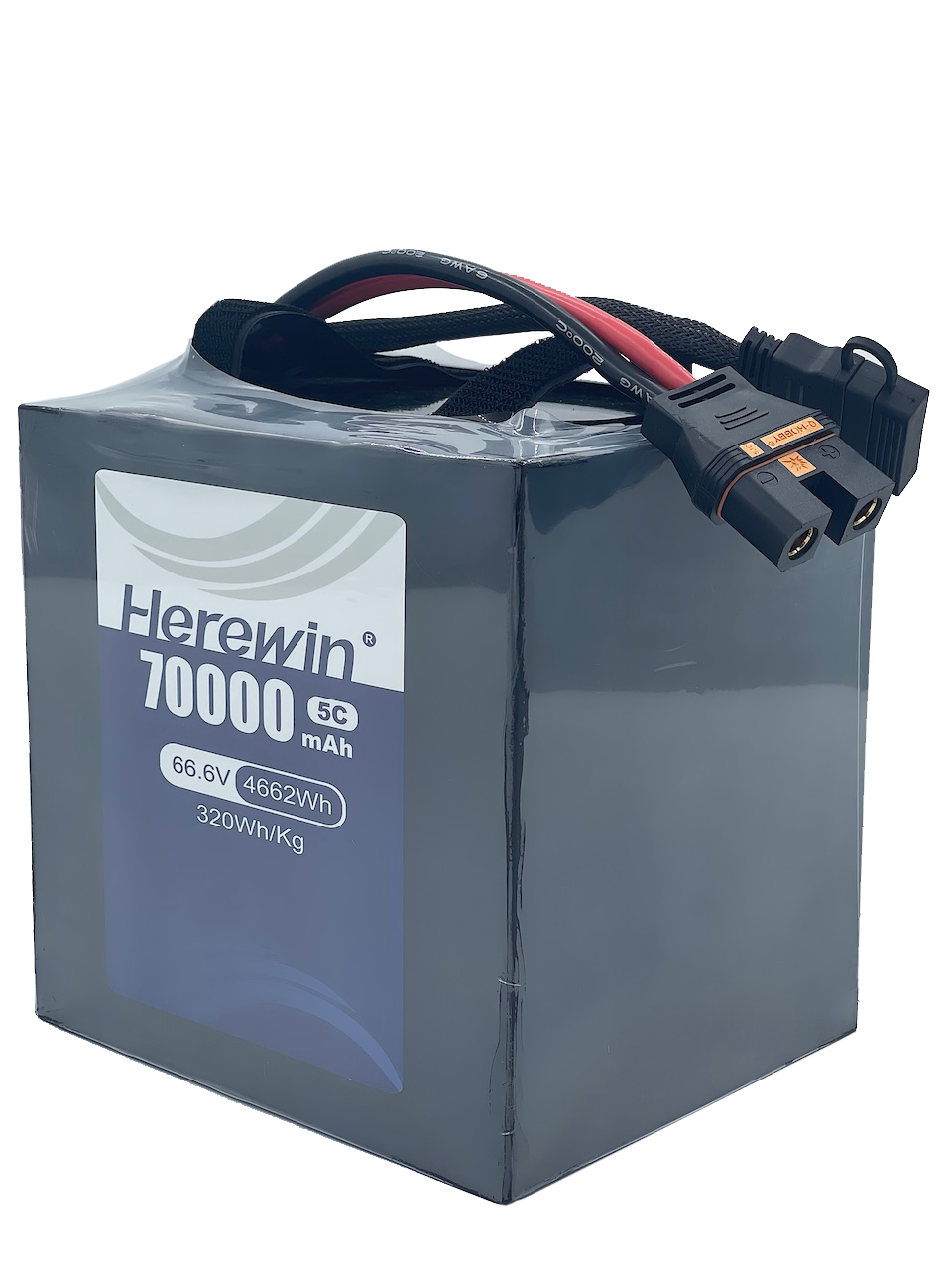
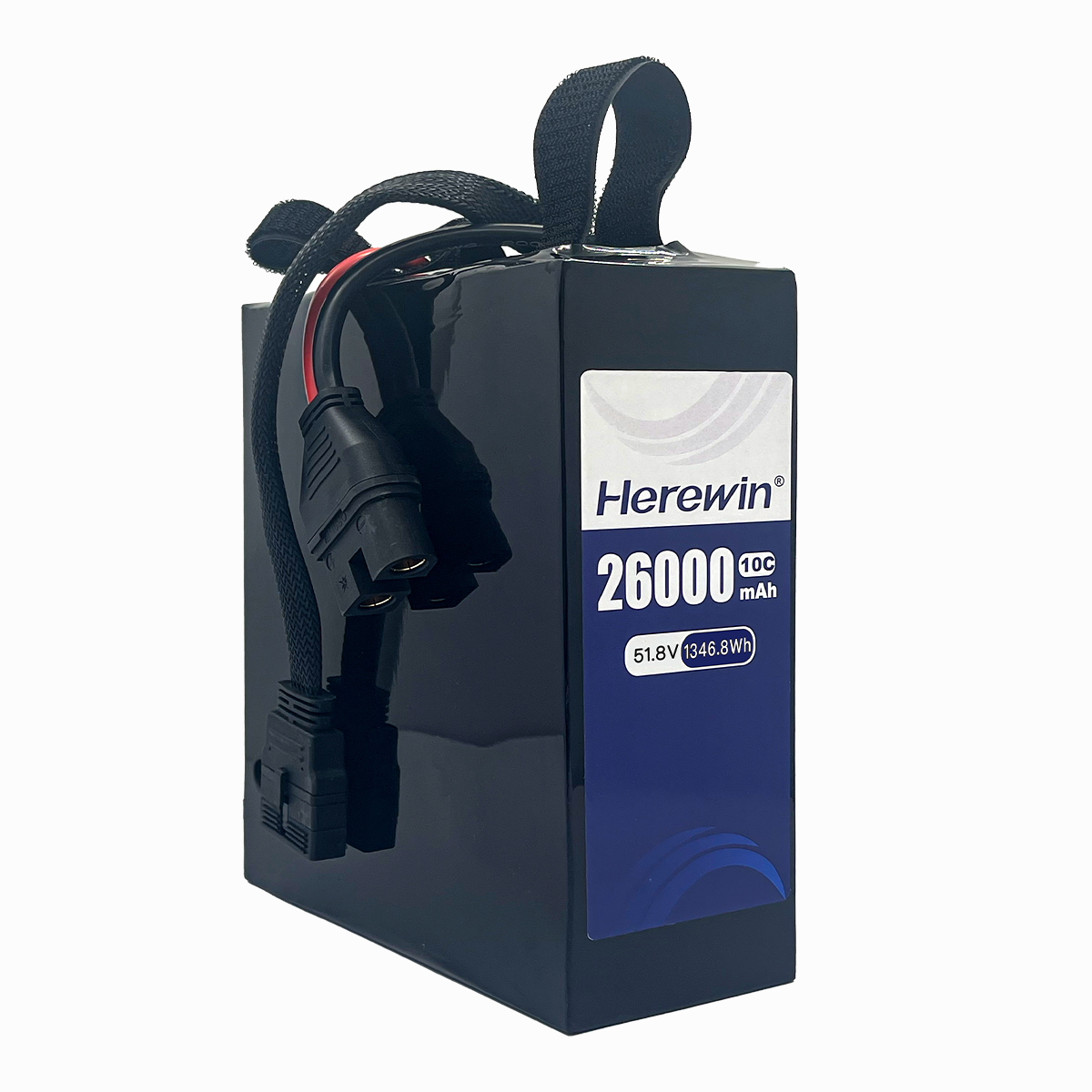
Teams evaluating industrial UAV battery migration pathways can also discuss validation workflows and deployment requirements with the Herewin engineering team and share a mission profile and charging constraints.



 Русский
  English
  Español
  한국어
한국어  Deutsch
  Français
  日本語
日本語  Bahasa Indonesia
  ไทย
ไทย  العربية
  Português do Brasil
  Italiano
  Nederlands