


The phrase “semi-solid state battery” is now used widely in battery marketing, but the label itself tells a buyer surprisingly little. A higher cell-level energy density does not automatically mean the same gain at pack level, and a semi-solid design does not automatically establish better safety, temperature performance or cycle life. The useful comparison starts with what was actually measured, at cell or pack level, and under what conditions. There is also no single industry-wide definition that makes the boundary between semi-solid and all-solid-state batteries completely clear, so suppliers may use the terms differently. This guide works through energy density, safety, operating limits, applications and the questions worth asking a supplier before you commit.
What a Semi-Solid State Battery Actually Is
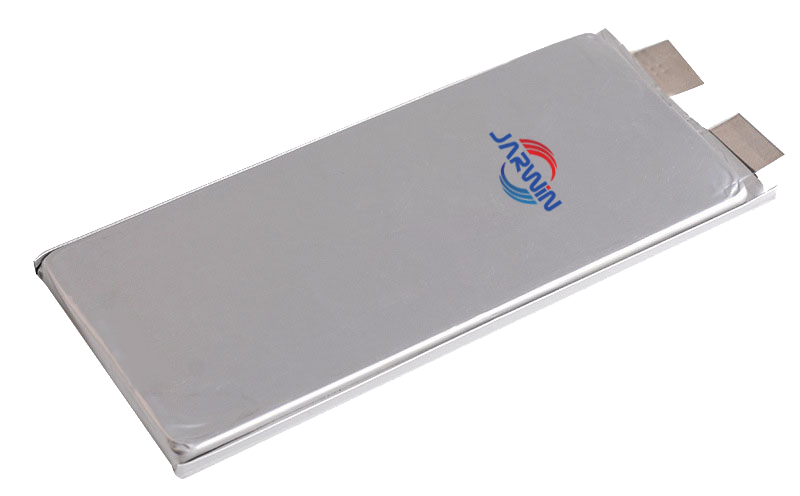
A semi-solid state battery is a hybrid cell that combines a liquid electrolyte with a solid or gel-like electrolyte structure, placing it between conventional liquid lithium-ion and all-solid designs rather than replacing the liquid outright. Semi-solid batteries are also commonly described as quasi-solid-state batteries, or QSSBs.
The amount and form of liquid electrolyte are therefore important when interpreting the label. One supplier describes its electrolyte as a solid-liquid mixed state in which liquid accounts for 5 to 15 percent of the cell. An all-solid-state cell, by comparison, contains zero liquid. The practical takeaway is that “semi-solid” is not a uniform performance tier. Two products carrying the label can differ in how much liquid remains and in how that liquid is held in place, so the word describes a family of designs rather than a fixed grade.
Because the boundary is not tightly defined, the same label can cover quite different electrolyte architectures. For a buyer, the practical consequence is that the term alone settles very little, and headline performance numbers are only meaningful once you know the level at which they were measured.
How Much Energy Density a Semi-Solid Battery Really Delivers
Energy density is where that gap between the label and the specification shows up first. Semi-solid state battery energy density is usually quoted at the cell level, which is where the confusion begins. Cell-level claims cluster well above conventional liquid lithium-ion, and the figures that reach a buyer are almost always supplier-reported, so they should be treated as claims to verify rather than as independent benchmarks.
The pack-level figure will normally be lower, but the size of that gap depends on the pack architecture. Packaging, thermal management, BMS, structural components and connectors all add mass, so a cell-level figure should never be treated as the pack-level specification. Cell-to-pack designs can reduce that gap, which is why no single retention percentage fits every pack.
The relationship is: pack Wh/kg ≈ cell Wh/kg × retention factor, where the retention factor is specific to your pack.
If a 400 Wh/kg cell were to retain 70% through the pack, that would give roughly 280 Wh/kg (illustrative calculation only). Treat this as a worked example of the arithmetic, not an expected outcome. Run your own mission numbers from the supplier’s pack-level data instead.
What Semi-Solid Batteries May Change About Safety
Because semi-solid designs keep less free liquid electrolyte, safety is where the label is most often used as a selling point. Semi-solid designs may offer safety advantages by reducing the amount of free liquid electrolyte, but the chemistry label itself does not establish how a finished battery will behave under abuse. The design goal is to cut the flammable liquid fraction, which may reduce some risks associated with electrolyte leakage and thermal events, depending on cell design.
What may improve:
Less free liquid electrolyte, so a shorter supply of fuel for a thermal event
Potentially different thermal-propagation behavior between neighboring cells
Potentially lower severity under some abuse conditions
What does not disappear:
Thermal runaway itself
Internal short risk, which persists in low-liquid systems
Overcharge and mechanical damage
Pack-level propagation risk, which depends on pack design rather than on the cell label
One test result illustrates the type of evidence to look for, without standing as a guarantee. In peer-reviewed thermal-runaway research on lithium iron phosphate cells, tested at matching states of charge and environmental stress, semi-solid-electrolyte cells were found to reach runaway less severely and release less gas than their liquid-electrolyte counterparts. That result reflects one cell design under one lab’s conditions, so it should not be generalized to every semi-solid product.
For procurement, the useful questions are which abuse tests were performed, which standard or test method was used, and whether the evidence applies to the same cell design and finished pack you are buying. The real issue is not whether a chemistry is safer in the abstract, but what evidence sits behind the specific safety claim you are being offered.
A chemistry name is not a safety certification. Ask for the abuse-test report, the cell design it covers, and the standard it was run against.
Temperature, Power and Cycle Life in Real Operating Conditions
A semi-solid state battery’s performance figures mean little until you know the conditions behind them. Three performance areas deserve particular attention: cold-weather behavior, discharge rate and cycle life.
Cold-weather behavior. Published pack cards typically list a −20 to 60 °C operating range with a discharge rating attached, but that is an operating range, not a retention curve. Capacity and power capability can decline as temperature falls, often becoming more constrained under higher loads, so a mission drawing high current continuously below freezing needs the discharge curve from the supplier before it is specified. An operating window tells you where the pack will run, not how much of its capacity it will deliver there.
Discharge rate. C-rate describes discharge speed relative to capacity: at 10C, the rated capacity corresponds to a theoretical discharge time of about six minutes. Ask whether the rating is continuous or a short burst, and at what temperature it was measured.
Cycle life. Cycle life is where the figures get least comparable across suppliers. A number only means something when the retention threshold, depth of discharge, C-rate and test temperature behind it are the same, and published claims rarely state all four at once. Rather than ranking products by a headline cycle count, treat any single figure as an example of what one design achieved under one set of test conditions.
Where Semi-Solid Batteries Make Sense
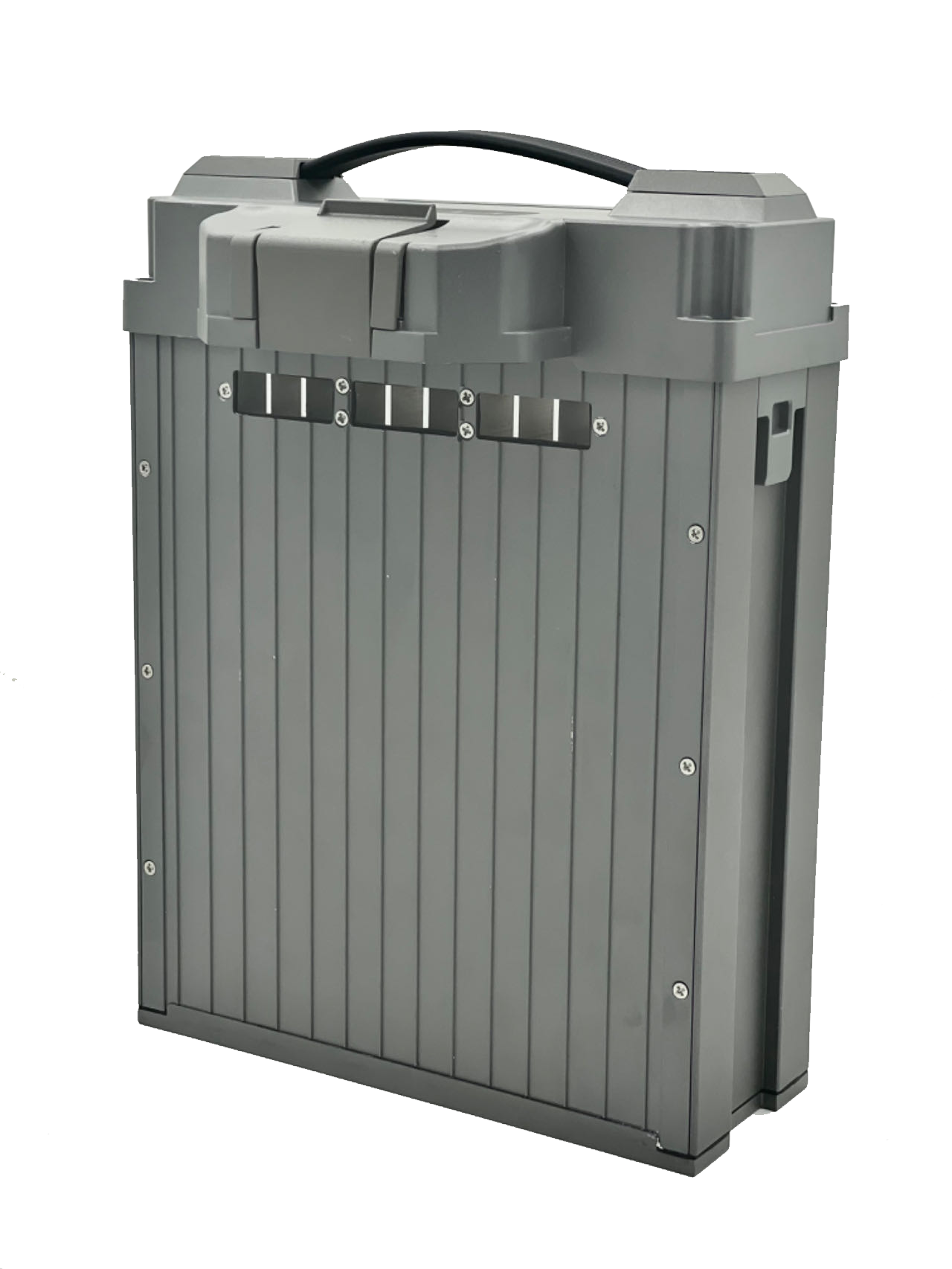
Weight-sensitive UAV applications are among the clearest use cases for a semi-solid state battery: surveying and mapping drones, heavy-lift and cargo drones, eVTOL platforms, and defense or industrial equipment. In these applications, battery mass can be a major system constraint, which makes energy density more valuable than it is in less weight-sensitive applications.
Surveying and mapping drones are a good example. Reducing battery mass can either preserve payload capacity or allow more energy within the same weight budget, which can translate into longer endurance and fewer battery changes during a mission.
Heavy-lift and cargo platforms can benefit from more payload margin within the same aircraft weight limit, along with potentially improved safety margins under certain abuse conditions.
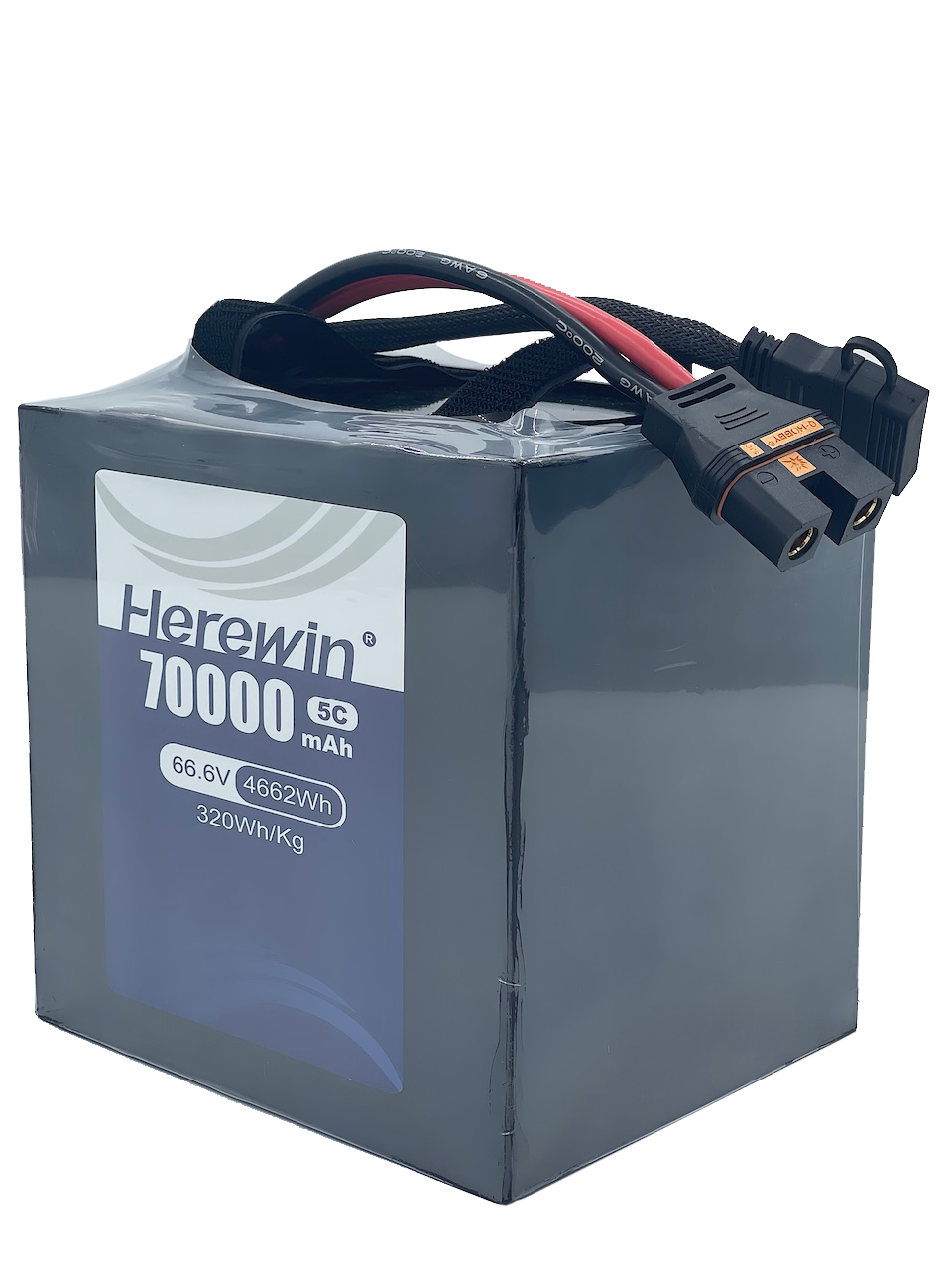
Supplier documentation tends to list surveying, logistics and emergency-rescue drone use, with pack-level cards quoting a high energy-density figure and 10C discharge. That material is the manufacturer’s own product documentation and carries no independent measurement, so treat it as a specification claim to verify rather than a benchmark. Integrators also flag voltage sag under heavy-lift bursts, which is why burst C-rate demand belongs in the same conversation as the headline figure.
When Conventional Lithium-Ion May Still Make Sense
Not every platform should switch. Conventional lithium-ion remains the better choice for missions with short, light duty cycles, tight unit-cost ceilings, or an existing certified pack and charger ecosystem that a swap would invalidate.
What to Compare When Buying a Semi-Solid Battery
A useful comparison starts by putting every headline number next to the conditions under which it was measured. A datasheet is only useful for comparison when you know which figures are cell level, which are pack level, and what test conditions produced them. Where a supplier publishes only a cell-level figure, or a pack figure with no test conditions, the sheet is answering a different question than the one you’re asking.
Parameter | What to verify |
|---|---|
Energy density | Cell or pack level? |
Cycle life | DoD, C-rate, retention basis? |
Low-temperature retention | Capacity at the target temperature? |
C-rate | Continuous or peak, and at what temperature? |
Abuse testing | Which standard and which cell? |
Certification scope | Cell, pack or system? |
Commercial cost | Price basis, volume and pack configuration? |
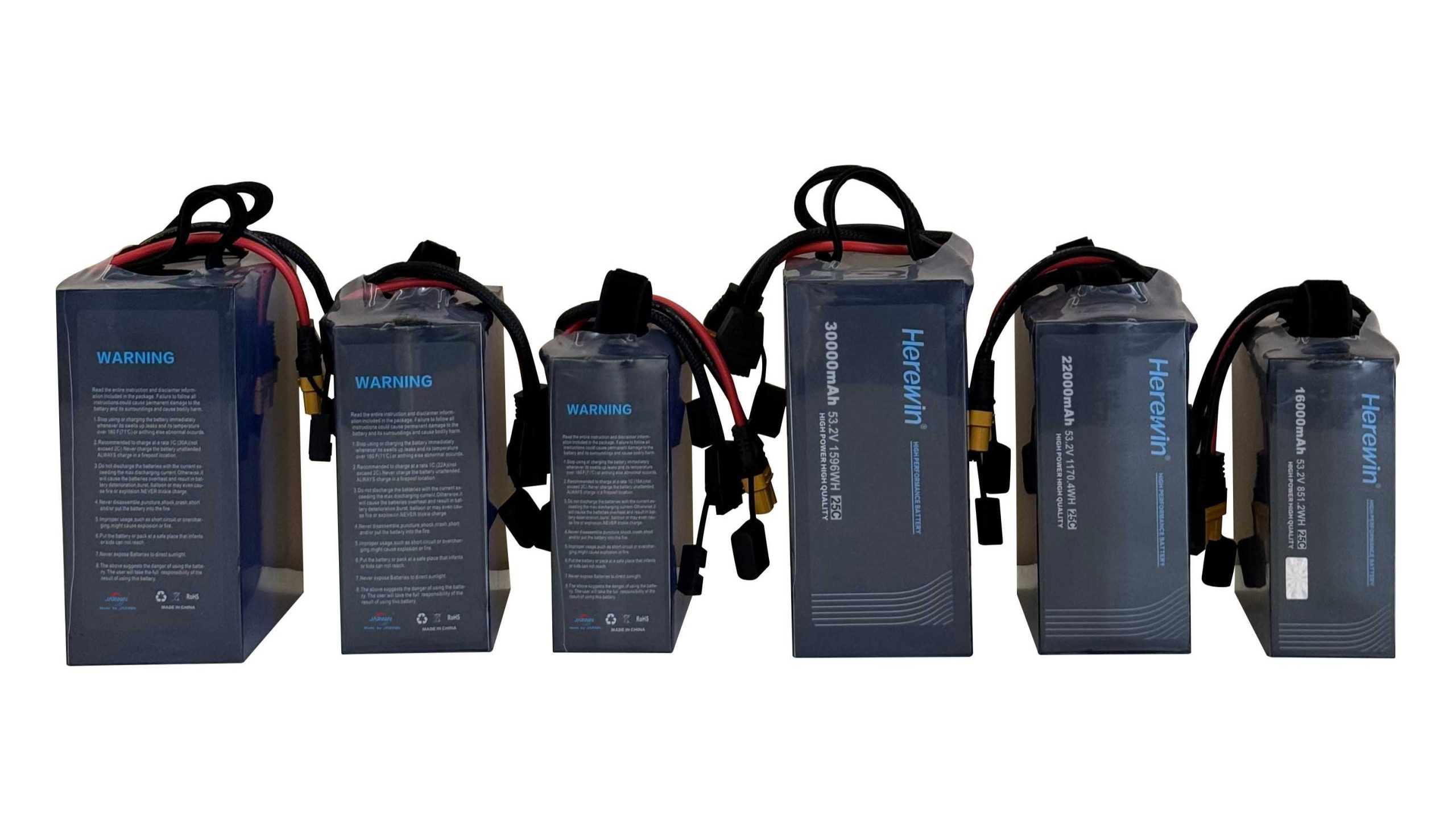
The same principle applies to our own range: published specifications include a cell-level energy density in the 350 to 500 Wh/kg band, an operating temperature range of −20 to 60 °C, and a discharge rating of up to 10C. Those figures still need to be read alongside their test conditions before they can be compared with another supplier’s data.
PREGUNTAS FRECUENTES
What is the difference between a semi-solid state battery and a solid-state battery?
Semi-solid cells retain some liquid electrolyte, while all-solid-state designs aim to use solid electrolyte throughout the relevant electrochemical system. Wikipedia’s overview of solid-state battery technology places quasi-solid-state batteries between liquid and all-solid designs, which is why the two labels get used interchangeably in marketing even though the architectures differ. Semi-solid designs can retain more of the manufacturing infrastructure used for conventional lithium-ion cells, while all-solid-state manufacturing requires additional materials and process changes.
Is a semi-solid battery safer than a lithium-ion battery?
Semi-solid designs may reduce certain risks associated with liquid electrolyte, but that does not make the battery inherently safe. Under matching abuse conditions, semi-solid cells have been observed to behave less violently than comparable conventional cells, though that result depends on the specific cell design tested. Cell, pack and BMS design still decide the outcome, so the abuse-test report matters more than the chemistry label.
What semi-solid state battery energy density should a buyer expect at pack level?
Do not convert cell-level energy density into pack-level performance using a fixed industry ratio. Housings, cooling, management electronics, structural components and connectors all add mass, and how much depends on the pack design, so retention varies widely. Ask for the measured pack-level figure for a completed pack, not the cell datasheet value.
How many cycles does a semi-solid battery last?
There is no single cycle-life figure that applies to semi-solid batteries. Published claims vary widely because they are measured under different conditions, so a number in isolation tells you very little. Ask what capacity-retention threshold defines end of life, along with the depth of discharge, C-rate and temperature the test used.
Do semi-solid batteries work in cold conditions?
Yes, within a defined window, but cold-weather performance is a specification to verify rather than assume. A stated operating range does not tell you how much capacity or power remains at the temperature limit. For cold-weather UAV use, ask for discharge curves at the actual mission temperature and confirm the permitted charging temperature separately.
The label is not the specification. A semi-solid state battery is defined by how much liquid electrolyte remains, and every number attached to it (energy density, safety, temperature range, power and cycle life) only means something when you know whether it was measured at cell or pack level and under what test conditions. Read the datasheet that way and most of the marketing noise disappears.
The evaluation itself can stay simple: check the level of each figure, check the conditions behind it, check whether the safety claim rests on abuse-test evidence, and check whether the cycle-life basis is stated as capacity retention at a defined C-rate and temperature. Where a supplier cannot answer those four questions, treat the number as unconfirmed rather than as false. A practical next step is to send the same questions to each supplier on your shortlist and compare the evidence behind their claims.



 Español
  English
  한국어
한국어  Deutsch
  Français
  日本語
日本語  Русский
  Bahasa Indonesia
  ไทย
ไทย  العربية
  Português do Brasil
  Italiano
  Nederlands