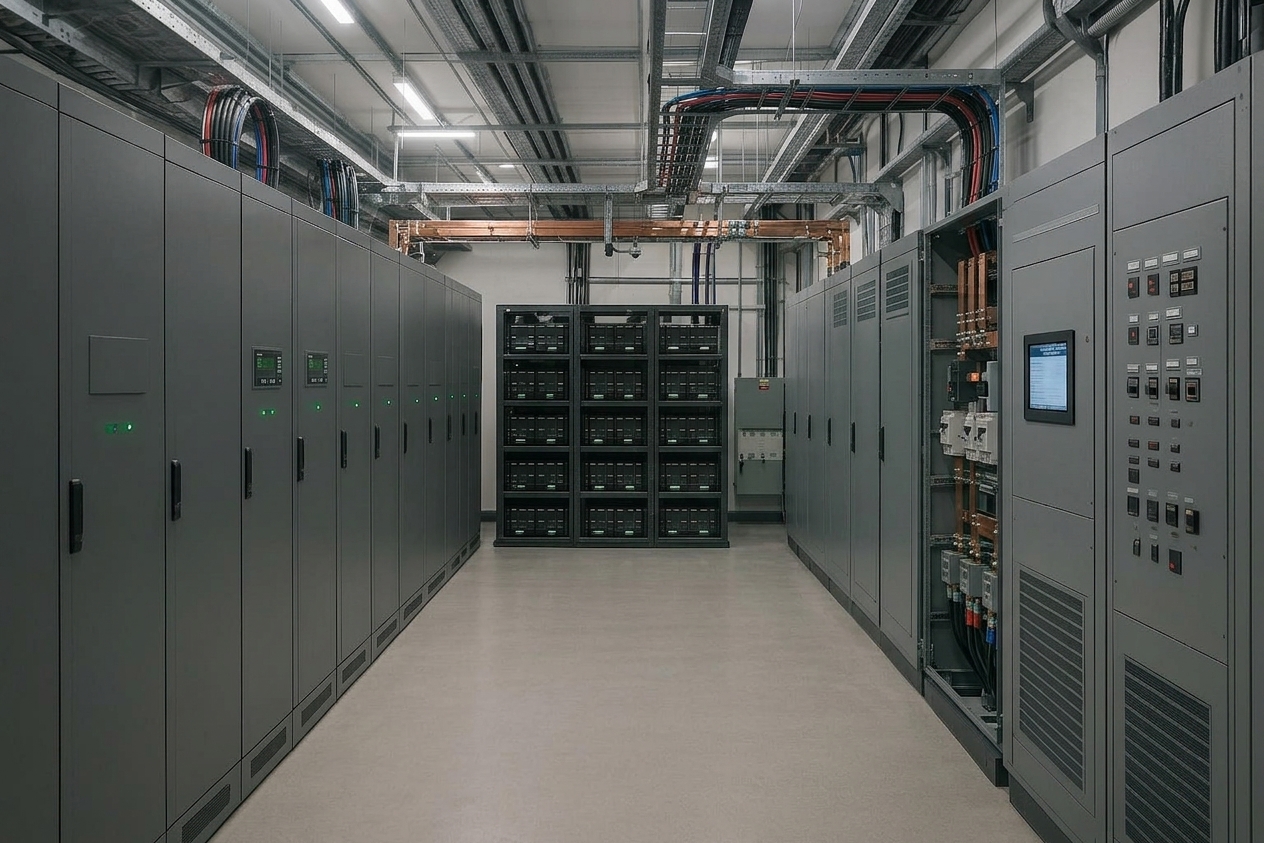
AI data center power architecture is no longer a clean separation between backup, conditioning, and resilience layers.
High-density AI deployments are pushing diesel generators, UPS systems, and battery energy storage systems (BESS) into overlapping operational roles.
What’s changing isn’t the hardware—it’s how power responsibility is being distributed across different time scales of instability.
If you’ve been around power rooms long enough, you know the first sign something’s off usually isn’t a grand outage story.
It’s a weird burst of alarms. A few nuisance transfers. Hot spots you didn’t have last month. This is where things get messy—because “backup” quietly turns into day-to-day control.
The real shift is not replacement—it’s overlap
Most debates still sound like procurement: Should we buy diesel, UPS, or BESS?
That framing is increasingly incorrect.
In 2026, the more accurate question is: Which system owns which instability time scale?
That framing matters because different assets respond on different time constants.
Microsoft Research frames power management for large AI training deployments as a stabilization problem—i.e., a control problem.
It’s not simply a steady-state capacity expansion (Microsoft Research’s “Power Stabilization for AI Training Datacenters” (2025)).
AI workloads are turning “backup systems” into active participants
In classical enterprise IT, “backup” is event-triggered.
In AI data centers, backup-adjacent systems are increasingly in the daily loop:
UPS is no longer idle until outage events. It is continuously conditioning and correcting. Online double-conversion topologies, by design, operate as a continuous conversion layer rather than a passive bypass (Molex on online double-conversion UPS).
Diesel is no longer only emergency-driven in the minds of planners; grid constraints and curtailment discussions are pulling diesel generators in data centers into the conversation as a capacity hedge.
BESS is increasingly involved in day-to-day stabilization, because the facility’s economic and operational constraints are shifting toward peaks, ramps, and grid-facing limits.
The key change: systems start “working continuously,” not only during discrete outage events.
The traditional boundary between systems is dissolving
For many facilities, “outage vs. non-outage” is no longer a clear separator.
Here’s what changes on the ground: you start caring less about monthly kWh and more about what happened in the last 500 milliseconds—the spikes, ramps, and fast disturbances that quietly drive UPS cycling, distribution stress, and nuisance events.
Data Center Knowledge’s work on voltage ride-through highlights a common pattern: many “outages” are actually smaller disturbances.
In practice, resilience often depends on the facility’s ability to ride through those events without cascading failures (Data Center Knowledge on voltage ride-through for data center resilience (2026)).
Diesel generators are still critical—but no longer sufficient alone
Diesel still matters, but mostly for a very specific responsibility: long-duration energy supply when the grid is not there.
If you require multi-hour autonomy, diesel remains a difficult layer to remove entirely.
Where diesel still fits well in AI infrastructure
Diesel is still a strong fit when the requirement is:
long-duration grid failure coverage (hours to days)
site-level resilience planning (sustained power availability independent of utility)
regulatory compliance and auditing expectations where proven backup power strategies are a prerequisite
If you map responsibilities by time scale, diesel is the layer you want owning the hours-plus domain. It’s critical for endurance; it’s not the right tool for fast stabilization.
Where diesel struggles in AI load environments
Diesel struggles when asked to behave like a fast stabilizer.
The mismatch is structural:
It responds too slowly relative to GPU load dynamics. Genset transient performance is defined and tested against step-load behavior; requirements are typically described under standards such as ISO 8528-5 classes (Caterpillar’s “Transient Performance Specifications for Diesel Generator Sets”).
It is inefficient under frequent cycling expectations. Frequent start/stop or rapid load-following can push operation outside the healthy band.
It is not designed for power quality shaping. A genset can supply power; it is not a high-bandwidth conditioning device.
A separate constraint is permitting. The Better Data Center Project’s 2026 report outlines regulatory limits commonly imposed on data center diesel generators (Better Data Center Project report on diesel generators at data centers (2026)).
Operational reality in new deployments
In practice, many new AI deployments are converging on a diesel role that looks like this:
diesel remains the last layer of defense
diesel is not part of the daily power stability management loop
This is an important distinction for architecture reviews. If diesel is treated as a daily stabilizer, you often end up designing for an operational mode the site will not (or cannot) consistently run.
UPS systems are being pushed beyond their original role
UPS has always been more than “a battery in a room.”
But what’s changing in AI deployments is the frequency and type of stress that reaches the UPS—especially when transient behavior becomes a daily condition rather than a rare event.
UPS is increasingly exposed to non-outage dynamics
AI workloads can create rapid, correlated power changes (large dP/dt). This pushes UPS behavior into patterns that previously sat at the margins:
frequent micro-cycling under variable loads
partial discharge behavior during load swings
thermal accumulation outside classic outage events
The design mismatch becoming visible in practice
Traditional UPS selection logic tends to emphasize:
kW/kVA capacity
redundancy topology (N+1, 2N)
runtime minutes
transfer behavior
Those remain necessary, but they are not sufficient.
In AI-heavy facilities, the UPS can end up acting like a real-time buffer too often. That’s when lifecycle costs show up: higher stress on power electronics, faster wear of the energy storage, and more maintenance drag.
Emerging behavior in AI data centers
In many facilities, the practical behavior looks like UPS operating closer to continuous conditioning mode, with less distinction between “normal” and “event-driven” operation.
This is why “UPS cycling” is now a procurement signal rather than only an operations note. If your UPS is cycling frequently under normal operation, it is evidence that the architecture is asking the UPS to own a time scale it may not have been purchased to own.
Why BESS is being pulled into the architecture layer
BESS is not being evaluated because UPS or diesel suddenly stopped working.
It’s being evaluated because the gap between transients and outages is becoming operationally and economically significant.
BESS is not replacing UPS or diesel
The most useful way to position BESS in 2026 is not as a replacement, but as a time-scale gap filler:
UPS is optimized for continuity and conditioning (and immediate ride-through)
diesel is optimized for long-duration resilience
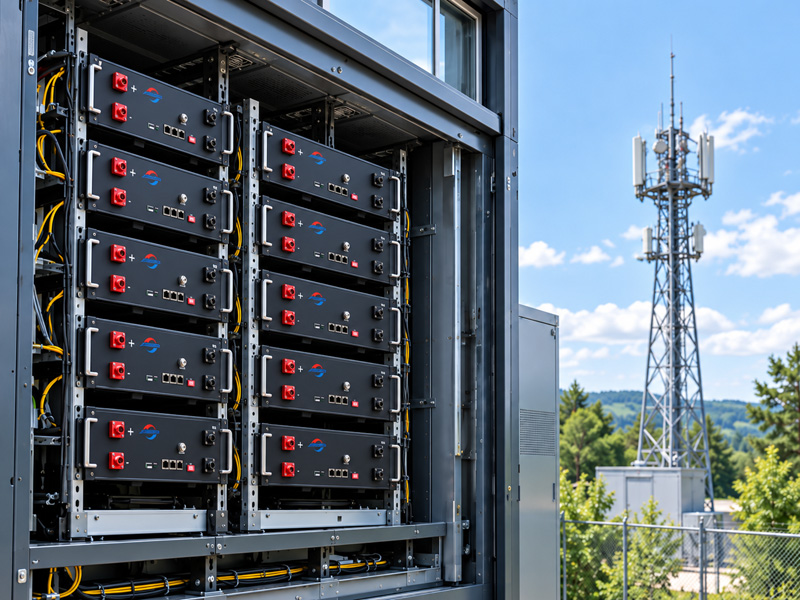
BESS is increasingly evaluated as a fast-response layer that can take peaks and frequent variability off other layers
This “multi-role asset” framing is appearing in industry guidance. Schneider Electric’s overview describes BESS as supporting a range of needs including backup, grid balancing, and peak shaving (Schneider Electric on “the rise of BESS” for data centers (2024)).
What operators are actually using BESS for
When you talk to operators, usage patterns tend to cluster around behaviors that are hard to solve with diesel alone and undesirable to push onto UPS: peak shaving under GPU ramp events, smoothing transient load spikes and ramp rates, and reducing stress on UPS cycling by handling frequent short events elsewhere.
Data Center Knowledge reports that battery storage is moving closer to the data center and is being tied into broader grid programs like virtual power plants—an indicator that BESS is being treated as a grid-interactive asset, not only a standby system (Data Center Knowledge on battery storage moving closer to data centers (2026)).
Why this matters in 2026
Three pressures are converging:
AI load volatility is increasing
grid constraints are tightening
stability is becoming a procurement metric
In other words: you can’t just buy “backup.” You need to design for behavior.
The new decision logic: AI data center power architecture, not equipment
Buyers are no longer comparing devices—they are assigning roles
The practical questions are behavioral:
who takes outages (minutes to hours to days)?
who absorbs peaks (metered demand events, grid caps, curtailment windows)?
who catches transients (fast load steps and rapid ramp rates)?
If you can’t answer these, you’re not really doing architecture yet—you’re just comparing spec sheets.
The emerging three-layer functional split
Below is a simplified, auditable split that many teams converge on.
This split is intentionally a little “unfair” in the sense that it ignores org charts and vendor boundaries.
It’s just a way to force a practical question: when something ugly happens on a specific time scale, which asset do you expect to carry it—without burning itself up?
Layer | Primary responsibility | Time scale | What “good” looks like (testable) | Failure mode when mis-assigned |
|---|---|---|---|---|
Diesel generators | Long-duration resilience | hours–days | sustained output under fuel/logistics constraints; proven start/reliability | site survives outages but still experiences daily instability and cycling stress elsewhere |
UPS | Continuity and bridging + power conditioning | milliseconds–minutes | tight output regulation; stable transfer/ride-through; acceptable cycling profile | UPS becomes a daily stabilizer → increased cycling, thermal accumulation, maintenance load |
BESS | Peak and transient response + grid-interactive flexibility | seconds–hours (and fast response depending on design) | demand smoothing; reduced ramp rate; coordinated control with UPS/protection; improved transient load response | BESS treated as “just runtime” → oversizing energy while under-specifying response/integration |
If your team reads this and says “we don’t actually want the UPS doing that every day,” that’s the point. It means you’ve found a role mismatch you can test and fix.
This is not universal. But it is a useful default because it forces a test plan.
What used to be procurement is now system design
CAPEX vs OPEX is still relevant.
But for AI data centers, response behavior is becoming just as important.
Does it reduce nuisance transfers and alarms? Does it cut UPS cycling under normal ramps? Does it lower thermal stress in distribution gear? Does it make demand caps and curtailment windows easier to ride through?
The deeper shift is simple: stop grading boxes in isolation. Grade the behavior of the integrated system under the events you actually see.
What this means for AI infrastructure planning teams
The teams that make the cleanest architecture decisions tend to shift their evaluation from “specs” to “behavior under test.”
Evaluation is shifting from specification to behavior
Three categories are becoming central:
response speed and stability (what time scale is controlled, and with what overshoot/settling behavior?)
cycling frequency tolerance (what wear profile is acceptable under normal AI load patterns?)
coordination between systems (UPS ↔ BESS controls; protection selectivity; operational modes)
A useful mental model here is that stored-energy systems can be dispatched, not merely reserved. Google’s early work on using distributed UPS energy for power capping shows the concept: stored energy can become an operational control lever when managed intentionally (Google’s paper on using distributed UPS energy for power capping).
Key risk when misaligned
Misalignment produces symptoms that look like “random reliability issues,” but are often deterministic:
Symptom you see | Likely root cause | What to validate / change |
|---|---|---|
UPS battery/rectifier cycling spikes under normal operation | UPS is absorbing transients that should be handled elsewhere | add sub-second telemetry; set an acceptable event rate; add a buffer layer to cut event frequency |
Instability during workload transitions | control loops and ramp limits not coordinated | run step/ramp tests; align ramp-rate constraints; validate protection coordination |
BESS delivers runtime but little stability improvement | procurement optimized kWh, not response/integration | specify a response envelope; verify it in commissioning tests |
Warning: If you cannot define pass/fail criteria for “stability,” you will end up purchasing capacity and hoping the behavior improves.
The core takeaway for 2026 planning
Power systems must be evaluated as dynamic systems, not static assets.
That is the architectural shift.
It is also why BESS, UPS, and diesel are increasingly discussed in the same meeting: not because they are competing products, but because they are being re-assigned across the instability spectrum.
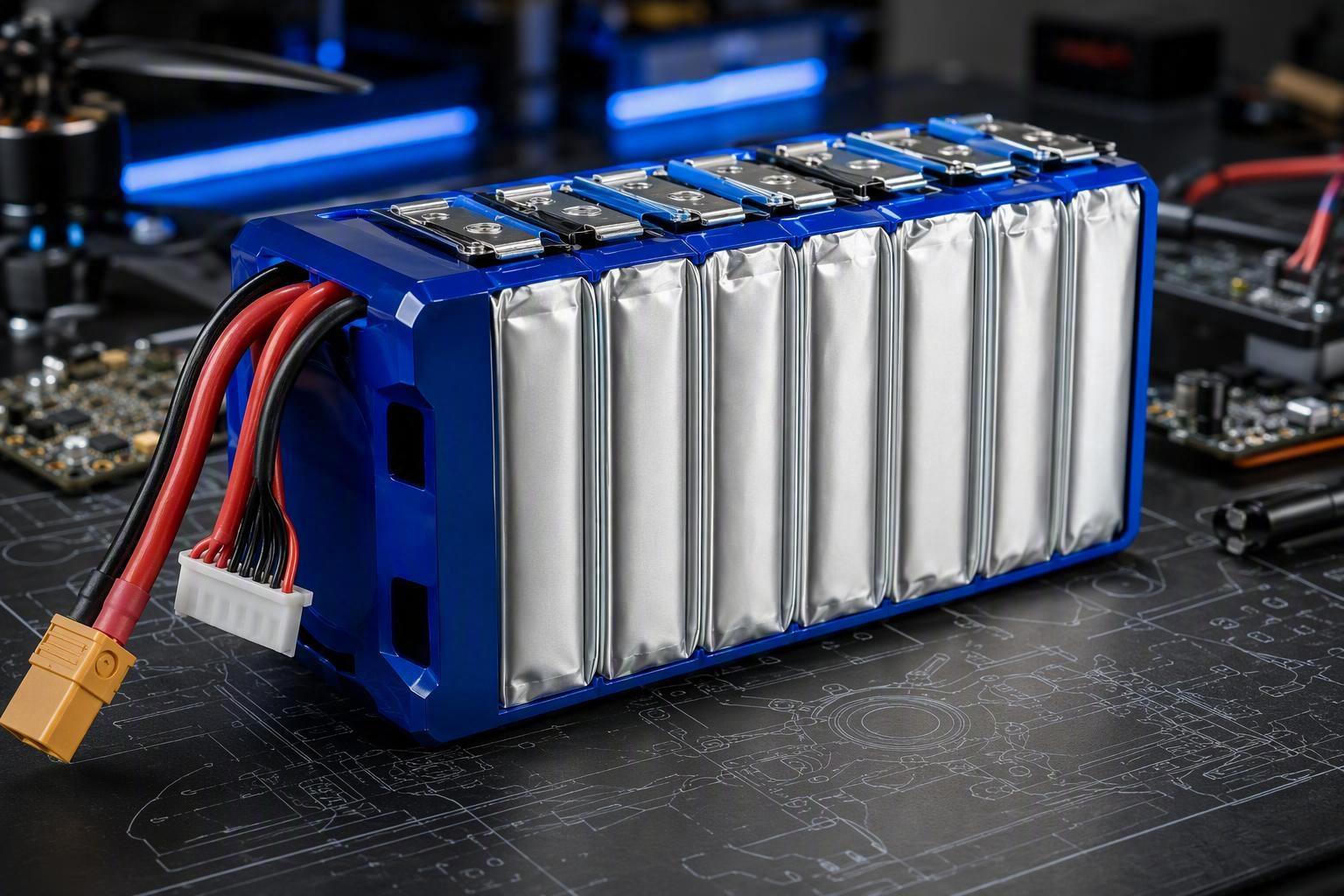
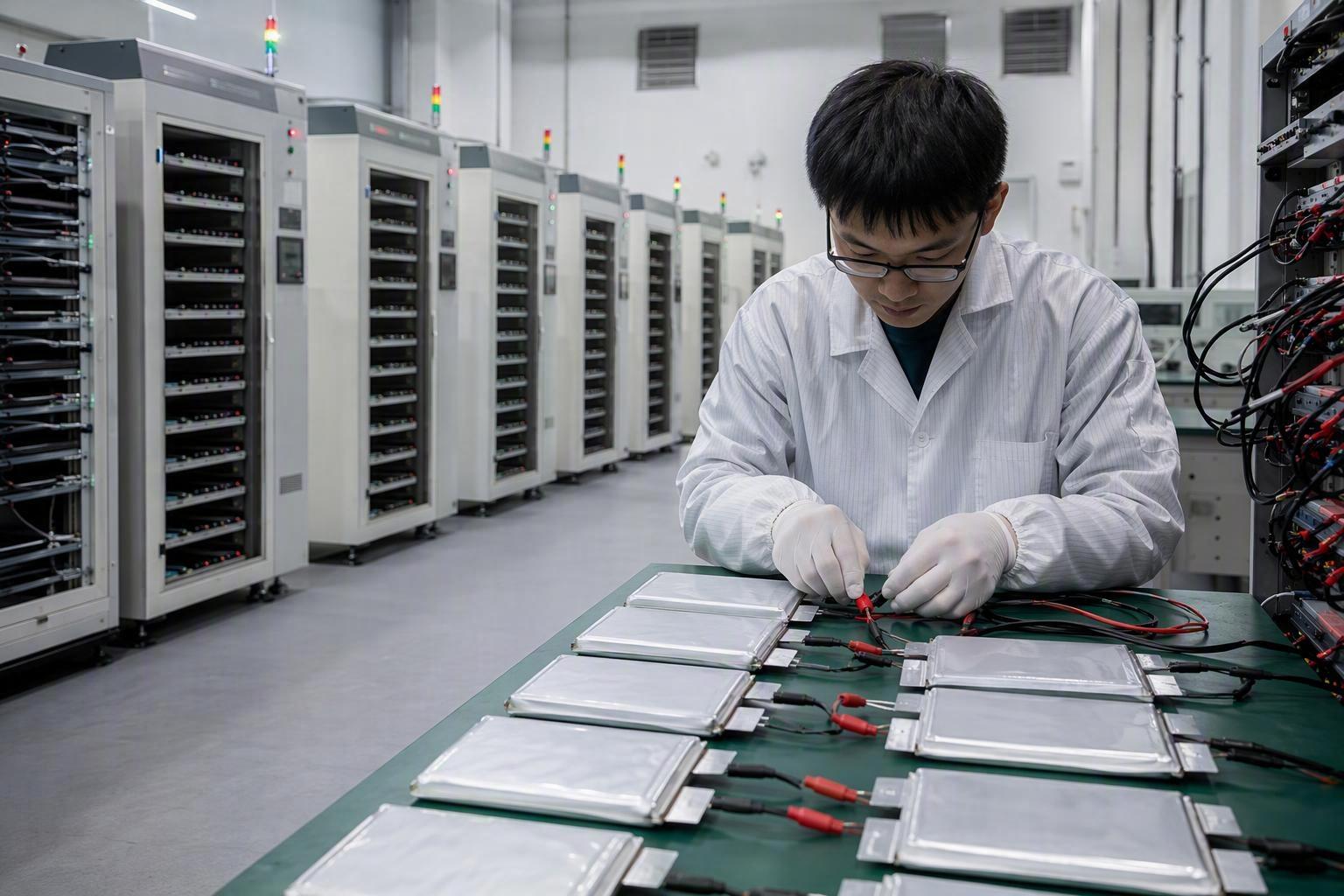
For teams that want an ODM/OEM partner to translate stability requirements into a compliant battery subsystem (and integration approach) without relying on marketing claims, Herewin can be evaluated as an engineering partner alongside your existing UPS and site resilience stack.
Reference point for procurement checklists: Herewin’s UPS battery selection guide for data centers
For storage-system risk framing (safety/O&M): Herewin’s C&I BESS selection guide
AI data center power architecture is gradually shifting from a redundancy-based design model to a dynamic power orchestration model.
Diesel, UPS, and BESS are no longer competing alternatives.
They are becoming different mechanisms for handling instability across different time scales of AI workload behavior.
Disclosure: For general information only—not engineering, legal, or procurement advice.
 Español
  English
  한국어
한국어  Deutsch
  Français
  日本語
日本語  Русский
  Bahasa Indonesia
  ไทย
ไทย  العربية
  Português do Brasil
  Italiano
  Nederlands