



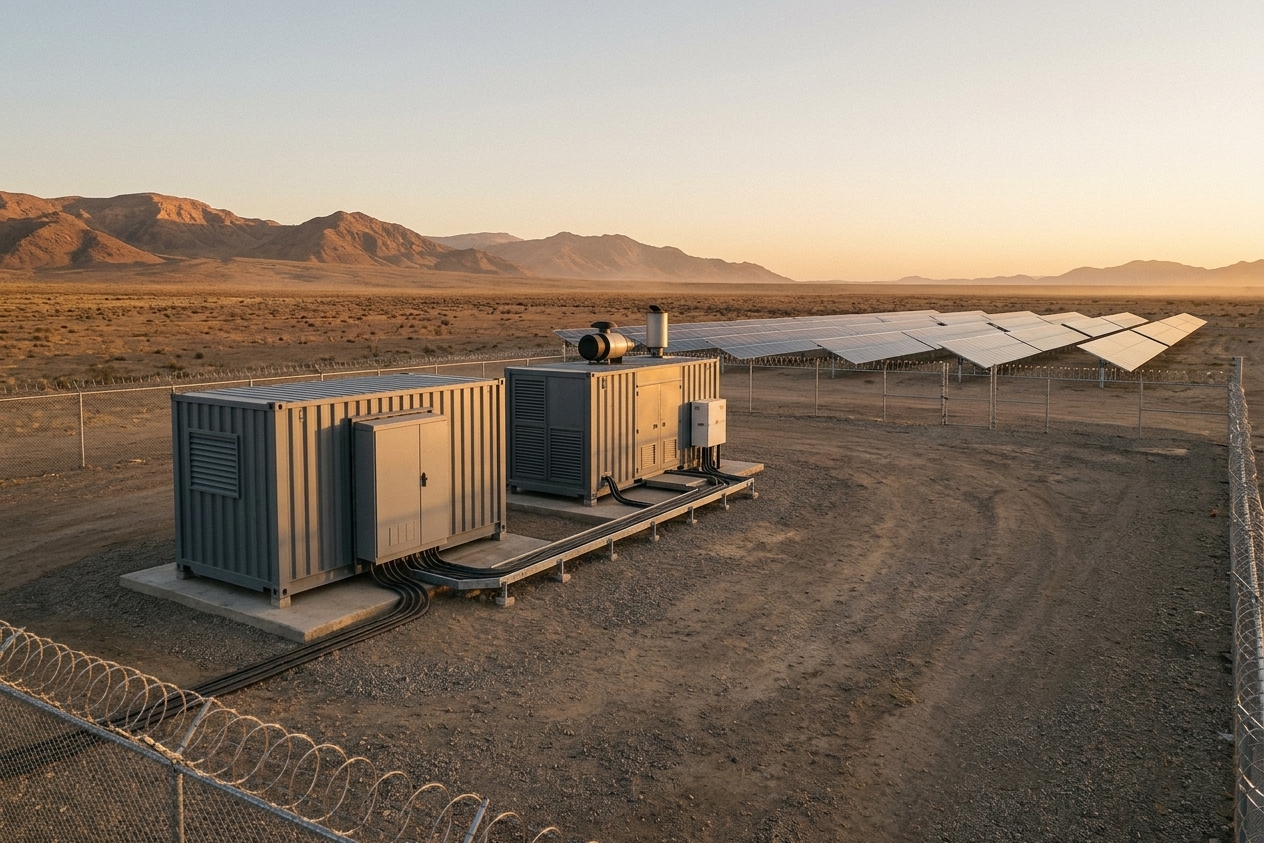
Hybrid microgrids don’t fail to save fuel because the battery is too small. They fail because the control layer—the energy management system (EMS), generator controls, and battery management constraints—doesn’t coordinate diesel loading, battery power, and real load behavior in a way that keeps the diesel engine in its efficient zone.
On many sites, the equipment is fine on paper—but day-to-day dispatch decisions quietly erase the expected fuel savings.
If you’ve installed a diesel + PV + battery system, but fuel bills look stubbornly similar, you’re likely seeing the same pattern: hybrid microgrids fail to save fuel when dispatch is treated as an afterthought. This article is a commissioning-minded explanation of why, and what to check before you spend money on “more kWh.”
Quick check:
Your diesel runs for long hours at low load (or “hunts” up and down) while the battery stays conservative.
You see frequent starts/stops or small ramps that don’t match a stable operating setpoint.
PV is available, but it gets curtailed during ramps or when SOC rules feel “too strict.”
The modeled fuel savings don’t show up in real logs—run hours and liters/kWh barely move.
What you’ll learn (and what to verify in your logs):
Whether your gensets are spending too many hours below their efficient loading band (a fast way to lose fuel savings).
Whether SOC windows and reserve rules are making the battery “available on paper” but rarely usable during step loads.
Whether EMS measurements and ramp handling are forcing PV curtailment or keeping diesel online for avoidable reasons.
If you nodded at two or more, the bottleneck is usually dispatch behavior (EMS + generator controls + BMS constraints), not battery nameplate kWh.
Why Diesel + Battery Hybrid Systems Are Widely Used in Industrial Microgrids
Remote industrial sites have a very specific energy problem: power is mission-critical, the grid (if it exists) is weak, and diesel logistics are expensive.
That’s why the same architecture shows up again and again:
One or more diesel generators
PV to offset daytime energy
A battery to handle fast load changes and PV variability
An EMS dispatch system that decides what runs when
On paper, this design can deliver redundancy, power-quality stability, and lower fuel burn. When it doesn’t, it’s usually worth auditing dispatch before assuming the battery is undersized.
Why Modeled Fuel Savings Don’t Show Up in Logs
This is the moment most projects discover that diesel battery hybrid microgrid fuel savings are not guaranteed by nameplate kWh. The savings only materialize when dispatch logic matches real operating behavior.
Most hybrid project models assume something like this:
PV serves load first
The battery shaves peaks and fills short gaps
Diesel runs less, and when it runs, it does so efficiently
Then commissioning happens. Operations take over. Loads behave like they do in the real world—motors starting, crushers ramping, pumps cycling, HVAC staging, shift changes, and “unknown unknowns.”
And the result is a familiar performance gap:
Die fuel consumption reduction you modeled doesn’t appear
Generator run hours remain high
Battery cycling looks conservative or strangely timed
Die microgrid ROI shifts out, sometimes enough to trigger project pushback
At that point, teams often misattribute the problem:
“We should have bought a bigger battery.”
“PV isn’t producing what we expected.”
“The equipment isn’t working.”
Sometimes those are contributors. But in many diesel generator hybrid system deployments, the root cause is simpler and more uncomfortable:
The hardware is capable, but the dispatch logic is not aligned with the operating conditions.
That is the hybrid system performance gap. In practice, it shows up as a hybrid microgrid performance gap between modeled savings and site logs.
If this performance gap shows up in your logs, treat it as a dispatch problem first, not a kWh problem.
The Real Reason: Energy Dispatch Does Not Match Real Operating Conditions
This is the point most teams miss. You can deploy a PV battery hybrid system and still burn fuel like a diesel-only site if dispatch treats PV and storage as “add-ons” rather than the primary control levers.
A diesel + battery hybrid is a control problem before it’s a capacity problem.
You can have enough PV and enough kWh on paper and still burn fuel unnecessarily if the controller fails at three coordination tasks:
keep the diesel generator in a stable, efficient loading range
use the battery at the right moments (not just “available moments”)
interpret real load variability correctly, including reserve requirements
The Genset Isn’t Held in Its Efficient Range
On most sites where fuel savings underperform, we see one pattern over and over: the genset spends too much time below its comfortable loading band—or it “hunts” because it’s asked to chase every small swing.
What to look for in logs:
A loading histogram with heavy run time in the low-load region.
The battery sitting conservative (“protect SOC”) while diesel carries small, inefficient loads for hours.
Frequent ramps where the generator never settles into a stable setpoint.
Why it tends to happen: SOC and reserve rules get tuned for safety (which is understandable), but the side effect is diesel stays online at light load “just in case.” That’s usually where fuel-per-kWh quietly gets worse.
The Battery Is Held Back at the Wrong Time
In many deployments, the battery isn’t “too small.” In a lot of sites, it ends up being held back at the wrong moments.
What we often see on site is a conservative SOC policy. And it’s often tied to how SOC rules are configured (and how reserve is defined). The battery stays out of the events where it creates the most value—fast steps, short reserve, and the messy minutes around shift changes or equipment starts.
What to check:
Does the battery discharge during steady periods, but sit out during step loads?
Do SOC windows keep the battery “available on paper” but rarely usable in practice?
Is diesel kept online at low load for reserve even though the battery could cover that short-duration reserve?
A simple rule of thumb that usually holds: use the battery for fast power and short reserve; let diesel do the energy work.
The EMS Can’t See (or React to) Real Load Changes
In practice, the biggest gap between models and real sites isn’t average load—it’s the shape of the load, minute by minute.
If the EMS can’t “see” those swings clearly (or can’t react confidently), the system usually plays it safe: keep diesel online, keep the battery conservative, and curtail PV during fast ramps.
What to check:
Are step loads and inrush events visible in EMS logs at a useful sampling rate?
Do reserve rules force diesel online even when the battery could cover short-duration events?
During fast ramps, does PV get curtailed because frequency/voltage support is tight?
When this shows up, it’s rarely fixed by adding kWh. It’s typically fixed by tightening measurement, reserve logic, and dispatch tuning.
If you want a quick win, start with the logs and the setpoints.
Dispatch-First Fixes Before Buying More kWh
If the root cause is dispatch mismatch, the fix is not “add kWh blindly.” The fix is to make dispatch behavior stable and verifiable.
If this is your site reality, you’ll usually get more ROI by tightening dispatch than by buying more battery.
A practical way to do that is to treat storage, battery controls, and supervisory control as one coordinated system:
EMS + BMS coordination so SOC limits and safety constraints don’t silently force conservative dispatch
deterministic generator loading strategy (avoid chronic underloading; avoid hunting)
explicit reserve logic (let the battery cover fast reserve; let diesel cover energy)
commissioning-grade logging so you can prove what happened during ROI disputes
Clarke Energy notes that in advanced hybrid microgrids, the control system continuously balances load, renewables, battery SOC, engine constraints, and grid limits—and that the control layer is often the most important element determining long-term performance (see the technical appendix for deeper references).
From an EPC perspective, this is the shift:
from “battery as capacity”
to “battery as a dispatch tool”
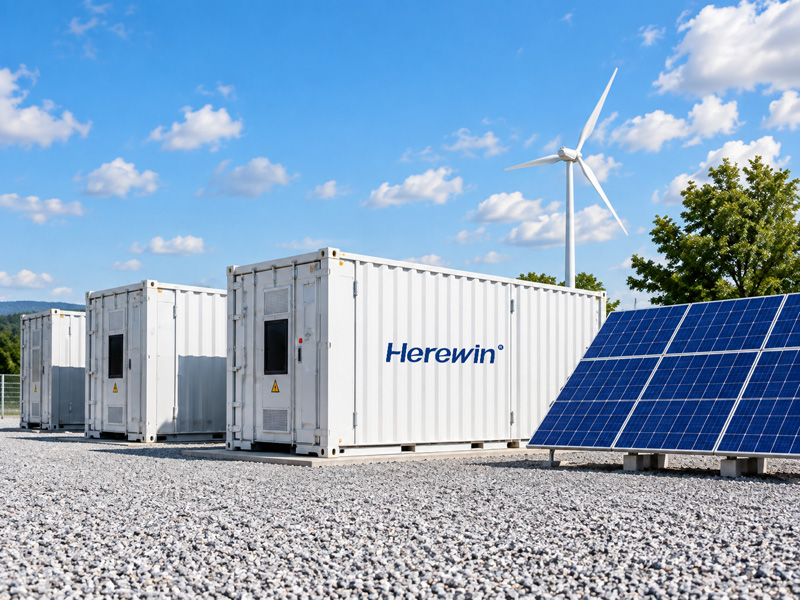
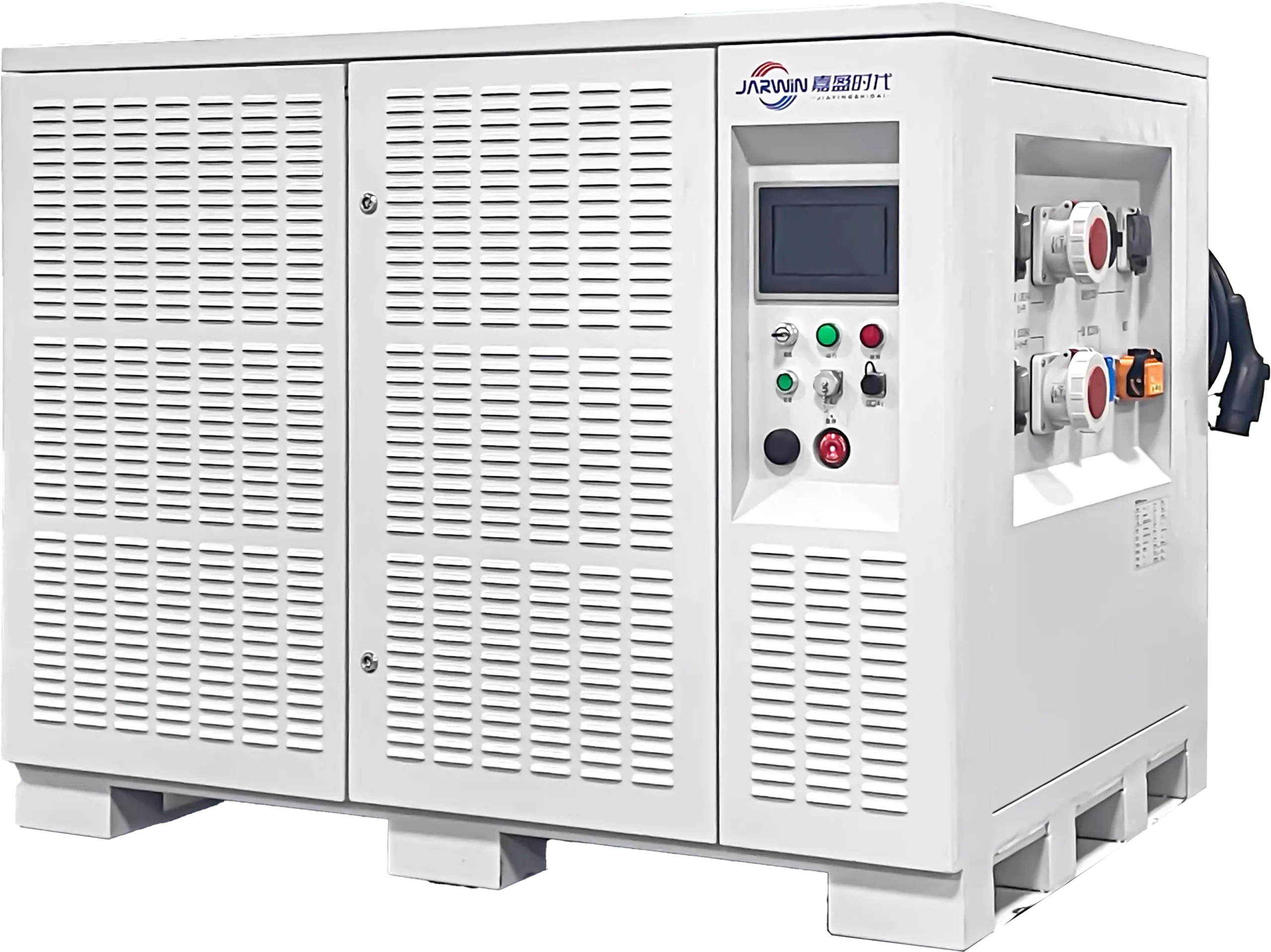
Integrated systems (for example, a containerized BESS sized to your site’s load steps and reserve policy) can help stabilize dispatch behavior and improve load coordination between diesel and battery systems.
For a product-level view of how Herewin packages containerized storage for commercial and industrial sites, see the commercial and industrial energy storage solution overview.
ROI table: a dispatch-first way to model fuel savings (with explicit assumptions)
Below is a simple table you can use to sanity-check whether “more battery” is actually your bottleneck.
Input (example assumptions) | Symbol | Example assumption (label) | Formula / how it affects ROI | Why it matters for dispatch |
|---|---|---|---|---|
Average electrical load | Avg load | Example: site average kW | (Annual energy ≈ Avg load × 8760) | Sets the baseline energy the system must deliver |
Peak load and step size | Peak and step size | Example: largest step kW | Reserve sizing + ramp constraints | Drives spinning reserve needs; causes diesel hunting |
Diesel minimum efficient loading | Min efficient genset load | Example: 30–50% (OEM guidance) | When running: (Genset load ≥ minimum efficient load) | Underloading increases fuel/kWh and maintenance risk |
Diesel fuel curve (site-specific) | Fuel curve | Example: OEM curve or measured | (Fuel ≈ Σ fuel-at-load over time) | Dispatch changes where you operate on the curve |
Battery usable energy window | Usable battery energy | Example: (SOC window × rated kWh) | Determines how long the battery can cover deficits | SOC policy can make installed kWh unusable |
Battery power limit | Max battery power | Example: inverter kW | Constraint: ( | Battery power |
Reserve requirement (policy) | Reserve requirement | Example: % of load or MW | Must be covered by online diesel or battery | If the battery can’t supply reserve, diesel stays on |
Dispatch strategy (control choice) | Dispatch strategy | Example: cycle-charging-like vs load-following-like | Determines diesel setpoints and battery behavior | Often the biggest driver of real fuel savings |
Note: all numeric values above should be replaced with your site measurements, OEM constraints, and commissioning logs. The point is not the numbers—it’s making dispatch constraints explicit.
Technical appendix (for deeper engineering review)
Low-load operation & underloading risks
Caterpillar explains risks associated with extended low-load operation (including wet stacking/exhaust slobber) in “The Impact of Generator Set Underloading”.
Dispatch modes and why they matter
HOMER defines the “load following” generator strategy in Load Following Strategy.
Generac describes “cycle charging” and microgrid ROI implications in Cycle Charging Microgrid ROI.
Reserve constraints in microgrids
For a more technical treatment of spinning reserve concepts in microgrids, see “Spinning reserve analysis in a microgrid” (SciELO).
In Hybrid Microgrids, Fuel Savings Depend on Control Strategy, Not Battery Size
If a diesel + PV + battery hybrid microgrid isn’t saving fuel, don’t assume you have a kWh problem. In most cases, you have a dispatch problem.
Keep the genset in a stable, efficient loading range instead of letting it hunt at light load.
Use the battery for fast power and short reserve—then let diesel do the energy work.
Make EMS measurements, reserve rules, and SOC windows explicit so performance can be verified in logs.
Fuel savings come from control strategy first—and hardware sizing second.

 Deutsch
  English
  Español
  한국어
한국어  Français
  日本語
日本語  Русский
  Bahasa Indonesia
  ไทย
ไทย  العربية
  Português do Brasil
  Italiano
  Nederlands