



In the deep cold of polar stations or high-altitude plateaus, a mission’s ceiling is rarely defined by the airframe—it is defined by the battery. Even if the aircraft can survive harsh weather, the electrochemical core still needs to stay within a workable temperature band.
For fleet and technical leads, the practical engineering objective is simple but critical: design for ambient down to about −40°C as a planning baseline, and maintain a workable cell core temperature (ideally ≥−20°C) through integrated preheating, aerogel insulation, and strategic power derating. This guide provides the operational logic to keep sorties on schedule and assets protected when the environment is working to pull your power system below its functional limit.
Why Drone Batteries for Polar Expeditions Fail in Extreme Cold
In extreme cold, failure starts at the interfaces. Your pack doesn’t “run out of capacity” first—it runs out of usable voltage and power.
At ultra‑low temperatures, lithium‑ion cells face stacked impediments:
SEI impedance rises: the solid‑electrolyte interphase (SEI) presents higher effective resistance at low temperature.
Electrolyte conductivity drops: electrolyte viscosity rises and ionic conductivity falls, so the pack becomes more “resistive” under load.
Diffusion slows: Li+ transport in the electrolyte and active material becomes rate‑limiting at currents that are routine at room temperature.
Polarization increases: as these resistances stack, polarization grows quickly and you see voltage sag and early BMS cutoffs.
A peer‑reviewed synthesis covers these low‑temperature mechanisms and their impact on usable energy and power in the Nanomaterials review by Luo et al. (2022).
To help fleet leads quantify risk during planning, translate the mechanisms above into a handful of mission-facing indicators you can log and trend:
Core indicator | What to watch | Why it matters in cold | Field rule-of-thumb |
|---|---|---|---|
Voltage sag under a known load | ΔV during a fixed takeoff-thrust test (e.g., first 10–20 seconds) | Higher polarization shows up as larger sag and earlier BMS cutoffs | If sag worsens noticeably vs your baseline at the same SOC and payload, extend preheat and reduce burst power |
Minimum cell-core temperature at arming | Lowest thermistor reading across the pack | Coldest cell governs plating risk and cutoff behavior | Don’t treat “pack surface warm” as sufficient—gate on core sensors |
Heater duty cycle / heater energy share | % on-time or Wh used by heaters per sortie | High duty indicates insulation leak, cold soak, or control mismatch | A rising trend is often an early warning before hard failures |
Internal resistance trend (if your BMS exposes it) | DCIR/ACIR estimate over time and temperature | IR drift compounds sag and reduces usable power | Use it as a maintenance flag, not a single-flight pass/fail number |
Planned endurance derate factor | Ratio of cold-planned flight time to normal flight time | Converts cold uncertainty into a hard mission constraint | As a conservative operator baseline, cap a cold-weather leg to ~60–70% of your room-temperature endurance until you have pack-specific chamber curves and logs |
A short detour into LUMO/HOMO helps explain why interphases form at all—without turning this into a quantum-chemistry lecture.
Think of the electrolyte as having a safe operating window. As long as the electrodes stay inside that window, the electrolyte remains mostly stable. When an electrode pushes outside the window, the electrolyte starts to break down and forms interphase films.
In the interphase literature, that “window” is often described in energy terms: electrolyte reduction is thermodynamically favored when an anode chemical potential sits above an electrolyte component’s LUMO, and electrolyte oxidation is favored when a cathode chemical potential sits below an electrolyte component’s HOMO. In practice, that stability-window mismatch is one reason SEI/CEI films form and evolve—shaping interfacial resistance and the cold‑temperature voltage you can actually deliver.
Now connect that back to polarization. Polarization is the extra voltage drop you have to “pay” to push current through internal limits (ohmic + charge‑transfer + diffusion). When temperature falls, each term gets worse:
Ohmic polarization rises as electrolyte conductivity drops.
Charge-transfer polarization rises because reaction kinetics slow at the anode/cathode interfaces.
Concentration polarization rises as diffusion can’t keep up with current, so Li+ concentration gradients steepen.
This is why the same current that feels “normal” in a warm hangar can cause a sudden voltage collapse on the ice.
Charging is even more constrained:
Below 0°C, lithium plating risk rises because anode diffusion and interfacial kinetics can’t accept Li+ quickly enough at normal charge currents.
Metallic lithium can deposit instead of intercalating, driving irreversible capacity loss, resistance growth, and (in worst cases) internal shorts.
Industry guidance emphasizes preheating before any charge and enforcing cold‑charge inhibits; see Battery University’s BU‑410 overview on charging at low temperatures (Accessed 2026). The operational takeaway is unchanged: don’t plan to charge below 0°C unless you have a validated, plating‑safe protocol with very low currents and explicit vendor approval.
What this means for your aircrews, a custom polar drone battery can technically discharge at sub‑zero, but without thermal control and conservative power profiles, you’ll trigger protective shutdowns long before expected. Preheat, insulate, and derate.
Low‑temperature chemistry options for polar use
Selecting chemistry is about trade‑offs. Below is a qualitative snapshot at approximately −40°C behavior; use it to shortlist candidates, then validate with cold‑chamber tests and vendor datasheets. Avoid assuming any chemistry alone solves extreme cold by itself.
In many industrial specs and procurement documents, −40°C is treated as a key low‑temperature planning threshold—but your actual go/no‑go still comes from cell‑core telemetry, load profiles, and cold‑chamber curves for the exact pack you’re deploying.
One emerging direction worth tracking is semi-solid and solid-state architectures, including sulfide solid electrolytes.
Semi-solid-state cells: often defined as ~5–10% liquid electrolyte content, with most ionic transport occurring through a small residual liquid phase inside a more solid framework. In practice, treat this as a design knob (safety/handling vs. transport) that still needs cold-chamber validation at mission C-rates.
Sulfide solid electrolytes: often reported with ionic conductivity close to liquid electrolytes and ~two orders of magnitude higher than many oxide/polymer solid electrolytes. The engineering takeaway is improved ion transport potential, but pack-level performance still depends on interfaces and validation.
Electrolyte-material numbers are not the same thing as “flight-ready at −40°C.” Require full-cell curves and BMS logs under your actual C-rates before you select an emerging architecture for polar field work.
Cross‑chemistry snapshot at −40°C
Chemistry | Pros at cold | Constraints and caveats | Readiness for ~−40°C operations |
|---|---|---|---|
Standard Li‑ion (NMC/NCA) | High energy density; mature supply | Significant capacity and power loss; strong voltage sag; charging below 0°C restricted | Requires a thermal package + derates |
Low‑temperature LiPo variants | Better low‑temp discharge formulations; flexible packaging | Vendor claims vary; still charging‑limited <0°C; mechanical fragility when cold | Verify curves + BMS logs |
LiFePO4 (LFP) | Stable chemistry; good cycle life; safer profile | Lower specific energy; pronounced cold‑charge limits; power drop at ≤−20°C | Power-limited; plan mass |
Semi/solid‑state (emerging) | Potentially improved low‑temp stability | Public UAV‑grade −40°C data sparse; integration non‑trivial | Experimental unless data |
What to check in vendor materials or commissioned tests: discharge curves at −20°C and −40°C across mission‑relevant C‑rates, BMS logs for temperature/voltage/current and cutoffs, and any verified sub‑zero charging protocols (industry-limited).
Note: ambient below −40°C quickly becomes an edge-case where you should assume aggressive derating and rely on core-temperature control, not nameplate ratings.
For background on why capacity and power collapse as temperature falls, see the mechanism overview in Luo et al., 2022.
Thermal management that works at altitude
High altitude reduces air density, so convective heat loss drops and conduction/radiation dominate. That changes the game: insulation becomes more valuable, and targeted internal heating can maintain cell core temperature with less waste.
Self‑heating modules and control
Modern polar packs integrate internal resistive elements managed by the BMS or a dedicated thermal MCU. These designs—leveraging the “all-climate” self-heating architecture—achieve rapid sub-zero warm-up with minimal mass penalty. In UAV applications, this logic enforces strict preheat thresholds and cold-charge inhibits to protect delicate interfacial structures.
At high altitudes, reduced air density lowers convective heat loss. This means internal heaters can maintain core temperatures using significantly lower power than at sea level—provided aerogel insulation is effective.
Thermal management is an energy-budgeting exercise. Every watt spent on heating is a watt taken from your thrust margin or wind resistance. When designing for polar UAV missions, always balance the three-way trade:
Thermal Stability: Keep cell core temperatures high enough to avoid voltage sag.
Efficiency: Minimize heater duty cycle through advanced insulation and control.
Mission Reserve: Protect propulsion energy for the worst-case leg of the flight (e.g., high-wind climbs or icing loads).
Aerogel insulation and retention
Aerogel‑based wraps deliver ultra-low thermal conductivity with minimal mass and thickness, creating a passive barrier that significantly reduces heater duty cycles. Utilizing high-performance materials,these sleeves retain cell core heat far longer than standard foam. Beyond thermal retention, pairing aerogel with sealed enclosures mitigates internal condensation and icing risks around connectors—a critical failure point in high-humidity polar coastal zones.
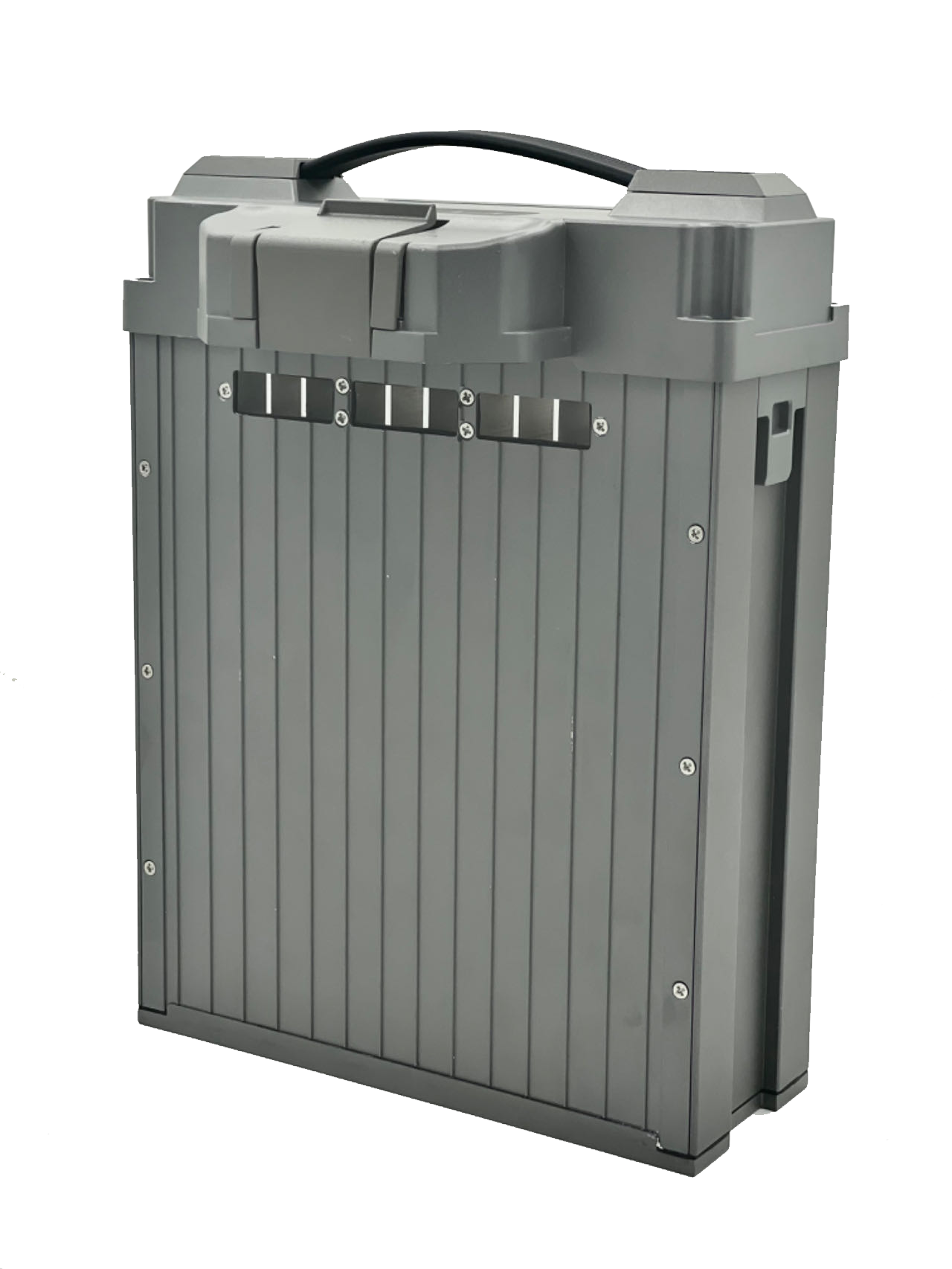
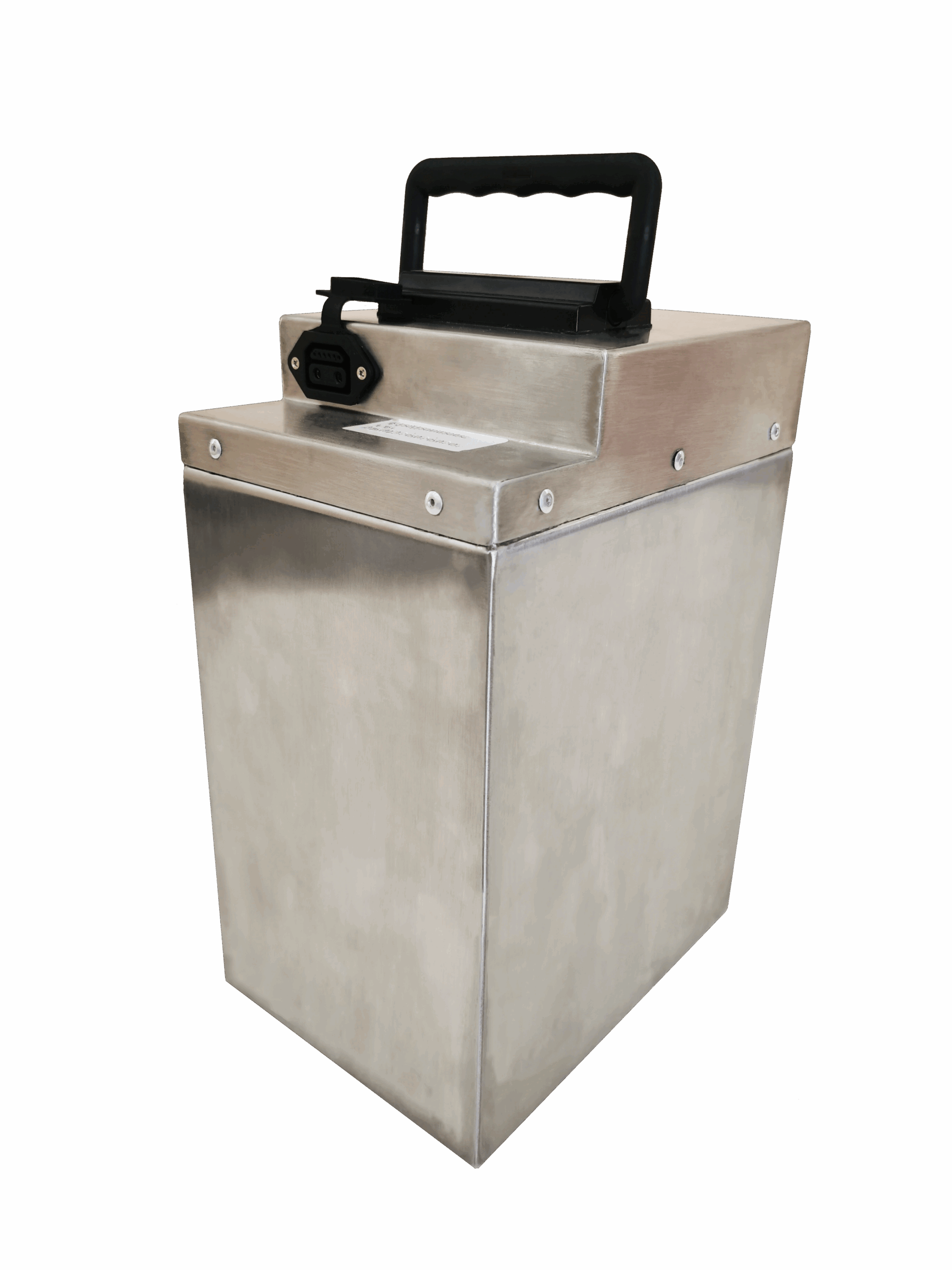
For custom polar builds, the most effective thermal architecture integrates polyimide heater mats and distributed thermistors under an aerogel-lined ruggedized shell. This hardware stack works in tandem with BMS-enforced cold-charge inhibits and staged preheating to ensure the pack remains within the electrochemical stability window before any high-current demand.
Verification Tip: Always request chamber data and UN38.3 documentation for the specific integrated thermal design you plan to deploy.
Custom polar drone battery strategies for long‑duration science
Long routes over ice or at altitude demand careful architecture to balance energy, redundancy, and serviceability.
Modular redundancy and pack architecture
Design for fault tolerance with fused parallel strings and consider split packs for staged preheating and limited hot‑swap windows between sorties. Budget reserve energy for heater overhead plus mission power at the coldest expected cell temperature, including contingency for wind gusts and icing loads.
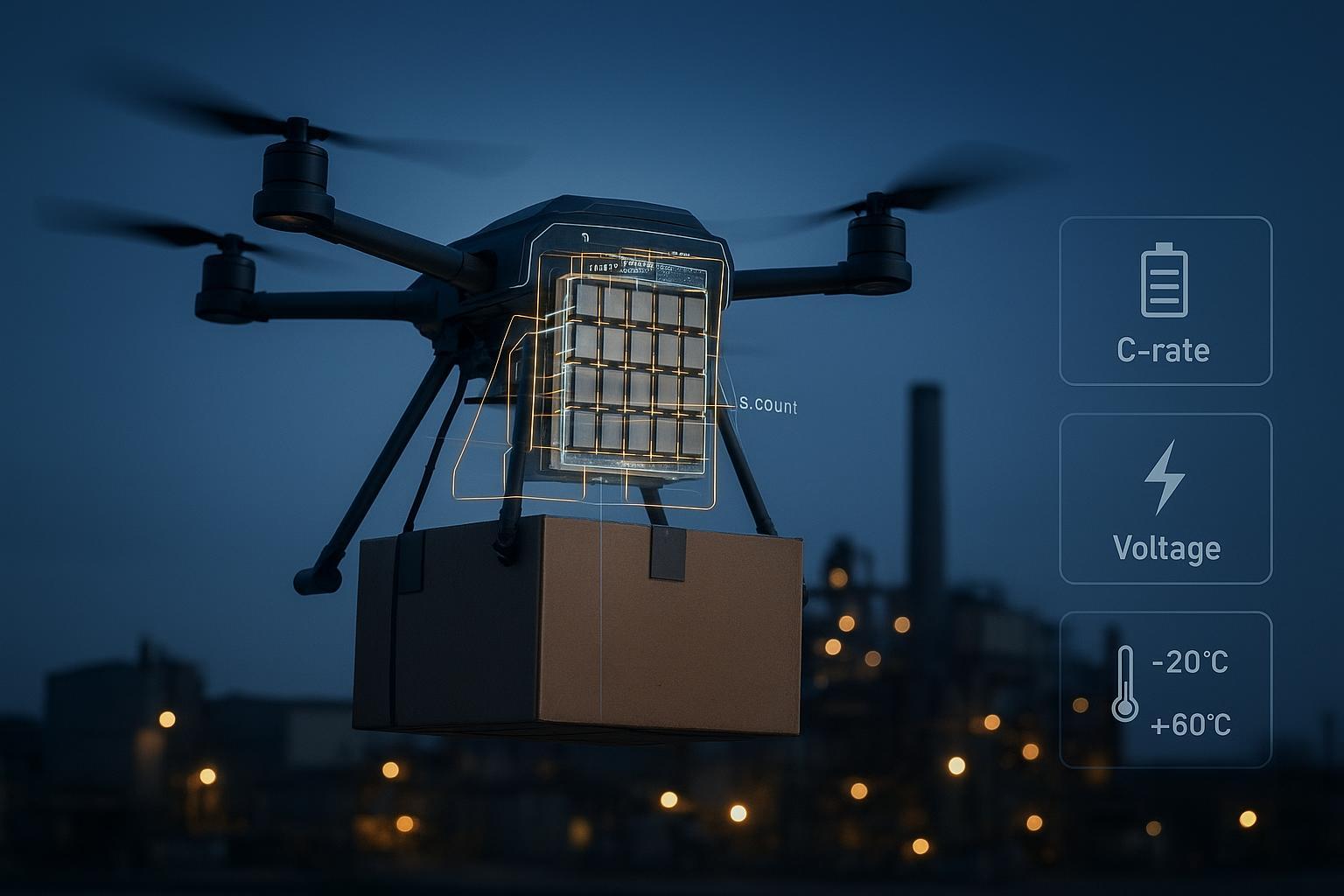
A practical sizing tool for custom packs is C‑rate (C-rating), which is just current normalized by capacity:
C‑rate (1/h) = I (A) ÷ Capacity (Ah)
Equivalent form: I (A) = C‑rate × Capacity (Ah)
If your aircraft draws 120 A during takeoff on a 20 Ah pack, the instantaneous demand is 120 ÷ 20 = 6C. In polar missions, also account for heater current (often a few amps to tens of amps depending on pack size and insulation) and the fact that cold increases voltage sag for the same C‑rate. The conservative approach is to size the pack so that your coldest-expected takeoff and sustained segments stay below your validated C‑rate limits at the cell core temperature you can actually hold, not at lab-room temperature.
For heavy-lift industrial rigs (10–50kg), standard takeoff demands are high. In polar conditions, internal resistance increases exponentially, meaning a pack’s room-temperature rating won’t reflect its actual sub-zero performance. Always size your system based on validated cold C-rate capability to prevent low-voltage cutoffs during the initial climb.
Engineering Note: Polar Sizing & Chemistry Validation
20–25°C Golden Window: Preheat cell cores to 20–25°C before takeoff. This is the mandatory threshold to activate chemical kinetics and prevent Sudden Shutdowns during high-thrust bursts.
30%–50% C-rate Buffer: Due to exponential IR rise in cold, a 30C-rated pack may behave like a 10C pack. Always size systems with a 30%–50% safety overhead for 10–50kg industrial rigs.
5%–10% Liquid Definition: Strictly specify Semi-Solid-State cells with 5%–10% liquid electrolyte content. This ratio is critical for balancing energy density with low-temperature ionic conductivity.
Connector, harness, and EMI considerations at cold
Use low‑temperature‑rated insulation and strain relief to avoid cracking during handling. Select connectors with gloved‑hand ergonomics and anti‑icing seals, and specify gold‑plated contacts to reduce contact resistance spikes. Route thermistor and heater leads separately from high‑current paths to minimize EMI on sensing.
Operating windows for your custom polar drone battery
These operating windows are expressed in cell core temperature, because that’s the variable your BMS and heaters can manage. Ambient may be far colder (even approaching −60°C in some environments), but mission success depends on whether your thermal system can hold the core above the thresholds below.
The table below provides conservative, condition‑based operating windows. Treat these as planning baselines; replace with your lab evidence once you have chamber curves and BMS logs for your exact pack. Safety references include Battery University BU‑410 (Accessed 2026) and workplace guidance on charging practices.
Phase | Cell core temperature band | Power/C‑rate guidance | Notes and assumptions |
|---|---|---|---|
Standby outdoors | −30 to −10°C with insulated enclosure | Keep avionics off or in low‑power; maintain pack in insulated case | Aim to prewarm to ≥0–5°C before any charge; monitor SOC drift due to cold |
Takeoff burst | Target: 20–25°C; Never <−10°C | Limit burst C‑rate if below 5°C; avoid full‑throttle spikes | Preheat to 20–25°C for optimal chemical activity. Gating on core sensors is mandatory to prevent sudden voltage collapse. |
Sustained cruise | ≥−10°C; target 0–15°C | Derate sustained power 30–50% at ≤−20°C environments | Maintain heater control; monitor pack voltage under load for sag trends |
Ricarica | ≥0–5°C for standard charge; 5–45°C preferred | No charge <0°C unless validated plating‑safe protocol at very low current | Enforce BMS cold‑charge inhibit; use staged current and dry, condensation‑free area |
Preflight thermal preparation
Move packs from insulated storage to a preheating sleeve and enable self‑heating until core temperature reaches ≥0–5°C for charging or ≥−10°C for immediate takeoff without charging. Verify that BMS cold‑charge inhibit is active below 0°C and confirm that thermistor readings are coherent across cells. Run a 60–120‑second hover power check to validate voltage stability before committing to your route.
In‑mission power and heater management
Monitor pack voltage under load and heater duty cycle. If voltage sag trends 8–10% below nominal early in the mission, shorten the current leg and plan an earlier RTH. Avoid repeated full‑throttle bursts; fly smoother profiles to limit peak currents in frigid air and reduce sag‑induced cutoffs. If icing load increases, reassess reserve energy and consider stepping down speed to reduce power draw.
Postflight storage and charging safety
Allow the pack to equilibrate in a dry, insulated enclosure and bring the core to ≥0–5°C before charging. Inspect connectors for frost and moisture; dry before mating. Keep logs of charge acceptance and internal resistance trends for auditability.
To make this more SOP-like for cold operations:
Condensation control: after a low‑temperature flight, remove the pack and place it in a sealed plastic bag before bringing it into a warmer area. Let it warm gradually inside the sealed bag so moisture condenses on the bag, not on connectors/BMS surfaces. Once at room temperature, wipe off any residual ice/snow and confirm the pack is fully dry before charging.
Cold step‑charging: if a pack is below 0°C, use a very low pre‑charge current (around 0.1C) until the pack warms above ~5°C, then transition to your normal charge profile. This reduces plating risk and avoids forcing current into a diffusion-limited anode.
Storage SOC (field baseline): for packs that will sit unused, a common battery-care baseline is to store around 50–60% SOC in a cool, dry place (especially common guidance for LFP). For extended storage, top up periodically per your vendor’s schedule.
When preparing for air transport, store at ≤30% SOC, segregate and label properly, and secure per IATA guidance.
Testing, certification, and logistics to polar bases
Transport and site audits hinge on two pillars: test evidence and correct documentation. UN38.3 validates cells/batteries under altitude, thermal, vibration, shock, short circuit, impact, overcharge, and forced discharge conditions. Since 2020, a UN38.3 Test Summary must be available for each model in the supply chain; see the U.S. DOT PHMSA Lithium Batteries portal (Accessed 2026) for regulatory background.
For air shipments of lithium‑ion batteries shipped alone (UN3480), IATA’s DGR requires Cargo Aircraft Only with state‑of‑charge ≤30% unless special approvals apply. Consult the current IATA DGR 67th Edition addendum (2026) and the IATA Lithium Battery Guidance Document 2026 for document sets and labeling. Keep certificate IDs, Test Summaries, and shipper’s declarations bundled with expedition manifests for station intake checks.
Arctic/Polar Deployment SOP
This narrative serves as a science-grade SOP for sorties where ambient temperatures sit between −30°C and −45°C.
Pre-Flight: Stage packs in insulated warming cases; log thermistor data to CSV. Enable self-heating to achieve a ≥20°C core before arming.
Launch: Conduct a 60–120s hover validation. Check for early voltage sag or cell imbalance before committing to the mapping grid.
In-Mission: Maintain smooth throttle profiles to limit peak currents. Monitor heater duty cycle; if unexpected sag appears, truncate the leg and plan an early Return to Home (RTH).
Post-Flight: Archive BMS data (V, I, T, cutoffs) and pair with cold-chamber curves for audit. Record mission KPIs, specifically Heater Energy Share and Average Cruise Power.
Troubleshooting in extreme cold
When telemetry signals anomalies, prioritize the following corrective actions:
If Voltage Sag Triggers Early RTH: Increase preheat soak time; derate maximum current in the flight controller; verify connector contact resistance.
If Cold-Charge Inhibit Activates: Move packs to a stabilized, insulated environment. Ensure core temperature is ≥5℃ before re-initiating. (Caution: Do not use unverified sub-zero charge protocols.)
Signs of Insulation or Moisture Failure: Watch for uneven cell temperatures or frost near leads. If found, reseal enclosures, replace compromised aerogel wrap, and add desiccant before the next sortie.
From Planning to Deployment
Reliable UAV operations in cryostatic environments require a unified, system-level approach. Successful missions depend on the precise synchronization of chemistry, self-heating, and BMS intelligence.
For organizations seeking to ensure mission success in the world’s most demanding environments, technical data and system evaluations are available. We welcome you to consult the Herewin Technical Team via our inquiry portal for specialized deployment support and collaborative engineering.

 Italiano
  English
  Español
  한국어
한국어  Deutsch
  Français
  日本語
日本語  Русский
  Bahasa Indonesia
  ไทย
ไทย  العربية
  Português do Brasil
  Nederlands