
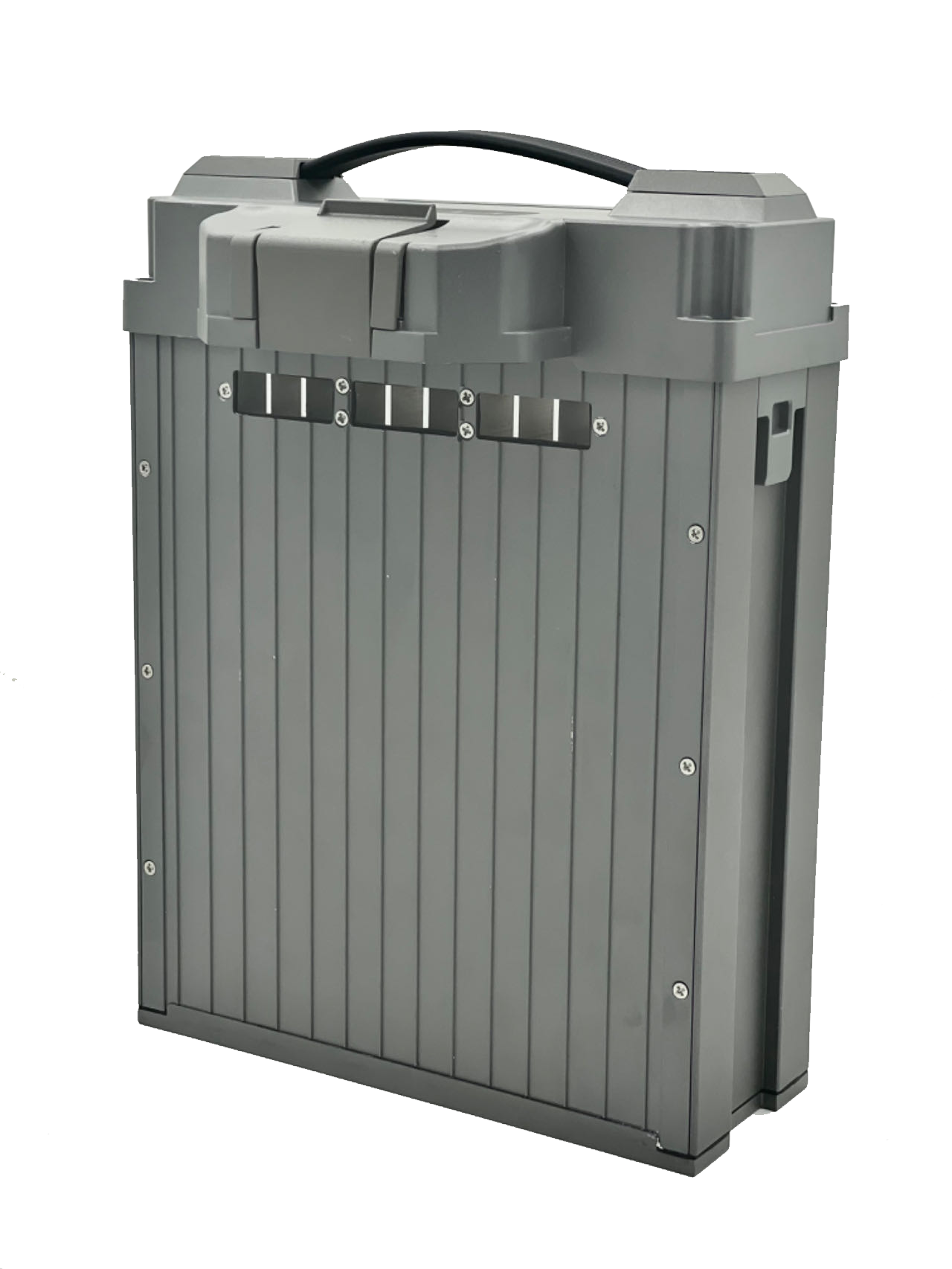
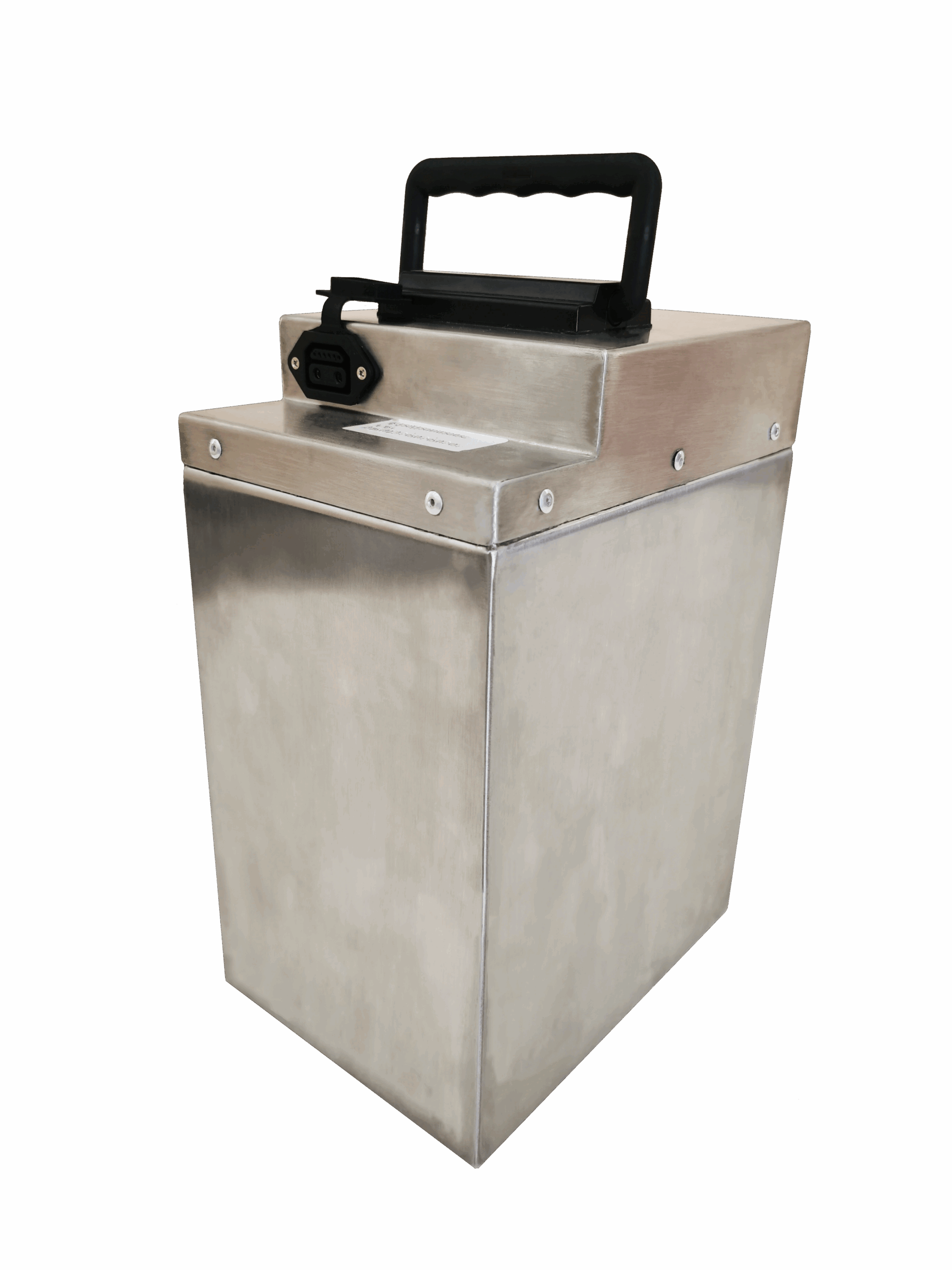




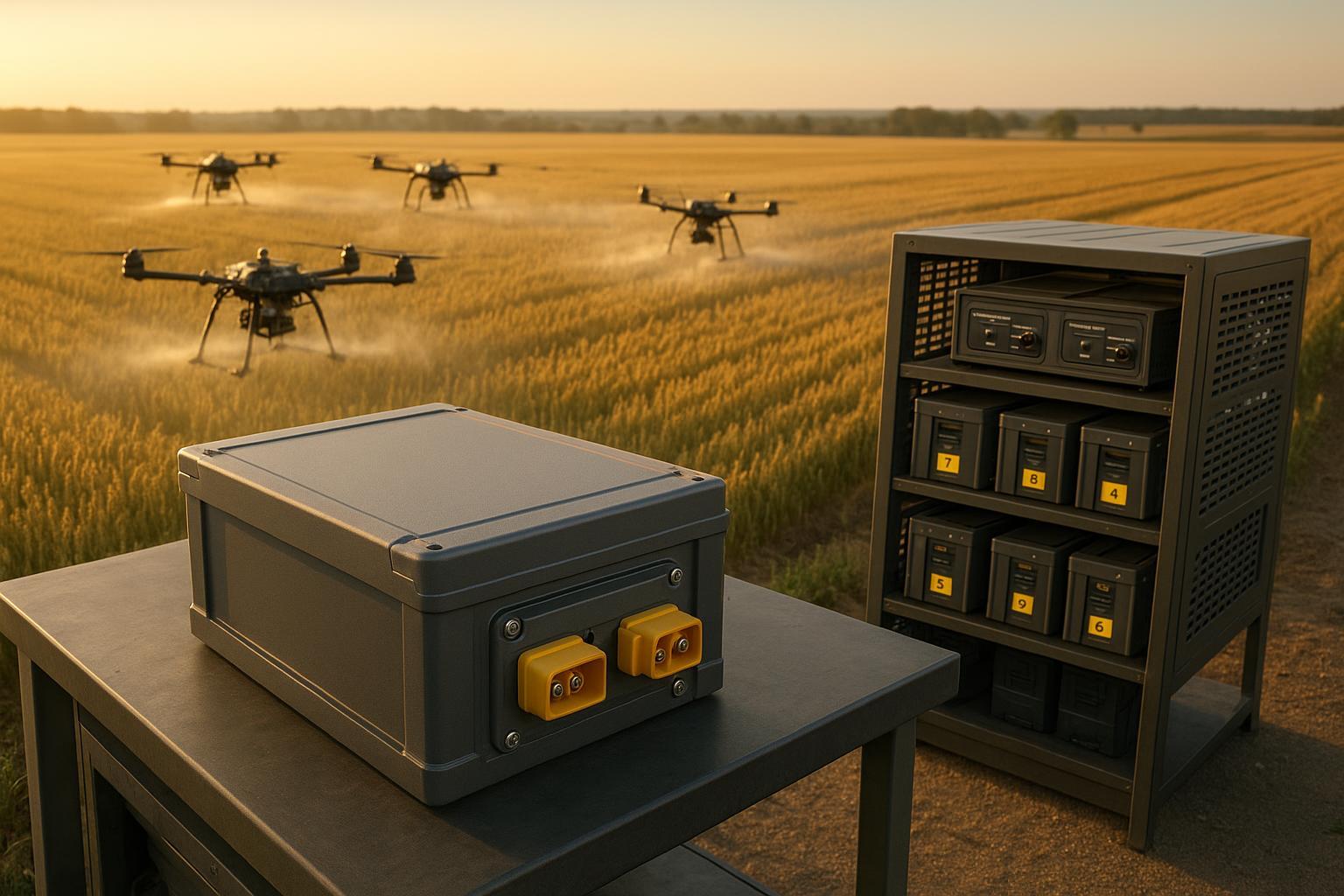
Battery selection is a mission‑critical decision for agricultural drone fleets: the wrong chemistry or inadequate sealing reduces flight duration, limits safe fast‑charging, and accelerates connector corrosion that can ground aircraft during peak season. Choosing high‑energy cells designed for field duty—combined with disciplined charging protocols, rapid‑swap procedures, and regular terminal maintenance—minimizes downtime, lowers the number of packs required per aircraft, and improves lifecycle cost and operational reliability.
Large‑area grain farm spraying drone batteries — why battery choice sets acres/hour
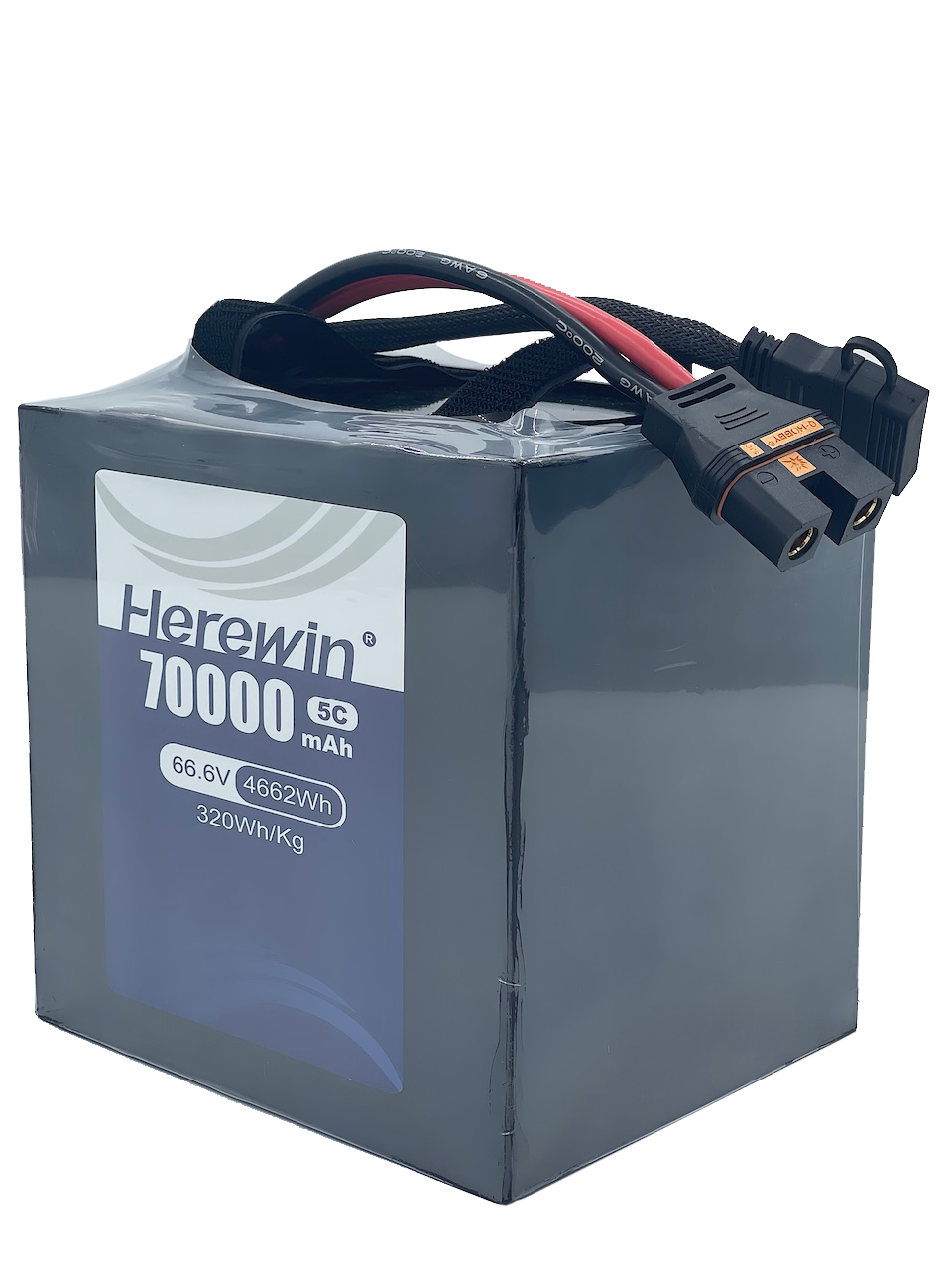
For continuous spraying rotations, energy density translates directly into sorties per hour. High‑energy NMC packs typically deliver higher Wh/kg at the pack level than LFP, which means either longer flight time per sortie or the same flight time with lower mass (and better efficiency). Technically, modern high‑energy NMC designs use two common cell‑level advances that extend endurance without compromising fast‑charge readiness:
- Silicon‑carbon (Si‑C) enhanced anodes: Si‑C composite anodes increase cell-level capacity compared with traditional graphite-only anodes, enabling longer flight time per pack for the same volume and weight (relevant to Large‑area grain farm spraying drone batteries use cases).
- Low‑resistance current collectors and optimized electrode coatings: Reduced contact resistance between electrode materials and current collectors lowers internal heating during high discharge and improves stability under 2C–5C fast‑charge profiles.
An additional cell‑and‑pack improvement increasingly used in NMC designs is the composite current collector (metal foil reinforced with conductive composite layers). Composite collectors reduce localized hot spots and improve mechanical energy dissipation during abuse; this has shown measurable improvement in nail‑penetration test behavior for selected NMC families, offering a safety advantage when combined with proper cell design and BMS protection. In practice, trimming battery mass by 20–40% for a given energy target can unlock 10–20% coverage gains per sortie once turn‑time and wind effects are accounted for, especially on large rectangular fields. For capacity selection on large‑area grain farms, practical pack ranges commonly deployed are 12,000–16,000 mAh for 16–30L class platforms—this balance reduces swap frequency while keeping weight within airframe limits. A simple farmland drone battery capacity calculation uses:
- aircraft average power draw (kW) at spray payload, times desired flight minutes, plus a reserve SoC (typically 10–20%), then convert to battery Wh and choose the pack mAh/nominal voltage that meets that Wh target. This sizing step is central to multi‑drone fleet battery management and ensures you provision the right number of packs per aircraft to minimize downtime.
Batch operations add another constraint: batteries must shed heat and be ready to charge at safe temperatures, or your charging queue becomes the bottleneck. The electrode and current‑collector optimizations described above directly reduce charge/discharge losses and help keep the charger queue moving. That’s where an integrated approach—high‑energy NMC chemistry, corrosion‑resistant sealing, and active thermal management coordinated with fast charging—keeps rotations tight without spiking degradation.
Chemistry & pack design for the Agricultural Drone Battery — why high‑energy NMC + sealing wins
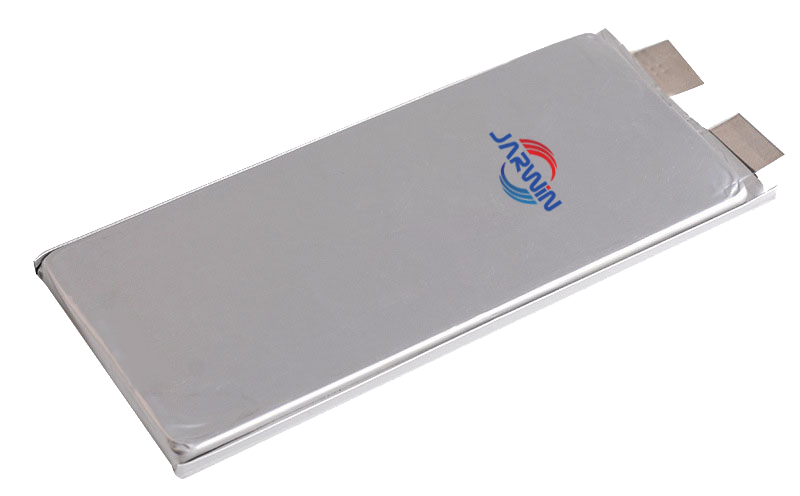
High‑energy nickel‑manganese‑cobalt (NMC) pouch/pack designs commonly achieve higher pack‑level Wh/kg than LFP, helping large fleets hit acres/hour targets with fewer total packs. LFP’s strength is stability and very long cycle life. Selection should be scenario‑driven: endurance‑critical, large‑area grain spraying typically favors higher‑energy NMC when paired with robust safety, sealing, and thermal measures; extreme‑corrosion or ultra‑long‑life fleets may favor LFP.
NMC vs LFP trade‑offs for spraying missions
Below is a condensed, scenario‑oriented comparison to guide selection for large‑area grain spraying.
| Factor | NMC (High‑energy) | LFP (High‑stability) |
|---|---|---|
| Energy density (pack level) | ≈160–220 Wh/kg — higher energy → longer flights / lower mass | ≈120–180 Wh/kg — lower energy → more packs / higher mass |
| Temperature resilience | Good across range; pairs well with carbon‑coated foil & active thermal management for 30–60°C ops | Excellent thermal abuse tolerance; heavier for same energy; can lag at very low temps without heating |
| Cycle life (to 80% SOC) | Typical 500–1,200 cycles (vendor dependent); performance tied to DoD and charge discipline | Often ≥2,500 cycles in conservative use; strong calendar/cycle longevity |
| Fast‑charge suitability | Select families support 2C–5C with strict BMS/thermal gating | Generally lower commercial fast‑charge rates; safer chemistry but may need more packs |
| Safety & internal‑short mitigation | Needs robust BMS, thermal design, and cell protections (e.g., composite collectors, coatings) | Intrinsically more tolerant; simpler pack protections are often sufficient |
| Best‑fit spraying scenario | Large‑area grain farms prioritizing acres/hour, lower packs per aircraft, fast‑turn ops (requires strict SOPs) | High‑corrosion or long‑service fleets where max cycle life and stability matter |
Herewin Insight: For high‑intensity spraying, NMC’s higher energy density typically outweighs LFP’s longer life—provided packs include engineered cell protections, corrosion‑resistant foils, and strict thermal/charge SOPs; verify cycle and fast‑charge limits with vendor datasheets and field pilots.
Pack features that matter: sealing, connectors, active thermal management
Corrosion‑resistant sealing and coatings
Prioritize robust enclosures and verified seals to keep pesticide mist and residues out of pack internals.
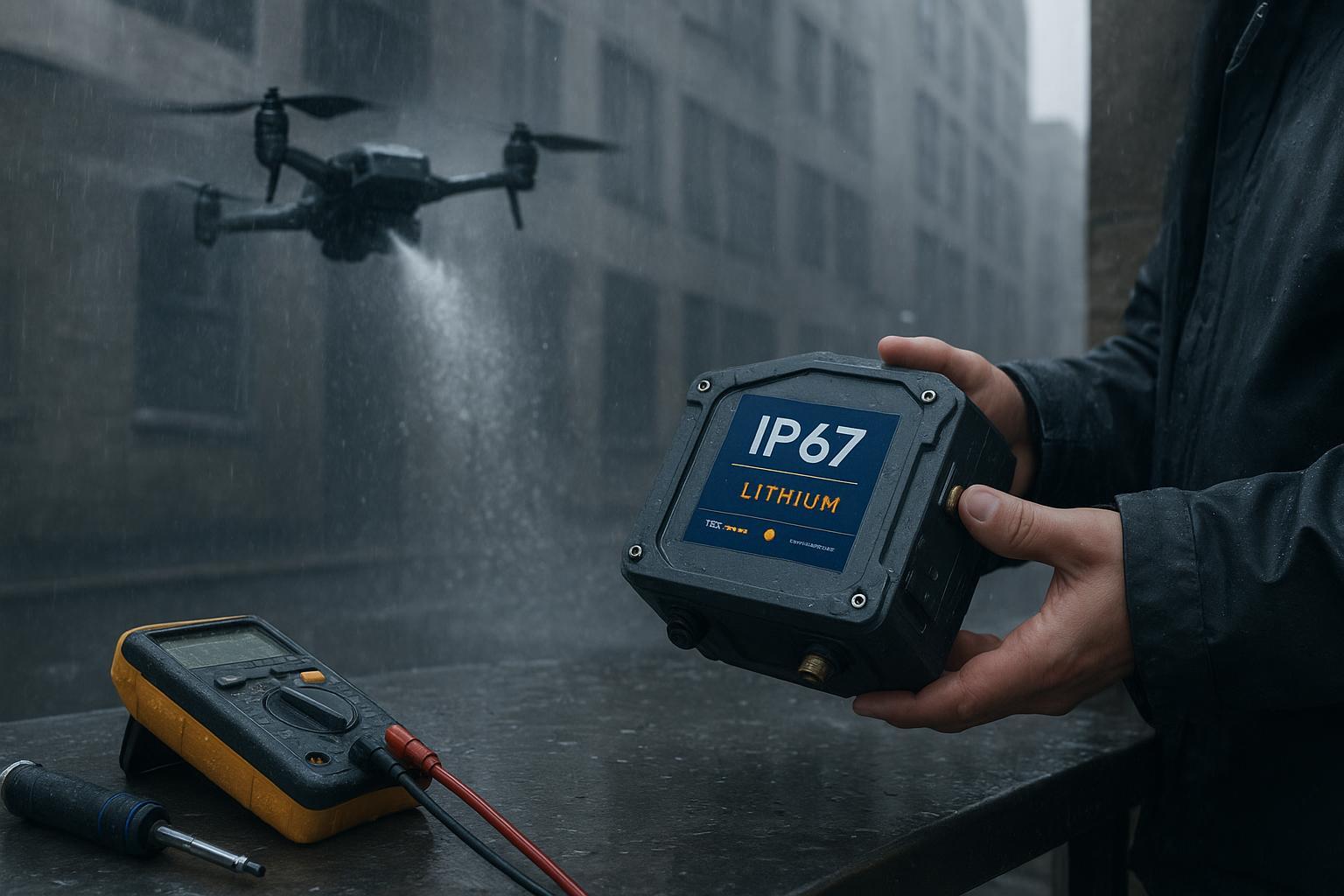
- Prefer packs rated IP65–IP67 with gasketing (silicone or fluororubber) and one‑piece or ultrasonically joined housings. Double O‑rings or redundant gaskets at connector interfaces add protection against acidic/alkaline sprays.
- Use conformal coatings on PCBs and sealed vents to reduce ingress risk without blocking pressure relief paths.
- Specify corrosion‑resistant fasteners and finishes; avoid snap‑fit covers in high‑spray environments.
Quick checks:
- Verify the model‑level IP rating and request ingress test evidence for your spray/immersion risk.
- Confirm gasket material and enclosure assembly method (one‑piece or ultrasonic weld vs snap‑fit).
- Require dual‑layer interface seals (double O‑rings or redundant gaskets) at connector/cover interfaces.
Connector choices and anti‑spark measures
Standardize sealed, high‑current connectors with corrosion‑resistant contacts and protective caps to reduce failures and resistive joints.
- Standardize one connector family across the fleet (avoid adapters) sized for continuous current and thermal rise at your peak load.
- Prefer anti‑spark designs and sealed connector boots or caps to limit residue accumulation and arcing.
- Specify contact platings that resist oxidation (e.g., gold or other anti‑oxidation finishes) and demand thermal‑rise test data for terminal joints.
- Match wire gauge to connector rating and ensure low‑loss internal designs (for example, carbon‑coated foil current collectors) to minimize interface Joule heating.
Quick checks:
- Confirm continuous‑current rating on the pack datasheet (do not rely on generic connector specs).
- Require protective caps/sealing boots and documented contact plating material on datasheets.
- Ask for terminal thermal‑rise test results and resistance measurements for connector assemblies.
Smart BMS and protections
Treat the BMS as the operational control center—require explicit features, telemetry, and predictable fault behavior.
- Require clear BMS feature lists: over/under‑voltage, cell and surface temperature cutoffs, balancing method, charge/discharge current limits, and fault logging.
- Insist on telemetry and integration: per‑pack voltage/current/temperature reporting, API/CAN access, and historical logging for trend analysis and warranty support.
- Define measurable protection and balancing targets: overcurrent trip behavior, cell‑delta after balance, and response times.
- Prefer predictive‑maintenance interfaces that surface rising inter‑cell delta or impedance trends to schedule pack retirement before in‑season failures.
Quick checks:
- Request the BMS data sheet showing protection thresholds and response times (example: overcurrent trip commonly set at ~1.2–1.5× rated continuous current with millisecond‑class short‑circuit detection).
- Specify cell balance target (aim for ≤0.03V per‑cell delta after balancing) and ask whether balancing is active or passive.
- Require telemetry cadence (millisecond–to–second reporting range), logged history for trend analysis, and API/CAN documentation for integration.
Pesticide corrosion protection for drone batteries — field SOPs that actually work
Chemical mist, acidic/alkaline residues, and conductive grime will attack housings and terminals unless protected and cleaned. Keep resistance low, connectors tight, and moisture out—without using solvents that harm seals.
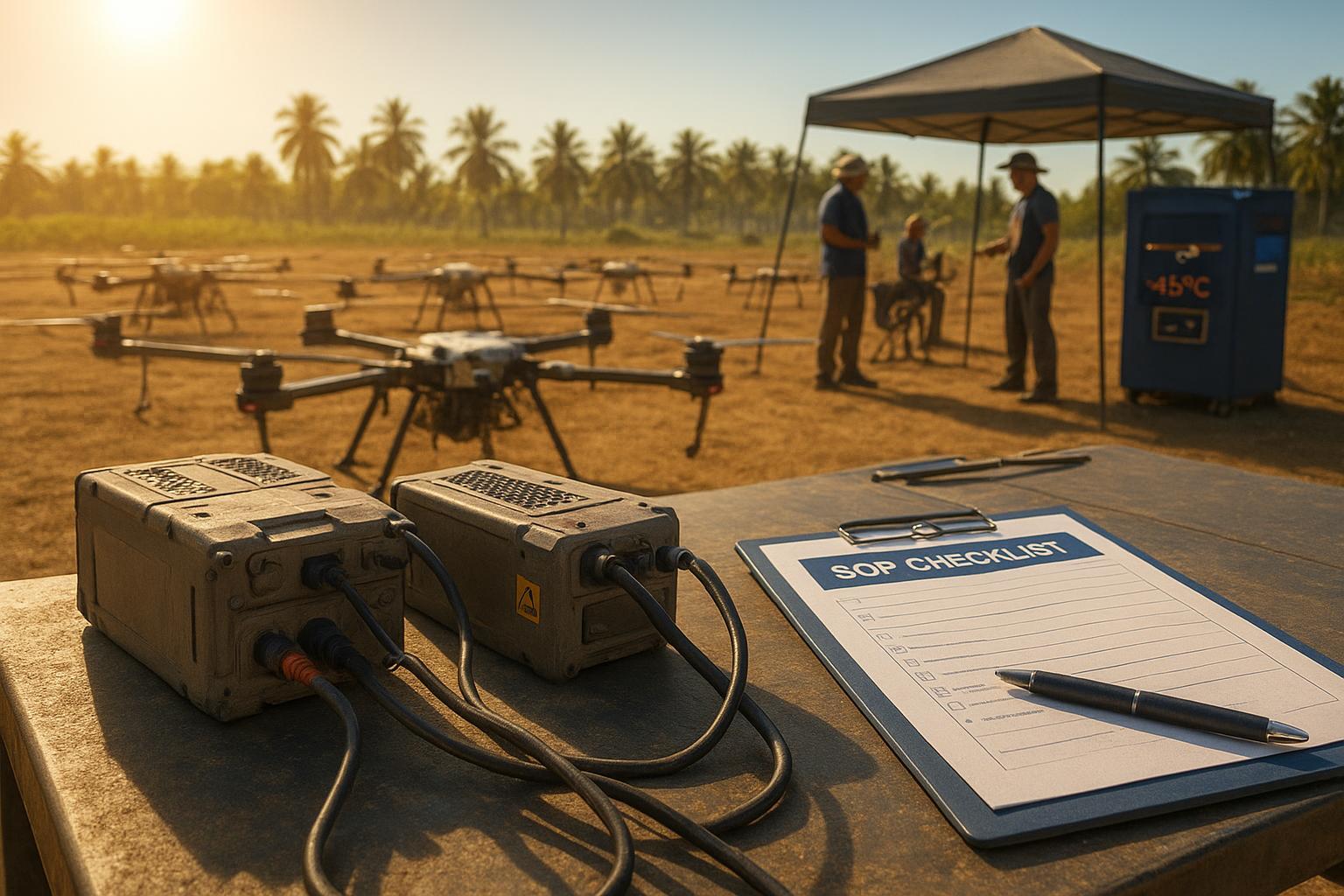
Terminal cleaning and post‑spray SOP
- After landing: power down, disconnect, blow off residue with low‑pressure clean air, and wipe exterior with a damp lint‑free cloth.
- Inspect for discoloration, pitting, or blackened oxidation. If present, remove the pack from active rotation.
- Light residue: swab with 70–90% isopropyl alcohol, dry, apply manufacturer‑approved dielectric protectant, and cap.
- Moderate/severe oxidation or pitting: replace corroded contacts with gold‑plated terminals or manufacturer‑approved parts; log the replacement and run a quick milliohm contact test before returning to service.
Avoid abrasives and aggressive solvents; consult the manufacturer for unclear cases.
Storage and humidity controls
- Use a fire‑resistant or certified battery storage box with replaceable desiccant packs for long‑term storage.
- Humidity targets: long‑term ≤60% RH; with active desiccant/monitoring acceptable up to 75% RH. Avoid environments >80% RH.
- Monitor interior RH with a hygrometer, inspect monthly in humid locations, and replace desiccant every 3–6 months as needed. Store packs at ~40–60% SoC and check voltage quarterly.
These concise checks and short SOPs preserve field reliability while minimizing inspection time and paperwork.
Agricultural drone battery batch charging solutions for multi‑drone fleets
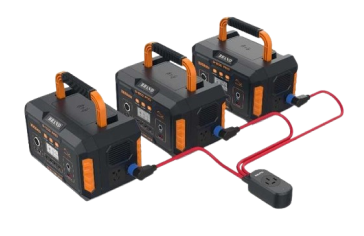
On a 20–100‑drone grain operation, the charger stack is part of the production line: dual‑or quad‑channel high‑power chargers sized to your pack series count (e.g., 12S/14S/18S), chemistry, and throughput requirements, plus data logging and telemetry, keep the battery queue flowing. Multi‑channel chargers with sequential processing and active temperature gating improve throughput while protecting pack life. Fast‑charge strategy (quantified) Example configuration
- a 3,500 W fast‑charger paired with a 16,000 mAh high‑energy pack can, under qualified cell families and controlled thermal conditions, approach ~10 minutes to ~90% SoC — validate this with the pack vendor datasheet and factory charge profiles before deployment. Use a segmented charge profile to balance speed and life: 0–80% at ~1C (fast), then 80–100% at ~0.5C (finish + balancing); vendors may use finer tapering and temperature‑aware cutbacks. This segmented approach reduces SEI stress and lithium‑plating risk while keeping turn‑time efficient.
Thermal gating and BMS preheat logic
- High‑temp protection: inhibit charging and require thermal cooldown if cell or surface temperature exceeds 40–42°C; allow discharge but prevent charge until temperatures return below the safe charge window.
- Low‑temp protection & automatic preheat: inhibit charging below ~5°C and require BMS‑controlled preheat (internal heater or controlled resistive warming) to bring cell temps into the 15–25°C charging band before enabling fast charge. This preserves SEI integrity and avoids lithium plating.
- Implementation note: BMS should expose preheat state, enable/disable flags, and temperature diagnostics to fleet telemetry so operators see which packs are staged vs ready.
Data monitoring, balancing and predictive maintenance
- Balance trigger: set active balancing or finish‑phase balancing to trigger at a cell‑delta ≥0.03 V (tighten from looser thresholds such as 0.05 V).
- Sensing calibration: perform monthly ADC/sensor calibration with target accuracy ≤0.5 mV per cell to keep SoC and delta measures reliable.
- Predictive alerts: promote logging from passive archives to active health management — raise automatic alerts when a cell‑delta trend or rising impedance predicts elevated failure risk (example triggers: cell‑delta growth >0.01 V/month or internal resistance rise >10% within 30 cycles). Use these alerts to pull packs from rotation before in‑flight cutoffs.
Operational SOP
- Cool‑down staging: queue packs 15–30 min after high‑power sorties or until surface/cell temperature is ≤40°C.
- Charge profile enforcement: apply segmented charge (0–80% @ ~1C; 80–100% @ ~0.5C) and require charger/BMS handshake to prevent profile mismatch.
- Telemetry & traceability: log per‑pack temperature, cell voltages, charge current, and impedance; retain 6 months of data for warranty and TCO analysis.
Any high‑power charging installation, heater/preheat hardware, or BMS modification must be validated by the pack vendor and engineered/signed off by certified electricians or engineers per local code. A mid‑size grain‑spraying fleet commonly assigns 4–5 high‑energy NMC packs per aircraft and pairs chargers into dual‑channel arrays; packs cycle through a cool‑down rack, an active preheat bay when needed, and into chargers with Bluetooth/CAN logging so operations can balance usage across the pool. For vendor specifications or to confirm operational limits, consult the manufacturer datasheet or contact the supplier’s technical team — for example, reach out to Herewin via the contact page.
Drone battery quick swap for spraying — workflow & hardware standards
For 18–25‑minute sorties, drone battery quick swap for spraying typically beats fast‑charging for uptime. Standardize hardware and human steps so swaps are consistent and sub‑2 minutes.
- Swap benches and bay design: Use a stable bench with foam cradles. Ensure the battery bay has a lock/verify latch and uses anti‑spark connectors to avoid pitting. Keep benches shaded to control pack temperature.
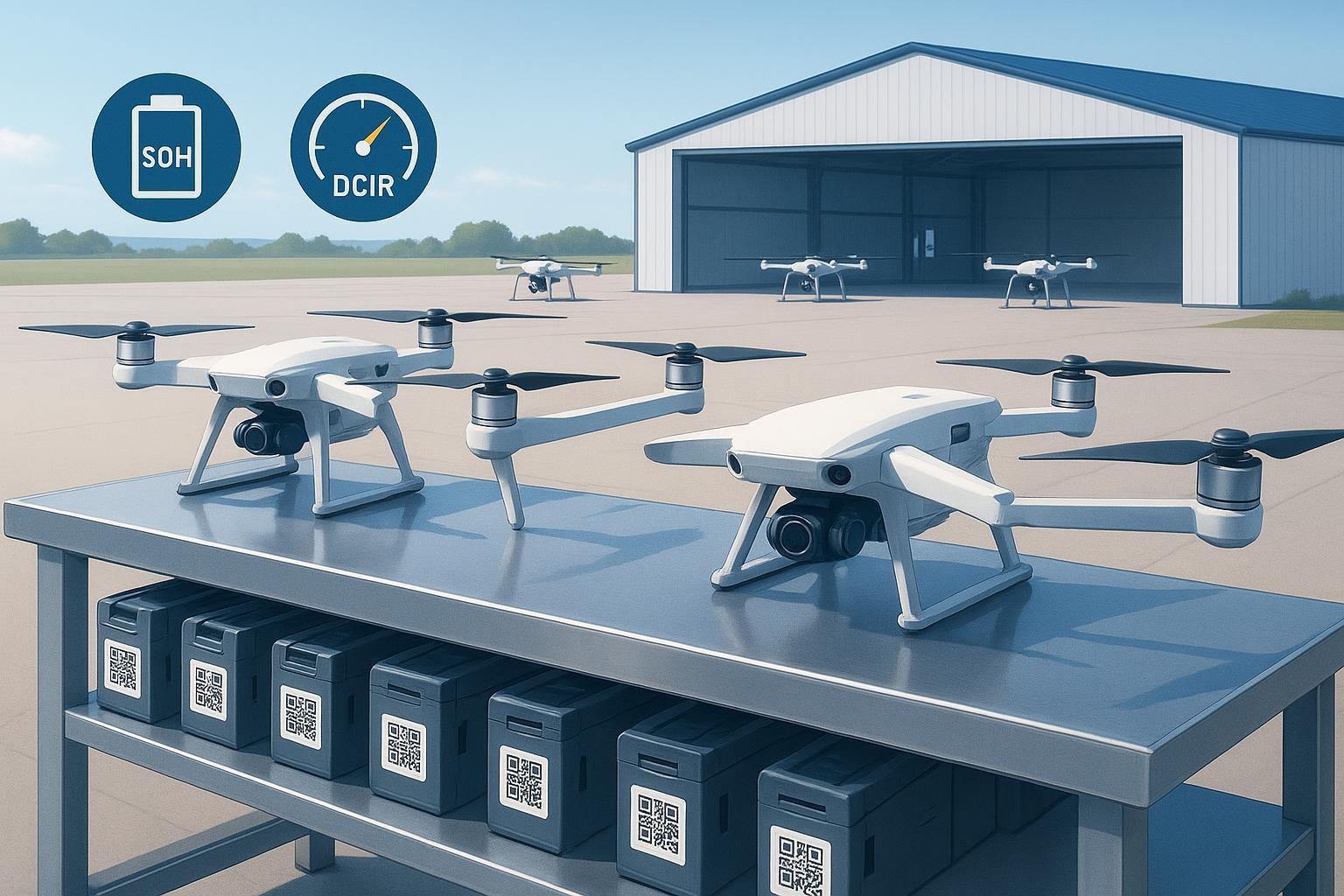
- SoC staging and labeling: Label packs with unique IDs. Stage them by state-of-charge: Ready (95–100%), Reserve (60–80%), and Cool‑down/Empty (<60%). Use color-coded tags to remove guesswork during peak intensity.
- Safety Inspections: Before insertion, perform a 30-second “Visual Check”: inspect electrode contacts for blackened oxidation , gently feel for housing swelling/deformity , and verify cell-voltage delta <0.05V on the smart display.
- Ergonomics and EHS: Use gloves for grip and avoid bending connector pins. Keep fire-resistant storage boxes, extinguishers, and thermal gloves at the swap station.
Cost‑effective agricultural spraying drone batteries — TCO & residual value
Cost‑effective agricultural spraying drone batteries are measured by the lifecycle cost per acre, not the purchase price.
- Key Lever – Cycle Life: With Herewin’s optimized chemistry achieving up to 1,200 cycles (industry‑high for NMC), compared to the 500–800 cycle baseline, the cost per acre can drop significantly. For a 16,000mAh pack, this efficiency can result in a operational cost as low as $0.04/acre.
- Corrosion Loss Prevention: Utilizing IP65+ designs with integrated ultrasonic welding and dual-layer seals prevents premature retirement due to pesticide ingress.
- Residual Value Policy: Retire packs from primary flight operations once capacity falls to 80% of its initial value . These packs can be redeployed for less demanding ground-station roles, capturing residual value while preventing in‑season flight failures.
For procurement framing and deeper ROI tips, see resources like the Industrial drone battery buyer’s guide and the practical battery selection guide.
Storage and off‑season notes you shouldn’t skip
- Outdoor staging during season: Keep cabinets shaded, ventilated, and dry. Store batteries in explosion-proof boxes with desiccant packets and maintain distance from pesticide prep areas to prevent aerosol deposition.
- Non‑spraying season storage: Target 40–65% SoC and store in a controlled environment: 10–25°C and ≤60% RH .
- Cycle Maintenance: Perform a complete charge-discharge cycle every 3 months to calibrate the BMS and reactivate chemistry. If any cell falls below 3.0V, replenish charge immediately to prevent permanent capacity loss.
PREGUNTAS FRECUENTES
How many batteries per aircraft for a continuous rotation on large fields?
A common baseline is 4–5 high-capacity packs per aircraft. For maximum efficiency, pair them with a 3,500W fast-charge generator to achieve ~10-minute charging for two packs simultaneously. Use BMS data logs to fine-tune based on actual field discharge.
Can I fast‑charge every sortie?
Only with manufacturer-qualified packs and segmented charging to protect cell health. Avoid charging “hot” packs (>40°C) or cold packs (<5°C) without BMS-integrated pre-heating to prevent lithium plating and SEI damage.
NMC or LFP for early spring cold?
NMC is superior for sub-zero stability (-20°C) during early spring. In extreme heat (30–60°C), LFP offers higher thermal stability (ignition >500°C). However, Herewin’s NMC with composite current collectors and carbon-coated foil effectively bridges this safety and heat-dissipation gap.
What ruins connectors fastest?
Acidic/alkaline pesticides and high humidity leading to blackened oxidation (a sign of high-resistance heating). Use gold-plated terminals and ensure the pack features ultrasonic-welded seams and dual-layer gaskets to block ingress.
How do I reduce charger‑room risks?
Use certified chargers and maintain ventilation to avoid a 30% drop in cooling efficiency from dust. Perform monthly ADC calibration (accuracy ≤0.5mV) and set balancing triggers at ≤0.03V to prevent overcharge-induced swelling and cell imbalance.

 Español
  English
  한국어
한국어  Deutsch
  Français
  日本語
日本語  Русский
  Bahasa Indonesia
  ไทย
ไทย  العربية
  Português do Brasil
  Italiano
  Nederlands