






Vietnam isn’t just “another country going electric.” It’s shaping up as a first validated transition market for Southeast Asia’s two-wheeler electrification—because three signals are lining up at the same time:
Policy creates a mobility constraint (not just a preference shift).
OEMs start scaling like it’s industrial, not experimental.
High-utilization fleets begin treating energy as an operating variable, which is where replacement cycles accelerate.
Together, these are alignment signals—but they don’t yet prove the market is in full procurement execution mode (the phase where large, repeatable fleet purchase orders, platform-wide rollouts, and measurable ICE procurement slowdown become visible). Put differently: the facts are sourced, but the pace/scale story still needs more measurable, multi-source confirmation.
The practical question is therefore not whether electrification is coming, but whether Vietnam is entering an execution phase that can be verified in procurement and operations data—and which indicators would confirm (or falsify) that shift.
For manufacturers and strategy teams tracking Southeast Asia’s two-wheeler transition, Vietnam is worth watching less for headlines—and more for what the market is beginning to force OEMs and suppliers to do next.
Hanoi’s 2026 fuel motorcycle restrictions: policy as the first demand shock
When a city restricts where internal combustion two-wheelers can operate, the market stops being “EV-curious” and becomes compliance-constrained.
According to the Vietnam Government Portal’s summary of Hanoi’s roadmap, Hà Nội plans to restrict gasoline-powered motorbikes and mopeds inside Ring Road 1 starting July 1, 2026, with a phased expansion outward over time (Ring Roads 1–2 by 2028 and Ring Road 3 by 2030) under a Prime Minister directive (Baochinhphu.vn, 2025).
Urban restriction turns electrification into an access problem
Once enforcement begins, mobility access starts to bifurcate:
ICE-usable zones (where petrol two-wheelers still operate normally)
EV-usable zones (where access is preserved because the vehicle class is allowed)
That’s a structural change. It converts an electric two-wheeler from a lifestyle choice into a route eligibility and service coverage decision.
For OEMs, the implication is straightforward: when the city draws a boundary, product strategy isn’t only about the rider anymore—it’s about which vehicles can still operate (and earn) inside the boundary.
The replacement cycle becomes policy-driven, not “natural refresh”
In a normal market, two-wheeler replacement is a rolling curve: riders replace when maintenance pain, resale value, or financing makes it rational.
In a restriction market, replacement planning becomes compliance-driven:
procurement timing shifts from “when the fleet grows” to “before the constraint bites”
model mix shifts toward whatever is allowed in restricted zones
after-sales and warranty exposure concentrates in the compliant segment first
This is why “ban” (or even partial restriction) acts like a demand shock. Adoption no longer depends primarily on preference—it depends on operability.
For OEMs, the first-order impact is demand. The second-order impact is planning discipline—your customers start buying to avoid being locked out of high-value zones.
VinFast’s scale-up signal: EV two-wheeler supply entering an industrial phase
Policy can create demand pressure. But it doesn’t guarantee supply readiness.
A stronger signal is when a domestic champion begins to scale two-wheelers as if the next order book is already visible.
VinFast has stated that “for two-wheelers, the Company targets 2026 deliveries to be at least 2.5 times its 2025 deliveries” (VinFast Investor Relations, 2026 guidance).
The baseline matters because it tells you what 2.5× actually means. VinFast also reported that “for the full year 2025, the Company delivered 406,498 e-scooters and e-bikes” (VinFast Investor Relations, 2025 deliveries).
Production expansion is a bet on future order structure
OEM capacity expansions (or delivery targets that imply capacity expansion) are rarely driven by optimism alone. They’re driven by:
expected shifts in channel mix (fleet vs consumer)
tightening compliance timelines
confidence in component availability and cost curves
In other words: scaling is not a press release—it’s a manufacturing decision.
“Industrialization” means the ecosystem starts standardizing
As e-two-wheelers move from “model launches” to “capacity systems,” the ecosystem shifts in predictable ways:
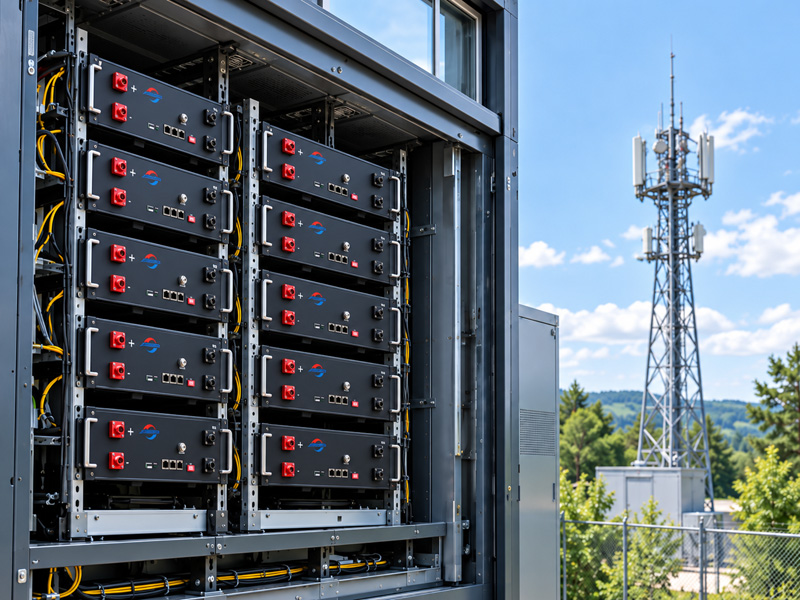
battery pack formats begin to standardize around serviceability and lifecycle economics
BMS interfaces and data requirements become procurement criteria, not engineering niceties
supplier QA moves toward repeatable validation rather than hero engineering
This is exactly the phase where regional OEMs feel both pressure and opportunity: the market is still forming, but the rules start to harden.
Fleet and commercial adoption signals: from pilot programs to operational replacement
The most credible proof layer in any two-wheeler transition is fleet behavior. Consumers adopt when the product feels better. Fleets adopt when the spreadsheet—and uptime—wins.
Rather than arguing about labels, it’s more useful to separate pilot electrification from operational replacement using observable signals:
Pilot electrification looks like: limited unit counts, limited routes, “does it work?” success criteria, and energy handled as an exception (charging/swap is managed ad hoc).
Operational replacement looks like: repeatable purchase orders, slower new ICE procurement in high-utilization segments, and energy becoming part of dispatch logic (routes, staffing, and maintenance are planned around battery availability).
A procurement metric shift is the real “start signal”
When fleets flip into replacement mode, their decision metric usually shifts:
from upfront cost → to cost per km + uptime + maintenance predictability
That shift matters more than any consumer survey, because it changes how products are specified.
One accessible (but vendor-reported) example: Selex Motors describes Lazada Logistics introducing 100 electric scooters for delivery operations in Vietnam in 2023 and reports trial economics with partners (directional signals; treat as indicative, not definitive) (Selex Motors, 2024).
The actionable lesson isn’t the exact number—it’s what fleets optimize for once EVs compete head-to-head with ICE.
Operations redesign: charging or swap becomes part of dispatch logic
In early-stage markets, people frame fleet electrification as an infrastructure problem.
In replacement markets, fleets treat energy as part of scheduling:
route planning begins to account for battery availability
charging or swap becomes a dispatch constraint like labor hours or traffic windows
maintenance planning moves from reactive to cycle-based
This is why high-utilization fleets are the “truth layer.” They’re forced to operationalize EV constraints quickly—or abandon the transition.
Expect a concentration effect: adoption shows up first where utilization is highest
In Vietnam (and across SEA), the earliest visible adoption tends to concentrate in:
last-mile delivery
gig logistics
high km/day riders
Private commuter adoption can lag even while fleet adoption accelerates—because commuters optimize for convenience, not fleet-level economics.
What signals from Vietnam matter for the rest of Southeast Asia
If Vietnam is an early validated transition market, the question becomes: what these developments imply for regional OEMs as the region approaches its next inflection?
1.Zone-based restrictions expand faster than full bans
Full bans are politically hard. Restricted zones are easier to implement and easier to justify (air quality, congestion, noise).
These developments typically affect:
which ring roads / districts are included
whether enforcement is time-based or always-on
whether commercial riders are treated differently
2.Delivery targets imply supply-chain commitments
Announcements matter less than what they force upstream:
cell supply allocations
pack line capacity
BMS component sourcing
after-sales and warranty provisioning
When delivery targets scale, ecosystems standardize.
3.Standards and lifecycle rules become the next bottleneck
As the International Council on Clean Transportation has noted, Vietnam’s two-wheeler electrification pathway still depends on closing gaps in technical standards and regulations around charging, battery swapping, and end-of-life management (ICCT policy brief, 2022).
For OEMs, this translates to a practical watchlist:
swapping interoperability rules (if they emerge)
battery safety and transport compliance requirements
recycling / EPR enforcement maturity
data requirements for BMS and fleet monitoring
4.The real “winner” is the OEM that can ship reliability at scale
In the industrial phase, you don’t win by being first.You win by being the OEM that can consistently deliver:
predictable pack performance across temperature/humidity ranges
auditable compliance documentation
stable spare parts and service processes
warranties that are financially survivable
That’s when electrification stops being a product story and becomes an operating system story.
In short, Vietnam is emerging as one of the clearest early signal markets for electric two-wheelers in Southeast Asia—where policy pressure, OEM scaling intent, and fleet behavior are beginning to align. But until execution shows up consistently in observable procurement patterns, it remains an early but incomplete transition signal—one that indicates direction, but not yet full-scale execution.





 Español
  English
  한국어
한국어  Deutsch
  Français
  日本語
日本語  Русский
  Bahasa Indonesia
  ไทย
ไทย  العربية
  Português do Brasil
  Italiano
  Nederlands