


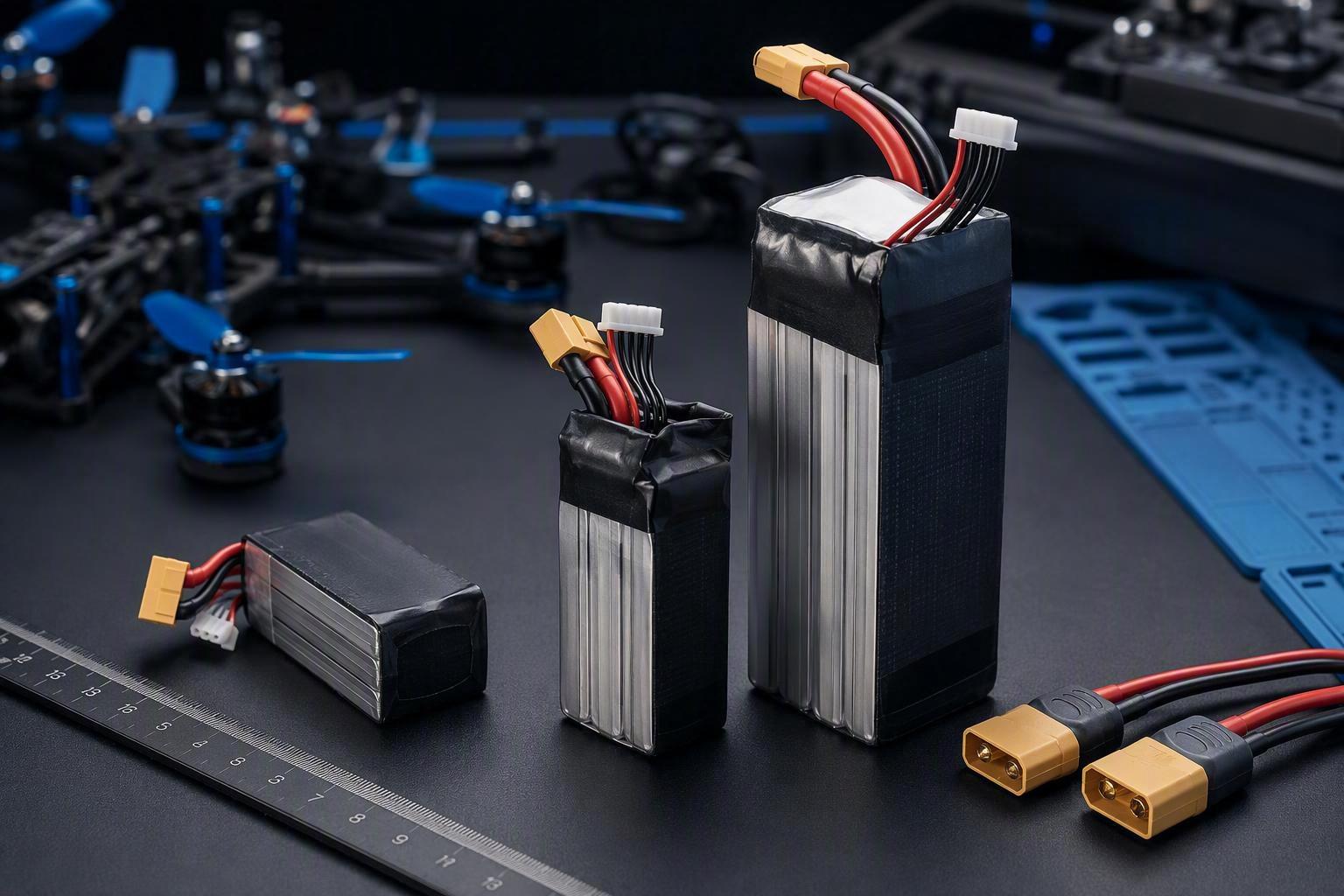
A battery can physically fit an FPV drone and still be the wrong pack for that build. Two packs with the same 6S voltage and similar capacity can behave very differently under high throttle. One may hold voltage well and deliver strong power, while the other may sag quickly or add too much weight. Discharge capability, internal resistance, weight, connector, and thermal behavior all affect how an FPV battery performs in flight.
This guide explains how to choose an FPV battery for 5-inch racing and freestyle platforms, long-range builds, cinematic rigs, and heavy-lift aircraft. It walks through common frame and power-system requirements and shows how to compare battery options based on how and where you fly.
The selection logic is straightforward: start with your drone platform, define the mission, then work through the electrical and physical requirements — platform → mission → voltage → capacity → discharge capability → weight → connector and dimensions → the pack that matches.
How to Choose an FPV Battery
Choosing an FPV battery is not simply a matter of picking the biggest capacity or highest C-rating on the label. Start with your drone and flight mission, then narrow the options by voltage, capacity, discharge capability, weight, and physical fit. Use these seven checks before comparing specific battery packs for your build.
The 7-step FPV battery selection checklist
-
Confirm the required cell count. Check the motor, ESC, and flight controller specifications for the cell count your build supports. Using a battery above the system’s rated voltage can damage the electronics.
-
Define the mission. Racing, freestyle, cinematic, long-range, and heavy-lift builds have different priorities. Some need maximum burst power and low weight, while others prioritize endurance, stable voltage, or sustained current.
-
Estimate current demand. Racing and aggressive freestyle can demand very high bursts, while long-range and heavy-lift builds may require high sustained current over longer periods.
-
Select capacity. Choose capacity based on the flight time you need, but make sure the pack can also deliver the current your mission demands. A larger battery is not automatically a better battery.
-
Check weight. Battery weight affects handling, flight time, and available payload. A pack that is too heavy can make the drone less responsive and reduce the useful payload it can carry.
-
Check connector and dimensions. Check the connector, battery dimensions, and mounting space before buying. The connector should be appropriate for the expected current, while the pack must fit securely without stressing the cables or restricting airflow.
-
Confirm charging and storage requirements. Use a charger that matches the battery’s chemistry, cell count, and charging requirements. Follow the manufacturer’s instructions for charging, storage voltage, temperature, and any protection features included with the pack.
FPV Battery Voltage: 4S vs 6S vs 8S
Voltage determines what the power system can deliver. It is dictated by the motor stator size, motor KV, and the ESC voltage rating on your build, not by preference.
|
Configuration |
Nominal Voltage |
Typical Role |
|---|---|---|
|
4S |
14.8 V |
Freestyle / cinematic / lighter 5-inch builds |
|
6S |
22.2 V |
Racing, freestyle, mid-size long-range |
|
8S |
29.6 V nominal |
Large-frame, long-range, and heavy-lift |
For standard LiPo terminology, 4S, 6S, and 8S correspond to approximately 14.8 V, 22.2 V, and 29.6 V nominal voltage, respectively — based on the common 3.7 V/cell convention. However, some FPV battery products use higher-voltage (HV) cell chemistry (closer to 3.85 V/cell) or other nominal/operating-voltage conventions, which shifts these numbers upward. Always use the manufacturer’s product specification when matching a specific pack to the motor and ESC.
In practice, 6S is a common starting point for modern 5-inch builds, while 4S is still suitable for lighter setups. Larger long-range and heavy-lift platforms may move to 8S when higher system voltage helps reduce current at the same power level.
Battery Capacity and Flight Time
Capacity is measured in mAh, and it affects how long a drone can fly — but it is not the only factor. A larger battery stores more energy, but it also adds weight. That extra weight can reduce the flight-time benefit, especially on smaller or highly maneuverable FPV builds.
A practical way to compare battery energy is to convert capacity into watt-hours:
Battery Energy (Wh) ≈ Pack Voltage (V) × Capacity (Ah)
For example, a 6S 5,000 mAh pack stores roughly:
22.2 V × 5 Ah ≈ 111 Wh
Approximate flight time can then be estimated from the usable energy and the drone’s average power draw:
Approximate Flight Time ≈ Usable Battery Energy (Wh) ÷ Average Power Draw (W)
This is only an estimate. Actual flight time depends on throttle level, payload, propeller efficiency, wind, voltage sag, battery temperature, and the amount of energy you keep as a reserve.
That is why a 5,000 mAh battery does not automatically out-fly a 3,000 mAh battery. If the larger pack adds too much weight or experiences significant voltage sag under load, part of its extra capacity is effectively offset.
Typical FPV Battery Capacity and Direction by Build
|
Flight Type |
Typical Frame |
Battery Direction |
|---|---|---|
|
Racing |
5-inch |
4S/6S, low weight, high burst, typically smaller capacity |
|
Freestyle |
5-inch |
6S, balance burst power, weight, and flight time |
|
Cinematic |
5–7-inch |
6S, moderate capacity, stable voltage, longer flight time |
|
Long-range |
7–10-inch |
6S/8S, higher capacity, energy density, sustained output |
|
Heavy-lift |
13–15-inch, X8 / hex |
6S/8S, high capacity, sustained current, thermal performance |
These are reference ranges rather than fixed requirements. The right capacity depends on the motor and propeller combination, battery voltage, expected current draw, frame weight, and mission profile. Frame size sets the physical envelope and the practical energy budget, but the mission — how much burst power versus how much endurance you actually need — does most of the deciding.
C-Rating, Continuous Current, and Peak Current
C-rating describes a battery’s discharge capability relative to its capacity. The theoretical maximum current corresponding to a C-rating is:
Maximum Current (A) ≈ Capacity (Ah) × C-rating
For example, a 5,000 mAh pack labeled 100C corresponds mathematically to:
5 Ah × 100C = 500A
However, this does not mean the battery should be treated as a 500A continuous power source. A printed C-rating may represent a peak or burst rating, depending on the manufacturer’s test method. The battery cells, wiring, connector, thermal conditions, and test duration all limit the current that can actually be sustained.
This distinction matters when comparing FPV batteries. A pack with a high peak C-rating may deliver strong short-duration bursts, while a pack with lower advertised C-rating may be better suited to a long, sustained load.
Always distinguish between:
-
Continuous discharge: current the pack is designed to sustain under specified conditions.
-
Peak or burst discharge: higher current available for a limited period.
-
C-rating test conditions: the temperature, duration, cutoff voltage, and other conditions used to establish the manufacturer’s rating.
If a product page only states a value such as “100C Max.”, do not assume that it represents continuous discharge capability. Confirm the continuous rating and test conditions before using the figure to size the power system.
Why Internal Resistance Matters
C-rating alone does not tell the whole story. Internal resistance also affects how well a battery maintains voltage under load. When current flows through the battery’s internal resistance, part of the voltage is lost as sag:
Voltage Sag ≈ Current × Internal Resistance (I × R)
At the same current, a battery with higher internal resistance will experience greater voltage sag. In flight, this can feel like softer throttle response, reduced available power, or an early low-voltage warning.
That is why two batteries with the same voltage, capacity, and advertised C-rating can behave differently under the same load.
For battery selection, do not compare C-rating alone. Look at continuous discharge capability, peak discharge capability, internal resistance, connector rating, wiring, and thermal performance together.
For more context on how internal resistance and voltage stability shape FPV battery performance, this companion guide on why FPV LiPo batteries still dominate in 2026 digs into the topic.
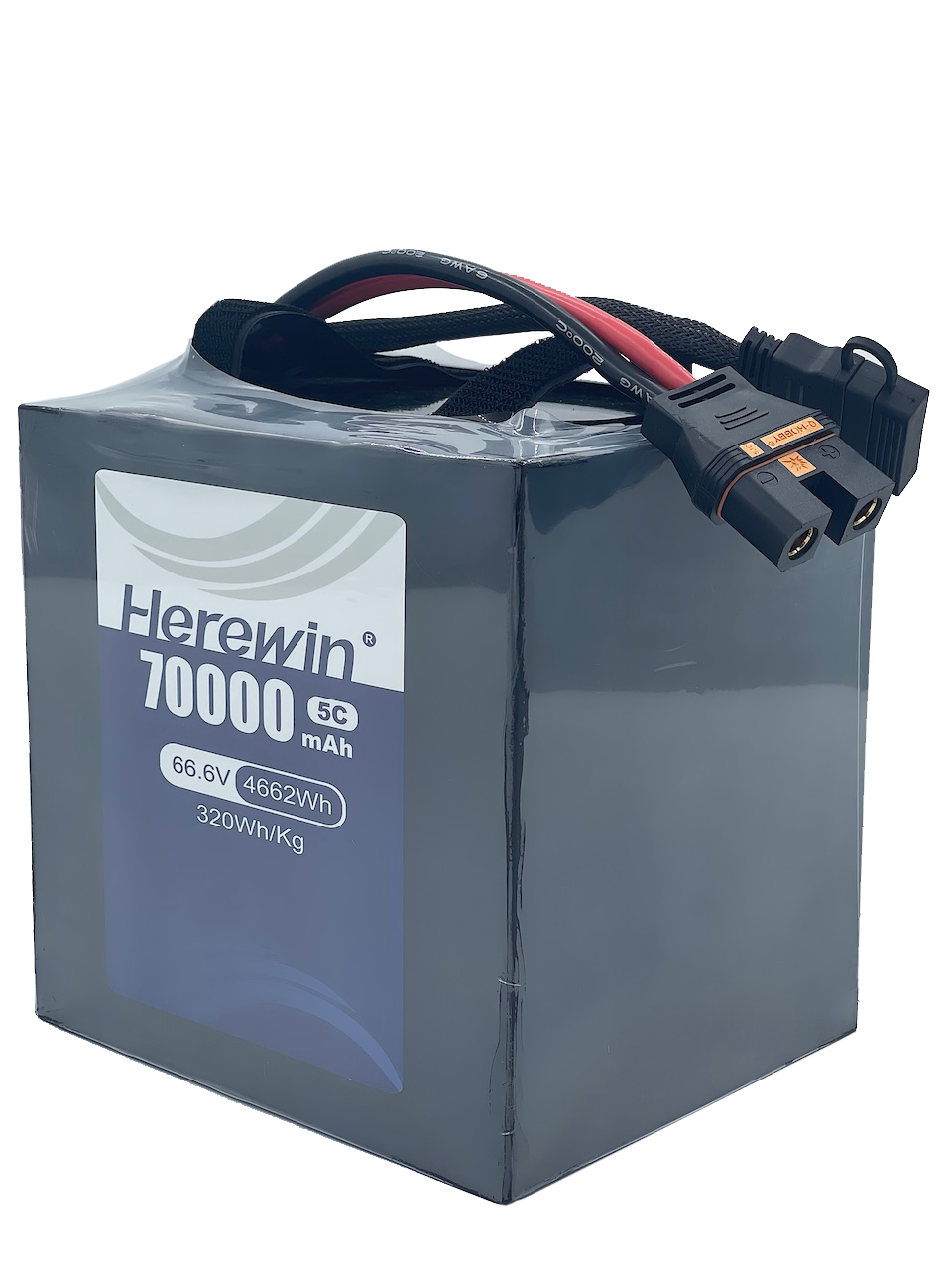
Herewin Power FPV Battery Lineup
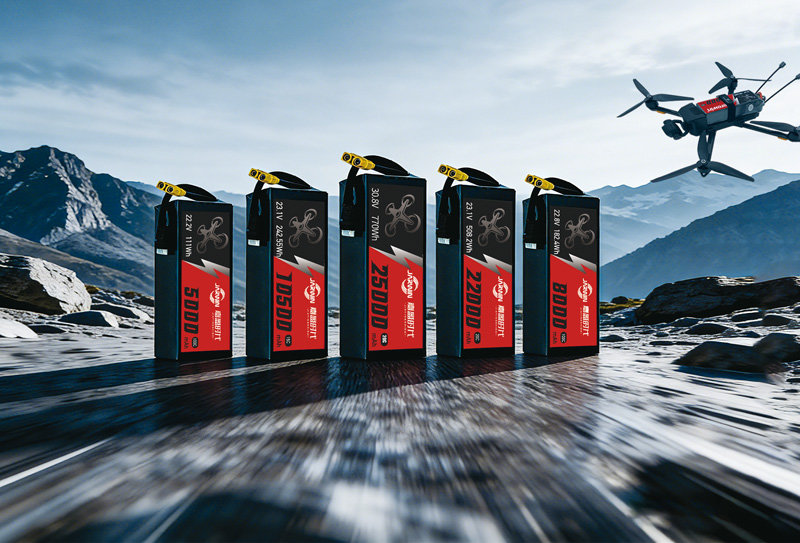
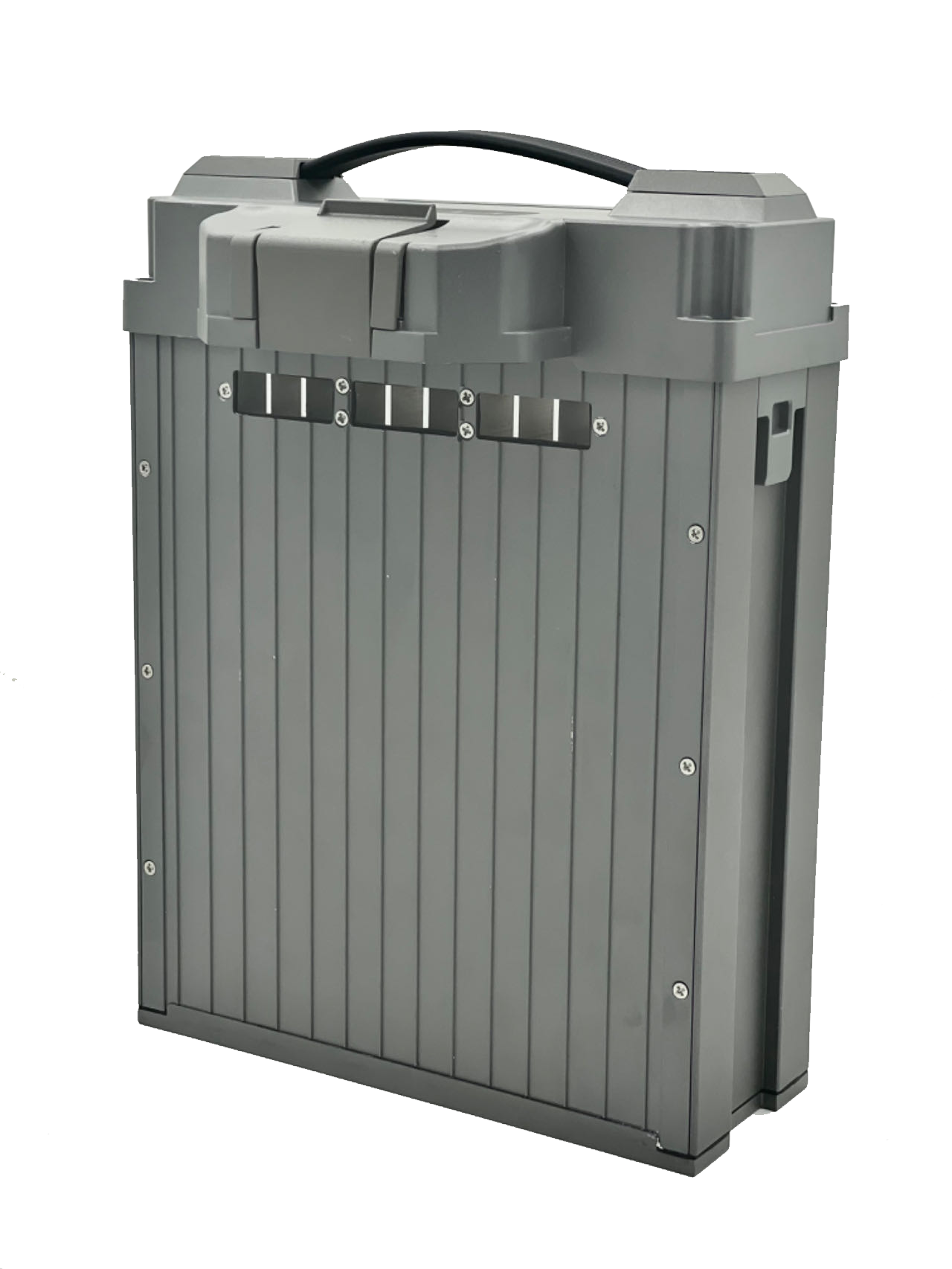
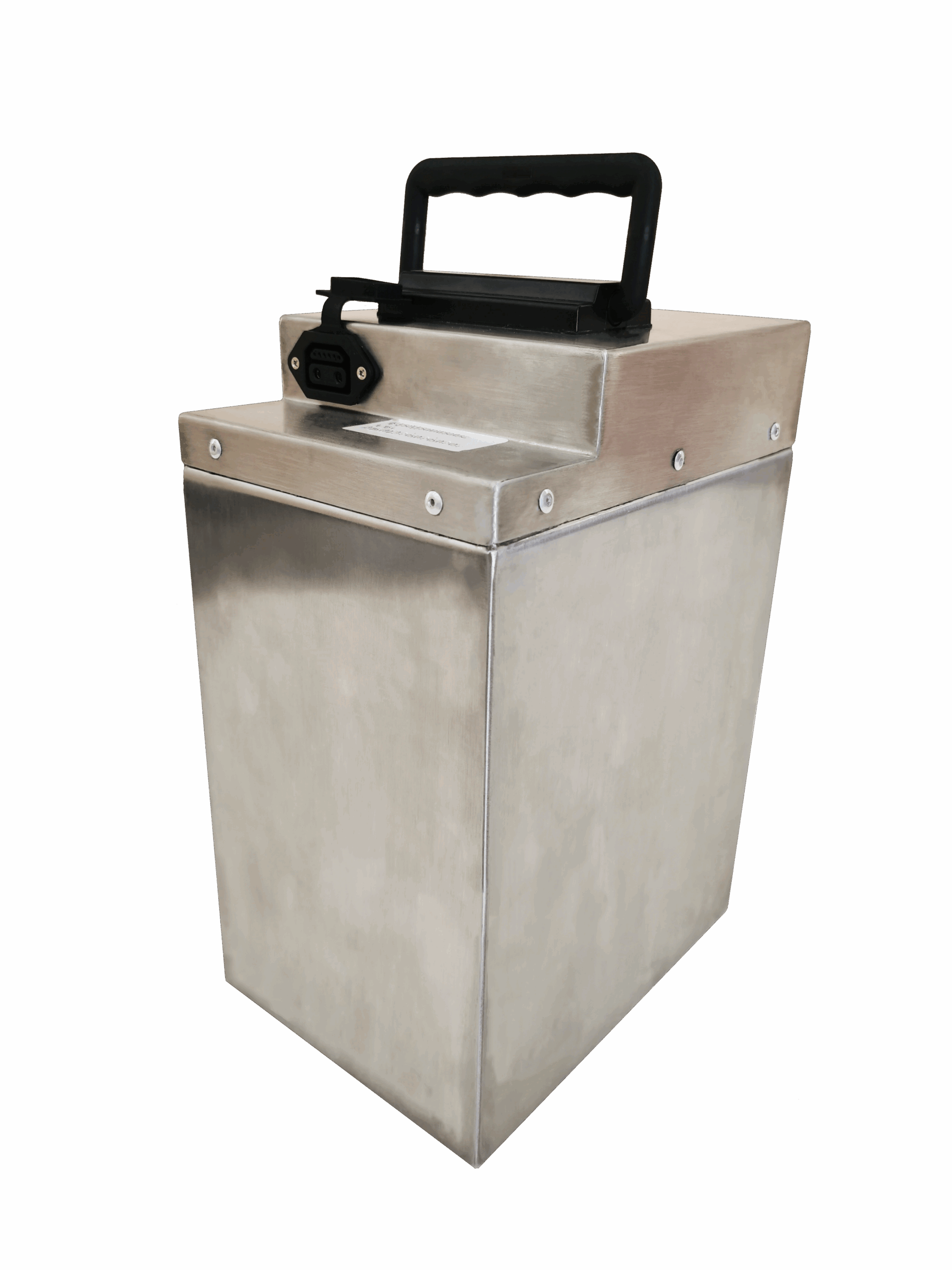
The table below outlines Herewin’s FPV product line, featuring current standard SKUs alongside a representative configuration for large-frame heavy lifting.
|
Specification |
High-Discharge Large-Frame FPV |
Long-Range |
Heavy-Payload / Large-Frame Lifting |
|---|---|---|---|
|
Product |
T9045135Z |
P9674170EV |
Custom / ODM |
|
Configuration |
6S1P |
8S1P |
6S1P (or Custom) |
|
Nominal Voltage |
22.2 V |
30.8 V (LiHV) |
23.1 V (LiHV) |
|
Capacity |
5,000 mAh |
16,000 mAh |
25,000 mAh |
|
Continuous Discharge Rate |
30C–50C (Sustained) |
10C–15C (Sustained) |
Custom |
|
Peak (Burst) Discharge Rate |
100C Max (Peak) |
20C Max (Peak) |
20C Max (Peak) |
|
Max. Burst Duration |
< 3 sec |
< 10 sec |
Custom |
|
Max. Charging Current |
2C |
1C |
Upon Request |
|
Cycle Life |
≥400 cycles |
≥200 cycles |
Custom Spec |
|
Weight |
760 g |
2,000 g |
2,450 g |
|
Dimensions |
56 × 48 × 150 mm |
79.5 × 77 × 182 mm |
Per Build Spec |
|
Connector |
XT60 / Custom |
XT90 / XT90S / AS150 |
XT90 / XT90S / QS8 / AS150 |
|
Typical Application |
7–15 in. large-frame freestyle/racing |
10–15 in. and X8/hex long-range |
X8, hex, 13–15 in. heavy-lift FPV |
Key Technical Notes:
-
Discharge Ratings: The 100C rating is a short-burst peak rating (< 3 seconds). The stated 30–50C continuous rating should be evaluated together with the actual connector, wiring, and thermal configuration of the battery pack.
-
LiHV Chemistry: Nominal voltages of 30.8 V and 23.1 V reflect High-Voltage cell chemistry (~3.85 V/cell). Make sure the ESC is rated for the battery’s full-charge voltage.
-
Battery Management: Like most FPV packs, these do not feature a built-in BMS. Ensure your flight controller and charger are configured for proper cell balancing and low-voltage protection.
-
Custom OEM/ODM Solutions: For unique large-scale builds, Herewin can engineer custom heavy-payload packs tailored to your specific voltage, capacity, and thermal requirements.
-
Compliance and Documentation: Depending on the battery model and target market, available documentation may include UN38.3 test reports, MSDS/SDS, CE, and RoHS compliance documentation. Confirm the exact documents required for your application and destination market before ordering.
LiPo vs Li-ion vs Semi-Solid-State
The main types of drone batteries used for FPV applications include LiPo, Li-ion, and semi-solid-state batteries. The best choice depends on the mission: LiPo prioritizes burst power, Li-ion prioritizes energy density, while semi-solid aims to balance endurance, stability, and safety.
|
Battery Type |
Main Strength |
Typical Use |
Main Trade-off |
|---|---|---|---|
|
LiPo |
High burst power, low weight |
Racing, freestyle |
Lower energy density, shorter cycle life |
|
Li-ion |
High energy density, longer life |
Long-range, cinematic |
Lower discharge capability |
|
Semi-solid |
High energy density + stable output |
Long-range, heavy-lift |
Higher cost and less widely adopted |
Choose based on the mission:
-
Racing: High-C LiPo for burst power and low weight.
-
Freestyle: LiPo with enough capacity for the desired flight time.
-
Long-range: Li-ion or semi-solid when endurance is the priority.
-
Heavy-lift: Semi-solid or other high-energy packs when sustained output and thermal stability matter.
Semi-solid battery technology reduces the liquid-electrolyte fraction and uses a more stable gel-type electrolyte and separator system designed to improve thermal stability under demanding operating conditions. This makes it particularly relevant to long-range and heavy-lift applications where endurance and sustained performance matter. As with any high-energy-density claim, treat published Wh/kg, cycle-life, and discharge figures as starting points to confirm against the specific SKU’s datasheet — energy density and sustained high-C discharge capability typically trade off against each other, so a pack advertising both should have test data available to back up the combination.
The right chemistry still depends on the specific aircraft. No single battery type is best for every FPV build.
Why Semi-Solid for Long-Range and Heavy-Lift FPV?
Long-range and heavy-lift flights place unusual demands on a battery. The current draw is high but steady, operating windows can stretch well beyond a short racing sortie, and the thermal environment is often demanding. For these missions, raw peak C-rating matters less than energy density, sustained voltage delivery, and cycle life.
A semi-solid design targets exactly those priorities: higher energy density for longer endurance, an electrolyte and separator system that improves thermal stability and reduces short-circuit risk, and a chemistry tuned to balance energy density, sustained discharge, and cycle life. Several manufacturers, Herewin among them, offer semi-solid packs aimed at this profile with cycle-life targets and operating ranges suited to long-duration industrial and heavy-lift work. As with any pack, the specific energy density, internal resistance, and cycle-life figures should come from the product datasheet and your own validation tests — these numbers vary with test conditions, charge cycles, and operating temperature.
Connector, Weight, and Physical Compatibility
Connector choice is not just about the plug shape. Different connectors are rated for different current levels, so the connector must match the pack’s actual discharge needs. XT60 connectors are common on smaller racing and freestyle packs where sustained current is moderate. XT90, AS150, and QS8 connectors appear on higher-capacity long-range and heavy-lift packs where sustained current draw is higher. Using an undersized connector to save a few grams can create exactly the kind of connection resistance that shows up as voltage sag at the wrong moment. Our detailed look at 10-inch FPV voltage sag explains how connector and wiring resistance compound under load on large builds.
Weight changes how the drone flies. A heavier pack extends flight time potential but reduces agility and eats into payload. A lighter pack improves handling but can cut endurance. Match battery weight to the frame’s size and role, and confirm both the physical fit and connector type before flying.
Dimensions matter on large frames. Long-range and heavy-lift packs can be physically large, so verify the pack fits the battery bay without forcing cables or blocking airflow.
FPV Battery Charging, Storage, and Safety
Charging and storage requirements vary by battery chemistry and pack design. Follow the manufacturer’s specified limits rather than applying one charging profile to every FPV battery.
-
Charging. Always use a balance charger matched to the pack’s voltage and cell count. Do not leave a charging pack unattended, and unplug it as soon as it reaches full charge.
-
Storage. For long-term storage, keep the pack at about 3.8 V per cell in a cool, dry place away from direct sunlight and heat.
-
Temperature. In cold conditions, follow the manufacturer’s temperature limits and allow the battery to reach an appropriate operating temperature before high-current flight. Avoid leaving packs in a hot car or direct sun. Allow a hot battery to cool to room temperature before charging.
-
Inspection. Check for swelling, leaks, or physical damage before and after each flight. Stop using a damaged pack immediately.
-
End of life. Discharge the pack fully with the correct tool, then dispose of it through a designated battery recycling center in line with local regulations. Never throw a battery in the trash.
Common Battery Problems
-
Swelling or puffing. Caused by gas buildup from overheating, over-discharge, or physical damage. Stop using the pack immediately and contact the manufacturer or a local recycling authority.
-
Cell imbalance. Cells at different voltages can make a drone fly poorly or damage the pack. A balance charger can correct minor imbalance during charging, but persistent or rapidly returning imbalance can indicate cell degradation or damage. If a pack will not balance or the imbalance quickly returns, it may be reaching end of life.
-
Excessive voltage sag. A pack that drops voltage sharply under load usually has elevated internal resistance. This connects directly to the C-rating and IR discussion above, and it worsens as the pack ages.
-
Overheating. High-rate discharge produces heat as a normal by-product. If a pack runs abnormally hot, let it cool before charging and check the operating limits.
-
Reduced flight time. A noticeable drop in usable flight time signals capacity loss. Plan battery replacement before it affects mission safety.
FAQ
What size battery do I need for an FPV drone?
Battery size depends on frame size, motor and ESC setup, mission, and allowable weight. A 5-inch racing drone commonly uses around 1,000–1,500 mAh, while larger long-range and heavy-lift platforms may require several thousand to tens of thousands of mAh.
What battery should I use for a 5-inch FPV drone?
For a 5-inch frame, capacity depends on the mission: racing setups typically stay in the 1,000–1,500 mAh range favored above for low weight, while freestyle builds on the same frame often run higher — up to around 1,800 mAh — depending on the motor, propeller, and desired flight time.
Is 6S better than 4S for FPV?
It depends on the build. 6S offers more voltage headroom and typically better efficiency on modern 5-inch platforms; 4S remains a strong, lower-cost choice for lighter freestyle and cinematic flying. Match the pack to the motor and ESC ratings.
What C-rating do I need for an FPV racing drone?
There is no universal C-rating for FPV racing. Start with the motor/propeller system’s expected peak current, then compare the battery’s verified continuous and peak discharge capability. Treat the printed C-rating as a reference rather than a guaranteed continuous-current value unless the manufacturer specifies the test conditions.
Does a higher-capacity FPV battery always give longer flight time?
No. Heavier packs consume some of their own extra energy, and a pack that cannot hold voltage under load shortens effective flight time. Capacity must be balanced against weight and discharge capability.
Can I use a semi-solid battery for long-range FPV?
Yes, provided the pack’s voltage, capacity, discharge capability, weight, and temperature range match the aircraft. Semi-solid packs can be a strong option for long-range and heavy-lift missions where energy density and sustained performance matter.
How do I tell if voltage sag is caused by the battery?
Measure internal resistance or observe sag under a controlled load. Higher internal resistance produces more sag at the same current. Our voltage sag guide covers how to distinguish battery-related sag from wiring, connector, and ESC causes.
How long does an FPV battery last in flight?
FPV battery flight time varies by drone size, battery capacity, average power draw, payload, and flying style. A practical estimate is usable battery energy (Wh) ÷ average power draw (W). Racing builds may prioritize short, high-power flights, while long-range and cinematic builds can use larger energy reserves for longer flight times.
Engineer Your Next FPV Power System
The FPV battery landscape moves quickly, but the selection logic does not. Match the pack to the platform, the mission, and the electrical and physical constraints, and you will fly longer and more reliably.
If you are working through a specific build and want a second set of eyes — whether you are evaluating a high-discharge racing pack, a high-density semi-solid long-range option, or a custom heavy-payload setup — share your aircraft voltage, capacity target, expected current draw, flight-time goal, and available battery space. Our engineering team is happy to help you evaluate the right pack configuration.

 English
  Español
  한국어
한국어  Deutsch
  Français
  日本語
日本語  Русский
  Bahasa Indonesia
  ไทย
ไทย  العربية
  Português do Brasil
  Italiano
  Nederlands