

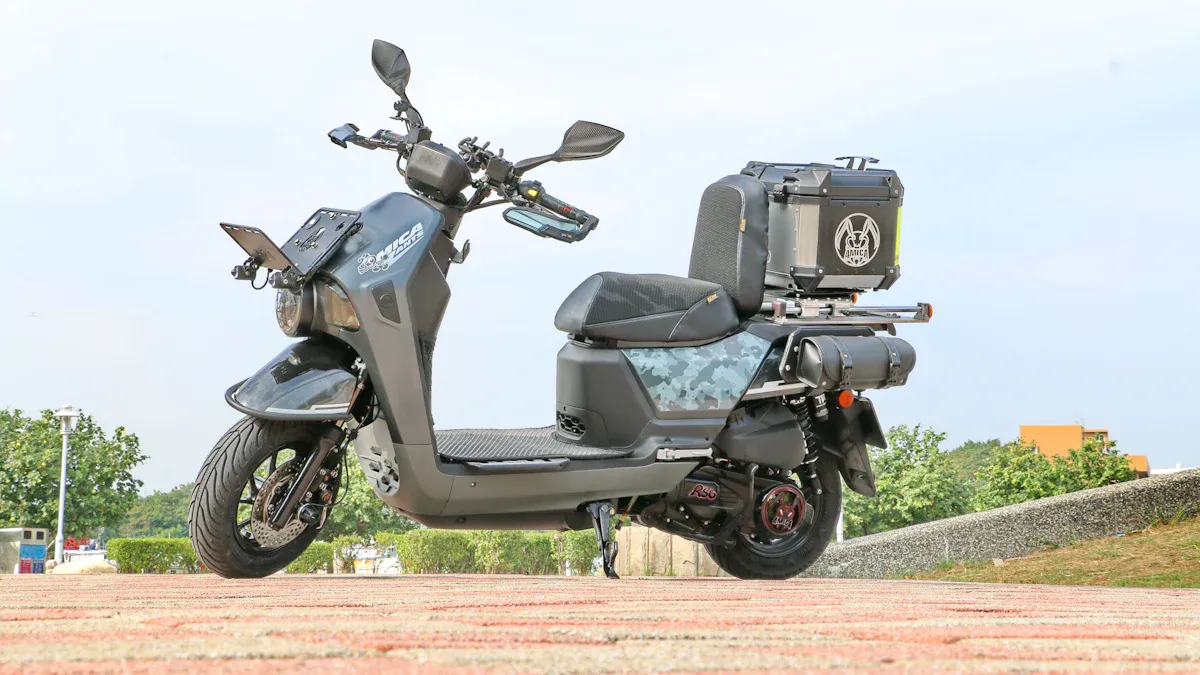
Range anxiety has become a critical bottleneck restricting the industrial upgrading of electric motorcycles and the improvement of user riding experience. Typical pain points include sudden power depletion during commutes, inability to complete long-distance trips due to insufficient range, and increased time costs and inconvenience from frequent charging. Solving these issues requires a combination of advanced battery R&D and scientific usage practices to achieve dual improvements in cruising range and battery lifespan.
From a professional lithium battery R&D perspective, combined with real-world multi-scenario range test data, this article systematically analyzes the core causes of e-motorcycle range deviation, proposes three key optimization strategies — battery selection, usage habits, and charge-discharge protection — and introduces high-range lithium battery solutions adapted to full-scenario riding needs, providing scientific guidance for eliminating e-motorcycle user range anxiety.
1. Core Causes of E‑Motorcycle Range Deviation
The common user complaint of “overstated range” is not simply due to misleading marketing. The core lies in the gap between ideal laboratory test conditions and real riding scenarios, combined with battery performance indicators such as energy density and cycle life, leading to significant differences between advertised and actual range.
1.1 Differences Between Test Conditions and Real-World Scenarios
Current industry-advertised e-motorcycle range data is based on ideal test conditions defined in GB/T19954.1-2021 Safety Requirements for Electric Motorcycles and Electric Mopeds, including flat asphalt roads, constant speed at 25 km/h, no extra load, and ambient temperature of 25±2℃. Under these conditions, battery energy consumption is minimized, delivering theoretical maximum range.
In actual riding, however, complex road conditions (uphill, downhill, bumpy surfaces), frequent acceleration/deceleration, and environmental factors (high/low temperatures, headwinds, rain) drastically increase battery consumption and reduce real-world range.
Test data shows:
A 150 km advertised-range e-motorcycle delivers only 110–120 km in urban commuting with frequent traffic lights.
On continuous uphill sections (≥15° slope), real range drops to 80–90 km, with a range deviation of up to 40%.
1.2 Decisive Role of Battery Energy Density
The most critical factor determining e-motorcycle range is battery energy density (measured in Wh/kg or Wh/L), representing electric energy stored per unit mass or volume. Higher energy density directly translates to longer range.
Comparative tests under mixed road conditions (flat, gentle slope, traffic lights) using the same 48V 30Ah battery specification:
Traditional lead-acid batteries: 35–45 Wh/kg; real range 80–100 km; 300–500 cycles; 1–2 years lifespan; severe low-temperature performance decay (≥40% capacity loss at -10℃).
Standard lithium batteries: 150–180 Wh/kg; real range 100–130 km; 800–1200 cycles; 3–5 years lifespan; lightweight, stable range, controllable low-temperature decay.
High-energy-density lithium batteries: 200–220 Wh/kg; real range 150–180 km; 1500–2000 cycles; 5–8 years lifespan; capacity decay controlled within 15% at -20℃.
Test results confirm that high-energy-density lithium batteries are the core technical solution to e-motorcycle range anxiety, while superior cycle performance reduces long-term operating costs.
2. Three Core Strategies to Extend E‑Motorcycle Range & Battery Lifespan
High-energy-density lithium batteries provide essential hardware support. Combined with proper selection, standardized usage, and scientific charge-discharge protection, range can be improved by 20–30% and battery lifespan significantly extended.
2.1 Precise Selection: Scenario-Based Battery Matching
Battery performance and applicable scenarios vary greatly. Tailored selection avoids wasted capacity and premature degradation.
Short-distance commuting (≤10 km/day):
Budget-focused users may choose lead-acid batteries. For light weight and convenience, standard lithium batteries are preferred.
Mid-to-long distance riding (≥20 km/day or frequent long trips):
Prioritize high-energy-density lithium batteries to reduce charging frequency, ideal for delivery riders and cross-district commuters.
Low-temperature environments (≤-10℃):
Use low-temperature-resistant high-energy-density lithium batteries, maintaining >85% capacity at -20℃.
Note: Battery voltage must match motor power. 350–800W motors suit 48V/60V batteries; 1000W+ motors require 72V+. Mismatched specifications cause abnormal discharge, reduced range, and shorter cycle life.
2.2 Standardized Usage: Key to Reducing Battery Consumption
Poor riding habits drastically increase energy consumption and accelerate battery aging.
Smooth riding avoids high instantaneous discharge: Frequent hard acceleration and braking increase energy consumption by over 30% and damage electrode materials.
Avoid overloading: Exceeding the 120–150kg design load reduces range by 10–20% and shortens lifespan.
Maintain economical speed: The most efficient range is achieved at 25–35 km/h. Excessively high speed (>40 km/h) drastically increases wind resistance and energy use.
2.3 Charge-Discharge Protection: Core Measures to Prolong Battery Life
Scientific charging and discharging directly determine cycle life.
- Use matched chargers: Incompatible chargers cause voltage/current instability, capacity fade, swelling, and safety risks.
- Avoid overcharging and deep discharging: Charge at 20–30% remaining capacity; disconnect promptly after full charge.
- Avoid extreme-temperature charging: Optimal charging environment: 10–35℃, well-ventilated.
- Periodic full charge-discharge: Every 2–3 months, discharge to 5–10% then fully recharge to reactivate passivated materials.
3. Herewin E‑Motorcycle Batteries: Full‑Scenario High‑Range Solutions
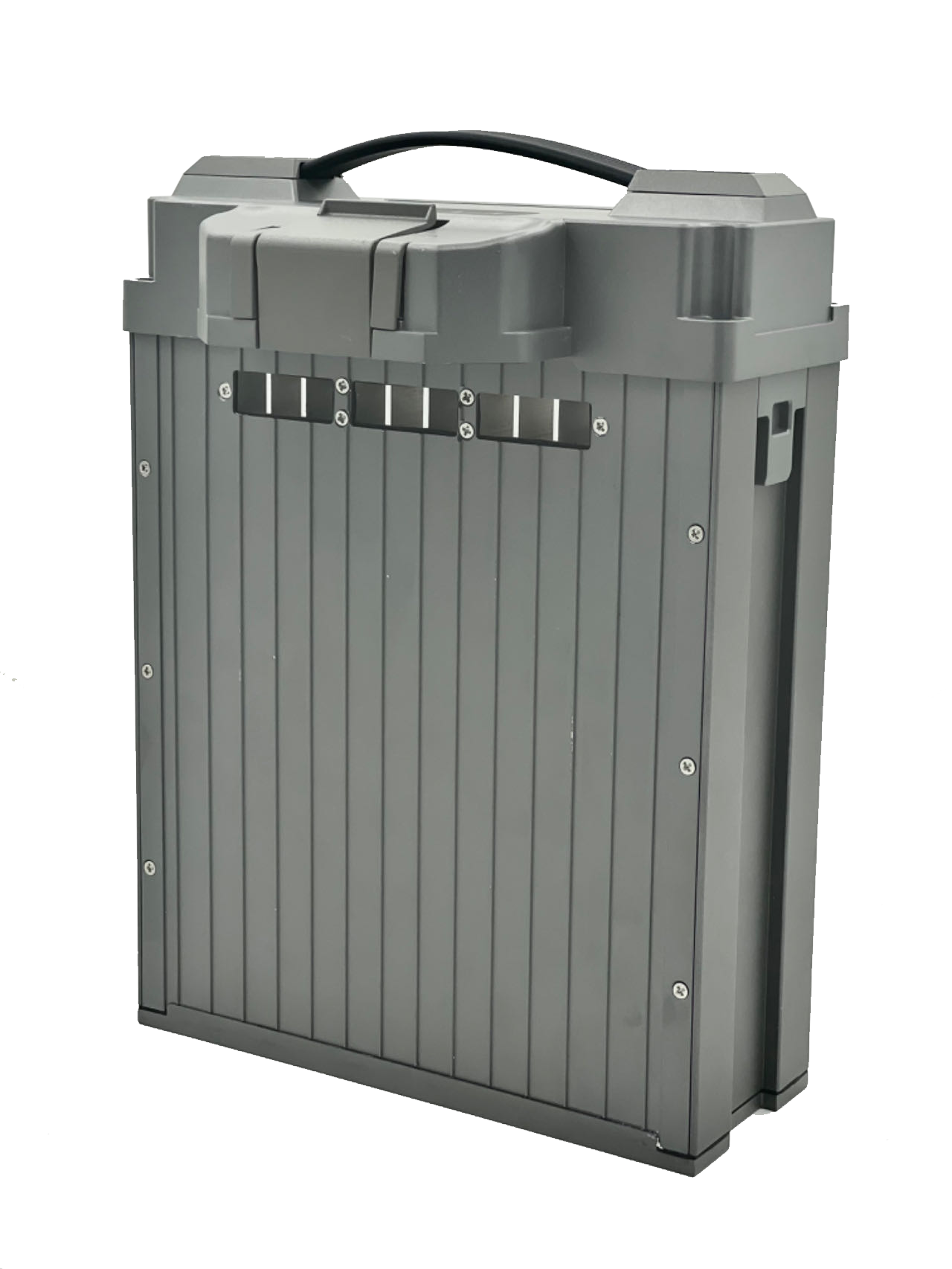
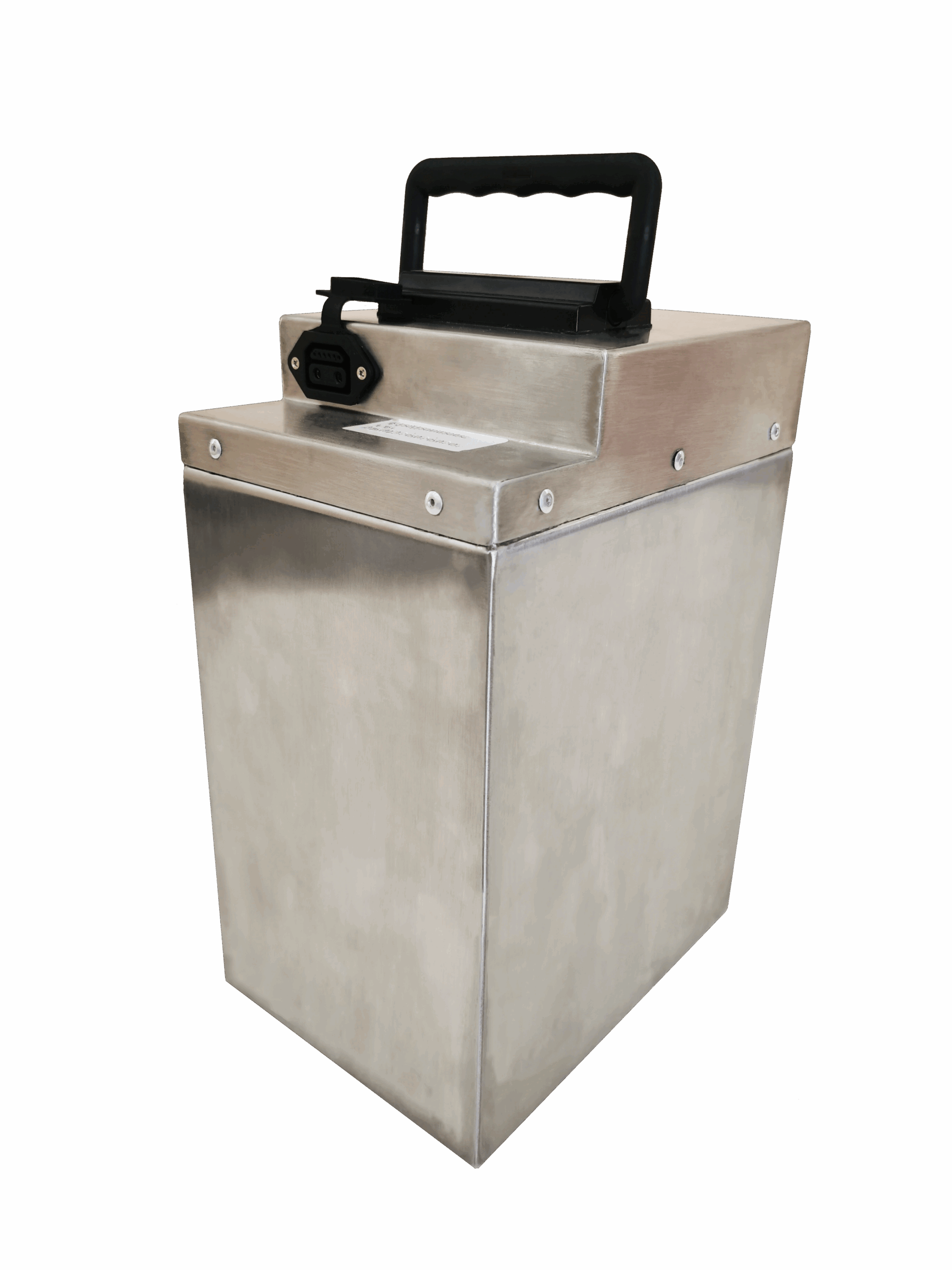
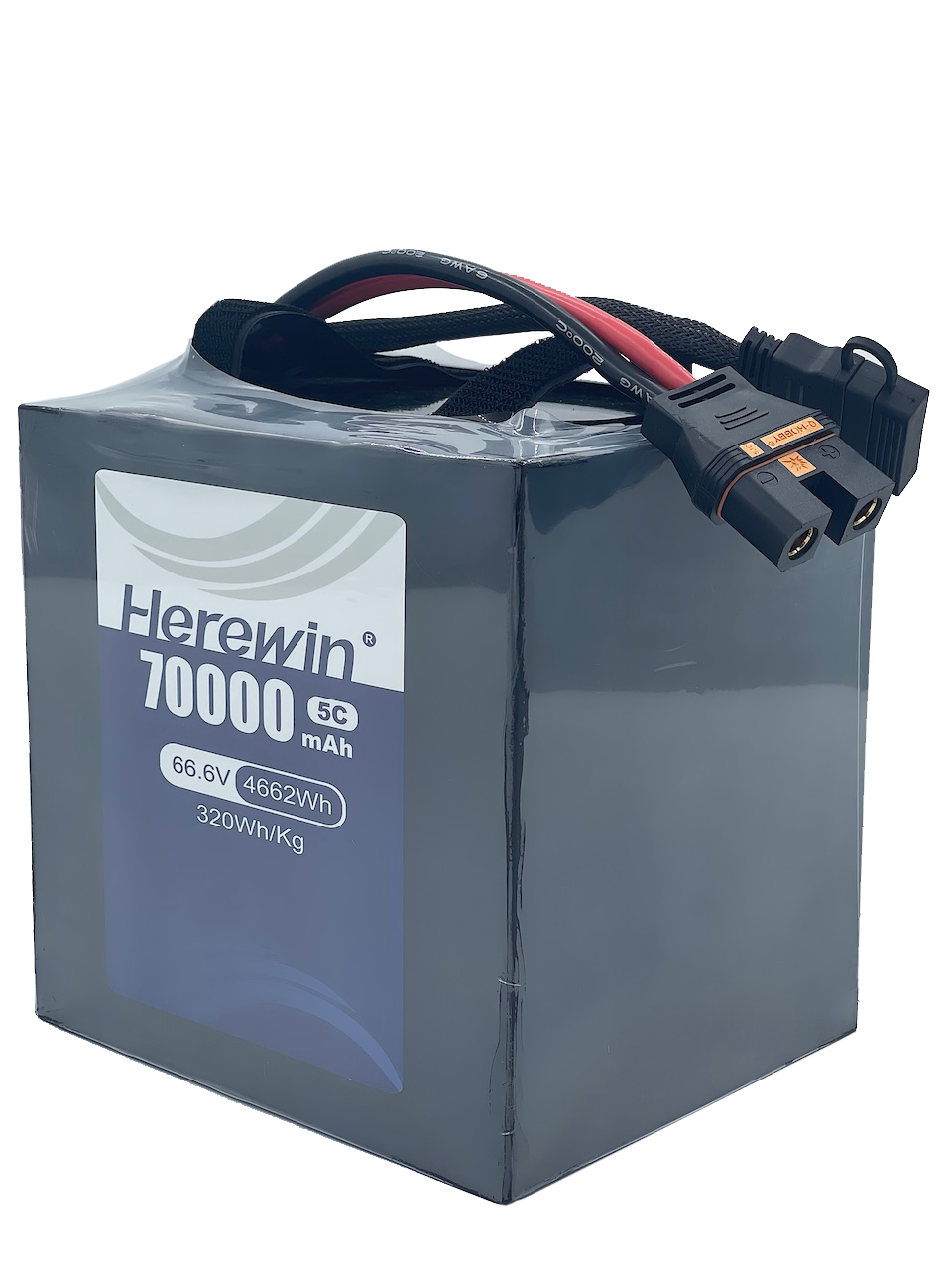
Based on extensive testing and user demand for long range, low charging frequency, and fast energy replenishment, the Herewin team has developed a high-range e-motorcycle lithium battery solution with optimized energy density, upgraded structural design, and swap-compatible architecture.
3.1 High Energy Density for Full-Scenario Range Coverage
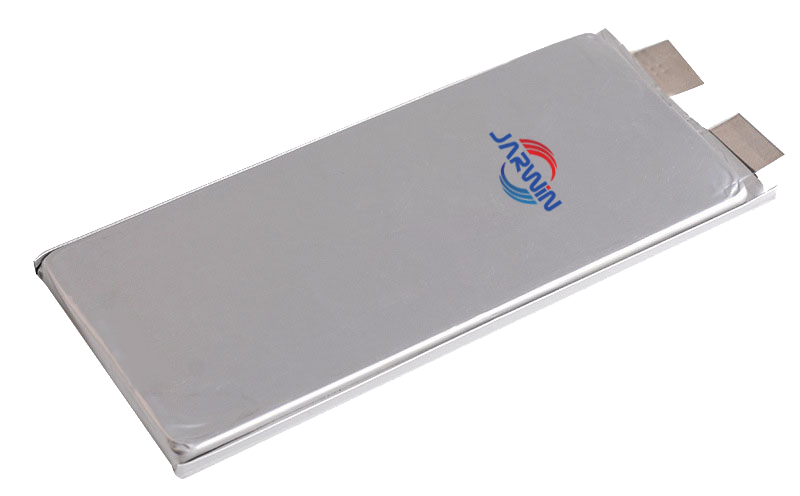
Featuring self-developed high-energy-density lithium batteries (200–220 Wh/kg), range is improved by over 30% compared to standard lithium batteries. Real-world mixed-road range reaches 150–180 km, fully covering daily commuting, short trips, and mid-to-long distance riding.
3.2 Low Charging Frequency for Improved Convenience
- Daily commute (20 km/day, 5 days/week): Standard e-motorcycles require 2–3 charges/week; Herewin solution needs only 1 charge/week.
- Monthly: Standard models charge 8–12 times; Herewin ≤ 4 times.
This greatly reduces time spent searching for or waiting at charging stations.
3.3 Battery-Swapping Compatible for Ultra-Fast Energy Replenishment
The solution fully supports mainstream battery-swapping systems with standardized modular design.
Full battery swap in 3–5 minutes — 10x faster than traditional charging.
Swapping stations are gradually deployed in urban cores, main roads, and highway service areas, supporting 24/7 uninterrupted riding.
4. Conclusion & Future Outlook
E-motorcycle range anxiety stems from the combined effect of battery performance, usage habits, and maintenance methods.
The core solution:
- Use high-energy-density lithium batteries as hardware foundation.
- Match batteries to actual usage scenarios.
- Adopt standardized riding habits to reduce energy consumption.
- Implement scientific charge-discharge protection to extend lifespan.
Looking ahead, the commercialization of solid-state batteries and new electrode materials will further boost energy density and cycle life, with future range expected to exceed 500 km per charge. These innovations will completely resolve range pain points and drive the e-motorcycle industry toward higher efficiency, environmental protection, and convenience.

 English
  Español
  한국어
한국어  Deutsch
  Français
  日本語
日本語  Русский
  Bahasa Indonesia
  ไทย
ไทย  العربية
  Português do Brasil
  Italiano
  Nederlands