
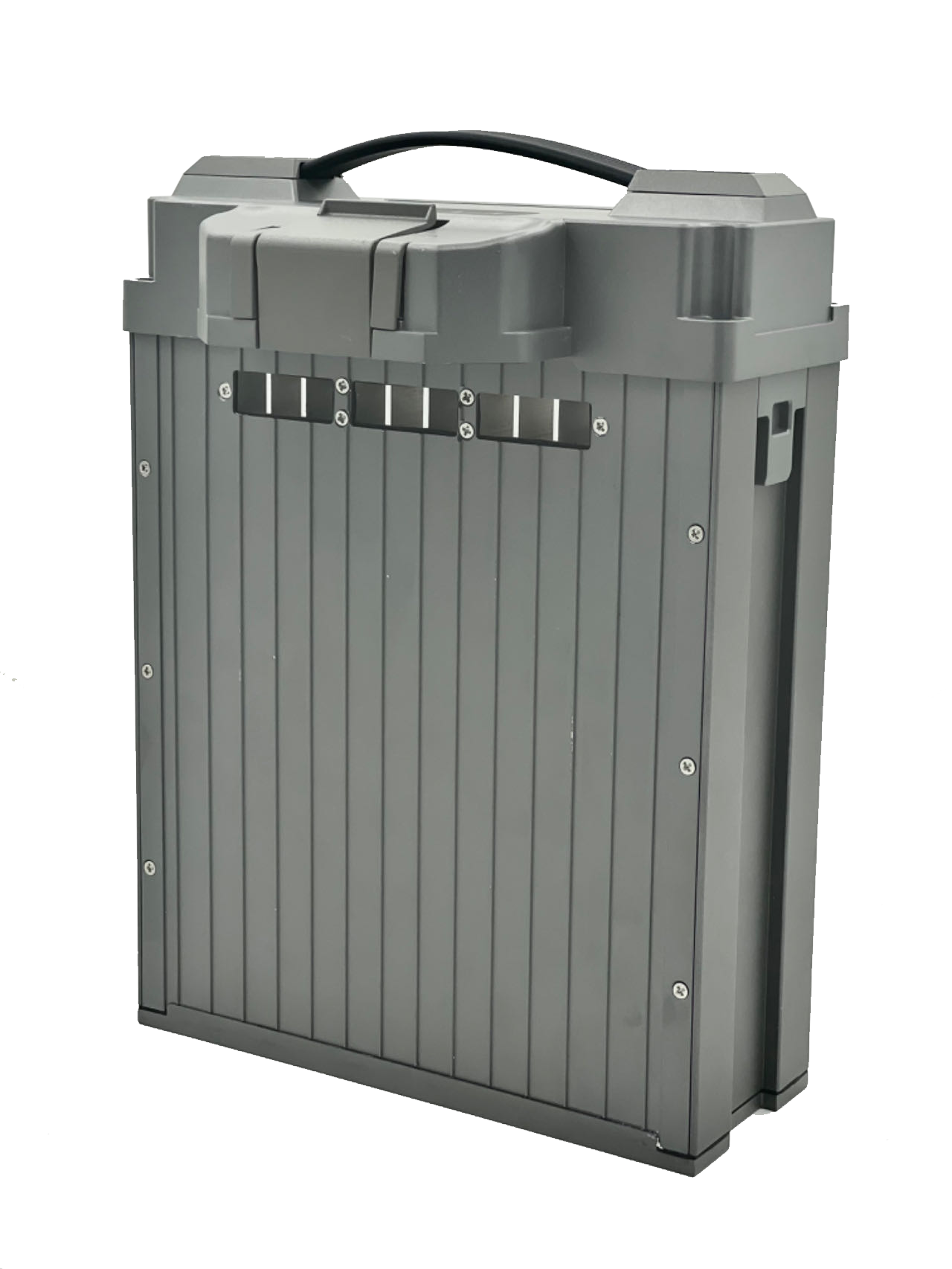
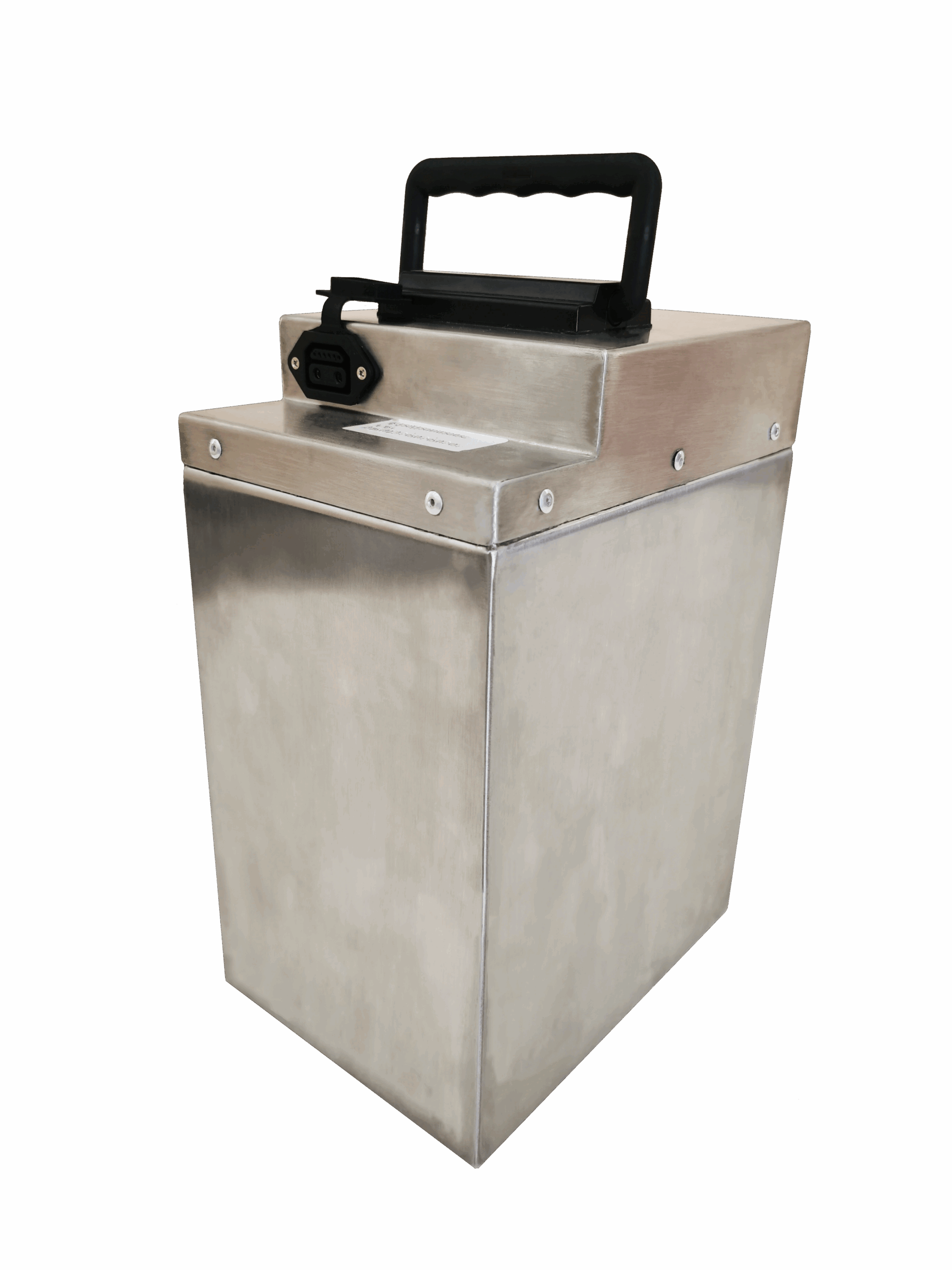
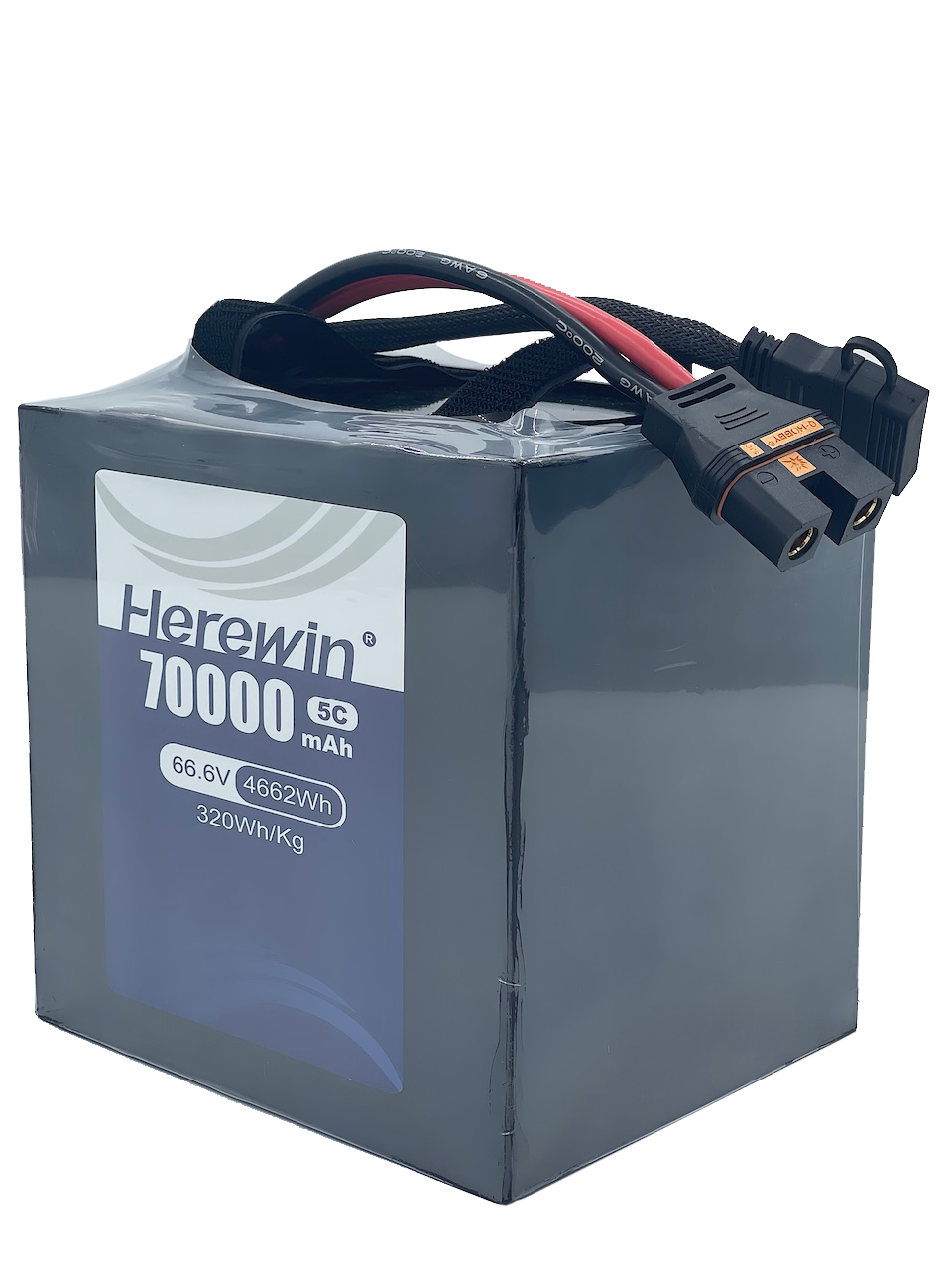



When temperatures plunge to −20°C, a cold weather drone battery is operating on the edge of physics. Internal resistance spikes, electrolytes thicken, ions crawl, and sudden voltage sag can turn a healthy state of charge into an instant brown‑out. This guide explains the science behind those failures and converts it into an auditable Four‑Step SOP you can enforce across an industrial fleet to preserve roughly 70% of your normal‑temperature range—safely, repeatably, and with logs you can hand to auditors.
The physics of failure at −20°C
At −20°C, three mechanisms combine to threaten flight stability and lifespan: a resistance jump that drives voltage sag under load, kinetic constraints from sluggish ion transport, and lithium plating risk whenever charging happens below freezing. Think of it this way: your pack’s highways narrow, traffic slows, and tolls triple—right when you hit the throttle.
Resistance jump — trigger for voltage sag and brown‑outs
Internal resistance (IR) rises steeply in the cold. Under any current draw, the terminal voltage you see is lowered by Ohm’s law: Vdrop = I × R. Push a 30 A step load into a pack whose effective IR rose from 25 mΩ to 80 mΩ and you’ve added about 1.65 V of instantaneous drop across the series string—easily enough to trigger power protection or cause an apparent free‑fall in state of charge. While exact IR deltas vary by chemistry, design, and age, the physical direction is consistent across the literature: lower temperature drives higher polarization and ohmic resistance, increasing the likelihood of brown‑outs under transient loads.
Kinetic constraints — electrolyte viscosity and ion migration
Below 0°C, the same electrolyte that behaves “normal” in the lab starts acting like cold syrup. Ionic conductivity drops, charge‑transfer slows, and the pack becomes less willing to deliver current on demand. In practice, that shows up as steeper voltage sag during punch‑outs, earlier low‑voltage warnings, and a bigger gap between “indicated SOC” and what the aircraft can safely use.
The operations takeaway is straightforward: if the pack is cold‑soaked, you should assume it can’t support the same burst power as it does at room temperature. Preheating isn’t about squeezing out extra minutes—it’s about restoring ion transport enough to keep voltage stable under load. The broader mechanism and the viscosity–conductivity trade‑off are summarized in the Advanced Materials review, “Electrolyte Design for Wide‑Temperature Lithium‑Ion Batteries” (2023). For a wider survey of how researchers try to push practical operation toward −40°C (and why conventional carbonate blends still struggle around −20°C), see the Chemistry—A European Journal review on wide‑temperature electrolytes (2024).
The lithium plating threat — irreversible anode damage
Charging a cold battery is where permanent damage can happen fastest. Below freezing, sluggish diffusion and elevated polarization can shift anode potential, encouraging metallic lithium plating and dendrites.
At extreme cold, interfacial films can also become more brittle. If you combine a cold‑soaked pack with strong vibration or a hard landing, that mechanical stress may damage already‑stressed interphases and accelerate irreversible cell degradation.
Reviews of low‑temperature performance and charging behavior emphasize preheating and reduced C‑rates as primary mitigations, with added caution during thermal transients that swing quickly from cold to warm. Practical policy for the field:
- Do not fast‑charge at or below 0°C. Warm the pack above 0°C before standard charging.
- Use a conservative 0.1C pre‑charge to raise cell temperature to at least 5°C before ramping to higher rates when ambient is deeply sub‑zero.
These rules reflect the mainstream consensus in the low‑temperature lithium‑ion literature: charging below freezing increases plating risk, so you manage it with heat and low current. If you want a single open‑access technical overview, see Luo’s “Low‑Temperature Performance of Lithium‑Ion Batteries and Mitigation of Lithium Plating” in Polymers (2022).
Selecting a cold weather drone battery and hardware
Choosing the right cold weather drone battery and supporting hardware gives you control over the 20–25°C target window and over telemetry granularity.
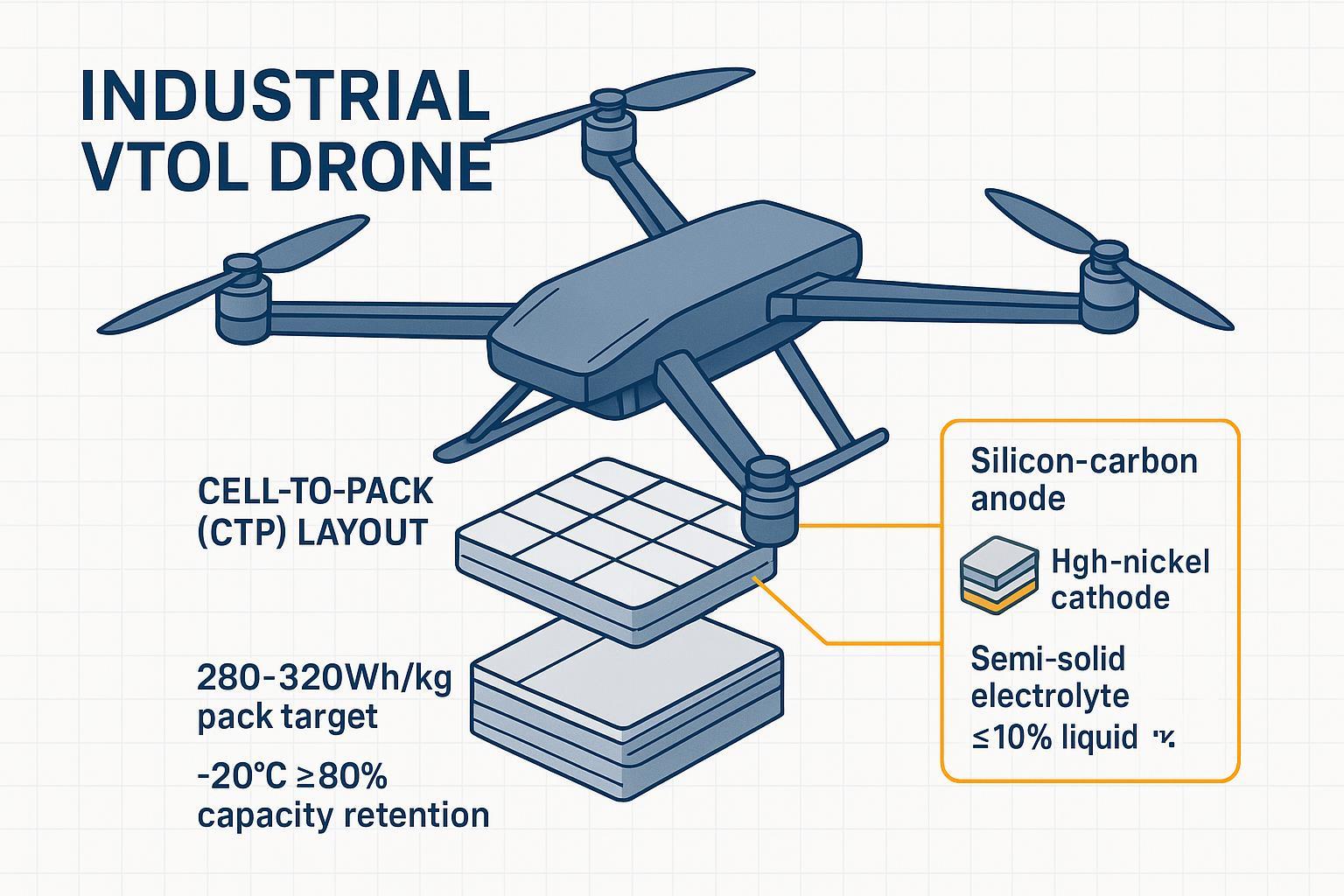
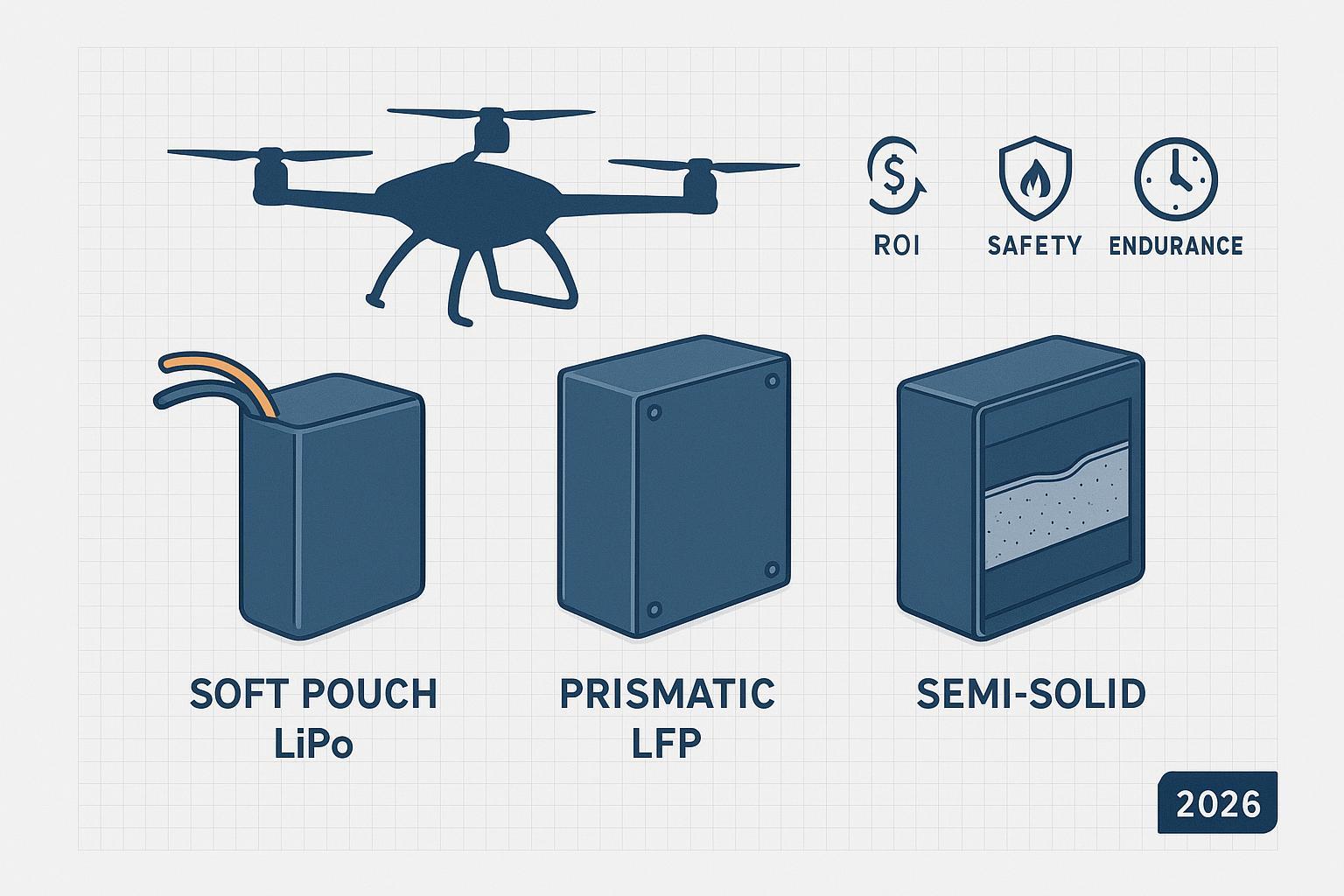
Beyond standard cells — LFP at −20°C versus semi‑solid state
Across public sources, standardized head‑to‑head capacity‑retention numbers at exactly −20°C are limited and vary with formulation and C‑rate. Directionally, many operators observe that common NMC packs degrade sharply, while well‑designed LFP solutions often retain about half to three‑fifths of their warm‑weather capacity without active heating.
That retention is usually quoted under low‑to‑moderate discharge rates; if you ask for high current during climbs or aggressive maneuvers with a cold‑soaked, non‑heated LFP pack, the voltage plateau can drop hard and the usable capacity can fall much more sharply than the headline number suggests. Semi‑solid systems marketed for cold climates can improve low‑temperature discharge acceptance but still depend on proper thermal management to avoid sag and plating during charge. Treat any exact percentage as implementation‑dependent; prioritize vendors that provide low‑temperature discharge curves and test conditions, not just marketing bullets. For a deeper, ROI‑oriented comparison across chemistries, see Herewin’s LFP vs. LiPo vs. Semi‑Solid Industrial Drone Batteries guide (2026).
Intelligent infrastructure — built‑in heaters and smart BMS
Self‑heating packs and docking stations can precondition cells into the 20–25°C “green band” before launch and hold them there during standby. Many enterprise ecosystems now combine automated preheating with weather‑based no‑launch rules in the −20°C class, and they often recommend increasing return‑to‑home reserves when cold and wind stack risk.
The operational implication is straightforward: at −20°C, preheating is not optional, and a smart BMS is what makes the workflow auditable. Your team should be able to verify internal cell temperature (not just surface temperature), confirm the preheat completion state, and review voltage‑sag behavior from logs after each sortie. For the manufacturer‑specific limits and procedures, follow your aircraft and battery OEM’s winter operations guide and maintenance manual for your exact model and firmware.
High‑altitude adaptation — propellers and air density compensation
Thin air amplifies power demand. At 1500–4000 m, reduced density cuts propeller thrust and forces higher disk loading or larger props. Many industrial platforms offer dedicated high‑altitude propellers and publish altitude‑dependent payload limits or operating ceilings for specific prop sets.
Even with perfect thermal control, endurance will drop at altitude. Plan your margins accordingly, and validate your endurance model with a short, instrumented test flight at the target elevation before you commit to a long inspection run.
The Four‑Step operational SOP for −20°C missions
This is an auditable runbook designed for flight leads and technicians. Aim to keep cell temperatures inside 20–25°C before high‑load maneuvers, and never exceed roughly 40°C. Where manufacturer manuals prescribe a stricter limit, defer to the stricter limit.
Step 1 — precision preheating in the 20–25°C band
- Target a cell temperature of 20–25°C before takeoff. Confirm via BMS telemetry. If using self‑heating packs or a dock, allow sufficient lead time for uniform core heating.
- Avoid surface‑only warming. Use integrated heaters, a temperature‑controlled case, or a vehicle HVAC solution that warms the entire pack uniformly.
- Safety ceiling: keep below about 40°C during preheating. If your OEM sets a different ceiling, follow that number.
Why it works: higher ionic conductivity and lower polarization reduce IR, trimming voltage sag risk at throttle‑up. Cold‑weather guidance and third‑party operator training consistently recommend prewarming toward ~20–25°C before flight, with Dock 3 offering automated preheat capabilities in remote deployments.
Step 2 — active thermal retention during field deployment
- Keep packs in an insulated, temperature‑controlled container between sorties. Phase‑change materials or heated cases help flatten temperature swings.
- Minimize idle exposure on the pad. Stage batteries as late as possible, especially in wind.
- For convoy or mobile teams, use vehicle HVAC routed to a small, insulated chest to maintain readiness.
For hands‑on retention tactics and field tips, see Herewin’s cold‑temperature battery operations playbook on sealed storage, staging, and field warm‑ups.
Step 3 — hover activation and Joule heat utilization
- After takeoff, hold a stable hover for about one minute. Watch cell temperature climb toward at least 15°C if you launched slightly below the ideal band.
- Avoid aggressive step loads during this warm‑up hover. Smooth stick inputs reduce transient sag while the pack equilibrates.
Multiple operator and OEM guides echo this hover‑to‑warm recommendation for winter operations. It’s a simple maneuver that pays back in stability.
Step 4 — real‑time telemetry and a 60–70% range buffer
- Set a conservative return‑to‑home buffer equal to about 60–70% of your normal‑temperature range for that mission profile. Label this as an internal operator policy, justified by increased IR, potential wind power spikes, and high‑altitude penalties.
- Monitor live pack telemetry for warning signs: sharp negative voltage slope under moderate load, rising IR estimates if your system exposes them, and flattening temperature when airflows increase cooling.
- Prefer lower cycle‑count packs in the cold season and log every sortie’s thermal and power traces for after‑action review.
This margin‑setting approach aligns with risk management frameworks that emphasize larger reserves when environmental and aerodynamic uncertainties compound.
Practical example — executing Step 1 and Step 4 with smart batteries
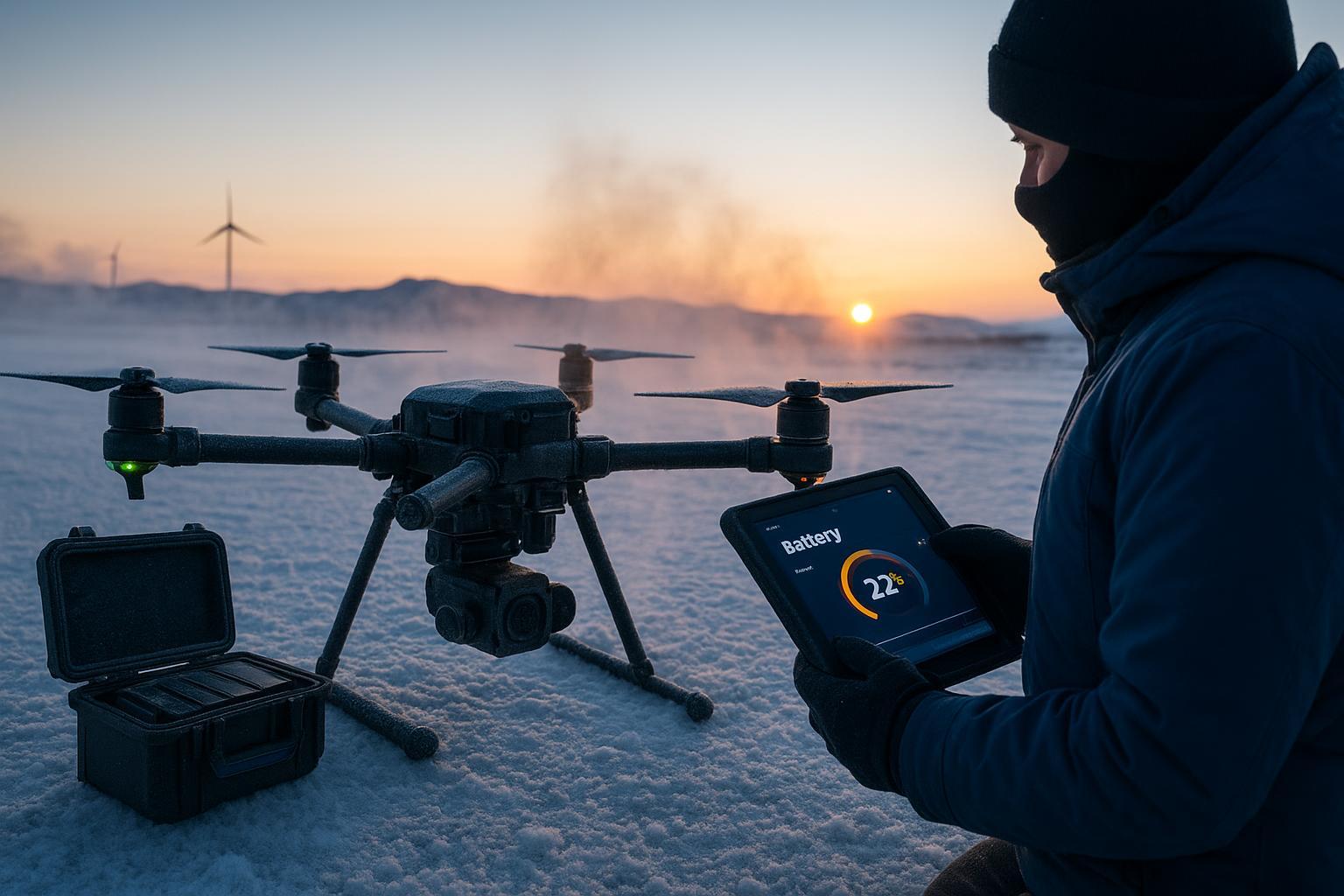
Here’s a vendor‑agnostic workflow used by many teams. A self‑heating smart pack is scheduled to preheat inside a field case 15 minutes before launch. The technician verifies that average cell temperature reached 22–24°C on the tablet. After takeoff, they hold a 60‑second hover, confirm temperature above 15°C, and then proceed. The flight controller monitors voltage slope versus current; if the slope exceeds a configured threshold while temperature trends down, the system auto‑bumps the RTH threshold to maintain the 60–70% buffer.
For readers building this workflow, smart BMS telemetry is the backbone. See the engineering explainer on the role of BMS in drone battery performance, safety, and lifespan from Herewin for a detailed view of the signals and protections a modern pack can expose.
Post‑flight recovery and safety compliance
Cold flights aren’t over when the props stop. Recovery steps protect electronics from moisture and cells from plating during the next charge.
Preventing condensation — the sealed‑bag re‑warming protocol
- Before bringing a frigid aircraft indoors, place the battery and airframe in clean, sealable bags with a desiccant pouch and allow them to warm gradually to room temperature while sealed. Only then unbag for inspection.
- Rationale: the sealed barrier prevents warm, humid indoor air from condensing on cold circuit boards, connectors, and pack surfaces. This is an operator policy drawn from general electronics moisture control practices.
Cold‑climate charging compliance — the 0.1C pre‑charge mandate
- Do not begin standard charging below 0°C internal temperature. Warm first.
- Use a conservative 0.1C pre‑charge until the pack reaches at least 5°C internal temperature, then transition to the normal charging profile if the OEM permits.
- Allow 20–30 minutes of post‑flight cool‑down after heavy current draws before any charge to avoid stacking thermal stress.
These measures echo themes from the low‑temperature lithium‑ion literature highlighting plating risk during sub‑zero charging and during rapid thermal transients. Maintenance notes also emphasize warming above 0°C before charging and adhering to routine maintenance cycles.
Winter storage — maintain SOH through controlled SOC
- For seasonal storage beyond 10 days, rest packs at roughly 40–60% state of charge and store in a cool, ventilated place around 5–20°C.
- Exercise long‑stored packs with a full, gentle cycle every few months per your OEM’s maintenance guidance.
This general regime aligns with common OEM maintenance guidance for long‑term health preservation.
Scenario‑specific optimization — power lines and arctic logistics
High‑altitude wind farm inspection at −20°C
Turbulence and thin air multiply current spikes. Plan missions with lower cruise speeds and smoother climb profiles, and consider larger‑diameter high‑altitude propellers where supported. Expect lower hover ceilings at payload and recalibrate endurance models using actual telemetry from trial sorties before committing to critical inspections. Build extra thermal headroom into your staging plan so packs begin each flight in the 20–25°C band despite wind chill.
Arctic logistics — managing fast cycles and preheating buffers
For repeated short hops between depots in deep cold, cycle your conditioning assets as aggressively as you cycle the aircraft. Stagger preheating windows so a warmed pack is always ready; maintain insulated transfer paths between case, aircraft, and recovery bag; and enforce the 60–70% range buffer to preserve abort options when gusts or icing risks emerge. If available, use docks or ground heaters that maintain cell temperature between sorties to avoid repeated cold‑start penalties.
FAQ — troubleshooting cold‑weather anomalies
Why did my 30% SOC jump to 0% mid‑mission
Cold‑elevated IR plus a sudden current step can induce a large voltage drop that forces the BMS to protect the pack. The SOC estimator often relies on open‑circuit voltage mapping, which becomes less reliable when the pack is cold‑soaked and under heavy load. In these conditions, voltage rebounds once load is removed, but the mission is already aborted. Preheating, a warm‑up hover, and smoothing control inputs mitigate the effect. Fleet‑level fix: analyze logs for voltage‑versus‑current slope and implement earlier RTH thresholds in cold seasons.
Can I use hair dryers or external heat pads for emergency preheating
Avoid ad‑hoc heat sources. They create uneven temperature gradients and hot spots, which are risky for cell integrity and can mask a still‑cold core. Prefer integrated self‑heating, controlled cases, or vehicle HVAC that warms uniformly. If you must improvise in an emergency, ensure the method is gentle, uniform, and verified by internal temperature telemetry before flight.
How to manage Battery Failed to Start errors in the field
This message often appears when the BMS detects parameters outside safe launch windows—low cell temperature, insufficient voltage recovery under self‑tests, or prior fault flags. Triage sequence:
- Verify cell and pack temperature readouts. If below target, run a timed preheat cycle and re‑test.
- Check voltage recovery at low throttle or hover; if sag persists, swap the pack.
- Review the last fault code and IR trend if accessible. Persistent anomalies warrant bench testing and, potentially, pack retirement.
Sources and further reading for engineers
Use these references to sanity‑check the mechanisms and set conservative SOP limits:
- Electrolytes at sub‑zero temperatures: the Advanced Materials review “Electrolyte Design for Wide‑Temperature Lithium‑Ion Batteries” (2023) explains the viscosity–conductivity trade‑off behind cold‑weather power loss.
- Pushing the window toward −40°C: the Chemistry—A European Journal review on wide‑temperature electrolytes (2024) surveys solvent/salt strategies and their limits.
- Lithium plating and why “warm before charging” exists: Luo, “Low‑Temperature Performance of Lithium‑Ion Batteries and Mitigation of Lithium Plating” (Polymers, 2022).
- Plating risk during thermal transients: Carter et al., “Detecting Lithium Plating During Dynamic Operating Conditions” (Frontiers in Energy Research, 2019).
- OEM and operator procedures: follow your aircraft and battery manufacturer’s winter operations guide and maintenance manual for model‑ and firmware‑specific limits (preheating, no‑launch rules, charging temperature thresholds, storage SOC, and high‑altitude payload/prop limits).
Next steps — standardize your winter checklist
Use this guide to train crews and standardize winter missions. If you want help turning the Four‑Step SOP into a site‑specific checklist with acceptance criteria, logging fields, and a one‑page runbook for your aircraft and mission profile, contact the Herewin team for a technical review.
 English
  Español
  한국어
한국어  Deutsch
  Français
  日本語
日本語  Русский
  Bahasa Indonesia
  ไทย
ไทย  العربية
  Português do Brasil
  Italiano
  Nederlands