
In long-range FPV flying, battery selection affects far more than flight time alone. It directly influences throttle response, cruising stability, voltage behavior, return safety, and even the long-term reliability of the entire power system.
For pilots building 7-inch or 8-inch long-range FPV platforms, one question appears repeatedly:
Should you use Li-ion packs or high-discharge LiPo batteries?
The answer is rarely straightforward.
Both battery types behave very differently under load, and the differences become even more important when operating through XT60 power connectors, which remain the standard interface for most long-range FPV builds. Energy density, discharge capability, voltage sag, cycle life, weight distribution, and current handling all influence how a battery performs in real flight conditions.
And while 7-inch and 8-inch FPV platforms are often grouped together under the “long-range” category, their battery requirements are not identical.
This article breaks down the selection logic from three practical perspectives:
- the flight characteristics of 7-inch and 8-inch FPV platforms,
- the real-world behavior of Li-ion vs high-C LiPo batteries,
- and XT60 connector compatibility under long-range power demands.
The goal is not to push one battery chemistry over another, but to help FPV pilots choose the configuration that actually matches their flight style, payload, and operational priorities.
Understanding the Difference Between 7-Inch and 8-Inch FPV Platforms
Although both frame sizes are commonly used for long-range FPV, they are designed around slightly different priorities.
Understanding those differences is essential before choosing a battery system.
Why 7-Inch FPV Builds Remain Popular
The 7-inch FPV platform is widely considered the balance point between endurance and maneuverability.
Most 7-inch long-range builds use lightweight carbon fiber frames paired with moderate prop loading, allowing the aircraft to maintain relatively efficient cruising behavior without becoming overly sluggish in directional control.
In practical flying terms, 7-inch FPV platforms tend to offer:
- better agility than larger long-range rigs,
- stronger wind resistance than smaller freestyle quads,
- manageable overall weight,
- and relatively efficient cruise performance.
This makes them particularly effective for:
- mountain exploration,
- long-distance cruising,
- rural cinematic flights,
- and medium-range reconnaissance-style flying.
Many 7-inch setups operate within a thrust-to-weight ratio around 1.5–2.0, which helps maintain stable long-range behavior without sacrificing too much responsiveness.
Battery space, however, is still somewhat limited.
Compared to 8-inch platforms, the battery bay on many 7-inch frames is tighter and more sensitive to pack dimensions and center-of-gravity positioning. That becomes an important factor when deciding between heavier Li-ion packs and higher-discharge LiPo configurations.
Why 8-Inch FPV Platforms Favor Endurance and Payload
An 8-inch FPV platform typically shifts the design priority toward endurance, stability, and payload capacity.
The larger frame allows:
- larger propellers,
- higher lift efficiency,
- larger battery mounting areas,
- and increased carrying capability.
As a result, 8-inch builds usually perform better in:
- long-duration hovering,
- mapping missions,
- professional aerial imaging,
- and heavy long-range payload applications.
The larger prop area also improves wind handling. Many properly tuned 8-inch platforms can remain stable in conditions that would noticeably disturb smaller long-range builds.
Compared with 7-inch rigs, 8-inch platforms generally offer:
- higher power reserve,
- improved cruise efficiency under load,
- longer achievable flight times,
- and better stability with cameras or surveying equipment onboard.
This is why 8-inch FPV systems are often selected for:
- long-range terrain inspection,
- industrial surveying,
- cinematic payload work,
- and professional aerial operations.
Battery selection for these builds tends to prioritize energy density and sustained power stability rather than pure agility.
Li-ion vs High-Discharge LiPo: What Actually Changes in Flight?
The debate between Li-ion and LiPo batteries is not simply about “better” or “worse.”
It is about matching battery behavior to the aircraft’s mission profile.
Li-ion Batteries: Efficient, Stable, and Built for Endurance
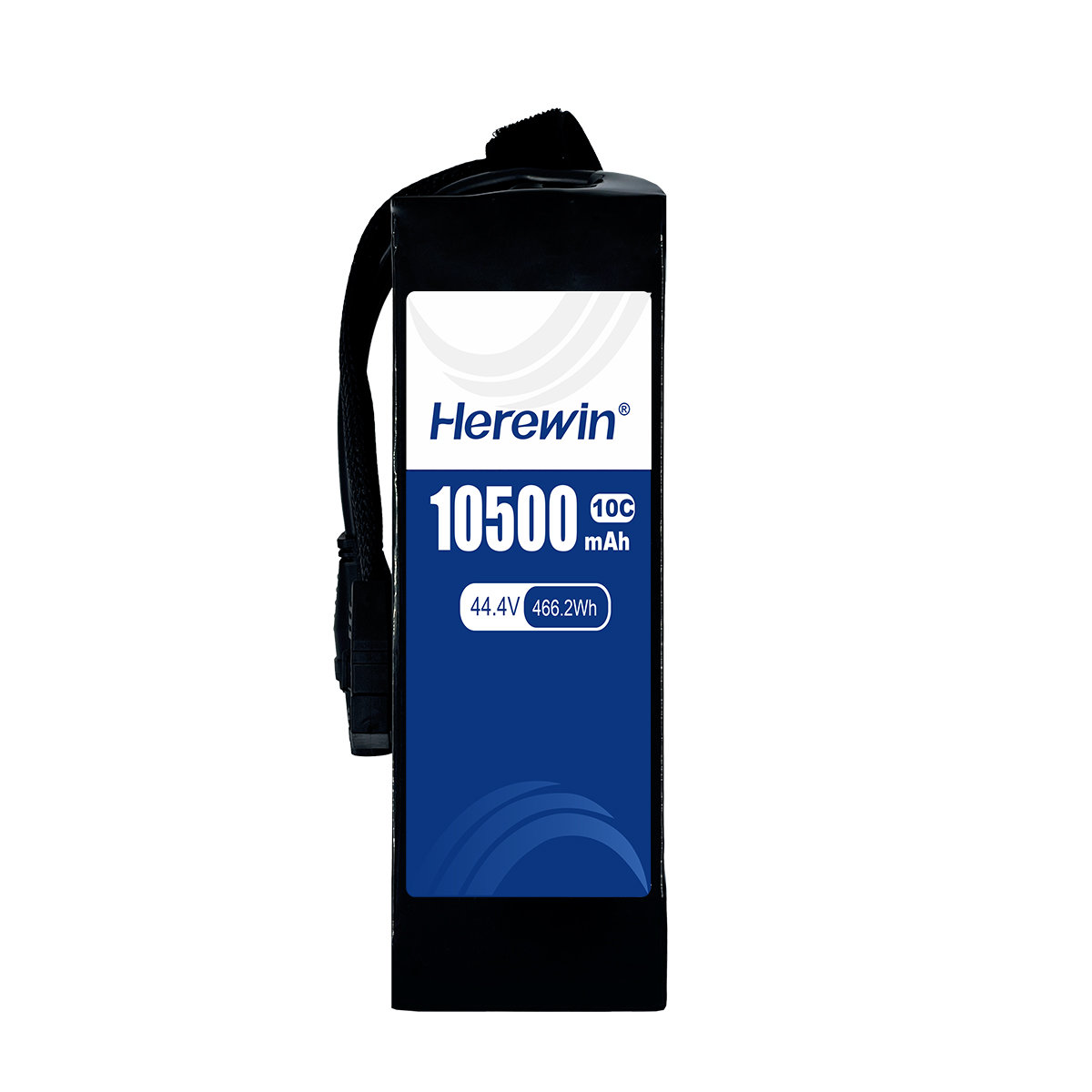
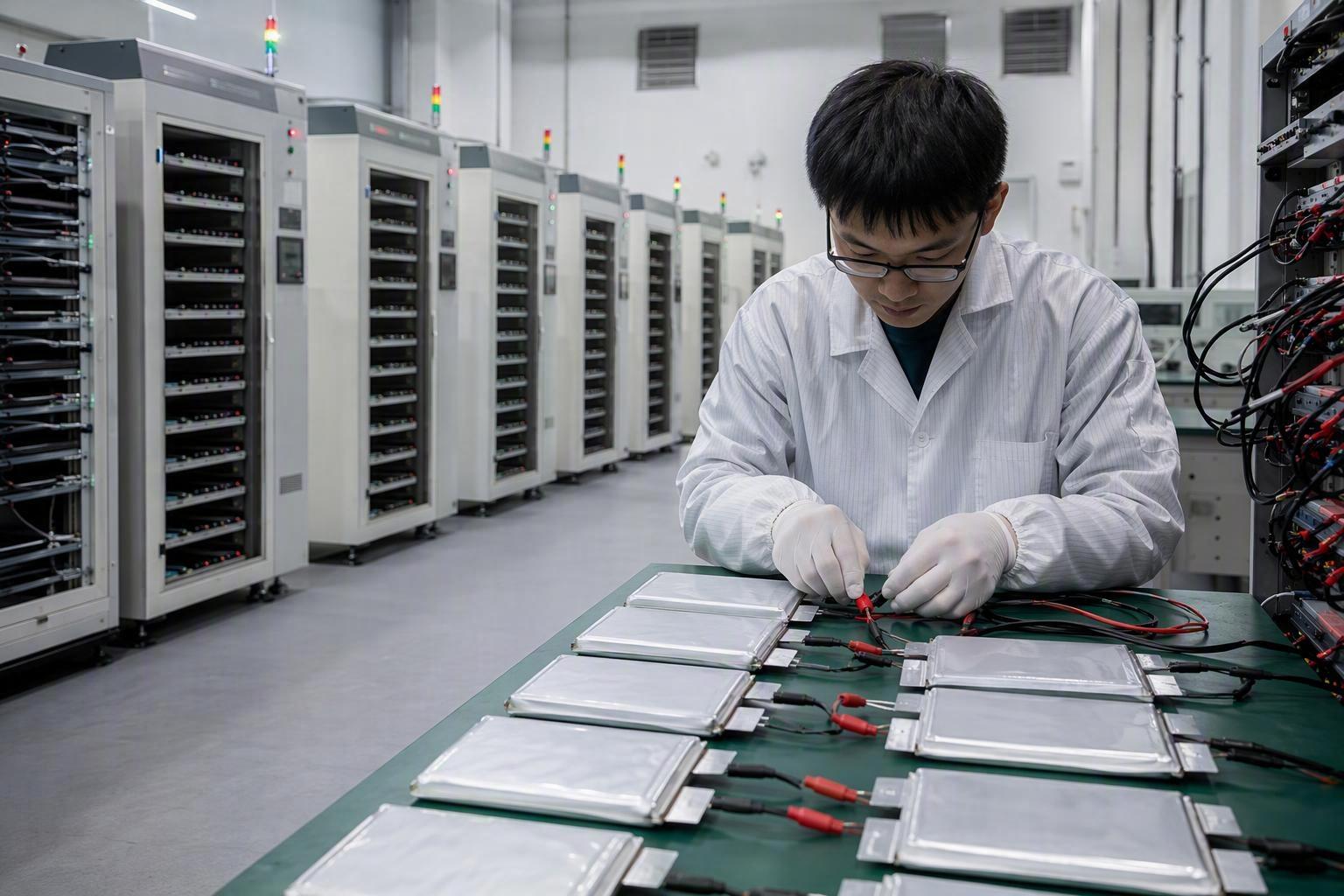
Li-ion battery packs are widely favored in long-range FPV because of their excellent energy efficiency and long cycle life.
Their main advantages include:
- stable voltage behavior,
- lower long-term operating cost,
- higher cycle durability,
- and efficient cruising performance.
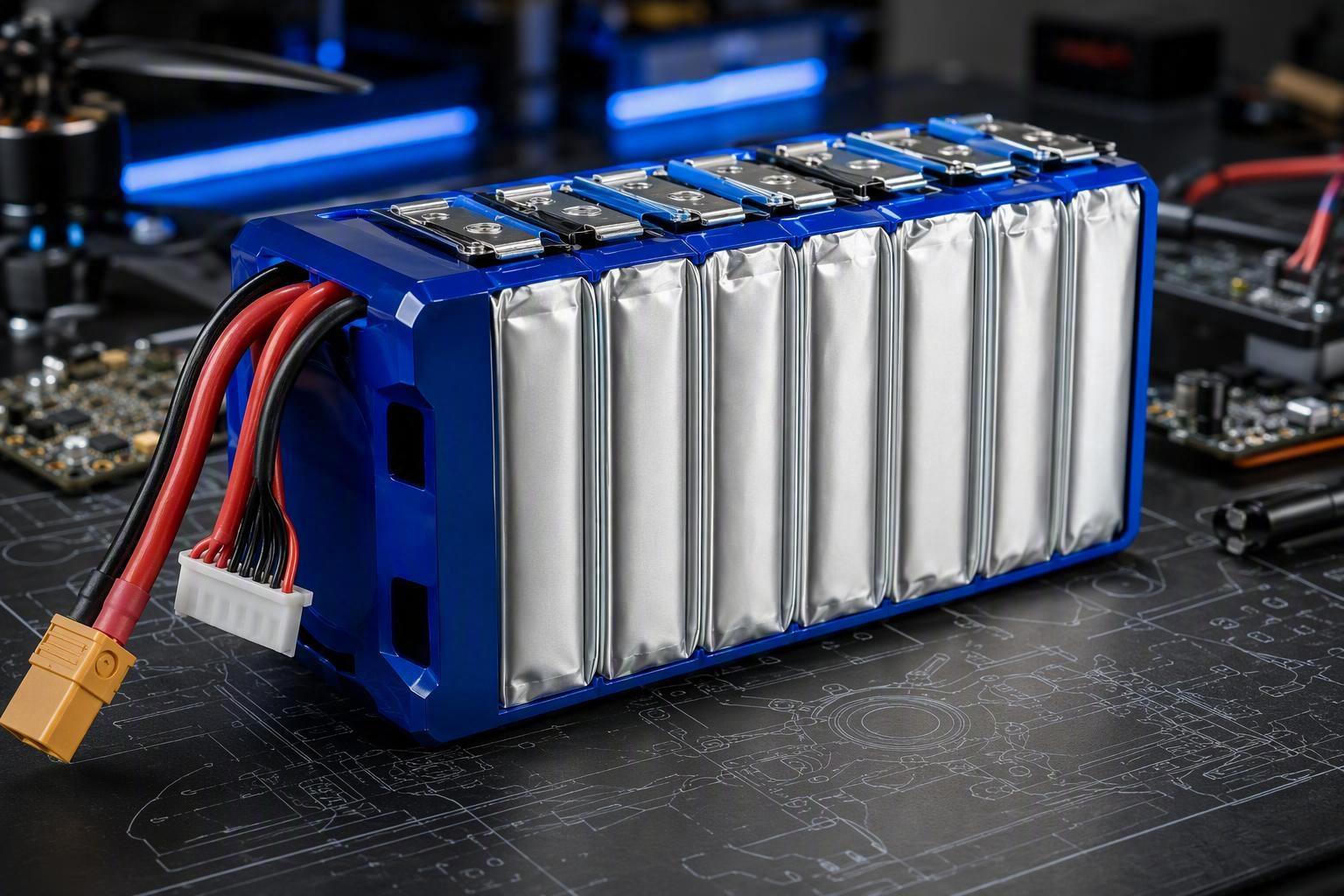
Most long-range FPV Li-ion packs are built using 18650 or 21700 cells.
These cells generally provide:
- high usable capacity,
- relatively flat discharge curves,
- and smoother voltage delivery during cruise flight.
For pilots focused on steady long-range flying rather than aggressive throttle input, this stability becomes extremely valuable.
Li-ion packs also tend to generate less dramatic voltage sag during moderate cruise conditions, helping maintain consistent power delivery to:
- ESCs,
- flight controllers,
- GPS systems,
- and video transmission equipment.
Their biggest limitation, however, is discharge capability.
Most Li-ion cells operate within relatively low discharge ranges compared with performance-oriented LiPo packs. That means they struggle under:
- rapid throttle punches,
- aggressive climbs,
- sudden acceleration,
- and high-load freestyle maneuvers.
Under heavy current demand, voltage sag becomes more noticeable and throttle response feels softer.
This is why Li-ion packs excel in:
- smooth cruising,
- long-range exploration,
- endurance-oriented flights,
- and efficiency-focused setups.
But they are rarely ideal for aggressive FPV flying styles.
High-C LiPo Batteries: Fast Response and High Current Output
High-discharge LiPo batteries remain the dominant choice for high-performance FPV flying for one reason:
They deliver current extremely quickly.
Compared with Li-ion packs, high-C LiPo batteries provide:
- significantly higher discharge rates,
- faster throttle response,
- stronger acceleration,
- and better recovery during aggressive maneuvers.
Many FPV-oriented LiPo packs operate in the 20C–40C range or higher, allowing motors to pull large bursts of current almost instantly.
In practical flight behavior, that translates into:
- sharper control feel,
- stronger punch-outs,
- faster directional changes,
- and improved responsiveness during freestyle or racing maneuvers.
For pilots flying:
- high-speed cinematic lines,
- mountain dives,
- aggressive long-range routes,
- or dynamic aerial tracking,
LiPo batteries generally feel far more capable than Li-ion packs.
However, this performance comes with tradeoffs.
Compared with Li-ion batteries, high-discharge LiPo packs usually have:
- shorter cycle life,
- faster degradation,
- more noticeable voltage drop near the end of discharge,
- and stricter safety requirements.
They also require more careful charging, storage, and monitoring procedures.
Improper charging, physical damage, overdischarge, or thermal stress can significantly increase safety risks.
In other words:
LiPo batteries maximize performance, while Li-ion batteries maximize endurance efficiency.
Why the XT60 Connector Matters in Long-Range FPV Builds
The XT60 connector has become the standard power connector across most 7-inch and 8-inch FPV platforms because it offers a practical balance between:
- current capacity,
- connection reliability,
- compact size,
- and durability.
Its anti-reverse design helps prevent polarity mistakes, while the low contact resistance minimizes power loss during high-current operation.
In long-range FPV applications, XT60 connectors are especially valued because they remain reliable under:
- vibration,
- repeated plugging cycles,
- and sustained current loads.
A properly installed XT60 connector can comfortably support the power demands of both:
- Li-ion long-range packs,
- and high-discharge LiPo setups.
But the battery chemistry still changes how the connector is stressed during flight.
XT60 Considerations with Li-ion Packs
Li-ion packs typically operate with lower continuous discharge current.
Because of that, XT60 stress levels are usually lower compared with aggressive LiPo builds.
Still, proper assembly matters.
Pilots should pay close attention to:
- solder quality,
- polarity alignment,
- connector fitment,
- and cable strain relief.
Poor contact quality can create resistance buildup, leading to connector heating and efficiency loss during longer flights.
Long-range FPV setups also experience constant vibration exposure, so secure connector retention becomes important for flight reliability.
XT60 Considerations with High-C LiPo Packs
High-discharge LiPo batteries place much heavier instantaneous load on the XT60 interface.
Under aggressive throttle input, current spikes can become substantial.
That means pilots should regularly inspect XT60 connectors for:
- oxidation,
- looseness,
- deformation,
- heat damage,
- or worn contact surfaces.
Poor-quality solder joints or partially degraded connectors can create dangerous resistance buildup under high current loads.
Connector condition becomes especially important in:
- high-throttle cinematic builds,
- freestyle-oriented long-range rigs,
- and heavy payload setups pulling sustained amperage.
In these applications, ESC capability, battery discharge rate, and XT60 current handling all need to remain properly matched.
Practical Long-Range Build References
Long-range FPV builder and educator Oscar Liang has published several widely referenced 7-inch long-range configurations that demonstrate how battery selection affects overall platform balance.
His long-range build philosophy emphasizes:
- lightweight frame construction,
- center-of-gravity optimization,
- vibration reduction,
- and efficient battery integration.
Many of these builds use customized battery mounting layouts designed around:
- 18650 Li-ion packs,
- 21700 Li-ion packs,
- or compact high-capacity LiPo configurations.
Another important practical point involves XT60 and balance connector assembly.
In long-range Li-ion packs, balance leads and XT60 power connectors must be assembled carefully to ensure:
- stable voltage monitoring,
- reliable current delivery,
- and proper BMS or charger communication.
Poor soldering quality, incorrect polarity, or weak insulation can create major reliability and safety risks during long-range operation.
For serious long-range pilots, connector quality is not a minor detail.
It is part of the flight safety system.
Recommended Battery Choices for 7-Inch FPV Platforms
When Li-ion Makes More Sense
Li-ion batteries are generally the better choice for 7-inch FPV pilots focused on:
- endurance cruising,
- smooth cinematic flying,
- route exploration,
- and efficiency-oriented long-range operation.
Typical configurations often include:
- 3S or 4S packs,
- 18650 or 21700 cells,
- capacities around 3000–5000mAh,
- and moderate discharge capability.
This setup prioritizes:
- stable cruising behavior,
- lower battery wear,
- and longer overall service life.
For pilots flying frequent long-range sessions, Li-ion can also reduce long-term battery replacement cost significantly.
When High-C LiPo Is the Better Choice
Pilots focused on:
- aggressive throttle response,
- fast directional changes,
- mountain diving,
- freestyle-style long-range flying,
- or competitive FPV performance
will usually prefer high-discharge LiPo batteries.
Typical 7-inch setups often use:
- 3S or 4S LiPo packs,
- capacities around 2200–3300mAh,
- and discharge ratings in the 25C–30C range or higher.
These packs provide noticeably stronger responsiveness and faster motor recovery under load.
The tradeoff is shorter flight time efficiency and increased battery wear.
Recommended Battery Choices for 8-Inch FPV Platforms
Li-ion for Endurance-Oriented 8-Inch Builds
For professional long-range applications such as:
- mapping,
- surveying,
- terrain inspection,
- and extended cruise operations,
Li-ion batteries are often the preferred option.
Many 8-inch endurance builds use:
- 4S or 5S Li-ion configurations,
- 21700 cells,
- capacities between 5000–8000mAh,
- and moderate discharge profiles.
Because 8-inch frames can carry larger battery mass more efficiently, they are particularly well suited to high-capacity Li-ion setups.
In properly optimized builds, flight times can increase substantially compared with smaller platforms.
High-C LiPo for Performance-Oriented 8-Inch Builds
Some 8-inch pilots still prioritize aggressive performance over maximum endurance.
For:
- cinematic chase flying,
- high-speed aerial filming,
- aggressive cruising,
- and dynamic payload operation,
high-discharge LiPo batteries may still be the better solution.
These setups commonly use:
- 4S or 5S LiPo packs,
- capacities around 3300–5000mAh,
- and discharge ratings around 30C–40C.
This approach preserves strong throttle authority while still maintaining reasonable endurance capability.
However, thermal management, charging discipline, and connector inspection become increasingly important at these current levels.
The Best Battery Depends on the Flight Mission
Choosing between Li-ion and high-discharge LiPo batteries is ultimately about matching the battery to the aircraft’s real operating behavior.
For long-range FPV pilots focused on:
- efficient cruising,
- stable endurance,
- lower operating cost,
- and predictable long-duration flight,
Li-ion packs often make the most practical sense.
For pilots prioritizing:
- responsiveness,
- aggressive maneuvering,
- high-speed control,
- and maximum power delivery,
high-C LiPo batteries remain difficult to replace.
The XT60 connector itself is not usually the limiting factor.
Its current handling capability is sufficient for most 7-inch and 8-inch long-range FPV builds when properly assembled and maintained.
The more important consideration is ensuring proper compatibility between:
- battery discharge capability,
- ESC current requirements,
- aircraft weight,
- cooling behavior,
- and intended flight style.
As battery technology continues evolving, future FPV platforms may eventually benefit from chemistries capable of combining:
- the endurance efficiency and cycle life of Li-ion,
- with the discharge performance of LiPo.
But for now, the best battery is still the one that matches the mission profile realistically rather than chasing specifications alone.
 English
  Español
  한국어
한국어  Deutsch
  Français
  日本語
日本語  Русский
  Bahasa Indonesia
  ไทย
ไทย  العربية
  Português do Brasil
  Italiano
  Nederlands